Northrop Grumman F/A-XX Emerges As Navy Decision Nears
The F/A-XX naval fighter moved back into the spotlight after Northrop Grumman released a short promotional video showing its next-generation carrier fighter concept. The footage offers the most detailed public glimpse so far of the company’s proposed aircraft for the U.S. Navy’s classified F/A-XX competition.
- Northrop Grumman released a new teaser video showing an updated F/A-XX fighter concept.
- The aircraft appears tailless, carrier-capable, and optimized for stealth and long-range operations.
- The U.S. Navy is expected to choose between Northrop Grumman and Boeing for the program.
- F/A-XX is intended to replace portions of the F/A-18E/F Super Hornet fleet in future carrier air wings.
- The platform is expected to operate with drones and advanced networked systems.
The release is notable because it comes as the Navy reportedly approaches a program milestone. According to reporting cited by The War Zone, Navy leadership has indicated a final selection between Northrop Grumman and Boeing could come in the coming months.
What The New F/A-XX Concept Shows
The updated imagery suggests a large, tailless stealth aircraft designed for carrier operations. Visible features include:
- Broad forward fuselage for sensors and radar aperture
- Dorsal or high-mounted engine inlets for reduced radar signature
- Folding wings for carrier deck storage
- Apparent internal weapons bay doors
- Heavy landing gear suited for catapult launches and arrested recoveries
These design cues align with what analysts expect from a sixth-generation naval fighter focused on survivability, reach, and persistence in contested airspace.
While concept art should not be treated as final configuration data, companies often use controlled imagery to signal design direction, maturity, and market confidence. That makes this teaser strategically timed.
Why F/A-XX Matters For The U.S. Navy
The F/A-XX program is expected to become the centerpiece of future carrier air wings, eventually complementing and replacing parts of the Boeing F/A-18E/F Super Hornet fleet. It would also operate alongside the Lockheed Martin F-35C Lightning II and future unmanned systems.
For the Navy, range is one of the most critical requirements. Carrier aircraft must operate farther from enemy missile threats while still striking targets deep inland or defending the fleet. That challenge has become more urgent in the Indo-Pacific, where China’s anti-access systems continue to expand.
A longer-range stealth fighter paired with drones could give carriers more stand-off flexibility than today’s legacy tactical aviation mix.
Northrop Grumman’s Position In The Race
Northrop Grumman brings strong stealth credentials to the contest, including work on the B-2 Spirit and B-21 Raider. The company previously stepped away from the Air Force’s NGAD fighter competition, a move many analysts interpreted as a decision to prioritize naval aviation and bomber programs.
That could give Northrop additional focus if selected for F/A-XX.
Boeing, however, remains a formidable competitor with deep Navy fighter heritage through the F/A-18 Super Hornet and EA-18G Growler families.
Strategic Outlook
The F/A-XX award will shape U.S. naval aviation for decades. Beyond the aircraft itself, the winner could secure a long pipeline of software upgrades, sustainment contracts, and autonomous teaming systems.
This new Northrop Grumman release appears designed to send a clear message: the company is ready, visible, and still firmly in the fight.
Zumwalt-Class Combat System Gets Fresh U.S. Navy Investment
The Zumwalt-class combat system is receiving another major funding injection after the U.S. Navy awarded Raytheon Missiles and Defense a $213.4 million contract modification to continue upgrades and sustainment work for the fleet’s mission systems. The award underscores Washington’s effort to preserve and expand the combat value of one of its most technologically ambitious surface combatant programs.
- Raytheon received a $213.4 million Navy contract modification for Zumwalt-class mission systems.
- Work covers installation, integration, testing, maintenance, corrections, and modernization.
- Upgrades support the Navy’s push to make Zumwalt destroyers more operationally relevant.
- Work runs across six U.S. states and is scheduled for completion by April 2027.
- Contract signals continued long-term investment in high-end surface warfare capabilities.
The Big Picture
The U.S. Navy is balancing two priorities at once: expanding fleet size while modernizing existing high-end warships for contested maritime operations. That strategy has become more urgent as the Indo-Pacific theater grows more competitive and long-range anti-ship missile threats continue to spread.
The three-ship Zumwalt-class destroyer program has often been debated because of its cost and reduced production run. Yet the vessels still offer unique advantages, including stealth shaping, integrated power generation, and large onboard capacity for future weapons or sensors. Continued investment suggests the Navy intends to extract maximum operational value from those advantages rather than treat the class as a niche experiment.
What’s Happening
According to the U.S. Department of Defense contract announcement, Raytheon will perform work supporting combat system installation, integration, development, testing, correction, maintenance, and modernization of Zumwalt-class mission systems.
The workshare includes:
- Portsmouth, Rhode Island (39%)
- Tewksbury, Massachusetts (32%)
- Pascagoula, Mississippi (14%)
- Nashua, New Hampshire (9%)
- San Diego, California (5%)
- Fort Wayne, Indiana (1%)
The contract is expected to run through April 2027.
Funding comes from multiple Navy accounts, including operations and maintenance, shipbuilding and conversion, procurement, and research and development. That mix indicates both near-term fleet sustainment and longer-term capability growth.
Why It Matters
Combat systems are the core of a modern destroyer. They connect sensors, command networks, weapons, electronic warfare tools, and targeting data into a single fighting architecture. Without constant software and hardware updates, even advanced hulls lose relevance quickly.
For the Zumwalt fleet, modernization is especially important because these ships were designed with significant growth margins. Their power generation and internal volume make them suitable candidates for future systems that require more electricity, cooling, or computing capacity.
That means the Zumwalt-class combat system can evolve faster than many legacy destroyers if funding remains steady.
Strategic Implications
The Navy increasingly needs distributed lethality, meaning more ships able to strike targets at range and operate independently in contested waters. Upgraded Zumwalt destroyers can support that concept by acting as stealthier surface strike platforms with advanced sensor integration.
The ships may also complement the larger Arleigh Burke-class destroyer fleet rather than replace it. Burkes provide numbers and proven versatility. Zumwalts can offer specialized high-end capability, especially in environments where lower radar signature and extra power capacity matter.
This contract also supports the U.S. industrial base across several states, sustaining engineering and naval combat system expertise that remains strategically valuable.
Competitor View
China and Russia closely track U.S. naval modernization, particularly programs involving long-range strike and advanced surface warfare networks. Continued upgrades to the Zumwalt class signal that the United States is not abandoning expensive but potentially high-payoff naval technologies.
Competitors may also view the decision as evidence that the Navy is preparing select premium platforms for future weapons integration, including next-generation missiles or energy-intensive systems.
Capability Gap
The Zumwalt program originally centered on land attack missions, but strategic needs shifted toward maritime competition against peer navies. That left a mission gap the Navy has been working to close.
Modernizing the Zumwalt-class combat system helps reposition the ships toward surface warfare and multi-domain operations. However, limitations remain. Only three hulls exist, which constrains fleet-wide impact, logistics efficiency, and deployment availability.
What To Watch Next
Several milestones will determine whether the modernization effort delivers full value:
- Integration of newer missile and sensor packages
- Software updates tied to joint force networks
- Readiness rates for all three ships
- Potential deployment patterns in the Pacific
- Future directed-energy or hypersonic weapon compatibility
The Bottom Line
The $213 million Raytheon award shows the U.S. Navy still sees the Zumwalt class as a valuable future combat asset rather than a legacy procurement problem.
Germany Launches Kraken K3 Armed USV Production
Kraken K3 armed USV production has begun in Germany, marking another step in Europe’s push toward autonomous maritime warfare and distributed naval operations. The new unmanned surface vessel is intended for armed strike, reconnaissance, and surveillance roles, offering naval forces a lower-risk platform for high-threat waters.
The launch comes as European militaries accelerate investment in drones and autonomous systems after observing the operational impact of unmanned surface vessels in the Black Sea and other contested maritime zones.
- Germany has launched production of the Kraken K3 armed unmanned surface vessel.
- The system is designed for autonomous strike, surveillance, and maritime security missions.
- The Kraken K3 can support contested littoral operations with lower risk to crews.
- Armed USVs are becoming a priority across Europe following lessons from the Black Sea.
- The program signals Germany’s growing focus on naval autonomy and distributed warfare.
Germany’s move suggests Berlin now sees armed surface drones as more than experimental assets. They are increasingly becoming practical tools for deterrence, coastal defense, and fleet support.
What Is The Kraken K3 Armed USV
The Kraken K3 armed USV is described as a compact unmanned vessel built for autonomous or remotely controlled operations. Systems in this category typically support missions such as:
- Maritime surveillance
- Harbor and infrastructure protection
- Intelligence collection
- Precision strike operations
- Swarm operations with multiple drones
- Decoy or electronic disruption missions
While detailed official specifications remain limited, platforms like the Kraken K3 usually emphasize modular payload bays, secure communications links, sensor integration, and scalable weapons options.
That flexibility matters. Navies no longer want single-purpose vessels when threats evolve rapidly. Modular USVs can be adapted faster and at lower cost than many traditional manned platforms.
Why Germany Is Moving Now
Germany’s decision reflects broader security changes in Europe.
The war in Ukraine demonstrated that relatively low-cost maritime drones can threaten larger and more expensive warships. Ukraine’s use of sea drones against Russian naval assets forced navies worldwide to reassess fleet protection, coastal defense, and force structure.
For Germany, which depends heavily on secure sea lines of communication in the Baltic Sea, North Sea, and wider NATO maritime network, autonomous systems offer several advantages:
- Persistent patrol capability
- Lower operating costs than crewed patrol craft
- Reduced personnel risk
- Faster mass production potential
- Better coverage of chokepoints and coastal zones
This is especially relevant as NATO members face pressure to expand readiness while controlling defense budgets.
Strategic Impact For NATO Navies
The Kraken K3 armed USV could become part of a wider layered force structure rather than a standalone replacement for warships.
Manned frigates and corvettes remain essential for air defense, anti-submarine warfare, and command missions. But unmanned vessels can screen approaches, scout ahead, monitor shipping lanes, or saturate enemy defenses.
That shift mirrors U.S., British, Turkish, and Ukrainian experimentation with autonomous naval systems.
If Germany fields the Kraken K3 at scale, it may encourage allied procurement programs and common standards for NATO unmanned maritime operations.
Industrial Significance
Launching production also highlights Germany’s defense industrial adaptation. European shipbuilders and technology firms are increasingly expanding into software-defined platforms, autonomous control systems, and smaller rapid-build naval assets.
Traditional shipbuilding cycles often take years. USVs can be developed faster, upgraded through software, and produced in larger numbers.
That industrial agility may prove just as important as raw platform performance.
Outlook
The Kraken K3 armed USV signals that Germany is joining the race to field practical autonomous naval combat systems. While large warships will remain central to maritime power, the future fleet is likely to include many smaller unmanned vessels working alongside them.
For NATO and European defense planners, the question is no longer whether armed USVs matter. It is how quickly they can be integrated into frontline operations.
HMS Queen Elizabeth Back At Sea After Rapid Turnaround
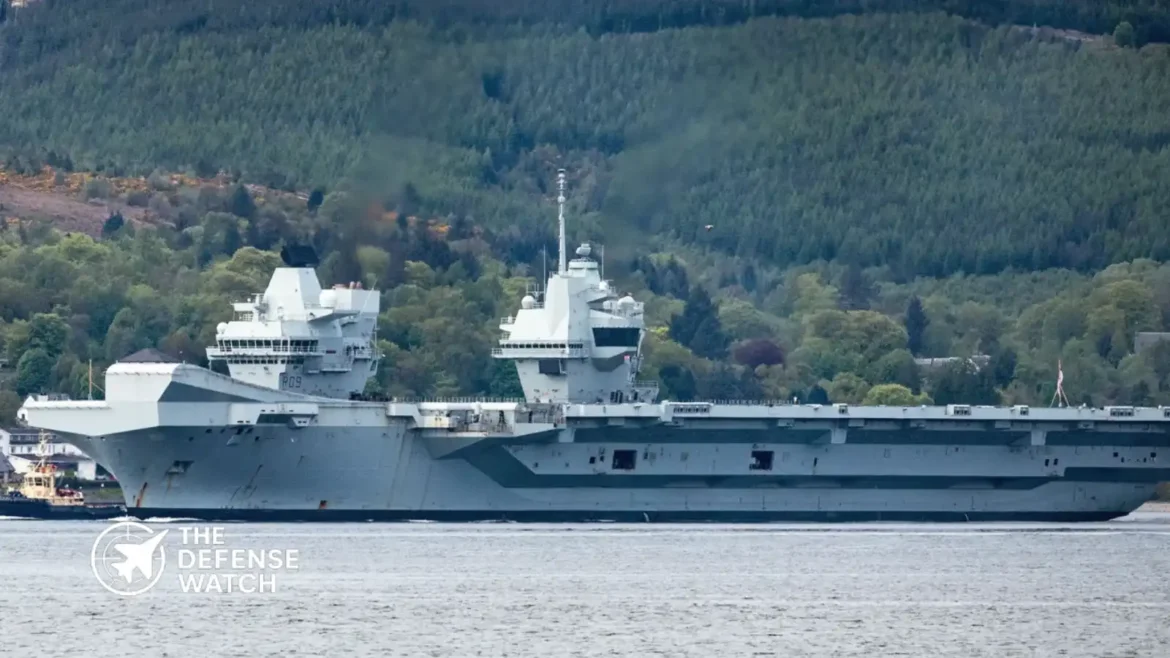
HMS Queen Elizabeth back at sea marks another visible sign that the Royal Navy is maintaining a high operational tempo for its carrier force. Britain’s flagship aircraft carrier departed Portsmouth only days after arriving, returning quickly to maritime duties following recent training activity.
The 65,000 ton warship had recently completed a 10 day training period involving Royal Air Force Chinook helicopters, naval aviation elements, and escort integration drills. Exercises also included cooperation with the Type 23 frigate HMS St Albans before the vessel re-entered port.
- HMS Queen Elizabeth has departed Portsmouth and returned to sea after a short port stop.
- The carrier recently completed training with Royal Air Force Chinook helicopters and escort units.
- The deployment highlights sustained Royal Navy readiness and rapid turnaround capability.
- HMS Queen Elizabeth is one of two 65,000 ton Queen Elizabeth class aircraft carriers.
- The ship can operate F-35B fighter jets, Merlin helicopters, and support carrier strike missions.
The quick turnaround is notable because large deck carriers require significant logistics support, maintenance coordination, and crew management even during short port visits. Returning to sea within days suggests the Royal Navy is emphasizing readiness rather than routine harbor downtime.
Why This Matters For Britain’s Naval Strategy
The British aircraft carrier force centers on two ships, HMS Queen Elizabeth and HMS Prince of Wales. Unlike larger navies with multiple carrier groups, the UK relies on rotating availability between these two vessels. That makes every deployment, sea trial, and training cycle strategically important.
A rapid redeployment can serve several purposes:
- Sustain pilot and deck crew proficiency
- Maintain escort integration with frigates and support ships
- Demonstrate NATO maritime readiness
- Preserve availability for crisis response
- Prepare for future global deployments
For London, carrier presence remains one of the clearest symbols of expeditionary military power. Whether operating in the North Atlantic, Mediterranean, Indo-Pacific, or on NATO tasking, these ships give Britain options beyond land-based airpower.
Capability Of The Queen Elizabeth Class
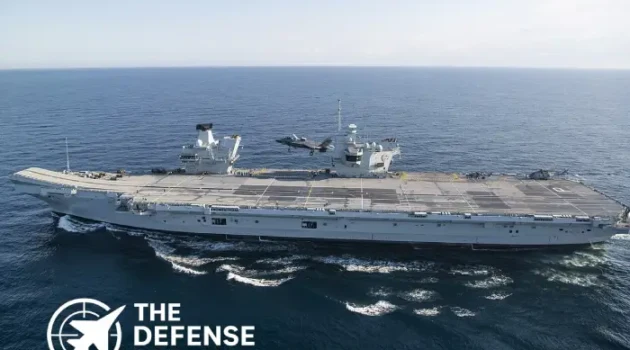
The Queen Elizabeth class carriers are among the largest warships ever built for the Royal Navy. Each vessel measures roughly 284 meters in length and can carry up to around 40 aircraft depending on mission profile. Their air wing can include F-35B Lightning II fighters and Merlin helicopters for anti-submarine warfare and airborne surveillance roles.
The ski-jump flight deck design allows short takeoff and vertical landing operations, enabling flexible use without catapult systems. This keeps the carrier optimized for the F-35B concept while reducing some technical complexity compared with CATOBAR carriers.
Original Analysis: Readiness Is The Real Message
The most important signal from HMS Queen Elizabeth back at sea may not be combat power alone. It is readiness discipline.
Modern carriers are expensive national assets, and critics often measure them only by wartime scenarios. In peacetime, however, value is often shown through availability, training output, alliance presence, and deterrence signaling. Sailing repeatedly, even for short periods, helps crews remain sharp and systems validated.
For allies, this shows the UK can still generate credible maritime power. For rivals, it signals Britain’s carrier fleet is active, not ceremonial.
US Seizes Iranian Cargo Ship As Regional Tensions Rise
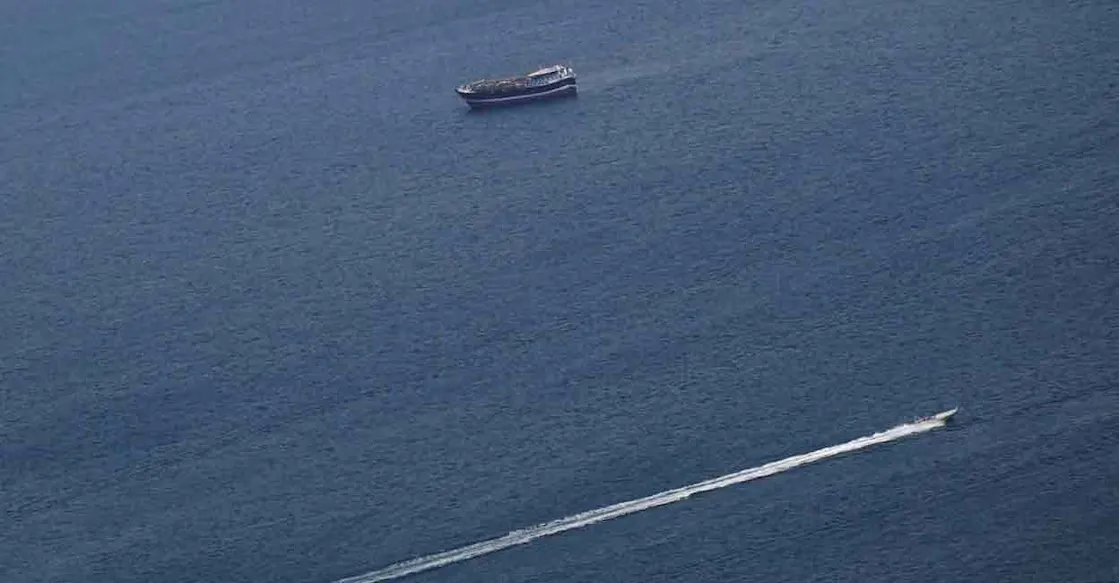
The US seizes Iranian cargo ship story has quickly become the most serious challenge yet to the fragile ceasefire between Washington and Tehran. U.S. officials said naval forces intercepted and took control of an Iranian vessel that allegedly attempted to bypass an American blockade, while Iran responded with threats of retaliation.
The confrontation comes only days before the temporary ceasefire is due to expire, creating new uncertainty across the Middle East and global energy markets.
- U.S. forces seized an Iranian cargo vessel accused of attempting to breach a maritime blockade.
- Iran condemned the move as armed piracy and warned retaliation would follow.
- Tehran said it would not join planned follow-on negotiations before the ceasefire deadline.
- The Strait of Hormuz remains under pressure, threatening global oil flows.
- The incident increases the risk of renewed military escalation across the Gulf region.
What Happened At Sea
Reuters reported the vessel was intercepted after the United States said it attempted to run the blockade imposed on Iranian ports. U.S. officials have framed the operation as enforcement of sanctions and maritime controls. Iran rejected that narrative, calling the seizure unlawful and provocative.
The incident reportedly occurred near the Gulf of Oman, close to the strategically vital Strait of Hormuz, one of the world’s most important oil transit chokepoints.
From a military standpoint, boarding and capturing a state-linked cargo vessel is a serious escalation. It signals Washington is prepared to use direct naval power to enforce pressure, not just economic sanctions.
Why The Strait Of Hormuz Matters
Roughly one-fifth of global oil shipments normally pass through the Strait of Hormuz. Any disruption there can rapidly affect fuel prices, shipping insurance costs, and naval deployments. Reuters noted that the waterway has already seen repeated restrictions during the current crisis.
This means the US seizes Iranian cargo ship incident is larger than a single maritime event. It directly impacts:
- Global oil supply confidence
- Commercial tanker traffic
- U.S. Navy regional posture
- Gulf Arab security planning
- Insurance and freight rates
Even limited friction in Hormuz can create outsized economic effects.
Ceasefire Talks Now In Doubt
Reuters said Iran announced it would not participate in a second round of planned negotiations that Washington hoped would begin before the ceasefire deadline.
That is a significant warning sign. Diplomatic channels often survive military incidents, but refusal to attend talks suggests both sides are hardening positions.
Pakistan had reportedly been preparing to host discussions, showing that outside powers remain interested in containing escalation. If talks collapse, military signaling at sea may become the main form of communication between both sides.
Defense Analysis: What Comes Next
The most immediate risk is retaliatory maritime action. That could include vessel harassment, missile threats, drone surveillance, or renewed disruption of shipping lanes.
The United States likely seeks deterrence through visible enforcement. Iran, however, may calculate that failing to respond weakens its regional credibility.
This raises the danger of tactical incidents spiraling into broader conflict, especially in congested waters where naval, commercial, and proxy actors operate close together.
Strategic Outlook
The US seizes Iranian cargo ship episode highlights a broader reality: ceasefires without a political framework are often temporary pauses, not lasting settlements.
Unless both sides restore talks quickly, the Gulf could enter another cycle of blockade pressure, naval confrontation, and economic shock.
For defense planners, the lesson is clear. Maritime chokepoints remain among the fastest ways regional crises become global crises.
The U.S. Iran blockade effort has reportedly intensified after 23 ships turned back from key maritime routes.The development suggests a sharper enforcement phase focused on limiting Iranian access to strategic shipping corridors while increasing pressure on commercial traffic linked to sanctioned trade networks.
- The United States has reportedly intensified maritime pressure on Iran-linked shipping routes.
- Army Recognition reported that 23 commercial vessels turned back amid expanding enforcement activity.
- Key sea lanes near the Gulf region remain vital for global oil and container traffic.
- Increased naval presence signals broader deterrence and sanctions enforcement strategy.
- Any prolonged disruption could affect freight costs, insurance rates, and energy markets.
The reported movement of vessels reversing course is notable because merchant shipping companies rarely alter routes without clear commercial or security reasons. When multiple ships change course in a short period, it often signals heightened operational risk, tighter inspections, or concern over possible escalation.
The waterways surrounding Iran, including approaches to the Strait of Hormuz, remain among the most important maritime chokepoints in the world. A significant share of global oil exports and container traffic transits the region, making any shift in naval posture strategically important.
Why 23 Ships Turning Back Matters
The number itself matters less than the pattern. If commercial operators believe delays, boarding actions, sanctions checks, or confrontation risks are rising, many will choose alternative routes or wait offshore.
That creates three immediate effects:
- Higher shipping insurance premiums
- Longer transit times
- Greater freight volatility for energy and cargo markets
This is where the U.S. Iran blockade strategy can generate leverage without direct combat. Economic friction on maritime movement can pressure state revenues and complicate logistics while avoiding broader military escalation.
U.S. Naval Presence And Enforcement Strategy
Washington has repeatedly used carrier strike groups, destroyers, patrol aircraft, and maritime surveillance assets to monitor Gulf traffic and reassure regional partners. Expanding control over key sea lanes typically involves intelligence gathering, vessel tracking, and selective interdiction backed by visible naval force.
If sustained, this approach can shape commercial behavior quickly. Shipping firms are highly sensitive to uncertainty. Even a low probability of disruption can move traffic patterns.
That makes maritime control one of the most efficient tools available in regional pressure campaigns.
Risks Of Escalation
While the reported move may strengthen deterrence, it also carries risk. Iran has historically responded to pressure through asymmetric methods, including harassment of shipping, drone activity, proxy operations, or threats to close strategic waterways.
Any cycle of action and reaction could raise tensions across the Gulf and affect neighboring states that rely on stable maritime commerce.
From a defense perspective, the balance now is between maintaining credible pressure and avoiding incidents at sea.
Strategic Analysis
At least part of the message appears aimed beyond Tehran. Regional allies, energy markets, and commercial operators are all audiences.
For allies, it signals continued U.S. commitment.
For markets, it warns of possible volatility.
For Iran, it demonstrates reach and persistence.
That multi-layered signaling often matters as much as the ships at sea.
Outlook
If more vessels reroute in coming days, the U.S. Iran blockade campaign could begin affecting global tanker flows and cargo schedules. If traffic normalizes, the move may instead be remembered as a short, sharp coercive signal.
Either way, maritime pressure remains one of the fastest tools Washington can employ in the region.
Spain Marine Amphibious Vehicle Program Advances
Spain marine amphibious vehicle modernization is moving ahead as Madrid seeks to strengthen the combat mobility of its naval infantry forces. Spain has taken steps toward a new amphibious vehicle program designed for the Spanish Marine Infantry, one of Europe’s longest-standing expeditionary naval forces.
The effort reflects a wider trend across NATO members to renew aging armored fleets and improve readiness for contested littoral operations. Amphibious forces must now operate in environments shaped by drones, precision weapons, and advanced surveillance, making survivability and speed more important than in previous decades.
- Spain has moved forward with plans for a new marine amphibious vehicle for its naval infantry forces.
- The program aims to replace older assault vehicles and improve ship-to-shore mobility.
- New platforms are expected to offer better protection, digital systems, and survivability.
- The move supports broader Spanish defense modernization and NATO readiness goals.
- Amphibious capability remains critical for crisis response, expeditionary missions, and Mediterranean operations.
Spain’s current amphibious vehicle inventory includes older systems that have served for years but face growing sustainment and capability limits. Replacing them is increasingly seen as necessary rather than optional.
Why Spain Needs A New Amphibious Vehicle
Modern amphibious vehicles are no longer simple transport platforms. They are expected to move troops from ship to shore, cross rough terrain, protect against mines and fragmentation, and connect digitally with commanders and nearby units.
That means Spain’s next marine amphibious vehicle will likely need several key traits:
- Improved ballistic and blast protection
- Strong water mobility and shore transition performance
- Modern communications and battle management systems
- Better reliability and lower maintenance burden
- Capacity for fully equipped infantry squads
This matters because amphibious assaults are among the most complex military operations. Vehicles must launch from ships offshore, survive exposure during landing, and then continue inland combat tasks without delay.
Strategic Importance In The Mediterranean
Spain occupies a critical geographic position between the Atlantic and Mediterranean, while also maintaining territories and interests that require rapid response capability. Amphibious forces provide options during crises ranging from evacuations to reinforcement missions.
For NATO planners, southern Europe has gained fresh relevance. Maritime chokepoints, instability in North Africa, migration pressures, and wider tensions across Europe have all increased the value of deployable marine forces.
A stronger Spanish amphibious fleet can support:
- NATO rapid reaction missions
- Maritime security operations
- Humanitarian assistance and disaster relief
- Protection of island or coastal territories
- Expeditionary deployments with allies
That gives Spain practical military utility beyond national defense alone.
Likely Contenders And Market Context
Although final selections were not detailed, the global market offers several proven amphibious armored systems. Western militaries have recently evaluated platforms such as the BAE Systems ACV, Iveco SuperAV family derivatives, and other tracked or wheeled marine assault vehicles.
Spain may prioritize interoperability with allies, lifecycle cost, domestic industrial participation, and ease of deployment aboard existing amphibious ships. Those factors often shape procurement decisions as much as raw performance.
This is especially relevant in Europe, where governments increasingly want defense spending to strengthen local industry and supply resilience.
Broader Defense Modernization Trend
The Spain marine amphibious vehicle program fits into a larger European rearmament cycle. Since 2022, many NATO states have accelerated purchases involving armor, artillery, air defense, and naval assets.
For Spain, balanced modernization means improving land, air, and sea forces together. Amphibious units are relatively small compared with army formations, but they deliver outsized strategic value because they can deploy quickly and operate from the sea.
That flexibility is difficult to replace once lost.
What Comes Next
The next steps will likely include requirement refinement, industry competition, testing, budgeting approvals, and phased delivery planning. Major defense vehicle programs often take years from initial movement to full operational service.
Still, the direction is clear. Spain wants a modern marine amphibious vehicle that can meet future threats rather than rely on legacy systems built for another era.
For NATO and regional observers, this is another signal that Europe’s maritime ground forces are entering a new modernization phase.
NATO Underwater Internet Concept Moves Into Operations
The NATO underwater internet concept is moving from research into real operational planning, marking a significant step in how allied navies may fight, monitor, and communicate beneath the sea.
NATO has launched the Allied Underwater Battlespace Mission Network (AUWB-MN), a program intended to create a secure mission network linking military systems operating above, on, and below the waterline. The project is being led by Saab through its MANGROVE consortium.
- NATO has advanced its underwater internet concept into operational development through a new Allied Underwater Battlespace Mission Network (AUWB-MN) program.
- Swedish defense firm Saab (through its Kockums business area) is leading the multinational MANGROVE consortium selected for the effort.
- The system is designed to connect crewed and uncrewed platforms above, on, and below the sea surface.
- Twelve NATO nations are backing the project, led by the United Kingdom.
- The move comes as allied nations face growing concern over cable sabotage, seabed espionage, and maritime disruption.
The initiative reflects a broader shift in alliance planning. Underwater operations were once focused mainly on submarines and anti-submarine warfare. Today, the seabed has become a strategic battlespace that includes data cables, energy pipelines, sensors, drones, and autonomous vehicles.
Why NATO Is Prioritizing Undersea Networks
More than traditional naval competition is driving this effort. Western officials have increasingly warned about the vulnerability of critical undersea infrastructure, especially fiber optic cables that carry global internet traffic and financial data.
Recent incidents in the Baltic Sea and North Atlantic have sharpened concern that hostile states or proxy actors could damage cables, disrupt communications, or gather intelligence without triggering open conflict.
That makes the NATO underwater internet concept strategically important. If allied forces can maintain resilient underwater communications and connect autonomous systems in real time, they gain faster detection, better coordination, and stronger deterrence.
This is no longer only about ships and submarines. It is about controlling information flows in contested waters.
What The New Network Is Designed To Do
According to Saab, the AUWB-MN project will create a reference architecture and testing environment for a future NATO standard. It aims to support secure and rapid information exchange between conventional naval assets and maritime uncrewed systems.
That could include:
- Underwater drones sharing sonar contacts
- Surface vessels relaying data to command centers
- Autonomous sensors tracking suspicious seabed activity
- Multi-nation forces operating on one common network
- Faster responses to sabotage or submarine threats
The long term value is interoperability. NATO forces often operate with different national systems. A common underwater data standard could reduce delays and improve joint missions.
Why This Matters Beyond Europe
Although many recent cable incidents have centered on Europe, the implications are global. Undersea infrastructure links continents, supports military communications, and underpins global commerce.
If NATO successfully fields an underwater network architecture, similar models could shape future Indo-Pacific security planning, Arctic surveillance, and coalition maritime operations.
The United States, as a leading NATO military power, has a clear stake in the project. American naval doctrine increasingly emphasizes unmanned systems, distributed sensing, and resilient communications. Those priorities align directly with AUWB-MN goals.
Analysis: A Quiet But Important Military Shift
This program may not attract attention like a new fighter jet or missile system, but it could prove just as consequential.
Modern warfare increasingly targets networks rather than platforms. A damaged cable, blinded sensor grid, or disrupted data link can weaken combat power before the first missile is fired.
By pushing the NATO underwater internet concept into operations, the alliance is recognizing that future maritime competition will be fought across the seabed as much as on the surface.
That suggests NATO sees underwater connectivity not as a technical niche, but as core military infrastructure.
USS Abraham Lincoln Anchors New US Pressure Campaign
The USS Abraham Lincoln blockade mission has become the centerpiece of a wider US maritime operation aimed at increasing pressure on Iran and controlling access to regional sea lanes. Multiple open source and media reports indicate the Nimitz-class aircraft carrier is operating in or near the Arabian Sea with escorts from Carrier Strike Group 9.
- USS Abraham Lincoln is reported to be leading US carrier operations tied to an Iran maritime blockade.
- More than a dozen US naval vessels and over 100 aircraft are reportedly supporting enforcement efforts.
- US destroyers, surveillance aircraft, and support ships are central to interception and sea control missions.
- Additional carrier and mine countermeasure forces are reportedly moving toward the region.
- The deployment raises pressure on Tehran while securing key shipping lanes near the Strait of Hormuz.
The deployment reflects a strategic shift from airpower alone toward sustained naval coercion. Carrier groups can remain on station for long periods, generate continuous air sorties, and project force without relying on host nation bases. That gives Washington a flexible tool during periods of regional instability.
Why USS Abraham Lincoln Matters
USS Abraham Lincoln is one of the US Navy’s most proven nuclear-powered carriers. It typically embarks a mix of strike fighters, electronic warfare aircraft, airborne early warning platforms, and helicopters. Previous reporting tied the ship to Carrier Air Wing 9, including F/A-18 Super Hornets, EA-18G Growlers, E-2D Hawkeyes, and rotary-wing detachments.
That matters because a carrier strike group can perform several missions at once:
- Air defense over fleet units
- Maritime surveillance across large sea areas
- Strike operations ashore
- Escort and deterrence patrols
- Rapid response to Iranian naval moves
In practical terms, USS Abraham Lincoln gives US commanders a floating air base that can reposition quickly.
Destroyers And Escorts Are Doing The Hard Work
While the carrier draws headlines, destroyers are often the workhorses of blockade enforcement. Recent reporting says Arleigh Burke-class destroyers are central to screening, boarding support, missile defense, and ship interception tasks.
These ships bring advanced radar, vertical launch missile cells, helicopters, and endurance. In a blockade environment, they are often the first ships to challenge approaching vessels, monitor suspicious traffic, and maintain constant patrol lines.
That suggests the operation is less about symbolic carrier presence and more about layered sea control.
Strait Of Hormuz Remains The Strategic Center
Any major US Iran naval operation inevitably points toward the Strait of Hormuz, one of the world’s most important maritime chokepoints. A large share of global energy shipments normally transits the waterway.
By massing naval power near the area, Washington gains leverage beyond the immediate Iran crisis. It reassures commercial shipping, signals resolve to regional partners, and preserves freedom of navigation options if tensions rise further.
This is why minesweepers, reconnaissance aircraft, and logistics ships matter as much as combat vessels. A carrier cannot sustain pressure alone. It needs a network.
Strategic Analysis: What Comes Next
The current posture suggests three likely US objectives:
- Economic pressure on Iran through maritime restrictions
- Deterrence against missile or swarm boat attacks
- Readiness for rapid escalation if diplomacy fails
For Tehran, direct confrontation at sea would carry high risk. Iran may instead rely on indirect pressure, drone threats, proxy activity, or legal and political messaging.
That means the naval contest could become a battle of endurance rather than a traditional fleet clash.
Broader Defense Implications
The USS Abraham Lincoln deployment also highlights how aircraft carriers remain relevant despite modern missile threats. Critics often question carrier survivability, yet Washington continues to use them first during crises because they combine mobility, airpower, command capability, and visible deterrence in one platform.
In that sense, the operation is also a message to rivals beyond the Middle East: the US still uses carrier strike groups as frontline instruments of state power.
U.S. Navy Deploys Drones and Robotic Systems for Strait of Hormuz Mine Clearance
The U.S. Navy has launched a mine clearance operation in the Strait of Hormuz, deploying unmanned surface vehicles, undersea drones, and remotely operated neutralization systems to address Iranian mines that have choked one of the world’s most critical maritime energy corridors. The operation, confirmed by U.S. military officials over the weekend of April 12–13, represents one of the most operationally complex mine countermeasure efforts the Navy has undertaken in decades.
- The U.S. military launched a mine-clearing operation in the Strait of Hormuz after Iran deployed approximately a dozen mines, severely disrupting global energy supplies.
- The Navy is deploying unmanned surface and undersea vehicles, BAE Systems‘ Archerfish torpedo-shaped neutralization devices, and MH-53 helicopters to locate and destroy mines remotely.
- The Strait of Hormuz handles roughly 20 percent of the world’s oil supply — even the threat of mines is sufficient to halt commercial shipping traffic.
- Two U.S. Littoral Combat Ships equipped with mine-hunting modules were undergoing maintenance in Singapore at the time the operation began, limiting initial capacity.
- Senior naval experts estimate the full clearance operation could take two to three weeks, with Iranian counterattack remaining a persistent threat throughout.
The Big Picture
The Strait of Hormuz — the narrow waterway between Iran and Oman — handles an estimated 20 percent of global oil supply. Its disruption since U.S. and Israeli strikes against Iran in late February 2026 has triggered significant global energy market volatility. Mine warfare, long considered a low-cost asymmetric weapon of choice for Iran’s Islamic Revolutionary Guard Corps Navy, has proven devastatingly effective at this strategic chokepoint.
Iran’s investment in sea mines is not new. Tehran has historically maintained one of the largest and most diverse mine inventories in the Middle East, developed specifically to threaten tanker traffic and U.S. naval assets in the Gulf. The current crisis has brought that threat from theoretical to operational reality.
What’s Happening
The U.S. military confirmed over the weekend it had started the mine-clearing operation, sending two warships through the strait, but offered few details about the equipment involved. It said additional forces, including underwater drones, would join the effort in the coming days.
Iran had recently deployed about a dozen mines in the Strait of Hormuz, Reuters reported, citing sources familiar with the matter. It is not publicly known where the mines may have been laid.

U.S. President Donald Trump said over the weekend that all of Iran’s minelaying ships had been sunk, though specialists noted there is a risk Tehran could deploy additional devices.
At the time the operation began, U.S. minesweeping capacity in the Middle East included unmanned undersea vehicles, four traditional Avenger-class vessels, helicopters, and divers, according to a senior U.S. official. Two Littoral Combat Ships with mine-hunting equipment were undergoing maintenance in Singapore.
U.S. Central Command declined to provide further operational details, and the Navy did not respond to requests for comment on its current mine-clearing capabilities in theater.
Iran’s Mine Arsenal: What the Navy Is Up Against
Tehran is believed to possess several types of maritime mines. These include bottom mines that rest on the seabed and detonate when ships pass above, tethered mines that are anchored but float closer to the surface, drifting mines that move freely on the water, and limpet mines that attach directly to a ship’s hull.
This diversity of mine types significantly complicates the U.S. clearance effort. Each category demands a different detection profile, different sensor configurations, and a different neutralization approach. Bottom mines in particular are difficult to distinguish from natural seabed debris using conventional sonar. Drifting and limpet mines introduce unpredictable threat vectors that cannot be resolved by a fixed search pattern alone.
The shallow, cluttered waters of the strait — with depths ranging from 35 to 100 meters in the navigable shipping lanes — add further acoustic and sonar complexity that degrades detection performance compared to open-ocean environments.
The Technology: How the Navy Clears Mines
Traditionally, the U.S. Navy relied on manned minesweeping ships that physically entered minefields, using sonars to locate the devices and mechanical gear dragged behind the vessel to clear explosives. Much of that aging fleet has been retired.

They are being replaced by Littoral Combat Ships, which carry modern mine-hunting equipment including semi-autonomous surface and underwater drones and remote-controlled robots that allow crews to maintain distance from the minefield. The Navy has three of these ships in deployment.
To destroy mines, the Navy can deploy systems such as the torpedo-shaped Archerfish — a remotely operated device about 2 meters long that carries an explosive charge and transmits video back to operators via cable, manufactured by BAE Systems. Designed to be expendable, it costs tens of thousands of dollars.
The U.S. could also deploy unmanned boats towing mine-sweeping sleds that trigger detonations or gather mines, according to Bryan Clark, a retired U.S. naval officer and senior fellow at the Hudson Institute. Human divers are also sometimes used, including for intelligence gathering.
The Archerfish system exemplifies the broader shift in mine countermeasures philosophy — away from placing sailors in harm’s way and toward expendable robotic platforms that absorb risk. At tens of thousands of dollars per unit, the cost-exchange ratio still strongly favors the mine (which can cost a few thousand dollars) over the neutralizer, but the reduction in human exposure is operationally significant.
Why It Matters
Mine warfare is effective because the devices are cheap, costly to clear, and “even the threat of a minefield is enough to stop ships, especially commercial ships,” according to Jon Pentreath, a retired British navy rear admiral and current consultant.
That deterrent effect is the strategic weapon. Iran does not need to sink a supertanker to win this phase of the campaign — it only needs to maintain uncertainty about which sea lanes are safe. Commercial operators and their insurers, applying standard risk calculus, will route around the strait entirely as long as any plausible mine threat persists.
This dynamic gives Iran a strategic multiplier well beyond the physical mines themselves: even a partial, unconfirmed minefield exerts maximum economic pressure on global energy markets while requiring minimum ongoing investment from Tehran.
Strategic Implications
The mine clearance operation carries implications that extend beyond the immediate tactical situation in the Gulf. A prolonged clearance timeline — measured in weeks rather than days — prolongs energy market disruption and tests the credibility of U.S. freedom-of-navigation commitments to regional partners including Saudi Arabia, the UAE, and Kuwait.
A successful and swift clearance would demonstrate the operational maturity of the Navy’s unmanned mine countermeasure systems and validate years of investment in platforms like the Remote Minehunting System and the Knifefish Unmanned Undersea Vehicle. Conversely, a prolonged or contested operation could expose gaps in fleet readiness — particularly given that two LCS mine-hunting-configured ships were sidelined in Singapore at the outset.
Competitor View
China’s People’s Liberation Army Navy strategists are almost certainly conducting detailed analysis of this operation. Beijing has studied Iranian mine warfare doctrine for decades, and the current Hormuz scenario provides a live operational case study in how a technologically inferior naval force can impose asymmetric costs on a superior power through mining.
For Chinese naval planners, the Taiwan Strait and South China Sea — both shallow, constrained water spaces with significant commercial traffic — offer analogous geography. Any lessons drawn from Iran’s success in temporarily disrupting Hormuz will likely inform PLA-N mine warfare doctrine and procurement priorities for constrained water operations.
Russia, too, maintains an interest: its own experience with drone-enabled maritime mining in the Black Sea during the Ukraine conflict has elevated the profile of mine warfare across multiple militaries.
What To Watch Next
Clearing the strait could take two or three weeks, according to Bryan Clark, with Iranian attacks on mine-clearing crews posing a risk of slowing the process. Clark noted the U.S. military may deploy defensive measures such as ships and airborne drones to protect crews and equipment.
New technologies are being developed to accelerate mine clearance, particularly through advances in sensors. French defense and technology group Thales says its latest sonar can scan a suspected mine from three different angles in a single pass — a process that typically requires multiple sweeps.

Advances in artificial intelligence are also enabling more onboard data analysis aboard unmanned vessels. Longer term, the ambition is to deploy groups of unmanned systems that can search for, identify, and destroy mines autonomously rather than through a multi-step crewed process. That doesn’t exist today,” said Mark Bock, a retired U.S. Navy captain and vice president at Thales’ U.S. Navy business, “but it is what all nations are trying to achieve now.
The deployment of additional unmanned underwater vehicles in the coming days will be the first major operational test of the Navy’s mine countermeasure modernization program under real-world combat conditions. Watch for how quickly the shipping lanes reopen to commercial traffic — that timeline will serve as the most credible public measure of the operation’s success.
Capability Gap
The Hormuz operation has exposed a structural readiness gap in U.S. mine countermeasure forces. The legacy Avenger-class fleet, commissioned in the 1980s and 1990s, is aging and was never designed for the intensity of operations now required. The transition to LCS-based mine hunting, while technologically sound in concept, has been marked by procurement delays, maintenance shortfalls, and an insufficient number of hulls in the right theaters at the right time.
U.S. Admiral Daryl Caudle, chief of naval operations, acknowledged in March that “finding and destroying mines is very time consuming,” leaving mine-clearing capability “vulnerable.”
That admission from the Navy’s top officer underscores a hard institutional reality: despite decades of investment in unmanned systems and new mine countermeasure concepts, the fleet entered this crisis with fewer ready assets than the mission demands. The gap between aspiration — fully autonomous multi-vehicle mine clearance — and current operational capability is real, and the Hormuz operation will quantify it in ways no exercise ever could.
The Bottom Line
The U.S. Navy’s Strait of Hormuz mine clearance operation is both an urgent tactical necessity and a high-visibility test of whether its unmanned mine countermeasure modernization program is ready for contested, real-world combat operations — with the credibility of American sea control hanging on the result.