

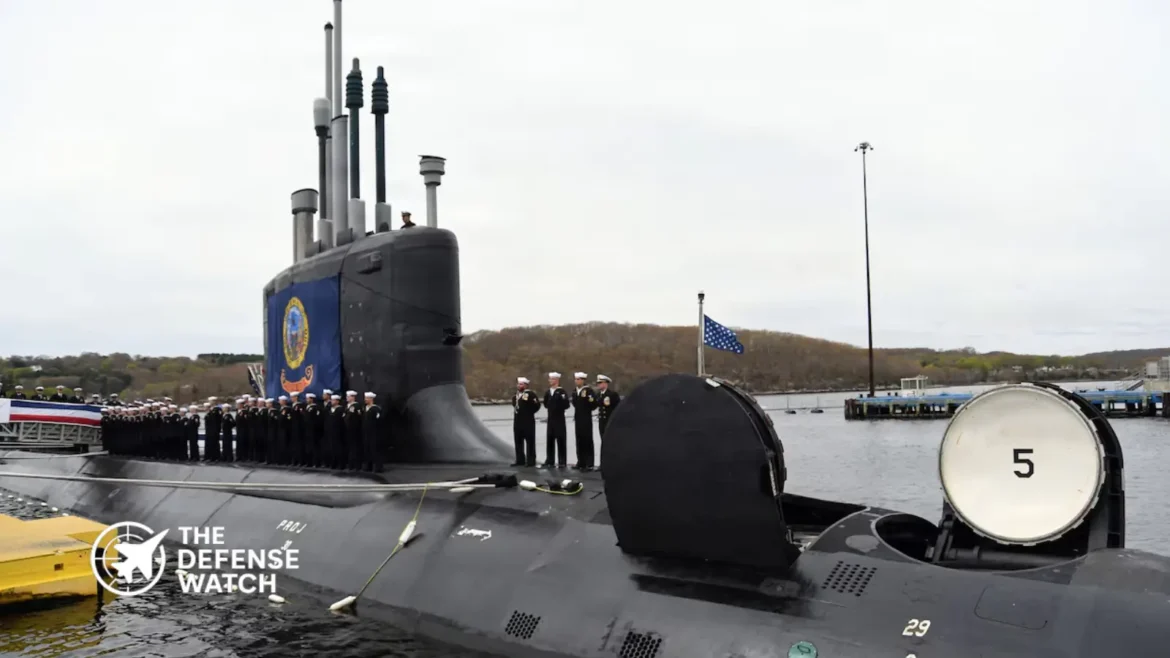
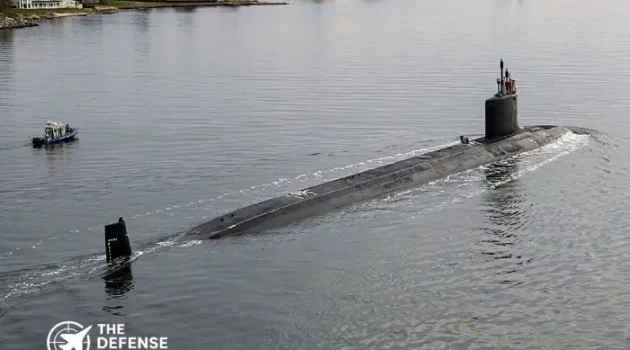
USS Idaho Officially Joins the Fleet
The USS Idaho submarine officially entered active U.S. Navy service during a commissioning ceremony at Naval Submarine Base New London in Groton, Connecticut, on April 25. The event marked the final step in a multi-year construction and testing process for one of America’s most important naval platforms.
USS Idaho (SSN 799) is the fifth U.S. Navy vessel to carry the name of the state of Idaho. Its predecessor was the battleship USS Idaho (BB-42), which earned seven battle stars during World War II.
- The U.S. Navy commissioned USS Idaho (SSN 799) on April 25, 2026, in Groton, Connecticut.
- USS Idaho is the 26th Virginia-class fast-attack submarine delivered to the Navy.
- The boat is the eighth submarine built to the advanced Block IV configuration.
- The submarine was jointly produced by General Dynamics Electric Boat and HII Newport News Shipbuilding.
- Virginia-class boats support anti-submarine warfare, intelligence collection, strike missions, and special operations.
The ship’s sponsor, Teresa Stackley, gave the traditional order to man our ship and bring her to life, after which the crew ceremonially boarded the submarine. Acting Secretary of the Navy Hung Cao formally placed the vessel into service.
Why USS Idaho Matters
The arrival of USS Idaho comes at a time when the United States is placing renewed emphasis on undersea deterrence and naval competition. Fast-attack submarines remain among the Navy’s most survivable and flexible assets, particularly in contested regions such as the Indo-Pacific and North Atlantic.
Virginia-class submarines are designed for multiple mission sets, including:
- Anti-submarine warfare
- Anti-surface warfare
- Intelligence, surveillance, and reconnaissance
- Land attack missions using cruise missiles
- Special operations support
That versatility gives commanders options short of deploying larger surface combatants or aircraft carriers. In modern conflict scenarios, submarines can often operate with lower visibility and greater persistence.
USS Idaho Specifications
USS Idaho is the 26th Virginia-class submarine and the eighth Block IV variant. According to the Navy, the submarine displaces about 7,800 tons, measures 377 feet long, and has a beam of 34 feet. It is powered by a nuclear reactor designed to last the planned service life of the vessel without refueling.
The Block IV design focuses heavily on reducing maintenance time and increasing deployment availability. That matters because submarine demand has consistently exceeded supply in several global theaters.
Industrial Base and Production Signal
USS Idaho was built through the long-running teaming arrangement between General Dynamics Electric Boat and HII Newport News Shipbuilding. The program remains central to sustaining the U.S. submarine industrial base while production also shifts toward the future Columbia-class ballistic missile submarine.
Commissioning another Virginia-class hull sends a wider signal that the Navy is trying to balance current readiness with long-term modernization, despite workforce and supply chain pressure across U.S. shipyards.
Strategic Outlook
The addition of USS Idaho strengthens a fleet that remains one of Washington’s most decisive military advantages. While surface fleets draw more public attention, submarines often carry the highest strategic value because of stealth, endurance, and strike reach.
As competition with China and Russia continues below the surface, new Virginia-class boats like USS Idaho are likely to remain in high demand for years ahead.
US Navy F/A-18 Block III Upgrade Program Marks Shift In Carrier Aviation Sustainment
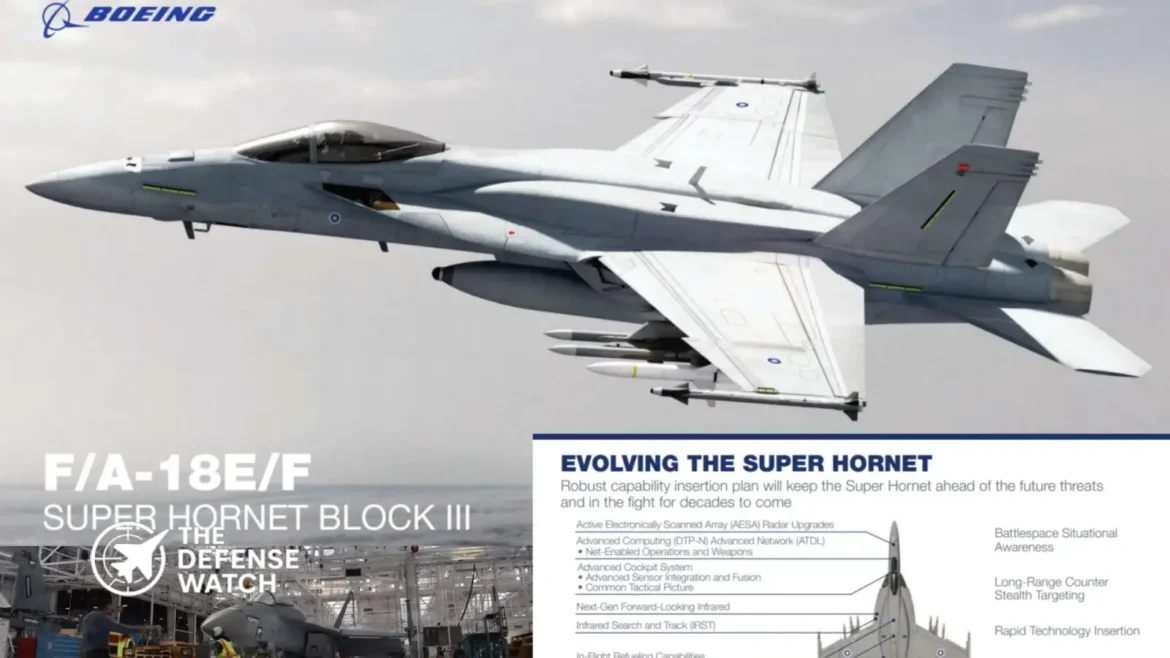
The US Navy F/A-18 Block III upgrade program has reached a key milestone with the completion of the first fully in house modernization of a Super Hornet aircraft. This step reflects a growing effort within naval aviation to strengthen sustainment capacity, shorten upgrade timelines, and maintain carrier strike readiness in an increasingly contested global environment.
At a time when naval forces are balancing high operational demand with aging airframes, the ability to conduct advanced upgrades internally is becoming a strategic advantage. It reduces dependence on external production lines and helps ensure that carrier air wings remain combat ready even during surge deployments.
- The US Navy has completed its first fully in house F A 18 Block III Super Hornet upgrade at a naval aviation maintenance facility.
- The effort supports a broader strategy to increase fleet readiness and reduce reliance on external contractor led upgrade lines.
- F A 18 Block III enhancements include improved cockpit systems, advanced networking, and extended service life structural improvements.
- The upgrade program is aligned with US Navy plans to sustain carrier air wing capability through the next decade.
- Officials say in house modification capability strengthens operational flexibility during high demand deployment cycles.
This development also highlights a broader modernization push across US naval aviation, where incremental upgrades are being used to extend platform relevance while next generation aircraft programs continue to mature.
In House Upgrade Capability Expands Naval Aviation Flexibility
The completion of the first US Navy F/A-18 Block III upgrade performed entirely within a Navy controlled facility represents more than a technical milestone. It signals a shift in how the service manages its fleet modernization pipeline.
Traditionally, major upgrades to the F/A-18 fleet have relied heavily on contractor led facilities and industrial partners such as Boeing. While those partnerships remain central, the introduction of in house capability gives the Navy more control over scheduling and throughput.
This is especially important for carrier strike groups, where aircraft availability directly impacts mission readiness. By internalizing part of the upgrade process, the Navy can better manage maintenance cycles and reduce downtime for deployed squadrons.
From an operational perspective, this flexibility helps address one of the most persistent challenges in naval aviation, balancing modernization with constant global deployments.
What The F/A-18 Block III Upgrade Brings To The Fleet
The F/A-18 Block III configuration is designed to keep the Super Hornet relevant well into the next decade. It introduces a range of improvements focused on survivability, situational awareness, and networked warfare capability.
Key enhancements typically associated with the Block III standard include:
Improved cockpit systems with a large area display for better pilot situational awareness
Advanced networking capabilities for integration into carrier strike group data links
Structural enhancements that extend service life by thousands of flight hours
Reduced radar signature improvements in selected configurations
Enhanced mission systems for multi domain operationsThese upgrades are not designed to transform the Super Hornet into a new aircraft. Instead, they extend the operational relevance of an already proven platform, ensuring it can continue operating alongside fifth generation assets such as the F 35C.
Strategic Context For Carrier Strike Readiness
The US Navy F/A-18 Block III upgrade effort comes at a time when carrier strike groups are operating in more contested maritime environments. Naval planners are increasingly focused on distributed operations, long range strike capability, and integration across air, sea, and space based sensors.
Within that framework, the Super Hornet remains the backbone of carrier air wings. Its versatility allows it to perform strike missions, air superiority roles, electronic warfare support, and reconnaissance tasks depending on mission configuration.
By upgrading the fleet through Block III enhancements, the Navy is effectively bridging the gap between legacy fourth generation aircraft and emerging next generation systems.
From an analysis standpoint, this approach reflects a pragmatic force structure strategy. Instead of waiting for full fleet replacement cycles, the Navy is investing in incremental upgrades that deliver immediate capability improvements.
Industrial And Sustainment Implications
The decision to execute the first in house F/A-18 Block III upgrade also carries implications for the US defense industrial base.
It suggests a gradual shift toward hybrid sustainment models where both government facilities and industry partners share responsibility for modernization work. This can improve resilience in the supply chain, especially during periods of high operational tempo or industrial bottlenecks.
It also reflects broader Pentagon priorities focused on readiness, depot level maintenance efficiency, and cost control across aging tactical aircraft fleets.
While contractor support remains essential for major structural and avionics upgrades, in house capability allows the Navy to absorb some workload internally, potentially accelerating delivery timelines for deployed squadrons.
Operational Impact On Carrier Air Wings
For carrier air wings, the F/A-18 Block III upgrade program directly translates into higher mission availability and improved combat effectiveness.
Aircraft that complete the upgrade cycle return with improved digital systems, better connectivity with carrier strike group networks, and extended service life margins. This helps squadrons maintain high readiness levels even during extended deployments.
It also reduces logistical strain, as fewer aircraft need to rotate through external modification lines at any given time.
In the long term, this approach supports sustained carrier presence across multiple theaters without degrading fleet readiness.
Analytical Perspective
The completion of the first in house F/A-18 Block III upgrade is not a radical shift in capability, but it is a meaningful evolution in sustainment strategy.
The US Navy is signaling that future readiness will depend not only on new platforms, but also on how efficiently existing fleets can be upgraded and maintained.
This is particularly relevant as peer and near peer competitors continue to expand their naval aviation and missile capabilities. Maintaining high sortie generation rates and aircraft availability will remain a core determinant of carrier strike group effectiveness.
From an E E A T standpoint, this development aligns with established Navy modernization patterns and reflects publicly documented sustainment goals for the Super Hornet fleet.

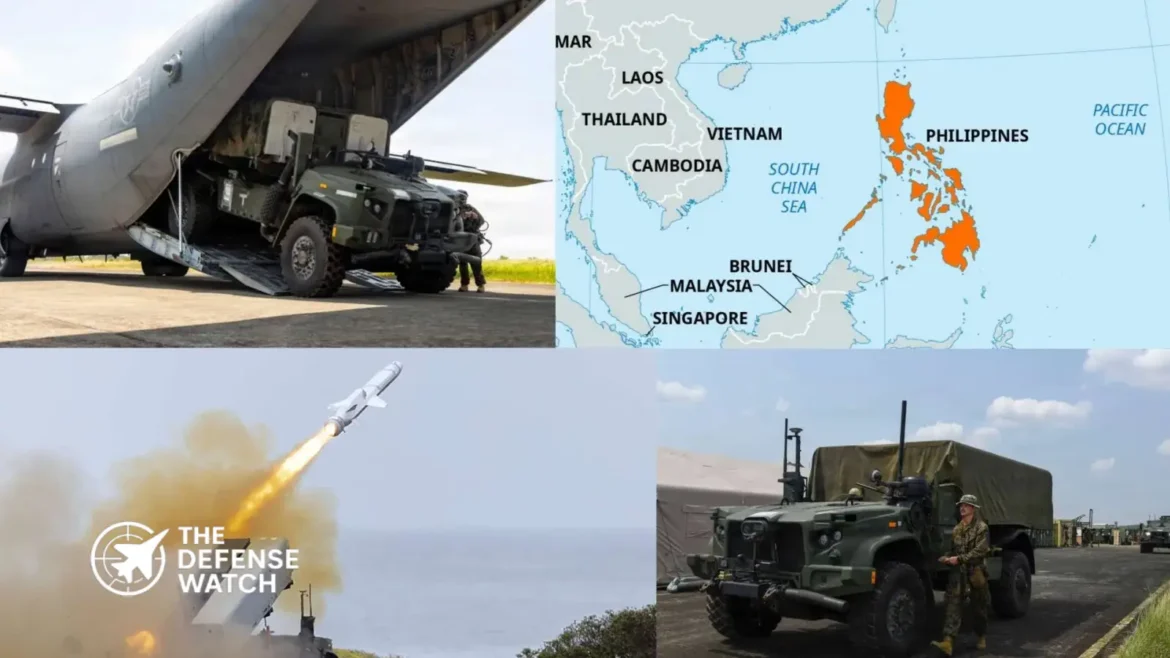
NMESIS coastal missile system Philippines deployment marks a notable shift in U.S. Indo-Pacific force posture, as Washington expands land based maritime strike capabilities closer to contested waters. According to reporting from Army Recognition, the system has been deployed to the Philippines to reinforce deterrence across the First Island Chain.
The deployment comes at a time of rising strategic competition in the Indo-Pacific, where the U.S. and its allies are increasingly focused on distributed lethality and mobile coastal defense systems. While official details remain limited, the move highlights growing emphasis on expeditionary anti-ship networks positioned across allied territory.
- The United States has deployed the NMESIS coastal anti-ship missile system to the Philippines under expanded Indo-Pacific defense cooperation.
- NMESIS is a mobile, unmanned launch platform armed with the Naval Strike Missile designed for long range maritime targeting.
- The deployment supports First Island Chain defense architecture aimed at strengthening deterrence in the South China Sea region.
- The system is operated by the U.S. Marine Corps as part of its Expeditionary Advanced Base Operations concept.
- The move aligns with broader U.S. efforts to enhance distributed maritime strike capability across allied Pacific territories.
U.S. expands distributed maritime strike footprint
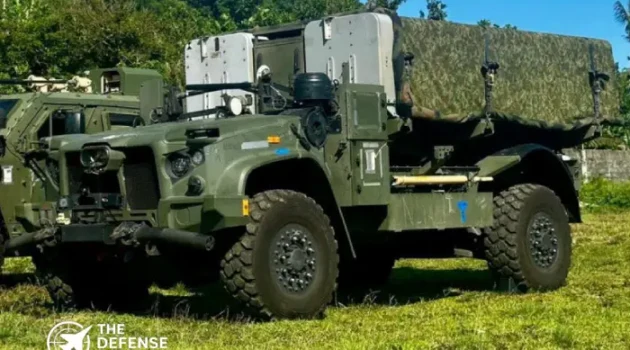
The NMESIS coastal missile system is a key component of the U.S. Marine Corps modernization strategy, built around Expeditionary Advanced Base Operations. The system uses an unmanned Joint Light Tactical Vehicle platform carrying two Naval Strike Missiles, enabling rapid deployment and reduced crew exposure.
NMESIS Coastal Defense System is designed to operate in austere environments, allowing small Marine units to establish temporary strike positions on islands or coastal zones. Its integration into the Philippines signals an operational step toward forward deployed, survivable anti ship networks.
At the core of the system is the Naval Strike Missile, a sea skimming precision weapon developed for long range maritime engagement. It uses autonomous target recognition and low observable flight profiles, making it suitable for contested littoral environments.
First Island Chain defense concept gains momentum
The NMESIS coastal missile system Philippines deployment is closely tied to the First Island Chain concept, a geographic arc that includes Japan, Taiwan, and the Philippines. This chain is widely viewed by defense planners as a critical buffer zone for maritime control in the Western Pacific.
From a strategic standpoint, the deployment reinforces the ability of U.S. forces and allies to deny access to key maritime corridors. Instead of relying solely on large naval platforms, the system distributes anti ship firepower across multiple land based nodes.
This approach complicates adversary targeting strategies. Mobile launch units can relocate quickly, reducing vulnerability and increasing survivability in a high intensity conflict scenario.
Analysis: why NMESIS matters in Indo-Pacific deterrence
The significance of the NMESIS coastal missile system Philippines deployment extends beyond hardware placement. It reflects a doctrinal shift in how the United States and its partners view maritime denial.
First, it reduces reliance on traditional carrier centered strike groups. While carrier strike groups remain central to U.S. power projection, distributed land based systems like NMESIS introduce additional layers of risk for any adversary operating near contested waters.
Second, it enhances allied integration. The Philippines, under the Enhanced Defense Cooperation Agreement framework, has become a key logistics and operational access point for U.S. forces. Deploying NMESIS into this environment strengthens joint operational familiarity and improves combined deterrence posture.
Third, it signals a broader scaling of expeditionary missile forces. The U.S. Marine Corps is transitioning toward lighter, more mobile units capable of operating across dispersed island chains. NMESIS fits directly into this model by providing anti ship capability without requiring large infrastructure.
However, there are operational constraints. NMESIS relies on targeting data from external sensors such as maritime patrol aircraft, satellites, and partner nation surveillance networks. Its effectiveness depends heavily on integrated command and control systems. In a contested electromagnetic environment, maintaining targeting continuity could be a challenge.
Regional implications for Southeast Asia
The deployment is likely to be closely monitored by regional actors, particularly as South China Sea tensions continue to shape military planning.
For the Philippines, hosting advanced missile systems represents both a capability boost and a strategic signal. It reinforces Manila’s role as a frontline state in regional security dynamics while increasing interoperability with U.S. forces.
For the broader region, the presence of NMESIS contributes to a growing lattice of land based anti ship systems across allied territories. This networked approach is becoming a defining feature of Indo-Pacific defense planning.
Operational impact and future outlook
Looking ahead, the NMESIS coastal missile system Philippines deployment may represent an early phase of broader regional integration. Additional deployments to allied islands in the Western Pacific could follow as part of distributed maritime operations.
If scaled, the system could create overlapping anti ship coverage zones across key maritime approaches. This would significantly increase the complexity of naval planning for any potential adversary operating in the region.
At the same time, sustainability will be a key factor. Mobile missile units require secure logistics, maintenance cycles, and protected communications infrastructure. Long term effectiveness will depend on how well these support systems are developed across partner nations.
Enhanced P-8A Poseidon Reaches Operational Milestone
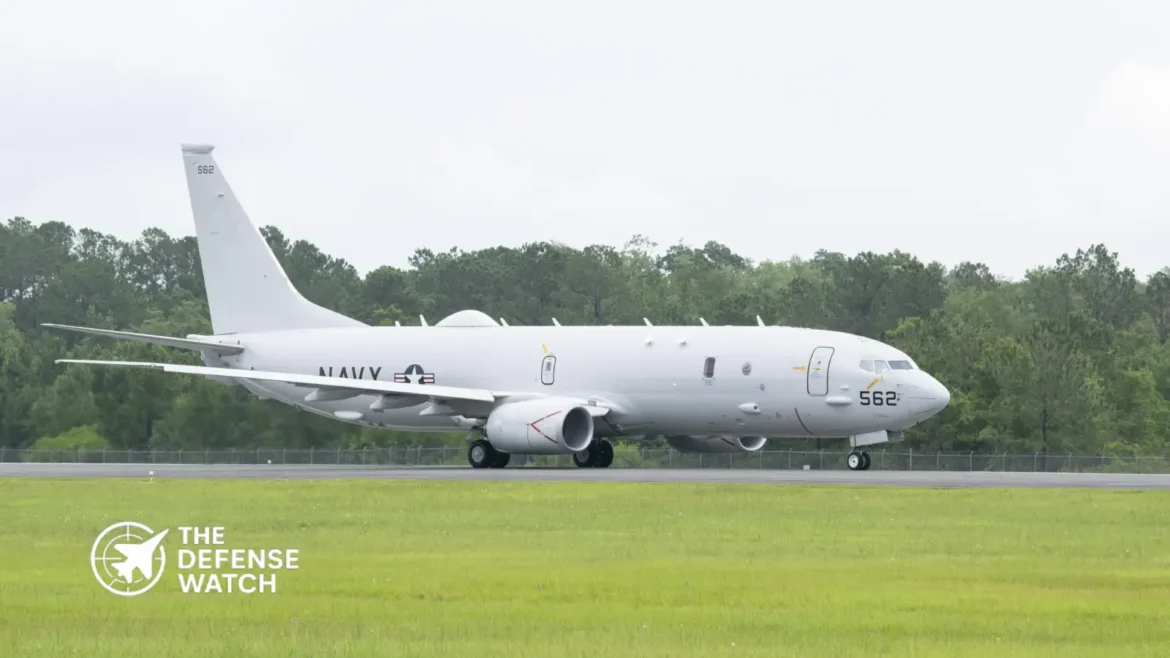
The Enhanced P-8A Poseidon has officially entered operational service after the U.S. Navy declared Initial Operational Capability for the Increment 3 Block 2 configuration, marking a major step in maritime patrol aircraft modernization. According to Naval Air Systems Command, the milestone followed successful initial operational testing supported by Air Test and Evaluation Squadron One and program office PMA-290.
- The U.S. Navy has declared Initial Operational Capability for the upgraded P-8A Poseidon Increment 3 Block 2 aircraft.
- The upgrade adds new avionics, sensors, antennas, radome changes, racks, and internal wiring.
- The Enhanced P-8A Poseidon supports anti-submarine warfare, anti-surface warfare, ISR, and targeting missions.
- The milestone follows operational testing led by Air Test and Evaluation Squadron One.
- The Navy says the modernization keeps the Poseidon relevant for future high-end maritime conflict.
The decision confirms the upgraded aircraft is ready for fleet use and capable of supporting frontline missions. For the U.S. Navy, this matters because the P-8A fleet is central to long-range surveillance, anti-submarine warfare, and maritime strike operations in the Pacific, Atlantic, and Middle East.
What Changed In The New P-8A Poseidon
The Increment 3 Block 2 package introduces substantial improvements across the airframe and mission systems. NAVAIR said the aircraft now includes upgraded racks, new antennas, revised radome structures, added sensors, and refreshed wiring architecture.
While these may sound technical, they directly affect battlefield performance. Better onboard processing and improved sensor integration can shorten detection timelines, improve crew awareness, and support faster targeting decisions.
That is increasingly important in an era where submarines are quieter, surface fleets are more networked, and maritime surveillance zones are expanding.
Why The Upgrade Matters Now
The timing of this declaration is significant. The U.S. military is placing renewed focus on undersea competition, especially in the Indo-Pacific where Chinese submarine activity and long-range naval operations continue to expand. Russia also remains an active submarine operator in the North Atlantic and Arctic.
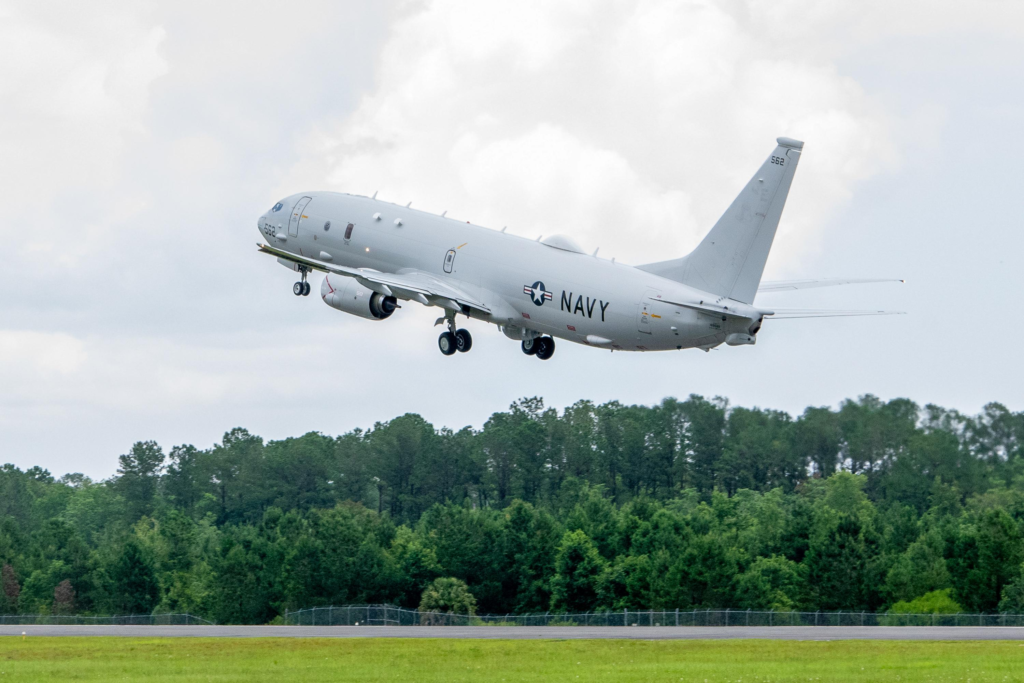
The Enhanced P-8A Poseidon gives the Navy a faster way to strengthen existing squadrons without waiting for an all-new aircraft platform. Upgrading proven fleets is often cheaper, quicker, and lower risk than launching replacement programs.
That approach mirrors broader Pentagon procurement trends, where survivability, networking, and sensor modernization are often prioritized over entirely new airframes.
Role Of The P-8A In Future Naval Operations
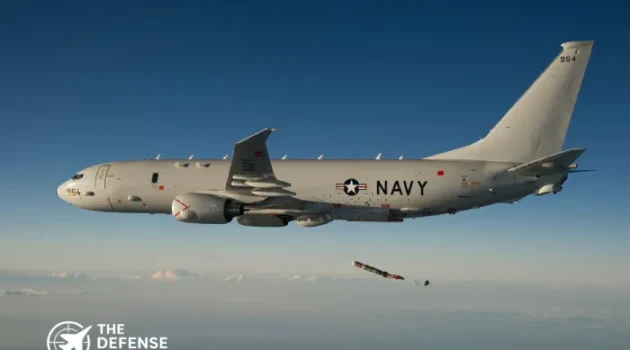
Built by Boeing, the P-8A Poseidon is based on the 737 platform but heavily modified for military missions. It performs anti-submarine warfare, anti-surface warfare, intelligence gathering, and search missions. The aircraft can deploy sonobuoys, carry torpedoes, and integrate with other naval assets such as the MQ-4C Triton unmanned system.
Its range, endurance, and jet speed allow commanders to move surveillance assets rapidly across large ocean areas, a key advantage during crises.
Analysis: A Practical Upgrade With Strategic Value
This is not a flashy next-generation reveal. It is something more useful, operational readiness for an aircraft already trusted by the fleet.
The Navy appears focused on ensuring current forces stay effective through the 2030s rather than accepting capability gaps while waiting for future programs. That makes the Enhanced P-8A Poseidon a practical force multiplier.
With anti-submarine warfare once again a priority mission, the upgraded Poseidon is likely to remain one of the Navy’s most valuable aviation assets.
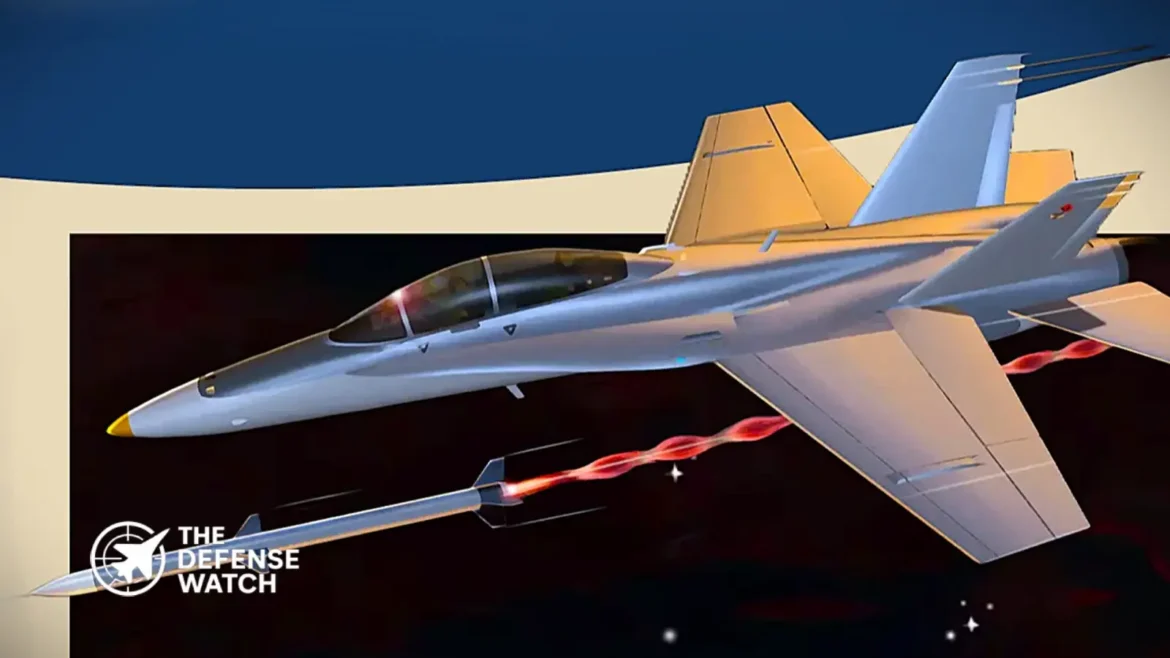
- The U.S. Navy awarded California startup :contentReference[oaicite:0]{index=0} a $105 million contract tied to Blackbeard missile integration on F/A-18 aircraft.
- Blackbeard is designed to exceed Mach 5 and support carrier-based long-range strike missions.
- The program includes flight testing, software and hardware integration, and naval airworthiness certification.
- Pentagon budget documents indicate plans for 4,500 air-launched hypersonic missiles for F/A-18E/F aircraft over five years.
- The move reflects growing U.S. focus on mobile strike options in the Indo-Pacific.
U.S. Navy Blackbeard Hypersonic Missile Program Gains Momentum
The Blackbeard hypersonic missile is moving closer to operational use as the U.S. Navy accelerates integration of the weapon onto Boeing F/A-18E/F Super Hornet aircraft. The effort follows a $105 million award to Castelion to complete the work needed for fleet use, including testing and certification.
The decision matters because it gives the Navy a potential way to place hypersonic strike weapons aboard aircraft carriers rather than relying only on fixed land-based launch systems. A carrier can reposition across wide ocean areas, creating a less predictable launch point and complicating enemy planning.
Why The F/A-18 Platform Matters
Using the Super Hornet offers a faster path to fielding. The aircraft already operates from U.S. carriers, has trained crews, maintenance pipelines, and established weapons handling procedures. That means the Navy may be able to insert new capability without waiting for a future aircraft platform.
For Blackbeard, however, integration is more than attaching a missile to a jet. Carrier weapons must survive catapult launches, arrested landings, vibration, salt exposure, storage constraints, and deck handling procedures. Those demands often delay otherwise promising programs.
Strategic Meaning In The Indo-Pacific
Much of the interest around the Blackbeard hypersonic missile centers on a possible Indo-Pacific scenario. Long distances, dense missile defenses, and mobile maritime targets place a premium on speed and reach.
A weapon launched from an F/A-18 operating from a carrier strike group could threaten radar sites, missile batteries, command nodes, or naval targets faster than conventional cruise missiles. Even limited deployment could force adversaries to dedicate more resources to defense and dispersal.
That strategic pressure can matter as much as actual missile numbers. Deterrence often depends on uncertainty.
Affordability Could Be The Real Breakthrough
Many hypersonic programs have faced criticism for high cost and low production volume. Castelion has publicly emphasized rapid manufacturing and lower-cost components. Reuters reported Pentagon planning documents show an average unit cost near $384,000 for planned buys, unusually low for this class of weapon.
If accurate, that could be the program’s biggest advantage. A missile that can be bought in large numbers changes operational planning far more than a boutique system produced in small batches.
What Comes Next
The next milestones are flight tests, safety certification, and carrier suitability reviews. If successful, the Navy could begin early fielding as soon as next year, according to reporting.
Blackbeard is still an emerging program, but it signals a broader Pentagon shift toward practical, scalable hypersonic weapons that can be deployed on existing combat platforms.
Malaysia K-SAAM Missiles To Strengthen New Corvette Fleet
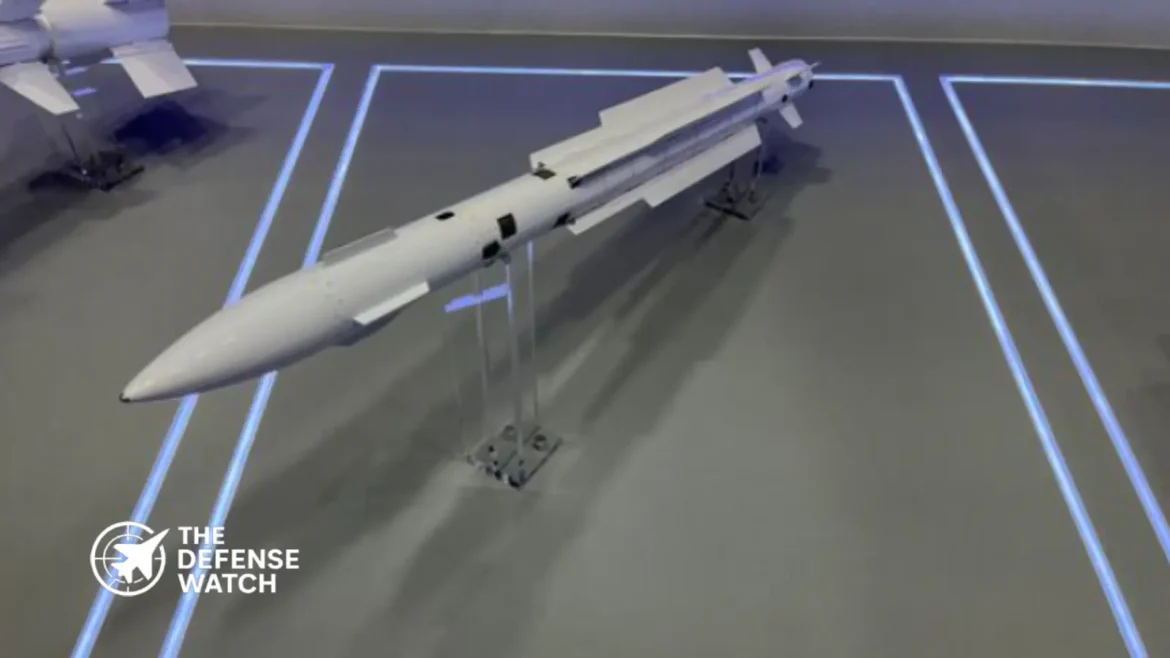
Malaysia K-SAAM missiles are set to become a key part of the Royal Malaysian Navy’s future fleet after Kuala Lumpur moved to acquire South Korean short-range naval air defense missiles for its Littoral Mission Ship (LMS) Batch 2 program.
According to Malaysian media reports released during Defence Services Asia (DSA) 2026, the government signed procurement agreements covering 48 surface-to-air missiles supplied by South Korea’s LIG Nex1, worth RM372.69 million. The missiles are intended for three LMS Batch 2 vessels now under construction.
- Malaysia signed contracts for 48 South Korean K-SAAM surface-to-air missiles for LMS Batch 2 ships.
- The missile package is reportedly valued at RM372.69 million during DSA 2026.
- The missiles will arm three new Royal Malaysian Navy Littoral Mission Ship Batch 2 corvettes.
- LMS Batch 2 vessels are based on Türkiye’s Ada-class corvette design.
- The move supports Malaysia’s response to rising maritime security pressure in the South China Sea.
The purchase marks a notable step in Malaysia’s long-running naval recapitalization effort, aimed at replacing lightly armed patrol ships with more capable multi-role combatants.
What Is K-SAAM And Why It Matters
K-SAAM is a vertically launched short-range naval air defense missile developed by South Korea. It is designed to intercept aircraft, helicopters, anti-ship missiles, and some unmanned threats at close to medium ranges.
For Malaysia, integrating K-SAAM into the LMS Batch 2 class adds an area previously lacking in smaller regional patrol ships, credible point air defense.
That matters because many Southeast Asian fleets still operate vessels with limited missile defense capability. By contrast, ships equipped with modern vertical launch systems can remain survivable in contested waters and operate farther from shore.
This gives Malaysia more operational flexibility in areas such as the South China Sea, where naval and coast guard encounters have become more frequent.
LMS Batch 2 Brings A Major Capability Shift
Malaysia selected Türkiye’s STM to build three LMS Batch 2 ships based on the Ada-class corvette design. The first vessel was launched in Istanbul earlier this month, with deliveries expected in 2027.
Open-source defense reporting indicates the ships will carry:
- 16-cell vertical launch system for K-SAAM
- Anti-ship missiles
- 76mm main naval gun
- Modern radar suite
- Helicopter deck and hangar
- Multi-mission combat management system
Compared with Malaysia’s earlier LMS Batch 1 vessels, which were lightly armed, the new class represents a much stronger combat platform.
Strategic Analysis: Why This Procurement Matters Now
The Malaysia K-SAAM missiles deal is more than a routine weapons buy. It reflects three broader trends.
First, Southeast Asian navies are seeking survivable warships rather than simple patrol craft.
Second, Malaysia is diversifying suppliers by sourcing hulls from Türkiye and missiles from South Korea, reducing dependence on any single defense partner.
Third, Kuala Lumpur appears focused on credible deterrence without entering an expensive arms race. Corvette-sized ships armed with modern missiles offer a lower-cost way to improve maritime posture.
For Washington and allied observers, the move also highlights how middle-power states are building indigenous and mixed-source fleets tailored to regional threats.
Outlook
If deliveries remain on schedule, the LMS Batch 2 fleet could become the Royal Malaysian Navy’s most modern surface combatants by the end of 2027. Their combination of anti-ship and air defense weapons would significantly improve Malaysia’s ability to protect sea lanes, patrol disputed waters, and contribute to coalition maritime operations.
The Malaysia K-SAAM missiles package may appear modest in scale, but operationally it could reshape the navy’s frontline readiness.
Lockheed Martin Outlines Maritime Electronic Warfare Vision As Navy Faces Accelerating Electromagnetic Threats
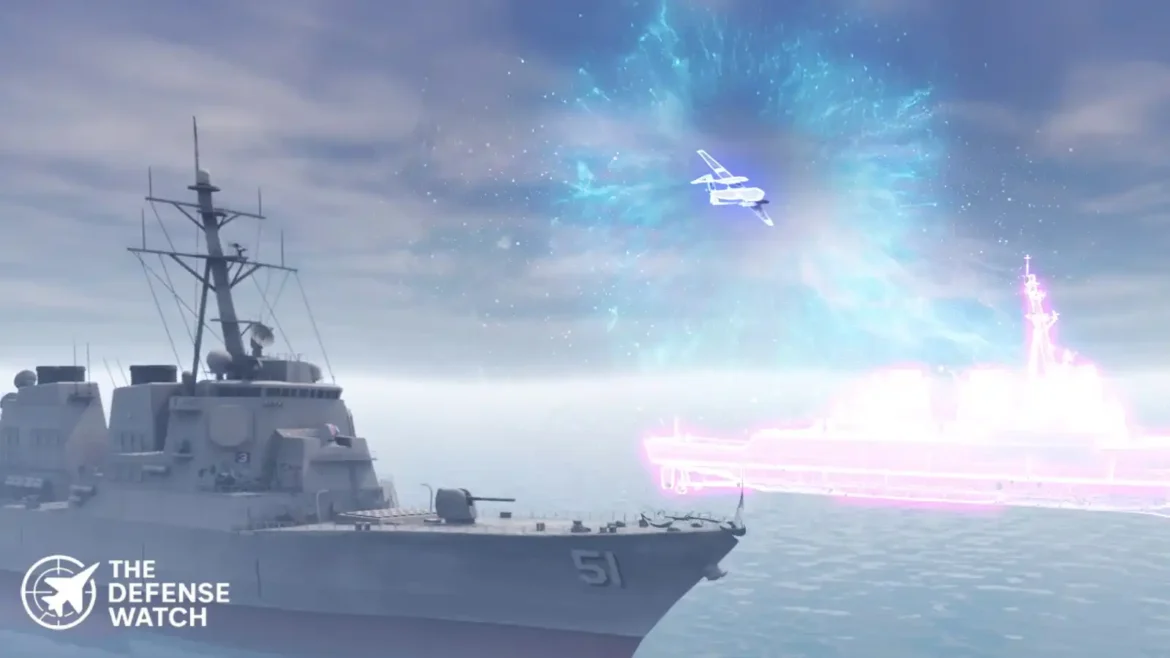
Maritime electronic warfare has moved from a supporting capability to a central pillar of US Navy fleet defense strategy, and Lockheed Martin is positioning itself at the forefront of that transformation. In a detailed technical feature published April 21, 2026, the defense contractor laid out its integrated approach to electromagnetic spectrum dominance aboard naval surface combatants — covering current fielded systems, next-generation development programs, and the doctrinal case for EW as the fleet’s primary non-kinetic shield.
- Lockheed Martin’s AN/SLQ-32(V)6 is described as the world’s most advanced naval electronic support system, forming a core layer of the Aegis Combat System’s real-time threat picture.
- The company is actively developing the Scaled Onboard Electronic Attack (SOEA) system — a next-generation, low-SWaP soft-kill terminal defense solution built on open architecture.
- Lockheed Martin argues EW enables surface combatants to conserve kinetic munitions, a lesson validated by real-world consumption rates observed in the Ukraine conflict.
- Lockheed Martin brings over 60 years of EW development history, integrating AI-enabled, software-defined EW into its open-architecture Surface Electronic Warfare Improvement Program (SEWIP) framework.
- The company positions maritime EW not as a last resort, but as the fleet’s first and most cost-effective defensive layer in future contested operations.
The Big Picture: A More Contested Electromagnetic Environment
Adversary investment in long-range sensors, anti-ship missiles, and multi-domain coordination has fundamentally altered the threat calculus for US surface forces. Peer competitors including China and Russia have developed sophisticated radio frequency (RF)-guided weapons and targeting systems specifically designed to compress the engagement timelines that traditional shipboard defenses rely on.
The US Navy’s response has centered on layered defense — combining kinetic interceptors, directed energy, and electronic warfare into a coherent, integrated system. Within that construct, EW carries a weight it has not historically held: the ability to deny an adversary’s entire kill chain without expending a single missile.
Lockheed Martin frames EW as the “connective tissue across the kill chain, from deciphering the environment to denying an adversary’s engagement and defeating threats.” That framing reflects a doctrine that has quietly gained momentum inside the Pentagon — one that treats spectrum control as a force multiplier, not merely a defensive reflex.
What’s Happening: Systems, Programs, and Active Development
Lockheed Martin’s current flagship naval EW system is the AN/SLQ-32(V)6 and its scaled derivative, the AN/SLQ-32C(V)6, which the company characterizes as the world’s most advanced electronic support systems for naval applications. The AN/SLQ-32(V)6 provides early threat indication and contributes to Aegis Combat System’s real-time battlespace picture. lockheedmartin
Beyond the fielded AN/SLQ-32 family, Lockheed is actively developing the Scaled Onboard Electronic Attack (SOEA) system. SOEA is described as an affordable, rapidly fieldable next-generation electronic attack system that leverages open-architecture engineering and low size, weight, and power (SWaP) design to support onboard soft-kill terminal defense.
SOEA is intended to advance the Surface Electronic Warfare Improvement Program (SEWIP) by integrating the advanced electronic support capability of the SLQ-32(V)6 with other shipboard systems to deliver onboard electronic attack capabilities.
The company frames the program as a direct bridge between legacy electronic support systems and a new generation of integrated attack-and-defense functions — a significant doctrinal and technical step for surface combatants.
Why It Matters: EW as Munitions Conservation
One of the more operationally significant arguments Lockheed Martin advances is the link between effective EW and kinetic munitions management. The company argues that by controlling the electromagnetic spectrum, naval forces deny adversaries the ability to employ systems across the entire kill chain — and that this is particularly important in conflicts where munition availability is limited, citing Ukraine as a recent example.
This is not a theoretical concern. The conflict in Ukraine has demonstrated at scale that even well-supplied militaries can face critical shortages in high-intensity combat environments. Surface combatants carry finite missile loads, and the logistics of replenishment at sea in contested waters are formidable. An EW capability that forces a threat into a soft-kill defeat before a ship must expend a Standard Missile or ESSM round represents a measurable tactical and logistical advantage.
The cost asymmetry also matters strategically. A reactive RF countermeasure that defeats an inbound missile costs far less than the interceptor it replaces. At fleet scale, across multiple simultaneous engagements, that arithmetic carries significant weight in long-duration conflict scenarios.
Open Architecture: The Strategic Differentiator
The most forward-looking element of Lockheed Martin’s maritime EW strategy is its emphasis on open architecture. Open-architecture EW systems enable navies to integrate new sensors, deploy updated countermeasure techniques, and adapt to shifting missions — effectively allowing the capability to evolve at the pace of software rather than shipbuilding.
This matters enormously in the current threat environment. Traditional closed-system EW platforms required lengthy and expensive upgrade cycles to address new emitter characteristics or weapons guidance modes. An open-architecture framework allows operators to push software-defined updates — new jamming techniques, updated threat libraries, revised countermeasure logic — in timelines measured in weeks rather than years.
Lockheed Martin describes open architecture as creating an ecosystem that encourages third-party developers to contribute and innovate, enabling standardization of interfaces and data formats across system components.
For the US Navy, this has tangible acquisition implications. Open-architecture EW platforms reduce vendor lock, lower lifecycle costs, and create space for rapid technology insertion from the commercial and academic sectors — an approach that aligns with the Pentagon’s broader defense modernization priorities under the National Defense Industrial Strategy.
Strategic Implications: AI Integration and the Multi-Domain Fight
Lockheed Martin is integrating artificial intelligence into its EW systems, with AI-enabled advanced, distributed, and cooperative EW platforms designed to support a range of missions and operations across all domains and platforms.
AI-driven EW represents a qualitative shift in how electronic warfare is conducted. Traditional EW systems rely on pre-programmed threat libraries and human operator decisions. AI-enabled systems can autonomously identify novel emitter signatures, correlate them against multi-source intelligence, and generate countermeasure responses in milliseconds — well within the engagement timelines that advanced anti-ship missiles impose.
The integration of AI also enables cooperative EW — where multiple shipboard or airborne platforms share threat data and coordinate spectrum management in real time. In a distributed maritime operations concept, which the Navy has been developing under its Distributed Maritime Operations (DMO) doctrine, this kind of machine-speed coordination is essential.
Competitor View: How Adversaries Will Read This Signal
China’s People’s Liberation Army Navy (PLAN) has invested substantially in anti-ship missile systems, over-the-horizon radar, and electromagnetic warfare capabilities. The PLAN’s DF-21D and DF-26 carrier-killer missiles depend on a functioning electromagnetic kill chain — from detection satellite or OTH radar through to terminal guidance. A US fleet with robust, layered EW capable of disrupting that chain at multiple nodes fundamentally challenges China’s anti-access/area-denial (A2/AD) strategy.
Russia’s naval doctrine similarly relies on coordinated missile salvos guided by radar and datalink. Advances in US shipborne electronic attack that can deny or degrade those guidance links would reduce the effectiveness of massed anti-ship strike packages — a core element of Russian maritime warfare doctrine.
Both adversaries will interpret accelerated US investment in maritime EW as a direct counter to their most valued naval strike capabilities, likely accelerating their own investment in guidance redundancy, frequency agility, and electronic counter-countermeasures.
What To Watch Next: SEWIP and SOEA Procurement Timelines
The SEWIP program has been the Navy’s primary vehicle for modernizing shipboard EW since the mid-2000s. SEWIP Block 2 delivered electronic support upgrades; SEWIP Block 3 has focused on expanding electronic attack capabilities. SOEA represents what Lockheed Martin positions as the next logical evolution of that roadmap.
Acquisition watchers should track whether SOEA receives a formal Navy program of record designation, which would signal transition from development to procurement. Given the Navy’s stated emphasis on non-kinetic fleet defense and the munitions conservation arguments Lockheed has publicly advanced, a formal SOEA contract award in the near term would be consistent with current service priorities.
EW training and simulation investment is also worth monitoring. Lockheed Martin is investing in more effective and efficient EW training and simulation tools to provide naval operators with realistic and immersive training environments, enhancing readiness to respond to emerging threats. Simulation-driven readiness investments often precede large-scale fielding programs, suggesting operational deployment planning may be further advanced than publicly disclosed.
Capability Gap: What This Addresses
The existing gap in US Navy surface EW is the integration seam between electronic support — knowing a threat exists — and electronic attack — actively denying or defeating it. The AN/SLQ-32 family excels at the former. SOEA is explicitly designed to close the latter.
A secondary gap is SWaP-constrained platforms: smaller surface combatants, littoral combat ships, and future unmanned surface vessels that cannot host legacy EW systems. SOEA’s low-SWaP architecture directly addresses that constraint, suggesting the system has applicability well beyond large-deck surface combatants.
Realistic limitations remain. Software-defined EW systems are only as effective as their threat libraries and update cycles. In a conflict where adversaries deploy previously unseen emitter characteristics, even advanced AI-enabled systems face detection and response latency. Redundancy, cross-domain cueing, and human oversight of autonomous EW decisions remain necessary safeguards.
The Bottom Line
As adversary missiles grow faster and smarter, the US Navy’s best and most cost-effective answer may not be another interceptor — it may be mastery of the electromagnetic spectrum, and Lockheed Martin is making a direct, technically credible case that it can deliver that edge.
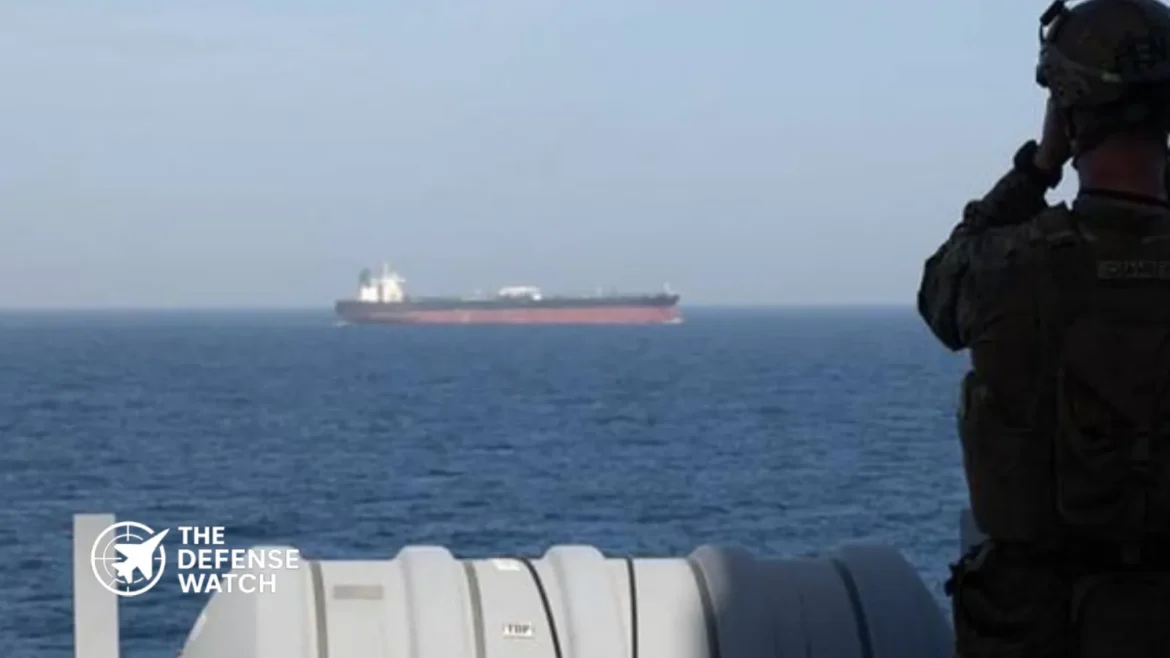
Iran Seizes Ships In Strait Of Hormuz After Trump Halts Attacks
Iran seizes ships in the Strait of Hormuz at a moment of renewed uncertainty in the Gulf, after U.S. President Donald Trump announced an indefinite pause in attacks on Iranian targets while keeping maritime pressure in place.
Iran’s semi-official Tasnim news agency reported Wednesday that the Islamic Revolutionary Guard Corps (IRGC) seized two vessels for alleged maritime violations and escorted them to Iranian shores. The identities and flags of the ships were not immediately disclosed.
- Iran seized two ships in the Strait of Hormuz on Wednesday, citing maritime violations.
- It marked Tehran’s first vessel seizure since conflict began in late February.
- President Donald Trump said the U.S. would indefinitely pause attacks on Iran.
- Washington will continue naval pressure and maritime interdictions, according to Trump.
- The Strait of Hormuz remains one of the world’s most critical oil transit chokepoints.
The move came hours after Trump said the United States had agreed to a request from Pakistani mediators to suspend planned attacks on Iran until Tehran’s leadership could present what he described as a unified proposal for discussions.
However, Trump also said the U.S. Navy would continue blocking Iranian trade routes by sea, signaling that Washington’s military pressure campaign has shifted rather than ended.
Why The Strait Of Hormuz Matters
The Strait of Hormuz is among the world’s most strategically important waterways. Roughly one fifth of global petroleum consumption passes through the narrow channel connecting the Persian Gulf to the Arabian Sea.
Any disruption in Hormuz can quickly affect:
- Global oil prices
- Commercial shipping insurance rates
- Naval force posture in the Gulf
- Regional military escalation risks
Iran has long used its geographic position near Hormuz as leverage during confrontations with the United States and its allies.
Iran’s Message To Shipping And Navies
Tasnim also reported that the Revolutionary Guards warned any disruption to order or safety in the strait would cross a red line.
That language suggests Tehran is attempting to frame itself as the security enforcer of the waterway while simultaneously detaining vessels. This dual-track messaging is common in maritime pressure campaigns, where states seek legal justification while signaling military resolve.
Earlier Wednesday, a British maritime security agency said three ships had come under fire in the region, underscoring how rapidly risks can spread once tensions rise.
U.S. Maritime Pressure Continues
Although Trump halted attacks, Washington appears committed to maritime interdiction operations.
According to the provided report:
- A U.S. action seized an Iranian cargo vessel on Saturday
- American forces boarded a large Iranian oil tanker Tuesday in the Indian Ocean
Those actions indicate the U.S. Navy and partner forces are focused on limiting Iran’s trade access and oil revenue rather than conducting immediate strike operations.
From a military standpoint, this can sustain pressure with lower escalation risk than direct airstrikes, though it still carries serious danger if Iranian naval forces retaliate.
Strategic Analysis: Pause In Strikes, Not A Pause In Conflict
The current situation points to a tactical pause rather than a durable ceasefire.
Three indicators support that view:
- Iran continues coercive maritime action through ship seizures.
- The U.S. continues interdictions at sea.
- No formal negotiations are underway despite mediation efforts.
That means the military contest has shifted into the maritime domain, where commercial vessels often become pressure points.
For defense planners, Hormuz now remains a live flashpoint requiring close monitoring of:
- IRGC Navy patrol activity
- U.S. carrier and destroyer deployments
- Commercial rerouting trends
- Energy market reactions
Outlook
If diplomacy fails to restart soon, further vessel detentions, drone surveillance encounters, and naval shadowing operations are likely. Even without missile strikes, Gulf tensions can escalate quickly through miscalculation at sea.
For now, the seizure of two ships shows that Iran seizes ships in Strait of Hormuz remains more than a headline. It is a warning that one of the world’s most vital maritime corridors is again under stress.
Ukraine Minehunting Ships Could Join Hormuz Security Mission
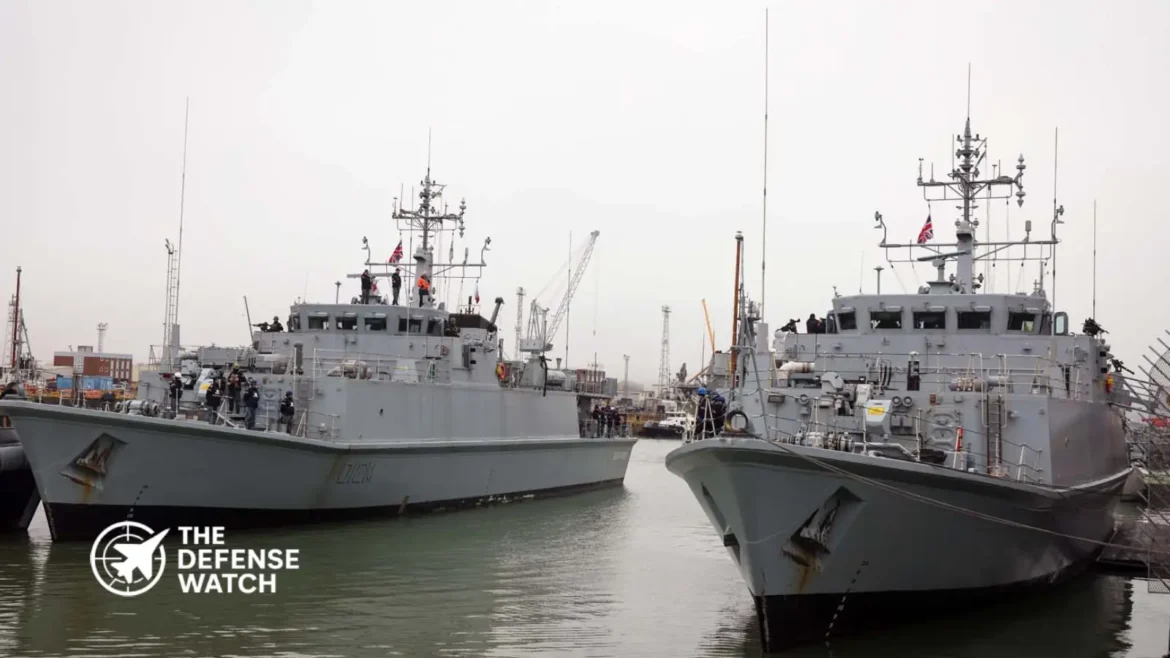
Ukraine minehunting ships may soon play a role far from the Black Sea, with Kyiv reportedly prepared to send British-built minehunters to support a future multinational mission in the Strait of Hormuz. The proposed effort is being led by Britain and France and would focus on protecting commercial shipping and clearing naval mines once active combat conditions ease.
- Ukraine could offer up to four minehunting vessels currently based in Portsmouth for a future Hormuz security mission.
- The proposed operation is being coordinated by Britain and France to restore safe commercial shipping.
- Two of the vessels were originally transferred from the United Kingdom, with two more from Belgium and the Netherlands.
- Deployment discussions remain conditional on reduced fighting between the United States and Iran.
- Mine warfare capability has become central to reopening the Strait of Hormuz.
The development reflects how Ukraine is increasingly positioning itself not only as a recipient of Western military aid, but also as a contributor to wider security operations. That shift carries political and strategic value as Kyiv seeks to maintain close defense ties with European allies.
Why The Strait Of Hormuz Matters
The Strait of Hormuz remains one of the most important maritime chokepoints in the world. Roughly one fifth of global oil and gas shipments typically transit the narrow waterway. Any disruption quickly affects energy markets, shipping insurance rates, and naval force posture across the Middle East.
Recent tensions involving Iran and the United States have increased fears that mines, drone attacks, or missile threats could halt traffic again. That has pushed allied governments to examine specialized mine countermeasure fleets rather than relying only on larger surface combatants.
The Ships Ukraine Could Send
Reports indicate up to four minehunters connected to Ukraine are currently in Portsmouth. Two were previously transferred from the United Kingdom, while two others came from Belgium and the Netherlands. Because wartime restrictions limited their movement into the Black Sea, the vessels remained outside the theater and available for alternative use.
These vessels are particularly relevant because minehunting requires specialized hull designs, sonar systems, remotely operated vehicles, and explosive ordnance disposal teams. Destroyers and frigates are not optimized for that mission.
Why This Matters Strategically
If Ukraine contributes ships, it would send several signals at once.
First, it would demonstrate that Kyiv can provide niche military capability despite being engaged in a major war with Russia.
Second, it would reinforce the growing European role in maritime security at a time when many allies want to show burden-sharing.
Third, it would highlight the value of older Western mine warfare fleets that still remain highly relevant in modern conflict.
Mine threats are relatively low cost to deploy but expensive and slow to remove. That imbalance gives naval mines strategic power far beyond their price.
Britain And France Driving Planning
British and French officials have been coordinating multinational talks on freedom of navigation and possible post-conflict maritime security arrangements. Officials have described any future mission as defensive and focused on commercial traffic rather than offensive combat operations.
That language is important. Many governments remain cautious about direct escalation in the Gulf, but are more willing to support defensive escort and mine-clearing tasks.
Operational Challenges Ahead
Even if approved, deployment would not be simple.
Mine clearance is slow, deliberate work. Each contact must be detected, identified, and neutralized safely. Weather, traffic density, shallow waters, and hostile drone or missile threats all complicate the mission. Reuters recently noted that clearing even limited lanes could take weeks depending on the density and type of mines used.
That means any coalition force would likely combine crewed vessels, unmanned surface craft, underwater drones, helicopters, and surveillance aircraft.
Bottom Line
The possible deployment of Ukraine minehunting ships to the Strait of Hormuz shows how naval mine warfare has re-emerged as a major strategic issue in 2026. It also underlines Ukraine’s effort to convert wartime experience into broader geopolitical influence.
For Britain and France, adding Ukrainian vessels would bring useful capacity. For Kyiv, it could strengthen alliances at a critical moment.
UK SRV-F Mk3 Submarine Rescue Vehicle Highlights Growing Naval Safety Focus
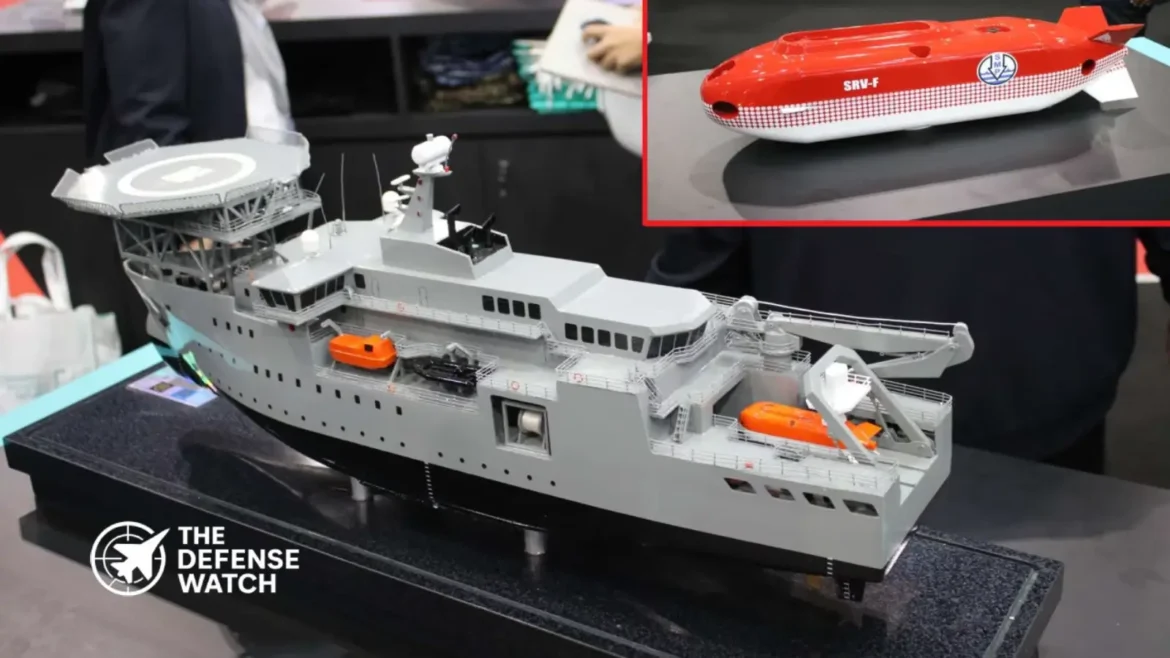
The SRV-F Mk3 submarine rescue vehicle reflects a growing push among global navies to strengthen undersea rescue readiness as submarine fleets expand across the Indo-Pacific and Europe. Displayed by the United Kingdom at DSA 2026, the system is designed to recover up to 50 trapped crew members in one dive, a major operational benchmark for emergency submarine rescue missions.
- The UK presented the SRV-F Mk3 submarine rescue vehicle during DSA 2026.
- The system is designed to recover up to 50 stranded submariners in a single dive.
- The rescue vehicle can be deployed by sea or transported rapidly by air.
- Britain recently backed export financing for submarine rescue deals with Indonesia worth £128 million.
- Demand for rescue systems is rising as more regional navies expand submarine fleets.
The platform is produced by UK-based Submarine Manufacturing and Products Ltd (SMP), a specialist in diving and subsea rescue systems. According to company and UK government statements, the vehicle can be deployed both by air and from a dedicated mothership, allowing faster response times across wide maritime areas.
Why The SRV-F Mk3 Matters Now
Submarine fleets are increasing in Southeast Asia, the Middle East, and Europe. Indonesia, Singapore, South Korea, Australia, India, and others are investing in modern undersea platforms. As fleets grow, so does pressure to maintain rescue coverage for accidents, onboard fires, flooding, or disabled submarines.
That makes systems like the SRV-F Mk3 submarine rescue vehicle strategically important. Buying submarines without rescue capability creates political and operational risk. Many governments now treat submarine rescue as part of fleet sustainment, not an optional add-on.
Britain appears to be targeting that market. In April 2026, UK Export Finance announced £128 million in support for exports of British-made submarine rescue vehicle systems to the Indonesian Navy. The package included contracts involving SMP and Forum Energy Technologies.
Technical Overview Of The SRV-F Mk3
Available data indicates the SRV-F Mk3 is built as a free-swimming manned rescue submersible for deep-water operations. Reported specifications include:
- Capacity to recover 50 personnel in one dive
- Operated by a three-person crew
- Untethered maneuvering capability
- Air transportability for rapid deployment
- Compatibility with mothership launch systems
- Designed to reduce time to first rescue response
The 50-person recovery figure is especially notable because many conventional submarines carry crews within that range. In practical terms, that could enable full evacuation in one cycle under some scenarios.
Competitive Landscape
The UK is not alone in this sector. NATO operates the multinational NATO Submarine Rescue System, while companies such as JFD have delivered advanced rescue vehicles to allied navies including South Korea.
However, the SRV-F Mk3 submarine rescue vehicle appears positioned as a flexible exportable system for countries seeking sovereign capability rather than reliance on multinational rescue frameworks.
Strategic Analysis
The presentation of the SRV-F Mk3 is not only about safety. It is also about defense exports, maritime partnerships, and industrial influence. Rescue systems create long-term relationships through training, maintenance, support vessels, and operational exercises.
For Britain, that means a niche but valuable segment of naval exports. For customer nations, it means reducing one of the biggest vulnerabilities of submarine operations, the inability to rapidly rescue trapped crews after an incident.
As more mid-sized navies buy submarines, demand for independent rescue systems is likely to rise.
Bottom Line
The SRV-F Mk3 submarine rescue vehicle gives the UK a credible offering in a specialized but increasingly important defense market. Its 50-person single-dive recovery claim, rapid deployment model, and export traction suggest submarine rescue is becoming a more prominent part of naval modernization planning worldwide.