Executive Summary:
The U.S. Air Force and Northrop Grumman completed a critical B-21 Raider flight test campaign in 73 days instead of the planned 180. The accelerated pace highlights progress in America’s next-generation stealth bomber program and could support faster operational deployment.
B-21 Raider Flight Test Campaign Advances Faster Than Expected
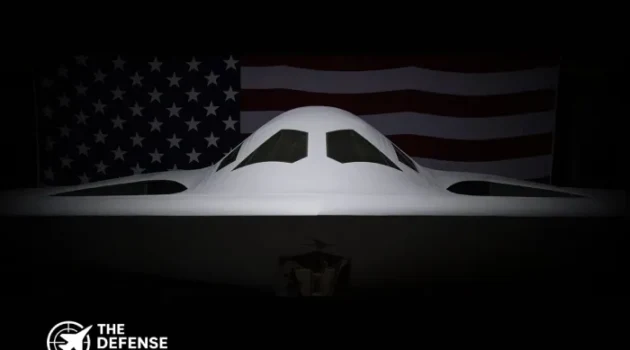
The U.S. B-21 Raider stealth bomber has completed a major developmental flight test campaign significantly faster than initially planned, marking an important milestone for the U.S. Air Force’s next-generation long-range strike program.
Northrop Grumman revealed on May 7, 2026, that the B-21 Raider Combined Test Force reduced a planned 180-day testing schedule to just 73 days.
The accelerated timeline is notable because large-scale military aircraft development programs frequently encounter delays during early flight testing, especially with stealth aircraft integrating advanced sensors, mission systems, and low observable technologies.
The B-21 Raider program appears to be avoiding many of those early setbacks.
Why The Accelerated Testing Timeline Matters
The B-21 Raider is intended to replace portions of the aging U.S. bomber fleet, including the B-1B Lancer and B-2 Spirit, while complementing the B-52 Stratofortress in long-range strike missions.
The faster-than-expected test progress suggests that the aircraft entered flight trials with mature software integration and a relatively stable design baseline. That is a significant achievement for a stealth platform expected to operate in highly contested environments against advanced air defense systems.
Northrop Grumman stated that the Combined Test Force achieved the milestone while completing roughly half of the planned mission objectives connected to an $11.8 billion effort.
Industry analysts view this as evidence that digital engineering and advanced modeling techniques used during development may be reducing traditional flight-test risks. The B-21 program has heavily emphasized digital design and production methods since its earliest phases. Earlier Air Force and Northrop Grumman statements also indicated that flight performance during testing closely matched digital simulations.
That alignment between simulated and real-world performance can shorten troubleshooting cycles and reduce costly redesign work.
Expanding U.S. Long-Range Strike Capability
The B-21 Raider is central to the U.S. Air Force’s future global strike strategy. Designed as a penetrating stealth bomber capable of delivering both conventional and nuclear payloads, the aircraft is expected to operate deep inside heavily defended airspace.
The bomber will eventually support missions across the Indo-Pacific, Europe, and other contested theaters where survivability against modern integrated air defense systems is increasingly important.
Recent testing milestones have included aerial refueling operations with a KC-135 Stratotanker, expanding the bomber’s operational reach and endurance.
The U.S. Air Force has also continued expanding the flight test fleet. A second B-21 Raider test aircraft joined the program in 2025, enabling parallel testing of mission systems, weapons integration, and sustainment procedures.
Officials believe multiple aircraft operating simultaneously will accelerate the path toward operational capability.
Strategic Implications For The United States
The rapid progress of the B-21 Raider program comes amid increasing strategic competition with China and Russia. Both nations continue investing heavily in advanced air defenses, long-range missiles, and next-generation combat aircraft.
For the Pentagon, the B-21 Raider represents more than a new bomber. It is a key part of maintaining credible long-range deterrence and strike flexibility in future conflicts.
The Air Force plans to acquire at least 100 B-21 aircraft, though some defense analysts argue that number may eventually increase depending on operational demands and geopolitical developments.
Unlike previous stealth bomber programs that faced major production and affordability challenges, the B-21 effort has focused heavily on scalable manufacturing and lower sustainment costs from the outset.
That production-focused approach may help the Air Force field the aircraft more rapidly than earlier strategic bombers.
Program Momentum Continues
The B-21 Raider first flew in November 2023 and has steadily expanded its test envelope since then. The aircraft already entered low-rate initial production, another sign of Pentagon confidence in the program’s maturity.
While many technical details remain classified, recent milestones indicate the stealth bomber program is progressing with fewer disruptions than typically seen in next-generation combat aircraft development.
If the current pace continues, the B-21 Raider could enter operational service on schedule and become the backbone of the U.S. Air Force’s future bomber fleet during a period of intensifying global strategic competition.
KEY FACTS AT A GLANCE
Specification Detail Manufacturer Korea Aerospace Industries (KAI), Sacheon, South Korea Generation 4.5 / Pre-5th Gen (Block III targets full stealth) First Flight 19 July 2022 Combat Suitability Final approval granted 7 May 2026 (DAPA) Powerplant 2× Hanwha/GE F414-GE-400K (~98 kN / 22,000 lbf each) Max Speed Mach 1.81 (~2,223 km/h) Service Ceiling ~16,700 m (54,800 ft) Combat Radius ~900–1,000 km (Block I, clean config) Ferry Range ~2,900 km (with external tanks) Key Radar APY-016K AESA — ~1,000 T/R modules, 150–200 km detection, 20+ simultaneous tracks EW Suite ALQ-200K (indigenous) Primary Armament 4× MBDA Meteor (semi-recessed) + 2× IRIS-T + 20 mm cannon Max Payload ~7,700 kg across 10 hardpoints Unit Cost (est.) USD ~65–70 M (Block I) ROKAF Order 40 Block I; 80 Block II planned; 120+ total by early 2030s IOC Target September 2026 Executive Summary
On 7 May 2026, South Korea’s Defense Acquisition Program Administration (DAPA) granted Final Combat Suitability approval to the KF-21 Boramae — formally certifying Korea Aerospace Industries’ twin-engine 4.5-generation fighter as ready for real-world combat operations. The announcement, coming barely six weeks after the first serial production aircraft rolled out of KAI’s Sacheon factory on 25 March 2026 and completed its maiden flight just 22 days later on 15 April 2026, marks the definitive transition of the KAI KF-21 Boramae from an ambitious national programme into a frontline weapon system.
The road to this moment covered more than two decades of sustained investment. Six prototypes flew approximately 1,600 accident-free sorties and validated over 13,000 individual test conditions between July 2022 and January 2026 — a campaign DAPA closed two months ahead of schedule. With an initial batch of 40 Block I aircraft under contract and ROKAF deliveries commencing in September 2026, the boramae kf 21 is now entering a decade of progressive capability expansion that will eventually see it evolve into a genuine stealth fighter. This report provides the definitive technical and strategic analysis for defence professionals tracking one of the Indo-Pacific’s most consequential aviation programmes.
Airframe & Low-Observable Design
The KF-21 Boramae airframe blends a cranked-arrow delta wing with a canted twin tail and carefully sculpted bifurcated intake ramps, producing a planform clearly optimised for reduced frontal radar cross-section. At 16.9 m in length and 11.2 m wingspan, the aircraft sits in the medium class — broadly comparable to the Dassault Rafale — but is substantially heavier at a maximum take-off weight approaching 25,600 kg, reflecting the fuel and payload margins demanded by ROKAF’s long-range patrol requirements over the Korean Peninsula and East Sea.
Block I does not incorporate a full Radar Absorbent Material (RAM) coating or an internal weapons bay. Instead, KAI engineered four semi-recessed fuselage stations positioned along the centreline for Meteor missiles. This arrangement dramatically reduces the frontal RCS penalty compared to conventional external pylons while stopping short of true internal carriage — a deliberate cost-and-schedule trade-off for the initial variant. Intake edge alignment, exhaust shaping, and canopy frame design all draw from low-observable engineering principles, providing a stealth signature that independent analysts broadly place well below legacy fourth-generation platforms such as the F-15 or F-16 but above F-35-class levels.
The Block III roadmap — sometimes designated KF-21EX in DAPA documentation — targets the full stealth package: internal weapons bays, broadband RAM coating, and an indigenous next-generation engine. DAPA has already launched the Advanced Aviation Engine Development Project to produce a domestic turbofan generating 16,000 lb dry and 24,000 lb afterburning thrust, approximately 25% more power than the current F414-GE-400K, fully eliminating propulsion dependence on foreign suppliers.
Avionics, Sensors & Sensor Fusion
APY-016K AESA Radar
The centrepiece of the KF-21’s mission system architecture is the domestically developed APY-016K Active Electronically Scanned Array radar, produced by Hanwha Systems. The first mass-produced unit rolled off Hanwha’s line on 5 August 2025. Equipped with approximately 1,000 transmit-receive (T/R) modules, the APY-016K delivers target detection at ranges of 150–200 km and can simultaneously track more than 20 contacts. Its Low Probability of Intercept (LPI) emission modes reduce the aircraft’s electromagnetic signature during tactical engagements — a critical attribute in Northeast Asian threat environments saturated with Russian and Chinese-derived electronic warfare assets.
Electro-Optical Targeting Pod & IRST
A chin-mounted indigenous Electro-Optical Targeting Pod (EO TGP), also developed by Hanwha Systems, occupies a dedicated hardpoint below the right engine intake. Positioning the targeting sensor here preserves all ten primary hardpoints for weapons and fuel, while providing a passive Infra-Red Search and Track (IRST) channel that operates silently — detecting heat signatures without any radar emission. This dual role mirrors the philosophy behind the F-35’s EOTS installation.
Electronic Warfare Suite
The ALQ-200K Electronic Warfare System — an indigenous development integrating radar warning receivers, missile approach warning sensors, and active countermeasures — is designed specifically for the dense electromagnetic environment of Korean Peninsula air combat. The suite feeds threat-geolocation data directly into the mission computer, enabling automated countermeasure responses and pilot cueing within milliseconds of a radar lock-on.
Sensor Fusion & Mission Computer
A high-throughput domestic mission computer fuses AESA radar tracks, IRST bearings, EW threat data, and tactical data-link feeds from the ROKAF network into a single integrated tactical picture. The cockpit features a wide-angle HUD, colour multi-function displays, and a voice-and-HOTAS interface designed to reduce cognitive load during high-g engagements. This fusion architecture is the foundation upon which Block II strike capabilities and Block III collaborative engagement with Unmanned Loyal Wingman assets will be layered.
Propulsion & Performance Envelope
Each KF-21 Boramae is powered by two Hanwha/General Electric F414-GE-400K turbofans, each producing approximately 98 kN (22,000 lbf) with afterburner — a combined plant equivalent to roughly 110,000 hp. The F414 family traces its lineage to the F/A-18E/F Super Hornet’s powerplant, providing a mature, combat-proven reliability baseline that materially reduced development risk during the KF-X programme. The “K” suffix denotes the Korean-specific variant, with Hanwha Aerospace licensed to produce and maintain the engines domestically.
The twin-engine configuration delivers:
Parameter Performance Maximum Speed Mach 1.81 (~2,223 km/h) at altitude First Supersonic Flight 17 January 2023 — Mach 1+ at 40,000 ft Service Ceiling ~16,700 m (54,800 ft) Combat Radius ~900–1,000 km (clean, Block I) Ferry Range ~2,900 km (external tanks) Internal Fuel ~6,000 kg The twin-engine layout also provides an important survivability advantage over single-engine alternatives in overwater and deep-penetration scenarios — a key ROKAF requirement when operating over the East Sea or across the demilitarized zone.
Armament & Weapons Integration
Block I is optimised for the Beyond Visual Range (BVR) air superiority role. The primary loadout exploits four semi-recessed stations for MBDA Meteor active-radar BVRAAMs — the world’s most capable beyond-visual-range missile, with a no-escape zone reported to exceed that of the AIM-120 AMRACON by a substantial margin. This is complemented by Diehl IRIS-T infrared short-range missiles on inner wing pylons for close-in combat.
Block II (targeting entry around early 2027, some 18 months ahead of the original schedule per DAPA’s August 2025 announcement) will certify the full strike toolkit:
- Korea Air-Launched Cruise Missile (KALCM) for stand-off land attack
- Indigenous Korean Guided Bomb Units (KGBUs) for precision strike
- JDAM-compatible tail kits for GPS-aided delivery
- Anti-ship missile integration
- Air-to-air refuelling probe (already validated in prototype testing)
The 10-hardpoint configuration — four semi-recessed fuselage stations plus six wing pylons — provides flexibility to balance fuel tanks, air-to-air missiles, and future strike weapons across a wide range of mission profiles.
Strategic & Export Outlook
The Block Development Roadmap
Block IOC Key Capability Aircraft Qty Block I Sep 2026 BVR air-to-air; APY-016K AESA; Meteor/IRIS-T 40 (contracted 2024) Block II Early 2027 Full A2G multirole; KALCM; guided bombs; refuelling 80 aircraft; ROKAF total ~120 Block III / KF-21EX 2030s+ Internal bays; full RAM; domestic engine; CCA; true 5th-gen TBD — export variant likely International Export Prospects
Beyond Indonesia, countries in Southeast Asia, the Middle East, and Africa have been linked to potential interest, including the Philippines, Malaysia, Poland, and the UAE. South Korea’s growing credibility as a defence exporter, built on recent sales of the K9 howitzer, K2 tank, FA-50 light fighter, and T-50 trainer, has strengthened the Boramae’s export prospects.
Key prospective customers include:
- Philippines — Active contender for PAF Multi-Role Fighter programme
- Indonesia — Jane’s reported in January 2026 that Indonesia is interested in purchasing sixteen KF-21 Block II.
- Malaysia — The Royal Malaysian Air Force is reportedly considering the KF-21 Boramae for its Multi-Role Combat Aircraft programme; the RMAF Chief of Air Force visited KAI in February 2025 to inspect the production line.
- UAE — Confirmed interest reports; financing discussions reportedly active
- Poland — High interest as part of the broader South Korean arms relationship
- Peru — KAI signed an MoU with SAMAN for domestic KF-21 component manufacture
At an estimated USD 65–70 million per Block I aircraft — roughly half the cost of an F-35A — the kai kf 21 boramae offers a compelling proposition for air forces requiring genuine 4th+ generation capability with a credible upgrade path, without US foreign military sales policy constraints.
Programme Milestones: Key Dates
Date Milestone Mar 2001 KF-X programme first announced Dec 2015 Full-scale development contract signed with KAI Apr 2021 Prototype No. 1 unveiled at Sacheon rollout 19 Jul 2022 Maiden flight of Prototype No. 1 17 Jan 2023 First supersonic flight — Mach 1+ at 40,000 ft Jul 2024 Serial production contract signed; 40 Block I aircraft 5 Aug 2025 First mass-produced APY-016K AESA radar delivered by Hanwha Systems 8 Aug 2025 DAPA confirms Block II A2G capability accelerated by 18 months 13 Jan 2026 DAPA announces completion of full 1,600-sortie flight-test campaign — 2 months ahead of schedule 25 Mar 2026 First serial production KF-21 Boramae rollout ceremony; President Lee Jae-myung presides 15 Apr 2026 First serial aircraft completes maiden flight — 22 days after rollout 7 May 2026 DAPA grants Final Combat Suitability approval — Block I certified for combat operations Sep 2026 First ROKAF deliveries scheduled (Initial Operating Capability) 2027 Block II full multirole capability; 31 aircraft planned for delivery that year 2028 47 aircraft delivery target; Full Operational Capability reached 2030s+ Block III / KF-21EX — full stealth variant with domestic engine Conclusion
The KF-21 Boramae has crossed every threshold that separates a national prestige project from a credible operational weapon system. The Final Combat Suitability approval granted by DAPA confirms that the aircraft can conduct missions in actual combat, with the agency stating that South Korea has fully secured independent fighter jet development capabilities. With the first serial production aircraft rolled out on 25 March 2026 and the production facility at Sacheon planning to deliver 31 aircraft in 2027 and 47 overall in 2028, the programme is ahead of schedule across every major metric.
For regional air power, the implications are significant. A ROKAF fleet of 120+ aircraft equipped with Meteor BVRAAMs, a domestically sovereign AESA radar, and an accelerated path to Block II multirole strike capability forces adversary planners to account for an entirely new South Korean kill-chain — one no longer dependent on foreign technology transfer approval for sustainment or upgrade. As Block III matures toward internal weapons bays, full RAM, and an indigenous turbofan, the kai kf-21 boramae will close the capability gap with fifth-generation platforms at a fraction of their lifecycle cost.
South Korea has joined a very small group of nations — the United States, Russia, China, France, the United Kingdom, Sweden, and Japan — capable of designing, testing, industrialising, and fielding an advanced supersonic combat aircraft through sovereign means. The kf 21 boramae is not merely a fighter jet. It is the proof of concept for an entire generation of Korean defence industrial capability — and its most consequential chapters are still being written.
Executive Summary:
Spain has reportedly opened discussions regarding potential participation in Türkiye’s KAAN fifth generation fighter program as Madrid reviews long term combat aircraft requirements. The move highlights growing European interest in alternative defense partnerships amid debates surrounding U.S.-made F-35 procurement and strategic autonomy.Spain Opens Talks On Turkish KAAN Fighter Program
Spain KAAN fighter discussions have emerged as Madrid evaluates future combat aircraft requirements and broader defense industrial cooperation with Türkiye. Spanish officials have initiated talks concerning the Turkish-developed KAAN stealth fighter, a fifth generation aircraft led by Turkish Aerospace Industries.
The development comes at a time when several European nations are reassessing procurement priorities amid rising defense spending, supply chain concerns, and geopolitical uncertainty across NATO’s southern and eastern flanks.
Türkiye officially unveiled the KAAN fighter in 2023 as part of Ankara’s long term effort to establish an indigenous fifth generation combat aircraft capability. The platform completed its maiden flight in February 2024 and remains one of the most ambitious aerospace programs currently underway outside the United States, China, and Russia.
Spain has not formally abandoned interest in the Lockheed Martin F-35 Lightning II, but discussions surrounding the Turkish KAAN fighter suggest Madrid is examining additional strategic options.
Why Spain Is Reviewing Fighter Procurement Options
Spain currently operates a mixed fleet of Eurofighter Typhoon and aging McDonnell Douglas EF-18 Hornet fighters. Several of these aircraft will eventually require replacement during the next decade.
Madrid also remains a major stakeholder in Europe’s Future Combat Air System (FCAS), a multinational sixth generation fighter initiative involving France and Germany. However, FCAS timelines continue to extend into the 2040s, creating a potential capability gap for participating nations.
This timing is important. European governments increasingly face pressure to modernize fleets faster while maintaining industrial independence and managing procurement costs.
The Turkish KAAN fighter program could offer Spain several advantages if talks progress beyond exploratory discussions. These may include industrial participation opportunities, technology cooperation, and diversification away from reliance on a single supplier ecosystem.
At the same time, any move involving the KAAN fighter would likely generate scrutiny within NATO and the broader European defense market, particularly because the F-35 remains the dominant fifth generation fighter platform among alliance members.
KAAN Program Reflects Türkiye’s Expanding Aerospace Ambitions
The Turkish KAAN fighter is being developed by Turkish Aerospace Industries under Türkiye’s broader defense modernization strategy. Ankara has significantly expanded domestic aerospace and defense production over the past decade, including unmanned systems, missiles, naval platforms, and advanced avionics.
KAAN is designed as a twin engine stealth fighter with advanced sensor fusion, internal weapons bays, and network centric warfare capabilities. Turkish officials have stated that the aircraft is intended to replace the country’s aging fleet of General Dynamics F-16 Fighting Falcon fighters over time.
The program also gained additional geopolitical importance after Türkiye was removed from the F-35 program in 2019 following Ankara’s acquisition of the Russian-made S-400 air defense system.
Since then, Türkiye has accelerated indigenous defense programs aimed at reducing dependence on foreign suppliers. KAAN has become a flagship symbol of that strategy.
Spain’s interest therefore carries significance beyond aircraft procurement alone. It reflects how Türkiye’s defense industry is increasingly positioning itself as an exporter and strategic partner within NATO markets.
Strategic Implications For Europe And NATO
Spain KAAN fighter talks also underline a broader shift occurring across Europe’s defense sector. Countries are increasingly balancing alliance interoperability with industrial sovereignty and procurement flexibility.
The F-35 program continues to expand across Europe, with nations including Germany, Finland, Poland, Belgium, Italy, the Netherlands, Denmark, Norway, and the United Kingdom operating or ordering the aircraft. However, concerns over cost, maintenance dependency, and long term operational autonomy remain part of political discussions in several countries.
For Spain, exploring the Turkish KAAN fighter may provide leverage in broader defense negotiations while supporting its own aerospace industrial interests.
There are still substantial hurdles before any potential agreement could materialize. KAAN remains under development and has not yet entered operational service. Questions also remain regarding engine integration, production timelines, export configurations, and interoperability standards within NATO structures.
Nevertheless, Spain’s willingness to open discussions indicates that European defense procurement is becoming increasingly competitive and politically complex.
Growing Competition In The Fifth Generation Fighter Market
The global fighter aircraft market is entering a new phase shaped by strategic competition, industrial partnerships, and regional security concerns.
While the F-35 currently dominates Western fifth generation procurement, newer programs such as KAAN, South Korea’s KF-21, and various European sixth generation initiatives are reshaping future competition.
Spain’s engagement with the Turkish KAAN fighter demonstrates that countries are no longer evaluating combat aircraft solely on technical performance. Industrial access, political alignment, export flexibility, and strategic autonomy now play a larger role in procurement decisions.
For Türkiye, even preliminary talks with a major European NATO member represent an important validation of its aerospace ambitions.
For Spain, the discussions provide another avenue to address future air combat capability requirements while maintaining flexibility in an evolving geopolitical environment.
Executive Summary:
BAE Systems has officially opened a 150,000-square-foot electrification facility at its Endicott, New York campus — a $65 million investment supporting hybrid and all-electric aircraft and ground vehicle development. The expansion adds 130 jobs and includes advanced manufacturing, a new battery production line, and a dedicated engineering laboratory, positioning the U.S. defense contractor as a key player in domestic battery and propulsion technology for both military and commercial aviation.
BAE Systems Expands U.S. Aircraft Electrification Capacity With New York Facility
ENDICOTT, N.Y. — May 6, 2026 — BAE Systems has opened a major new facility at its Endicott, New York campus, dedicated to the development and manufacturing of high-voltage energy storage for hybrid and all-electric aircraft and ground vehicles. The move signals a significant escalation in the company’s domestic industrial footprint — and in the broader race to electrify both defense and commercial aviation platforms.
The 150,000-square-foot addition was first announced last year and increases BAE Systems’ capacity to combine decades of propulsion expertise with leading-edge aviation technology.
A $65 Million Bet On Domestic Battery Manufacturing
The scale of the investment underscores growing urgency — both strategic and industrial — to reduce U.S. dependence on foreign battery supply chains.
Senator Chuck Schumer described the expansion as a “$65 million, 130-job expansion” that will bring to life “a new battery production line, research lab, and office space.”
Schumer further emphasized the facility’s national significance, stating that it would “help bring the battery supply chain back from overseas, supercharging the Southern Tier’s leadership in battery manufacturing.”
For defense analysts, that framing is notable. Battery and energy storage supply chains have emerged as a recognized vulnerability in U.S. defense industrial planning — particularly as more military platforms integrate electric and hybrid-electric propulsion systems. BAE Systems’ Endicott expansion is a direct response to that strategic gap.
What The Facility Will Produce
The campus addition supports the development of high-voltage energy storage systems essential to hybrid and all-electric aircraft and ground vehicles, and will accelerate delivery of technology enabling more efficient, lower-emission flights while significantly enhancing BAE Systems’ advanced manufacturing capacity and field support operations.
The upgraded facility includes an advanced engineering laboratory and fully automated, high-volume manufacturing capabilities, as well as dedicated workspace for BAE Systems’ Horizon Solutions Aftermarket Services and Support team, which provides comprehensive commercial aircraft solutions.
BAE Systems’ aircraft electrification portfolio spans both defense and civil aviation markets — a dual-use posture that amplifies the strategic value of the Endicott investment. Technologies developed here for commercial aircraft can feed directly into military platform development timelines, compressing what would otherwise be lengthy, costly military-specific R&D cycles.
Defense And Commercial Aviation: A Dual-Use Strategy
BAE Systems’ Endicott employees develop solutions for both commercial and military air and land applications, including flight controls, engine controls, mission systems, and power and propulsion solutions.
This dual-use model is increasingly central to how major defense primes are approaching electrification. Rather than maintaining separate commercial and military development tracks, firms like BAE Systems are consolidating expertise in shared facilities — driving down costs while accelerating technology maturation across both sectors.
For the U.S. military, the implications are significant. The Army’s interest in hybrid-electric combat vehicles, the Air Force’s exploration of hybrid propulsion for unmanned systems, and the broader push toward reduced-emission military operations all point toward growing demand for exactly the type of high-voltage energy storage systems BAE Systems is now scaling up in Endicott.
Leadership Comments
Jack Stevens, Vice President and General Manager of Controls and Avionics Solutions at BAE Systems, framed the opening in terms of both market demand and regional commitment.
This expansion strengthens our ability to meet growing global demand for aircraft and ground vehicle electrification,” Stevens said. “Additionally, it creates new opportunities for growth and collaboration across the Greater Binghamton community, reinforcing our commitment to the talented workforce in this region.”
The regional jobs angle is not incidental. Defense manufacturing investments have become a bipartisan priority in Congress, with facilities like the Endicott campus frequently cited as examples of how defense spending translates into domestic industrial and employment benefits.
Strategic Context: Electrification As A Defense Priority
The Endicott expansion arrives at a pivotal moment. The Pentagon has been accelerating efforts to integrate electric and hybrid-electric propulsion across multiple platform categories — from next-generation tactical vehicles to advanced air mobility concepts under exploration by the Army and Air Force.
Meanwhile, peer competitors — notably China — have invested heavily in battery technology for both commercial and military applications, creating pressure on U.S. primes to close capability and production gaps. BAE Systems’ $65 million Endicott facility represents one concrete answer to that challenge: a purpose-built, domestically located production hub for the energy storage systems that will define the next generation of aircraft and ground combat vehicles.
By combining automated manufacturing, an advanced engineering lab, and aftermarket support operations under one roof, BAE Systems is positioning Endicott not just as a production site, but as an end-to-end center of excellence for defense-grade aircraft electrification.
Key Takeaways
- BAE Systems has opened a 150,000-square-foot aircraft electrification facility in Endicott, New York
- The $65 million investment adds 130 jobs and includes a new battery production line, research lab, and advanced manufacturing capabilities
- The facility focuses on high-voltage energy storage for hybrid and all-electric aircraft and ground vehicles
- The expansion serves both commercial and military customers, reinforcing a dual-use industrial strategy
- Senator Chuck Schumer highlighted the facility’s role in reshoring battery supply chains from overseas
- The move aligns with broader U.S. defense priorities around electrification and domestic industrial capacity
Executive Summary:
Türkiye has revealed the new GUECHAN turbofan engine, a 42,000-pound-thrust indigenous propulsion system aimed at powering future combat aircraft. The program supports Ankara’s long-term effort to reduce dependence on foreign engines and strengthen its next-generation aerospace sector.Türkiye Unveils GUECHAN Turbofan Engine For Future Fighter Programs
Türkiye’s aerospace sector has introduced the new GUECHAN turbofan engine, a domestically developed propulsion system designed to deliver up to 42,000 pounds of thrust, placing it in the same performance category as engines used by fifth-generation combat aircraft.
The engine is being positioned as a strategic step toward supporting Türkiye’s expanding military aviation ambitions, including future variants of the KAAN next-generation fighter program.
The unveiling reflects Ankara’s broader push to reduce reliance on foreign defense suppliers following years of export restrictions, procurement disputes, and licensing challenges affecting several Turkish aerospace programs.
The GUECHAN turbofan is expected to support high-performance combat aircraft operations, including sustained supersonic flight, advanced maneuverability, and larger payload capacities. Turkish defense officials have repeatedly emphasized the importance of sovereign propulsion technology as a core requirement for long-term defense autonomy.
Indigenous Engine Development Gains Strategic Importance
The development of an indigenous fighter engine has become increasingly important for Türkiye’s defense planning over the last decade. The country’s defense industry has expanded rapidly across drones, missiles, naval systems, armored vehicles, and combat aircraft, but propulsion technology remains one of the most difficult areas to localize.
Modern fighter engines require advanced metallurgy, precision manufacturing, thermal management systems, and highly sophisticated turbine technologies. Only a limited number of countries currently possess the industrial base needed to independently design and manufacture high-thrust military turbofans.
The GUECHAN program appears intended to narrow that gap.
Türkiye’s KAAN stealth fighter currently relies on imported propulsion systems during prototype development and flight testing phases. However, Ankara has repeatedly stated its goal of integrating a fully indigenous engine in future production configurations.
The reported 42,000 lbf thrust rating places the GUECHAN engine within the performance range associated with modern fifth-generation fighter propulsion systems. For comparison, the Pratt & Whitney F135 engine used in the Lockheed Martin F-35 Lightning II generates roughly similar thrust output depending on configuration.
That comparison is strategically significant. It suggests Türkiye is not simply pursuing a replacement engine for legacy aircraft, but rather attempting to establish an independent high-performance propulsion capability suitable for advanced stealth platforms.
KAAN Fighter Program Remains Central To Türkiye’s Aerospace Ambitions
The indigenous KAAN fighter program remains one of Türkiye’s largest defense modernization projects. Led by Turkish Aerospace Industries, the aircraft is intended to replace portions of the Turkish Air Force’s aging F-16 fleet over the coming decades.
The KAAN prototype completed its maiden flight in 2024, marking a major milestone for Türkiye’s domestic aerospace industry. Future development phases are expected to focus on avionics integration, stealth optimization, weapons testing, and propulsion improvements.
An indigenous engine program could reduce long-term exposure to export controls or political restrictions affecting combat aircraft operations and upgrades.
This issue has gained greater relevance since Türkiye’s removal from the F-35 program following Ankara’s acquisition of the Russian-made S-400 air defense system. The dispute highlighted the risks associated with reliance on foreign-controlled supply chains for strategic military platforms.
As a result, Turkish defense planners have increasingly prioritized domestic production capabilities across key technologies, particularly propulsion, sensors, radar systems, and electronic warfare components.
Regional And Global Implications
The unveiling of the GUECHAN turbofan also carries broader geopolitical implications for regional aerospace competition.
Türkiye has emerged as a major exporter of defense systems, particularly unmanned aerial vehicles and armored platforms. A successful indigenous high-thrust engine program could strengthen its position in the global defense market by enabling greater control over export licensing and aircraft customization.
Countries seeking alternatives to Western or Russian combat aircraft suppliers may view Turkish aerospace products as increasingly attractive if Ankara can independently provide propulsion systems without third-party approval requirements.
The move also reflects a wider global trend toward defense industrial self-sufficiency. Several middle powers are investing heavily in indigenous aerospace manufacturing capabilities amid rising geopolitical tensions and concerns over supply chain vulnerability.
Still, developing an operational fifth-generation-class fighter engine remains an exceptionally difficult and expensive undertaking. Engine reliability, durability, thermal efficiency, and maintenance cycles often require years of testing before operational deployment.
Industry analysts note that while prototype demonstrations are important milestones, large-scale production and long-term sustainment capabilities ultimately determine whether a propulsion program achieves strategic success.
Technical Challenges Remain Ahead
Although the unveiling marks a significant symbolic and industrial milestone, major technical hurdles remain before the GUECHAN engine can enter operational service.
Military turbofan development programs typically require extensive ground testing, high-altitude validation, thermal endurance assessments, and integration trials with combat aircraft platforms. Certification timelines can stretch for years, even among established aerospace powers.
Türkiye’s growing experience in aerospace manufacturing may provide a stronger foundation than in previous decades, particularly through lessons learned from drone engines, helicopter propulsion systems, and advanced aerospace composites.
However, transitioning from smaller propulsion systems to a 42,000-pound-thrust class fighter engine represents a major technological leap.
The long-term success of the GUECHAN program will likely depend on sustained government funding, industrial cooperation, supply chain resilience, and successful flight integration with future KAAN variants.
Why The GUECHAN Engine Matters
The GUECHAN turbofan represents more than a new aerospace product. It reflects Türkiye’s broader strategic effort to establish greater independence in advanced military technologies amid a changing geopolitical and defense environment.
If successful, the engine could become a cornerstone capability for future Turkish combat aviation programs while strengthening Ankara’s standing as an emerging aerospace power.
At the same time, the program underscores how propulsion technology remains one of the defining competitive areas in modern military aviation.
Executive Summary:
The US Navy is developing a compact version of the AIM 9X missile designed for integration on F-35 fighter jets and advanced combat drones. The effort focuses on increasing internal and external weapons carriage options while preserving air to air performance. The move reflects growing demand for scalable missile systems across manned and unmanned platforms.US Navy development of the compact AIM-9X missile marks a significant shift in how short range air to air weapons are being adapted for modern multi domain operations. The program focuses on improving compatibility with F-35 fighters and emerging combat drone platforms.
The main keyword compact AIM-9X missile reflects a broader modernization trend across US air combat systems, where size, integration flexibility, and multi platform use are becoming as important as raw performance.
Smaller Missile for Broader Integration
The compact AIM-9X missile concept is aimed at reducing physical constraints that limit weapon carriage on stealth aircraft and unmanned systems. By shrinking key components while maintaining guidance capability, the Navy seeks to improve loadout efficiency on platforms like the F-35.
A major driver behind this development is internal weapons bay limitations. The F-35 relies on stealth optimized storage, which restricts the size and number of air to air missiles it can carry without external pylons. A more compact missile allows greater flexibility without compromising radar signature.
This approach also supports distributed air operations where drones may operate alongside crewed fighters in contested environments.
Expanding Role of F-35 Weapon Systems
The F-35 continues to evolve as a central node in US and allied air combat strategy. The integration of a compact AIM 9X missile would allow the aircraft to carry more short range weapons while preserving space for other mission systems or fuel.
The AIM 9X family is already a cornerstone of US close range air combat capability, known for high off boresight targeting and infrared tracking performance. A compact variant would extend these strengths while improving payload efficiency.
This is particularly relevant in scenarios involving high intensity air combat where missile inventory per sortie can directly impact mission endurance.
Drone Integration and Networked Air Combat
One of the most notable aspects of the compact AIM 9X missile effort is its potential use on combat drones. The US military has been expanding experimentation with unmanned systems that can operate alongside manned aircraft in coordinated strike and defense roles.
Integrating short range air to air missiles on drones introduces new tactical options. These platforms could potentially engage threats independently or act as forward positioned interceptors under pilot control.
The Navy and broader US defense community are increasingly focused on distributed lethality, where smaller platforms contribute directly to air superiority missions rather than serving only reconnaissance roles.
Strategic Context and Air Superiority Competition
The development comes at a time when air forces globally are investing heavily in advanced missile systems and counter air capabilities. Short range infrared guided missiles remain a key component of close combat engagements, even as beyond visual range weapons dominate longer distance scenarios.
The compact AIM 9X missile effort aligns with broader US strategies to maintain flexibility across both high end fighter fleets and emerging unmanned combat systems. It also reflects concerns about platform saturation, where aircraft must carry a wider variety of weapons without sacrificing stealth or range.
Industrial and Program Implications
While detailed specifications remain limited, the program indicates continued investment in modular missile design. The AIM 9X lineage has undergone multiple upgrades since its introduction, and this compact variant represents an adaptation to modern airframe constraints rather than a full replacement.
Defense industry sources cited in reporting suggest that future air combat systems will increasingly prioritize adaptability across platforms rather than platform specific weapon designs.
Analysis
The compact AIM 9X missile reflects a broader shift in US air combat philosophy. Instead of building entirely new missile families for every platform, the focus is moving toward scalable designs that can be resized or adapted depending on mission requirements.
This approach reduces logistical burden and improves interoperability across the F-35 fleet, legacy fighters, and unmanned systems. It also suggests that future air dominance will depend as much on weapons integration efficiency as on platform performance.
If successful, this concept could influence other missile programs, particularly in short range air defense and naval aviation systems where space and weight constraints are critical.
Executive Summary:
Ukrainian drone manufacturer Skyeton has introduced a new anti-interceptor capability aimed at protecting ISR drones operating in contested airspace. The upgrade is intended to improve survivability against hostile aerial interception attempts, reflecting the growing electronic and kinetic threats facing reconnaissance UAVs in modern warfare.Skyeton Introduces New ISR Drone Protection Capability
Ukrainian drone maker Skyeton has announced a new anti-interceptor capability designed to improve the survivability of intelligence, surveillance, and reconnaissance (ISR) drones operating in contested airspace.
The system is intended to counter the growing threat posed by interceptor drones and other aerial counter-UAV measures increasingly deployed on the modern battlefield.
The capability is being integrated into Skyeton’s ISR drone ecosystem, including the company’s Raybird unmanned aerial system, which has been widely used for long-endurance reconnaissance missions during the war in Ukraine.
Growing Threat To ISR Drones
The announcement highlights how drone warfare continues to evolve beyond traditional electronic warfare and ground-based air defense threats. ISR platforms are now facing increasing risks from dedicated interceptor drones designed specifically to track and destroy reconnaissance UAVs.
This shift has forced UAV manufacturers and military operators to focus more heavily on survivability measures rather than solely endurance, range, or payload capacity.
Skyeton’s anti-interceptor capability appears aimed at addressing that operational challenge directly. While the company has not publicly disclosed the full technical details of the system, the capability is reportedly designed to help ISR drones evade or disrupt hostile intercept attempts during missions in heavily defended airspace.
The development reflects broader battlefield lessons emerging from the conflict in Ukraine, where both sides have rapidly adapted drone tactics, electronic warfare systems, and counter-UAV technologies.
Raybird ISR Drone Remains Central To Ukrainian Operations
Skyeton’s Raybird platform has become one of Ukraine’s better-known ISR drones due to its endurance and operational flexibility. The aircraft is designed for long-duration reconnaissance and battlefield monitoring missions, providing intelligence support for military operations.
The system has previously been promoted for its ability to remain airborne for extended periods while conducting surveillance in high-risk environments.
Adding anti-interceptor functionality could significantly expand operational survivability for such ISR platforms, particularly in areas where hostile forces increasingly rely on layered drone defense tactics.
The move also underscores a wider trend across the global UAV market, where drone manufacturers are prioritizing resilience against electronic warfare, GPS denial, and aerial interception systems.
Counter-UAV Competition Intensifies
The rapid development cycle seen in Ukraine has accelerated innovation across both UAV and counter-UAV technologies. Reconnaissance drones that once operated with relative freedom are now increasingly vulnerable to electronic attack, kinetic interceptors, and autonomous counter-drone systems.
As a result, survivability upgrades are becoming a key competitive factor for ISR platforms worldwide.
Military planners are closely watching developments from the Ukrainian battlefield because they provide real-world insight into how drones perform under continuous electronic and kinetic pressure. Technologies proven in Ukraine are increasingly influencing procurement decisions in Europe, NATO countries, and other regions seeking lessons for future high-intensity conflicts.
Skyeton’s latest announcement signals that Ukrainian defense technology firms continue adapting quickly to changing operational realities despite ongoing wartime pressures.
Strategic Significance Beyond Ukraine
The introduction of anti-interceptor capability also reflects the growing importance of persistent ISR operations in modern warfare. Intelligence collection drones are now central to artillery targeting, battlefield awareness, force coordination, and long-range strike support.
Any improvement in UAV survivability can directly affect operational tempo and battlefield intelligence quality.
For NATO and allied defense observers, Ukraine’s drone innovation cycle continues to serve as a real-time laboratory for future air warfare concepts. The speed at which Ukrainian firms are iterating ISR and counter-interceptor technologies is drawing increasing international attention.
The capability may also strengthen Skyeton’s position in export markets as countries seek UAV systems capable of surviving in heavily contested electromagnetic and aerial threat environments.
Analysis: ISR Survivability Is Becoming The Next UAV Arms Race
The emergence of dedicated interceptor drones marks a major evolution in aerial warfare. Early phases of the Ukraine conflict demonstrated the value of affordable ISR drones, but the battlefield has since become saturated with layered counter-UAV systems.
That reality is changing procurement priorities.
Modern ISR drones are no longer judged only by flight endurance or sensor quality. Survivability against electronic attack and aerial interception is rapidly becoming just as important.
Skyeton’s anti-interceptor capability reflects this transition. Even limited survivability improvements can extend mission duration, preserve intelligence collection continuity, and reduce UAV attrition rates during sustained operations.
The development also suggests that future drone conflicts may increasingly resemble an aerial contest between autonomous reconnaissance platforms and dedicated hunter-killer interceptor systems.
As drone warfare matures, the competition between ISR survivability technologies and counter-UAV interceptors is likely to intensify across both state and non-state military actors.
Executive Summary:
DARPA’s XRQ-73 SHEPARD hybrid electric uncrewed aircraft completed its first flight in April 2026 at Edwards Air Force Base, California. The prototype under DARPA’s Series Hybrid Electric Propulsion Aircraft Demonstration program is a key test of hybrid-electric propulsion for future UAS designs.First Flight Marks Progress for XRQ-73 Hybrid Electric Uncrewed Aircraft
DARPA’s hybrid electric uncrewed aircraft, designated XRQ-73 under the Series Hybrid Electric Propulsion Aircraft Demonstration (SHEPARD) program, completed its first flight in April 2026 at Edwards Air Force Base, California. The flight was confirmed by program partners and announced publicly in early May 2026.
The XRQ-73 aircraft was developed by Northrop Grumman in collaboration with DARPA and with support from the Air Force Research Laboratory and Scaled Composites. The demonstrator uses a series hybrid electric propulsion system where a conventional engine generates electricity to power electric motors that drive the aircraft.
The SHEPARD program aims to assess the operational utility of hybrid-electric technologies for future military aircraft designs. The design blends efficient fuel use with reduced acoustic and thermal signatures, which could benefit long-endurance intelligence, surveillance and reconnaissance (ISR) missions and other applications.
Hybrid Electric Propulsion in a Group 3 UAS
The XRQ-73 SHEPARD is a Group 3 uncrewed aircraft system weighing roughly 1,250 pounds. The flying-wing configuration reflects earlier technology demonstrations such as the XRQ-72 Great Horned Owl, while pushing hybrid electric propulsion forward.
Hybrid electric propulsion uses a fuel-burning engine to generate electricity that drives electric motors. This setup can offer fuel savings, flexibility in mission pacing, and quieter operation compared with traditional propulsion. DARPA’s experiment tests how such systems perform in real flight conditions, data that could influence future military and research platforms.
The April test flight at Edwards occurred within a controlled flight envelope. Details on duration, range, or performance metrics were not disclosed at the time of the announcement. Continued flight testing and data analysis will shape follow-on evaluations.
Broader Research and Industry Context
Hybrid electric propulsion is drawing growing interest across military and civilian aviation sectors. DARPA’s SHEPARD program sits alongside other hybrid UAS projects, including those exploring multi-mode powerplants, quieter signatures, and improved endurance. Because hybrid systems can reduce fuel use and emissions while still tapping conventional power sources, researchers see potential for both defense and commercial applications.
SHEPARD builds on previous DARPA efforts, like the Great Horned Owl initiative, and reflects the Department of Defense’s focus on agile experimental programs that mature technologies fast. The platform’s performance in flight tests will help define whether hybrid-electric designs have practical value for sustained operational use or transition into broader defense acquisition.
What’s Next for XRQ-73 and SHEPARD
DARPA and industry partners will continue flight tests on the XRQ-73 prototype throughout 2026. These trials are expected to probe performance envelopes, endurance characteristics, and propulsion system behavior under varying conditions. The lessons learned could inform future designs for ISR or other uncrewed missions where endurance and low signatures matter.
Executive Summary:
Baykar has signed an agreement to export its unmanned fighter jet to Indonesia, marking a significant step in Turkey’s defense export strategy. The deal highlights growing demand for advanced UAV capabilities and signals deeper Ankara–Jakarta defense cooperation. It also positions Turkey as a rising competitor in the global high-end drone market.Baykar Unmanned Fighter Jet Deal Signals Strategic Expansion
The Baykar unmanned fighter jet deal with Indonesia underscores Turkey’s accelerating push into high-end UAV exports and reflects Jakarta’s effort to modernize its air combat capabilities.
Baykar has reached an agreement with Indonesia for the sale of its next-generation unmanned combat aircraft, widely understood to be linked to the Kizilelma program. While financial details and delivery timelines remain undisclosed, the agreement represents one of the most advanced UAV export moves by Turkey to date.
The deal builds on a broader defense relationship between the two countries, which has expanded in recent years across naval platforms, armored vehicles, and aerospace collaboration.
Advancing The Kizilelma Unmanned Fighter Concept
At the center of the agreement is Baykar’s Kizilelma, a jet-powered unmanned combat aircraft designed for air-to-air and air-to-ground missions. Unlike traditional UAVs such as the Bayraktar TB2, Kizilelma is intended to operate in contested environments, including alongside manned fighter aircraft.
The platform is expected to feature:
- High subsonic or near-supersonic speed
- Reduced radar cross-section characteristics
- Compatibility with short-runway or carrier operations
- Advanced autonomy and AI-assisted mission systems
From an operational standpoint, this moves Turkey beyond tactical drones into the emerging category of unmanned fighter aircraft, an area also being explored by the United States, China, and Russia.
Analysis:
This deal reflects a shift in UAV demand from surveillance and strike roles toward multi-role combat systems. Countries like Indonesia are not just buying drones for counterinsurgency, but for peer-level deterrence and airpower augmentation.Indonesia’s Modernization Drive And Strategic Needs
For Indonesia, the Baykar unmanned fighter jet deal aligns with its broader military modernization goals. The Indonesian Air Force has been working to upgrade its fleet amid rising regional competition and growing operational demands across its vast archipelago.
Jakarta faces several challenges:
- Monitoring and securing expansive maritime zones
- Responding to gray-zone activities in contested waters
- Enhancing deterrence without the high cost of large fighter fleets
Unmanned fighter aircraft offer a cost-effective complement to manned platforms, enabling persistent presence and reduced risk to pilots.
Analysis:
Indonesia’s interest in advanced UAVs reflects a pragmatic approach. Rather than relying solely on expensive fourth- or fifth-generation fighters, Jakarta is diversifying its airpower mix with unmanned systems that can scale more quickly and operate flexibly.Turkey’s Rising Position In The Global UAV Market
The agreement further strengthens Turkey’s position as a major exporter of unmanned systems. Over the past decade, Baykar has gained international recognition through platforms like the Bayraktar TB2, which has been exported to multiple countries and used in various conflicts.
With Kizilelma, Turkey is attempting to move up the value chain.
Key implications include:
- Entry into the high-end UAV segment
- Increased competition with U.S., Chinese, and Israeli systems
- Expansion of defense diplomacy in Asia
Analysis:
Turkey’s strategy combines affordability, operational credibility, and fewer export restrictions compared to Western suppliers. This creates a competitive edge, particularly among countries seeking advanced capabilities without political constraints.Broader Geopolitical And Industrial Impact
The Baykar unmanned fighter jet deal also carries geopolitical weight. It strengthens ties between Turkey and Indonesia, two influential regional players with growing defense industries.
Potential long-term outcomes include:
- Technology transfer and co-production opportunities
- Expanded defense-industrial collaboration
- Greater Turkish presence in Southeast Asian defense markets
For Ankara, the deal supports its ambition to become a global defense exporter and reduce reliance on foreign technology. For Jakarta, it offers access to emerging capabilities that could reshape its airpower doctrine.
Operational Implications For Future Air Combat
The introduction of unmanned fighter aircraft like Kizilelma could alter how air forces approach combat operations.
Key trends include:
- Human-machine teaming in air combat
- Increased use of autonomous strike platforms
- Lower-cost force multiplication
Analysis:
If successfully deployed, systems like Kizilelma may reduce the dominance of traditional fighter fleets by enabling distributed, resilient air operations. This could be particularly relevant in regions with complex geography, such as Southeast Asia.Conclusion
The Baykar unmanned fighter jet deal with Indonesia marks a notable in the evolution of global UAV markets. It highlights the growing demand for advanced unmanned combat systems and reinforces Turkey’s emergence as a key defense exporter.
As countries seek cost-effective ways to enhance airpower, deals like this are likely to become more common, reshaping both procurement strategies and the future of aerial warfare.
Executive Summary:
The United States is repositioning F-22 stealth fighters closer to China to improve response times in a potential Taiwan crisis. The move underscores growing tensions and a renewed focus on air superiority in the Indo-Pacific.US Moves F-22 Stealth Fighters Closer To China
The F-22 stealth fighters deployment marks a significant step in U.S. efforts to strengthen rapid-response capabilities near Taiwan, as tensions with China continue to shape regional military planning.
The U.S. Air Force has moved F-22 Raptors closer to the western Pacific theater, reducing operational distance to potential hotspots around the Taiwan Strait. This forward positioning is designed to enable faster sortie generation and immediate air dominance in the early stages of a conflict.
The F-22 Raptor, developed by Lockheed Martin, remains the U.S. military’s premier air superiority fighter. Its low observable design, advanced avionics, and supercruise capability allow it to penetrate contested airspace and engage high-end threats, including advanced Chinese fighters and integrated air defense systems.
Strategic Context: Taiwan And The Indo-Pacific Balance
The F-22 stealth fighters deployment comes amid increasing military activity by China around Taiwan, including large-scale air and naval exercises. Beijing continues to assert sovereignty over the island, while Washington maintains a policy of strategic ambiguity backed by growing military presence in the region.
Forward deployment of fifth-generation fighters reflects a broader U.S. shift toward distributed and resilient force posture across the Indo-Pacific. By positioning assets closer to potential flashpoints, the Pentagon aims to complicate adversary planning and ensure rapid escalation control.
From an operational perspective, reducing transit time for high-value assets like the F-22 can significantly impact early-phase combat effectiveness. In a Taiwan contingency, the first 24 to 72 hours are widely assessed by defense analysts as critical for establishing air superiority.
Operational Advantages Of Forward-Deployed F-22s
The F-22 stealth fighters deployment enhances several key operational capabilities:
- Reduced Response Time: Aircraft can reach contested zones faster, improving reaction speed to emerging threats.
- Increased Sortie Rates: Shorter distances allow for more frequent missions per aircraft.
- Enhanced Deterrence: Visible presence of advanced stealth fighters signals readiness and capability.
- Survivability In Contested airspace: The F-22’s stealth and electronic warfare suite provide a decisive edge against modern air defenses.
In addition, forward basing supports integration with allied forces, including Japan and other regional partners, enabling joint operations and interoperability in complex scenarios.
U.S. Airpower Strategy Against China
The F-22 stealth fighters deployment aligns with the Pentagon’s broader modernization and deterrence strategy focused on peer competition with China. While newer platforms like the F-35 are more widely distributed, the F-22 remains unmatched in pure air-to-air combat performance.
China, for its part, continues to field advanced systems such as the J-20 stealth fighter and long-range surface-to-air missile networks. This evolving threat environment has driven the U.S. to prioritize survivable, high-end capabilities in forward positions.
Defense analysts note that positioning F-22s closer to China also supports the concept of agile combat employment (ACE), which emphasizes dispersal, mobility, and rapid redeployment across multiple bases to reduce vulnerability.
Analysis: Speed, Deterrence, And Escalation Risks
The F-22 stealth fighters deployment reflects a calculated balance between deterrence and escalation management. On one hand, forward positioning strengthens U.S. credibility and reassures regional allies. On the other, it increases the proximity of high-end military assets between competing powers.
From a strategic standpoint, this move signals that the U.S. is prioritizing readiness for high-intensity conflict scenarios, particularly in the Taiwan Strait. It also highlights the importance of air superiority as a foundational element of any potential operation.
However, closer deployments may also heighten risks of miscalculation, especially during periods of increased military activity. Encounters between U.S. and Chinese aircraft have become more frequent, raising concerns among policymakers and military leaders.
Conclusion
The F-22 stealth fighters deployment closer to China underscores a clear shift toward faster, more responsive U.S. airpower in the Indo-Pacific. As tensions over Taiwan persist, the ability to rapidly project advanced combat capability will remain central to deterrence and crisis response.