Top 5 Russian Fighter Jets in 2026: Su-57 to MiG-35 Ranked
Russian fighter jets remain a central pillar of Moscow’s airpower strategy in 2026, as wartime attrition, sanctions pressure, and a renewed export push reshape the Russian Aerospace Forces (VKS) fleet. From the fifth-generation Su-57 Felon to the Mach-capable MiG-31BM interceptor, this technical ranking breaks down the five most significant Russian fighter jets currently in production or frontline service.
KEY FACTS AT A GLANCE
| Aircraft | Manufacturer | Generation | Max Speed | Combat Radius | Key Sensors | Primary Armament |
|---|---|---|---|---|---|---|
| Su-57 Felon | Sukhoi / UAC | 5th Gen | Mach 2.0 | ~1,500 km | N036 Byelka AESA, 101KS Atoll IRST | R-77M, R-37M, RVV-SDM |
| Su-35S Flanker-E | Sukhoi / UAC | 4++ Gen | Mach 2.25 | ~1,600 km | Irbis-E PESA radar, OLS-35 IRST | R-77-1, R-37M, R-73 |
| Su-34M Fullback | Sukhoi / UAC | 4+ Gen (strike) | Mach 1.8 | ~1,100 km | Sh-141 radar suite, Khibiny EW | Kh-38, Kh-59MK2, FAB-series glide bombs |
| MiG-31BM Foxhound | MiG / UAC | 4th Gen (interceptor) | Mach 2.83 | ~1,450 km | Zaslon-M PESA radar | R-37M, Kh-47M2 Kinzhal |
| MiG-35 Fulcrum-F | MiG / UAC | 4++ Gen | Mach 2.25 | ~1,000 km | Zhuk-AME AESA radar, OLS-UEM IRST | R-77-1, R-74M, Kh-31 |
Executive Summary:
Russia’s fighter fleet in 2026 reflects a dual reality: a slow-maturing fifth-generation program and a battle-hardened 4th/4.5-generation core sustaining wartime operations. The Su-57 has begun limited export deliveries to Algeria and secured new contracts at DSA-2026 in Kuala Lumpur, even as a fire at the Komsomolsk-on-Amur plant briefly disrupted output. Meanwhile, the Su-35S and Su-34M continue rolling off the same production line at a steady wartime tempo, with the MiG-31BM still flying Kinzhal-armed strike missions and the MiG-35 awaiting broader fleet integration. Together these five platforms define Russia’s current and near-term airpower posture.
Technical Deep-Dive
Airframe & Stealth
The Su-57 is Russia’s only true low-observable design, using semi-recessed weapon bays, faceted intake ducting, and composite/RAM (Radar Absorbent Material) coatings to reduce frontal RCS (Radar Cross Section), though its rear-aspect signature is widely assessed as less stealthy than Western fifth-gen peers. The Su-35S, Su-34M, MiG-31BM, and MiG-35 are non-stealth designs relying on speed, payload, and electronic warfare for survivability rather than signature reduction — the Su-34M’s armored cockpit “bathtub” being a notable structural feature for the strike role.
Avionics & Sensor Fusion
Sensor fusion is the clearest generational divide in this lineup. The Su-57’s N036 Byelka AESA radar array (with side-facing panels for wide-angle coverage) is paired with the 101KS Atoll IRST/EW suite for a genuinely fused targeting picture. The Su-35S instead uses the powerful but mechanically-scanned Irbis-E PESA radar, giving strong detection range without true AESA agility. The MiG-35 fields Russia’s newest Zhuk-AME AESA radar, positioning it as an avionics testbed for future upgrades, while the MiG-31BM’s Zaslon-M remains a legacy PESA optimized for long-range, high-altitude intercepts rather than fusion.
Propulsion
The Su-57 currently flies primarily on AL-41F1 “izdeliye 117” engines, with the definitive izdeliye 30 engine still in staged rollout for full supercruise performance. The Su-35S and MiG-35 both use variants of the AL-41F1S/RD-33MK family for thrust-vectoring agility, while the MiG-31BM’s twin D-30F6 turbofans remain unmatched among this group for sustained high-Mach interception, enabling its signature Kh-47M2 Kinzhal launch profile.
Strategic & Export Outlook
Russia’s export strategy centers on the Su-57E, marketed through Rosoboronexport with an active Block-style capability roadmap — baseline aircraft, followed by upgraded avionics, AESA integration, and eventual two-seat variants pitched to India for potential licensed production. Algeria remains the only confirmed foreign Su-57 operator, with Middle Eastern and Southeast Asian buyers cited as active prospects following the DSA-2026 exhibition. The Su-35S export line, heavily weighted toward Iran, is absorbing a growing share of Komsomolsk-on-Amur capacity, directly constraining how many airframes reach the VKS domestically.
Gaming & Esports Crossover: Flanker Firepower in Digital Skies
For strategy and combat-sim audiences, this lineup reads like a tech tree: the MiG-31BM is the glass-cannon interceptor built for alpha-strike Kinzhal runs, the Su-35S is the balanced all-rounder favored in dogfight-heavy loadouts, and the Su-57 is the late-game unlock — powerful but bottlenecked by production, mirroring how sim titles gate fifth-gen stealth platforms behind steep resource costs.
FAQs
Is the Su-57 a true fifth-generation fighter?It has stealth shaping and an internal weapons bay, but its rear RCS and engine maturity trail the F-22 and F-35, leading most analysts to call it a “4.5-to-5th-gen” transitional design.
Which Russian fighter has seen the most combat use?The Su-34M and Su-35S have flown the highest sortie counts in the Ukraine conflict, primarily in strike and escort roles.
Has Russia exported the Su-57?Algeria is the only confirmed foreign operator as of 2026, with additional Rosoboronexport contracts announced but customers undisclosed.
Conclusion
The Su-57, Su-35S, Su-34M, MiG-31BM, and MiG-35 collectively illustrate a fleet in transition — wartime demand keeps 4th/4.5-generation production lines running hot, while fifth-generation ambitions advance unevenly under sanctions and industrial strain. Until Su-57 output scales meaningfully, Russia’s regional air balance will continue to rest on these proven, non-stealth workhorses.
Executive Summary:
Saab expects production of the Boeing T-7A Red Hawk advanced trainer to accelerate following the U.S. Air Force’s Milestone C approval, which formally cleared the program to enter low rate initial production. The decision is expected to improve production stability at Saab’s Indiana manufacturing facility, which has experienced reduced activity while the aircraft completed development and testing.
Saab T-7A Red Hawk Production Enters A New Phase After Milestone C
Saab’s T-7A Red Hawk production program is entering a more stable manufacturing phase after the U.S. Air Force approved Milestone C, allowing the advanced trainer aircraft to transition from development into low rate initial production. The approval, announced by the Air Force in May 2026, authorized Boeing to begin building the first production aircraft under a $219 million contract covering 14 aircraft, associated support equipment, simulators, and spares.
For Saab, which manufactures the aircraft’s aft fuselage at its West Lafayette, Indiana facility, the decision represents an important industrial milestone. Company executives have indicated that higher production rates are expected to support a multi year financial recovery for the U.S. operation after several years of lower than anticipated output during program delays.
The T-7A is being jointly developed by Boeing and Saab to replace the U.S. Air Force’s aging T-38 Talon fleet, which has served as the primary advanced jet trainer for more than six decades.
Indiana Factory Positioned For Higher Output
Saab invested heavily in its purpose built manufacturing facility in West Lafayette to support long term T-7A production. The site now serves as the exclusive production location for all production aft fuselage sections after manufacturing transitioned from Sweden to the United States.
Earlier program delays affected manufacturing schedules, resulting in lower factory utilization than originally planned. With Milestone C completed, Saab expects aircraft deliveries to gradually increase as Boeing begins assembling production aircraft.
According to previous Saab statements, the Indiana facility was designed specifically around advanced digital manufacturing techniques developed jointly with Boeing, allowing highly automated assembly and improved production precision.
What Milestone C Actually Means
Milestone C is one of the most significant decision points in the U.S. Department of Defense acquisition process.
Rather than representing full rate production, it authorizes Low Rate Initial Production (LRIP) after developmental testing demonstrates sufficient maturity.
For the T-7A program, the Air Force adopted an incremental production strategy that differs from many previous acquisition programs.
Milestone Significance Development Complete Major engineering and testing objectives achieved Milestone C Approval for Low Rate Initial Production Initial Production First 14 production aircraft ordered IOC Target Operational service beginning in 2027 Full Rate Production Expected after additional operational evaluation The Air Force has stated that each of the first three LRIP production lots will receive separate approval, allowing engineers to incorporate lessons learned before committing to larger production quantities. That phased approach is intended to reduce technical and manufacturing risk while maintaining delivery schedules.
Why The T-7A Matters To The U.S. Air Force
The Red Hawk represents a substantial modernization of pilot training.
Unlike the T, 38 Talon, which entered service during the Cold War, the T-7A was designed using digital engineering techniques and incorporates modern avionics, open architecture systems, and training capabilities intended to prepare pilots for fifth and future sixth generation aircraft.
The aircraft supports training for future operators of platforms including:
- F, 35 Lightning II
- F, 22 Raptor
- F, 15EX Eagle II
- B, 21 Raider
Its digital design also enables software updates and future capability enhancements more efficiently than legacy trainer aircraft.
Industrial And Strategic Importance
Beyond replacing the T-38, the T-7A has become an important example of how the Pentagon is attempting to modernize defense acquisition.
The program has faced challenges, including ejection seat redesigns, flight control software improvements, and schedule delays. Rather than immediately transitioning into large scale manufacturing, the Air Force adopted an incremental production strategy intended to reduce concurrency risk.
That approach reflects broader acquisition reforms emphasizing testing before large procurement commitments. While it slows initial production growth, it reduces the likelihood of expensive retrofits after aircraft enter service.
For Saab, sustained production at the Indiana facility also strengthens its long term U.S. industrial footprint. The company has invested significantly in domestic manufacturing capacity, positioning itself as a supplier within the American defense industrial base rather than solely as a foreign defense contractor.
Outlook For Production
With Milestone C complete, Boeing and Saab can now begin increasing production in line with Air Force procurement decisions.
Initial Operational Capability remains targeted for 2027, while the full program is expected to eventually replace hundreds of T, 38 trainers across multiple Air Education and Training Command bases.
Although production will expand gradually rather than immediately reaching full capacity, Saab’s Indiana facility is expected to benefit from more predictable manufacturing schedules and improved financial performance as additional production lots are approved.
Executive Summary:
The US Air Force has successfully demonstrated an artificial intelligence controlled airborne interception using its X-62 VISTA experimental aircraft, expanding autonomous flight testing beyond air combat maneuvering into real world interception scenarios. The milestone highlights the growing role of AI in future Collaborative Combat Aircraft and next generation air superiority programs.
US Air Force Demonstrates AI Led X-62 Airborne Intercept Capability
The US Air Force X-62 AI program has reached another milestone after successfully demonstrating an artificial intelligence controlled interception of airborne targets using the X-62A Variable Stability In-flight Simulator Test Aircraft (VISTA). The demonstration marks the first publicly reported instance of AI directing an intercept mission rather than solely executing defensive maneuvers or within-visual-range dogfights.
Conducted by the US Air Force Test Pilot School at Edwards Air Force Base, the test represents another step in integrating autonomous software into tactical aviation while retaining a qualified safety pilot onboard.
The demonstration builds upon several years of research under the Defense Advanced Research Projects Agency (DARPA) Air Combat Evolution initiative and ongoing Air Force autonomy programs.
How The X-62 VISTA Serves As An AI Flight Testbed
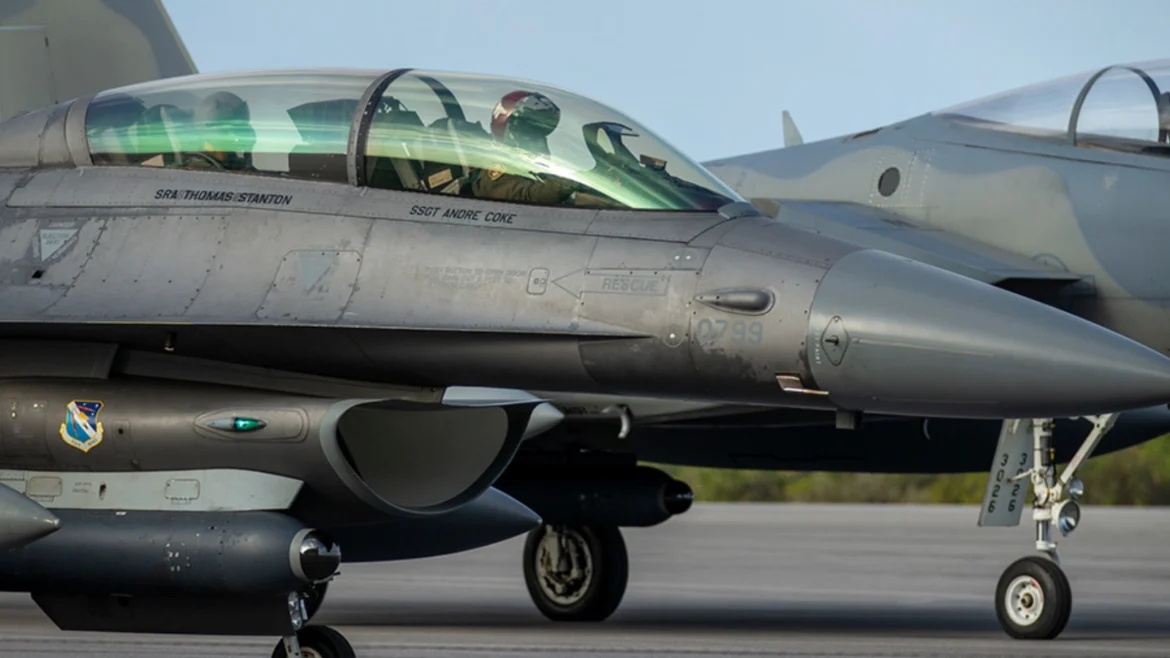
The X-62A VISTA is a heavily modified F-16D Block 30 equipped with advanced simulation software that allows engineers to rapidly install and evaluate different autonomous flight algorithms.
Unlike a conventional fighter, the aircraft can emulate multiple aircraft types and flight control characteristics through its Variable Stability In-flight Simulator architecture. Since receiving major autonomy upgrades, it has become the Air Force’s primary flying laboratory for evaluating machine learning in tactical aviation.
Previous milestones include:
- AI controlled supersonic flight
- Autonomous dogfight testing against human pilots
- AI controlled defensive missile evasion
- Evaluation of collaborative autonomous flight behaviors
The latest airborne interception demonstration expands these capabilities into another mission area that future autonomous combat aircraft are expected to perform.
What Makes Airborne Interception More Challenging
Intercepting another aircraft is significantly more complex than executing scripted maneuvers.
The autonomous system must continuously:
Mission Function AI Requirement Detect target Process sensor information rapidly Track aircraft Predict changing flight paths Maneuver safely Maintain aircraft performance limits Select intercept geometry Optimize closure rates and positioning Adapt in real time Respond to unexpected target maneuvers These functions require autonomous software to make rapid decisions while operating within strict flight safety constraints.
Unlike demonstrations focused solely on aggressive maneuvering, interception requires balancing tactical effectiveness with safe aircraft handling throughout the engagement.
Supporting Future Collaborative Combat Aircraft
The demonstration directly supports the Department of the Air Force’s broader effort to field autonomous Collaborative Combat Aircraft (CCA).
Future CCAs are expected to operate alongside crewed fighters including the F-35A and the forthcoming Next Generation Air Dominance (NGAD) platform.
Rather than replacing pilots, autonomous aircraft are envisioned to perform missions such as:
- Forward scouting
- Airborne interception
- Defensive counter air
- Electronic warfare
- Decoy operations
- Cooperative missile employment
Testing these capabilities aboard the X-62 allows engineers to validate software in realistic flight conditions before transitioning algorithms to operational uncrewed aircraft.
AI Development Continues To Expand
The X-62 continues to receive upgrades designed to support increasingly sophisticated autonomy testing.
The Air Force is enhancing the aircraft with advanced mission systems, including modern radar and sensor integration, enabling autonomous software to process more representative combat information during future experiments. Those improvements are intended to support testing involving multiple aircraft and more operationally realistic scenarios.
The aircraft also complements the VENOM (Viper Experimentation and Next-generation Operations Model) program, which is modifying additional F-16s to accelerate autonomy research across a larger test fleet.
Why This Matters
Although the latest demonstration remains an experimental flight test, its significance extends well beyond a single aircraft.
Modern air combat is increasingly defined by compressed decision timelines, large numbers of airborne sensors, electronic warfare, and cooperation between crewed and uncrewed platforms. Artificial intelligence offers the potential to process information and recommend or execute tactical actions at speeds beyond human capability while allowing pilots to focus on mission command.
The interception test also illustrates a gradual shift in Air Force AI development. Earlier efforts concentrated on proving that autonomous systems could safely fly an aircraft or compete in basic dogfights. Current testing is expanding into operational mission sets that reflect how autonomous aircraft may contribute during future combat operations.
Importantly, the Air Force continues to emphasize that these demonstrations occur with extensive human oversight, rigorous safety controls, and onboard safety pilots. The objective is not fully independent combat aircraft today, but developing trusted autonomous systems that can operate alongside human aircrews in increasingly complex environments.
As Collaborative Combat Aircraft move toward operational service later this decade, demonstrations aboard the X-62 provide valuable risk reduction by validating software in real flight conditions before integration into next generation autonomous combat platforms.
Executive Summary:
RTX has advanced a longer range version of its StormBreaker precision weapon from concept to flight testing in less than 12 months, marking one of the company’s fastest air launched weapon development efforts. The new design aims to significantly extend standoff strike range while retaining StormBreaker’s existing multi mode guidance and network enabled targeting capabilities for U.S. and allied air forces.
RTX Advances Longer Range StormBreaker Toward Flight Testing
RTX has moved its Longer Range StormBreaker precision strike weapon into flight testing less than a year after beginning development, demonstrating an accelerated approach to delivering new air launched capabilities for the U.S. military and international customers. The company announced the milestone during its recent update on advanced weapons development, highlighting a rapid engineering process driven by evolving operational requirements.
The effort builds on Raytheon’s existing StormBreaker family, officially designated the GBU 53/B, which is already fielded on the U.S. Air Force’s F 15E Strike Eagle and approved for the U.S. Navy’s F/A 18E/F Super Hornet. Integration continues across all three variants of the F 35 Lightning II.
Building On An Existing Combat Proven Weapon
Rather than designing an entirely new missile, RTX leveraged the mature StormBreaker architecture to shorten development timelines.
According to the company, engineers reused key subsystems while incorporating a new propulsion solution designed to dramatically increase engagement range. This modular approach allowed the weapon to progress from concept to flight testing in under 12 months.
The original StormBreaker is designed to defeat both moving and stationary targets under challenging weather conditions. Its tri mode seeker combines:
- Imaging infrared guidance
- Millimeter wave radar
- Semi active laser guidance
A two way datalink also enables operators to update target information after launch, allowing the weapon to engage dynamic battlefield targets.
Longer Range Expands Operational Flexibility
The primary enhancement is increased standoff distance.
Although RTX has not disclosed exact performance figures, the longer range configuration is intended to allow aircraft to engage targets from farther outside hostile air defense envelopes while preserving StormBreaker’s precision engagement capability.
Greater range provides several operational advantages:
Capability Operational Benefit Extended launch distance Aircraft remain farther from enemy air defenses Precision engagement Reduced collateral damage against tactical targets Network enabled guidance In flight target updates improve flexibility Multi mode seeker Effective against moving targets in adverse weather Existing StormBreaker architecture Faster fielding and lower development risk Why The Development Timeline Matters
Modern defense procurement has increasingly emphasized speed.
Traditional precision weapon programs often require many years between concept definition and flight testing. RTX’s decision to reuse proven technologies reflects a broader industry trend toward modular weapon development, enabling manufacturers to respond more rapidly to changing operational requirements.
The company previously demonstrated this philosophy during development of the ground launched StormBreaker prototype, which progressed from concept to testing in roughly 50 days using existing weapon components and commercial rocket technology.
The air launched longer range variant follows the same engineering philosophy, reducing technical risk while accelerating delivery.
Strategic Context
The longer range StormBreaker arrives as U.S. and allied militaries place greater emphasis on long range precision strike against heavily defended targets.
Potential future operating environments in the Indo Pacific and Europe feature increasingly sophisticated integrated air defense systems, electronic warfare capabilities, and contested airspace. Aircraft capable of launching precision weapons from greater distances gain improved survivability while maintaining the ability to strike mobile targets.
StormBreaker’s existing network enabled architecture already supports engagement of moving vehicles, maritime targets, and fixed infrastructure under poor visibility. Extending range could significantly increase mission flexibility without requiring major aircraft modifications.
Unlike developing an entirely new weapon, upgrading an established munition also simplifies logistics, training, sustainment, and platform integration for operators already fielding StormBreaker.
Existing Integration Across Multiple Aircraft
StormBreaker continues expanding across multiple U.S. tactical aircraft.
The weapon has completed extensive testing from:
RTX reported a perfect 14 for 14 planned jettison success rate during U.S. Navy F-35C testing, supporting continued integration across the Joint Strike Fighter fleet.
As the F 35 becomes the primary tactical aircraft for numerous allied nations, a longer range StormBreaker could offer an incremental capability upgrade without requiring entirely new aircraft certification programs.
Industry Implications
Rapid adaptation of existing precision weapons has become a defining trend across the defense industry.
Rather than relying exclusively on lengthy next generation development programs, manufacturers are increasingly extending proven systems with improved propulsion, networking, software, and seekers. This approach reduces acquisition risk while delivering operational capability much faster.
For RTX, advancing the Longer Range StormBreaker from concept to flight testing in under a year demonstrates how modular weapon architectures can accelerate modernization. If flight testing proceeds successfully, the weapon could provide U.S. and allied air forces with a cost effective means of expanding precision strike reach while leveraging an already fielded family of smart munitions.
Executive Summary:
Türkiye’s indigenous KAAN fifth generation fighter has entered another key stage of development after a newly built prototype began taxi testing in late July 2026. The milestone moves the program closer to an expanded flight test campaign that will validate production standard systems and support the Turkish Air Force’s long term modernization plans.
KAAN Prototype Starts Taxi Tests As Flight Test Campaign Expands
Turkish Aerospace has begun taxi testing a new KAAN prototype, marking another significant milestone in Türkiye’s effort to field an indigenous fifth generation fighter aircraft. The company released footage of the prototype conducting low speed runway tests, confirming that the aircraft has entered the final phase of ground evaluations before its planned first flight later this year.
The latest prototype represents a major step beyond the technology demonstrator that first flew in February 2024. Turkish Aerospace has stated that multiple prototypes are being assembled to accelerate testing, collect certification data, and mature the aircraft ahead of operational service.
Why Taxi Tests Matter
Taxi testing is one of the final validation stages before a prototype receives clearance for flight.
During these tests engineers evaluate:
- Steering and braking performance
- Flight control system operation
- Landing gear functionality
- Engine performance across different power settings
- Aircraft stability during ground operations
- Communications and onboard avionics integration
Successful completion reduces technical risk before first flight while allowing engineers to identify integration issues without exposing the aircraft to airborne hazards.
Unlike the original prototype, the newest aircraft incorporates systems intended to be much closer to the production configuration, allowing engineers to collect more representative flight data.
A Larger Flight Test Fleet
Turkish Aerospace plans to significantly expand KAAN’s flight testing over the next several years.
According to company officials, additional prototypes are expected to join the program, enabling simultaneous testing of:
- Flight performance
- Mission systems
- Sensor integration
- Weapons compatibility
- Environmental qualification
- Structural loads
A larger prototype fleet allows multiple test objectives to be pursued in parallel, shortening overall development timelines compared with relying on a single aircraft.
Current Propulsion Strategy
The current KAAN prototypes continue to use two GE Aerospace F110 afterburning turbofan engines.
Turkish Aerospace has confirmed that these engines will power early production aircraft while Türkiye develops the indigenous TF35000 engine intended for later production blocks. Company officials recently disclosed that export approval has enabled procurement of additional F110 engines to sustain prototype and initial production requirements.
The transition to a domestically developed engine remains one of the program’s most technically demanding objectives, since propulsion affects aircraft performance, maintenance, export flexibility, and long term industrial independence.
KAAN Program Snapshot
Specification Details Manufacturer Turkish Aerospace Aircraft Type Twin engine fifth generation multirole fighter First Flight February 2024 Current Milestone New prototype taxi testing Current Engine Two GE Aerospace F110 turbofans Planned Indigenous Engine TEI TF35000 Intended Operator Turkish Air Force Planned Service Entry Later this decade (subject to development progress) Strategic Importance For Türkiye
KAAN is one of Türkiye’s largest aerospace development programs and forms a central element of Ankara’s strategy to expand domestic defense manufacturing.
The aircraft is intended to replace aging F 16 fighters while providing an indigenous platform capable of advanced air superiority and multirole missions. Beyond military capability, the program supports growth across Türkiye’s aerospace supply chain, including avionics, sensors, software, composite manufacturing, and propulsion technologies.
For Turkish industry, developing these technologies domestically also reduces long term dependence on foreign suppliers for future combat aircraft modernization.
What This Means For Global Air Power
The taxi tests themselves do not demonstrate operational capability, but they indicate that the program continues progressing through standard aerospace development milestones.
Globally, only a limited number of countries are pursuing indigenous fifth generation fighter programs. As additional KAAN prototypes enter flight testing, engineers will be able to validate stealth shaping, mission systems, flight control software, and weapons integration under increasingly demanding conditions.
From a broader defense perspective, KAAN reflects a wider trend in which regional powers are investing heavily in sovereign aerospace capabilities rather than relying exclusively on imported combat aircraft. If development remains on schedule, Türkiye will join a small group of nations capable of designing, testing, and producing advanced stealth fighters largely within their domestic industrial base.
For NATO, the program could eventually strengthen alliance industrial capacity while providing an additional source of advanced combat aircraft technology, although operational maturity will depend on years of continued testing, certification, and production.
Executive Summary:
The U.S. Air Force is examining future propulsion options for its F-15EX Eagle II and F-16 Fighting Falcon fleets as part of a broader effort to strengthen long term competition and sustainment. The review comes as the service prepares for decades of continued operation of both fighter platforms while balancing readiness, affordability, and industrial base resilience.
US Air Force Studies Alternative Engines For F-15EX And F-16
The F-15EX alternative engines initiative signals a renewed Air Force interest in increasing competition for propulsion systems supporting two of its most important fourth generation fighter fleets. Air Force officials are evaluating whether additional engine options could reduce long term sustainment costs and improve operational flexibility.
The F-15EX currently flies with the GE Aerospace F110,GE,129 engine, while many F-16 variants operate either General Electric F110 engines or Pratt & Whitney F100 engines depending on aircraft block and operator. The Air Force’s review does not represent an immediate procurement decision but instead explores future pathways as fleet requirements evolve.
Why The Air Force Is Revisiting Fighter Engine Competition
Historically, engine competition has been viewed as a way to encourage innovation while providing leverage on pricing and sustainment.
The F-15EX program initially experienced debate over whether a sole source engine procurement or a competitive process would best support rapid fielding. Ultimately, the Air Force selected the GE F110 because it had already completed integration and certification with the aircraft’s digital fly by wire flight control system, minimizing schedule risk.
For the F-16 fleet, both GE Aerospace and Pratt & Whitney engines have powered different production blocks for decades, providing the Air Force and international operators with experience supporting multiple propulsion options.
Current Engine Configuration
Aircraft Current Primary Engine Notes F-15EX Eagle II GE F110,GE,129 Fully integrated and certified for the aircraft F-16 Fighting Falcon GE F110 or Pratt & Whitney F100 Depends on production block and operator Strategic Importance Beyond Procurement
The engine review reflects more than a technical exercise.
The Air Force expects both aircraft to remain operational well into the 2030s and beyond. The F-15EX continues replacing aging F-15C aircraft while assuming homeland defense and long range weapons carriage missions. Meanwhile, upgraded F-16s remain essential for homeland operations, training, and numerous overseas deployments.
Because propulsion systems account for a significant portion of lifecycle operating costs, even modest improvements in maintenance requirements, fuel efficiency, spare parts availability, or reliability can produce substantial savings across hundreds of aircraft.
Technical Challenges Of Introducing A New Engine
Although evaluating alternative engines appears straightforward, integrating a new propulsion system into an existing fighter is a complex engineering effort.
Certification typically requires:
- Flight testing across the aircraft’s operating envelope.
- Software integration with flight control systems.
- Validation of cooling, electrical, and hydraulic interfaces.
- Structural analysis of engine mounts.
- Logistics and maintenance qualification.
- Airworthiness certification.
For the F-15EX, these integration requirements were one of the principal reasons the Air Force previously favored the already qualified GE F110 rather than introducing another engine option.
Broader Implications For U.S. Air Power
The Air Force’s review also reflects broader concerns about maintaining a healthy defense industrial base.
Maintaining multiple capable propulsion suppliers can strengthen supply chain resilience, reduce dependence on a single manufacturer, and preserve engineering expertise that could benefit future combat aircraft programs.
At the same time, introducing competition must be balanced against integration costs and the operational risks associated with certifying new propulsion systems.
As the Air Force modernizes its tactical aviation fleet alongside sixth generation development efforts, sustaining highly capable fourth generation fighters remains a critical element of overall force structure. Aircraft such as the F-15EX provide exceptional payload capacity, long range, and the ability to carry emerging long range air to air and strike weapons that complement stealth aircraft rather than replace them.
What Happens Next
Air Force officials have not announced a formal engine competition or acquisition timeline.
Instead, the current effort appears focused on understanding available propulsion technologies, future sustainment strategies, and potential industrial benefits before any procurement decisions are made.
If the study eventually leads to competitive engine procurement, it could influence sustainment planning for hundreds of fighters that are expected to remain in service for decades.
Executive Summary:
NATO’s Next Generation Rotorcraft Capability (NGRC) program has entered its concept design stage, marking another milestone in the alliance’s effort to replace aging medium military helicopters after 2035. The move allows prequalified aerospace manufacturers to begin developing competing designs that could define NATO’s future vertical lift capability for decades.
NATO Next Generation Rotorcraft Capability Moves Into Concept Design Phase
NATO’s Next Generation Rotorcraft Capability (NGRC) program has advanced into its concept design phase, bringing the multinational effort one step closer to selecting a successor for several aging helicopter fleets operated across Europe.
Managed by the NATO Support and Procurement Agency (NSPA), the program is intended to deliver a new generation of medium multi role military rotorcraft capable of operating in increasingly contested environments while replacing legacy platforms such as the NH90 and AW101 beginning around 2035.
The latest milestone follows years of requirement studies and industry concept work, shifting the project from exploratory research toward competitive design development.
Six NATO Nations Continue Joint Development
The NGRC initiative currently includes six participating NATO members:
- Canada
- France
- Germany
- Italy
- Netherlands
- United Kingdom
The participating governments are working together through the NSPA to establish common operational requirements rather than pursuing separate national helicopter replacement programs.
According to NATO, multinational cooperation is intended to reduce development costs, improve interoperability, and accelerate the introduction of advanced technologies into allied forces.
Four Aerospace Companies Eligible To Submit Designs
Following an industry prequalification process, four manufacturers are eligible to compete during the concept design phase:
Company Status Airbus Helicopters Prequalified Boeing Prequalified Leonardo Helicopters Prequalified Sikorsky Prequalified The companies will receive NATO’s formal Request for Proposals (RFP), after which they will prepare detailed concept designs for evaluation.
Unlike the earlier study phase, Boeing has now entered the competition, joining Airbus, Leonardo, and Sikorsky in the next stage of the program.
Program Requirements Continue To Mature
NSPA officials indicate that approximately 90 percent of the operational requirements have been agreed among participating nations.
Several major capability areas have already been established:
- Land and maritime mission capability
- Transport capacity for approximately 12 to 16 fully equipped troops
- Compatibility with naval ships and flight decks
- Improved survivability in contested environments
- Greater operational range and endurance
- Digital open systems architecture for future upgrades
Some key requirements remain under discussion, including the preferred balance between cruise speed, aircraft weight, payload, and shipboard compatibility. Those decisions will significantly influence the final aircraft configuration.
Multiple Technical Approaches Remain Under Consideration
One notable feature of the NGRC competition is that NATO has not selected a preferred aircraft architecture.
Instead, manufacturers are proposing different approaches that include:
- Conventional helicopter designs
- High speed compound helicopters
- Advanced tiltrotor concepts
Airbus has publicly presented both conventional and compound rotorcraft concepts, while Leonardo continues to promote a next generation military tiltrotor derived from technologies developed through its civil tiltrotor research programs.
This technology neutral approach allows NATO to evaluate multiple solutions before selecting a preferred path.
Why NGRC Matters For Future NATO Operations
The NGRC program reflects changing operational realities facing NATO forces.
Many helicopters currently serving European militaries were designed decades ago and face increasing limitations against modern air defense systems, long range precision fires, electronic warfare, and unmanned aircraft.
Future military operations are expected to demand aircraft capable of:
- Faster deployment across large operational areas
- Longer stand off distances from frontline threats
- Greater digital connectivity
- Improved survivability
- Easier integration with autonomous systems and unmanned platforms
Rather than focusing solely on replacing existing helicopters, NATO is attempting to define a vertical lift capability suited for operations well into the 2040s.
Analysis: Balancing Performance, Cost, And Commonality
One of the NGRC program’s biggest technical challenges is balancing competing operational requirements.
Higher cruise speeds generally require more complex aircraft designs, increasing acquisition costs, maintenance demands, and technical risk. Conventional helicopters remain simpler and less expensive but may offer reduced operational reach compared with compound rotorcraft or tiltrotors.
Equally important is NATO’s emphasis on commonality. Developing one multinational platform could simplify logistics, maintenance, pilot training, and long term sustainment across several allied air forces.
Open systems architecture is another critical objective. A digitally designed aircraft would allow future upgrades to sensors, mission systems, electronic warfare suites, communications equipment, and autonomous capabilities without requiring major structural redesigns.
From a strategic perspective, the NGRC effort also demonstrates NATO’s continued investment in collaborative capability development. Rather than replacing helicopters independently, participating allies are pooling requirements and industrial expertise to field a common platform capable of supporting coalition operations for decades.
Expected Program Timeline
Milestone Expected Timeframe Concept design competition 2026 to 2027 Industry proposal evaluation 2027 Platform selection recommendation Early 2028 Development and production contracts 2028 to 2029 Planned entry into service Around 2035 The schedule remains subject to agreement among participating governments and successful completion of the competitive design process.
Looking Ahead
As the NGRC enters concept design, participating manufacturers will begin translating NATO’s operational requirements into detailed aircraft proposals.
The next two years will be critical as governments assess competing technologies, operational performance, affordability, and long term support considerations before selecting the design that will shape NATO’s future medium rotorcraft capability.
Executive Summary:
Exercise Combat Archer U.K. 26 concluded on July 24 after two weeks of advanced air combat training that certified U.S. Air Force fighter squadrons for operational air to air missions. The exercise brought together U.S. and Royal Air Force aircraft for live weapons employment, strengthening NATO interoperability and combat readiness in Europe.
Exercise Combat Archer U.K. 26 Reinforces NATO Fighter Combat Readiness
Exercise Combat Archer U.K. 26 has concluded with the successful combat certification of the U.S. Air Force’s 492nd and 493rd Fighter Squadrons stationed at Royal Air Force Lakenheath, England. Led by U.S. Air Forces in Europe and Air Forces Africa (USAFE-AFAFRICA), the exercise validated the ability of pilots, maintainers, and support personnel to conduct live air to air combat operations under realistic operational conditions.
The exercise also integrated Royal Air Force F-35B Lightning II aircraft, demonstrating allied interoperability during advanced weapons employment scenarios. According to the U.S. Air Force, the training ensures operational fighter units remain certified before undertaking real world missions.
Live Weapons Certification Focused On Combat Readiness
Combat Archer is one of the U.S. Air Force’s premier fighter weapons evaluation exercises. Rather than serving as a large force employment event, its primary purpose is to verify that fighter squadrons can safely and effectively employ live weapons while meeting operational standards.
The 83rd Fighter Weapons Squadron from Tyndall Air Force Base, Florida, served as the evaluating organization, while the 351st Aerial Refueling Squadron from RAF Mildenhall provided aerial refueling support throughout the exercise.

An Air Force F-35A Lightning II fighter jet, assigned to the 48th Fighter Wing, prepares to receive fuel from a KC-135 Stratotanker aircraft, assigned to the 100th Air Refueling Wing, during Exercise Combat Archer U.K. 26 over the North Sea, July 20, 2026. With rapid, reliable refueling, 100th Air Refueling Wing tankers extend sorties and sustain combat operations, allowing fighters to concentrate on weapons employment and underscoring air mobility as a critical enabler of readiness. Ground crews assembled, loaded, armed, and inspected live air to air missiles before aircraft launches. Pilots then executed complex intercept missions culminating in live missile and aerial gun engagements against airborne targets.
According to the Air Force, these evaluations satisfy Chief of Staff certification requirements before fighter units deploy for operational taskings.
RAF F-35B And U.S. Fighters Train Together
A notable feature of Exercise Combat Archer U.K. 26 was the integration of Royal Air Force F-35B Lightning II aircraft with U.S. fourth and fifth generation fighters.
RAF crews executed beyond visual range engagement scenarios alongside U.S. aircraft, allowing both services to synchronize tactics, techniques, and procedures. Such integration improves coalition effectiveness during multinational operations while enhancing confidence between allied air forces.

Air Force Master Sgt. Nathan Perry, 100th Air Refueling Wing chief instructor boom operator, positions the boom for refueling during Exercise Combat Archer U.K. 26 over the North Sea, July 20, 2026. The wing’s tankers are the premier source of aerial refueling operations within the European theater. The exercise also enabled participants to practice mission planning, weapons selection, aircraft maintenance, command and control coordination, and airborne execution within realistic combat scenarios.
Live Fire Data Benefits Future Weapons Development
Beyond pilot qualification, Combat Archer provides valuable engineering information.
Unlike routine training flights, the exercise employs traceable air to air missiles equipped to transmit detailed telemetry throughout each engagement. Engineers analyze this information to assess missile performance, guidance accuracy, launch parameters, and aircraft system integration.
This data supports future improvements to aircraft mission systems, weapons software, and missile guidance technologies across the U.S. Air Force inventory.
Senior Leaders Emphasize Operational Preparation
Lt. Gen. Jason Hinds, commander of U.S. Air Forces in Europe and Air Forces Africa, said the exercise allows operational units to share lessons learned before they are needed in real world operations.
He noted that conducting challenging multinational training provides a strategic advantage while improving readiness among pilots, maintainers, and support personnel across the command.

Air Force Airman 1st Class Karlie Kessler, 493rd Aircraft Maintenance Unit weapons load crew member, loads an AIM-9X missile onto an F-35A Lightning II fighter jet with the assistance of Air Force Tech. Sgt. Kevin Williams, 493rd AMU weapons load crew chief, and Air Force Airman 1st Class Ismael Belem, 493rd AMU weapons load crew member, during Exercise Combat Archer U.K. 26 at Royal Air Force Lakenheath, England, July 21, 2026.Capt. Thomas Holmes of the 493rd Fighter Squadron described Combat Archer as one of the few opportunities for pilots to experience actual live weapons employment, noting that realistic firing exercises remain essential for maintaining advanced air to air combat proficiency.
Why Combat Archer Matters Beyond Certification
Although Combat Archer focuses primarily on weapons certification, its strategic importance extends well beyond individual pilot qualifications.
Europe continues to experience one of its most demanding security environments since the Cold War. NATO air forces increasingly conduct multinational patrols, quick reaction alert missions, and deterrence operations across the alliance’s eastern flank. Exercises that validate live weapons employment help ensure these aircraft can immediately transition from training to operational missions if required.
Another significant aspect is interoperability between fourth generation aircraft such as the F-15E Strike Eagle and fifth generation platforms like the RAF’s F-35B. Modern air operations increasingly rely on mixed force packages that combine stealth aircraft, conventional fighters, aerial refueling assets, and airborne command systems. Training these platforms together under realistic combat conditions improves operational effectiveness while reducing integration risks during coalition operations.
The exercise also highlights the critical role of maintainers. Combat capability depends not only on pilot proficiency but also on the speed and accuracy with which ground crews prepare aircraft, inspect weapons, and generate sorties under operational timelines. Combat Archer evaluates these support functions alongside flight operations, providing a comprehensive assessment of squadron readiness.
Key Exercise Participants
Organization Role U.S. Air Forces in Europe and Air Forces Africa Exercise lead 492nd Fighter Squadron Combat certification 493rd Fighter Squadron Combat certification Royal Air Force F-35B units Allied integration and BVR training 83rd Fighter Weapons Squadron Weapons evaluation and certification 351st Aerial Refueling Squadron Air refueling support Operational Significance
Exercise Combat Archer U.K. 26 demonstrates how the U.S. Air Force and Royal Air Force continue investing in realistic live fire training to maintain combat credibility within NATO. By certifying both aircrews and maintenance personnel under demanding operational conditions, the exercise strengthens alliance readiness while generating valuable technical data that will inform future aircraft and weapons improvements.
As NATO places increasing emphasis on rapid response and multinational integration, recurring certification events such as Combat Archer remain a key component of maintaining a capable and immediately deployable fighter force across the European theater.
Executive Summary:
A Royal Australian Air Force KC-30A Multi-Role Tanker Transport delivered fuel to Indian Air Force Rafales, RAAF F/A-18F Super Hornets, Republic of Korea Air Force F-15Ks and German Air Force Eurofighter Typhoons during Exercise Pitch Black 2026. The operation, highlighted by the RAAF on 28 July 2026, demonstrated practical multinational aerial refueling interoperability among partner air forces operating from bases in northern Australia. The activity forms part of the biennial exercise running from 20 July to early August 2026, which brings together approximately 21 nations and up to 100 aircraft to strengthen collective readiness in the Indo-Pacific.
RAAF KC-30A Conducts Multinational Aerial Refueling at Pitch Black 2026
A Royal Australian Air Force KC-30A Multi-Role Tanker Transport successfully delivered fuel to Indian Air Force Rafales, RAAF Super Hornets, Republic of Korea Air Force F-15Ks and German Eurofighter Typhoons, the RAAF announced via official channels on 28 July 2026.
The mission occurred during Exercise Pitch Black 2026, the RAAF’s premier biennial air combat training event held primarily across RAAF Bases Darwin, Tindal and Amberley in Australia’s Northern Territory and Queensland. The exercise runs from 20 July to approximately 6–7 August 2026 and involves around 2,500 personnel from 21 nations with up to 100 aircraft.
Official RAAF statements describe the refueling as evidence of seamless multinational interoperability. The KC-30A, operated by No. 33 Squadron and based at RAAF Base Amberley, serves as both a tanker and strategic transport platform derived from the Airbus A330 airliner.
Exercise Pitch Black 2026 Context and Scale
Pitch Black 2026 ranks among the largest and most complex air combat exercises in the Indo-Pacific. It emphasizes large-force employment, day and night operations, and integration of fighters, tankers, airborne early warning, and airlift assets over one of the world’s largest military training areas.
Participating nations include Australia, the United States, Japan, India, the Republic of Korea, Germany, Spain, France, Singapore, Indonesia, the Philippines, Thailand and others, along with embedded personnel from additional partners. Aircraft types range from F-35A Lightning IIs and Super Hornets to Rafales, Typhoons, F-16s and supporting tankers such as the RAF Voyager, U.S. KC-135 and Multinational Multi-Role Tanker Transport Unit platforms.
Air-to-air refueling forms a core enabler. Tankers based at Amberley and Tindal extend the range and endurance of combat aircraft operating hundreds of kilometers from their temporary bases, allowing sustained training in realistic high-intensity scenarios.
Technical Capabilities of the KC-30A
The RAAF operates seven KC-30A aircraft. Each can carry more than 100 tonnes of fuel and offload substantial quantities while remaining on station for extended periods. The platform is equipped with an advanced aerial refueling boom system on the tail and two under-wing hose-and-drogue pods. An air refueling operator controls both systems from the cockpit using 2D and 3D displays.
This dual capability allows the KC-30A to service aircraft configured for boom refueling (common on many U.S. and allied types) and those using probe-and-drogue systems (standard on many European and some Asian fighters). Compatibility testing and certification with partner aircraft have expanded steadily in recent years, enabling the KC-30A to support a growing list of foreign receivers.
In previous iterations of Pitch Black and other multinational activities, RAAF tankers have refueled a wide range of allied platforms. The July 2026 mission with Indian Rafales, Korean F-15Ks and German Typhoons continues that progression.
Operational Implications for Indo-Pacific Interoperability
Aerial refueling interoperability is a practical measure of alliance readiness. In a theater as vast as the Indo-Pacific, the ability of partner aircraft to receive fuel from a common tanker fleet multiplies available combat power without requiring every nation to deploy its own tankers in equal numbers.
For the United States and its partners, such integration reduces logistical friction in potential coalition operations. Indian Rafales, already operating as part of a growing Indo-Pacific partnership, gain experience receiving fuel from a non-French tanker. Republic of Korea Air Force F-15Ks, long-range strike platforms, demonstrate the ability to sustain operations far from home bases. German Typhoons, deployed across significant distances, validate expeditionary procedures alongside regional partners.
The RAAF’s role as host and primary tanker provider positions Australia as a key enabler of collective air power. By concentrating tanker support at Amberley while combat operations occur over the Northern Territory, the exercise also tests distributed logistics and command-and-control arrangements that would be relevant in real-world contingencies.
From a technical standpoint, successful simultaneous or sequential refueling of disparate fighter types requires precise coordination of formation flying, radio procedures, fuel offload rates and emergency protocols. Achieving this across four different national air forces underscores the maturity of shared standards developed through repeated exercises.
Broader Strategic Context
Pitch Black occurs against a backdrop of heightened focus on Indo-Pacific security architecture. Regular large-scale air exercises build habits of cooperation that are difficult to generate in crisis. They also provide opportunities to identify and resolve technical or procedural gaps before they affect operations.
The KC-30A fleet itself continues mid-life upgrades and sustainment efforts to maintain high readiness. Australia’s investment in the platform, combined with its willingness to certify foreign aircraft, contributes directly to the region’s collective aerial refueling capacity.
As Pitch Black 2026 continues through early August, further combined missions are expected. The RAAF’s public highlighting of the multinational refueling event signals that practical interoperability remains a central objective of the exercise.
Executive Summary:
British engineering company MGI Engineering has introduced the T-022 Vortex, an autonomous collaborative combat aircraft proposed for the United Kingdom’s emerging Storm Fighter requirement. The reusable uncrewed aircraft is designed to fly alongside Eurofighter Typhoon, F-35 Lightning II, and future GCAP fighters, providing lower cost strike, electronic warfare, and intelligence capabilities while expanding combat mass.
MGI T-022 Vortex Targets UK’s Next Generation Collaborative Air Combat Requirement
MGI Engineering has officially unveiled the T-022 Vortex, a new autonomous combat aircraft intended for the UK’s Storm Fighter requirement, marking the company’s most ambitious defense aviation program to date. The announcement was made through the company’s official release following earlier autonomous flight testing conducted under the UK Ministry of Defence’s Project BRAKESTOP.
Rather than replacing crewed fighters, the T-022 Vortex is designed as an Autonomous Collaborative Platform (ACP). It would accompany aircraft such as the Eurofighter Typhoon, the F-35 Lightning II, and the future Global Combat Air Programme (GCAP) fighter, carrying out high risk missions while reducing risk to human pilots.
Key Technical Characteristics
MGI positions the Vortex as a reusable autonomous aircraft instead of an expendable drone.
Specification MGI T-022 Vortex Maximum Takeoff Weight 3,500 kg Length 11.0 m Wingspan 7.6 m Maximum Payload 1,000 kg Internal Payload Bay 400 kg Maximum Speed Mach 0.85 Cruise Speed Approximately 875 km/h Operational Range More than 4,000 km Estimated Unit Cost £3 million to £6 million Source: MGI Engineering and publicly released company specifications.
MGI says the aircraft has been designed with modular mission systems that allow rapid configuration changes for strike operations, intelligence, surveillance and reconnaissance (ISR), electronic warfare, communications relay, suppression of enemy air defenses (SEAD), and decoy missions.
Built Around Collaborative Combat Operations
The central concept behind the T-022 Vortex is manned and unmanned teaming.
Instead of requiring continuous remote control, the aircraft is intended to execute missions with significant onboard autonomy while receiving mission priorities from a crewed fighter. This approach allows one pilot to coordinate multiple autonomous aircraft during complex operations inside contested airspace.
According to MGI, the aircraft incorporates experience gained during development of its TigerShark deep strike program under Project BRAKESTOP, including autonomous navigation, operations in GNSS denied environments, modular payload integration, and long range strike technologies.
Why Storm Fighter Matters
The UK Ministry of Defence has increasingly emphasized autonomous systems as part of its future combat aviation strategy.
Storm Fighter seeks affordable collaborative combat aircraft capable of operating alongside high value fighter fleets. These systems are expected to increase sortie generation, distribute sensors across the battlespace, conduct electronic attack, and absorb operational risk that would otherwise fall on expensive crewed aircraft.
The Vortex proposal aligns with broader international trends. The United States Air Force is advancing Collaborative Combat Aircraft (CCA) programs, while Australia, Japan, and European partners are also investing in loyal wingman concepts to complement advanced fighters rather than replace them.
Strategic Analysis
The introduction of the T-022 Vortex reflects a broader transformation in air power.
Modern fighter aircraft such as the F-35 and future sixth generation platforms provide exceptional capability but are expensive to procure and sustain. Defense planners increasingly recognize that future conflicts may require larger numbers of autonomous aircraft capable of extending sensor coverage, carrying additional weapons, conducting electronic warfare, and serving as decoys.
MGI’s proposed price range of £3 million to £6 million per aircraft is notable because it suggests that significantly larger autonomous fleets could be fielded for the cost of a small number of crewed fighters. If those cost targets prove achievable in production, operators could accept greater operational risk without jeopardizing high value assets.
However, several technical hurdles remain before aircraft such as the Vortex can become operational. Secure autonomous decision making, resilient communications in contested electromagnetic environments, mission software certification, and integration with existing command and control networks remain among the most demanding aspects of collaborative combat aircraft development.
In addition, low acquisition cost alone will not determine success. The platform must demonstrate reliable autonomous performance, interoperability with NATO combat aircraft, cybersecurity resilience, and maintainability before it can compete with other emerging collaborative combat systems.
Global Significance
The Vortex announcement underscores how autonomous aircraft are becoming a central element of future air combat doctrine across NATO.
For the United States and its allies, collaborative combat aircraft promise to increase combat mass without proportionally increasing procurement costs. They also offer greater operational flexibility by allowing commanders to distribute sensors, electronic warfare assets, and precision strike capabilities across multiple autonomous platforms.
If selected for future UK programs, the T-022 Vortex would contribute to a growing ecosystem of autonomous combat aircraft supporting next generation air operations rather than replacing traditional fighter fleets.