Executive Summary:
NASA’s X-59 experimental aircraft has successfully reached Mach 1.4 and 55,000 feet during a June 12 test flight, achieving the exact operating conditions required for future community overflight campaigns. The milestone advances NASA’s Quesst mission, which seeks to demonstrate that supersonic aircraft can fly over land while generating a quiet sonic thump rather than a disruptive sonic boom, potentially reshaping future civil aviation regulations.
NASA’s X-59 Reaches Critical Mission Conditions Flight Milestone
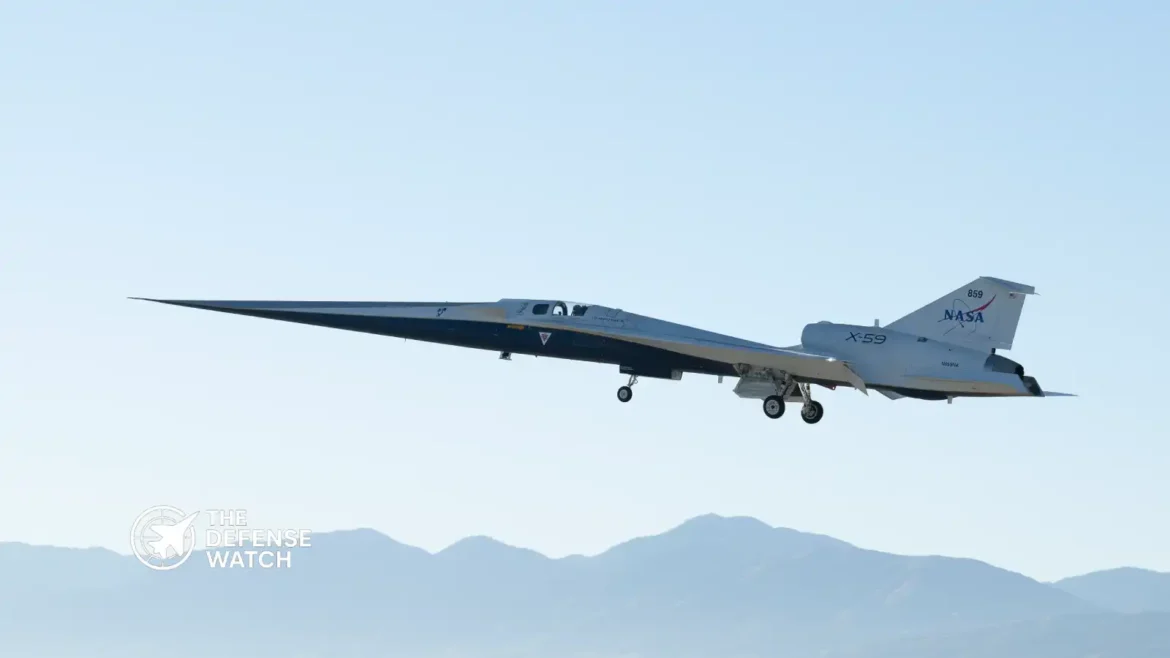
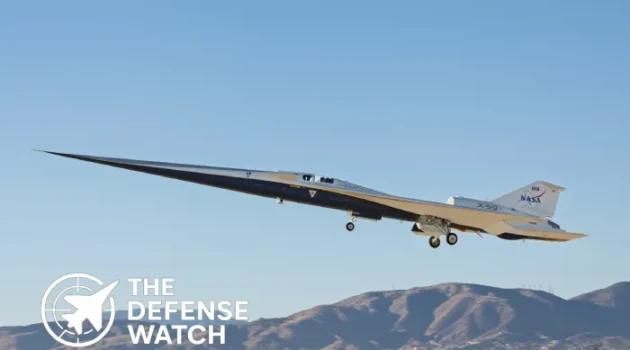
NASA’s X-59 quiet supersonic research aircraft has achieved a major program milestone by flying at Mach 1.4 and an altitude of 55,000 feet, the exact conditions planned for future community response testing under the agency’s Quesst mission. According to NASA, the achievement occurred during a June 12 flight test and represents the first time the aircraft has operated at its intended mission profile.
The milestone comes only days after the X-59 completed its first supersonic flight on June 5, when the aircraft exceeded the speed of sound for the first time by reaching approximately Mach 1.1 at 43,400 feet.
NASA officials describe the latest flight as more significant because it validates the aircraft’s ability to operate at the altitude and speed necessary for future community overflight demonstrations. Those demonstrations form the core objective of the Quesst program.
What Makes the X-59 Different?
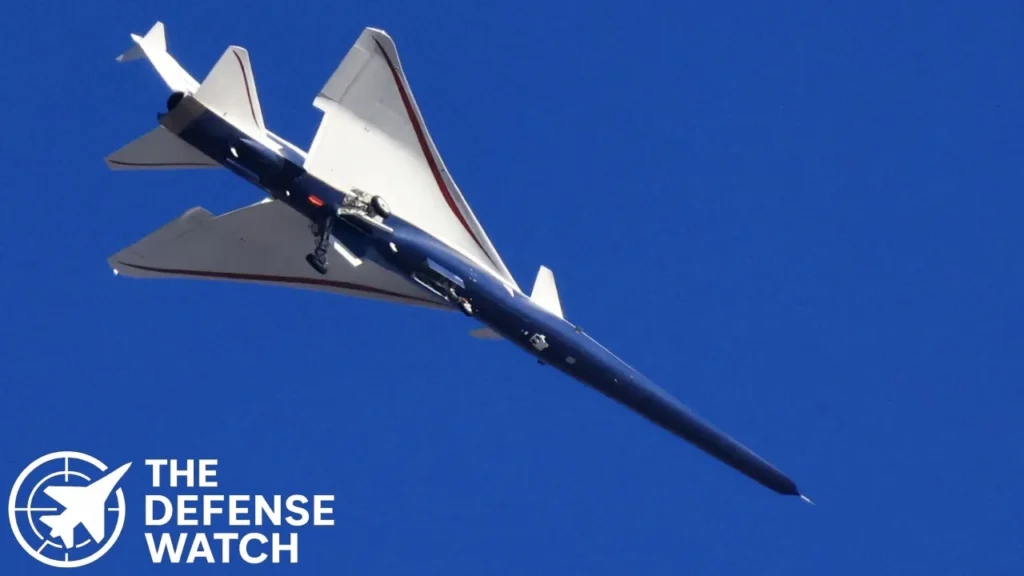
Unlike traditional supersonic aircraft such as the Concorde or military fighters, the X-59 was specifically engineered to minimize the shock waves that create loud sonic booms.
The aircraft features an unusually long and narrow nose, optimized fuselage shaping, and aerodynamic design elements intended to distribute pressure waves more evenly as the aircraft travels faster than sound. NASA’s objective is to transform the traditional sonic boom into a significantly quieter “sonic thump.”
Key X-59 specifications include:
Specification X-59 Maximum Test Speed Mach 1.4 Cruise Altitude 55,000 ft Length Nearly 100 ft Mission Quiet Supersonic Demonstrator Program NASA Quesst Prime Contractor Lockheed Martin Skunk Works The aircraft was developed by NASA in partnership with Lockheed Martin and serves as a flying laboratory rather than a prototype airliner. Its primary purpose is to collect scientific and acoustic data that regulators can use when evaluating future supersonic flight rules.
Community Overflights Are the Next Major Phase
NASA’s testing campaign remains focused on expanding the aircraft’s flight envelope and validating performance before acoustic testing begins.
The agency plans to conduct flights over multiple U.S. communities after the aircraft completes additional performance evaluations. During those flights, researchers will gather data on how people on the ground perceive the sound generated by the aircraft while operating at Mach 1.4 and 55,000 feet.
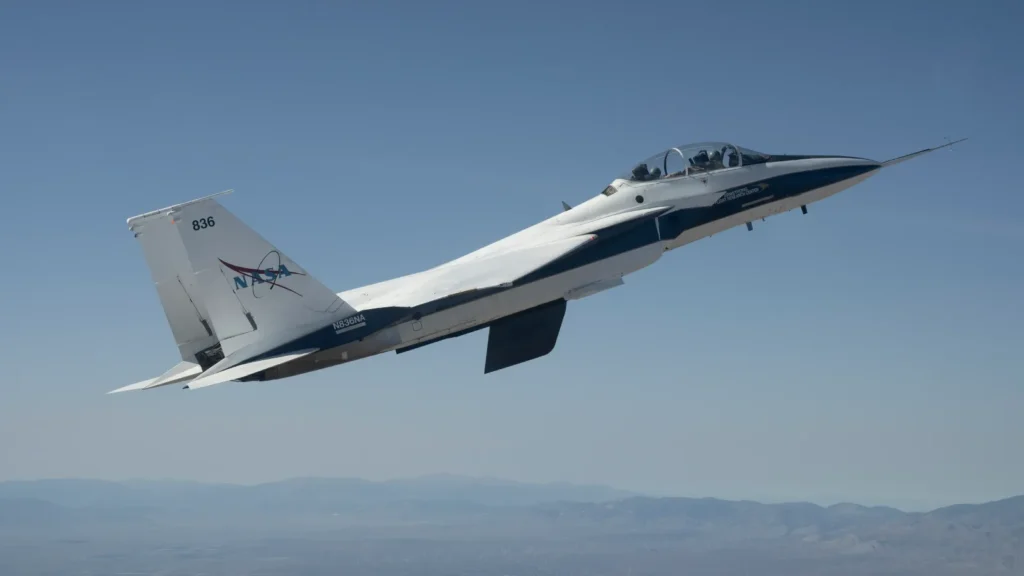
Interestingly, NASA has not yet verified the aircraft’s actual low-boom performance during recent supersonic flights. The X-59 has been accompanied by a NASA F-15 chase aircraft whose conventional sonic booms intentionally mask any sound generated by the experimental jet during early flight testing. Acoustic validation will occur during later testing phases.
Why the Program Matters for Future Aviation
The X-59 is attempting to address a regulatory challenge that has limited commercial supersonic travel for decades.
In 1973, U.S. regulators effectively prohibited routine civilian supersonic flight over land because traditional sonic booms created significant noise disturbances for communities below. That restriction remains a major barrier to the development of next-generation supersonic passenger aircraft.

Image : NASA NASA’s strategy is not to build a commercial airliner itself. Instead, the agency aims to generate scientifically validated acoustic data that could help regulators establish future noise-based standards for overland supersonic operations. The collected information will be shared with U.S. and international aviation authorities.
If successful, the effort could enable a new generation of commercial aircraft capable of dramatically reducing travel times on domestic and international routes while remaining acceptable to communities beneath flight paths.
Defense and Aerospace Implications
While the Quesst mission is fundamentally a civil aviation research effort, the technologies being evaluated have broader aerospace significance.
Low-boom aerodynamic shaping, advanced computational modeling, and high-speed flight control techniques could inform future military aircraft design. Reduced acoustic signatures during supersonic operations may offer operational advantages for reconnaissance, rapid response, and long-range strike platforms where minimizing detectability remains important.
-
The program also demonstrates continued U.S. leadership in experimental aerospace development through the use of X-plane research aircraft. Historically, X-plane programs have served as technology incubators for capabilities that later transitioned into operational military and civilian aviation systems.
From a strategic perspective, the X-59 represents one of the most ambitious efforts since the retirement of the Concorde to address the fundamental noise challenge that has constrained supersonic transportation for more than half a century.
Technical Challenges Still Ahead
Despite the recent milestone, the program remains in a test and validation phase.
NASA officials note that months of additional performance testing remain before the aircraft begins its community overflight campaign. Engineers must continue validating handling qualities, flight stability, and acoustic performance across a range of operating conditions.
The next critical objective will be confirming that the aircraft’s unique design consistently produces the predicted low-noise signature under real-world atmospheric conditions. Success in that phase will determine whether the collected data can support future regulatory changes governing overland supersonic flight.
-
(adsbygoogle = window.adsbygoogle || []).push({});Executive Summary:
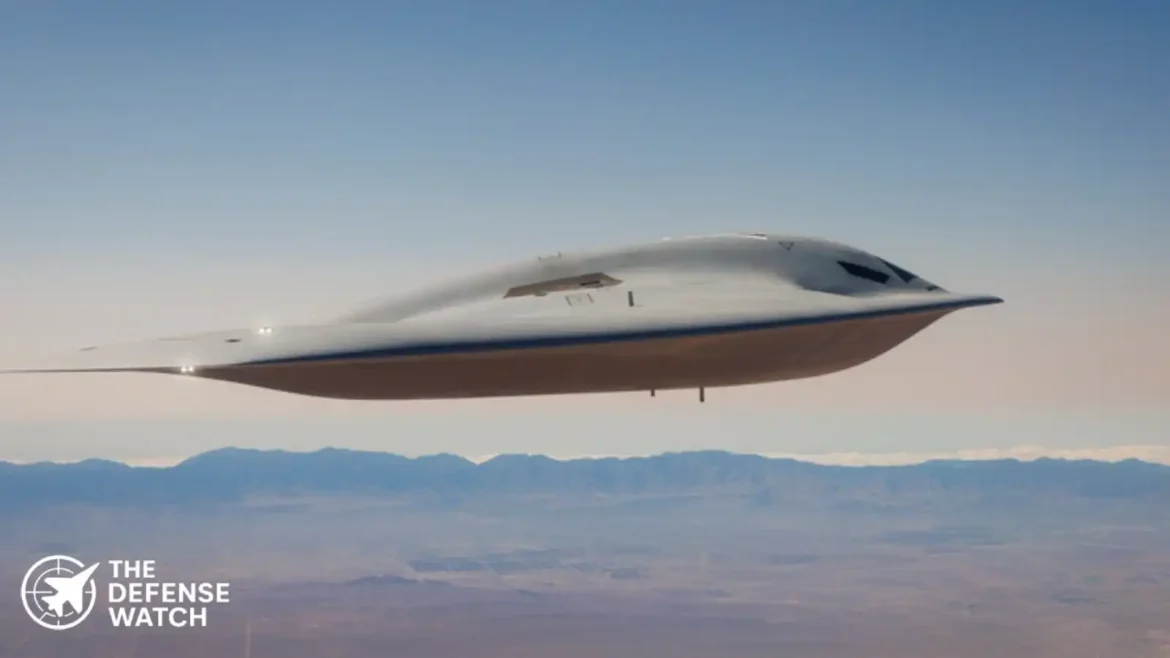
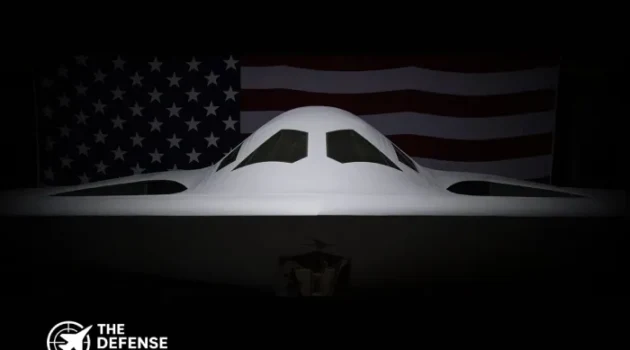
The U.S. Air Force has begun a new phase of B-21 Raider testing by integrating operational test pilots into the flight test program at Edwards Air Force Base, California. The milestone moves the stealth bomber beyond pure developmental testing and toward evaluation of real-world combat effectiveness, weapons integration, and operational utility. The transition is a critical step as the Air Force prepares the B-21 for future deployment as the backbone of America’s long-range strike force.
U.S. Air Force Begins Combat-Focused B-21 Raider Testing
The U.S. Air Force has initiated combat-focused testing of the B-21 Raider after an operational test pilot completed a flight alongside a developmental test pilot at Edwards Air Force Base, California. The flight marks the first publicly acknowledged integration of operational testers into the Raider program, signaling a shift toward evaluating how the aircraft will perform in actual combat scenarios rather than solely assessing flight characteristics.
According to Air Force officials, the addition of operational testers enables the service to assess the bomber’s combat utility earlier in the development process. This combined developmental and operational testing approach is intended to accelerate capability validation while reducing risk before the aircraft enters operational service.
The milestone comes as the B-21 program continues to expand its flight test campaign with multiple aircraft and increasingly complex mission evaluations. The second B-21 test aircraft joined the program in 2025, enabling parallel testing activities focused on mission systems and weapons integration.
- (adsbygoogle = window.adsbygoogle || []).push({});
Why Operational Testing Matters
Developmental testing determines whether an aircraft can safely fly and whether its systems perform according to design specifications. Operational testing answers a different question: can the platform successfully accomplish combat missions under realistic conditions?
The inclusion of operational test pilots allows the Air Force to evaluate:
Testing Area Purpose Mission Systems Assess sensor, communications, and battle management performance Weapons Integration Validate employment of conventional and strategic weapons Crew Operations Examine workload, mission planning, and decision-making Combat Effectiveness Measure performance against realistic operational scenarios Sustainment Evaluate maintenance and deployment requirements This phase is particularly important because the B-21 is expected to operate inside heavily defended airspace where advanced integrated air defense systems, electronic warfare assets, and long-range missile networks pose significant challenges.
B-21 Raider’s Role in U.S. Strategic Deterrence
Developed by Northrop Grumman, the B-21 Raider is designed to become the centerpiece of the U.S. Air Force’s future bomber fleet.
The aircraft will gradually replace portions of the aging B-1B Lancer and B-2 Spirit fleets while complementing upgraded B-52 Stratofortress bombers. The Raider is also expected to serve as a key component of the U.S. nuclear triad, providing both conventional and nuclear strike capabilities.
Air Force plans currently call for a minimum procurement of 100 aircraft, although some defense analysts and military leaders have argued that a larger fleet may ultimately be required to meet global operational demands.
- (adsbygoogle = window.adsbygoogle || []).push({});
Program Momentum Continues to Build
The operational test flight follows a series of major milestones achieved during the past year.
- Arrival of the second flight test aircraft at Edwards Air Force Base.
- Expansion of testing into mission systems and weapons integration.
- Successful aerial refueling evaluations with KC-135 Stratotankers.
- Continued progress toward initial operational deployment later this decade.
The aerial refueling campaign is especially significant because it validates one of the bomber’s most important operational requirements: the ability to conduct long-duration global strike missions without relying on forward basing.
Analysis: A Shift Toward Warfighting Capability
The integration of operational testers reflects a broader trend across major U.S. defense acquisition programs. Rather than waiting until late-stage development, the Air Force is increasingly blending developmental and operational testing to identify deficiencies earlier and speed fielding timelines.
For the B-21, this approach carries strategic significance.
The aircraft is expected to operate in environments shaped by rapidly modernizing Chinese and Russian air defense networks. As a result, survivability, sensor fusion, electronic warfare performance, and weapons employment are as important as basic flight performance.
Moving operational testers into the cockpit at this stage allows the Air Force to evaluate these combat-relevant capabilities before production ramps further. It also helps ensure that future bomber crews receive an aircraft optimized not only for engineering requirements but also for operational realities.
The timing is notable as the Pentagon continues to emphasize long-range strike capabilities as a core element of deterrence in the Indo-Pacific. The B-21’s combination of stealth, range, payload capacity, and open-systems architecture is intended to provide adaptability against evolving threats for decades.
(adsbygoogle = window.adsbygoogle || []).push({});Unlike earlier stealth bombers, the Raider was designed from the outset with digital engineering methods and a modular architecture that allows future upgrades without extensive redesigns. This approach aims to shorten modernization cycles and maintain relevance against rapidly changing technologies.
Outlook
The first operational test pilot flight represents more than a symbolic milestone. It marks the beginning of the Air Force’s effort to determine whether the B-21 can deliver the combat capability expected of America’s first new strategic bomber in more than three decades.
As testing expands to include mission systems, weapons integration, aerial refueling, and operational employment scenarios, the Raider is moving steadily from a developmental aircraft toward an operational weapon system. If current progress continues, the B-21 is expected to become a central element of U.S. long-range strike and strategic deterrence capabilities throughout the coming decades.
- (adsbygoogle = window.adsbygoogle || []).push({});
(adsbygoogle = window.adsbygoogle || []).push({});Executive Summary:
Greece is moving ahead with plans to acquire three Embraer C-390 military transport aircraft as part of a broader €1 billion to €1.2 billion defense procurement package approved by a parliamentary committee on June 11, 2026. The package also includes drones from the United States and Israel, British-built mini-submarines for special operations forces, and upgrades for Greek Navy frigates, reinforcing Athens’ long-term military modernization strategy.
Greece Advances Embraer C-390 Acquisition Plan
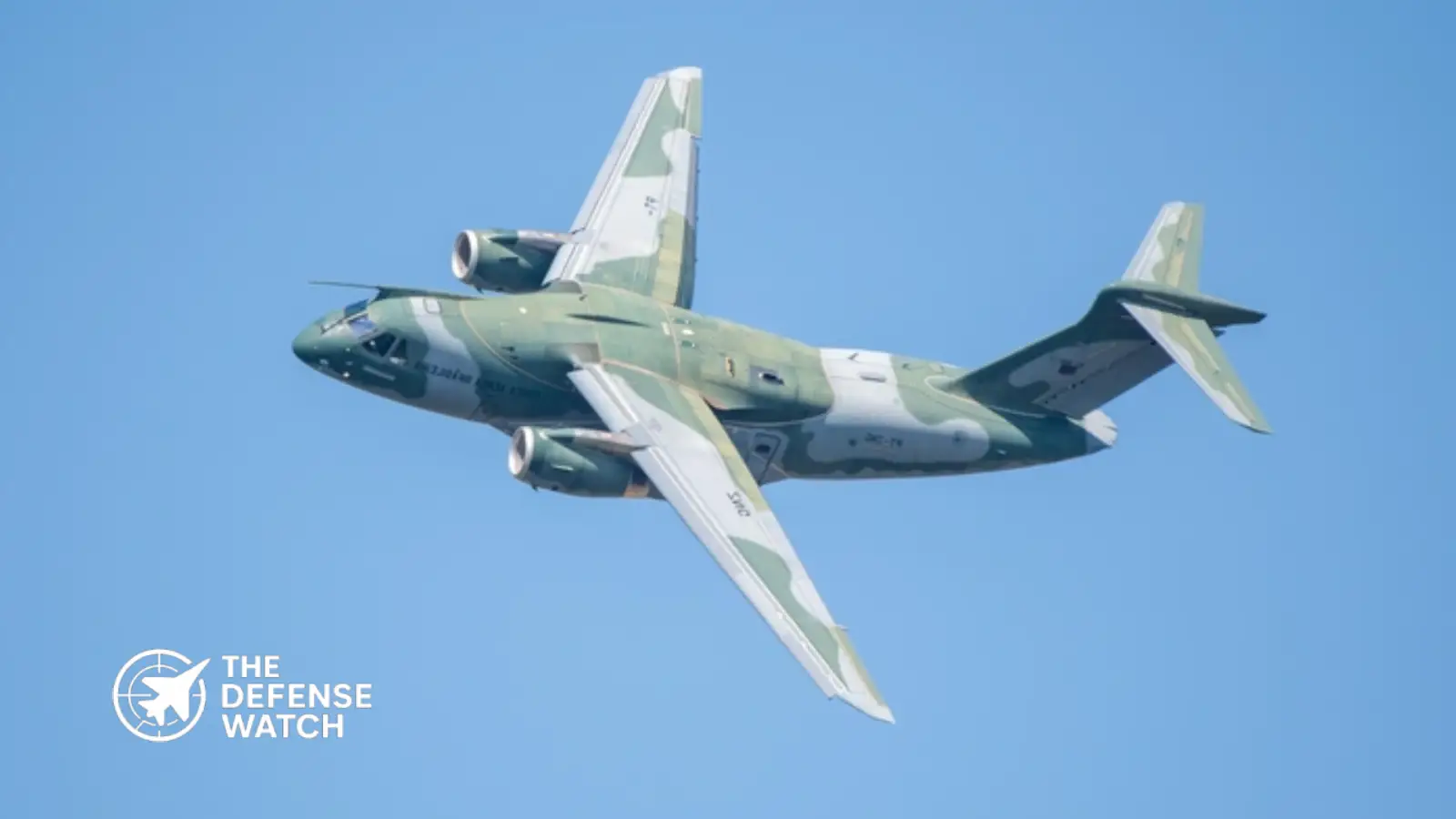
Greece is set to acquire three Embraer C-390 Millennium military transport aircraft following approval by a parliamentary committee reviewing a major defense procurement package valued between €1 billion and €1.2 billion, according to Reuters reporting citing sources familiar with the matter. The acquisition forms part of Athens’ broader effort to modernize its armed forces and replace aging airlift capabilities.
The procurement package still requires final approval from Greece’s Government Council for Foreign Affairs and Defense (KYSEA), the country’s highest defense decision-making body. However, officials familiar with the process expect approval to be granted.
Approximately half of the package’s value will reportedly be allocated to the purchase of the C-390 aircraft and associated support services.
(adsbygoogle = window.adsbygoogle || []).push({});Defense Package Includes Drones and Special Operations Capabilities
Beyond the transport aircraft acquisition, Greece plans to procure several additional systems designed to strengthen operational flexibility across multiple domains.
The package includes:
System Quantity Origin Mission Embraer C-390 Millennium 3 Brazil Tactical and strategic airlift Heron UAV System 1 system Israel Intelligence, surveillance, reconnaissance V-BAT UAVs 10 United States Tactical reconnaissance and maritime surveillance VICTA Mini-Submarines 10 United Kingdom Special operations insertion MEKO-200 Frigate Upgrades 4 vessels Germany Naval modernization The combination of airlift, unmanned systems, naval modernization, and special operations capabilities reflects a multi-domain modernization approach rather than a single-service procurement effort.
(adsbygoogle = window.adsbygoogle || []).push({});Why Greece Is Replacing Its Transport Fleet
The Hellenic Air Force currently relies on aging Lockheed C-130 aircraft and Alenia C-27J transport aircraft, many of which have faced availability and maintenance challenges in recent years. Greece has been evaluating options to restore and expand its tactical airlift capacity amid growing operational requirements.
Greek Defense Minister Nikos Dendias publicly confirmed Athens’ interest in the C-390 during a visit to Portugal earlier this year. Portugal was the first NATO member to adopt the aircraft and has become a key European operator of the platform.
The C-390 offers several advantages for medium-sized air forces seeking to balance capability, operating costs, and logistical flexibility.
(adsbygoogle = window.adsbygoogle || []).push({});Key C-390 Capabilities
- Tactical and strategic airlift operations
- Aerial refueling capability (KC-390 variant)
- Medical evacuation missions
- Humanitarian assistance and disaster relief
- Cargo and troop transport
- Operations from semi-prepared runways
The aircraft has gained increasing international traction across NATO and partner nations, positioning itself as a modern alternative in the medium transport aircraft segment.
Strategic Importance for Greece
The acquisition carries significance beyond simple fleet replacement.
Greece occupies a critical position on NATO’s southeastern flank, with responsibilities spanning the Aegean Sea, Eastern Mediterranean, and wider regional security architecture. Rapid transport capabilities are essential for moving personnel, equipment, and supplies among mainland bases and island territories.
Enhanced air mobility also supports Greece’s participation in NATO operations, humanitarian missions, and regional crisis response efforts.
(adsbygoogle = window.adsbygoogle || []).push({});Athens has consistently emphasized the need to maintain military readiness amid longstanding tensions with neighboring Turkey. While the procurement is part of a broader modernization roadmap rather than a direct response to a single development, improved airlift capacity strengthens Greece’s ability to sustain operations across dispersed geographic areas.
Industrial and Defense Cooperation Opportunities
The proposed purchase could also deepen defense-industrial cooperation between Greece and Embraer.
In May 2026, Embraer and the Hellenic Aerospace Industry (EAB) signed a memorandum of understanding intended to support future C-390 operations and maintenance activities in Greece. The agreement seeks to develop local support capabilities and strengthen domestic aerospace expertise.
Such arrangements are increasingly important as European nations seek greater operational self-sufficiency and improved sustainment capacity for advanced military platforms.
If finalized, Greece would join a growing list of international C-390 operators and customers, further expanding the aircraft’s presence within NATO and allied air forces.
(adsbygoogle = window.adsbygoogle || []).push({});Part of a €28 Billion Long-Term Military Modernization Program
The C-390 procurement is one element of Greece’s broader defense transformation effort.
Athens plans to spend approximately €28 billion on military modernization through 2036, targeting improvements across air, naval, land, cyber, and unmanned capabilities. The initiative follows years of constrained defense spending during Greece’s debt crisis and reflects renewed investment in force readiness and modernization.
The latest package demonstrates how Greece is pursuing a balanced force structure that combines traditional platforms such as transport aircraft and frigates with emerging capabilities including drones and specialized maritime systems.
For NATO planners, the procurement strengthens a key southeastern ally’s ability to support regional operations and sustain military readiness in a strategically important theater.

(adsbygoogle = window.adsbygoogle || []).push({});Executive Summary:
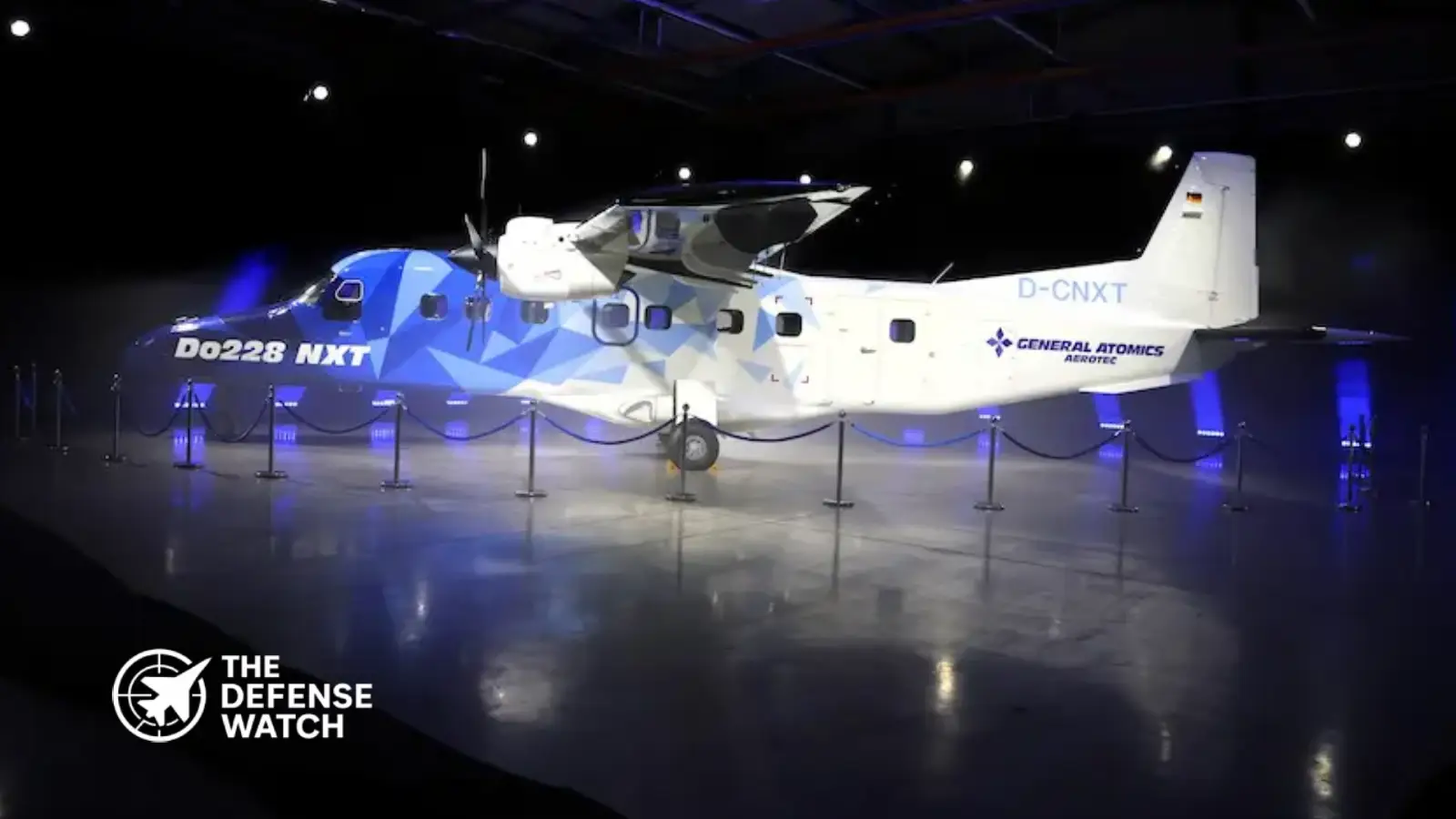
General Atomics AeroTec Systems has announced the first customer for its new Do228 NXT aircraft, marking a major milestone for the program. The launch customer, an unnamed humanitarian organization, will use the aircraft for special mission and relief operations, with delivery scheduled for early 2027. The deal provides an early validation of the platform’s operational flexibility and market potential.
General Atomics Secures First Do228 NXT Customer For Humanitarian Operations
General Atomics AeroTec Systems (GA-ATS) has announced the first customer for its Do228 NXT aircraft, a significant step forward for the German-built multi-role turboprop program. The launch customer is a non-governmental organization (NGO) engaged in humanitarian operations that has requested anonymity due to operational considerations. The aircraft is expected to be delivered in early 2027.
The announcement comes only weeks after the Do228 NXT completed its first flight and days after its official public rollout in Oberpfaffenhofen, Germany. The rapid progression from flight testing to securing a launch customer highlights growing confidence in the aircraft’s capabilities and mission adaptability.
(adsbygoogle = window.adsbygoogle || []).push({});A Platform Designed For Challenging Missions
According to GA-ATS, the Do228 NXT will be configured specifically for humanitarian and special mission operations. While the company has not disclosed detailed mission equipment, it stated that the aircraft will incorporate technologies supporting situational awareness, communications, mission coordination, and response operations in demanding environments.
The Do228 NXT builds on the legacy of the Dornier 228, an aircraft with decades of service across passenger transport, cargo logistics, maritime surveillance, medical evacuation, and disaster relief missions. The latest variant introduces upgraded avionics, a modernized cockpit and cabin, enhanced mission systems, and improvements throughout the supply chain aimed at reducing operational costs and increasing reliability.
Powered by two Honeywell TPE331-10 turboprop engines, the aircraft retains the Dornier platform’s well-known short takeoff and landing (STOL) performance, allowing operations from austere airstrips and remote locations where humanitarian organizations frequently operate.
(adsbygoogle = window.adsbygoogle || []).push({});Why The First Customer Matters
Securing a launch customer is often one of the most important milestones for a newly developed aircraft program. For the Do228 NXT, the agreement provides early market validation at a time when governments, humanitarian agencies, and security organizations are seeking versatile aircraft capable of performing multiple missions without requiring large logistical footprints.
Unlike many modern aircraft programs that initially focus on military procurement, the Do228 NXT’s first customer comes from the humanitarian sector. This demonstrates the platform’s flexibility and suggests that operators see value in its ability to transition between disaster response, medical evacuation, surveillance, transport, and logistics missions.
The choice of a humanitarian operator is also notable because such organizations often prioritize operational reliability, low operating costs, and the ability to access remote regions. Those requirements closely align with the aircraft’s STOL design and multi-role mission architecture.
(adsbygoogle = window.adsbygoogle || []).push({});Part Of A Broader General Atomics Strategy
The customer announcement arrives during a period of renewed investment by General Atomics in European aerospace manufacturing. Following the acquisition of the Oberpfaffenhofen facility and the Dornier 228 program in 2021, GA-ATS restarted production and developed the Do228 NXT as a next-generation evolution of the proven platform.
The company has positioned the aircraft for civil, government, military, and special mission operators. Industry observers view the program as an effort to fill a niche between larger transport aircraft and smaller utility platforms, particularly in missions requiring flexibility, endurance, and access to remote operating locations.
(adsbygoogle = window.adsbygoogle || []).push({});Market Outlook
Demand for special mission aircraft continues to grow as governments and humanitarian organizations face increasingly complex disaster response, border security, environmental monitoring, and emergency medical support requirements.
The Do228 NXT enters a market where versatility often outweighs speed or payload capacity. Its ability to support multiple mission sets from a single airframe could make it attractive to operators with limited budgets but diverse operational demands.
With its first customer now secured and deliveries expected to begin in 2027, the Do228 NXT program has moved beyond the demonstration phase and into the commercial execution stage. Future orders from government agencies, humanitarian organizations, and security operators will likely determine how significant a role the aircraft plays in the global special mission aviation market.

Executive Summary:
UAE-based EDGE Group has integrated its Desert Sting 16 precision-guided glide munition onto the Bayraktar TB2 unmanned aircraft developed by Baykar. The move expands the TB2’s available weapons portfolio and reflects growing defense cooperation between the United Arab Emirates and Türkiye as both companies seek to enhance export-focused unmanned warfare capabilities.
EDGE Integrates Desert Sting 16 On Bayraktar TB2
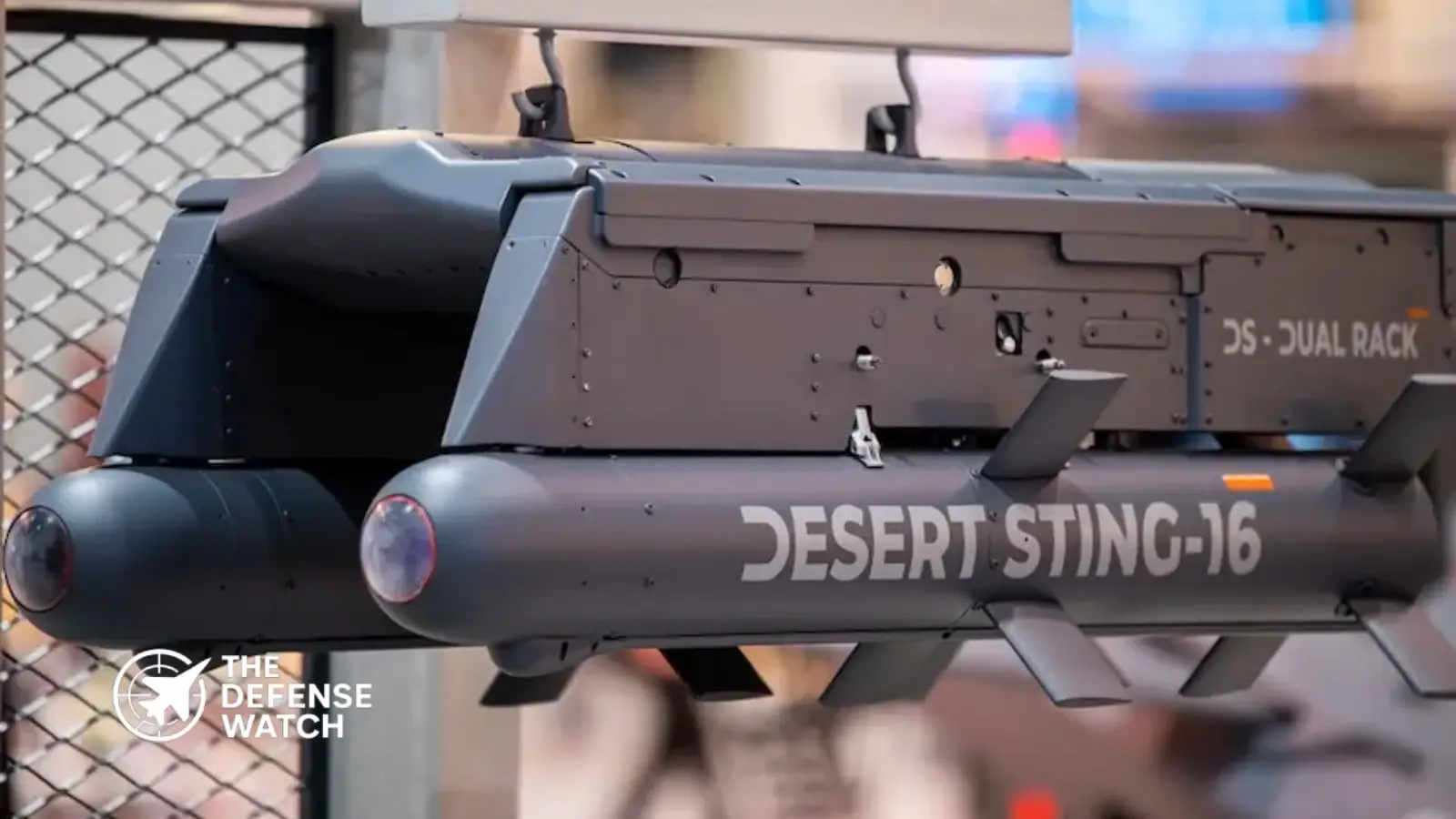
The Desert Sting 16 integration marks another step in the growing partnership between UAE-based defense technology company EDGE and Turkish drone manufacturer Baykar. The companies have confirmed the integration of the Desert Sting 16 precision-guided munition onto the Bayraktar TB2 unmanned aerial vehicle (UAV), adding a new precision strike option to one of the world’s most widely deployed drone platforms.
The effort is part of a broader strategic alliance between the two defense firms focused on expanding cooperation in advanced unmanned systems and precision-guided weapons. Initial plans for the integration were announced in early 2024, with both companies highlighting the potential for additional payloads and future collaboration across Baykar’s UAV portfolio.
What Is The Desert Sting 16?
The Desert Sting 16 is a lightweight precision-guided glide munition developed by EDGE. The weapon uses inertial navigation and satellite guidance, while a semi-active laser seeker can be added for increased targeting accuracy against designated targets. According to defense industry reporting, the munition can engage targets at ranges of up to approximately 15 kilometers when released from altitude and is designed to deliver precise effects while minimizing collateral damage.
Its relatively low weight makes it particularly suitable for medium-sized UAVs such as the Bayraktar TB2, allowing operators to maintain endurance while adding precision strike capability.
Why The Integration Matters
The Bayraktar TB2 has become one of the most successful export UAVs in recent years. The platform has been adopted by multiple armed forces worldwide for intelligence, surveillance, reconnaissance, and strike missions. Integrating the Desert Sting 16 expands the aircraft’s available weapons portfolio and gives current and future operators additional mission flexibility.
From an operational perspective, broader weapon compatibility is increasingly important in the global UAV market. Many defense customers seek flexible platforms capable of integrating both domestic and foreign munitions rather than relying on a single supplier ecosystem.
The integration also reflects a wider trend in the defense industry toward modular payload architectures. UAV manufacturers are increasingly designing platforms that can accommodate multiple sensors, weapons, and mission systems to meet diverse customer requirements.
Growing UAE-Türkiye Defense Cooperation
Beyond the technical achievement, the project highlights the expanding defense relationship between the UAE and Türkiye. EDGE and Baykar have steadily deepened cooperation through agreements covering weapons integration, unmanned systems, and joint market opportunities. Recent agreements announced in 2026 also include plans to integrate EDGE’s AL TARIQ precision-guided munitions onto the larger Bayraktar AKINCI unmanned combat aerial vehicle.
This pattern suggests that both companies view weapons integration as a long-term strategic effort rather than a single program. As unmanned systems become central to military modernization efforts worldwide, partnerships that combine proven UAV platforms with diverse precision-guided munitions are likely to attract increased attention from export customers.
Strategic Analysis
The Desert Sting 16 integration demonstrates how the global UAV market is evolving beyond platform performance alone. Today, a drone’s value increasingly depends on the breadth of weapons, sensors, and mission systems it can support.
For Baykar, expanding the TB2’s weapon options enhances the platform’s attractiveness in competitive export markets. For EDGE, integration with a globally recognized UAV opens additional opportunities for its precision-guided munitions among existing and future TB2 operators.
The development also underscores a broader industry shift toward multinational defense partnerships. Rather than developing every subsystem domestically, manufacturers are increasingly combining strengths across national defense industries to accelerate capability growth and improve market access.
As unmanned aircraft continue to assume larger roles in modern military operations, the combination of proven UAV platforms and flexible precision-guided weapons is expected to remain a key factor shaping procurement decisions worldwide.

(adsbygoogle = window.adsbygoogle || []).push({});Executive Summary:
Airbus has launched a new industrial consortium called Team Gen 6 after the collapse of the Franco-German-Spanish FCAS fighter program. The initiative aims to preserve European sixth-generation fighter development capability under a German-led framework. The move reflects widening fractures in Europe’s previous joint combat aircraft effort and a shift toward nationally anchored industrial programs.
Airbus Team Gen 6 Sixth Generation Fighter Emerges After FCAS Collapse
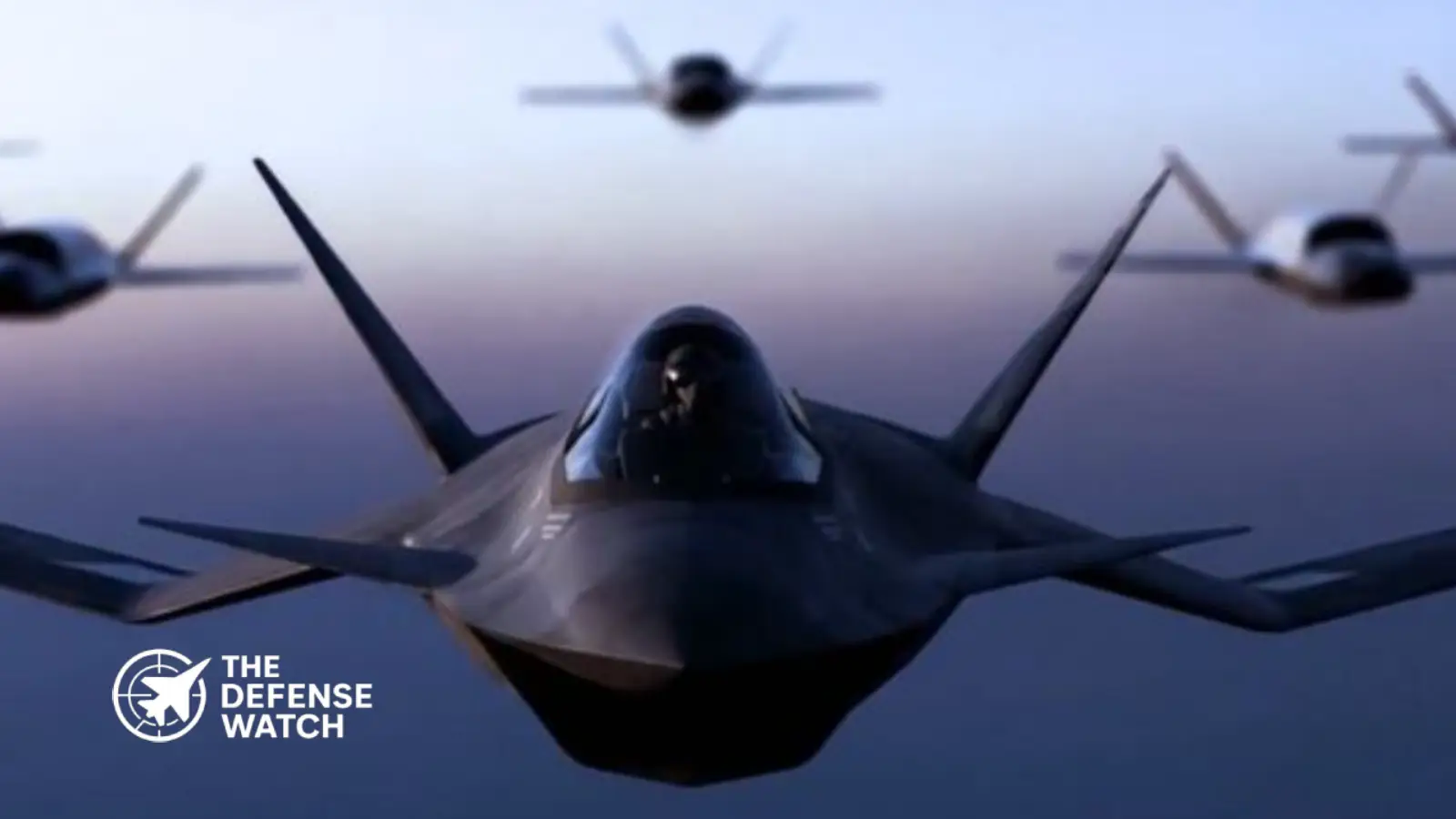
The Airbus Team Gen 6 sixth generation fighter initiative marks a major reset in European combat aircraft development following the breakdown of the FCAS program. The announcement was made during the ILA Berlin 2026 air show, where Airbus and a group of German and European defense firms outlined a new path forward for next-generation air combat capability.
According to reporting from defense media at ILA Berlin and industry statements, the move follows the effective end of the Franco-German-Spanish New Generation Fighter effort after sustained disagreements over leadership, design authority, and industrial workshare.
(adsbygoogle = window.adsbygoogle || []).push({});FCAS Collapse Reshapes European Fighter Development
The Future Combat Air System was originally launched in 2017 as a trilateral effort between France, Germany, and Spain to develop a sixth-generation fighter ecosystem centered on a manned aircraft, unmanned teaming systems, and a digital combat cloud.
However, long-running disputes between industrial partners ultimately stalled progress. The breakdown between Airbus Defence and Space and Dassault Aviation over program leadership and design authority became a key factor in the program’s collapse.
Recent reporting confirms that European governments effectively ended the manned fighter component of FCAS in early June 2026, clearing the way for alternative national and industrial approaches.
This outcome has left a capability gap in Europe’s planned next-generation air combat roadmap, particularly as peer competitors accelerate their own sixth-generation efforts.
(adsbygoogle = window.adsbygoogle || []).push({});Airbus Team Gen 6 Consortium Structure and Goals
In response, Airbus has formed an eight-company industrial alliance under the Team Gen 6 banner. The group includes:
- Airbus Defence and Space
- MBDA
- Hensoldt
- Diehl Defence
- MTU Aero Engines
- Liebherr
- Autoflug
- Rohde & Schwarz
The consortium is positioning itself as a Germany-centered industrial base for a future sixth-generation fighter aircraft program.
Initial statements indicate the group has already submitted a position paper to German defense authorities outlining its vision for a next-generation combat aircraft and urging timely procurement decisions.
The initiative reflects an effort to retain key aerospace engineering and defense technology skills within Europe, particularly in avionics, propulsion, sensors, and systems integration.
(adsbygoogle = window.adsbygoogle || []).push({});Strategic Shift Away From Multinational Dependence
The emergence of Airbus Team Gen 6 signals a broader shift in European defense procurement dynamics.
Instead of a tightly integrated multinational fighter program, Europe now appears to be moving toward parallel national or regional development paths. Germany is emerging as the primary anchor for the new effort, while France is expected to pursue alternative options following the FCAS breakdown.
Defense analysts note that this fragmentation increases short term industrial competition but may also accelerate parallel innovation streams across European aerospace firms.
At the same time, policymakers in Berlin are reportedly evaluating multiple options, including participation in other international programs or additional procurement of fifth generation aircraft to bridge capability gaps.
(adsbygoogle = window.adsbygoogle || []).push({});Industrial and Strategic Implications
The collapse of FCAS and the rise of Team Gen 6 highlight several structural issues in European defense collaboration:
First, differing national operational requirements continue to challenge joint fighter development programs. France, Germany, and Spain had diverging priorities around carrier compatibility, strike range, and aircraft size.
Second, industrial leadership disputes remain a persistent barrier in high value defense programs, particularly when major primes compete for control of design authority.
Third, Europe now faces increased pressure to maintain technological parity with emerging sixth-generation programs being developed in the United States, United Kingdom, Italy, Japan, and China.
While Team Gen 6 aims to preserve industrial continuity, the program is still in an early conceptual stage, with detailed design and funding pathways yet to be fully defined.
(adsbygoogle = window.adsbygoogle || []).push({});Perspective
From a defense industry standpoint, the Team Gen 6 initiative is less a finalized program and more a structured attempt to prevent capability fragmentation after FCAS. It preserves workforce continuity and technical expertise while governments reassess long term procurement strategies.
The key question going forward is whether Germany can convert this industrial consortium into a fully funded state-backed development program, or whether it remains a preparatory framework for future international cooperation.


Executive Summary:
SpaceX launched a Falcon 9 rocket carrying 29 Starlink satellites from Cape Canaveral on the same day the company began trading publicly on the Nasdaq stock exchange. The mission highlights the growing importance of Starlink to SpaceX’s business model while underscoring the company’s long-term ambitions centered on Starship and next-generation space infrastructure.
SpaceX Begins New Chapter With Starlink Launch And Nasdaq Debut
SpaceX’s Starlink launch on Friday marked more than another routine satellite deployment. The mission coincided with the company’s first day as a publicly traded firm, creating a significant milestone for one of the world’s most influential aerospace companies.
(adsbygoogle = window.adsbygoogle || []).push({});The Falcon 9 rocket lifted off from Space Launch Complex 40 at Cape Canaveral Space Force Station in Florida, carrying 29 Starlink V2 Mini Optimized satellites into low Earth orbit. Liftoff occurred less than an hour before trading opened on the Nasdaq Stock Market, symbolically linking SpaceX’s operational achievements with its entry into public financial markets.
The mission, designated Starlink 10-54, represents the 650th Falcon 9 flight and the company’s 68th Falcon 9 launch of 2026.
Falcon 9 Continues Record-Breaking Launch Cadence
The mission utilized Falcon 9 first-stage booster B1080, a veteran vehicle completing its 27th flight.
The booster previously supported multiple high-profile missions, including crewed flights to the International Space Station for Axiom Space, cargo resupply missions, and the launch of the European Space Agency’s Euclid space observatory.
Following stage separation, B1080 targeted a landing aboard the autonomous drone ship A Shortfall of Gravitas positioned off the coast of South Carolina. A successful recovery would mark the vessel’s 155th booster landing and SpaceX’s 623rd successful first-stage recovery overall.
The launch further demonstrates SpaceX’s unmatched reusability model, which continues to drive down launch costs while sustaining an unprecedented flight tempo. No other launch provider currently approaches the company’s combination of launch frequency, payload delivery capability, and booster reuse rates.
(adsbygoogle = window.adsbygoogle || []).push({});Starlink Remains Central To SpaceX Growth Strategy
The Starlink 10-54 mission was the 55th dedicated Starlink launch of 2026 and the 56th overall mission involving Starlink spacecraft this year.
According to company disclosures, SpaceX now has more than 10,500 Starlink satellites in orbit, making it the largest satellite constellation ever deployed.
Starlink has evolved from an experimental broadband initiative into a major revenue-generating business segment. Financial filings submitted before the company’s stock market debut revealed that connectivity-related revenue reached approximately $2 billion in 2024 before growing to roughly $4.4 billion in 2025.
That growth highlights how satellite communications are becoming an increasingly important pillar of SpaceX’s broader business strategy.
From a defense and national security perspective, Starlink’s expanding network has also demonstrated strategic value by supporting resilient communications in contested and remote environments. The system’s growing global footprint has attracted attention from military organizations and government agencies seeking alternative communications architectures that are less vulnerable than traditional infrastructure.
(adsbygoogle = window.adsbygoogle || []).push({});Public Listing Signals Major Strategic Shift
SpaceX’s public market debut comes more than two decades after the company was founded in 2002.
The company offered approximately 555.6 million Class A shares priced at $135 per share, raising roughly $75 billion and placing its valuation near $1.77 trillion.
The move provides SpaceX with substantial access to capital at a time when the company is investing heavily in next-generation technologies.
While Falcon 9 and Starlink currently generate significant revenue, investors are closely watching development of the Starship-Super Heavy launch system, which SpaceX views as the foundation of its future growth.
The public listing also increases transparency around SpaceX’s finances, offering investors and industry observers greater insight into how revenue from launch services and satellite connectivity supports long-term development programs.
(adsbygoogle = window.adsbygoogle || []).push({});Starship Development Remains The Long-Term Priority
Despite the success of Falcon 9, SpaceX’s future ambitions remain tied to Starship.
The company completed its 12th Starship test flight in May and is preparing for Flight 13. SpaceX intends to use future Starship vehicles to deploy larger and more capable Starlink V3 satellites beginning in the latter half of 2026.
According to company filings, SpaceX invested approximately $3 billion in Starship research and development during 2025 and another $930 million during the first quarter of 2026 alone.
Those figures illustrate the scale of investment required to transform Starship from a developmental program into an operational transportation system.
Beyond satellite deployment, SpaceX envisions Starship supporting future missions involving deep-space exploration, large-scale orbital infrastructure, and eventual Mars settlement initiatives. While many of these concepts remain long-term objectives, Starship is widely viewed as the critical platform needed to achieve them.
(adsbygoogle = window.adsbygoogle || []).push({});Why The Launch Matters
The timing of the Starlink launch and Nasdaq debut reflects a broader transformation underway within SpaceX.
For years, the company focused on proving reusable launch technology and building a viable satellite communications network. With Falcon 9 now firmly established and Starlink generating growing revenues, SpaceX is transitioning into a new phase defined by large-scale capital investment and expansion.
For the aerospace sector, the public listing provides investors direct exposure to a company that has reshaped launch economics and accelerated commercial space development.
For defense planners, the continued growth of Starlink and future Starship capabilities could influence communications resilience, space logistics, and military space operations for years to come.
As SpaceX enters public markets, the company faces heightened scrutiny from investors while simultaneously pursuing some of the most ambitious technological goals in the aerospace industry.
Executive Summary:
The RAF Rivet Joint surveillance aircraft has deployed to Norway as part of a NATO-focused exercise designed to strengthen intelligence gathering and allied interoperability. The deployment highlights growing emphasis on operations in the High North, a region of increasing strategic importance for NATO members.
RAF Rivet Joint Deployment Highlights NATO Focus On The High North
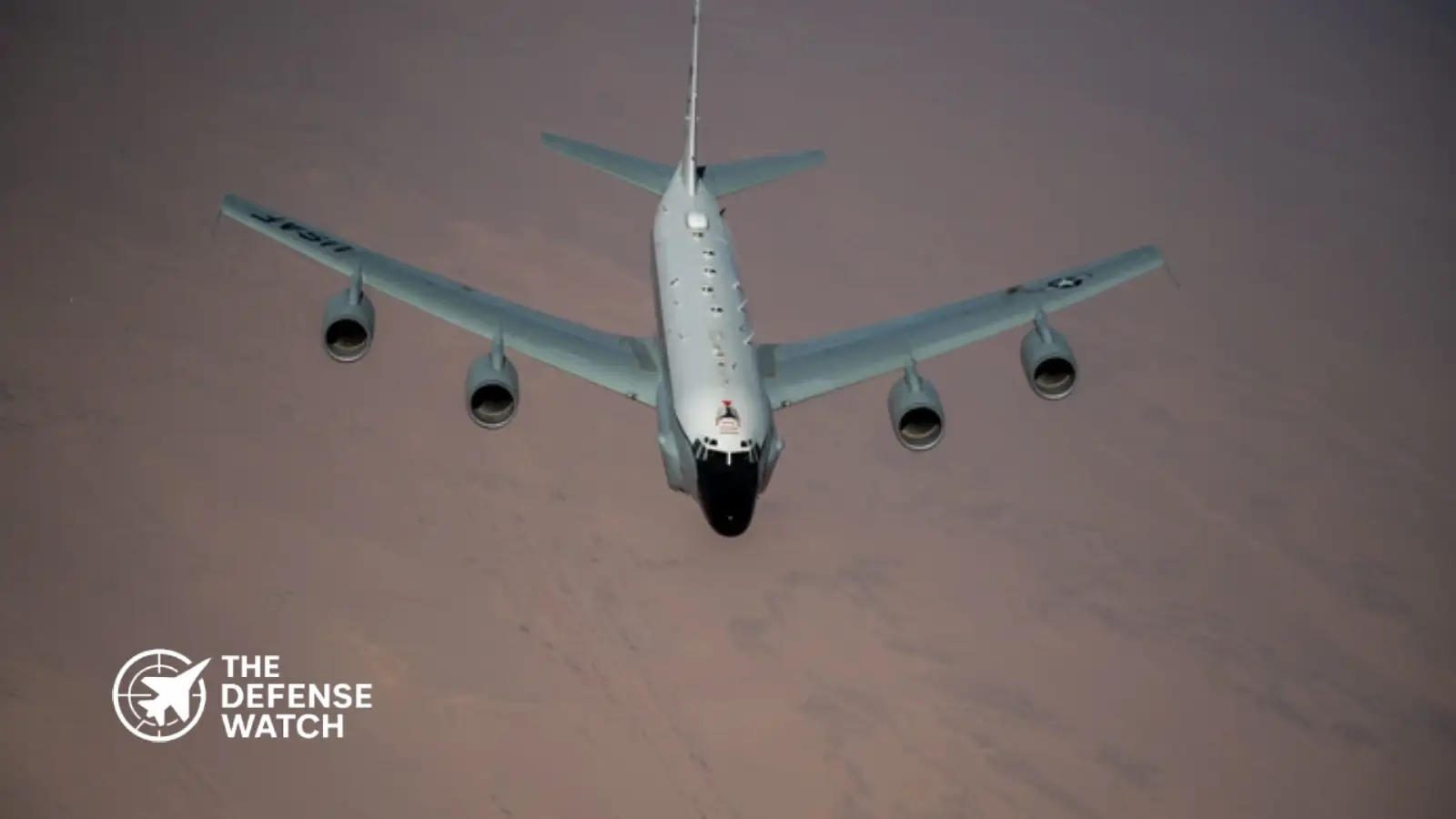
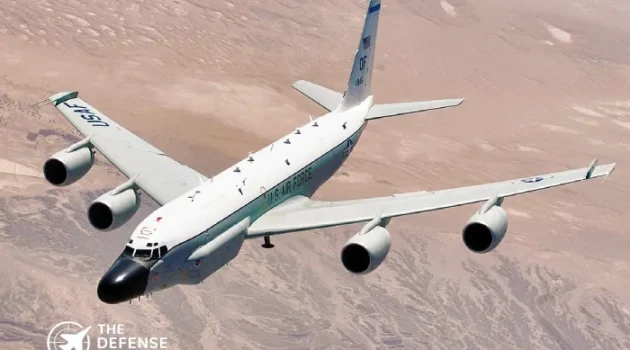
The RAF Rivet Joint surveillance aircraft has deployed to Norway’s western fjord region as part of an exercise aimed at improving operational flexibility and strengthening cooperation with NATO allies.
According to the Royal Air Force, No. 51 Squadron deployed the RC-135W Rivet Joint aircraft to Ørland Air Base in Norway under an Agile Combat Employment exercise. The activity was designed to demonstrate the aircraft’s ability to operate effectively from dispersed locations while working closely with allied forces.
The deployment comes as NATO continues to place greater emphasis on readiness, interoperability, and intelligence sharing across northern Europe.
Intelligence Aircraft Designed For Modern Surveillance Missions
The RAF Rivet Joint is one of the United Kingdom’s most important intelligence, surveillance, and reconnaissance (ISR) platforms.
Operated by No. 51 Squadron from RAF Waddington, the RC-135W specializes in collecting electronic intelligence and communications intelligence. Its onboard sensors can detect, intercept, and analyze signals across the electromagnetic spectrum, providing commanders with real-time situational awareness.
The aircraft entered RAF service through Project Airseeker and remains a key component of Britain’s intelligence gathering capability. The fleet is expected to remain operational into the next decade as part of the UK’s broader ISR architecture.
Norway Deployment Demonstrates Agile Combat Employment
A central objective of the exercise was validating the RAF’s ability to operate from locations away from its main operating bases.
Operating from Norway with limited support infrastructure allowed crews to test dispersed operations while maintaining mission effectiveness. The concept aligns with NATO’s growing focus on survivability, flexibility, and resilience in contested environments.
During the deployment, the aircraft worked alongside Norwegian military units and NATO airborne assets, improving coordination and understanding of each platform’s capabilities. The exercise also provided opportunities to streamline procedures and enhance operational integration among allied forces.
Why The High North Matters
The Norwegian deployment reflects broader strategic trends across the Euro-Atlantic region.
The High North has become increasingly significant due to its proximity to critical maritime routes, Arctic operating areas, and NATO’s northern flank. As military activity in northern Europe and the Arctic continues to attract attention from alliance planners, intelligence collection and situational awareness have become essential components of regional security.
The RC-135W’s advanced signals intelligence capabilities make it particularly valuable in this environment. By monitoring electronic emissions and communications activity, the aircraft contributes to a more comprehensive understanding of the operational picture across large geographic areas.
Recent RAF surveillance activities over the Baltic region and NATO’s eastern flank further illustrate the aircraft’s role in supporting alliance intelligence requirements.
Strategic Analysis
While the Norway deployment was presented as a training and readiness exercise, its significance extends beyond routine operations.
The ability to rapidly relocate high-value ISR assets is increasingly important as NATO prepares for potential disruptions to traditional basing arrangements. Dispersed operations reduce vulnerability and provide commanders with more options during crises.
For NATO, intelligence sharing remains one of the alliance’s most important force multipliers. Platforms such as the RAF Rivet Joint help connect national capabilities into a broader multinational intelligence network, improving decision-making speed and operational effectiveness.
The exercise also reinforces the close defense relationship between the United Kingdom and Norway, both of which play critical roles in safeguarding NATO’s northern approaches.
Conclusion
The deployment of the RAF Rivet Joint to Norway demonstrates NATO’s continued focus on readiness, interoperability, and intelligence operations in the High North. By operating from a dispersed location alongside allied forces, the RC-135W showcased the flexibility and intelligence capabilities that remain central to modern air power and alliance security.

(adsbygoogle = window.adsbygoogle || []).push({});Executive Summary:
SpaceX has completed the largest initial public offering in U.S. history, raising $75 billion at $135 per share and achieving a valuation of approximately $1.77 trillion. The offering marks a major milestone for the commercial space sector, providing significant capital for future expansion in launch services, satellite communications, and space infrastructure while highlighting growing investor confidence in the long-term aerospace market.
SpaceX IPO Signals New Era For Commercial Space Investment
SpaceX IPO headlines dominated global financial and aerospace markets after the company completed a record-breaking $75 billion public offering, making it one of the most valuable publicly traded companies in the United States. The offering was priced at $135 per share and valued the company at approximately $1.77 trillion, setting a new benchmark for both the aerospace industry and global capital markets.
The Elon Musk-led company sold more than 555 million shares as part of the offering. Once trading begins on Nasdaq, SpaceX will rank among the largest publicly listed firms in the United States by market capitalization. The IPO surpasses previous records set by major global listings, including Saudi Aramco’s landmark 2019 offering.
(adsbygoogle = window.adsbygoogle || []).push({});Why The IPO Matters Beyond Wall Street
While the transaction is primarily a financial milestone, its significance extends well beyond equity markets.
SpaceX has become a critical player in the global aerospace sector through its launch services, reusable rocket technology, satellite communications network, and national security missions. The company supports numerous U.S. government and commercial space programs while operating one of the world’s largest satellite constellations through Starlink.
The scale of the IPO provides SpaceX with unprecedented access to capital that could support future investments across several strategic areas:
- Expansion of Starlink satellite infrastructure
- Growth of launch and manufacturing capacity
- Development of next-generation launch systems
- Investment in advanced computing and artificial intelligence capabilities
- Expansion of space transportation and exploration programs
For the broader aerospace industry, the offering demonstrates that investors increasingly view space infrastructure as a long-term growth sector rather than a niche market.
(adsbygoogle = window.adsbygoogle || []).push({});SpaceX’s Unique Approach To Going Public
The company departed from several traditional Wall Street practices during the IPO process.
According to Reuters, SpaceX set its offering price before completing the customary investor roadshow process and allocated approximately 30% of shares to retail investors, a notably larger proportion than is typical for major public offerings. The company also announced pricing while U.S. markets were still open, another unusual move for a deal of this size.
The structure reflects Elon Musk’s preference for unconventional financing strategies and direct engagement with investors.
Following the offering, Musk is expected to retain approximately 82% voting control, preserving significant influence over the company’s long-term strategic direction.
(adsbygoogle = window.adsbygoogle || []).push({});Strategic Implications For Aerospace And Defense
From a defense and aerospace perspective, the SpaceX IPO carries broader implications.
The company has become an essential supplier for U.S. space launch requirements, supporting both civilian and national security missions. Increased financial resources could accelerate investments in launch infrastructure, satellite networks, and technologies that have dual-use commercial and defense applications.
Starlink’s global communications network has already demonstrated its strategic relevance in military and emergency response environments. Additional investment could further expand the network’s resilience and global reach.
The IPO also highlights the growing convergence between aerospace, communications, data infrastructure, and artificial intelligence. Investors appear to be valuing SpaceX not solely as a launch provider but as a diversified space technology enterprise operating across multiple high-growth sectors.
(adsbygoogle = window.adsbygoogle || []).push({});Valuation Debate Continues
Despite strong investor demand, some analysts remain cautious regarding the company’s valuation.
At $1.77 trillion, SpaceX is valued above several long-established multinational corporations despite generating significantly lower revenue than many of those firms. Critics argue that the valuation assumes continued dominance in future markets that remain under development, including advanced space services and emerging technology sectors.
Supporters counter that SpaceX has consistently transformed ambitious concepts into operational businesses, citing reusable rockets, commercial crew transportation, and Starlink as examples of successful execution.
The market’s long-term assessment will depend on the company’s ability to convert future growth opportunities into sustainable revenue and profitability.
(adsbygoogle = window.adsbygoogle || []).push({});Outlook
The successful SpaceX IPO represents a defining moment for both the aerospace sector and public capital markets. By raising a record $75 billion, the company has secured substantial financial resources to support future expansion while reinforcing investor confidence in the commercial space economy.
For defense, aerospace, and space industry observers, the offering underscores a larger trend: space infrastructure is increasingly viewed as a strategic asset with commercial, technological, and national security significance. As SpaceX begins life as a publicly traded company, its performance will likely influence future investment across the broader space sector for years to come.
(adsbygoogle = window.adsbygoogle || []).push({});Executive Summary:
The U.S. Navy has awarded Lockheed Martin a contract for long-lead materials supporting the production of 11 F-35 Lightning II fighter aircraft for an undisclosed foreign customer. The move highlights sustained international demand for the stealth fighter while preserving production timelines ahead of final aircraft procurement.
U.S. Navy Funds F-35 Fighter Production For Unnamed Foreign Customer
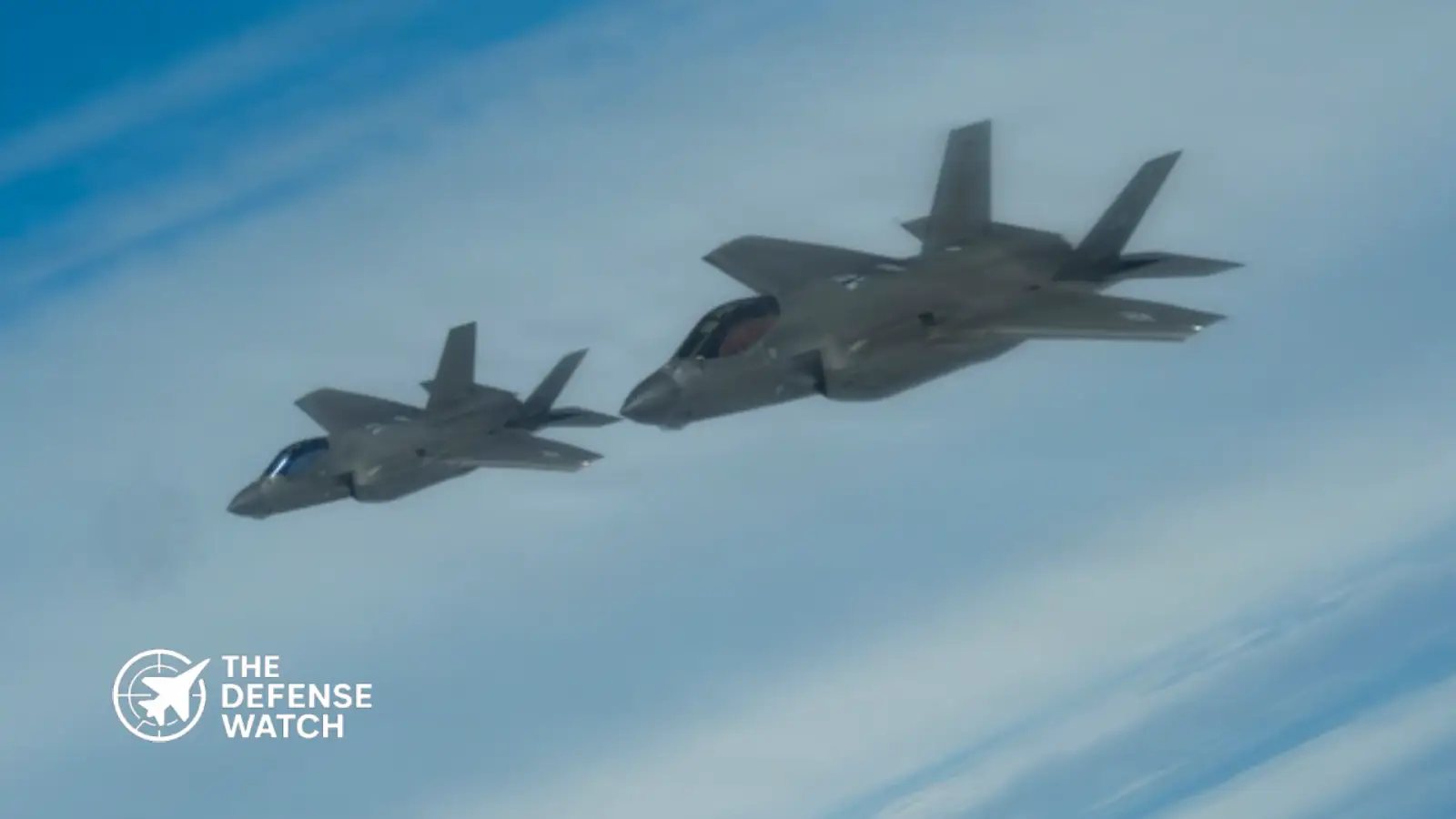
The F-35 fighter procurement program received another boost after the U.S. Navy awarded funding for long-lead materials associated with the production of 11 F-35 Lightning II aircraft destined for an undisclosed international customer.
The award enables Lockheed Martin to acquire critical components and materials required well before final aircraft assembly begins. Such long-lead procurement actions are commonly used to maintain production schedules and avoid supply chain delays for advanced military aircraft.
The identity of the customer has not been disclosed, a practice that occasionally occurs in Foreign Military Sales (FMS) cases or pending international defense acquisitions before formal government announcements.
(adsbygoogle = window.adsbygoogle || []).push({});Supporting Production Continuity
Long-lead procurement contracts are a critical element of modern fighter aircraft manufacturing. Advanced systems such as the F-35 require specialized components, including avionics, radar elements, structural assemblies, propulsion-related parts, and mission systems that often have lengthy manufacturing timelines.
By funding these components early, the U.S. Navy and industry partners can preserve production efficiency while reducing delivery risks once the full aircraft contract enters execution.
The latest award reflects continuing efforts to sustain the global F-35 production pipeline, which supports dozens of partner and customer nations across Europe, the Indo-Pacific, and the Middle East.
(adsbygoogle = window.adsbygoogle || []).push({});F-35 Remains The Backbone Of Allied Airpower Modernization
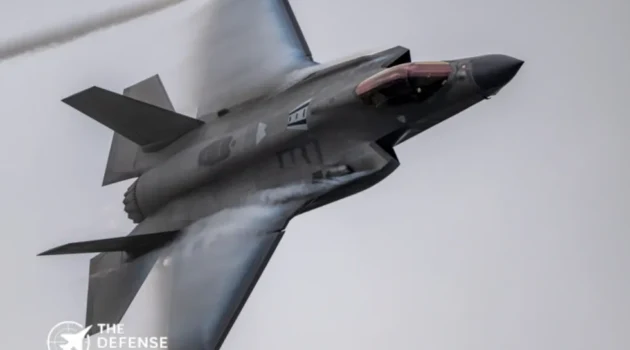
The F-35 international customers network continues to expand as governments seek advanced stealth, sensor fusion, and network-centric warfare capabilities.
The aircraft is currently operated or ordered by numerous nations, including the United States, the United Kingdom, Italy, the Netherlands, Norway, Denmark, Australia, Japan, South Korea, Belgium, Poland, Finland, Germany, Switzerland, the Czech Republic, Canada, Israel, and Singapore.
The continued growth of the F-35 user community has transformed the aircraft from a national acquisition program into a multinational defense ecosystem. Shared training, logistics, software upgrades, and interoperability have become major factors driving procurement decisions among allied nations.
From a strategic perspective, the platform’s widespread adoption strengthens coalition operations by allowing participating air forces to share data and coordinate missions through common systems and communications architectures.
(adsbygoogle = window.adsbygoogle || []).push({});Undisclosed Buyer Fuels Industry Speculation
While defense officials have not identified the purchasing nation, the timing is notable as several countries are currently evaluating new fighter acquisitions or expanding existing F-35 fleets.
However, no official information has been released regarding the recipient, and neither the U.S. government nor Lockheed Martin has provided details beyond the contract announcement.
Maintaining confidentiality during certain stages of foreign military sales is not uncommon, particularly when negotiations, parliamentary approvals, or government-to-government agreements remain in progress.
What is clear is that demand for the aircraft remains strong despite growing competition from emerging fighter programs in Europe and Asia.
(adsbygoogle = window.adsbygoogle || []).push({});Strategic Importance For The F-35 Program
The latest U.S. Navy F-35 contract demonstrates continued confidence in the long-term viability of the program. Early procurement funding helps stabilize industrial capacity across the extensive supplier network supporting the fighter’s production.
For Lockheed Martin, sustained international orders are increasingly important as global operators expand fleets and integrate additional aircraft into their force structures. Foreign sales also help distribute production costs across a larger customer base, supporting economies of scale and long-term sustainment efforts.
The contract further underscores the central role of the F-35 in Western airpower modernization strategies. As geopolitical competition intensifies across multiple regions, nations continue to prioritize platforms capable of operating in contested environments while integrating seamlessly with allied forces.
(adsbygoogle = window.adsbygoogle || []).push({});Outlook
The funding of long-lead materials for 11 additional aircraft indicates that another international F-35 acquisition is moving forward, even if the customer remains undisclosed for now.
As governments continue investing in next-generation combat aviation capabilities, the F-35 remains one of the most sought-after fighter aircraft in production. Future announcements from the U.S. Department of Defense or the purchasing nation are expected to clarify the destination of these aircraft and provide further insight into the evolving global fighter market.