
Pentagon Deploys Advanced Laser Technology Without FAA Coordination
The U.S. Army deployed AeroVironment Inc.’s LOCUST laser counter-drone weapon system near El Paso International Airport on February 11, 2026, triggering a seven-hour airspace shutdown following coordination failures between the Pentagon and Federal Aviation Administration, according to multiple sources briefed on the incident.
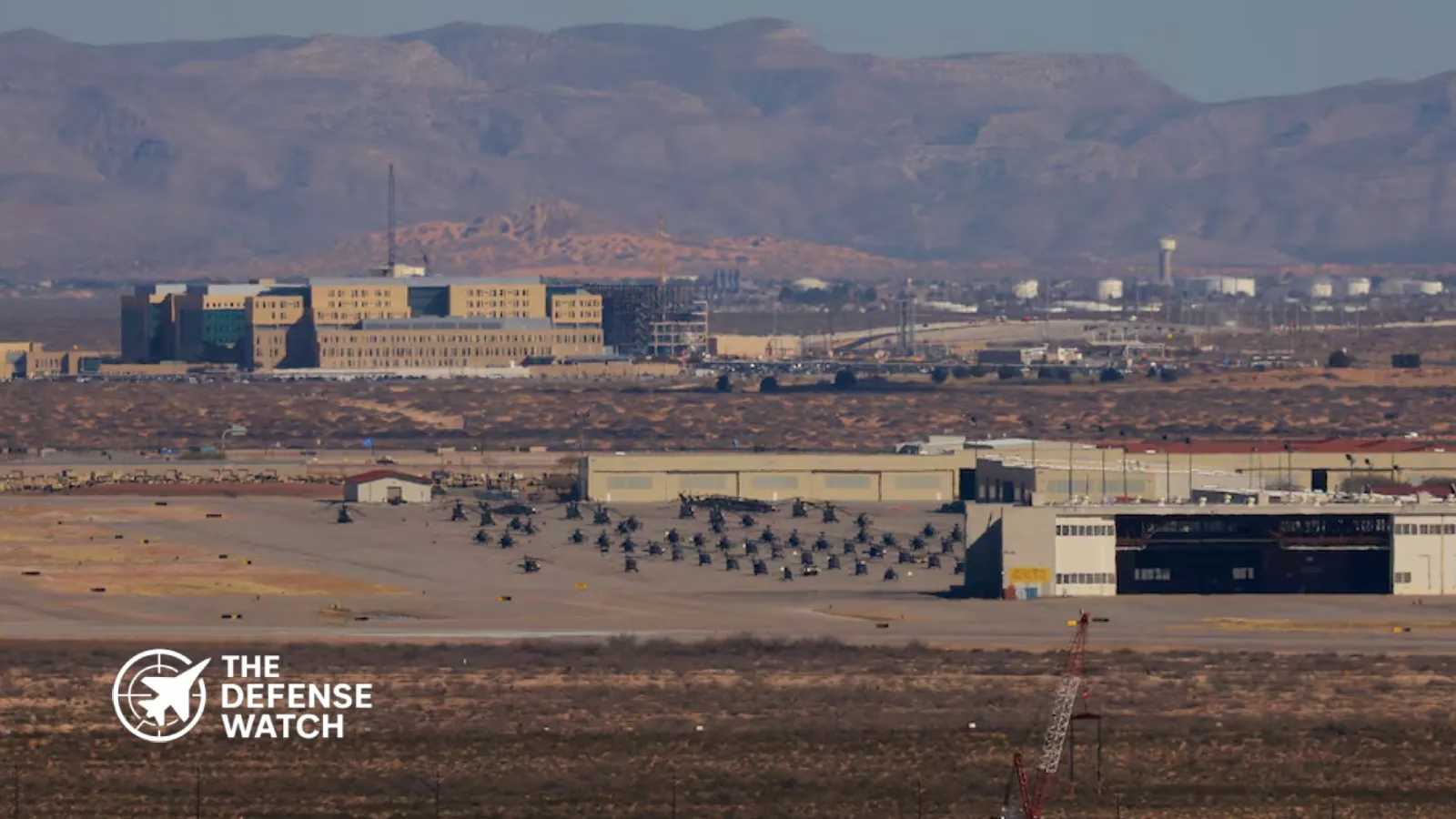
The deployment of the 20-kilowatt LOCUST direct-energy weapon marks a rare documented instance of the U.S. military employing cutting-edge counter-drone technology capable of neutralizing aerial threats at a fraction of the cost of traditional interceptor missiles. The system, housed at Fort Bliss adjacent to El Paso International Airport, was activated without proper coordination with the FAA, prompting aviation safety concerns that led to the emergency airspace closure.
Neither AeroVironment nor the Pentagon immediately responded to requests for comment regarding the deployment.
Seven-Hour Disruption Affects Border City Operations
The FAA halted all air traffic in and out of El Paso for more than seven hours on Wednesday after determining that the Army’s laser-based counter-drone system at Fort Bliss could pose risks to commercial aviation. The restriction affected one of the busiest border crossings in the southwestern United States, stranding travelers and disrupting commercial operations.
El Paso International Airport describes itself as the gateway to west Texas, southern New Mexico, and northern Mexico. Major carriers including Southwest, United, American, and Delta operate regular flights through the facility, which serves a metropolitan area of nearly 700,000 people.
The sudden shutdown, initially announced as a 10-day restriction before being lifted after seven hours, marked the most significant airspace closure since the September 11, 2001 attacks, according to El Paso Mayor Renard Johnson. Local officials, including the mayor and congressional representatives, received no advance notice of the closure.
LOCUST: Army’s Mobile Counter-Drone Solution
AeroVironment delivered its first two LOCUST (Laser-Oriented Counter-UAS System) systems to the U.S. Army in September 2024 as part of the Multi-Purpose High Energy Laser prototyping effort. The systems represent the Army’s commitment to fielding mobile, cost-effective counter-drone capabilities against evolving aerial threats.
The LOCUST laser weapon system features a 20-kilowatt-class directed-energy weapon mounted on tactical vehicles, including the General Motors Defense Infantry Squad Vehicle and the Oshkosh Joint Light Tactical Vehicle. The system employs advanced target acquisition and tracking capabilities, utilizing multi-band radio frequency detection and 360-degree scanning with precision beam control.
Key technical specifications include:
- 20-kilowatt-class laser output with larger-aperture beam director
- Single-operator control via standard gaming controller interface
- Automated multi-target tracking and rapid target switching
- 15-minute deployment time from transport to operational status
- Platform-agnostic design for integration across multiple vehicle types
- Operational range extending several kilometers (classified)
The system underwent rigorous acceptance testing at Yuma Proving Ground in Arizona before Army units received training at Fort Sill, Oklahoma. According to AeroVironment, earlier LOCUST-equipped Palletized High Energy Laser systems have maintained operational deployment outside the United States for more than three years, demonstrating high availability rates and engaging real-world UAS threats in combat environments.
Border Drone Threat Drives Deployment Decision
The United States faces a persistent and growing drone threat along the southern border, with the Pentagon reporting more than 1,000 drone sightings monthly. Department of Homeland Security data reveals that more than 27,000 drones were detected within 500 meters of the southern border during the last six months of 2024, primarily during nighttime operations.
Steven Willoughby, deputy director of the Department of Homeland Security’s counter-drone program, testified to Congress in July 2024 that Mexican drug cartels use drones nearly daily to transport narcotics across the border and conduct surveillance on Border Patrol agents. Rep. Tony Gonzales (R-TX), whose district spans approximately 800 miles along the Texas-Mexico border, characterized cartel drone incursions as routine.
“For any of us who live and work along the border, daily drone incursions by criminal organizations is everyday life for us,” Gonzales stated.
Drug trafficking organizations employ increasingly sophisticated drone operations, utilizing both commercial quadcopters and custom-built platforms capable of carrying up to 100 kilograms of cargo. These unmanned systems support fentanyl smuggling operations, conduct reconnaissance on law enforcement positions, and facilitate coordination of cross-border activities.
Coordination Failure Highlights Interagency Tensions
The incident exposes significant coordination gaps between military and civilian aviation authorities. According to sources familiar with the situation, Pentagon officials deployed the laser system despite a scheduled meeting later in February to discuss safety protocols with the FAA.
FAA Administrator Bryan Bedford made the decision to close the airspace Tuesday night without alerting White House, Pentagon, or Department of Homeland Security officials, sources indicated. The decision followed Pentagon assertions that U.S. Code 130i requirements governing the protection of facilities from unmanned aircraft had been satisfied.
Transportation Secretary Sean Duffy initially stated that the FAA and Department of Defense “acted swiftly to address a cartel drone incursion” and that “the threat has been neutralized.” However, subsequent reporting suggested more complex circumstances involving planned testing operations rather than an immediate incursion response.
Rep. Veronica Escobar (D-TX), whose district includes El Paso, criticized the lack of communication: “Neither my office, the city of El Paso nor airport operations received advance notice. The information coming from the federal government does not add up.”
The coordination failure draws parallels to the January 2025 midair collision near Washington, D.C., between a commercial airliner and Army helicopter that killed 67 people. The National Transportation Safety Board determined that the FAA and Army failed to share critical safety data regarding close calls around Reagan National Airport.
Sen. Tammy Duckworth (D-IL), a former Army helicopter pilot serving on aviation and armed services committees, characterized Wednesday’s incident as “the latest example of the lack of coordination that’s endemic in this Trump administration.
Directed Energy Weapons Integration Into Border Security
Defense experts have advocated for integrating counter-drone technology into President Donald Trump’s “Golden Dome” missile defense initiative, particularly along the southern border where cartel drones conduct surveillance and infrastructure attacks.
The LOCUST deployment reflects the Army’s broader modernization strategy to rapidly develop and field directed-energy solutions against a range of threats. The program complements parallel efforts, including mounting 50-kilowatt laser weapons on Stryker combat vehicles and developing the Enduring High Energy Laser program scheduled for competitive procurement in 2026.
AeroVironment’s modular LOCUST architecture enables integration with Army command-and-control systems, providing scalable counter-UAS capabilities across fixed-site installations and mobile platforms. The company’s directed-energy division, based in Albuquerque, New Mexico, manufactured the systems under the Army’s Rapid Capabilities and Critical Technologies Office oversight.
John Garrity, Vice President of AeroVironment’s Directed Energy business unit, emphasized operational readiness: “Directed energy is no longer a future concept—it is a proven force-protection capability. Since deployed, LOCUST-equipped systems have actively protected warfighters, allies, and critical infrastructure against aerial threats.”
Cost-Effectiveness Compared To Traditional Intercepts
High-energy laser systems provide significant cost advantages over conventional missile-based intercepts. While traditional counter-drone missiles can cost tens of thousands to hundreds of thousands of dollars per shot, directed-energy weapons engage targets at an estimated cost of less than $100 per engagement, primarily representing electrical power consumption.
The economic calculus becomes particularly relevant given the volume of drone threats. With more than 27,000 border drone detections in six months, traditional kinetic intercept solutions would prove financially unsustainable for routine counter-drone operations.
The Army’s investment in LOCUST technology reflects recognition that asymmetric threats—inexpensive commercial drones modified for hostile purposes—require equally asymmetric defensive responses. The system’s ability to engage multiple targets rapidly without ammunition resupply constraints provides tactical flexibility unavailable with conventional weapons.
International Context And Operational Precedents
The U.S. deployment follows similar directed-energy weapon fielding by international partners. Israel’s Ministry of Defense recently announced operational deployment of the Iron Beam 100-kilowatt laser system, claiming it as the world’s first operationally deployed counter-drone laser defense system.
However, AeroVironment’s statements suggest LOCUST-equipped Palletized High Energy Laser systems have maintained operational deployments for more than three years, potentially predating the Iron Beam operational announcement. The company indicates these systems have engaged real-world UAS threats in combat, though specific deployment locations remain classified.
Other nations developing or fielding directed-energy counter-drone capabilities include the United Kingdom (DragonFire laser system), Germany (high-energy laser demonstrators), and Japan (counter-drone laser initiatives). The technology represents a growing international trend toward energy-based air defense solutions.
Future Implications For Military-Civilian Coordination
The El Paso incident underscores the challenges of integrating advanced military technologies near civilian infrastructure. As directed-energy weapons transition from experimental systems to operational deployments, coordination protocols between military services and civilian regulatory agencies require strengthening.
Aviation safety concerns regarding high-energy lasers include potential interference with aircraft optical systems, pilot vision hazards, and electromagnetic effects on avionics. The FAA maintains strict regulations regarding laser operations near airports, typically requiring advance notification and coordination for any laser activity within specified distances of flight paths.
The Army’s decision to proceed with LOCUST operations despite pending coordination meetings suggests operational urgency considerations outweighed procedural compliance. This tension between rapid threat response and established safety protocols will require policy resolution as directed-energy weapons become more commonplace.
The incident may accelerate development of formal protocols governing military directed-energy weapon employment near civilian aviation infrastructure, potentially including mandatory notification periods, restricted engagement zones, and real-time coordination mechanisms between military operators and air traffic control.
Congressional Oversight And Policy Implications
The airspace closure has prompted congressional inquiries into interagency coordination procedures. Sen. Ben Ray Lujan (D-NM) stated he was seeking answers from the FAA and administration regarding why the airspace closure occurred without notifying appropriate officials.
The incident could influence ongoing debates regarding counter-drone authorities, particularly along the border. Current legal frameworks governing counter-UAS operations involve complex jurisdictional questions between military services, Department of Homeland Security, and civilian law enforcement agencies.
Future congressional action may address:
- Clarification of counter-drone authority jurisdictions near civilian infrastructure
- Mandatory coordination requirements for directed-energy weapon deployments
- Funding allocations for expanded counter-drone capabilities
- Integration of directed-energy systems into border security architecture
- Oversight mechanisms ensuring interagency communication compliance
The El Paso deployment demonstrates both the operational readiness of U.S. counter-drone laser technology and the organizational challenges associated with its tactical employment in complex operational environments where military and civilian activities intersect.
Technical Specifications Summary
AeroVironment LOCUST Laser Weapon System:
- Class: 20-kilowatt directed-energy weapon
- Platform: Vehicle-mounted (ISV, JLTV compatible)
- Range: Several kilometers (classified specifics)
- Engagement: Multi-target capability with automated tracking
- Deployment: 15-minute setup time
- Operation: Single-operator control
- Integration: Compatible with Army C2 architecture
- Power: Vehicle-exported electrical power
- Tracking: 360-degree scanning, 100 degrees/second gimbal rotation
- Interface: Standard gaming controller
Program Timeline:
- 2022: First LOCUST delivery under P-HEL program
- April 2023: $45.7 million contract awarded to BlueHalo (now AeroVironment)
- September 2024: First AMP-HEL increment delivered (ISV-mounted)
- December 2025: Second AMP-HEL increment delivered (JLTV-mounted)
- February 11, 2026: Operational deployment at Fort Bliss
Get real time update about this post category directly on your device, subscribe now.
