

Executive Summary
- Taiwan received its first two new F-16 Block 70 fighters on October 2, beginning delivery of a 66-aircraft U.S. Foreign Military Sale approved in 2019.
- The $8 billion approved package includes F-16C/D Block 70 aircraft and associated equipment and support. The new configuration incorporates the APG-83 AESA radar and modernized avionics.
- The aircraft expand Taiwan’s existing F-16 force and improve its ability to conduct air defense and multirole missions, but they do not remove the capability gap created by China’s growing fleet of advanced and stealth aircraft.
Taiwan Receives First F-16V Block 70 Fighter Jets
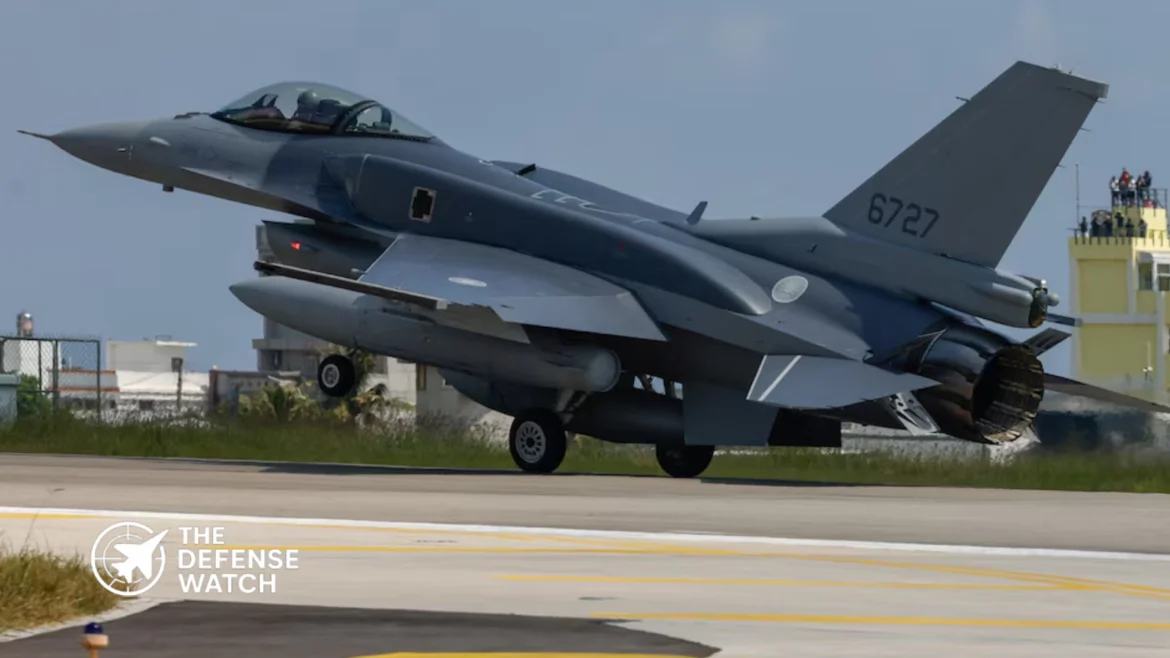
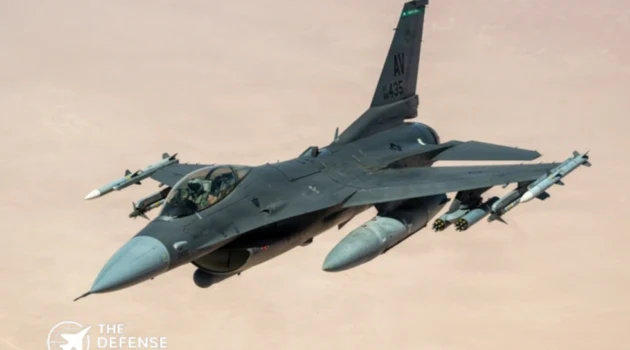
Taiwan received its first two new F-16V Block 70 fighter jets on October 2, marking the start of deliveries under a 66-aircraft U.S. procurement program intended to modernize one of the island’s principal fighter fleets.
The two single-seat aircraft arrived at Chihhang Air Base in Taitung after flying through Hawaii and Guam. Taiwan’s Air Force said the aircraft would enter a planned reception and conversion training process as crews and maintenance personnel transition to the new configuration.
The arrival comes after significant schedule delays. Taiwan’s Ministry of National Defense previously said the program had been affected by supplier delays and changes to the U.S. assembly schedule. By October 2, Taiwan said the first two aircraft had arrived while 63 of the remaining aircraft were still on the U.S. production line, with some already at the delivery stage.
What Taiwan Is Receiving
The F-16 Block 70 is the latest production configuration of the F-16 family. The aircraft retains the basic F-16 design while adding a substantially modernized mission system architecture.
The U.S. government approved the potential sale to Taiwan in August 2019. The Defense Security Cooperation Agency notified Congress of a possible $8 billion Foreign Military Sale covering 66 F-16C/D Block 70 aircraft, engines, Link 16 systems and associated equipment and support.
Program element Confirmed information Aircraft 66 F-16C/D Block 70 U.S. approval August 2019 Approved estimated value $8 billion First aircraft delivered 2 F-16 Block 70 Delivery location Chihhang Air Base, Taitung Remaining aircraft on U.S. production line 63, according to Taiwan MND Primary radar APG-83 AESA Data link Link 16 included in the approved U.S. package Existing Taiwan F-16 upgrade Completed in 2023 The $8 billion figure is the U.S. government’s 2019 estimated value for the possible sale, rather than a verified per-aircraft acquisition price. The notification covered a broader package of aircraft, equipment, support and associated systems.
APG-83 Radar Is a Major Upgrade
One of the most important changes in the Block 70 configuration is the APG-83 active electronically scanned array radar.
Lockheed Martin identifies the APG-83 as the Block 70’s primary AESA fire-control radar and says the system incorporates technology commonality with AESA radar development associated with the F-22 and F-35 programs. The company also identifies improved pilot displays and integration with targeting and infrared search and track systems as part of the configuration.
For Taiwan, the significance is less about turning the F-16 into a fifth-generation aircraft and more about extending the useful combat value of a large existing fighter fleet.
The Block 70 remains a fourth-generation fighter. Its AESA radar, improved mission systems, data links and cockpit architecture provide a substantially newer sensor and information-management baseline than older F-16 configurations, but they do not give the aircraft the low-observable characteristics of a stealth fighter.
That distinction matters in the Taiwan Strait, where aircraft must operate against an increasingly sophisticated Chinese air force and integrated air defense environment.
A Larger Modernized F-16 Fleet
The new aircraft will add to Taiwan’s existing F-16 inventory rather than replace the entire fleet.
Taiwan completed an upgrade program for its existing F-16s in 2023. Reuters reported that the combined fleet is expected to exceed 200 aircraft once the new Block 70s are delivered.
The resulting fleet structure gives Taiwan a common fighter family across older upgraded aircraft and new-production Block 70s.
That has practical implications for training, maintenance, weapons integration and logistics. A larger modernized F-16 force also gives Taiwan more options for distributing fighter missions across its air bases rather than relying on a small number of newer aircraft.
The immediate constraint, however, is delivery tempo. Taiwan’s Air Force said the remaining aircraft will return according to a schedule coordinated with the U.S. program office. The service is already training personnel in the United States for the transition.
Why the Delivery Matters for Taiwan’s Air Defense
Taiwan’s fighter force operates in an environment of sustained Chinese military activity around the island.
Taiwan’s Air Force reported that 23 PLA aircraft were detected around Taiwan during the 24-hour period ending October 1, with 16 crossing the Taiwan Strait median line and entering Taiwan’s northern, central or southwestern air defense identification zone. Taiwan said it responded with combat air patrol aircraft, naval forces and coastal missile systems.
That operating pattern creates a readiness problem independent of any major conflict.
Aircraft used repeatedly for air policing and interception accumulate flight hours, maintenance requirements and personnel demands. Additional modern fighters can increase the pool of available aircraft, although the precise operational effect will depend on pilot training, maintenance capacity, weapons stocks, base survivability and the rate at which the remaining F-16s are delivered.
The Block 70 therefore represents more than an individual aircraft purchase. It is part of Taiwan’s effort to maintain a sustainable fighter force while facing persistent air activity around the island.
F-16 Block 70 Versus China’s Stealth Fighter Challenge
The new F-16s improve Taiwan’s fighter fleet, but the procurement does not create a direct one-for-one answer to China’s J-20 stealth fighter.
Reuters reported that the Block 70’s upgraded radar, avionics and weapons systems are intended to improve Taiwan’s ability to confront China’s advanced air force, including the J-20. At the same time, Taiwan does not operate the F-22 or F-35, leaving its fighter force without a comparable U.S.-designed stealth platform.
The distinction between the two aircraft generations is important.
Area Taiwan F-16 Block 70 Chinese J-20 Basic design generation Fourth-generation derivative Fifth-generation stealth fighter Radar APG-83 AESA Chinese AESA system Low-observable design No Yes Primary role Multirole fighter Air superiority and long-range counter-air focused platform Fleet role for Taiwan Expansion and modernization of existing F-16 force Part of China’s advanced combat-aircraft force Key advantage of program Modernized sensors, avionics and common F-16 ecosystem Stealth design and advanced combat-aircraft architecture This comparison should not be interpreted as a simple aircraft-versus-aircraft contest. In a Taiwan Strait contingency, fighter effectiveness would depend on the broader sensor network, command and control architecture, air defenses, electronic warfare, weapons inventories, dispersal, runway resilience and access to external intelligence.
The F-16 Block 70 can therefore improve Taiwan’s air combat capability without eliminating the wider requirement for layered air defense and distributed military infrastructure.
The Industrial Lesson From the Delays
The delivery timeline also highlights the difficulty of sustaining a major fighter modernization program under production and integration constraints.
Taiwan’s Ministry of National Defense said in September 2024 that the first aircraft had originally been scheduled for production in the third quarter of that year. The ministry attributed schedule changes to international conditions, supplier delivery delays and adjustments to the U.S. assembly schedule. It subsequently targeted completion of the aircraft’s return to Taiwan by the end of 2026.
In March 2026, Taiwan’s defense ministry said 59 of the 66 aircraft were undergoing assembly and modification and explained that the Taiwan-specific configuration required flight testing and calibration before feedback could be incorporated into production.
By October, the first aircraft had reached Taiwan, but the program still had a substantial number of aircraft to deliver.
For Taiwan, this reinforces the importance of delivery schedules and production capacity when acquiring systems intended to address immediate readiness requirements. A modern aircraft has limited value to force structure until it is delivered, accepted, supported, crewed and integrated into operational units.
Training and Force Generation
Taiwan’s Air Force established a tactical fighter wing in December 2023 and divided the conversion process into phases. Air and maintenance personnel have been sent to the United States for training before returning to support the new aircraft in Taiwan.
This approach allows Taiwan to begin building the personnel pipeline before the complete fleet arrives.
The training requirement is particularly important because the Block 70 is not simply an older F-16 with a new radar. The aircraft combines updated avionics, displays, sensors and weapons integration that require pilots and maintainers to develop familiarity with a new mission-system configuration.
The pace at which Taiwan can turn delivered aircraft into operationally available aircraft will therefore be an important measure of the program’s real contribution.
What the F-16 Delivery Does Not Solve
The first two aircraft are an important addition to Taiwan’s fighter inventory, but several structural challenges remain.
First, the 66 aircraft will arrive over time rather than simultaneously. Second, Taiwan must maintain runways, shelters, fuel infrastructure, weapons stocks and command networks that can survive disruption. Third, the F-16 fleet must operate alongside Taiwan’s F-16 upgrades, Indigenous Defense Fighters and Mirage 2000s while the service manages an increasingly demanding readiness cycle.
The F-16 Block 70 also cannot independently solve Taiwan’s exposure to China’s larger military aviation and missile forces.
Its value is therefore greatest when viewed as one component of a wider air-defense architecture.
A Modernization Program With Regional Significance
The arrival of the first two F-16 Block 70s also carries significance beyond Taiwan’s inventory.
The United States has maintained arms sales to Taiwan under the framework of the Taiwan Relations Act while avoiding formal diplomatic relations with Taipei. Beijing has repeatedly opposed U.S. arms sales to Taiwan. The U.S. State Department told Reuters that Washington continues to support security cooperation with Taiwan.
The aircraft thus sit at the intersection of military modernization, industrial production and U.S. defense policy in the Indo-Pacific.
For Taiwan, the immediate objective is practical: introduce the new aircraft, train personnel and progressively build an operational Block 70 capability.
For the United States, the program demonstrates continued support for Taiwan’s conventional defense capabilities while relying on an established fighter platform rather than transferring the F-22 or F-35.
For China, the delivery adds another modernized fighter element to Taiwan’s air-defense network. Its ultimate military significance will depend less on the arrival of two aircraft than on how quickly Taiwan converts the full 66-aircraft order into a sustainable, networked and survivable force.
Bottom Line
Taiwan’s receipt of its first two F-16 Block 70 fighters marks the operational beginning of a long-delayed 66-aircraft modernization program.
The aircraft bring the APG-83 AESA radar, updated avionics and a modernized mission-system architecture to Taiwan’s F-16 fleet. They also extend a fighter force that already underwent a major F-16 upgrade program completed in 2023.
The larger question is now execution. Taiwan has to move from initial delivery to sustained fleet generation, with pilots, maintainers, weapons, infrastructure and aircraft availability developing together.
The Block 70 does not erase the technological and numerical challenges posed by China’s expanding air force. It does, however, give Taiwan another modern fighter capability within a force structure designed around distributed air defense and continued F-16 operations.

Peru F-16 Block 70 Purchase Signals Major Airpower Shift
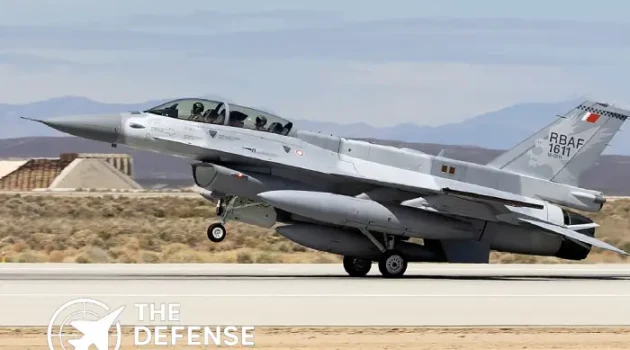
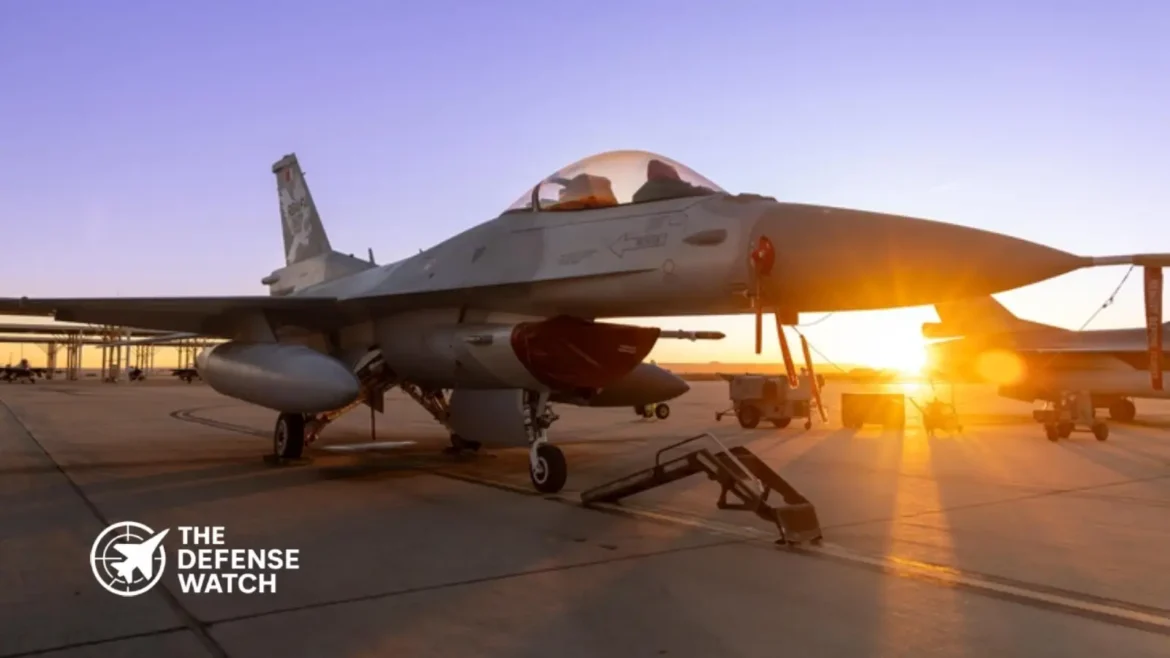
Peru F-16 Block 70 acquisition plans could significantly upgrade the country’s air combat capability as Lima explores the purchase of 12 advanced fighter aircraft from Lockheed Martin. The reported proposal would replace aging legacy fleets and give the Peruvian Air Force a modern multirole platform with stronger deterrence value.
- Peru is considering the purchase of 12 F-16 Block 70 multirole fighter aircraft.
- The Block 70 variant includes AESA radar, modern avionics, and extended service life.
- The deal would mark one of Latin America’s most important fighter recapitalization efforts.
- Peru seeks to replace aging Soviet and French-origin combat aircraft fleets.
- A final decision would shape Peru’s airpower posture for decades.
The potential deal reflects a broader trend across Latin America, where several nations are reassessing airpower readiness amid aging fleets, sustainment challenges, and rising operational demands.
The Big Picture
Latin American air forces have long faced delayed modernization due to budget pressure, political turnover, and maintenance costs. Many fleets now rely on aircraft introduced decades ago. That creates readiness gaps in air sovereignty, border patrol, maritime surveillance support, and crisis response.
For Peru, combat aviation remains strategically important. The country has a large territory, Pacific coastline, mountainous geography, and remote regions that require rapid-response air assets. A modern fighter fleet supports both national defense and peacetime security missions.
The proposed Peru F-16 Block 70 move would align Lima with a growing list of nations selecting Western fourth-generation-plus aircraft with lower risk than more expensive fifth-generation options.
What’s Happening
According to reporting cited by Defence Industry Europe, Lockheed Martin outlined Peru’s planned purchase of 12 F-16 Block 70 fighters. No final contract value or delivery schedule has been publicly confirmed.
Peru currently operates mixed legacy fleets including Russian-origin MiG-29 fighters and French Mirage 2000 aircraft. Both types have modernization potential, but long-term sustainment becomes increasingly expensive as fleets age and supply chains tighten.
The F-16 Block 70 package typically includes:
- AN/APG-83 AESA radar
- Advanced mission computer
- Modern cockpit displays
- Precision strike integration
- Improved electronic warfare systems
- Structural life extension up to 12,000 flight hours
Why It Matters
The F-16 remains one of the world’s most widely supported fighter platforms. That matters because aircraft capability alone does not determine readiness. Training pipelines, spare parts access, software upgrades, and weapons integration often decide long-term value.
For Peru, the Peru F-16 Block 70 option could reduce logistical complexity by moving toward a scalable, globally supported platform.
It would also improve interoperability with regional and international partners that already operate the F-16.
Strategic Implications
A successful acquisition would strengthen Peru’s deterrence posture without dramatically altering the regional balance of power. Instead, it would likely be viewed as a normalization step after years of deferred recapitalization.
Modern fighters provide better reaction times, improved sensor range, and stronger survivability. They also allow more effective maritime monitoring over Pacific approaches and faster response to unauthorized air activity.
Competitor View
Regional militaries will likely watch the program through a readiness lens rather than an arms-race lens. Countries operating legacy fleets may see Peru’s move as evidence that sustainment pressure is forcing overdue replacement decisions.
Russia could also view the shift as another example of long-term erosion in legacy Soviet equipment influence within export markets historically open to mixed sourcing.
What To Watch Next
Key indicators now include:
- Government funding approval
- Foreign Military Sales pathway details
- Weapons package selection
- Pilot training arrangements
- Infrastructure upgrades
- Delivery timeline and industrial participation
Capability Gap
Peru needs to close the gap between aging aircraft availability and modern mission demands. Older fleets can remain lethal, but readiness often falls when maintenance hours rise and spare parts become scarce.
The F-16 does not eliminate all challenges. New aircraft require pilot conversion, base upgrades, sustainment funding, and long-term procurement discipline.
The Bottom Line
Peru’s planned F-16 Block 70 purchase would be less about prestige and more about restoring credible, sustainable air combat readiness for the next generation.


Slovakia F-16s Purchase Talks Signal Further Air Force Expansion
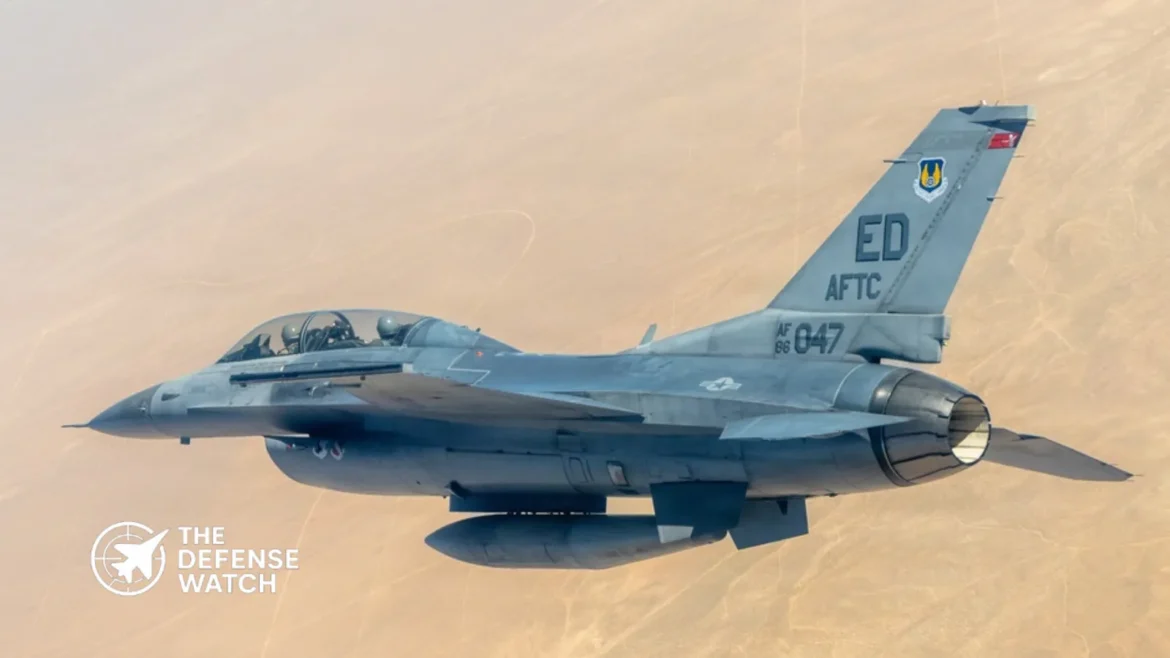
Slovakia is in talks with the United States to buy four additional F-16s fighter jets, a move that would expand its ongoing F-16 modernization program and further align its air force with NATO standards.
According to a report by Defense News, Slovak officials confirmed discussions with Washington over the potential acquisition, which would add to the 14 F-16 Block 70 aircraft already on order from Lockheed Martin. The original deal, signed in 2018, marked the country’s largest military procurement since gaining independence.
If finalized, the new purchase would increase Slovakia’s future fleet to 18 advanced multirole fighters.
Building On The F-16 Block 70 Program
Slovakia selected the F-16 Block 70 variant to replace its aging Soviet-era MiG-29 fleet. The Block 70 configuration features an Active Electronically Scanned Array radar, modern avionics, advanced electronic warfare systems, and compatibility with a wide range of NATO-standard weapons.
The F-16s are being manufactured in the United States and are expected to form the backbone of the Slovak Air Force’s tactical aviation capability for decades.
The potential addition of four more jets suggests Bratislava may be seeking greater operational flexibility, enhanced training capacity, or improved readiness levels.
NATO Integration And Regional Security
As a NATO member, Slovakia has prioritized interoperability with allied air forces. The F-16 platform is widely operated across the alliance, including by the United States and several European nations, simplifying joint operations, logistics, and pilot training.
The talks also come amid broader European efforts to strengthen air defense and combat aviation capabilities in response to Russia’s ongoing war in Ukraine and shifting security dynamics along NATO’s eastern flank.
Slovakia has contributed to allied air policing missions and has relied on partners for temporary airspace protection during its transition from MiG-29 operations to the new F-16 fleet.
Budget And Timeline Considerations
Slovak defense officials have not disclosed the estimated cost or timeline for the potential four-aircraft purchase. Any agreement would likely proceed through the US Foreign Military Sales process, pending government approvals on both sides.
The original 14-jet F-16 deal was valued at approximately $1.6 billion, covering aircraft, training, weapons, and support. Expanding the fleet could further increase sustainment efficiency while spreading fixed operational costs across a larger number of aircraft.
Analysts note that fleet size is a critical factor in maintaining pilot proficiency, conducting maintenance rotations, and ensuring continuous air defense coverage.
Strategic Implications
The Slovakia F-16s purchase talks underscore a continued shift toward Western equipment and long-term defense integration within NATO. By expanding its fleet, Slovakia would strengthen its ability to conduct air policing, air-to-air defense, and precision strike missions.
While discussions remain ongoing, the move reflects sustained investment in combat aviation modernization and deeper US-Slovakia defense cooperation.
Further details are expected once negotiations advance and formal notifications are issued through official channels.
CAE F-16 Block 70 contract expands Taiwan Air Force training capability
CAE USA Inc. has been awarded a $69.9 million definitization modification to support the F-16 Block 70 Training Simulators program for the Taiwan Air Force, reinforcing U.S. backed efforts to modernize Taiwan’s air combat training infrastructure.
(adsbygoogle = window.adsbygoogle || []).push({});The award, issued by the U.S. Air Force Life Cycle Management Center at Wright Patterson Air Force Base, Ohio, increases the total cumulative value of the contract to nearly $128 million under the Foreign Military Sales framework.
Contract details and scope
The modification, identified as PZ0012, finalizes Phase II of contract FA8621-23-C-0023, previously awarded to CAE USA Inc., headquartered in Arlington, Texas. The action increases the total contract value from $58.1 million to $127.99 million.
Work under the contract will be performed in Arlington, Texas, with completion expected by Aug. 29, 2028. The effort focuses on delivering advanced F-16 Block 70 training simulators tailored to the operational requirements of the Taiwan Air Force.
At the time of award, $59.4 million in Fiscal 2026 Foreign Military Sales funding was obligated.
Supporting Taiwan’s F-16 Block 70 fleet
The CAE F-16 Block 70 contract directly supports Taiwan’s ongoing acquisition and modernization of its F-16 fleet, which includes new build F-16C Block 70 aircraft approved through U.S. Foreign Military Sales channels.
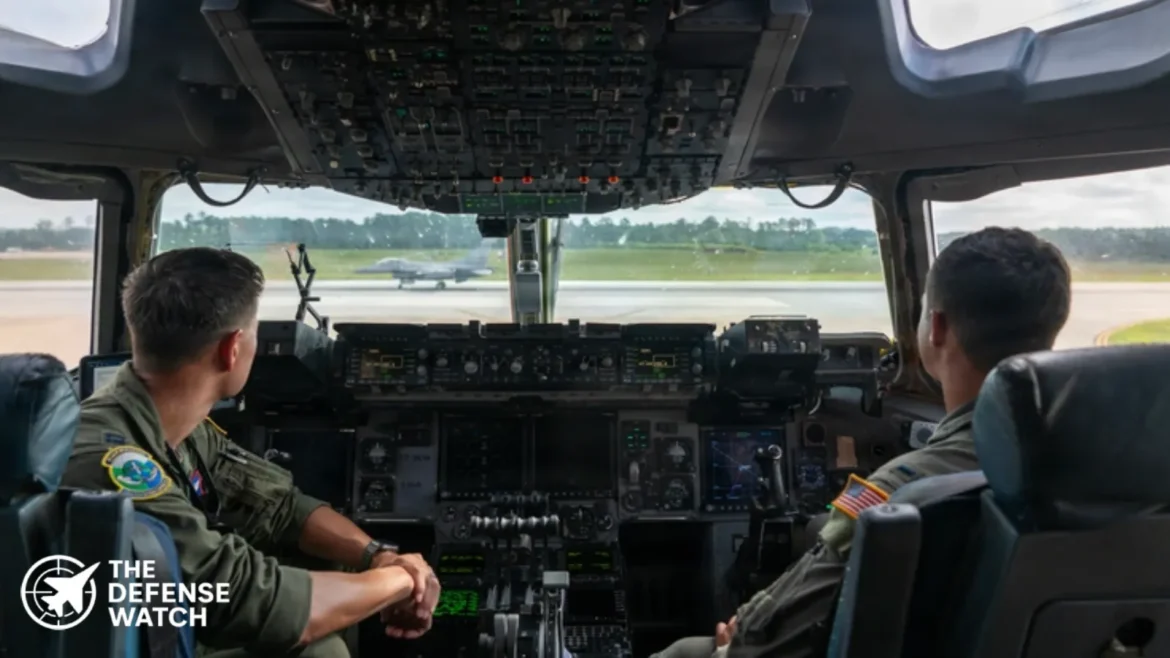
Training simulators play a critical role in preparing pilots for advanced avionics, radar systems, mission computers, and networked combat operations associated with the Block 70 configuration. High fidelity simulators allow aircrews to train for complex mission sets while reducing operational costs and aircraft wear.
CAE is a long standing supplier of military training systems to the U.S. Department of Defense and allied air forces, with a portfolio that includes full mission simulators, mission rehearsal systems, and integrated training solutions.
Role of the U.S. Air Force and FMS framework
The Air Force Life Cycle Management Center is serving as the contracting authority, reflecting the U.S. government’s role in managing Foreign Military Sales programs for allied nations.
Under the FMS structure, the U.S. Department of Defense oversees contracting, program management, and delivery to ensure interoperability, standardization, and compliance with U.S. security requirements. Taiwan’s F-16 Block 70 training program is one of several FMS cases aimed at strengthening air defense readiness in the Indo Pacific region.
The definitization modification signals the transition from earlier contractual phases to a fully defined cost, schedule, and scope, providing long term program stability for both the U.S. government and Taiwan.
Strategic importance of simulator based training
Advanced simulator based training has become a core component of modern air force readiness. For aircraft such as the F-16 Block 70, simulators enable pilots to train for high threat scenarios that cannot be safely or affordably replicated during live flight operations.
(adsbygoogle = window.adsbygoogle || []).push({});These systems support joint training concepts, emergency procedures, sensor fusion operations, and combat mission rehearsal. They also allow air forces to maintain pilot proficiency amid limited flight hours or operational constraints.
For Taiwan, expanding simulator capacity is particularly important given airspace congestion and high operational tempo.
CAE’s position in defense training systems
CAE USA is a key U.S. subsidiary of CAE Inc., a global leader in military and civil aviation training. The company supports numerous U.S. and allied programs, including fighter, mobility, rotary wing, and unmanned systems training.
The F-16 Block 70 contract further strengthens CAE’s footprint in Asia focused defense training, while reinforcing its role as a trusted supplier within the U.S. FMS ecosystem.
Program timeline and outlook
With work extending through 2028, the program aligns with Taiwan’s broader timeline for inducting new F-16 Block 70 aircraft into operational service. Simulator delivery and integration are expected to progress in parallel with aircraft deliveries, ensuring pilots transition smoothly to the new configuration.
The award reflects continued U.S. government support for allied airpower modernization through long term, structured defense contracts.
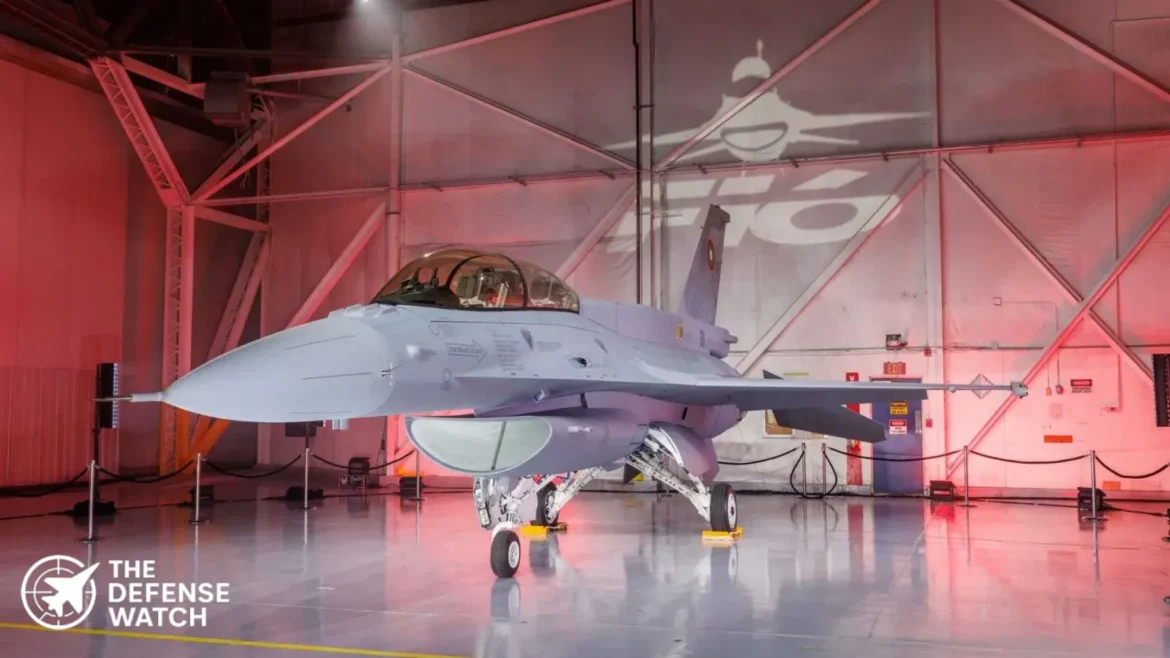
US and Türkiye are continuing negotiations on the F-16 Block 70 sale, focusing on pricing, configuration, and technology access as Ankara seeks terms it calls fair within NATO cooperation.
Negotiations over Ankara’s planned acquisition of F-16 Block 70s remain active, with officials from both governments working through contractual details and technical requirements. The talks underscore ongoing efforts to finalize a long-discussed procurement that remains central to the Turkish Air Force modernization plan.
The F-16 Block 70, also marketed as the F-16V, is the most advanced production variant of Lockheed Martin’s Fighting Falcon family, featuring an active electronically scanned array (AESA) radar, upgraded mission systems, and improved avionics. It is designed to sustain frontline service into the 2040s.
Turkish President Recep Tayyip Erdoğan has publicly underscored Ankara’s expectation that any agreement reflect alliance cooperation principles, stressing that pricing and technology transfer must align with NATO partnership norms.
The deal has been discussed for years. The United States Congress approved a potential Foreign Military Sale of up to 40 new F-16 Block 70 aircraft and related equipment in early 2024 under a proposed package valued at about $23 billion, with Lockheed Martin as the principal contractor.
Despite that approval, Ankara and Washington have not finalized contract terms. Recent reporting indicates Turkey is pushing for access to deeper technology elements, including mission computer source code to integrate Turkish sensors and weapons systems, a point Washington has traditionally guarded.
Pricing disagreements and production backlogs at Lockheed Martin have also been part of the ongoing talks. Bloomberg and other outlets reported additional meetings scheduled between Turkish officials and Lockheed representatives to resolve a pricing dispute, including aircraft configuration and upgrade scopes.
Türkiye’s broader air force modernization includes parallel discussions with European partners over Eurofighter Typhoon acquisitions, part of Ankara’s strategy to diversify its fighter fleet beyond legacy F-16 models.
The Turkish Air Force operates more than 230 F-16s across multiple older blocks. Upgrading to the Block 70 standard has been seen as key to maintaining interoperability with NATO forces while closing capability gaps with regional peers.