
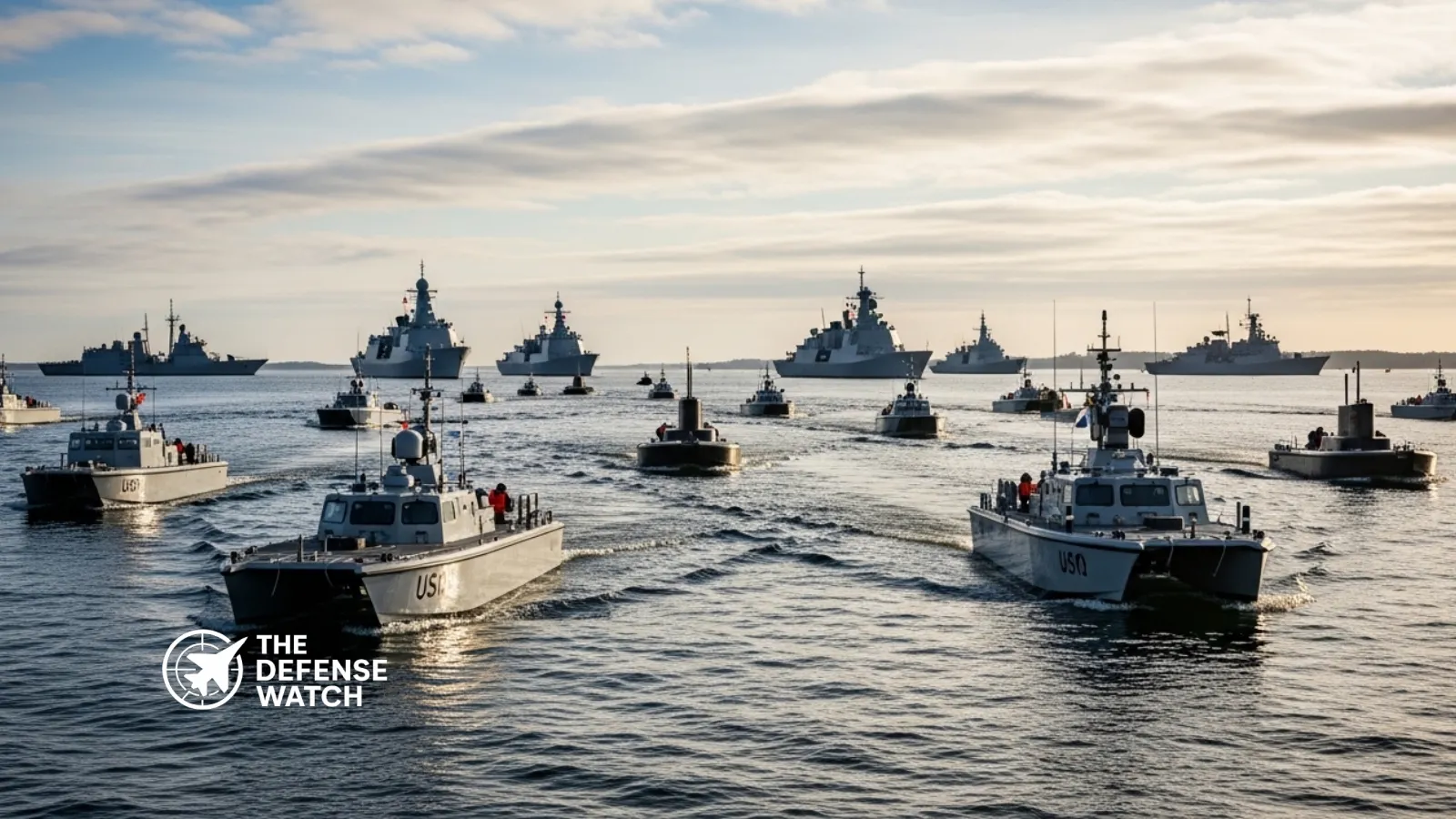
NATO Deploys World’s Largest Drone Fleet To Deter Russia
NATO has deployed what officials describe as the world’s largest drone fleet in the Baltic Sea region as part of a broader effort to deter Russian aggression and improve surveillance of critical undersea infrastructure. The move follows a shift from experimental unmanned systems testing toward broader operational use among alliance members.
NATO’s Unmanned Systems Move To Operational Scale
In 2025 NATO transitioned efforts with unmanned platforms from research and innovation to field deployment, officials said at NATO Headquarters in Brussels. The drone fleet, consisting of dozens of unmanned vessels, was first operated in support of Baltic Sentry activity, a regional patrol and monitoring effort aimed at securing undersea cables and other critical infrastructure.
According to a NATO defence industrial official, the initial phase showed that commercially available technology could be quickly adapted for collective defence use. The initiative, part of the broader Task Force X Baltic programme, now moves into a formal second phase under an eight-nation letter of intent.
The participating states include Denmark, Estonia, Finland, Germany, Latvia, Lithuania, Poland and Sweden. Analysts say this effort reflects growing allied focus on unmanned systems as a deterrent against Russian hybrid and conventional threats in the region.
Bigger Fleet, Broader Roles
Officials noted that the fleet demonstrated persistent surveillance and multi-domain coverage in the Baltic Sea with autonomous surface vessels working alongside traditional manned assets. The approach reflects a wider trend in alliance planning to integrate unmanned systems rapidly into defence operations.
Allied commanders are planning further expansions, including enhanced sensor integration and command-and-control links to provide real-time data feeds to naval and joint headquarters. This effort aims to reduce response times and improve situational awareness in contested environments.
Strategic Context
The Baltic region has been a focal point for NATO deterrence since Russia’s invasion of Ukraine in 2022. In recent years, the alliance has strengthened air, naval and ground forces along its eastern flank, and expanded cooperation on unmanned and digital assets. Previous allied initiatives included expanding conventional unit rotations and air defence deployments.
Drone and unmanned systems have also been central to battlefield dynamics in the Russo-Ukrainian war, highlighting how mass unmanned platforms can shape modern conflicts. NATO’s deployment in the Baltic aims to provide persistent domain awareness and complicate potential adversary actions without escalating tensions.
Interoperability And Procurement
NATO’s focus on interoperability means participating nations are working toward common standards for autonomy, communications and data sharing. Officials said lessons from the Baltic deployment will inform doctrine and procurement approaches going forward.
The alliance is also exploring partnerships with industry to improve system reliability and support rapid refresh cycles for unmanned technologies, acknowledging how fast these systems evolve compared with traditional defence platforms.
Implications For Russian Posture
While NATO’s drone deployment is defensive in nature, it comes amid continued unpredictability in the region. Russia has formalised its own unmanned systems branch, signalling Moscow’s recognition of drone warfare’s importance.
Moscow’s investments in unmanned systems and mass production of attack drones in recent years underline why NATO places emphasis on surveillance and networked sensors along eastern approaches.
Outlook
Analysts expect NATO to continue expanding unmanned operations across alliance areas of interest, including maritime, air and land domains. How these systems integrate with manned forces and broader allied strategy will be a key focus in upcoming defence planning discussions and exercises.
Get real time update about this post category directly on your device, subscribe now.
