Lockheed Martin Space has received a $211.4 million contract modification to manufacture new Configuration 3 (C3) THAAD launchers for the United Arab Emirates, extending a long-running U.S. Foreign Military Sales program through January 2031.
The Missile Defense Agency (MDA) in Huntsville, Alabama, is the contracting activity. The modification, designated P00082 under contract HQ0147-19-C-5001, increases the cumulative value of the contract to $1.0545 billion. UAE FMS funds will finance the full $211.4 million obligation.
Deep Technical & Strategic Context Analysis
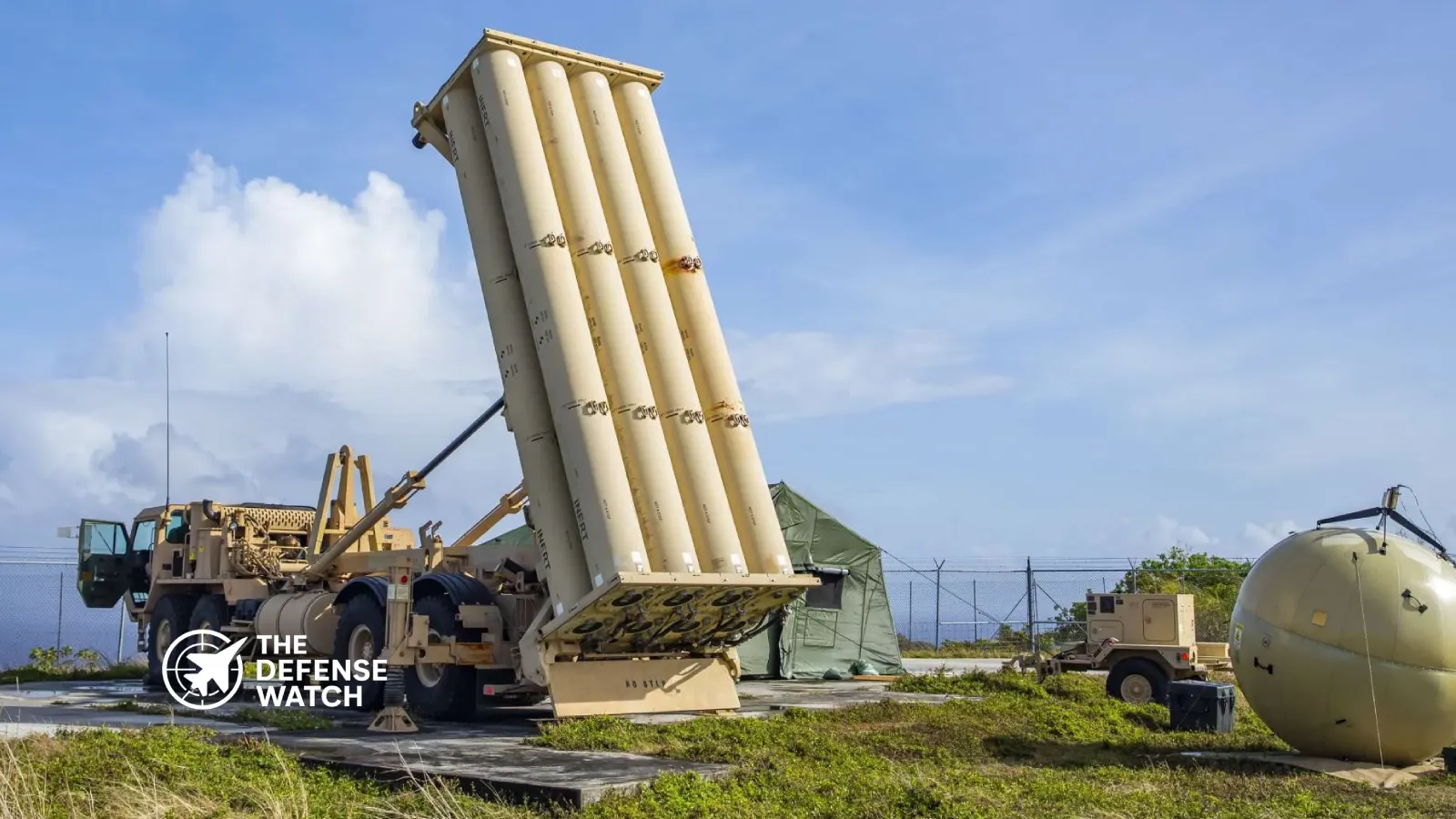
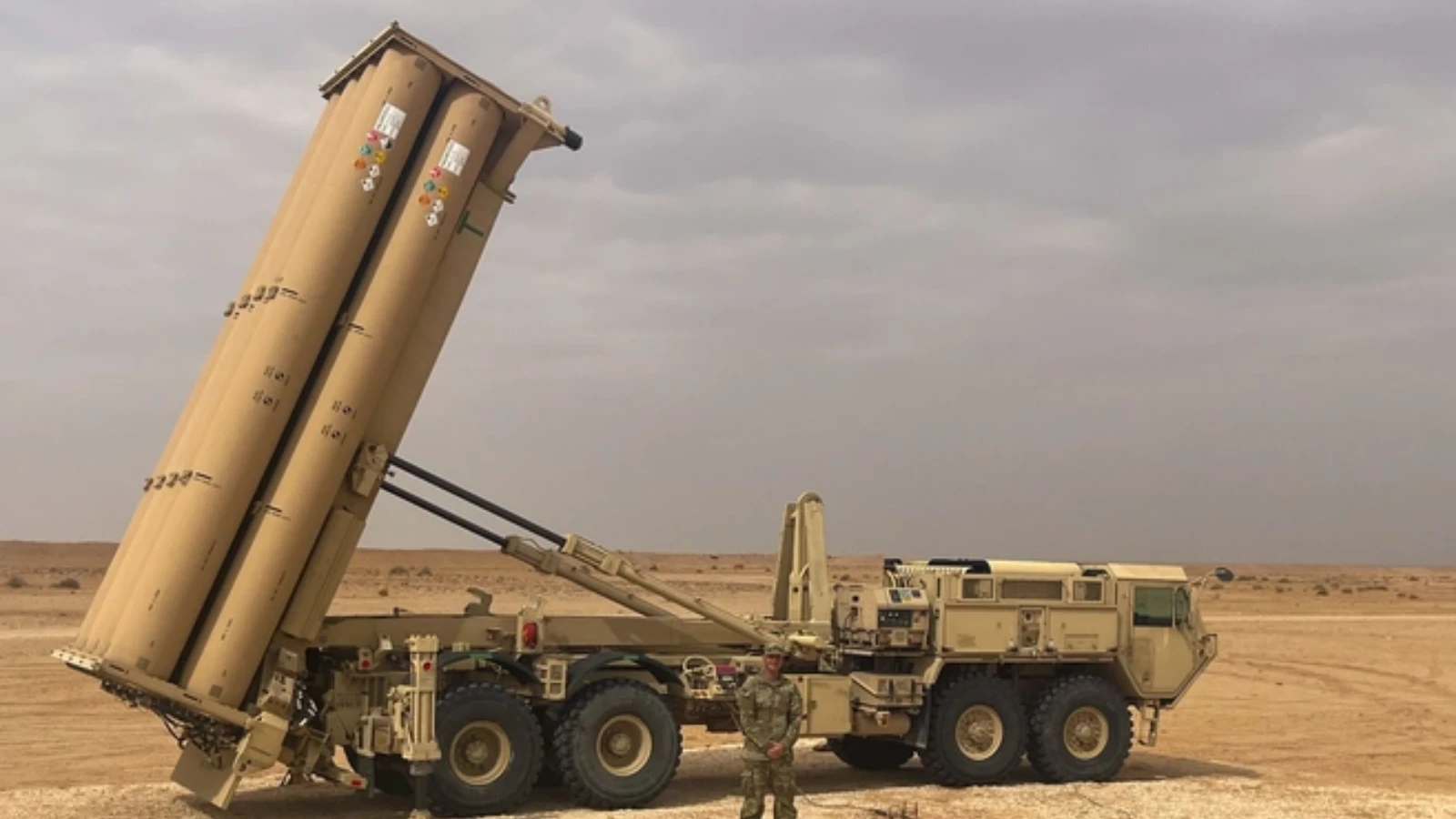
The award is significant because it moves the UAE THAAD program beyond sustainment of its existing batteries and into production of newer launcher hardware. THAAD is designed to intercept short, medium and limited intermediate-range ballistic missiles during their terminal flight phase, both inside and outside the atmosphere. Its hit-to-kill interceptor destroys the incoming target through direct kinetic impact rather than relying on a conventional explosive warhead.
A THAAD battery combines mobile launchers, interceptors, the AN/TPY-2 X-band radar and fire-control equipment. The launcher is a critical part of the system’s operational capacity because it determines how many interceptors can be positioned, fired and reloaded during an engagement sequence. MDA identifies Configuration 3 hardware as part of THAAD System Build 5.0, which also includes mission-assurance updates. The agency has planned the integration of C3 hardware into the THAAD operational baseline as part of the system’s continuing modernization.
The UAE has particular operational relevance to the program. It operates two THAAD batteries, and MDA says the UAE achieved the first operational THAAD intercept in combat in January 2022. That gives the UAE a unique position among THAAD’s international users and demonstrates that the system is not simply an acquisition program, but an actively employed layer of the country’s ballistic missile defense architecture.
The new launcher production also comes as regional demand for integrated missile defense remains high. Saudi Arabia has signed FMS cases for seven THAAD batteries, while Lockheed Martin currently identifies the UAE and Saudi Arabia as THAAD’s two international customers.
Contract Breakdown & Details
What Lockheed Martin Is Receiving
According to the MDA contract announcement, the modification provides:
- Contract value: $211,435,067
- Cumulative contract value: $1,054,537,337
- Contract modification: P00082
- Original contract: HQ0147-19-C-5001
- Prime contractor: Lockheed Martin Space
- Contractor location: Sunnyvale, California
- Customer: United Arab Emirates
- Acquisition mechanism: Foreign Military Sales
- Contracting activity: Missile Defense Agency, Huntsville, Alabama
- Offers solicited: One
- Offers received: One
- Performance period: August 2026 through January 2031
What Is Being Produced?
The central requirement is the manufacture and production of new Configuration 3 THAAD launchers.
This is different from a conventional maintenance award. Previous modifications under the same contract have supported the UAE’s existing THAAD force through maintenance, logistics, training, repair, software and hardware sustainment, engineering and other technical services. A December 2025 modification, for example, provided continued sustainment support for the UAE’s two THAAD batteries through August 2028.
The latest award therefore adds a significant production component to the continuing UAE support relationship.
Why Configuration 3 Matters
THAAD System Build 5.0 incorporates Configuration 3 hardware alongside mission-assurance improvements. MDA describes the broader THAAD modernization effort as an effort to improve capability and performance against current and evolving missile threats.
For the UAE, new C3 launchers can provide a path toward keeping the ground segment aligned with the evolving THAAD architecture rather than allowing launcher hardware to become a limiting factor as other elements of the weapon system are modernized.
The distinction is important. A missile defense battery is not simply a collection of interceptors. Radar detection, target tracking, discrimination, fire control, communications and launcher availability all have to function as an integrated engagement chain. Maintaining modern launcher hardware is therefore directly connected to the system’s ability to generate usable firing capacity.
FMS Funding And Geographic Work Breakdown
The announcement identifies UAE FMS funding of $211,435,067, meaning the full amount obligated under this modification comes from the UAE’s Foreign Military Sales case.
The announcement provided in the award notice does not specify percentage allocations by work location. Accordingly, assigning geographic percentages to California, Alabama, Texas or other locations would not be supported by the available contract data.
The documented information establishes:
- Funding source: 100% UAE FMS funds for the obligated modification
- Primary contractor location: Sunnyvale, California
- Contracting authority: MDA, Huntsville, Alabama
- Geographic percentage split: Not publicly specified in the announcement
What One Offer Received Means
The notice states that one offer was solicited and one offer was received. That figure should not automatically be interpreted as evidence of a conventional competitive procurement.
THAAD is a highly integrated weapon system with proprietary design information, established production processes and extensive government-industry interfaces. Lockheed Martin is the system’s prime contractor, making the company’s established technical position particularly relevant to modifications involving specific THAAD configurations.
The key point is that the procurement record identifies one offer, while the award is being executed as a modification to an existing THAAD contract.
UAE THAAD Capability Continues To Expand
The UAE’s relationship with THAAD dates back more than a decade. Lockheed Martin delivered the first UAE THAAD battery in 2015, making the country the system’s first international customer. The UAE already operated Patriot PAC-3 before adding THAAD, creating a layered missile defense architecture with different engagement capabilities.
THAAD also has an established integration path with Patriot. Lockheed Martin and the U.S. Army demonstrated the integration of PAC-3 MSE launchers with THAAD, allowing Patriot interceptors to benefit from the broader THAAD radar and fire-control architecture.
That layered approach is increasingly important as regional missile threats become more diverse. THAAD is optimized for ballistic missile defense, while lower-tier systems such as Patriot can provide additional engagement opportunities against targets within their respective performance envelopes. The result is a networked defense architecture rather than reliance on a single interceptor or launcher type.
Strategic Significance
The $211.4 million award represents a shift from simply keeping the UAE’s existing THAAD batteries operational toward modernizing the physical launcher component of the force.
For Lockheed Martin, the modification also reinforces the long-term nature of the UAE THAAD relationship. For the MDA, continued international investment in THAAD provides another mechanism for maintaining a common weapon-system architecture among U.S. and allied operators.
The January 2031 performance endpoint also gives the UAE a multi-year production horizon for C3 launcher modernization. Combined with ongoing sustainment and the broader THAAD System Build 5.0 effort, the contract indicates that the UAE intends to maintain THAAD as a core component of its ballistic missile defense architecture well into the next decade.
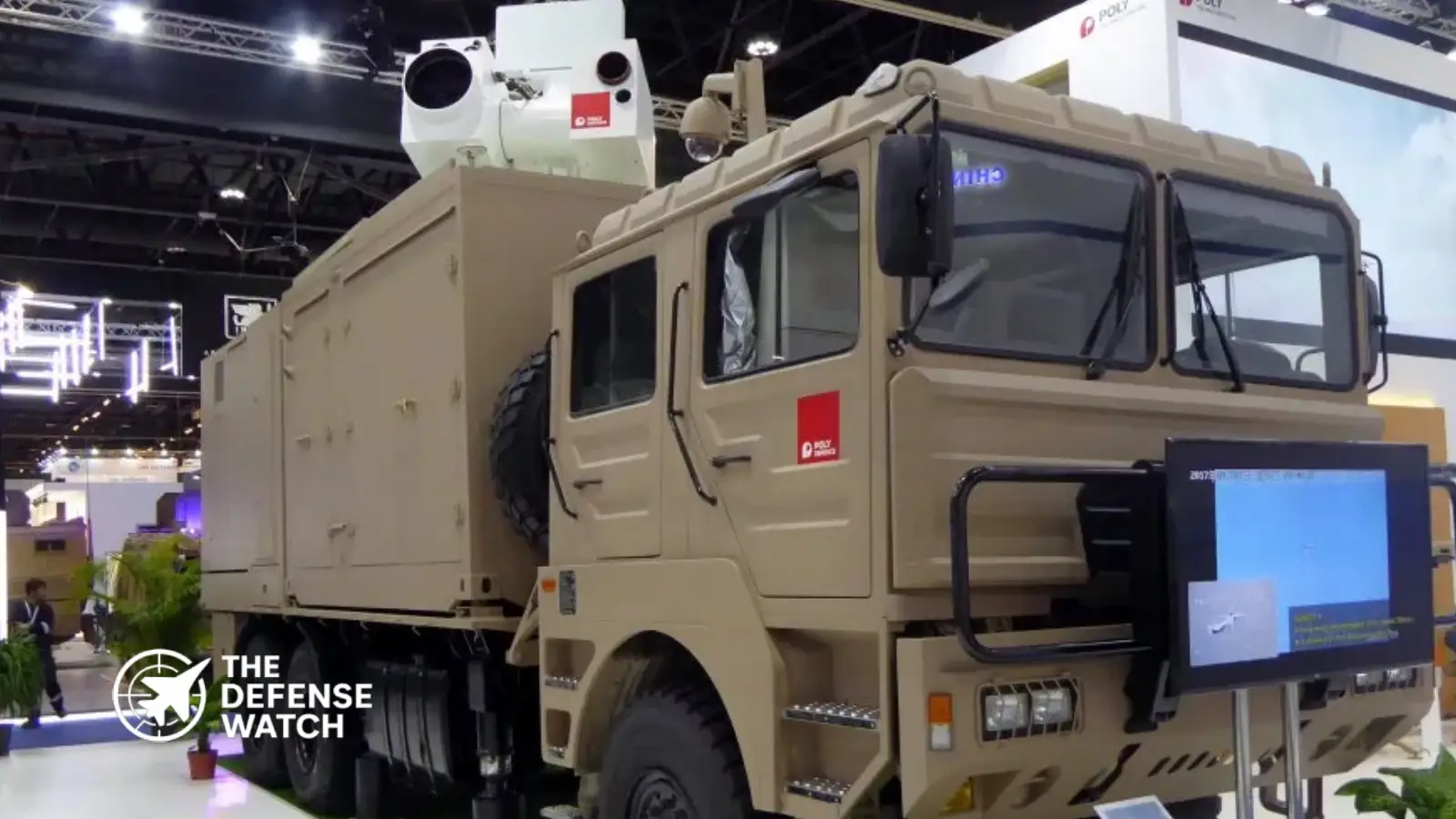
Executive Summary: China’s Poly Technologies Silent Hunter directed-energy weapon system has drawn renewed attention following its association with Abu Dhabi Airport in the United Arab Emirates. The truck-mounted laser is engineered primarily for high-efficiency interception of small, low-flying drones and similar threats. Its presence underscores growing Gulf interest in cost-effective, rapid-response air defense solutions amid evolving regional security dynamics.
Silent Hunter Laser System Overview
The Silent Hunter (also known as the Low-Altitude Laser Defending System or LASS/LW-30) is a Chinese-developed fiber-optic laser air defense system optimized for counter-unmanned aerial system (C-UAS) missions. Developed as an evolution of earlier 30 kW systems, it is available in mobile and fixed configurations.
The system is typically mounted on a 6×6 wheeled chassis, providing high mobility for the protection of critical infrastructure such as airports, military bases, ports, and government facilities. It employs an electrically powered fiber laser with scalable output, commonly cited in the 30 kW range but with officials noting potential between 30-100 kW depending on configuration.
Key reported performance parameters include:
- Interception range: Up to approximately 4 km against small drones (targets <2m diameter, speed <60 m/s).
- Power modes: Variable settings (e.g., 10 kW, 20 kW, 30 kW) offering flexible engagement envelopes from several hundred meters to the maximum range.
- Effects: Thermal ablation or structural damage to drone airframes and components; secondary capability to blind or damage optical sensors at relevant distances.
- Advantages: Low per-shot cost compared to missiles, minimal collateral damage, rapid retargeting, and high accuracy against slow-moving low-altitude threats.
Exhibition History and UAE Context
The Silent Hunter was first publicly unveiled by Poly Technologies at the International Defence Exhibition and Conference (IDEX) in Abu Dhabi in 2017. It has been showcased at subsequent IDEX events and other international exhibitions, highlighting China’s push to market directed-energy solutions to Middle Eastern customers.
Its recent association with Abu Dhabi Airport aligns with the UAE’s broader efforts to modernize air and missile defense capabilities against drone and low-altitude threats, a priority shared across Gulf states facing asymmetric aerial risks.
Operational Use and Export Interest
Beyond exhibitions, the system has seen reported operational interest and deployment. Saudi Arabia has been linked to acquisitions, with unconfirmed reports of field testing—though some accounts noted performance challenges in desert conditions related to target detection and environmental factors.
Open-source reporting also indicates Russian forces have employed variants of the Silent Hunter or closely related Chinese laser systems against Ukrainian drones, demonstrating real-world C-UAS application in high-intensity conflict.
Analysis: Directed-energy weapons like the Silent Hunter represent a logical evolution in air defense economics. Traditional kinetic interceptors are effective but expensive for use against low-cost attritable drones. Laser systems offer near-unlimited “magazine depth” limited primarily by power generation and thermal management, along with engagement speeds measured in seconds. However, their performance remains sensitive to atmospheric conditions (dust, humidity, fog), line-of-sight requirements, and target resilience.
For operators in the Gulf, integration with layered defenses—combining radar, electronic warfare, and kinetic systems—could enhance overall effectiveness against swarming or massed low-altitude incursions. The mobile 6×6 platform enhances survivability and repositioning flexibility compared to static installations.
Broader Implications for Regional Defense
The UAE and other Gulf nations continue to diversify defense suppliers amid shifting geopolitical dynamics. Chinese systems offer an alternative or complement to Western platforms, often with potentially lower acquisition and operating costs for high-volume drone defense scenarios.
This development fits into a global trend where nations accelerate directed-energy programs. The U.S., Israel, and others are also fielding or testing similar high-energy laser systems for C-UAS and other missions. China’s progress in this domain, evidenced by repeated international marketing and reported exports, positions it as a notable player in the emerging DEW market.
Feature Image Suggestion: High-resolution photo of the Silent Hunter 6×6 truck-mounted turret system, preferably in a desert or exhibition setting, with clear view of the laser emitter and tracking sensors. Overlay text option: “Silent Hunter Laser C-UAS System.”
- ► Raytheon Co. awarded $183,682,456 firm fixed price contract for Patriot Program support under UAE FMS case AE-B-ZUW.
- ► Total cumulative contract face value stands at $281,146,668.
- ► Work includes procurement, installation, inspection, logistics, and program management services.
- ► Performance location: Tewksbury, Massachusetts, with completion expected by March 3, 2031.
- ► Contracting authority: U.S. Army Contracting Command, Redstone Arsenal, Alabama.
US Army Awards Patriot Program Contract For UAE Air Defense
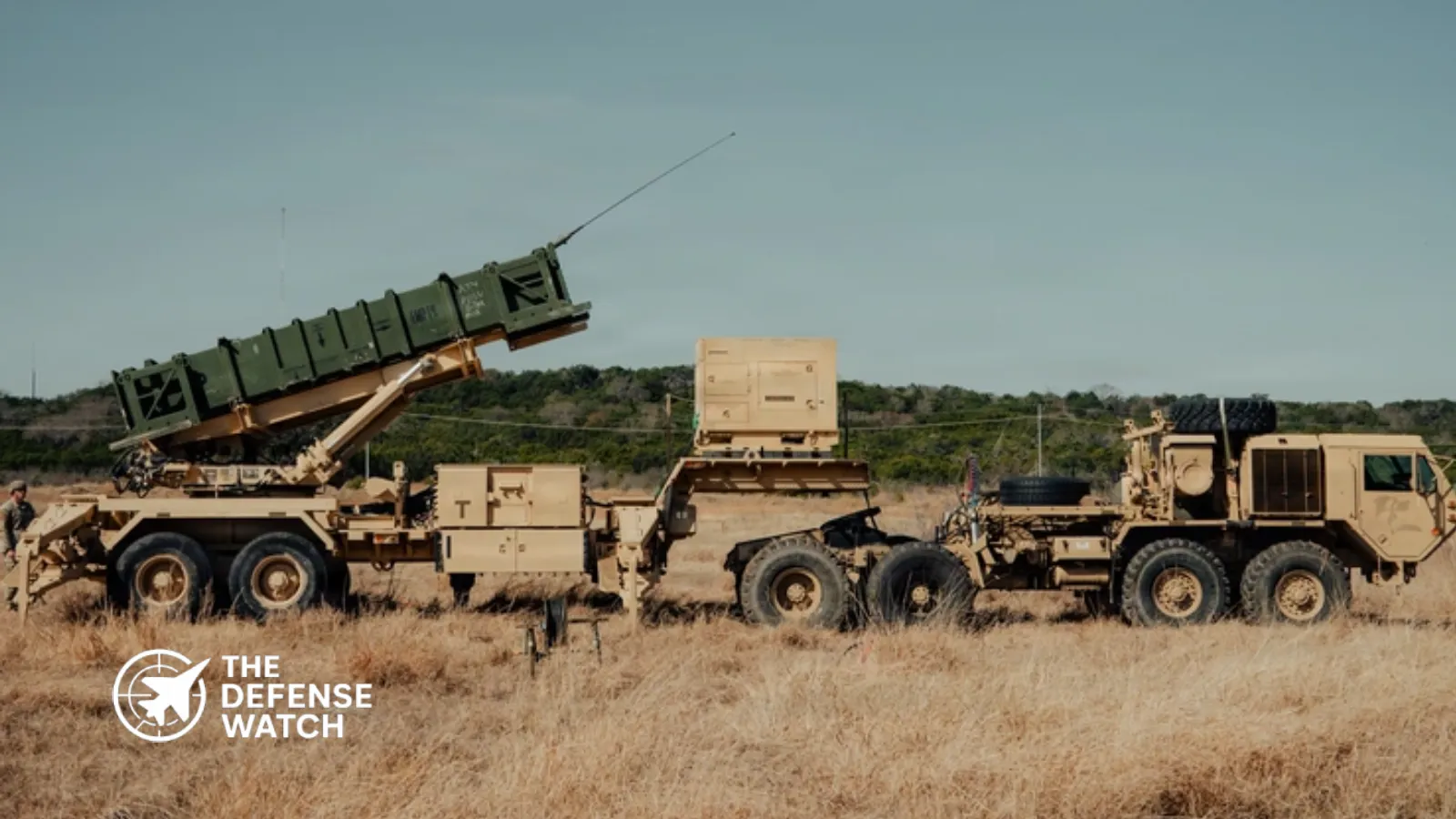
The Patriot Program contract awarded to Raytheon Co. underscores continued US support for the United Arab Emirates’ integrated air and missile defense architecture under the Foreign Military Sales framework.
The US Army announced a firm fixed price award valued at $183,682,456 for new kit hardware and associated services tied to the Patriot Program. The work falls under FMS case AE-B-ZUW for the United Arab Emirates. With options and cumulative actions included, the total contract face value reaches $281,146,668.
The contracting authority is the U.S. Army Contracting Command, Aviation Logistics, based at Redstone Arsenal, Alabama.
Fiscal Year 2026 FMS funds in the full amount of $183,682,456 were obligated at the time of award.
Scope Of Work And Performance Timeline
According to the Army contract notice, the Patriot Program contract covers procurement, installation, inspection, logistics support, and program management services. These activities are essential to maintaining operational readiness and lifecycle sustainment of Patriot air defense systems already fielded by the UAE.
Work will be performed in Tewksbury, Massachusetts, a long standing hub for Patriot system integration and sustainment activities. The estimated completion date is March 3, 2031.
Only one bid was received via online solicitation, a common outcome in sole source or limited source defense sustainment programs where original equipment manufacturers retain technical data and system integration authority.
Strategic Importance Of The Patriot Program Contract
The Patriot Program contract is more than a sustainment action. It reflects the enduring role of the Patriot system in Gulf security planning.
The United Arab Emirates operates one of the most capable Patriot configurations outside the United States. The system provides layered defense against tactical ballistic missiles, cruise missiles, and advanced aerial threats. In recent years, the Gulf region has seen repeated missile and drone attacks targeting critical infrastructure and urban centers. Sustainment contracts like this ensure continued readiness against evolving threats.
Under the US Foreign Military Sales process, the Department of Defense manages procurement and oversight, ensuring interoperability with US and allied forces. This structure supports common training, shared logistics pipelines, and standardized upgrades.
From a policy perspective, Patriot sustainment contracts reinforce long term defense ties between Washington and Abu Dhabi. The UAE remains a key US security partner in the Middle East, hosting American forces and participating in regional security initiatives.
Industrial And Budget Context
The award comes as the US Army continues to modernize its own air and missile defense enterprise, including upgrades to Patriot radar, command and control networks, and interceptor variants.
For Raytheon, Patriot sustainment and modernization remain core revenue drivers within its integrated air and missile defense portfolio. International operators account for a significant share of Patriot program activity, particularly in Europe, the Middle East, and Asia.
Firm fixed price contracts transfer cost risk to the contractor but provide predictable budgeting for the government. The full obligation of Fiscal 2026 FMS funds at award indicates the UAE’s commitment to timely execution and sustained capability availability.
What Comes Next
Execution of the Patriot Program contract will focus on hardware kits and associated technical services required to maintain system performance through the end of the decade.
As regional missile threats grow more sophisticated, Gulf operators are investing in upgrades that enhance radar discrimination, interceptor effectiveness, and integration with broader air defense networks. Sustainment actions today often lay the groundwork for future modernization paths.
For the US defense industrial base, the contract highlights continued demand for integrated air and missile defense solutions in the Middle East.
Lockheed Martin UAE THAAD Sustainment Contract
Lockheed Martin has secured a 142.6 million contract to provide sustainment support for the UAE THAAD missile defense system, reinforcing the long term readiness of the country’s ballistic missile defense architecture.
The contract, awarded by the U.S. Department of Defense, covers logistics, maintenance, and technical services to ensure continued operational availability of the UAE THAAD missile defense system. The work supports one of the most advanced missile defense networks deployed in the Middle East.
According to Army Recognition and U.S. defense officials, the agreement focuses on sustainment activities rather than new system deliveries, highlighting the UAE’s emphasis on maintaining high readiness levels for existing strategic assets.
Sustaining a Key Regional Missile Defense Asset
The Terminal High Altitude Area Defense system is designed to intercept short and intermediate range ballistic missiles during the terminal phase of flight. The UAE became the first international customer for THAAD, integrating it into a layered air and missile defense structure alongside Patriot systems.
Under the new contract, Lockheed Martin will deliver system sustainment, engineering support, and supply chain services. These efforts are intended to preserve system reliability and ensure interoperability with U.S. forces operating in the region.
Strategic Importance for the UAE and the U.S.
The UAE THAAD missile defense deployment plays a central role in regional deterrence amid persistent missile and drone threats. Continued sustainment support strengthens collective defense cooperation between Washington and Abu Dhabi.
Lockheed Martin stated that the program reflects ongoing U.S. commitment to supporting allied missile defense capabilities through long term partnerships and lifecycle support.