

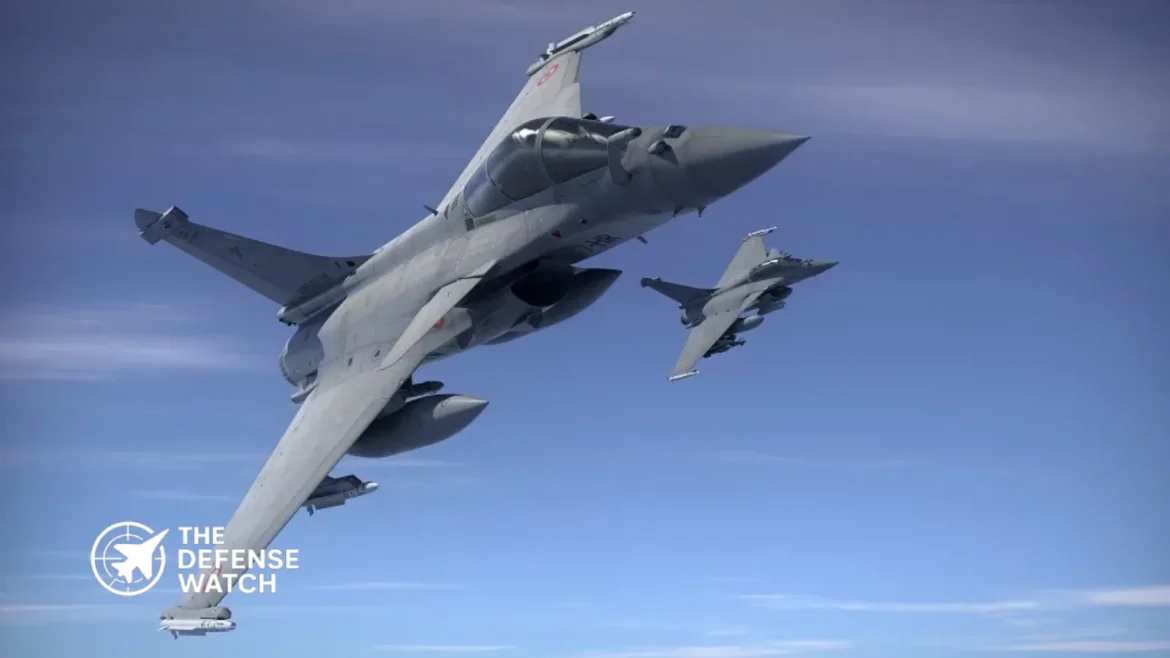
French Rafale Baltic Deployment Strengthens NATO Air Policing
The French Rafale Baltic deployment marks a renewed commitment by NATO to safeguard its eastern airspace, with France taking a leading role in the long-running Baltic Air Policing mission.
French Air and Space Force units have deployed Dassault Rafale jets to the Baltic region, where they will conduct quick reaction alert duties. These operations involve intercepting and identifying aircraft approaching NATO airspace without filed flight plans or transponder signals.
The Baltic Air Policing mission, launched in 2004, remains a cornerstone of NATO’s collective defense framework, particularly for member states such as Estonia, Latvia, and Lithuania, which lack their own full-scale air defense fighter fleets.
- France has deployed Rafale fighter jets to lead NATO’s Baltic Air Policing mission.
- The deployment is part of NATO’s rotational air defense effort over Estonia, Latvia, and Lithuania.
- Rafale aircraft will operate from a Baltic base to intercept and identify unidentified aircraft near NATO airspace.
- The mission underscores NATO’s response to heightened military activity near its eastern flank.
- France’s leadership role highlights its growing contribution to alliance air defense operations.
Operational Role And Mission Scope
Under the current rotation, French Rafale fighters are tasked with maintaining continuous readiness to respond to airspace violations or unidentified aircraft movements. These missions are coordinated through NATO’s integrated air and missile defense system, ensuring rapid response across allied airspace.
The Rafale’s multirole capability allows it to perform air superiority, interception, and reconnaissance missions within a single platform. Equipped with advanced radar, electronic warfare systems, and beyond-visual-range missiles, the aircraft enhances NATO’s ability to monitor and control contested airspace.
Operationally, Baltic Air Policing sorties often involve shadowing Russian military aircraft operating near NATO borders. While such encounters typically remain professional and non-confrontational, they reflect persistent strategic competition in the region.
Strategic Context And Regional Security Implications
The French Rafale Baltic deployment comes amid sustained tensions between NATO and Russia, particularly following increased military activity along NATO’s eastern flank.
From a strategic standpoint, the deployment serves multiple purposes. First, it reinforces NATO’s deterrence posture by maintaining a visible and credible air defense presence. Second, it distributes operational burden among member states, demonstrating alliance cohesion.
France’s leadership in this rotation also reflects a broader shift toward greater European contributions within NATO. As European nations expand defense spending and operational roles, missions like Baltic Air Policing provide a practical framework for burden sharing.
Capability Impact Of Rafale Deployment
The introduction of Rafale fighters into the Baltic rotation enhances mission capability in several ways. Compared to legacy aircraft often used in earlier rotations, the Rafale offers improved sensor fusion, network-centric warfare integration, and extended operational range.
These features are particularly relevant in the Baltic region, where rapid response times and situational awareness are critical. The ability to integrate with NATO command systems allows Rafale units to operate seamlessly alongside other allied aircraft and ground-based assets.
Moreover, the deployment highlights the flexibility of the Rafale platform, which has seen increasing export success and operational use across multiple theaters. Its performance in NATO missions reinforces its standing as a key European multirole fighter.
Alliance Signaling And Deterrence
Beyond operational duties, the French Rafale Baltic deployment carries significant signaling value. NATO rotations in the Baltic states are closely watched by both allies and adversaries, serving as a barometer of alliance resolve.
By assigning advanced aircraft and experienced crews to the mission, France and NATO send a clear message regarding their commitment to collective defense. This is particularly important in regions where airspace incursions and military probing activities remain frequent.
At the same time, the mission maintains a defensive posture, focused on surveillance and interception rather than escalation. This balance is central to NATO’s strategy of deterrence without provocation.
Outlook For Baltic Air Defense Operations
Looking ahead, Baltic Air Policing is expected to remain a persistent requirement as long as regional security dynamics remain unchanged. Rotational deployments, including the current French Rafale presence, will continue to adapt based on threat assessments and operational needs.
The integration of more advanced aircraft into these rotations suggests a gradual evolution of the mission from basic air policing toward a more robust air defense framework. This shift aligns with NATO’s broader efforts to strengthen its eastern defenses.
Exercise Tests Combat Readiness Under Time Constraints
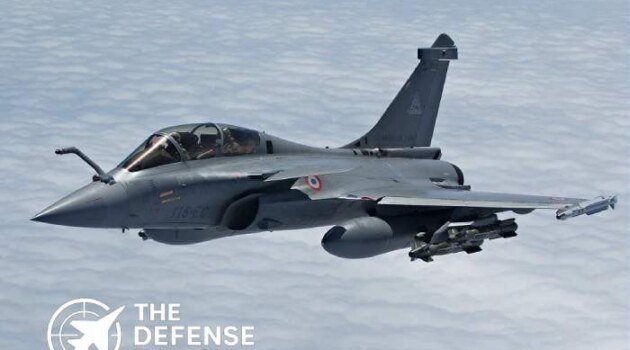
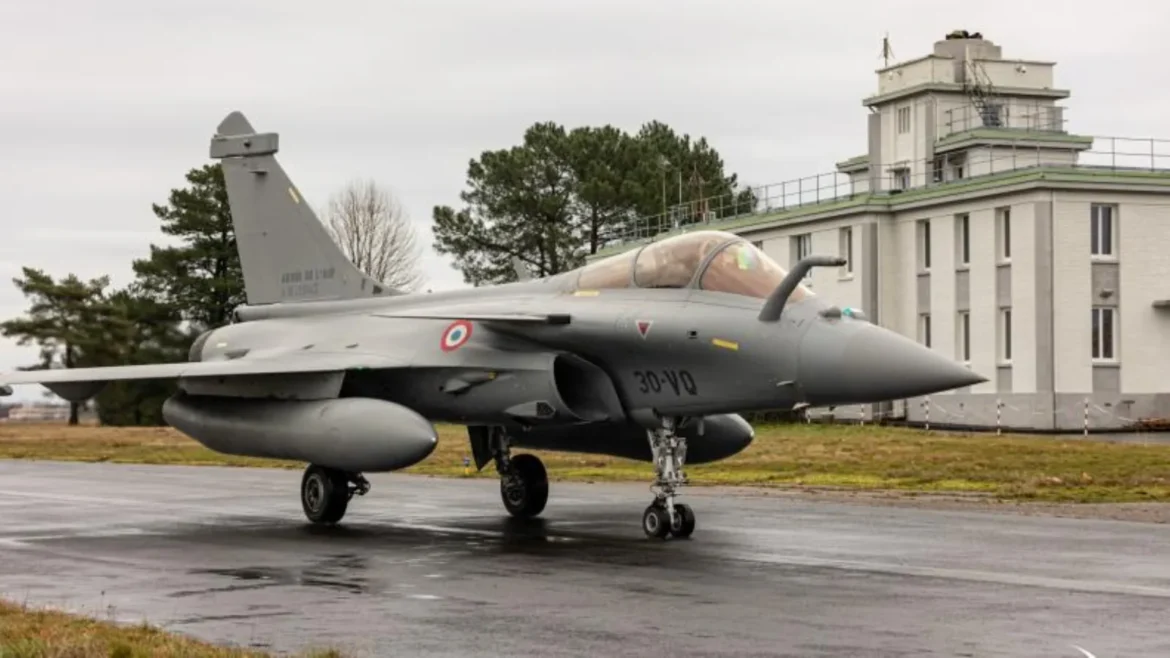
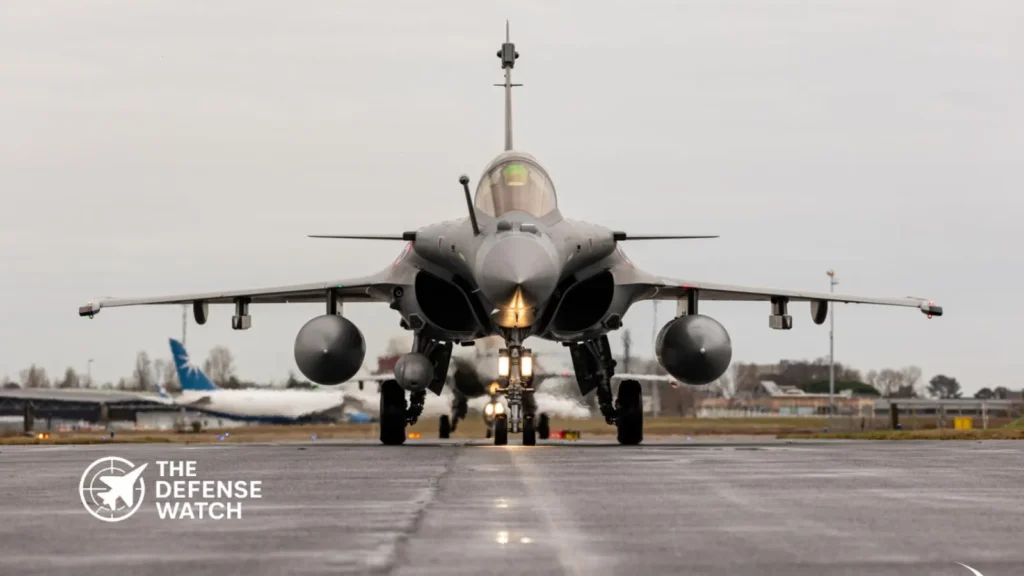
The French Air and Space Force successfully executed Exercise Topaze on January 27, 2025, deploying five Dassault Rafale fighters from Air Base 118 Mont-de-Marsan to Air Base 106 Bordeaux-Mérignac under minimal advance warning. The drill evaluated the service’s capacity to rapidly disperse combat aircraft and maintain operational effectiveness under high-intensity warfare scenarios.
(adsbygoogle = window.adsbygoogle || []).push({});According to the French Ministry of Armed Forces, the exercise mobilized operational squadrons and support units in record time, testing the force’s ability to preserve assets through rapid deployment while sustaining combat operations. Commander Mathieu, deputy commander of Fighter Squadron 3/30 “Lorraine” based at Mont-de-Marsan, stated that units received orders to deploy the entire fleet before 15:00 hours with less than 24 hours’ notice.
High-Intensity Warfare Focus Drives Training Evolution
Exercise Topaze represents the French Air and Space Force’s ongoing emphasis on preparing for large-scale conventional conflict, particularly influenced by operational lessons from the war in Ukraine. The drill simulated scenarios requiring immediate asset preservation in response to potential threats against primary airbases.
The goal is to be taken by surprise,” explained a Rafale pilot participating in the exercise, according to media reports from Euronews. “The deployment at very short notice, followed by a huge team effort to configure the aircraft as quickly as possible and prepare ourselves for this mission under severe time constraints, was the hardest part.”
General Pierre Gaudillière, commander of the Fighter Aviation Air Brigade, emphasized the operational relevance of such training. “We never train for nothing and since high-intensity warfare is raging on all fronts, it is in response to this kind of operational requirement that we are doing this exercise,” he stated.
Rapid Deployment Tests Coordination Between Units
The five Rafale fighters arrived at Bordeaux-Mérignac despite challenging weather conditions, immediately proceeding to designated parking areas where maintenance crews and support personnel were positioned to receive them. Within two hours of arrival, aircraft were secured, crews debriefed, and coordination established between operational squadrons and support units.
(adsbygoogle = window.adsbygoogle || []).push({});Commander Mathieu described the exercise as testing the feasibility of deployments under constrained timelines while identifying potential obstacles and evaluating personnel responsiveness. Crisis cells were activated the day prior to deployment, requiring rapid mission planning and logistical coordination across multiple units.

The drill’s success hinged on seamless integration between combat squadrons and support elements. “Efficiency,” Commander Mathieu stated when asked to characterize the exercise. “By engaging both operational squadrons and support units, coordination proved optimal, almost spontaneous.”
Agile Combat Employment Concept Gains Prominence
Exercise Topaze aligns with the French Air and Space Force’s implementation of what it terms the “MORANE” operational concept, equivalent to NATO’s Agile Combat Employment (ACE) doctrine. This approach emphasizes distributing high-value air assets across geographically dispersed locations with minimal logistical infrastructure to enhance survivability against peer adversaries.
The French service has conducted multiple exercises testing rapid dispersal capabilities throughout 2024 and 2025. In April 2025, the service simultaneously executed Exercise JADE, involving Mirage 2000D and 2000B aircraft dispersing from Air Base 133 Nancy-Ochey to five locations across France, and Exercise Pégase 25, deploying Rafale fighters to Sweden alongside NATO allies.
(adsbygoogle = window.adsbygoogle || []).push({});In November 2024, French Rafale jets deployed to Germany, Croatia, and Poland, practicing ACE procedures at NATO bases with minimal logistical support. These deployments tested the ability to operate from forward locations using host nation infrastructure for refueling, mission planning, and rearming.
Strategic Context And European Defense Posture
The emphasis on rapid dispersal and distributed operations reflects broader European defense planning in response to potential large-scale conventional conflict. Fixed airbases represent primary targets in high-intensity scenarios, making the ability to quickly relocate combat aircraft critical for force preservation and sustained operations.
France operates approximately 108 Rafale fighters as of 2025, according to Ministry of Armed Forces data, distributed across multiple squadrons including nuclear-capable units assigned to the Strategic Air Forces Command. The Rafale serves as France’s primary multi-role combat aircraft, capable of air superiority, ground attack, and reconnaissance missions.
(adsbygoogle = window.adsbygoogle || []).push({});Exercise Topaze specifically involved assets from Fighter Squadron 3/30 “Lorraine,” one of three Rafale squadrons based at Mont-de-Marsan alongside squadrons 1/30 “Côte d’Argent” and 2/30 “Normandie-Niemen.” Mont-de-Marsan serves as a major Rafale operating base and houses the Centre d’expertise aérienne militaire (CEAM), the Military Air Expertise Centre responsible for operational evaluation and pilot conversion training.
Operational Implications For Allied Forces
The French Air and Space Force’s focus on distributed operations provides relevant lessons for allied services implementing similar concepts. NATO members have increasingly prioritized ACE as Russian military modernization and demonstrated willingness to employ force against neighbors has heightened concerns about large-scale conventional conflict in Europe.
The ability to rapidly deploy and sustain operations from austere or non-traditional locations complicates adversary targeting while maintaining operational tempo. Exercise Topaze demonstrated that even with minimal advance notice, coordinated action between operational and support elements can achieve rapid deployment objectives.
(adsbygoogle = window.adsbygoogle || []).push({});France’s independent nuclear deterrent adds strategic significance to these exercises. While Exercise Topaze involved conventional Rafale operations, the service regularly practices rapid dispersal with nuclear-capable variants, enhancing survivability of second-strike capabilities. The Rafale B variant equipped with ASMP-A nuclear missiles forms the airborne component of France’s nuclear triad.
Conclusion
Exercise Topaze confirmed the French Air and Space Force’s capability to execute rapid aircraft dispersal under demanding timelines. The successful deployment of five Rafale fighters from Mont-de-Marsan to Bordeaux-Mérignac with minimal notice validated training protocols and inter-unit coordination necessary for distributed operations.
As European defense planning increasingly accounts for potential large-scale conventional conflict, exercises like Topaze provide essential operational testing of concepts designed to enhance force survivability and operational effectiveness. The French service’s continued emphasis on such training reflects strategic assessments prioritizing readiness for high-intensity warfare scenarios.
France Launches Major Recruitment Initiative For Military Aviation Technical Training
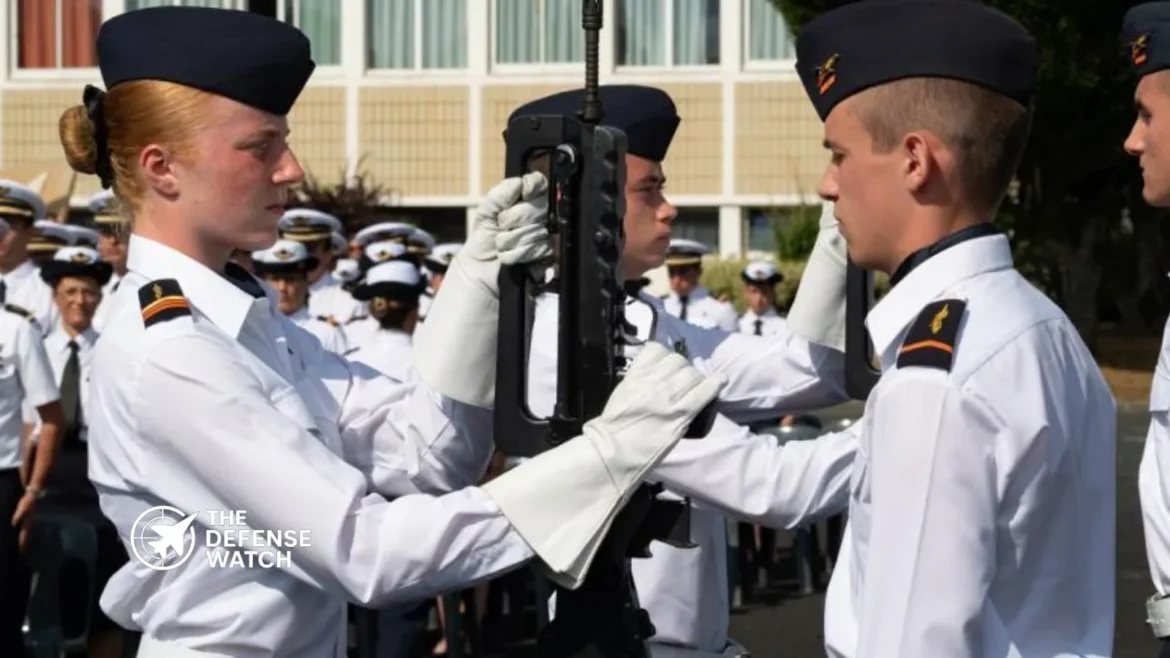
The French Air and Space Force technical school (École d’enseignement technique de l’armée de l’Air et de l’Espace – EETAAE) has opened applications for its 159th graduating class, according to an official announcement from France’s Ministry of Armed Forces. The recruitment drive runs from February 2 through April 26, 2026, with 352 positions available for students entering the program in late August 2026.
Located at Air Base 722 in Saintes, Charente-Maritime, the EETAAE represents a unique pathway for young French citizens to combine military service with technical education in aerospace fields. The institution has trained more than 47,000 airmen since its establishment in 1949, making it a cornerstone of France’s military aviation workforce development strategy.
Academic Excellence Meets Military Discipline
The French Air and Space Force technical school accepts candidates as young as 16 years old, who enter either as high school juniors (première) or seniors (terminale). Students pursue general, technological, or professional baccalaureate tracks while simultaneously receiving military instruction. The dual-track program integrates academic coursework delivered by national education teachers with military training provided by specialized instructors and physical education staff.
The school’s academic performance metrics demonstrate the effectiveness of this integrated approach. In 2025, EETAAE achieved a 100% first-attempt pass rate on the baccalaureate examination, with 91% of students earning honors distinctions. These results reflect the rigorous standards maintained by the institution’s faculty, which includes civilian educators from France’s national education system working alongside military instructors and sports training specialists.
Strategic Workforce Development For French Aerospace Defense
For the 2026 academic year, the French Air and Space Force technical school has allocated 322 positions for students entering as juniors and 30 positions for direct senior-year entry. Upon completing their two-year academic and military formation, graduates receive specialized assignments at French air bases throughout metropolitan France and overseas territories.
The recruitment initiative supports France’s broader strategy to maintain a technically proficient aerospace force capable of operating advanced military aviation platforms. As European nations continue modernizing their air capabilities with next-generation fighter aircraft, unmanned systems, and space-based assets, programs like EETAAE serve as critical talent pipelines for specialized technical personnel.
Application Process And Selection Criteria
Prospective students must submit applications through the school’s digital platform using France’s simplified administrative procedures system (démarches simplifiées). The Ministry of Armed Forces has not disclosed specific selection criteria, though the competitive nature of the program and limited enrollment capacity suggest rigorous evaluation of academic performance, physical fitness, and motivation for military service.
The EETAAE conducted an open house event in early 2026, providing interested candidates and their families opportunities to tour facilities and meet with instructional staff. Detailed information about the institution’s programs and selection process remains available through official French Air and Space Force channels.
Context: European Military Aviation Training Programs
France’s approach to military aviation technical education reflects broader European trends in defense workforce development. As NATO allies confront evolving security challenges and technological complexity in aerospace systems, member nations have emphasized early-career technical training programs.
The EETAAE model differs from U.S. military service academies in its acceptance of students at secondary school age rather than requiring completion of high school before entry. This approach allows the French Air and Space Force to begin military acculturation and technical skill development earlier in candidates’ educational trajectories.
Similar programs exist across European armed forces, though specific structures vary by nation. Germany’s Bundeswehr operates technical schools for various service branches, while the United Kingdom maintains apprenticeship programs combining military service with vocational training in aerospace maintenance and operations.
Implications For French Defense Capabilities
The sustained investment in technical education through institutions like EETAAE demonstrates France’s commitment to maintaining autonomous aerospace defense capabilities. With domestic production of Rafale fighter aircraft, development of future combat air systems through international partnerships, and expansion of space-based military assets, France requires a steady supply of technically trained personnel.
The school’s location at Air Base 722 in Saintes provides students access to operational military aviation facilities, enabling practical training alongside theoretical instruction. This integration of academic and operational environments distinguishes military technical schools from civilian vocational programs.
As France continues its role as a leading European defense power with global military commitments, programs ensuring technical competency among enlisted personnel remain strategically important. The EETAAE’s consistent performance metrics and long operational history suggest the model effectively meets French Air and Space Force requirements for qualified technical specialists.
Looking Ahead
Applications for the 159th EETAAE class remain open through April 26, 2026. Selected candidates will begin their program in late August 2026, joining a tradition of military aviation technical education spanning more than seven decades.
The French Ministry of Armed Forces has not announced plans for enrollment expansion beyond the 352 positions allocated for 2026, though demographic trends and defense modernization requirements may influence future recruitment targets. Additional information about French Air and Space Force career pathways and educational programs is available through official Ministry channels and the service’s recruitment website.
France Initiates Unprecedented Air Combat Exercise Along Atlantic Coast
The French Air and Space Force has commenced the dynamic phase of ORION 26, France’s largest military exercise, deploying 1,500 air personnel across the Atlantic coast to test high-intensity warfare capabilities. The exercise, running from February 8 through March 1, 2026, represents a comprehensive demonstration of France’s ability to achieve air superiority in contested environments.
(adsbygoogle = window.adsbygoogle || []).push({});According to the French Ministry of Armed Forces, the drill constitutes a major milestone in operational readiness training for high-intensity conflict scenarios, conducted entirely on French territory with primary focus on the Atlantic facade.
Comprehensive Air Operations Across Seven Strategic Bases
The French Air and Space Force is conducting operations from seven air bases: Mont-de-Marsan, Cazaux, Orléans, Cognac, Avord, Istres, and Tours. Coordinating these dispersed assets is the newly established Air Operations Planning and Command Center (CAPCODA), based at Lyon-Mont Verdun Air Base.
CAPCODA, formed from the merger of the Air Operations Planning and Command Center (CAPCO) and the National Air Operations Center (CNOA), holds the essential mission of planning and conducting joint air operations.
The exercise integrates multiple capability sets including fighter aircraft, transport planes, reconnaissance and attack drones, and ground-based air defense systems. This combination demonstrates France’s capacity to coordinate simultaneous effects across extensive operational areas.
Air Superiority: The Critical First Phase
Since January 5, 2026, a joint theater command post (PCIAT) at Cinq-Mars-la-Pile has operated under General Marc Le Bouil, Commander of Air Defense and Air Operations (ComDAOA). This operational staff holds responsibility for planning and executing all joint operations across French territory.
The Air and Space Force has been entrusted with leading joint operations at the beginning of the dynamic phase. This prominent role reflects the decisive nature of air superiority – the ability to control airspace to enable freedom of action for maritime and ground components.
The exercise structure prioritizes air operations because achieving control of the air domain remains essential before naval and ground forces can operate effectively. The French Navy will conduct amphibious operations in the Saint-Nazaire zone and Brittany, while the Army will execute deep penetration supported by massive airborne operations in contested areas.
Joint Force Air Component Command Leads Initial Operations
Starting February 8, 2026, the Joint Force Air Component Command (JFACC) assumed control of initial air activities under ORION 26. The JFACC represents the air component within the ComDAOA structure, responsible for executing the comprehensive air maneuver planned by CAPCODA.
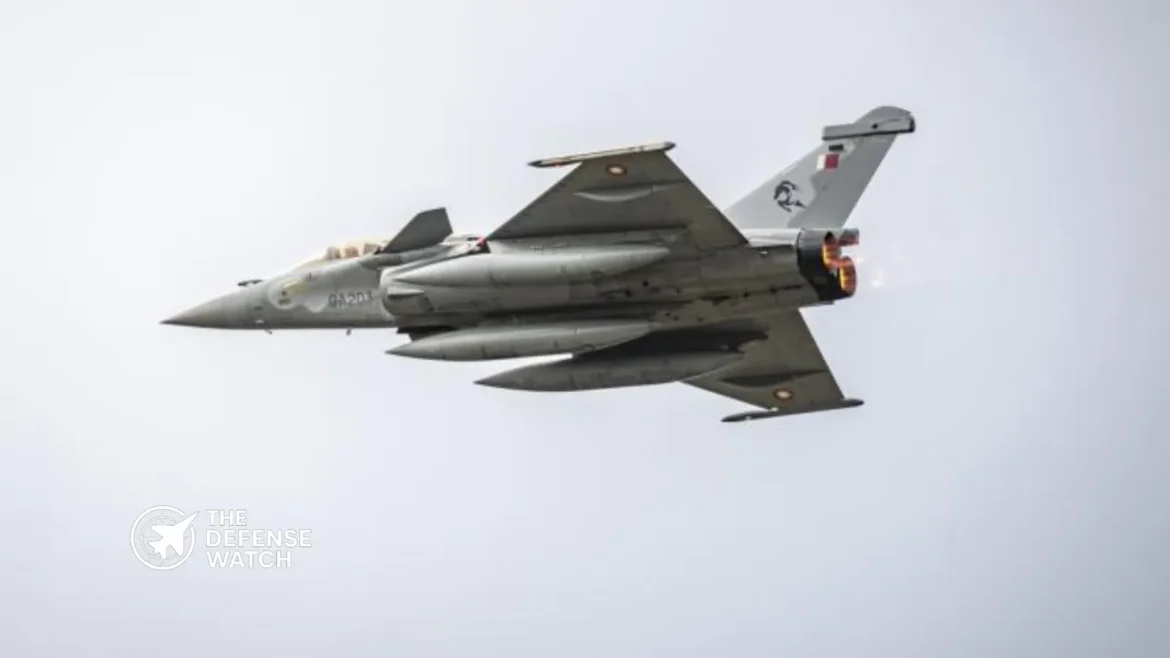
(adsbygoogle = window.adsbygoogle || []).push({});The first week emphasizes French air assets, with international participation including Qatari Rafale fighters joining the exercise. This multinational dimension enhances interoperability and tests coalition air operations under realistic high-intensity scenarios.
Testing Multi-Domain Combat Integration
ORION 26 evaluates France’s ability to integrate operations across all conflict domains simultaneously. The exercise scenario requires air forces to neutralize aerial threats, suppress enemy air defenses, conduct intelligence-surveillance-reconnaissance missions, and provide close air support – all while maintaining homeland air defense against external threats.
The Ministry of Armed Forces emphasizes this drill as essential preparation for modern warfare, where air superiority serves as the foundation enabling joint force success. By conducting the exercise on national territory, France demonstrates its capability to defend against sophisticated threats while projecting power from homeland bases.
Strategic Implications for European Defense
ORION 26 represents France’s commitment to maintaining credible conventional deterrence and high-intensity warfare capabilities. As European security concerns intensify, the exercise showcases France’s role as a leading military power capable of independent action or coalition leadership.
The scale and complexity of ORION 26 – France’s largest military exercise – signals French determination to maintain cutting-edge operational readiness. The drill tests not only equipment and tactics but also the command structures necessary to coordinate joint operations involving thousands of personnel across vast geographical areas.
(adsbygoogle = window.adsbygoogle || []).push({});The exercise timeline extends through early March, with subsequent phases integrating naval amphibious operations and ground force deep strikes. By sequencing operations to reflect actual combat requirements – establishing air superiority first, then enabling maritime and ground maneuvers – France validates its operational doctrine under realistic conditions.
International Participation Strengthens Alliance Readiness
The inclusion of Qatari Rafale fighters demonstrates France’s commitment to training with partner nations operating French-built aircraft. This interoperability testing proves critical as France expands its defense industrial partnerships and seeks to strengthen coalitions beyond traditional NATO frameworks.
(adsbygoogle = window.adsbygoogle || []).push({});Exercise ORION 26 provides valuable data on multi-national air operations, communications interoperability, and integrated air defense. These lessons directly support France’s broader strategic objectives of maintaining autonomous military capability while strengthening alliance networks.
The coming weeks will reveal how effectively French forces execute this ambitious exercise scenario. Success will validate years of modernization efforts and demonstrate France’s readiness to lead coalition air operations or defend national territory against high-end threats.