How U.S. Special Forces Captured Venezuela President
U.S. Special Forces captured Venezuela president in a rare and highly sensitive Delta Force raid that combined intelligence, precision planning, and rapid execution. While many operational details remain classified, enough is known from defense reporting and past special operations doctrine to explain how such a mission was likely planned and carried out.
- How U.S. Special Forces Captured Venezuela President
- Step One, Strategic Decision and Authorization
- Step Two, Intelligence Preparation of the Target
- Step Three, Why Delta Force Was Selected
- Step Four, Mission Planning and Rehearsals
- Step Five, Insertion Into Venezuelan Territory
- Step Six, The Assault and Capture
- Step Seven, Extraction and Exit
- Step Eight, Transfer to U.S. Custody
- Role of Technology and Surveillance
- Risks Involved in the Operation
- What Happens Inside Venezuela Afterward
- Why This Operation Matters
- Analysis, A Blueprint for Modern Direct Action
- FAQs
This guide explains the process behind the operation, from intelligence preparation to extraction, and why Delta Force was chosen for a mission of this scale.
Step One, Strategic Decision and Authorization
Operations targeting a sitting foreign leader require approval at the highest levels of the U.S. government. In this case, the decision to move forward likely involved:
- The President of the United States
- The National Security Council
- The Secretary of Defense
- Senior intelligence officials
The trigger is usually a combination of legal authority, national security risk, and a time limited opportunity. U.S. officials have long accused Venezuela’s leadership of links to transnational drug trafficking and organized crime. Existing U.S. indictments likely formed part of the legal foundation.
Once political authorization is granted, the mission moves rapidly into military planning.
Step Two, Intelligence Preparation of the Target
Before U.S. Special Forces captured Venezuela president, intelligence agencies would have spent months building a detailed profile of the target. This phase is known as intelligence preparation of the environment.
Key intelligence inputs likely included:
Human Intelligence
Sources close to the target’s inner circle provide movement patterns, security routines, and last minute changes.
Signals Intelligence
Intercepted communications help confirm location, timing, and threat levels.
Geospatial Intelligence
Satellite imagery and overhead surveillance identify entry points, escape routes, and nearby security forces.
Pattern of Life Analysis
Analysts track where the target sleeps, works, and travels, looking for predictable windows.
This intelligence must reach near certainty before a green light is given.
Step Three, Why Delta Force Was Selected
Delta Force, officially 1st Special Forces Operational Detachment Delta, is designed for missions that demand absolute precision and political sensitivity.
Delta Force is typically used when:
- Capture is preferred over lethal force
- The target is high value and heavily protected
- The mission must remain deniable or discreet
- Time on the ground must be minimal
Its operators train for urban assaults, close quarters combat, and rapid target exploitation. These skills make the unit uniquely suited for a leader capture mission inside a hostile capital.
Step Four, Mission Planning and Rehearsals
Once tasked, Delta Force planners build a full mission profile. This includes:
- Primary and alternate insertion routes
- Multiple extraction options
- Medical evacuation planning
- Contingencies for resistance or target movement
Rehearsals are conducted using mock ups of the target location, sometimes built from satellite data and drone imagery. Every operator knows their role down to the second.
This phase also includes coordination with intelligence agencies and, in some cases, limited partner support.
Step Five, Insertion Into Venezuelan Territory
The insertion phase is one of the riskiest parts of the mission.
Possible insertion methods include:
- Low altitude aircraft insertion
- Helicopter assault under cover of darkness
- Maritime insertion followed by ground movement
The goal is to remain undetected until the assault begins. Timing is critical. Weather, air defenses, and civilian activity all factor into the final decision.
Electronic warfare assets may be used to reduce detection during the approach.
Step Six, The Assault and Capture
This is the moment where U.S. Special Forces captured Venezuela president.
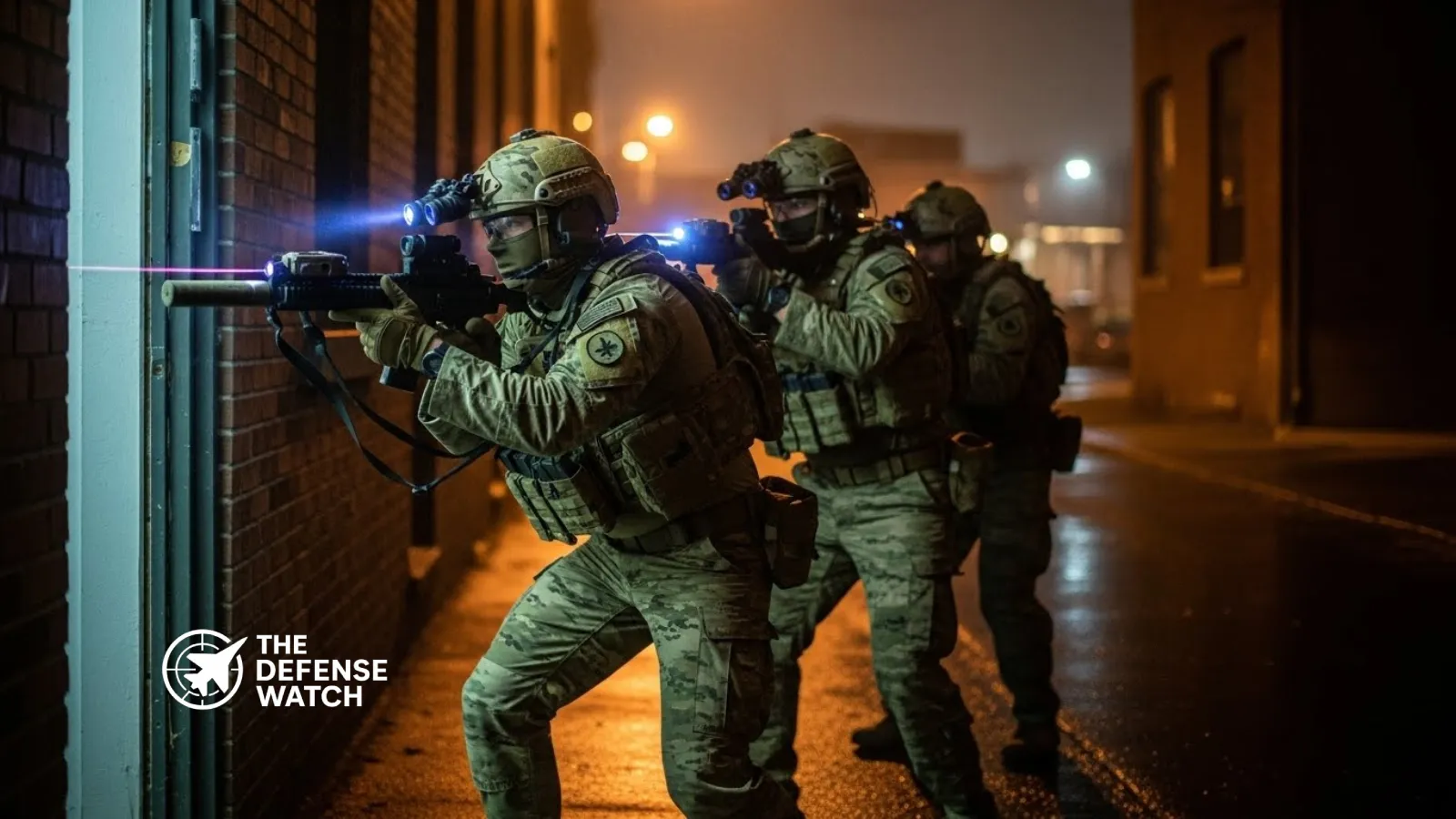
Delta Force assaults are designed to be fast and overwhelming. Once the team reaches the target site:
- Entry points are breached simultaneously
- Security personnel are neutralized or restrained
- The target is identified, secured, and restrained
- Sensitive materials are collected
Speed matters more than firepower. Most raids last only minutes from breach to exit.
Operators are trained to confirm identity on site using biometric or visual verification to avoid mistakes.
Step Seven, Extraction and Exit
Extraction begins immediately after capture.
The team moves the detainee to a secure pickup zone, often different from the insertion point. Extraction options may include:
- Helicopter pickup
- Ground movement to an airstrip
- Transfer to a naval platform offshore
Medical personnel remain on standby in case of injury. Once outside Venezuelan airspace or territorial control, the mission shifts from military to legal custody.
Step Eight, Transfer to U.S. Custody
After U.S. Special Forces captured Venezuela president, the detainee would be transferred to U.S. law enforcement or federal custody.
This handoff is critical. It establishes the legal chain required for detention, prosecution, or interrogation under U.S. law.
At this stage, public communication is tightly controlled. Officials often delay confirmation until the detainee is secure and the legal framework is in place.
Role of Technology and Surveillance
Modern special operations rely heavily on technology.
In this operation, analysts believe the following played a role:
- Persistent satellite surveillance
- Secure real time communications
- Unmanned aerial systems for overwatch
- Advanced navigation and targeting systems
These tools reduce uncertainty and allow commanders to abort if conditions change.
Risks Involved in the Operation
A mission of this nature carries significant risks.
Operational risks include:
- Armed resistance from security forces
- Civilian casualties
- Aircraft loss or detection
Strategic risks include:
- Diplomatic fallout
- Retaliation by allied states or proxy groups
- Legal challenges in international courts
The decision to proceed suggests U.S. leaders assessed that the risks of inaction were higher.
What Happens Inside Venezuela Afterward
Once U.S. Special Forces captured Venezuela president, the internal balance of power shifted immediately.
Possible outcomes include:
- A military led interim authority
- Fragmentation within security forces
- Negotiations with opposition groups
- External mediation by regional states
History shows that removing a leader does not guarantee stability. Much depends on institutions and military cohesion.
Why This Operation Matters
This raid marks a major moment in U.S. special operations history. It signals a willingness to move beyond sanctions and diplomacy when national security and law enforcement objectives converge.
For allies, it demonstrates U.S. reach and capability. For adversaries, it raises concerns about precedent and sovereignty.
For the defense community, it highlights how intelligence, elite forces, and political authority intersect at the highest level.
Analysis, A Blueprint for Modern Direct Action
From an analytical standpoint, the operation reflects how modern direct action missions are executed. Small teams, deep intelligence, limited footprint, and rapid exit define today’s high end special operations.
It also shows that Delta Force remains a strategic tool, not just a tactical unit. When used, it signals that the issue has reached the top tier of U.S. national security priorities.
Whether the long term outcome stabilizes Venezuela or deepens uncertainty remains an open question.
FAQs
It was a capture focused mission, not a conventional combat operation.
Short duration reduces detection, resistance, and civilian harm.
Such missions are rare and depend on legal authority and strategic risk.
The legality will likely be debated in courts and diplomatic forums.
They provided targeting, timing, and real time situational awareness.