• Home
  • About
  • Defense Systems
  • Manufacturer
  • Comparisons
  • Compare 
  • Tools
TheDefenseWatch.com
  • Aerospace & Aviation
  • Military & Ordnance
  • Naval & Maritime
  • Cyber & Space Defense
  • Policy & Strategy
  • Global News
  • Tools Library
    • Smart Calculator
    • Drone Flight Time Calculator
    • Drone Range Calculator
    • Counter-Drone Jammer Effective Range Calculator
    • Counter-Battery Radar Detection Calculator
    • Artillery Fire Correction Calculator
    • Thermal Camera Detection Range Calculator
    • Missile Range & Time-of-Flight Calculator
    • Radar Detection Range Calculator
    • FPV Strike Drone Payload vs Range Calculator
    • Loitering Munition Endurance Calculator
    • Sniper Ballistic Drop & Windage Calculator
    • Bullet Drop Calculator
    • U.S. Army Combat Fitness Test (ACFT) Calculator
    • Military Pension Calculator
    • Military Retirement Calculator
    • Military Pension Calculator
    • Large Number Calculator
Font ResizerAa

TheDefenseWatch.com

The Defense Watch | U.S. & Global Defense News, Analysis & Military Updates

Search
  • Home
  • About
  • Defense Systems
  • Manufacturer
  • Comparisons
  • Compare 
  • Tools

Stay Updated

Get the latest update

Subscribe

Explore

  • Drone
  • Fighter Jets & Military Aircraft
  • Hypersonic Weapons
  • Aircraft Carriers
  • Strategic History & Missions
  • Tools Library
Home » World’s First Hydrogen-Powered Hypersonic Jet Targets Mach 12: Hypersonix’s Sustainable Breakthrough in Aerospace
Global News

World’s First Hydrogen-Powered Hypersonic Jet Targets Mach 12: Hypersonix’s Sustainable Breakthrough in Aerospace

TeamDefenseWatch
Last updated: September 8, 2026 4:20 am
TeamDefenseWatch
Share
3 Min Read
hydrogen-powered hypersonic jet
SHARE
Follow The Defense Watch on Google:

A Leap Toward Mach 12 with Clean Propulsion

In a pivotal advancement for aerospace engineering, Hypersonix Launch Systems, an Australian innovator based in Brisbane, has unveiled plans for the world’s first hydrogen-powered hypersonic jet. This cutting-edge vehicle, propelled by the company’s proprietary SPARTAN scramjet engine, aims to achieve speeds of up to Mach 12—approximately 12 times the speed of sound. The development, announced amid a surge in global investments in sustainable high-speed flight, positions Australia at the forefront of hypersonic technology. With demonstration flights slated for early 2026, this hydrogen-powered hypersonic jet promises to redefine rapid transit and strategic operations.

Contents
A Leap Toward Mach 12 with Clean PropulsionBackground: From Scramjet Pioneers to Hydrogen HorizonsCore Details: The SPARTAN Engine and Platform InnovationsChallenges and Technical Analysis: Navigating Hypersonic HurdlesExpert Perspectives: Defense Implications and Policy AlignmentConclusion: Reshaping Skies and Strategies Ahead

The project gained momentum in late October 2025 when Hypersonix secured a $46 million Series A funding round, including a $10 million equity investment from Australia’s National Reconstruction Fund Corporation (NRFC). This capital infusion supports testing and manufacturing under the U.S. Defense Innovation Unit’s (DIU) HyCAT program, with NASA backing the initial launch of the DART AE testbed.

Background: From Scramjet Pioneers to Hydrogen Horizons

Australia’s storied legacy in scramjet research sets the stage for this hydrogen-powered hypersonic jet. The nation achieved the world’s first successful scramjet flight in 2002 through the HyShot program, a collaboration with the University of Queensland’s Centre for Hypersonics. This milestone demonstrated supersonic combustion in flight conditions, paving the way for sustained hypersonic propulsion.

hydrogen-powered hypersonic jet

Over the subsequent two decades, Australia conducted more than 6,000 ground tests in facilities like the T4 shock tunnel and participated in 11 sub-orbital flights via the HIFiRE initiative with the U.S. Air Force. These efforts addressed core challenges in hypersonic flight, such as extreme heat management and air-breathing efficiency. Traditional hypersonic vehicles have relied on hydrocarbon fuels like kerosene, limiting speeds to Mach 5-8 due to combustion constraints.

- Advertisement -

Enter hydrogen propulsion: With 2.5 times the energy density of kerosene, green hydrogen enables higher Mach numbers while emitting only water vapor. Hypersonix builds on this by integrating 3D-printing for rapid iteration, a technique first applied to a fixed-geometry scramjet in 2021. The company’s focus on reusability addresses the disposability of past test vehicles, aiming for commercial viability in both civilian and defense sectors.

Core Details: The SPARTAN Engine and Platform Innovations

At the heart of Hypersonix’s hydrogen-powered hypersonic jet lies the SPARTAN engine, the world’s first fully 3D-printed scramjet. This air-breathing system features a fixed geometry with no moving parts, reducing complexity and enhancing reliability. Measuring compact for integration, SPARTAN ingests atmospheric air at hypersonic velocities, mixes it with hydrogen, and ignites combustion in milliseconds—self-igniting without external aids.

Technical specifications underscore its prowess. Powered by green hydrogen derived from renewable sources like solar electrolysis of seawater, SPARTAN delivers high thrust for extended flight durations. Its exhaust? Pure H2O, achieving zero CO2 emissions and minimizing environmental impact. Materials include high-temperature alloys for the core structure and ceramic matrix composites (CMCs) for thermal resilience, capable of withstanding temperatures exceeding 2,000 degrees Celsius. These CMCs offer superior strength-to-weight ratios and shock resistance, crucial for reusable operations.

Hypersonix’s platform lineup demonstrates scalability. The DART AE, a 3.5-meter-long demonstrator, serves as the initial testbed, targeting Mach 7 speeds in its Q1 2026 NASA-supported launch. This vehicle validates SPARTAN’s performance in real atmospheric conditions. Scaling up, the VISR platform—an 8-meter reusable aircraft for intelligence, surveillance, and reconnaissance (ISR)—integrates four SPARTAN engines to operate at Mach 5-10. Designed for defense missions, VISR employs CMCs throughout to endure sustained hypersonic stresses.

Further afield, the Delta Velos system extends SPARTAN’s application to space access. This next-generation launcher, also hydrogen-fueled, eyes Mach 12 for high-cadence, reusable orbital insertions, potentially slashing launch costs by enabling rapid turnaround.

Official data from Hypersonix highlights the engine’s pedigree: Over 100 recent ground tests confirm its hypersonic flight readiness, building on decades of R&D. The $46 million raise, closed in October 2025, includes contributions from strategic investors eyeing dual-use potential. As per NRFC statements, the $10 million commitment accelerates scramjet manufacturing in Queensland, creating jobs and bolstering national security tech.

Dr. Michael Smart, Hypersonix co-founder and scramjet expert, emphasized the engine’s transformative potential: “The SPARTAN is more than a propulsion system—it’s a breakthrough in reusable hypersonic flight.” This sentiment echoes in DIU announcements, which selected Hypersonix for HyCAT to prototype hypersonic capabilities for U.S. allies.

Challenges and Technical Analysis: Navigating Hypersonic Hurdles

Developing a hydrogen-powered hypersonic jet involves formidable engineering feats. Hypersonic speeds generate intense heat from air friction, risking material dissociation and structural fatigue. SPARTAN mitigates this through advanced cooling via hydrogen’s endothermic properties—fuel absorbs heat before combustion—and CMC linings that prevent oxidation.

- Advertisement -

Hydrogen storage poses another hurdle: Its low density requires cryogenic systems, adding weight and insulation needs. Hypersonix counters with optimized tank designs and non-toxic fuel handling, where leaks vent upward harmlessly. Aerodynamic control at Mach 12 demands precise shockwave management, addressed by SPARTAN’s simple intake geometry.

Comparatively, U.S. and Chinese hypersonic programs, like the AGM-183A ARRW, use rocket-boosted gliders with hydrocarbon scramjets, capping at Mach 5-7. Hypersonix’s air-breathing, hydrogen approach enables atmospheric loitering without boosters, offering endurance advantages for ISR. Ground tests since 2019, including the first hydrogen-fueled 3D scramjet firing, validate these edges, though full-flight reusability remains unproven until DART AE.

Expert Perspectives: Defense Implications and Policy Alignment

Industry experts view this hydrogen-powered hypersonic jet as a game-changer for geopolitical strategy. Dr. Sarah Johnson, a hypersonics analyst at the Australian Strategic Policy Institute, notes, “Hypersonix’s reusable design could democratize hypersonic access, shifting from expendable weapons to persistent platforms.” This aligns with U.S.-Australia AUKUS pacts, emphasizing shared tech for Indo-Pacific deterrence.

hydrogen-powered hypersonic jet

From a policy standpoint, the NRFC investment signals Australia’s pivot toward green defense tech. As climate imperatives intersect with security, hydrogen propulsion supports net-zero goals without sacrificing speed. DIU’s HyCAT involvement underscores interoperability, potentially integrating VISR into allied ISR networks. However, experts caution on proliferation risks, urging export controls akin to those for missile tech.

Conclusion: Reshaping Skies and Strategies Ahead

The advent of Hypersonix’s hydrogen-powered hypersonic jet heralds profound shifts. For civilians, it envisions Sydney-to-London flights in under an hour, slashing emissions in ultra-long-haul aviation. In defense, Mach 12 ISR platforms could outpace adversaries, enabling real-time global monitoring and rapid response.

Looking ahead, DART AE’s 2026 flight will be a litmus test, with VISR and Delta Velos following in subsequent years. Backed by $46 million and tripartite partnerships, Hypersonic eyes commercialization by decade’s end. As hypersonic proliferation accelerates—witness Russia’s Avangard or China’s DF-17—this Australian innovation underscores sustainable superiority. The world may soon witness not just faster flight, but cleaner conquests of the atmosphere.

Enjoying our coverage?

Make The Defense Watch a preferred source on Google to see more of our geopolitical and defense insights when relevant to you.


TAGGED:Defense Innovationhigh-speed flighthypersonicsscramjet technologysustainable aerospace
Share This Article
Facebook Copy Link Print
ByTeamDefenseWatch
TeamDefenseWatch is the official editorial byline of TheDefenseWatch.com. Working under one umbrella, TheDefenseWatch.com, the team delivers verified, factual reporting on global defense, military technology, aerospace systems, and security developments. Articles are sourced from official statements, defense industry releases, and trusted media, with editorial review to ensure accuracy and clarity.Contact: info@TheDefenseWtach.com
15 Comments
  • Pingback: Pentagon Unveils New Warfighting Acquisition System to Accelerate Defense Procurement
  • Pingback: Lockheed Martin’s Golden Dome Missile Defense System Debuts as New AI-Driven Homeland Shield
  • Pingback: France Unveils ASMPA‑R Nuclear Cruise Missile for the First Time | TheDefenseWatch.com
  • Pingback: China’s PL‑15 Air-To-Air Missile: A Deep Dive into Its Capabilities, Variants, and Strategic Impact
  • Pingback: Ukraine Uses Music to Jam Russia’s Mach 10 Kinzhal Hypersonic Missiles
  • Pingback: How Hypersonic Missiles Achieve Hypersonic Speed: Inside U.S. Hypersonic Missile Programs and New Advances in Hypersonic Flight
  • Pingback: Talon-A Hypersonic Aircraft: Stratolaunch Revolutionizes Flight Testing
  • Pingback: Iran's Fattah-1 Hypersonic Missile: How Hypersonic Flight Changes Warfare
  • Pingback: Russia’s S-500 “Prometheus” Air-Defense System Claimed to Threaten F-22 and F-35 Stealth Fighters
  • Pingback: Russia’s Hypersonic Oreshnik Missile Escalates Risk to NATO and U.S. Security Posture | TheDefenseWatch.com
  • Pingback: Lockheed Martin, GE Aerospace Test Rotating Detonation Ramjet for Hypersonic Missiles | TheDefenseWatch.com
  • Pingback: Stavatti Aerospace Unveils Mach 4+ SM-39 Razor Fighter Concept Amid Questions Over Company's Production Track Record | TheDefenseWatch.com
  • Pingback: Northrop Grumman Tests Second Advanced Solid Rocket Motor in Two Months Under Rapid Development Program | TheDefenseWatch.com
  • Pingback: India Successfully Flight Tests Solid Fuel Ducted Ramjet (SFDR) Technology for Long-Range Air-to-Air Missiles | TheDefenseWatch.com
  • Pingback: Europe Private Hypersonic Missile Prototype Reaches Mach 6 in First Test Flight | TheDefenseWatch.com

Leave a Reply Cancel reply

Your email address will not be published. Required fields are marked *

Search Defense Systems

Latest Defense Systems

  • Ilyushin Il-20 Coot Aircraft Ilyushin Il-20 Coot Aircraft
  • FGM-148 Javelin Anti-Tank Missile FGM-148 Javelin Anti-Tank Missile
  • F-104 Starfighter F-104 Starfighter
  • F-15J Eagle Fighter Jet F-15J Eagle Fighter Jet
  • China’s GJ-21 Stealth Drone China’s GJ-21 Stealth Drone
  • China’s GJ-11 Stealth Drone China’s GJ-11 Stealth Drone
  • F-15EX Eagle Fighter Jet F-15EX Eagle Fighter Jet
  • TRML-4D Radar TRML-4D Radar
  • F-47A Fighter Jet F-47A Fighter Jet

Recent Compares

  • J-10C vs JF-17 Thunder: Which Fighter Is More Capable? J-10C vs JF-17 Thunder: Which Fighter Is More Capable? View Comparison →
  • Tejas vs Gripen: Key Differences and Capabilities Tejas vs Gripen: Key Differences and Capabilities View Comparison →
  • Tejas vs MiG-21 Bison: How India Replaced Its Iconic Supersonic Fighter Tejas vs MiG-21 Bison: How India Replaced Its Iconic Supersonic Fighter View Comparison →
  • F-35 vs F-16: Stealth, Sensors and Combat Roles F-35 vs F-16: Stealth, Sensors and Combat Roles View Comparison →
  • Tejas Fighter Jet vs F-16 Fighting Falcon: Capability Compared Tejas Fighter Jet vs F-16 Fighting Falcon: Capability Compared View Comparison →
  • Rafale Fighter Jet vs F-16 Fighting Falcon : Which Fighter Has the Edge? Rafale Fighter Jet vs F-16 Fighting Falcon : Which Fighter Has the Edge? View Comparison →
  • Su-57 Fighter Jet vs J-20 Fighter Jet: Stealth and Air Combat Compared Su-57 Fighter Jet vs J-20 Fighter Jet: Stealth and Air Combat Compared View Comparison →
  • Mirage 2000 vs Tejas Mk1A: Legacy Combat Power vs Indigenous Modernization Mirage 2000 vs Tejas Mk1A: Legacy Combat Power vs Indigenous Modernization View Comparison →
  • Rafale Fighter Jet vs F-22 Raptor: Which Air Dominance Fighter Has the Edge? Rafale Fighter Jet vs F-22 Raptor: Which Air Dominance Fighter Has the Edge? View Comparison →
  • Tejas Fighter Jet vs. Rafale Fighter Jet: India’s Indigenous Fighter Meets France’s Proven Multirole Combat Aircraft Tejas Fighter Jet vs. Rafale Fighter Jet: India’s Indigenous Fighter Meets France’s Proven Multirole Combat Aircraft View Comparison →

Recent Posts

  • Modern Warfare Puts Command and Control at the Center of Military Operations
  • Lockheed Martin Completes Third JR3 Rocket Test for U.S. Army Training
  • Lockheed Martin Advances Robotic Welding Technology for In-Space Construction
  • Europe Seeks U.S. National Guard F-16s for Ukraine’s Drone Defense
  • U.S. Marines to Join Finland and Estonia in Baltic Sea Defense Exercise

You Might Also Like

US seizes Venezuelan oil tanker
Global News

US Seizes Sixth Venezuelan Oil Tanker Veronica in Caribbean Under Shadow Fleet Blockade

January 15, 2026
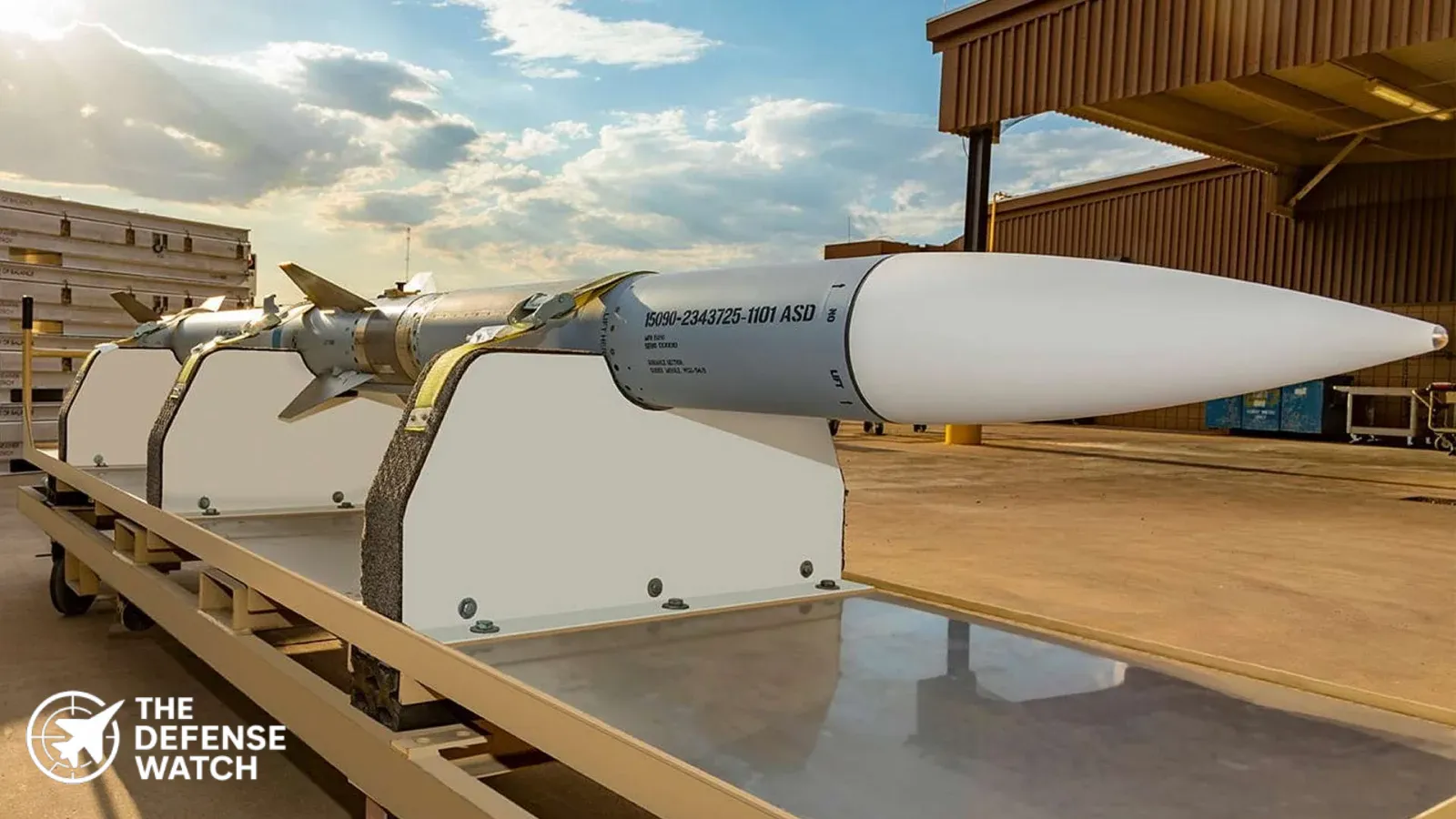
AMRAAM ER missile sale to Denmark
Global News

US Approves 951 Million AMRAAM ER Missile Sale to Denmark for Air Defense Boost

September 8, 2026
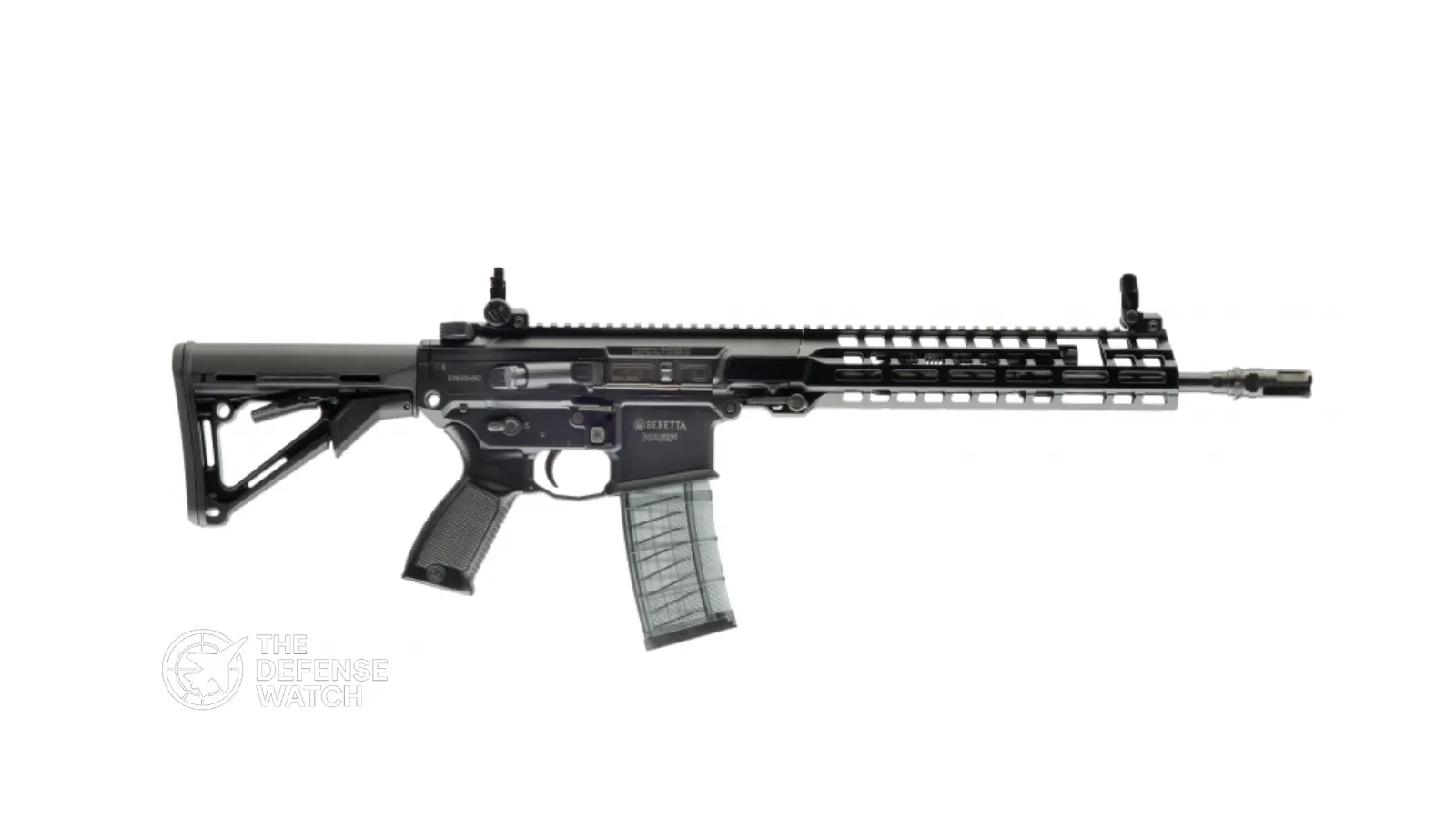
Beretta NARP assault rifle
Global News

Italy Receives 7,000 Beretta NARP Assault Rifles As Army Modernization Accelerates

September 12, 2026
Greenland NATO area of responsibility
Global News

UK Chief of Defence Staff Says Greenland Falls Within NATO Area of Responsibility Amid Arctic Security Focus

January 13, 2026

Logo

Copyright © 2026 TheDefenseWatch.com

Helpful Links

  • Home
  • About Us
  • Privacy Policy
  • Terms of Use / Disclaimer
  • U.S. Privacy Notice – CCPA Compliance

Defense Systems

  • Defense Systems
  • Comparisons 
  • Manufacturer
  • Tactical Calculators

Popuplar

Which 5 Air Forces Possess the Costliest Fighter Jet Fleets in the World
Evolving Strategic Value: Carrier Strike Groups in the Indo-Pacific’s Future Security Architecture
Autonomous Weapon Systems Spark U.S. Ethics Debate Amid Rapid Military AI Integration

We report on developments involving military forces, governments, defense companies, research organizations, and security institutions around the world. 

Welcome Back!

Sign in to your account

Username or Email Address
Password

Lost your password?

Enjoying our coverage?

Make The Defense Watch a preferred source on Google to see more insights.