

Executive Summary:
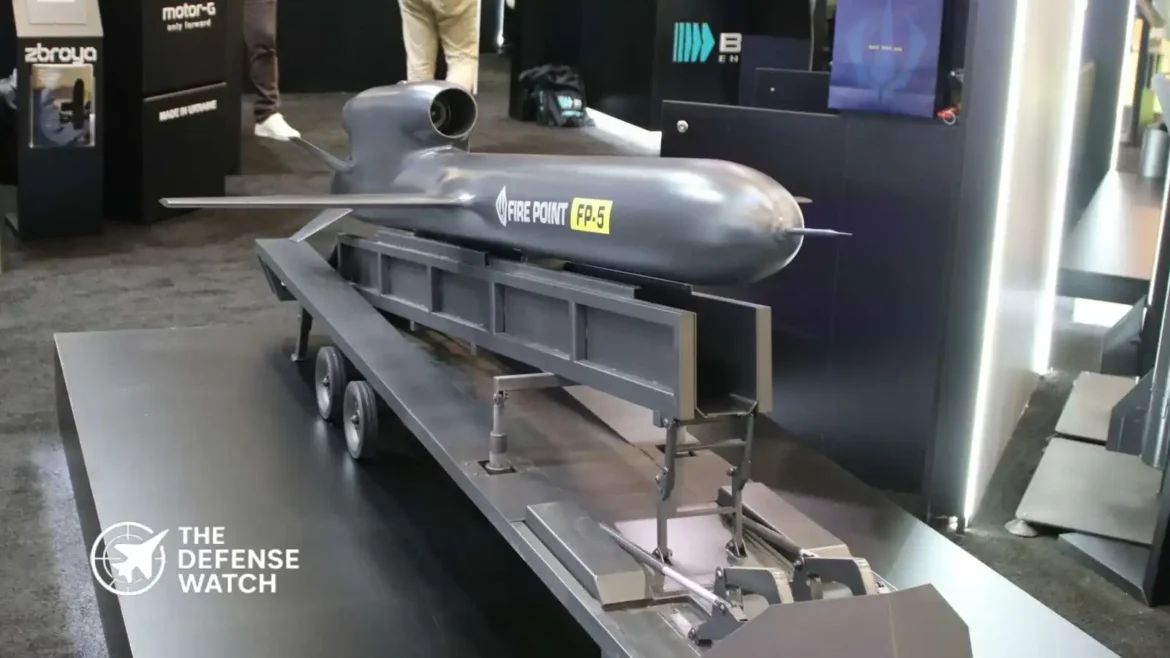
Ukraine has introduced the FP-5 Flamingo cruise missile, a new low-cost deep strike system showcased in Türkiye. The system reflects Kyiv’s push to expand precision strike capability while offering a potential model for NATO operations. Its design prioritizes affordability, flexibility, and scalable production.
Ukraine FP-5 Flamingo Cruise Missile Debuts With NATO Implications
The Ukraine FP-5 Flamingo cruise missile has made its public debut at a defense exhibition in Türkiye, highlighting Kyiv’s evolving approach to long-range precision strike capabilities. Developed amid ongoing conflict pressures, the system reflects Ukraine’s focus on cost-effective, adaptable weapons that can be produced at scale.
The FP-5 Flamingo is designed as a subsonic cruise missile capable of striking targets at extended ranges while maintaining a relatively low production cost compared to traditional Western systems.
The unveiling comes at a time when NATO allies are increasingly assessing how to sustain long-term strike capacity in high-intensity conflicts, particularly where industrial output and affordability are critical.
Designed For Scalable Deep Strike Operations
The FP-5 Flamingo cruise missile appears tailored for sustained operational use rather than limited high-value deployments. Its design emphasizes simplicity, modularity, and ease of production, aligning with lessons learned from the war in Ukraine.
Key characteristics reported include:
- Subsonic flight profile optimized for range and fuel efficiency
- Terrain-following capability for low-altitude penetration
- Flexible launch options, including potential ground-based platforms
- Precision guidance systems for targeting fixed infrastructure
This approach differs from more complex Western cruise missiles, which often prioritize advanced stealth and high-end electronics but come with higher costs and longer production timelines.
Ukraine’s model suggests a shift toward “quantity with precision,” where a larger number of affordable missiles can achieve operational effects traditionally reserved for smaller inventories of expensive systems.
Strategic Significance For NATO
The introduction of the FP-5 Flamingo cruise missile carries broader implications for NATO doctrine. The alliance has long relied on systems such as Tomahawk and Storm Shadow, which offer high performance but are expensive and produced in limited numbers.
Ukraine’s approach could influence future NATO thinking in several ways:
- Industrial scalability: The ability to mass-produce cruise missiles quickly during conflict
- Cost efficiency: Lower unit costs enabling sustained strike campaigns
- Operational flexibility: Integration with diverse launch platforms
This aligns with growing concerns among NATO planners about stockpile depletion in prolonged conflicts. The war in Ukraine has demonstrated that high-end munitions can be consumed at a faster rate than traditional defense planning anticipated.
By focusing on affordability and production speed, the FP-5 Flamingo represents a potential complement, rather than replacement, to existing Western systems.
Operational Context And Combat Lessons
Ukraine’s missile development efforts are shaped directly by battlefield requirements. The need to strike logistics hubs, command centers, and infrastructure deep behind enemy lines has driven innovation in long-range precision weapons.
The FP-5 Flamingo cruise missile reflects several key lessons:
- Sustained deep strike requires large inventories, not limited stocks
- Simpler systems can still achieve high operational impact
- Adaptability is critical in contested electronic warfare environments
Ukraine has increasingly relied on domestically developed systems to reduce dependence on foreign supply chains. This trend has accelerated innovation, particularly in unmanned systems and missile technology.
Türkiye Debut Signals Export And Cooperation Potential
The decision to unveil the FP-5 Flamingo in Türkiye is notable. Türkiye has emerged as a major player in defense exports, particularly in drones and missile systems, and maintains close defense ties with Ukraine.
Showcasing the missile at an international venue suggests potential future cooperation, co-production, or export opportunities. It also indicates Ukraine’s intent to position itself as a contributor to allied defense innovation, not just a recipient of military aid.
For NATO members, the system may offer a blueprint for developing complementary low-cost strike capabilities within their own defense industries.
Analysis: A Shift Toward Affordable Precision Warfare
The FP-5 Flamingo cruise missile highlights a broader in modern warfare, where affordability and scalability are becoming as important as technological superiority.
Western defense programs have traditionally focused on advanced, high-cost platforms. However, recent conflicts have exposed limitations in this model, particularly when facing prolonged engagements.
Ukraine’s approach suggests a hybrid model may be more effective:
- High-end systems for strategic targets
- Lower-cost, mass-produced systems for sustained operations
If adopted more widely, this could reshape procurement strategies across NATO, with greater emphasis on industrial resilience and rapid production.

Pentagon AI Agreements Signal Strategic Shift In Military Modernization
The Pentagon AI agreements mark a significant step in reshaping how the U.S. military integrates advanced technology into its operational framework. According to reporting from Reuters, the U.S. Department of Defense has formalized partnerships with several leading artificial intelligence firms, aiming to accelerate adoption across critical defense functions.
The initiative reflects a broader push to align military capabilities with the rapid pace of commercial AI innovation. Defense officials see these agreements as essential to maintaining a technological edge in an increasingly contested global security environment.
- The Pentagon reached agreements with leading artificial intelligence companies to expand defense applications of AI.
- The initiative focuses on accelerating AI deployment across military operations, logistics, and intelligence analysis.
- Partnerships aim to leverage commercial innovation to strengthen U.S. technological superiority over rivals.
- The move reflects growing urgency amid global competition in military AI development, particularly with China.
- Officials emphasize safeguards, ethical use, and operational reliability in deploying AI systems.
Unlike earlier efforts that relied heavily on internal development, the Pentagon is now leaning more on private sector expertise. This approach signals a shift toward faster, scalable solutions that can be deployed across multiple domains, including intelligence, logistics, and battlefield decision-making.
Expanding AI Across Military Operations
Under the new Pentagon AI agreements, artificial intelligence is expected to play a growing role in operational planning and execution. Key areas of focus include data analysis, predictive maintenance, and autonomous systems support.
AI tools can process vast amounts of sensor and intelligence data far faster than human analysts. This capability is increasingly critical as modern warfare generates massive data streams from satellites, drones, and electronic surveillance systems.
In logistics, AI-driven systems are expected to improve supply chain efficiency and readiness. Predictive analytics can identify potential equipment failures before they occur, reducing downtime and enhancing operational availability.
From a strategic perspective, these improvements translate into faster decision cycles and greater operational agility. That advantage is particularly important in high-intensity conflict scenarios where speed and accuracy can determine outcomes.
Strategic Context: Competition With China
The timing of these Pentagon AI agreements is closely tied to intensifying competition with China, which has made artificial intelligence a central pillar of its military modernization strategy.
U.S. defense officials have repeatedly warned that maintaining leadership in AI is critical to national security. China’s investments in AI-enabled systems, including autonomous platforms and surveillance technologies, have raised concerns about a potential capability gap.
By partnering with leading AI companies, the Pentagon aims to close that gap and ensure continued dominance in emerging technologies. The strategy also reflects lessons learned from past acquisition programs, where slow procurement processes limited the speed of innovation.
This new model emphasizes agility and collaboration, allowing the military to adopt cutting-edge technologies as they evolve.
Balancing Innovation With Risk
While the Pentagon AI agreements highlight a strong push toward innovation, they also raise important questions about risk management and ethical use.
Defense officials have stressed that all AI systems developed under these partnerships will adhere to strict guidelines. These include ensuring human oversight in critical decision-making processes and maintaining transparency in how AI systems operate.
Reliability is another key concern. Military applications demand systems that can perform under extreme conditions, with minimal margin for error. As a result, testing and validation will be central to the rollout of AI-enabled capabilities.
There is also ongoing debate about the role of autonomous systems in combat. While AI can enhance decision-making, policymakers continue to draw clear boundaries around its use in lethal operations.
Industry Collaboration And Innovation Pipeline
A core advantage of the Pentagon AI agreements lies in access to the commercial innovation pipeline. Leading technology firms are investing billions in AI research and development, often outpacing government-funded programs.
By leveraging these resources, the Pentagon can accelerate capability development without bearing the full cost of innovation. This approach also allows for faster iteration and deployment of new technologies.
The collaboration is expected to create a feedback loop, where military requirements shape commercial development, and commercial breakthroughs enhance defense capabilities.
However, integrating commercial technology into military systems presents challenges. These include cybersecurity risks, compatibility issues, and the need to adapt civilian tools for combat environments.
Operational Impact And Future Outlook
The long-term impact of the Pentagon AI agreements will depend on how effectively the military can integrate AI into its existing force structure. Early gains are likely to be seen in support functions such as intelligence analysis and logistics.
Over time, AI could play a more direct role in operational decision-making, particularly in areas like cyber defense and electronic warfare.
The agreements also signal a broader transformation in how the Pentagon approaches technology acquisition. By prioritizing speed and collaboration, the department is adapting to a rapidly changing technological landscape.
This shift could redefine military innovation in the years ahead, setting a precedent for how governments engage with the private sector in high-tech domains.

- European Commission launched a €115 million Agile Programme to accelerate defense innovation across the EU.
- The initiative focuses on rapid development and deployment of advanced military technologies.
- Programme supports startups, SMEs, and research institutions within the European defense ecosystem.
- Agile Programme aligns with broader EU efforts to strengthen strategic autonomy and defense readiness.
- Funding targets emerging technologies including AI, robotics, and next-generation battlefield systems.
European Commission Agile Programme Targets Faster Defense Innovation
The European Commission Agile Programme marks a €115 million push to accelerate defense innovation and shorten deployment timelines across Europe, reflecting growing urgency around military readiness and technological competitiveness.
Announced as part of broader EU defense initiatives, the program is designed to bridge the gap between research and operational capability. It focuses on enabling faster development cycles, reducing bureaucratic delays, and improving collaboration among member states, according to reporting from Defence Industry Europe.
The initiative comes amid increasing pressure on European governments to modernize armed forces and respond more quickly to evolving threats, particularly following lessons learned from recent conflicts.
Accelerating From Concept To Capability
A central objective of the European Commission Agile Programme is to compress the timeline between concept development and field deployment. Traditionally, European defense projects have faced long procurement cycles and fragmented coordination among member states.
The Agile Programme seeks to address this by introducing more flexible funding mechanisms and streamlined project approval processes. This approach mirrors practices seen in U.S. defense innovation frameworks, where rapid prototyping and iterative testing have become standard.
By focusing on speed and adaptability, the program aims to ensure that emerging technologies can be tested, validated, and deployed in operational environments without prolonged delays.
Startups And SMEs In Defense Ecosystem
The European Commission Agile Programme places strong emphasis on supporting startups, small and medium-sized enterprises, and research institutions. These actors are often at the forefront of innovation but face barriers in accessing defense contracts.
Through targeted funding and simplified participation requirements, the initiative aims to integrate these players into the European defense industrial base. This reflects a broader shift in defense procurement strategies, where governments increasingly rely on commercial innovation to maintain technological edge.
According to the European Commission, expanding participation across the private sector will enhance competition, diversify technological solutions, and reduce dependency on a limited number of major defense contractors.
Focus On Emerging Technologies
The program prioritizes investment in high-impact technologies expected to shape future warfare. These include artificial intelligence, autonomous systems, robotics, advanced sensors, and digital battlefield integration tools.
Such capabilities are seen as critical for improving situational awareness, decision-making speed, and operational effectiveness. The European Commission Agile Programme also aligns with ongoing EU efforts to strengthen capabilities in cyber defense and electronic warfare.
By concentrating resources on these areas, the EU aims to close capability gaps and maintain relevance in an increasingly technology-driven security environment.
Strategic Context And Policy Alignment
The launch of the European Commission Agile Programme is part of a broader policy framework aimed at enhancing European strategic autonomy. This includes reducing reliance on external suppliers and strengthening internal defense industrial capacity.
The initiative complements existing EU programs such as the European Defence Fund and Permanent Structured Cooperation, which focus on collaborative development and capability building among member states.
From a geopolitical perspective, the program reflects Europe’s response to shifting security dynamics, including increased competition among major powers and the need for rapid response capabilities in crisis scenarios.
Analysis: Bridging Structural Gaps In EU Defense Innovation
The European Commission Agile Programme addresses a long-standing structural issue in European defense policy: the gap between innovation and deployment. While Europe has strong research capabilities, translating those advances into operational systems has often lagged behind.
This initiative signals a recognition that speed is now a critical factor in military effectiveness. Modern conflicts have demonstrated that technological superiority must be paired with rapid integration into operational forces.
However, the program’s success will depend on implementation. Coordination among EU member states remains complex, and aligning national priorities with collective goals can be challenging. Additionally, scaling successful prototypes into full production will require sustained funding and political commitment.
If effectively executed, the Agile Programme could significantly improve Europe’s ability to respond to emerging threats and compete with other global defense powers.
Implications For Transatlantic Defense Cooperation
For the United States, the European Commission Agile Programme may enhance interoperability and burden-sharing within NATO. A more capable and technologically advanced European defense base could strengthen alliance readiness.
At the same time, increased EU focus on strategic autonomy may influence procurement decisions, potentially affecting U.S. defense exports. Balancing autonomy with alliance integration will remain a key consideration for policymakers on both sides of the Atlantic.
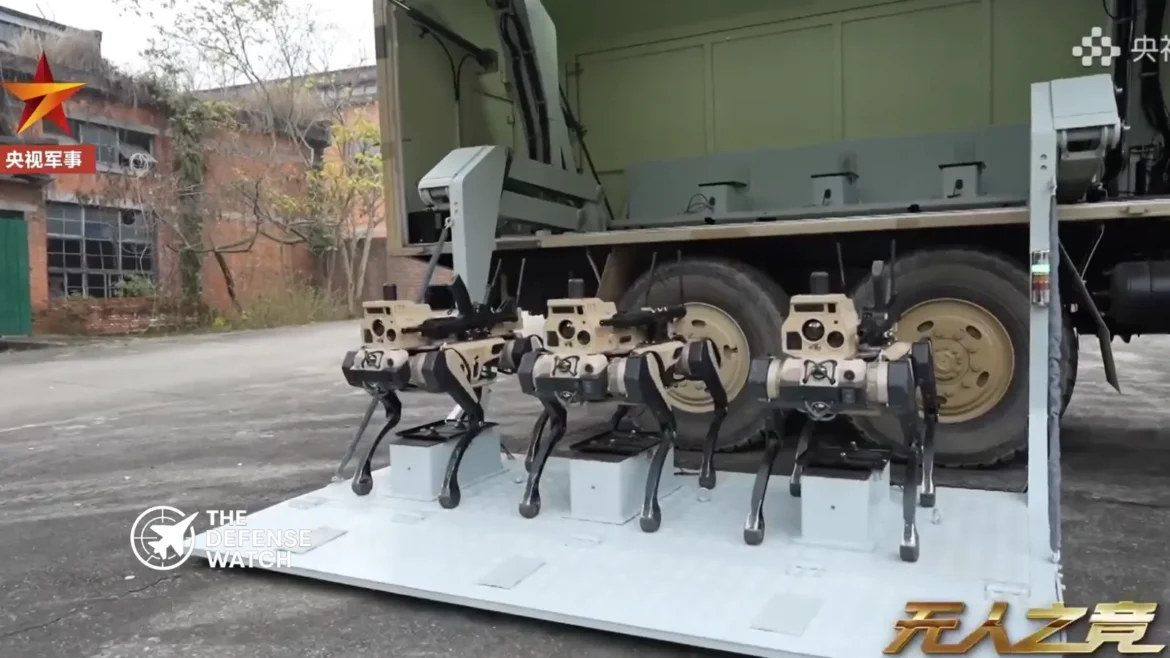
- ► China reveals multi-role robotic wolf pack designed for urban combat and reconnaissance missions.
- ► System includes three variants: reconnaissance, strike, and logistics support platforms.
- ► Robots integrate with aerial drones via shared AI network and real-time mapping systems.
- ► Human operators remain in the loop, authorizing all weapon engagements.
- ► Development signals accelerating shift toward AI-enabled infantry-machine teaming.
China Robot Wolf Pack System Targets Urban Warfare Dominance
China’s robot wolf pack system marks a new phase in military robotics, combining autonomous mobility, modular weapons, and coordinated swarm tactics for urban warfare environments.
Developed by the China Ordnance Automation Research Institute, the system consists of quadruped robotic platforms designed to operate in dense, complex terrain such as collapsed structures and contested city blocks. The unveiling reflects broader efforts by the People’s Liberation Army to integrate artificial intelligence into frontline operations.
According to Chinese state-affiliated defense reporting and technical disclosures, the robots are built to support reconnaissance, precision strike, and logistics functions within a unified network.
Multi-Role Design Enables Coordinated Combat Functions
The robot wolf pack is structured around three specialized variants, each tailored to a specific battlefield role.
The reconnaissance unit, often referred to as the Shadow variant, is optimized for forward scouting. It uses onboard sensors and mapping tools to identify threats and relay data in real time.
The strike variant, described as Bloody Battle, is configured for direct engagement. It can carry modular payloads including small arms, grenade systems, and lightweight guided munitions. The use of a modular architecture allows operators to adapt loadouts based on mission requirements.
A third configuration, known as Polar, supports logistics. This platform is designed to transport supplies, ammunition, or other mission-critical equipment across uneven terrain.
This division of labor mirrors emerging doctrines in unmanned systems, where distributed roles enhance survivability and mission flexibility.
Mobility And Payload Reflect Urban Combat Requirements
Engineers behind the China robot wolf pack system have focused on mobility in constrained environments. Each unit features 12 degrees of freedom, allowing movement patterns that resemble biological quadrupeds.
The robots reportedly reach speeds of up to 15 kilometers per hour while maintaining stability over obstacles up to 30 centimeters in height. This capability is particularly relevant in urban warfare, where debris and vertical obstacles can limit conventional vehicles.
Payload capacity has also been increased to approximately 25 kilograms. This enables the integration of weapons systems and sensor packages without significantly reducing mobility.
Such specifications align with global trends in military robotics, where endurance, payload, and terrain adaptability are key performance factors.
AI Networking And Drone Integration Expand Operational Reach
A defining feature of the system is its integration into a broader network that includes aerial drones. Using simultaneous localization and mapping, or SLAM, the robots generate real-time 3D maps of their surroundings.
These maps are shared across the network, allowing both ground units and drones to maintain a common operational picture. This creates what analysts describe as an air-ground coordination layer, enabling synchronized surveillance and targeting.
The China robot wolf pack system also uses a shared control architecture, sometimes referred to as a shared-brain network. This allows multiple units to coordinate movement and task allocation without requiring constant manual input.
While autonomy plays a role in navigation and target detection, human operators remain responsible for engagement decisions. Control interfaces include voice commands, wearable systems, and handheld devices.
Operational Implications For Modern Infantry Units
The introduction of robotic swarms into urban combat scenarios could significantly alter infantry tactics. By deploying unmanned systems for high-risk tasks such as building entry or reconnaissance in contested zones, forces can reduce exposure of personnel.
At the same time, the reliance on networked systems introduces vulnerabilities. Electronic warfare, signal disruption, and cyber threats remain critical concerns for any AI-enabled platform.
Western defense analysts have noted similar developments in U.S. and allied programs, including efforts to field robotic combat vehicles and autonomous support systems. However, the level of integration demonstrated in the China robot wolf pack system suggests a focus on swarm coordination at the tactical level.
This reflects a broader shift toward distributed operations, where multiple smaller systems operate collaboratively rather than relying on single high-value platforms.
Strategic Context And Global Competition
China’s investment in robotic systems is part of a wider modernization effort aimed at enhancing battlefield awareness and decision speed. The People’s Liberation Army has identified intelligentized warfare as a key objective, emphasizing AI, autonomy, and data integration.
The unveiling of the robot wolf pack system underscores this direction, particularly in the context of urban warfare, which remains a central challenge in modern conflicts.
For the United States and its allies, the development highlights the need to accelerate countermeasures and maintain parity in autonomous systems. This includes both offensive capabilities and defenses against unmanned swarms.

- Polish defense company WB Group has partnered with AI developer Applied AGI to integrate artificial intelligence into UAV systems.
- The collaboration focuses on enhancing autonomy, mission planning, and real time battlefield data processing.
- AI integration could significantly improve ISR capabilities and operational efficiency for modern military forces.
- The partnership aligns with growing global investment in autonomous and AI driven defense technologies.
- AI enabled UAV systems are becoming a critical element in modern military reconnaissance and precision operations.
WB Group AI Enabled UAV Development Signals Growing Role Of Artificial Intelligence In Military Drones
The WB Group AI enabled UAV initiative marks a new step in the integration of artificial intelligence into unmanned aerial systems. Polish defense manufacturer WB Group has partnered with technology firm Applied AGI to develop AI powered capabilities designed to enhance autonomy, mission effectiveness, and data analysis for military drone operations.
The collaboration reflects a broader shift across the defense sector toward advanced software driven systems capable of operating in complex battlefield environments with minimal human intervention.
The Big Picture
Artificial intelligence has rapidly emerged as a core technology in modern military modernization programs. Armed forces across NATO and other allied nations are investing heavily in AI driven systems that can process large volumes of sensor data, support faster decision making, and improve operational efficiency.
Unmanned aerial systems are particularly suited to this transformation. Drones generate large amounts of surveillance and reconnaissance data during missions, often overwhelming human operators. AI powered tools can automate much of this analysis while enabling faster identification of targets, threats, or patterns of activity.
For European defense companies such as WB Group, integrating AI into drone platforms also supports NATO efforts to strengthen technological competitiveness and operational readiness.
What Is Happening
WB Group and Applied AGI announced a partnership focused on integrating artificial intelligence into unmanned aerial systems and related defense technologies.
WB Group is a well established Polish defense manufacturer known for developing advanced unmanned systems, communications equipment, and battlefield management technologies. Its drone portfolio includes the widely deployed Warmate loitering munition and the FlyEye reconnaissance UAV.
Applied AGI specializes in advanced artificial intelligence software designed to support autonomous decision making and complex data analysis.
The collaboration aims to combine WB Group’s experience in UAV design and operational deployment with Applied AGI’s AI expertise to create next generation drone capabilities.
The partners intend to develop software solutions that can improve:
Autonomous flight control
Mission planning and task execution
Real time intelligence processing
Sensor data analysis
These capabilities could allow UAV systems to perform missions with reduced operator workload while increasing the speed and accuracy of battlefield information processing.
Why It Matters
Artificial intelligence is transforming how militaries operate unmanned systems.
Traditional drones rely heavily on human operators to analyze sensor feeds, identify targets, and make tactical decisions. This approach limits the number of systems that operators can control simultaneously and slows the flow of intelligence to commanders.
AI enabled UAV systems can partially automate these tasks. Machine learning algorithms can detect objects, track targets, and identify unusual patterns across video feeds and sensor data.
This capability becomes especially valuable during high intensity operations where speed and situational awareness are critical.
The WB Group Applied AGI partnership also highlights the growing importance of software in modern defense technology. Hardware platforms such as drones are increasingly defined by the software systems that control them.
Strategic Implications
The development of AI driven UAV capabilities could strengthen operational effectiveness for militaries using WB Group platforms.
Autonomous functions can improve mission endurance and allow smaller teams to control larger drone fleets. This capability is particularly relevant for reconnaissance missions, border surveillance, and precision strike operations.
For NATO members and partner countries, enhanced drone autonomy may support distributed operations where forces operate across multiple locations while maintaining situational awareness.
AI enabled systems can also improve resilience in contested environments. Automated data processing allows operators to focus on strategic decisions rather than routine analysis tasks.
The partnership also reflects a broader trend among European defense firms seeking to expand their software capabilities in response to evolving battlefield requirements.
Competitor View
Major military powers are closely monitoring developments in AI powered military systems.
China has invested heavily in autonomous drone technologies and swarm capabilities as part of its military modernization strategy. Russia has also explored AI integration in unmanned systems, particularly in reconnaissance and loitering munition roles.
The United States continues to advance artificial intelligence initiatives through programs supported by the US Department of Defense and the Defense Advanced Research Projects Agency (DARPA).
European defense firms therefore face increasing pressure to develop competitive AI capabilities. Partnerships between hardware manufacturers and AI specialists offer one path to accelerate innovation.
What To Watch Next
Several milestones will determine the long term impact of the WB Group AI enabled UAV effort.
The first key step will involve integrating Applied AGI software into operational drone platforms. This stage typically requires extensive testing to validate reliability and mission performance.
Future development phases may include:
AI assisted target recognition
Autonomous mission coordination
Advanced swarm control technologies
Improved sensor fusion capabilities
Successful integration could lead to upgrades for existing WB Group systems as well as entirely new UAV platforms designed around AI driven operations.
Capability Gap
Modern battlefields produce vast amounts of data from sensors, surveillance systems, and unmanned platforms.
Human operators alone cannot analyze all this information in real time. This gap creates delays in intelligence processing and decision making.
AI enabled UAV systems aim to close this gap by automating data analysis and improving information flow between drones and command centers.
However, AI systems still face limitations. They require large training datasets and must operate reliably in complex environments where sensor inputs may be degraded by electronic warfare or weather conditions.
Ensuring secure and trustworthy AI decision making will remain a key challenge for defense developers.
The Bottom Line
The WB Group AI enabled UAV partnership with Applied AGI highlights how artificial intelligence is becoming a central driver of next generation military drone capabilities.

- ► Hermeus flew Quarterhorse Mk 2.1 on March 2, 2026 at Spaceport America, New Mexico — its second aircraft first flight in less than nine months.
- ► Mk 2.1 is roughly the size of an F-16, powered by a Pratt & Whitney F100 engine — approximately three times larger and four times heavier than the Mk 1.
- ► The Mk 2.1 flight kicks off a test campaign aimed at reaching supersonic speeds; the follow-on Mk 2.2 is projected to become the world’s fastest unmanned aircraft.
- ► The U.S. Air Force has backed Hermeus with a $60 million STRATFI contract; the Defense Innovation Unit selected Hermeus for its HyCAT hypersonic flight test program.
- ► The Congressional Research Service has warned that the U.S. is unlikely to field an operational hypersonic weapon system before FY2027 at the earliest.
- ► A former Pentagon senior official has noted China has tested hypersonic flight at roughly ten times the rate of the United States since the late 1960s.
- ► Hermeus CEO AJ Piplica has stated the company expects Quarterhorse to begin supporting Department of Defense test events in 2026, around when its Mk 3 vehicle rolls out.
Hermeus Quarterhorse Mk 2.1 Takes Flight, Pushing U.S. Toward Reusable Supersonic Drone Capability
The Hermeus Quarterhorse Mk 2.1 supersonic drone completed its first flight on March 2, 2026, at Spaceport America over White Sands Missile Range airspace in New Mexico — a milestone that marks the Atlanta-based startup’s second aircraft first flight in under nine months. While the event generated predictable industry applause, the strategic importance of this test runs deeper than any single flight.
(adsbygoogle = window.adsbygoogle || []).push({});For the United States, this flight is less about one company’s momentum and more about whether commercial-pace innovation can solve a systemic problem: America’s chronic inability to generate enough reusable high-speed test capacity to keep pace with China and Russia in the hypersonic domain.
What Actually Flew — and What Comes Next
The Quarterhorse Mk 2.1 is powered by a Pratt & Whitney F100 engine — the same powerplant used in the F-15 and F-16 — and is nearly three times larger and four times heavier than its predecessor, the Mk 1. It was flown remotely from a ground-based flight deck, validating aircraft systems, handling qualities, and operational procedures.
The Mk 1 flew first in May 2025 at Edwards Air Force Base. That initial flight focused on validating Quarterhorse’s ability to take off and land at high speeds — a particular engineering challenge unique to future hypersonic aircraft. Mk 2.1 builds on that foundation by entering what Hermeus describes as its Mk 2 phase: a multi-aircraft series focused on achieving and expanding supersonic flight.
Following Mk 2.1, the next aircraft in the series — Mk 2.2 — is expected to become the world’s fastest unmanned aircraft. Subsequent phases will push toward the company’s ultimate objective: sustained ramjet-powered flight, the propulsion breakthrough required for true hypersonic cruise capability at Mach 5 and beyond.
This matters because the road from supersonic to hypersonic is not linear. Crossing Mach 1 is a precondition, but the engineering leap to Mach 5 involves fundamentally different physics — extreme aerodynamic heating, inlet design, fuel chemistry, and propulsion transitions that cannot be solved on paper or in wind tunnels alone. Real flight data at each speed regime is irreplaceable.
Why the Pentagon Is Watching Closely
The Defense Innovation Unit selected Hermeus under its Hypersonic and High-Cadence Airborne Testing Capabilities program — known as HyCAT — which is designed to leverage commercial technology to increase the Pentagon’s hypersonic flight-testing capacity.
That program exists because the United States has a testing bottleneck problem. The Pentagon’s Test Resource Management Center has begun modernizing facilities and exploring the use of commercial space assets for more frequent hypersonic flight testing, but according to former Pentagon hypersonics official Michael White, progress has been too slow. White, who co-authored a 2025 Atlantic Council report with former Air Force Secretary Deborah Lee James and former Army Secretary Ryan McCarthy, argued that the U.S. needs to leverage commercial innovation more aggressively to break the testing bottleneck.
(adsbygoogle = window.adsbygoogle || []).push({});That bottleneck is not just an inconvenience. A former Pentagon senior official has noted that since the late 1960s, China has tested hypersonic flight at approximately ten times the rate of the United States. In a field where proficiency is earned through accumulated flight hours and failure analysis, that testing disparity compounds over time.
Hermeus CEO AJ Piplica has said the company expects Quarterhorse to begin supporting Department of Defense test events in 2026, around when its Mk 3 vehicle rolls off the line. That timeline, if met, would position Quarterhorse as a commercially operated, reusable hypersonic test bed available to AFRL, DIU, and other defense customers — exactly the kind of infrastructure the Pentagon’s test enterprise currently lacks at scale.
The Industrial Logic: Speed as a Strategic Asset
The most consequential aspect of Hermeus’ program is not any single aircraft — it is the company’s development cadence. Hermeus flew Mk 2.1 within a year of its previous flight campaign, compressing timelines that traditionally take decades into a single development cycle.
This approach runs counter to the dominant model in U.S. defense aviation. Legacy programs — even agile ones — routinely spend five to ten years between major prototype milestones. The causes are familiar: cost-plus contracting incentives, requirements volatility, congressional budget cycles, and industrial base constraints. Hermeus operates outside most of those constraints, using venture capital and fixed-price government partnerships to maintain velocity.
The company’s goal is to build one test vehicle per year, and CEO AJ Piplica has emphasized that refining rapid build-and-fly processes is just as important as the capability demonstrated in any single flight. That philosophy — hardware richness over risk aversion — deliberately mirrors what SpaceX demonstrated in the launch vehicle sector: iterating through failures faster than competitors can iterate through planning cycles.
Hermeus has stated it could manufacture roughly a dozen Mk 2 drones per year in its current Atlanta facility, with the ability to expand if there is a clear demand signal from the Defense Department. That production capacity, modest by legacy standards, is nonetheless significant in the context of reusable high-speed aircraft — a category where operational numbers have historically been measured in single digits.
(adsbygoogle = window.adsbygoogle || []).push({});RTX’s venture capital arm has invested in Hermeus, linking Pratt & Whitney’s F100 engine supply chain directly to the program’s growth. The $60 million AFWERX STRATFI contract, awarded in 2021, was described at the time as one of the most valuable startup contracts of its type ever awarded — a signal that AFRL and the Air Force Life Cycle Management Center viewed the company’s technical approach as credible, not speculative.
Competitive Landscape: Hermeus Is Not Alone
Hermeus is the most publicly visible player in the commercial reusable high-speed aircraft race, but it is not operating in a vacuum. Stratolaunch’s Talon-A vehicle, backed by Ursa Major propulsion, has already demonstrated Mach 5 flight, becoming the first reusable hypersonic test aircraft to reach that threshold in over five decades. The Talon-A flights, conducted in December 2024 and March 2025, were carried aloft by Stratolaunch’s Roc carrier aircraft over the Pacific — marking the United States’ first return to reusable hypersonic flight trials since the X-15 program ended nearly 60 years ago. NewsNation
The two companies occupy different portions of the speed-altitude envelope and serve complementary roles. Talon-A focuses on Mach 5+ regime testing, delivered via air launch. Quarterhorse’s roadmap emphasizes ground-launched, runway-independent operations that more closely replicate the operational profile of future military hypersonic aircraft. The Pentagon benefits from having both approaches in parallel, particularly given the acknowledged weakness in domestic high-speed test infrastructure.
What neither program has yet demonstrated is the full propulsion transition central to hypersonic cruise: the turbine-based combined cycle (TBCC) handoff from turbojet to ramjet operation at speed. That remains Hermeus’ most technically ambitious goal — and the achievement that, if realized, would most directly validate the propulsion architecture for future operational vehicles like the Darkhorse multi-mission drone.
Strategic Assessment
The Testing Bottleneck Is the Real Problem
The United States does not lack hypersonic ambition. The Pentagon has dedicated approximately $1 billion to hypersonic facility modernization from FY2015 to FY2024, and the FY2026 budget request included roughly $3.9 billion for hypersonics research and development. What it lacks is the test cadence to convert that investment into fielded capability at competitive speed.
The Congressional Research Service, in its August 2025 update, noted that U.S. hypersonic weapons programs are unlikely to field operational systems before FY2027 at the earliest — and that limitation stems partly from infrastructure constraints, particularly for simulating Mach 8 and above flight conditions. Hermeus and Stratolaunch both address the lower end of that envelope; the upper range remains dependent on government-owned facilities that are oversubscribed.
Who Benefits
The Air Force Research Laboratory gains a commercially operated, reusable high-speed test bed — reducing per-test costs and increasing test frequency without requiring congressional appropriations for each flight. The Defense Innovation Unit validates its HyCAT investment thesis. Pratt & Whitney secures a development and production relationship in an emerging high-speed aircraft sector. And the broader U.S. defense industrial base gets proof that iterative, commercial development timelines can apply to high-speed aviation, not just satellites and launch vehicles.
Who Is Under Pressure
Legacy prime contractors operating in the hypersonic space face a structural challenge from companies like Hermeus. If a venture-backed startup can build and fly an F-16-class unmanned supersonic aircraft in under a year — at a fraction of traditional program costs — the argument for decade-long, cost-plus hypersonic development programs becomes harder to sustain in congressional budget hearings.
(adsbygoogle = window.adsbygoogle || []).push({});China, meanwhile, is the underlying strategic driver of this entire investment surge. In late September 2025, China conducted a hypersonic ICBM test featuring boost-glide technology and a depressed trajectory, combining maneuverability with stealthy approach vectors that reduce detection windows and complicate interception. Against that threat environment, every additional month of U.S. testing delay carries real strategic cost.
What Happens Next
The Quarterhorse Mk 2.1 test campaign will now push toward supersonic speeds. If successful, the data feeds directly into Mk 2.2 — the aircraft Hermeus says will push toward world record unmanned speed. Mk 3, with the full Chimera II turbine-based combined cycle propulsion system installed, is expected around 2026-2027 and will represent the first attempt to validate the propulsion architecture most critical to operational hypersonic aircraft.
The more important near-term question is whether the Pentagon will issue a program of record for Quarterhorse — or a derivative operational system like Darkhorse. The Department of Defense has not publicly revealed a program of record for a hypersonic aircraft, though it has made several investments in Hermeus as the company develops the Quarterhorse. Without a clear acquisition signal, Hermeus must continue balancing commercial investor expectations against the long acquisition lead times inherent to Pentagon procurement.
The flight on March 2 advances the technical case. The programmatic case still needs to be made — and that argument will be decided not at Spaceport America, but on Capitol Hill and in the Pentagon’s E-Ring.
NATO Training Hub Sets Strategic Direction Through 2030
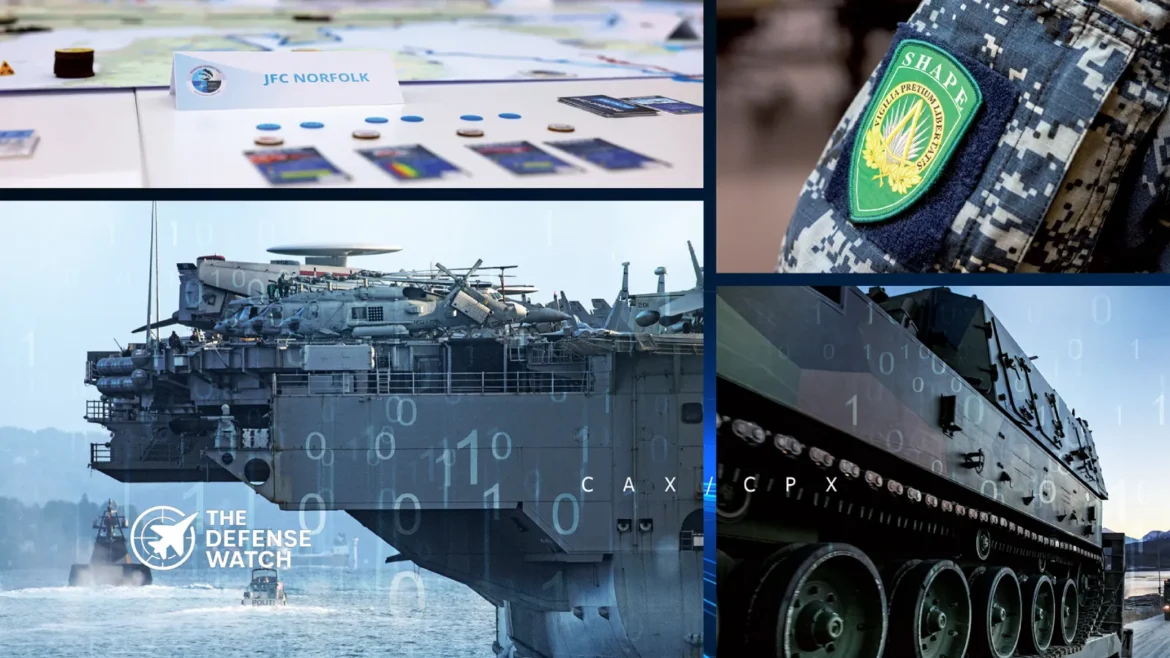
The NATO Joint Warfare Centre has launched a new five-year campaign plan intended to guide its work on training, exercises and warfare development through to 2030. The initiative, unveiled January 26 in Stavanger, Norway, establishes a comprehensive framework for synchronizing activities, managing transformation, and institutionalizing innovation as the Alliance adapts to an increasingly complex security environment.
Major General Ruprecht von Butler, Commander of the JWC, said the document sets a unified direction for the command’s future role within the Alliance. The campaign plan represents a significant shift in NATO’s approach to operational readiness, moving beyond traditional headquarters-based training toward theater-wide, strategically integrated models that test real-world operational plans using emerging technologies and increased realism.
Five Strategic Objectives Drive Modernization Effort
The JWC Campaign Plan 2026-2030 outlines five core strategic objectives designed to position the organization as the Alliance’s central enabler for warfare development and training of operational and strategic headquarters. These objectives prioritize delivering high-quality multi-domain exercises, driving warfare development from Allied Command Transformation concepts into Allied Command Operations execution, and informing future Alliance direction through rigorous testing of NATO defense plans.
Additional priorities include developing a modern digitally enabled workforce and enhancing organizational agility to meet accelerating demands. The framework is designed to improve alignment with the NATO Warfighting Capstone Concept, NATO’s Warfare Development Agenda, a new Campaign Approach to Exercises, and the Audacious Training Initiative.
The Joint Warfare Centre serves as a critical link between Allied Command Transformation and Allied Command Operations, bridging the gap between conceptual warfare development and practical warfighting readiness. Established in Stavanger in October 2003, the JWC has evolved into NATO’s primary training focal point for full-spectrum joint operational and strategic-level warfare.
Digital Integration and AI-Enabled Capabilities
The campaign plan emphasizes significant technological advancement, with planned priorities including development of a combined opposing forces capability, deeper utilization of modeling and simulation, and improved digital infrastructure. Integration of AI-enabled tools represents a cornerstone of the modernization effort, reflecting NATO’s recognition that future warfare requires advanced computational capabilities and data-driven decision-making processes.
Von Butler emphasized the necessity of organizational evolution to meet contemporary challenges. The campaign plan positions the JWC to expand its exercise spectrum, shorten planning timelines, integrate military and multi-domain effects, evolve organizational structure, and fully adopt digital ways of working. These changes respond to the accelerating complexity of modern warfare and ensure the organization maintains readiness for evolving operational demands.
Shift Toward Theater-Wide Training Models
The campaign plan reflects a fundamental transformation in Alliance training methodology. Rather than focusing solely on headquarters-based process drills, the new approach emphasizes theater-wide and strategically integrated models that test real-world operational plans and emerging concepts. This evolution incorporates increased realism, enhanced agility, and integration of new technologies across multiple domains.
The JWC began implementing amended exercise planning processes in March 2025 under a “new ways of working” initiative aimed at improving resource management, increasing ownership in exercises, and supporting digital transformation. This preparatory work laid the groundwork for the comprehensive campaign plan now guiding operations through 2030.
Over the past two decades, the JWC has planned and delivered more than 100 exercises and training events, ensuring NATO commanders and staffs maintain preparedness for any mission. The organization delivers three of NATO’s four core multi-domain exercises: STEADFAST DETERRENCE, STEADFAST DUEL, and STEADFAST DAGGER, which replaced earlier exercise series following NATO’s 2022 Madrid Summit.
Warfare Development Beyond Exercise Delivery
While exercises represent the most visible aspect of the JWC’s mission, the organization’s role in joint and combined warfare development at operational and strategic levels offers enduring benefits to the Alliance. The JWC functions as NATO’s transformational hub in Europe, executing the Alliance’s largest-scale, multi-domain computer-assisted command post exercises while simultaneously harvesting dividends in warfare development and innovation.
The center incorporates warfare development activities into collective training and exercises, including wargame design and the testing, validation, and integration of new concepts and doctrine development. It applies lessons learned processes to continuously improve NATO capabilities, contributing to overall warfighting readiness for both NATO Command and Force Structure Headquarters.
The JWC’s workforce comprises NATO international civilians and military personnel from 18 member nations, including Canada, Czech Republic, Denmark, Finland, France, Germany, Greece, Hungary, Italy, the Netherlands, Norway, Poland, Portugal, Romania, Spain, Türkiye, the United Kingdom, and the United States. This multinational composition ensures diverse perspectives and expertise inform warfare development efforts.
Strategic Context and Future Direction
The campaign plan’s launch comes as NATO faces an evolving security landscape characterized by great power competition, technological disruption, and multi-domain threats. The Alliance has increased its collective defense posture significantly since Russia’s full-scale invasion of Ukraine in February 2022, with enhanced readiness requirements driving demand for more sophisticated training and exercise capabilities.
Von Butler noted that the campaign plan ensures the organization remains fully prepared for accelerating complexity. By positioning the JWC to provide the critical link between emerging concepts, real-world observations, and operational readiness, the plan establishes a foundation for sustained Alliance adaptation through the remainder of the decade.
The JWC supports both collective defense operations and crisis response missions, ensuring high standards of preparedness across the peace, crisis response, and conflict continuum. Its contribution to NATO’s deterrence threshold remains essential as the Alliance maintains its 360-degree approach to security across the Euro-Atlantic area and beyond.
Implementation and Organizational Transformation
Implementation of the campaign plan requires significant organizational evolution. The JWC must expand its capacity to deliver complex, multi-domain exercises while simultaneously shortening planning timelines to respond to dynamic security requirements. Integration of military effects across all domains—land, sea, air, space, and cyber—demands enhanced coordination mechanisms and advanced technical infrastructure.
The center’s adoption of digital ways of working extends beyond simple technology integration. It encompasses fundamental changes to organizational culture, processes, and capabilities designed to maximize efficiency and effectiveness in delivering training outcomes. Development of a modern digitally enabled workforce ensures personnel possess the skills and knowledge necessary to operate in increasingly complex technical environments.
The campaign plan also emphasizes strengthening relationships and integration with national training and command organizations, governmental and non-governmental organizations, and regional security organizations and partners. These collaborative efforts enhance interoperability and ensure NATO exercises reflect realistic operational conditions incorporating diverse actors and stakeholders.
Implications for Alliance Readiness
The JWC Campaign Plan 2026-2030 represents more than an internal organizational roadmap. It establishes the foundation for NATO’s collective training architecture through the remainder of the decade, directly impacting the Alliance’s ability to deter aggression and respond effectively to crises. By transforming how NATO trains and prepares its forces, the plan contributes to overall Alliance readiness and resilience.
As NATO continues adapting to contemporary security challenges, the JWC’s role as the transformational hub connecting warfare development with operational readiness becomes increasingly critical. The campaign plan’s emphasis on innovation, digital transformation, and multi-domain integration positions the Alliance to maintain technological and operational superiority in an era of rapid change and intensifying competition.

Pentagon Accelerates Defense Innovation with Record Small Business Investment
The War Department’s Accelerate the Procurement and Fielding of Innovative Technologies (APFIT) program has surpassed $1 billion in total awards to small businesses and non-traditional defense contractors, marking a significant expansion in the Pentagon’s effort to rapidly field cutting-edge military capabilities.
The milestone announcement, made December 22, 2025, includes the first round of Fiscal Year 2026 project selections valued at approximately $400 million across 14 unclassified programs spanning autonomous systems, space technologies, communications networks, and advanced munitions.
“Crossing the billion-dollar threshold underscores APFIT’s commitment to America’s small business innovators,” stated Emil Michael, Under Secretary of War for Research and Engineering, emphasizing the program’s role in accelerating critical capabilities to warfighters.
Scaling Innovation from Development to Production
The FY 2026 selections demonstrate the program’s growing maturity and operational impact. Average project awards now exceed $30 million, reflecting APFIT’s transition from early-stage prototypes to production-scale deployments of mission-critical technologies.
The largest single award announced totals $49.7 million for the U.S. Army’s Real-Time Command and Control at the Tactical Edge project, approaching APFIT’s $50 million statutory maximum. This represents the highest individual contract in the program’s history and signals increasing confidence in rapid technology transition pathways.
According to the War Department, the FY 2026 portfolio emphasizes operational readiness through technologies already validated in development phases. The program continues expanding opportunities for small businesses across all U.S. regions, including traditionally underrepresented and remote states, strengthening the domestic defense industrial base.
Marine Corps Dominates Project Awards
The U.S. Marine Corps leads FY 2026 selections with seven projects totaling approximately $212 million, focusing heavily on autonomous systems and unmanned platforms. Notable Marine Corps projects include:
The Gremlin Low-Cost Munition receives $35 million to provide affordable precision strike capabilities. The autonomous Unmanned Ground Vehicle for Ground Based Air Defense garners $20 million to enhance expeditionary air defense posture.
Maritime autonomy represents another Marine Corps priority, with the Whaleshark Autonomous Low-Profile Vessel awarded $29.49 million and Small Uncrewed Maritime Vessels receiving $24 million in joint funding with the Navy. The Trolling Uncrewed Navigation Assistant (TUNA) Seeker secures $35 million for advanced maritime guidance systems.
Additional Marine Corps investments include a $20 million Miniaturized Gyroscope for Resilient Navigation and a $10 million Tactical High-Bandwidth, Low-Latency data network project, addressing critical gaps in denied-environment operations.
Space Force Pursues Orbital Superiority
The U.S. Space Force received two substantial awards addressing critical space domain challenges. The Augmented Maneuver Vehicle for Satellites project secures $48.5 million, the second-largest award announced, to enhance on-orbit operations and satellite maneuverability.
Deployable, Attritable Optical Systems receives $22.15 million to develop cost-effective space-based surveillance and tracking capabilities. These investments align with broader Pentagon efforts to maintain space superiority amid growing threats to orbital assets.
Navy and Air Force Technology Priorities
The U.S. Navy’s selection of Domestic High Performance UAS Batteries for $28 million addresses critical supply chain vulnerabilities in unmanned aerial systems. The service also allocated $33 million for the Kraken 18 Communications Pod, enhancing maritime communications capabilities.
The U.S. Air Force focuses on logistics innovation with a $25 million award for Mobile Smart Manufacturing for Airframe Spares. This project aims to revolutionize maintenance operations through additive manufacturing and distributed production capabilities at forward locations.
Army Invests in Electronic Warfare and Network Command
Beyond the flagship $49.7 million command and control project, the U.S. Army awarded $21.66 million for the High Frequency Intercept Direction Finding and Exploitation (HIDES) system. This electronic warfare capability addresses emerging threats in contested electromagnetic environments.
The Real-Time Command and Control at the Tactical Edge project represents the Army’s commitment to network-centric warfare, enabling faster decision-making cycles and improved battlefield awareness at the lowest echelons.
Strategic Implications for Defense Industrial Base
The APFIT program serves as a cornerstone of the War Department’s innovation strategy, designed to circumvent traditional acquisition timelines that often span decades. By focusing on small businesses and non-traditional contractors, APFIT aims to access commercial technologies and innovative approaches typically outside conventional defense channels.
Industry analysts note the program’s emphasis on dual-use technologies, particularly in autonomy, communications, and advanced manufacturing. These sectors attract significant commercial investment, allowing the Pentagon to leverage private sector innovation while maintaining operational requirements.
The $1 billion milestone also reflects broader Pentagon efforts to distribute defense spending beyond traditional prime contractors. Small business participation strengthens regional economies and cultivates a diverse supplier base less vulnerable to single points of failure.
Program Structure and Future Outlook
APFIT operates under specific statutory authorities enabling rapid prototyping and fielding of technologies demonstrating high operational value. The $50 million per-project ceiling encourages focused development while maintaining agility compared to major acquisition programs.
The War Department indicated additional FY 2026 projects will be announced throughout the fiscal year as selections are finalized. Classified projects were excluded from the December announcement but represent a significant portion of total APFIT funding.
Program officials emphasize that awards target technologies at higher technology readiness levels, typically between TRL 6 and 8, where systems have been validated in relevant environments but require final engineering and production scaling. This approach minimizes technical risk while maximizing fielding speed.
Technology Trends and Operational Priorities
The FY 2026 selections reveal clear operational priorities across the services. Autonomous systems dominate the portfolio, with seven of 14 unclassified projects involving unmanned platforms or autonomous capabilities. This reflects ongoing Pentagon emphasis on distributed operations, attrition-resistant forces, and human-machine teaming.
Maritime autonomy receives particular attention, with multiple projects addressing surface and subsurface unmanned vessels. These investments support distributed maritime operations concepts and counter-maritime strategies in contested environments.
Communications and networking technologies represent another focus area, addressing persistent challenges in denied and degraded environments. Projects emphasize resilience, bandwidth, and low-latency requirements for modern multi-domain operations.
Space technologies expand APFIT’s traditional focus on terrestrial systems, reflecting the domain’s growing importance and the Space Force’s integration into rapid acquisition pathways. Emphasis on attritable and maneuverable systems suggests preparations for potential orbital conflicts.
Congressional and Industry Reaction
While official congressional responses have not yet been issued, APFIT enjoys bipartisan support as a mechanism to accelerate innovation while supporting small business development. The program aligns with legislative priorities to strengthen the defense industrial base and reduce acquisition timelines.
Defense industry associations have previously praised APFIT for lowering barriers to entry for non-traditional contractors. However, some traditional defense firms express concern about program scale relative to major acquisition programs and potential gaps in long-term sustainment planning.
Small business advocacy groups welcome the funding expansion but note that $1 billion across multiple years represents a fraction of total defense procurement spending, which exceeds $140 billion annually.
Additional FY 2026 Announcements Expected
The War Department indicated the December announcement represents only the initial round of FY 2026 selections. Additional projects will be revealed as they complete evaluation and approval processes throughout the fiscal year.
Historical patterns suggest subsequent announcements may include projects currently under security review or pending final contract negotiations. The program typically announces 20-30 projects per fiscal year across classified and unclassified portfolios.
APFIT remains a key element of the Pentagon’s broader technology modernization strategy, working alongside other innovation initiatives such as the Defense Innovation Unit, Strategic Capabilities Office, and service-specific rapid capabilities offices. Together, these programs aim to maintain U.S. technological advantage against near-peer competitors while adapting to evolving threats.
The program’s success in reaching the $1 billion milestone demonstrates sustained institutional commitment to alternative acquisition pathways and recognition that traditional procurement cycles cannot adequately address the pace of technological change in modern warfare.

A Leap Toward Mach 12 with Clean Propulsion
In a pivotal advancement for aerospace engineering, Hypersonix Launch Systems, an Australian innovator based in Brisbane, has unveiled plans for the world’s first hydrogen-powered hypersonic jet. This cutting-edge vehicle, propelled by the company’s proprietary SPARTAN scramjet engine, aims to achieve speeds of up to Mach 12—approximately 12 times the speed of sound. The development, announced amid a surge in global investments in sustainable high-speed flight, positions Australia at the forefront of hypersonic technology. With demonstration flights slated for early 2026, this hydrogen-powered hypersonic jet promises to redefine rapid transit and strategic operations.
The project gained momentum in late October 2025 when Hypersonix secured a $46 million Series A funding round, including a $10 million equity investment from Australia’s National Reconstruction Fund Corporation (NRFC). This capital infusion supports testing and manufacturing under the U.S. Defense Innovation Unit’s (DIU) HyCAT program, with NASA backing the initial launch of the DART AE testbed.
Background: From Scramjet Pioneers to Hydrogen Horizons
Australia’s storied legacy in scramjet research sets the stage for this hydrogen-powered hypersonic jet. The nation achieved the world’s first successful scramjet flight in 2002 through the HyShot program, a collaboration with the University of Queensland’s Centre for Hypersonics. This milestone demonstrated supersonic combustion in flight conditions, paving the way for sustained hypersonic propulsion.

Over the subsequent two decades, Australia conducted more than 6,000 ground tests in facilities like the T4 shock tunnel and participated in 11 sub-orbital flights via the HIFiRE initiative with the U.S. Air Force. These efforts addressed core challenges in hypersonic flight, such as extreme heat management and air-breathing efficiency. Traditional hypersonic vehicles have relied on hydrocarbon fuels like kerosene, limiting speeds to Mach 5-8 due to combustion constraints.
Enter hydrogen propulsion: With 2.5 times the energy density of kerosene, green hydrogen enables higher Mach numbers while emitting only water vapor. Hypersonix builds on this by integrating 3D-printing for rapid iteration, a technique first applied to a fixed-geometry scramjet in 2021. The company’s focus on reusability addresses the disposability of past test vehicles, aiming for commercial viability in both civilian and defense sectors.
Core Details: The SPARTAN Engine and Platform Innovations
At the heart of Hypersonix’s hydrogen-powered hypersonic jet lies the SPARTAN engine, the world’s first fully 3D-printed scramjet. This air-breathing system features a fixed geometry with no moving parts, reducing complexity and enhancing reliability. Measuring compact for integration, SPARTAN ingests atmospheric air at hypersonic velocities, mixes it with hydrogen, and ignites combustion in milliseconds—self-igniting without external aids.
Technical specifications underscore its prowess. Powered by green hydrogen derived from renewable sources like solar electrolysis of seawater, SPARTAN delivers high thrust for extended flight durations. Its exhaust? Pure H2O, achieving zero CO2 emissions and minimizing environmental impact. Materials include high-temperature alloys for the core structure and ceramic matrix composites (CMCs) for thermal resilience, capable of withstanding temperatures exceeding 2,000 degrees Celsius. These CMCs offer superior strength-to-weight ratios and shock resistance, crucial for reusable operations.
Hypersonix’s platform lineup demonstrates scalability. The DART AE, a 3.5-meter-long demonstrator, serves as the initial testbed, targeting Mach 7 speeds in its Q1 2026 NASA-supported launch. This vehicle validates SPARTAN’s performance in real atmospheric conditions. Scaling up, the VISR platform—an 8-meter reusable aircraft for intelligence, surveillance, and reconnaissance (ISR)—integrates four SPARTAN engines to operate at Mach 5-10. Designed for defense missions, VISR employs CMCs throughout to endure sustained hypersonic stresses.
Further afield, the Delta Velos system extends SPARTAN’s application to space access. This next-generation launcher, also hydrogen-fueled, eyes Mach 12 for high-cadence, reusable orbital insertions, potentially slashing launch costs by enabling rapid turnaround.
Official data from Hypersonix highlights the engine’s pedigree: Over 100 recent ground tests confirm its hypersonic flight readiness, building on decades of R&D. The $46 million raise, closed in October 2025, includes contributions from strategic investors eyeing dual-use potential. As per NRFC statements, the $10 million commitment accelerates scramjet manufacturing in Queensland, creating jobs and bolstering national security tech.
Dr. Michael Smart, Hypersonix co-founder and scramjet expert, emphasized the engine’s transformative potential: “The SPARTAN is more than a propulsion system—it’s a breakthrough in reusable hypersonic flight.” This sentiment echoes in DIU announcements, which selected Hypersonix for HyCAT to prototype hypersonic capabilities for U.S. allies.
Challenges and Technical Analysis: Navigating Hypersonic Hurdles
Developing a hydrogen-powered hypersonic jet involves formidable engineering feats. Hypersonic speeds generate intense heat from air friction, risking material dissociation and structural fatigue. SPARTAN mitigates this through advanced cooling via hydrogen’s endothermic properties—fuel absorbs heat before combustion—and CMC linings that prevent oxidation.
Hydrogen storage poses another hurdle: Its low density requires cryogenic systems, adding weight and insulation needs. Hypersonix counters with optimized tank designs and non-toxic fuel handling, where leaks vent upward harmlessly. Aerodynamic control at Mach 12 demands precise shockwave management, addressed by SPARTAN’s simple intake geometry.
Comparatively, U.S. and Chinese hypersonic programs, like the AGM-183A ARRW, use rocket-boosted gliders with hydrocarbon scramjets, capping at Mach 5-7. Hypersonix’s air-breathing, hydrogen approach enables atmospheric loitering without boosters, offering endurance advantages for ISR. Ground tests since 2019, including the first hydrogen-fueled 3D scramjet firing, validate these edges, though full-flight reusability remains unproven until DART AE.
Expert Perspectives: Defense Implications and Policy Alignment
Industry experts view this hydrogen-powered hypersonic jet as a game-changer for geopolitical strategy. Dr. Sarah Johnson, a hypersonics analyst at the Australian Strategic Policy Institute, notes, “Hypersonix’s reusable design could democratize hypersonic access, shifting from expendable weapons to persistent platforms.” This aligns with U.S.-Australia AUKUS pacts, emphasizing shared tech for Indo-Pacific deterrence.

From a policy standpoint, the NRFC investment signals Australia’s pivot toward green defense tech. As climate imperatives intersect with security, hydrogen propulsion supports net-zero goals without sacrificing speed. DIU’s HyCAT involvement underscores interoperability, potentially integrating VISR into allied ISR networks. However, experts caution on proliferation risks, urging export controls akin to those for missile tech.
Conclusion: Reshaping Skies and Strategies Ahead
The advent of Hypersonix’s hydrogen-powered hypersonic jet heralds profound shifts. For civilians, it envisions Sydney-to-London flights in under an hour, slashing emissions in ultra-long-haul aviation. In defense, Mach 12 ISR platforms could outpace adversaries, enabling real-time global monitoring and rapid response.
Looking ahead, DART AE’s 2026 flight will be a litmus test, with VISR and Delta Velos following in subsequent years. Backed by $46 million and tripartite partnerships, Hypersonic eyes commercialization by decade’s end. As hypersonic proliferation accelerates—witness Russia’s Avangard or China’s DF-17—this Australian innovation underscores sustainable superiority. The world may soon witness not just faster flight, but cleaner conquests of the atmosphere.

U.S. Advances Hypersonic Test Capability with Talon-A Innovation
The United States has taken a key step in maintaining its edge in hypersonic technology. Ursa Major has struck a $32.9 million deal with Stratolaunch to upgrade the Talon-A hypersonic test vehicle with powerful H13 rocket engines, a boost in propulsion that aims to enhance reusability and reduce costs. Talon-A, launched from Stratolaunch’s carrier aircraft, has already completed its second Mach-5-plus flight—signaling meaningful momentum in U.S. hypersonic testing infrastructure.
Simultaneously, the U.S. military is gearing up to operationalize its first hypersonic weapon systems, including the Long-Range Hypersonic Weapon (LRHW), expected to be fielded by the end of fiscal year 2025, and the Hypersonic Attack Cruise Missile (HACM), on schedule for deployment by 2027. The Air Force is also advancing rapid prototyping for HACM and moving to field additional missiles by FY2027.

Additional steps toward countering hypersonic threats include U.S. development of the Glide Phase Interceptor (GPI)—a sea-launched, hit-to-kill missile designed to intercept hypersonic glide vehicles during their high-altitude glide phase. The program targets initial deployment by the end of 2029, with full operational capability by 2032.
China Pushes Hypersonic Networked Capabilities
China continues to place strategic bets on hypersonic systems—not just in speed but in integrated battlefield awareness. The YJ-21 anti-ship hypersonic ballistic missile, capable of Mach 6 cruise and Mach 10 terminal speed, stands as a powerful maritime threat, deployable from Type-055 destroyers and H-6K bombers.
Crucially, Chinese engineers have developed an advanced military data-link network tailored for hypersonic coordination. This system achieves synchronization precision within five nanoseconds—100 times better than NATO’s Link-16—and enables real-time cooperation among hypersonic vehicles, radar, command centers, naval assets, and satellites. Analysts warn that without similar capabilities, Western militaries risk being “time blind” in light of rapid, coordinated hypersonic strike systems.
Strategic Stakes and Global Arms Race
The U.S. Department of Defense has earmarked nearly $13 billion through 2027 for hypersonic defense development. The competitive dynamic among the U.S., China, and Russia continues to fuel a global hypersonic arms race, where strategic advantage depends on both breakthrough speed and integrated command systems.
An institutional analysis from the Atlantic Council underscores hypersonic weapons’ role in modern combat: their high speed and maneuverability shorten adversary reaction time, require fewer launch vehicles, and can “open the door” for conventional forces to operate more effectively in contested environments.
Contextual Analysis: Why This Race Matters
Technological convergence defines future deterrence. Speed alone no longer suffices. The integration of hypersonic platforms with high-precision data links, and defense systems like interceptor missiles, is a pivotal evolution in modern warfare—shaping command-and-control architectures.
Operational readiness remains uneven. China’s parade of hypersonic weapons and the U.S.’s rapid prototyping both signal progress—but actual deployment and readiness are still works in progress. The coming few years will test if these systems can move from prototypes and displays to practical, reliable tools in deterrence and regional power projection.
FAQs
Hypersonic speeds are generally defined as Mach 5 or higher—more than five times the speed of sound.
The U.S. is advancing hypersonic capabilities via Talon-A test vehicles, LRHW and HACM missiles, and defense systems like the Glide Phase Interceptor.
China pairs advanced hypersonic missiles like the YJ-21 with a synchronized data-link system supporting real-time coordination across vehicles and platforms.
The U.S. aims to field LRHW by FY2025 and HACM by FY2027, with GPI beginning deployment by 2029. China’s systems appear show-ready and are likely nearing operational use.