Argentina is trying to rebuild its military after decades of declining investment, with new F-16 fighter jets, maritime surveillance aircraft and potential naval acquisitions forming part of President Javier Milei’s modernization agenda. However, the effort faces a fundamental problem: replacing individual weapons systems is considerably easier than rebuilding the operational capabilities needed to defend a large maritime territory.
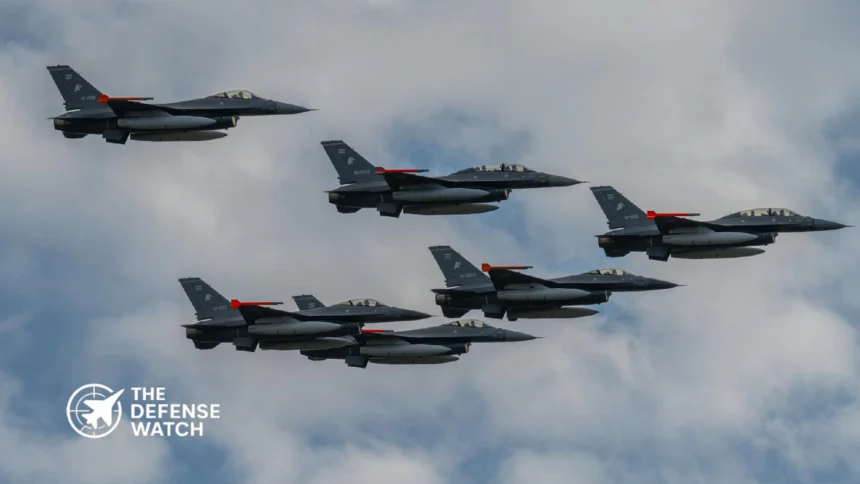
The arrival of F-16 Fighting Falcon fighters has given the Argentine Air Force an important opportunity to restore its supersonic combat aviation capability. Yet the country continues to face serious weaknesses in naval readiness, submarine operations, maintenance infrastructure and defense funding.
These limitations are becoming increasingly relevant as Buenos Aires renews its diplomatic campaign over the Falkland Islands, known in Argentina as the Malvinas, and seeks a stronger strategic position in the South Atlantic.
November 27 that Argentina’s military modernization ambitions remain constrained by decades of underinvestment, despite recent procurement agreements and renewed political attention to national defense.
A fighter fleet returning after years of decline
The F-16 acquisition is the most visible element of Argentina’s current military modernization effort.
In April 2024, Argentina signed an agreement with Denmark to acquire 24 F-16 Fighting Falcon aircraft, comprising 16 single-seat and eight two-seat aircraft, along with associated components and services.
The approved contract value was approximately $301.2 million, payable in five annual installments, according to Argentina’s Administrative Decision 252/2024.
The aircraft were previously operated by the Royal Danish Air Force. Their transfer provides Argentina with a modernized combat aircraft platform and an opportunity to restore capabilities that had deteriorated following the retirement of its Mirage fighter fleet in 2015.
The acquisition is important for several reasons:
- Restores a supersonic fighter and interception capability.
- Improves Argentina’s ability to monitor and protect national airspace.
- Introduces a modern Western combat aircraft into the Air Force.
- Provides a foundation for improved pilot and technical training.
- Creates opportunities for closer defense cooperation with the United States and other F-16 operators.
Argentina’s Ministry of Defense reported on September 30, 2026, that the second delivery of six aircraft brought the country’s received F-16 fleet to 12. The complete acquisition consists of 24 aircraft, with the remaining deliveries forming part of the longer-term integration program.
Nevertheless, receiving aircraft does not automatically establish full operational readiness. Pilot qualification, weapons integration, maintenance personnel, spare parts, technical support and sustainable operating budgets will determine how much combat capability the fleet can deliver.
The F-16 acquisition is therefore an important modernization milestone, but it cannot independently resolve Argentina’s wider military weaknesses.
The Navy remains the most serious capability concern
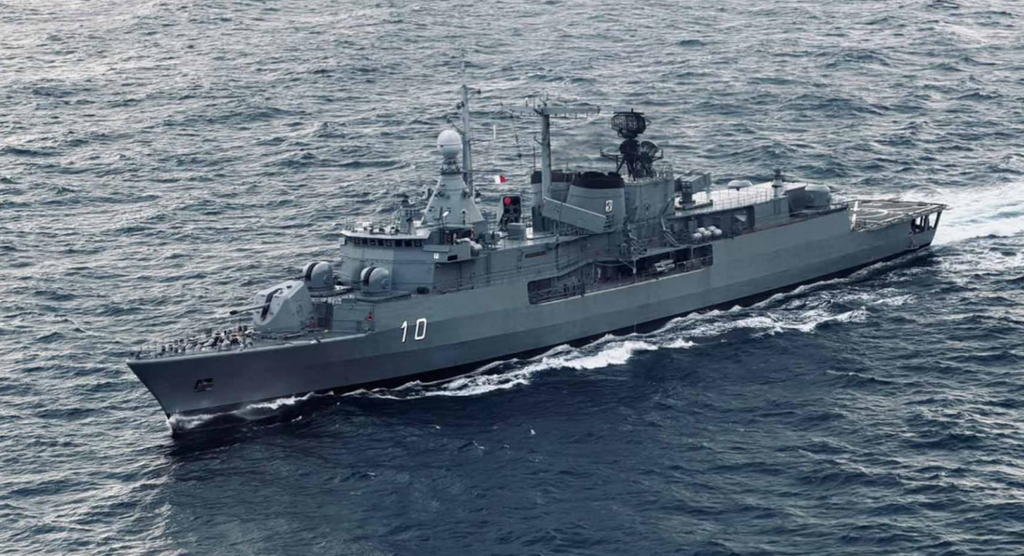
Argentina’s naval limitations present a particularly difficult challenge for a country with extensive Atlantic maritime interests.
The loss of the submarine ARA San Juan in November 2017 left the Argentine Navy without an operational submarine capability, according to information published by Argentina’s own Ministry of Defense in a parliamentary response. The submarine was lost with 44 crew members.
The Navy has continued maintaining submarine training and personnel qualifications, but its remaining submarine ARA Salta is not operational.
This creates a substantial gap in underwater surveillance and maritime defense.
Submarines can provide intelligence collection, covert surveillance, sea-denial capabilities and a potential deterrent against hostile naval activity. Without operational submarines, Argentina has fewer options for monitoring underwater activity across its maritime approaches.
Surface fleet readiness presents another concern.
Argentina’s aging destroyers continue to rely on outdated onboard computing technology, citing comments by the country’s senior military leadership. This illustrates the scale of the maintenance and modernization challenge facing the Navy.
The government has begun considering ways to improve its southern naval infrastructure. A tender for a dock at a planned naval base is intended to improve access to the country’s southern maritime areas and support operations connected with Antarctica.
However, infrastructure investment and the acquisition of modern ships are separate requirements. A new naval facility cannot compensate for a shortage of operational vessels, trained crews or sustainable maintenance funding.
Surveillance aircraft and ground forces expand the modernization effort
Argentina’s modernization program extends beyond fighter aircraft.
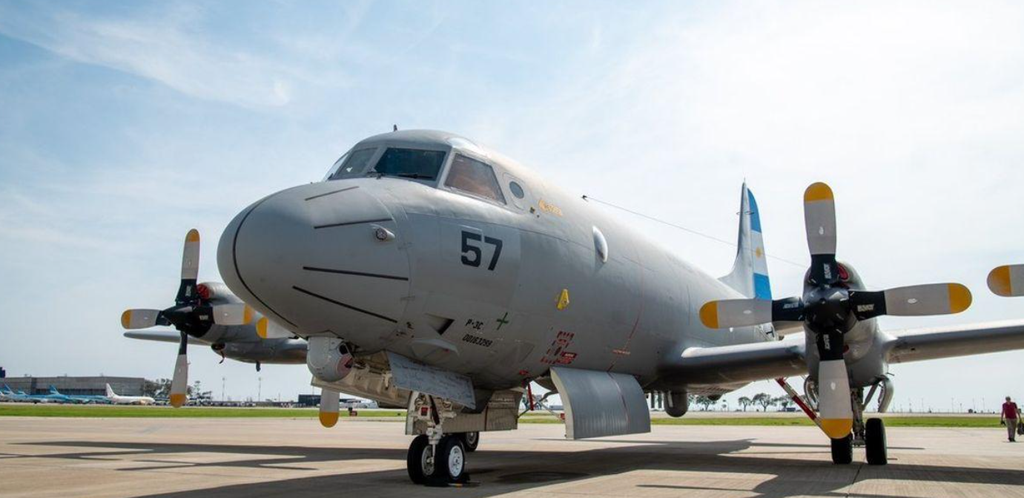
The Navy is receiving four P-3 Orion maritime patrol aircraft acquired from Norway. The aircraft are intended to improve long-range maritime surveillance and monitoring of Argentina’s extensive maritime areas.
Argentina’s Navy confirmed that the first aircraft arrived in September 2024. The P-3 platform was originally developed for maritime patrol and anti-submarine warfare, making it relevant to Argentina’s requirements for monitoring shipping activity, fishing operations and underwater threats.
The aircraft are particularly relevant because maritime surveillance does not depend exclusively on combat ships. Long-range patrol aircraft can cover large areas, identify suspicious activity and provide information to naval forces.
The government has also pursued improvements to its ground forces.
According to Reuters, the United States approved the sale of eight Stryker armored vehicles to Argentina, while the country is replacing older service rifles with Israeli-made weapons. Washington has also approved a potential Black Hawk helicopter acquisition.
These purchases could improve mobility, reconnaissance, troop transport and infantry equipment. However, their overall contribution will depend on how they are integrated into existing force structures and supported over their service lives.
Defense spending remains the central obstacle
The biggest constraint on Argentina’s military recovery is financial.
Argentina spent approximately 0.56% of its GDP on defense in 2025, the lowest proportion in South America. The figure reflects the consequences of prolonged underinvestment and economic difficulties that have affected military procurement and force readiness for decades.
Milei has attempted to change this situation by directing 10% of government proceeds from the sale or lease of non-military public assets toward defense spending.
The policy could provide additional funding for equipment purchases and military infrastructure. However, revenue from asset sales is not necessarily predictable or sufficient to support long-term military commitments.
Modern combat aircraft, naval vessels and surveillance systems require recurring expenditure. This includes:
- Aircraft maintenance and spare parts.
- Weapons procurement and replacement.
- Pilot and technical personnel training.
- Naval ship maintenance and modernization.
- Fuel, logistics and operational support.
- Military infrastructure and communications.
For Argentina, sustaining these capabilities may prove more difficult than securing the initial procurement agreements.
The F-16 program demonstrates this challenge. Its acquisition involves not only the aircraft but also training, technical support, infrastructure improvements and integration of additional equipment.
Without consistent funding, even relatively modern military platforms can experience declining availability.
The Falklands dispute and the regional military balance
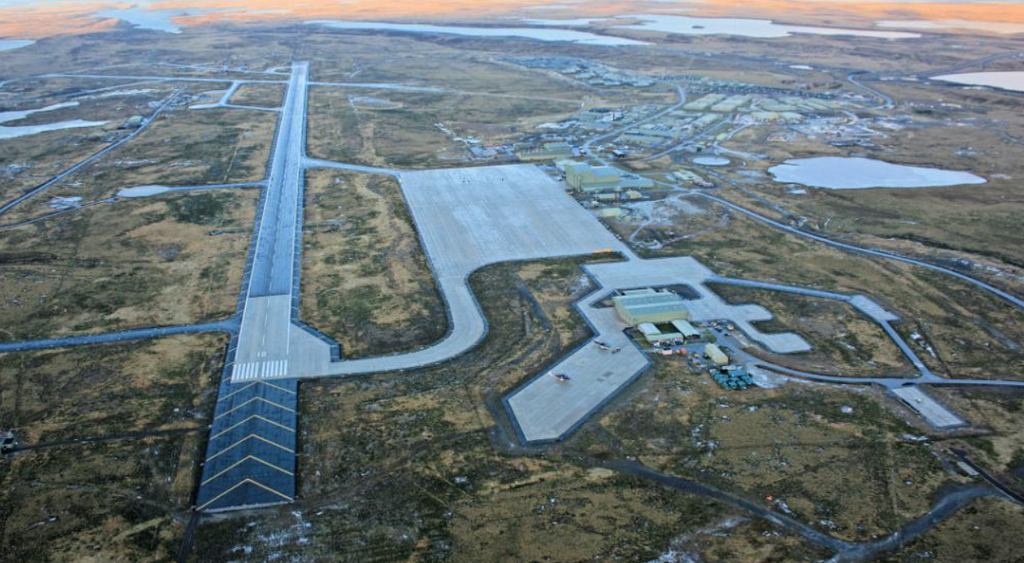
Argentina’s renewed focus on the South Atlantic also has a political and strategic dimension.
The Falkland Islands remain a longstanding sovereignty dispute between Argentina and the United Kingdom. Argentina maintains its territorial claim, while Britain administers the islands and maintains a military presence there.
Milei has emphasized recovering the islands through diplomatic means rather than military action. Nevertheless, his administration’s renewed attention to defense modernization has brought military capability back into discussions about Argentina’s regional position.
Britain has maintained that its military presence is sufficient to defend the islands. In a June 2026 statement to the Organization of American States, the UK reiterated that its South Atlantic forces serve a defensive purpose and that it regularly reviews the level of military presence required.
The F-16 acquisition changes Argentina’s air force capabilities, but it does not fundamentally alter the regional military balance.
The aircraft were not purchased specifically to retake the Falkland Islands, according to former Argentine defense official Juan Battaleme, quoted by Reuters.
There are also practical limitations. Argentina must establish a sustainable aircraft support system, complete pilot training and maintain sufficient weapons and operational readiness.
Dependence on foreign technical support and equipment supply chains adds another consideration. The United States plays an important role in the F-16 program, while Britain remains a close American defense partner.
This does not establish that Washington would automatically prevent Argentina from operating its aircraft in a particular scenario. However, the wider political and logistical relationships involved would influence any future crisis.
More importantly, Argentina currently lacks the naval and logistical capabilities required for sustained power projection across the South Atlantic.
What Argentina needs beyond new weapons
Argentina’s modernization challenge is not simply a question of buying additional aircraft or armored vehicles.
The country needs a coordinated rebuilding program that addresses several interconnected weaknesses.
| Capability area | Current position | Main requirement |
|---|---|---|
| Combat aviation | F-16 acquisition underway | Training, weapons integration and sustained availability |
| Maritime patrol | Four P-3 aircraft acquired | Full operational integration and maintenance |
| Submarine force | No operational submarine | Restoration of submarine capability |
| Surface fleet | Aging destroyers and other vessels | Fleet modernization and maintenance |
| Ground forces | Stryker and rifle acquisitions | Training, logistics and force integration |
| Naval infrastructure | Southern base development planned | Docking and maintenance capacity |
| Defense financing | Limited spending relative to requirements | Predictable long-term investment |
The most important consideration is the relationship between equipment and operational readiness.
A modern fighter fleet requires functioning airbases, trained personnel, weapons stocks and dependable maintenance. Similarly, maritime surveillance aircraft provide limited strategic value if the Navy lacks the vessels and infrastructure needed to respond to the information they collect.
Argentina also needs to consider the geographical scale of its responsibilities. Protecting its Atlantic maritime interests, monitoring fishing activity, supporting Antarctic operations and maintaining airspace security require different capabilities that must work together.
The modernization program will therefore need to balance investment across the Air Force, Army and Navy rather than concentrate resources on highly visible acquisitions.
A gradual recovery, not a restored regional power
Argentina’s military modernization under Milei has produced tangible results, particularly through the F-16 acquisition and the return of long-range maritime patrol aircraft to the Navy’s modernization plans.
However, these developments should not be confused with a comprehensive restoration of military power.
The country still faces significant gaps in naval readiness, submarine operations, maintenance infrastructure and defense financing. These weaknesses limit its ability to sustain operations across the South Atlantic.
The F-16 fleet gives Argentina a stronger foundation for airspace defense, while the P-3 Orion aircraft improve its ability to monitor maritime activity. Neither acquisition independently provides the ability to project sustained military power over long distances.
For Buenos Aires, the central test will be whether its government can maintain investment beyond individual procurement announcements and rebuild the institutions, personnel and infrastructure required to operate modern military equipment.
Until that happens, Argentina’s renewed South Atlantic ambitions will remain considerably larger than its available military capabilities.
Enjoying our coverage?
Make The Defense Watch a preferred source on Google to see more of our geopolitical and defense insights when relevant to you.