Somalia’s reported interest in acquiring Pakistan-China JF-17 Thunder fighter aircraft could become a major step in rebuilding its air force, but the experience of Iraq’s F-16 procurement program offers an important warning: acquiring modern combat aircraft is considerably easier than building the military institutions needed to operate them effectively.
The reported agreement also carries political implications beyond Somalia’s efforts to fight al-Shabaab. Authorities in Somaliland, the self-declared breakaway region that Mogadishu considers part of Somalia, have expressed concern about Turkey’s expanding military presence and the possibility that a stronger Somali air force could eventually change the regional security balance.
However, the reported JF-17 procurement remains unconfirmed by both governments. The number of aircraft, contract value, financing arrangements and delivery schedule have not been established through publicly available official documentation.
Somalia’s JF-17 procurement remains unconfirmed
Reports of a potential fighter acquisition gained attention following growing defense cooperation between Somalia and Pakistan.
On September 22, 2026, Somalia’s Ministry of Defence confirmed that Defense Minister Ahmed Moallim Fiqi received a Pakistani Air Force delegation led by Air Marshal Muhammad Sarfraz, Pakistan’s air defense commander and deputy chief of the air staff.
According to the Somali ministry, discussions focused on rebuilding the Somali Air Force, improving military training and developing officers’ professional capabilities.
The visit followed Fiqi’s August 4 trip to Pakistan, during which the two governments signed a memorandum of understanding on defense and security cooperation. Neither announcement identified a finalized JF-17 purchase.
The reported aircraft agreement emerged separately through Turkish media reporting in October. Earlier reports suggested Somalia could seek as many as 24 JF-17 Block III fighters in a package estimated at approximately $900 million.
Those figures remain unverified. The available official statements do not establish that Somalia has signed a binding aircraft procurement contract.
The distinction is important because defense cooperation agreements, preliminary negotiations and finalized aircraft contracts represent different stages of procurement.
If Somalia eventually acquires the JF-17, it would regain a fixed-wing combat capability that has been absent since the collapse of its former air force during the civil war in 1991.
Why Iraq’s F-16 program is a relevant comparison

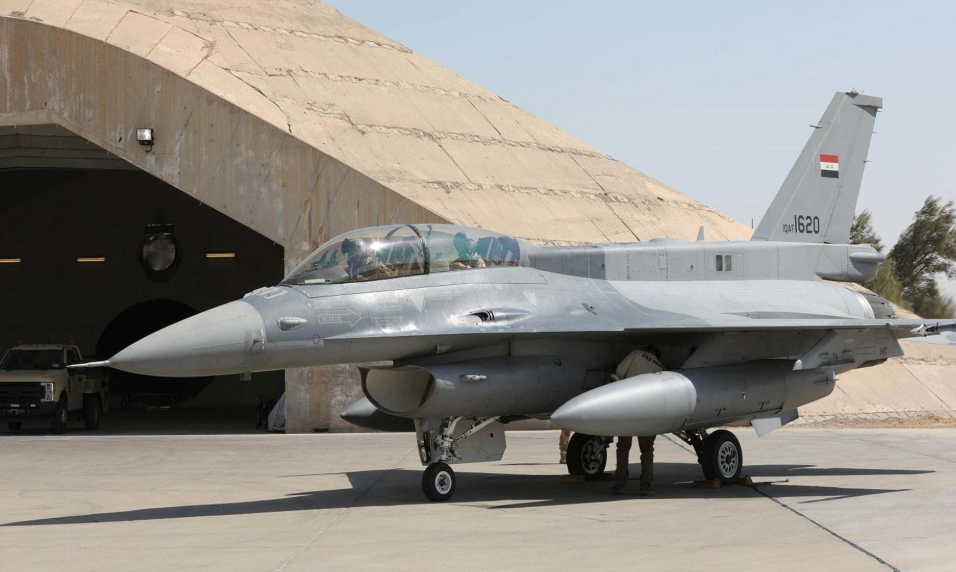
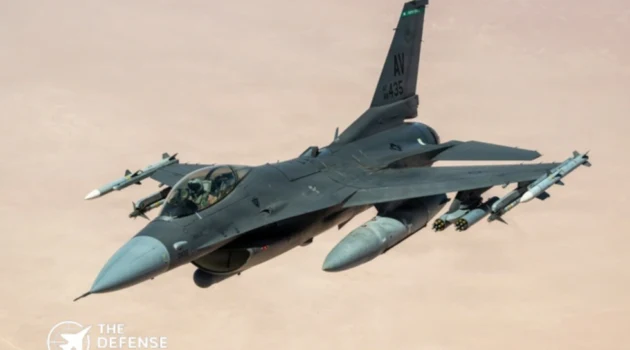
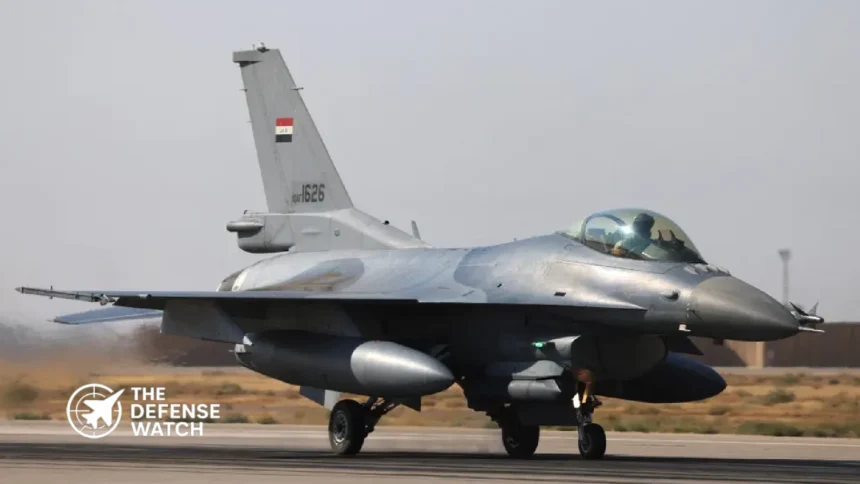
An F-16 jet at Balad Air Base in 2018. File photo: AFP Iraq’s acquisition of American F-16 Fighting Falcons provides a useful comparison because Baghdad also sought to rebuild its combat aviation capabilities following the destruction and disruption of its military infrastructure.
In December 2011, the U.S. Defense Security Cooperation Agency notified Congress of a possible sale of 18 F-16IQ aircraft and associated equipment to Iraq, with an estimated package value of $2.3 billion.
The proposed package included weapons, engines, radar equipment, training, spare parts and logistical support. Iraq subsequently expanded its planned fleet to 36 aircraft through additional procurement.
The program demonstrated that a modern fighter acquisition involves considerably more than the aircraft themselves.
Iraq needed trained pilots, maintenance personnel, weapons integration, secure facilities, technical support and a dependable supply of spare parts.
The security situation also complicated implementation.
In November 2014, the Pentagon announced that the initial aircraft would be sent to Tucson, Arizona, rather than Balad Air Base in Iraq because the deteriorating security environment prevented the original delivery and training arrangements from proceeding as planned.
Iraqi pilots subsequently trained with the Arizona Air National Guard’s 162nd Wing.
The first four aircraft reached Iraq in July 2015. The Pentagon announced in September that year that the Iraqi Air Force had begun using its F-16s in counter-Islamic State operations.
The experience illustrates an important procurement lesson for Somalia: aircraft deliveries do not automatically translate into immediate operational capability.
A fighter fleet requires a sustained support system, including trained crews, maintenance infrastructure, mission planning, weapons availability and long-term funding.
The political concern extends beyond the battlefield
The possible acquisition also raises questions about relations between Mogadishu and Hargeisa.
Somaliland declared independence from Somalia in 1991 and has maintained its own administration and security institutions, although it lacks broad international recognition.
The region’s leadership has historically viewed developments in Somalia’s military capabilities through the lens of its own security and political status.
In October 2026, Mohamed Osman Fadal, a senior foreign affairs adviser to Somaliland’s president, told Middle East Eye that Hargeisa wanted air-defense systems in response to Turkey’s growing military presence in Somalia.
His comments specifically referred to Turkish fighter aircraft and the possibility of an expanded drone presence.
The Turkish aircraft presence is independently documented. Janes reported that three Turkish F-16s participated in a flypast over Mogadishu on April 12, 2026, during celebrations marking the Somali National Armed Forces’ anniversary.
Turkey’s Ministry of National Defence also acknowledged the participation of military aircraft in the event.
This means the regional airpower debate is not entirely dependent on the reported Pakistani procurement.
Turkey already has a military aviation presence in Somalia, while the possible introduction of Somali-operated JF-17s would represent a separate development.
Nevertheless, the comparison with Iraq requires caution.
In 2012, Iraqi Kurdish leader Masoud Barzani expressed concern that Baghdad could use its newly acquired F-16s to threaten the autonomous Kurdish region.
Those concerns reflected longstanding political tensions between Baghdad and the Kurdistan Regional Government.
Iraq ultimately received its aircraft, but the F-16s were not used in a campaign against Iraqi Kurdish forces.
The historical example therefore demonstrates how military acquisitions can generate political anxiety even when the feared military scenario never materializes.
It does not establish that Somalia would use future fighter aircraft against Somaliland.
JF-17s would not automatically solve Somalia’s security problems

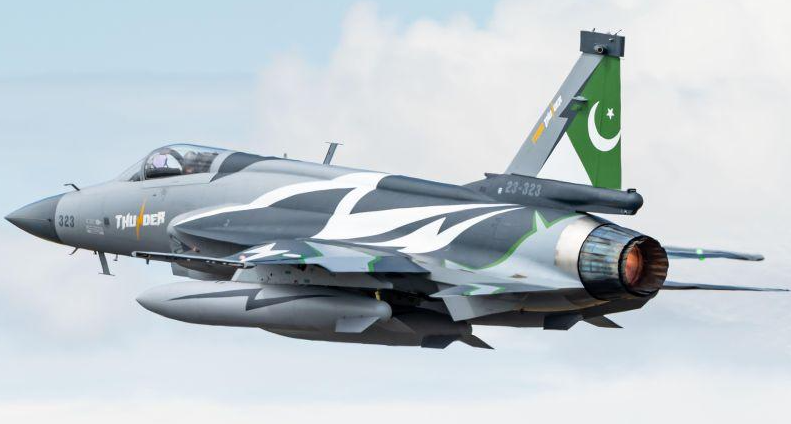
JF-17 Thunder: The multi-role jet that won’t break the bank The operational suitability of the JF-17 is another important question.
The JF-17 Thunder is a multirole combat aircraft jointly developed by Pakistan and China. Its intended missions include air defense and air-to-ground operations.
The Block III configuration incorporates an active electronically scanned array radar and upgraded avionics, giving it capabilities suited to more demanding conventional air operations.
For Somalia, such aircraft could eventually provide an independent fast-jet capability, support airspace protection and reduce reliance on foreign combat aviation for certain missions.
However, the country’s continuing fight against al-Shabaab presents a different set of operational requirements.
Al-Shabaab primarily operates as an insurgent organization, relying on dispersed fighters, small units, improvised explosive devices and attacks against military and civilian targets.
Fighter aircraft can provide air-to-ground strike capabilities, but they are not necessarily the most economical or effective platform for persistent surveillance and routine counterinsurgency missions.
Uncrewed aircraft, intelligence and surveillance systems, helicopters and light attack aircraft can offer different operational advantages, depending on mission requirements.
The question is therefore not simply whether Somalia can acquire a modern fighter, but whether the aircraft would address its most pressing military requirements.
A JF-17 fleet would also introduce significant recurring expenses. Fuel, maintenance, pilot training, weapons stocks, infrastructure and technical support would all require long-term financial commitments.
The reported $900 million figure, if eventually confirmed, should not be treated as the complete lifetime cost of operating the aircraft.
Public information currently does not establish the proposed procurement’s support package or financing structure.
Somalia’s defense modernization faces an institutional test
There is also a broader issue concerning the development of Somalia’s military institutions.
The United Nations Security Council lifted the general arms embargo on the Federal Government of Somalia through Resolution 2714, adopted on December 1, 2023.
A separate resolution, 2713, imposed an arms embargo on al-Shabaab while providing for the federal government’s security institutions to acquire military equipment under the applicable arrangements.
This change expanded Mogadishu’s ability to pursue military modernization through international partnerships.
However, access to military equipment does not eliminate the institutional challenges involved in building a sustainable air force.
The September 2026 meetings with Pakistani officials are particularly relevant in this regard. Somalia’s own Ministry of Defence described rebuilding the air force and improving professional training as central priorities.
These objectives suggest that capability development remains an important part of the bilateral relationship, regardless of whether a fighter contract has been finalized.
For Pakistan, cooperation with Somalia could also create a new defense relationship in the Horn of Africa. The JF-17 has become an important export offering for the Pakistani defense industry, jointly supported by China’s role in the aircraft’s development and production.
But the success of any potential sale would depend on more than the aircraft’s purchase price.
Somalia would need to establish the infrastructure, personnel and financial arrangements required to keep the fleet operational over many years.
Iraq’s experience provides a clear example of how security conditions, training requirements and support arrangements can affect the transition from procurement to operational service.
For Mogadishu, the central question is whether a potential JF-17 acquisition would form part of a wider, funded air-force development program or remain an expensive addition to a military establishment still rebuilding its basic capabilities.
Until the governments of Somalia and Pakistan publish a confirmed contract and its associated details, the reported fighter purchase should be treated as a prospective development rather than an established procurement.