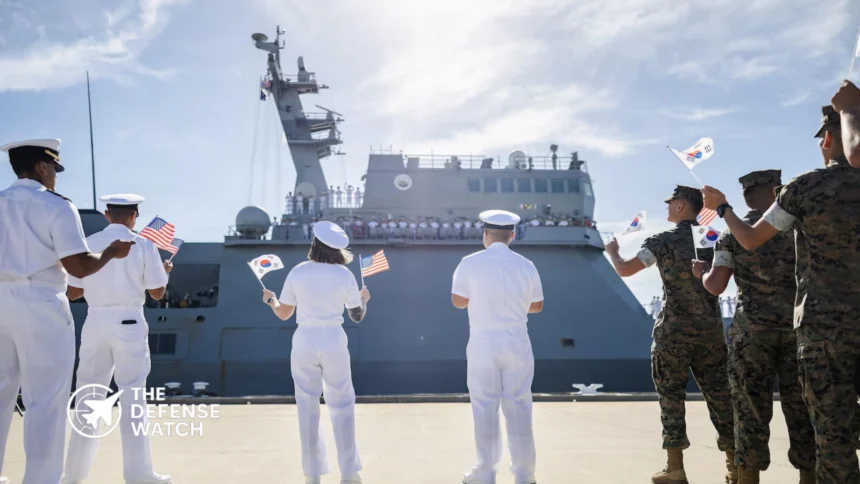
U.S. Navy Strengthens Naval Training Partnership With South Korea
The U.S. Navy is strengthening its naval education and training relationship with South Korea through a series of leadership engagements, professional exchanges and visits involving future naval officers.
Rear Adm. Greg Huffman, commander of the U.S. Naval Education and Training Command (NETC), met senior Republic of Korea Navy (ROKN) representatives on October 27, 2026, during the first port visit of the South Korean training ship ROKS Hansando (ATH-81) to Naval Air Station Pensacola, Florida.
The engagement focused on cooperation in naval education, professional development and preparing sailors for operational responsibilities. It also continued a series of exchanges between the two countries’ naval training organizations aimed at maintaining personnel readiness and improving institutional cooperation.
OKS Hansando Visit Brings Naval Training Leaders Together
During the October 27 engagement, Huffman held meetings with Vice Adm. Kyu-Paek Park, superintendent of the Republic of Korea Naval Academy, and Rear Adm. Joon Yup Kim, commander of the 2026 Republic of Korea Navy Cruise Task Training Group.
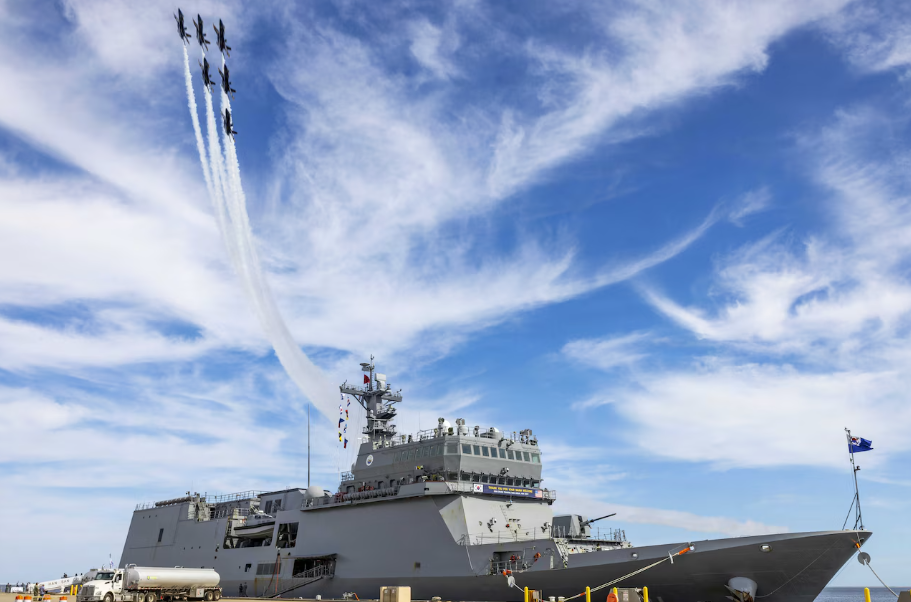
Huffman also joined South Korean naval officers, crew members and embarked midshipmen aboard Hansando for a reception.
The ship’s arrival was part of a training deployment involving South Korean naval personnel and academy cadets. Its four-day visit to Pensacola provided opportunities for interaction with U.S. Navy personnel and exposure to American naval facilities.
According to South Korean news agency Yonhap, the visit included activities intended to give cadets practical experience and encourage exchanges between the two navies.
The schedule also included a visit to the National Naval Aviation Museum and a wreath-laying ceremony at Pensacola’s Korean War Memorial.
For South Korean naval cadets, these engagements provide exposure to the professional environment of an allied navy beyond their domestic training institutions.
A Partnership Built Through Repeated Training Exchanges
The Pensacola visit was not an isolated diplomatic engagement. It followed several years of cooperation between the U.S. Naval Education and Training Command and its South Korean counterpart.
In September 2025, Vice Adm. Jeong Ho Kang, commander of the Republic of Korea Navy Naval Education and Training Command, visited NETC headquarters in Pensacola.
The visit included briefings on U.S. Navy training initiatives and tours of several training organizations, including:
- Center for Information Warfare Training
- Naval Aviation Schools Command
- Naval Air Technical Training Center
The discussions covered professional military education, force development and opportunities to expand cooperation between the two naval training establishments.
The relationship continued in September 2026, when Huffman and NETC Force Master Chief Ben Hodges visited South Korea.
During the September 7-12 trip, the American delegation met Vice Adm. Kang at the ROK Navy’s naval education headquarters in Jinhae. Discussions addressed professional military education, training methodologies, force development and future cooperation.
The September engagement provided a direct institutional link between the two commands ahead of the subsequent Pensacola visit.
Why Naval Education Cooperation Matters
The military relationship between Washington and Seoul depends on more than combined exercises and operational coordination. It also requires personnel who understand each other’s procedures, communications practices and professional standards.
Naval education organizations contribute to this process by preparing sailors and officers for increasingly complex operational responsibilities.
For the U.S. Navy, NETC oversees a broad training and education system designed to recruit, train and develop personnel throughout their careers. Its South Korean counterpart performs a comparable function within the Republic of Korea Navy.
Cooperation between the organizations can support several areas:
Professional military education: Exchanges allow officers and instructors to compare approaches to leadership, naval doctrine and career development.
Personnel readiness: Shared training practices can improve the preparation of sailors who may later operate alongside allied forces.
Institutional cooperation: Regular contact between training commands helps maintain relationships beyond individual deployments or military exercises.
Interoperability: Familiarity with allied procedures and professional practices can support more effective cooperation during combined operations.
These benefits are particularly relevant to the Indo-Pacific, where the United States and South Korea maintain a longstanding defense alliance and regularly conduct combined military activities.
However, professional education exchanges should not be confused with operational integration. The Pensacola engagement did not announce a new combined training program, changes to military command arrangements or a specific new operational agreement.
South Korean Navy Training and the Indo-Pacific Alliance
The ROK Navy has expanded its role in regional maritime security as South Korea continues to develop its naval capabilities and maintain its alliance with the United States.
Its training system must prepare personnel for a range of responsibilities, including surface warfare, submarine operations, maritime security and combined activities with allied forces.
The ROKS Hansando deployment offers one avenue for developing future officers through practical experience and international exposure.
The ship’s presence in Pensacola also carried historical significance. Its first port call at the U.S. naval installation coincided with the base’s 200th anniversary in 2026 and the 250th anniversary of American independence.
During the October 28 activities, South Korean sailors visited Veterans Memorial Park and laid a wreath at the Korean War Memorial. Rear Adm. Kim also presented a commemorative coin to representatives of the park’s foundation.
The ceremony connected the current naval relationship with the history of the U.S.-South Korea alliance, which developed following the Korean War.
Training Cooperation Remains a Long-Term Investment
One of the most important aspects of the latest engagement is its continuity. The 2025 visit by South Korean naval education leadership, the September 2026 meetings in Jinhae and the October Pensacola reception demonstrate repeated contact between the two organizations.
That continuity matters because military readiness is built through sustained personnel development rather than exercises alone.
For both navies, the challenge is to ensure that sailors and future officers can operate effectively in demanding maritime environments while understanding the procedures and expectations of allied forces.
The latest visit provides another opportunity to strengthen those relationships. However, neither a new training agreement nor measurable changes to the two navies’ training systems were announced in the available reporting.
The longer-term value will depend on whether the exchanges lead to continued educational cooperation, practical training opportunities and stronger professional relationships between the U.S. and South Korean naval forces.