P-800 Oniks Missile: Range, Speed and How It Compares to BrahMos
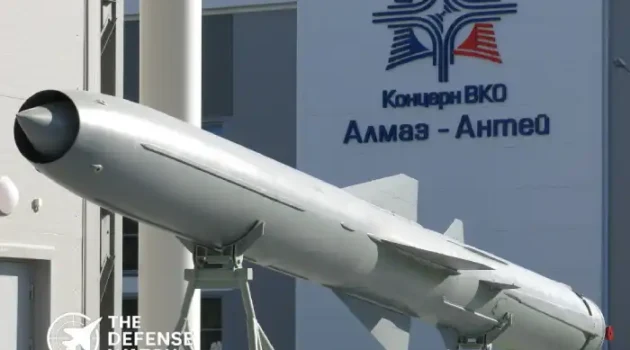
The Russian P-800 Oniks is a supersonic cruise missile designed primarily to attack surface ships, with additional land-attack applications. Its combination of high speed, sea-skimming flight options and deployment from naval vessels or mobile coastal defense systems makes it a significant part of Russia’s maritime strike capability.
The missile is also important because it provided a technological foundation for the Indian-Russian BrahMos program. Although the two weapons share design heritage and propulsion concepts, they are not identical systems, and their published specifications should not be treated as interchangeable. The U.S. Army’s OE Data Integration Network identifies the export-oriented Yakhont as a version of the Oniks and BrahMos as a jointly developed missile based on the Russian design.
How far can the P-800 Oniks missile travel?
The commonly cited range for the standard P-800 Oniks is approximately 300 kilometers, although the achievable distance depends on the flight profile and missile variant. The export Yakhont is associated with a shorter low-altitude engagement range in publicly available technical assessments.

The Center for Strategic and International Studies’ Missile Threat project lists a range of about 300 kilometers for a standard trajectory and approximately 120 kilometers for a low-altitude trajectory. These figures illustrate the trade-off between flying at higher altitude for greater reach and remaining closer to the sea surface for the terminal approach.
Speed, propulsion and flight profile

These figures should not be interpreted as a universal maximum for every Oniks configuration. Russia has also been associated with an upgraded designation, Oniks-M, for which reports have claimed a range of up to 800 kilometers. However, that figure should be distinguished from the established baseline commonly cited for the original missile. Publicly available evidence does not justify applying the 800-kilometer figure to every operational Oniks or treating it as independently verified performance for all variants.
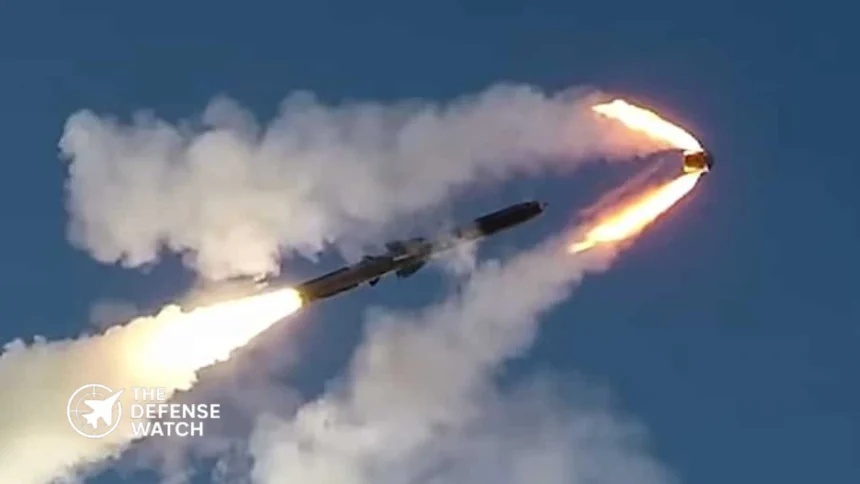
The Oniks uses a solid-propellant booster to accelerate the missile after launch. Once the booster has completed its job, a liquid-fueled ramjet sustains powered flight. This propulsion arrangement allows the missile to maintain supersonic speeds over much of its flight.
CSIS lists a maximum speed of approximately 750 meters per second, equivalent to roughly Mach 2.2 under the relevant flight conditions. It also describes a lower-altitude terminal approach, with the missile descending to around 10 to 15 meters above the surface. Actual speed varies with altitude and atmospheric conditions, so Mach numbers should be understood as approximate rather than fixed values throughout the flight.
The missile’s flight profile presents a different problem for a defender than a slower cruise missile would. High speed reduces the time available for detection, tracking, decision-making and engagement after the missile is identified. A low-altitude approach can also limit radar visibility because the curvature of the Earth and the radar horizon constrain detection of objects close to the sea.
Neither characteristic makes the Oniks impossible to intercept. Detection depends on sensor placement, the surrounding environment and the missile’s approach, while interception depends on the defending ship’s radar, combat system, available weapons and engagement conditions.
What is the P-800 Oniks designed to do?
The Oniks was developed primarily as an anti-ship weapon. It can be launched from naval platforms and from coastal defense systems, including the Bastion-P mobile coastal missile system.
The coastal configuration gives a force a means of threatening ships without relying exclusively on missile-armed surface combatants. Mobile launch vehicles can be repositioned, although their effectiveness still depends on targeting information, communications, support equipment and the ability to identify and engage the intended target.
The missile’s role is not limited to attacking ships. Russian forces have also used the Oniks family in land-attack missions. That application broadens its operational utility, but it does not mean every variant has identical guidance arrangements, target-selection capabilities or performance against land targets.
The weapon’s effectiveness therefore depends on more than its published range and speed. A coastal battery must receive sufficiently accurate information about the target, while a ship-launched weapon depends on the platform’s sensors and the wider surveillance network. A missile’s nominal reach is not the same as the distance at which a force can reliably find, identify and engage a moving ship.
Oniks vs. BrahMos: What are the main differences?
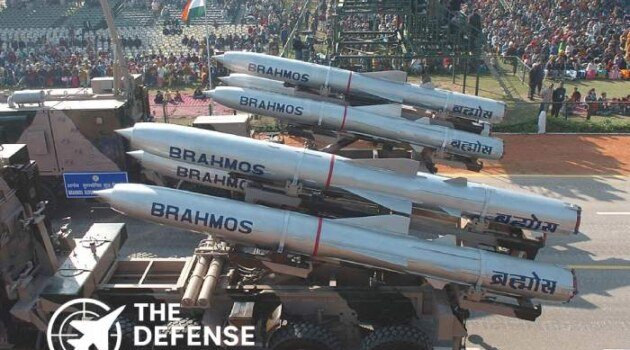
The BrahMos is the closest major comparison because it emerged from Russian-Indian cooperation using technology derived from the Oniks and its export counterpart, the Yakhont. India’s Defence Research and Development Organisation identifies BrahMos as a jointly developed system involving DRDO and Russia’s NPO Mashinostroyeniya.
Published specifications vary by variant and launch platform. Figures below describe commonly cited configurations, not every version of either missile.
Attribute P-800 Oniks BrahMos Origin Russia India and Russia Primary role Anti-ship, with land-attack applications Anti-ship and land attack Commonly cited speed Up to about Mach 2.2 Around Mach 2.8 Commonly cited range About 300 km for the baseline profile 290 km for the original export-limited configuration Propulsion Solid booster and liquid-fueled ramjet Solid booster and liquid-fueled ramjet Launch options Naval and coastal defense systems, with variants for other platforms Land, ship and air launch configurations, with platform-specific development Main distinction Russian-designed missile family Jointly developed family with Indian-specific configurations and integration Sources: CSIS Missile Threat, the U.S. Army’s OE Data Integration Network, BrahMos Aerospace and India’s DRDO.
Why BrahMos has a separate identity
BrahMos is not simply an Oniks missile with a different name. The program involves its own development, manufacturing and integration work, including adaptations for Indian aircraft, ships and land-based launchers.
BrahMos Aerospace publicly lists a speed approaching Mach 2.8 and a range of up to 290 kilometers for the configuration described on its missile page. CSIS, meanwhile, identifies longer range figures for some BrahMos variants, illustrating why specifications must be tied to a particular version rather than applied to the entire family.
The comparison also has an important historical dimension. The original BrahMos range was shaped by export restrictions associated with the Missile Technology Control Regime. India’s DRDO documented the subsequent effort to develop the extended-range BrahMos configuration after India joined the regime in 2016. That history helps explain why the original 290-kilometer figure should not be used as a permanent limit for all BrahMos versions.
Which missile has the advantage?
There is no sound basis for declaring one missile universally superior from speed and range figures alone.
BrahMos has a publicly advertised maximum speed higher than the commonly cited figure for the baseline Oniks. Oniks, however, belongs to a broader Russian missile family with different configurations and a long-standing role in coastal defense and naval strike operations.
Operational effectiveness also depends on target detection, guidance, electronic countermeasures, launch-platform integration, reliability and the defensive systems protecting the target. Public sources do not provide a controlled, like-for-like assessment that establishes an overall winner across these factors.
For military planners, the more useful comparison is between complete weapon systems, including their sensors, launch platforms, command networks and support infrastructure.
Why the Oniks matters in maritime defense
The Oniks illustrates the continuing importance of supersonic anti-ship missiles in naval planning. Its speed and low-altitude terminal approach can compress a defending ship’s reaction time, particularly when the missile is detected late or approaches from a direction with limited radar coverage.
For coastal forces, a mobile launch system can complicate an adversary’s planning by extending the threat beyond the immediate vicinity of a naval base. However, a coastal missile battery is only as effective as its ability to locate targets, receive usable targeting data and operate under surveillance or attack.
For ships at sea, the response requires a layered defense. Long-range surveillance, airborne sensors, electronic warfare, decoys and shipboard interceptors may all contribute, depending on the circumstances. No single defensive measure guarantees protection, and no published missile specification alone determines the outcome of an engagement.
The Oniks also has implications beyond Russia. Its export counterpart, Yakhont, has contributed to the spread of supersonic anti-ship capability, while the related BrahMos program demonstrates how shared technology can lead to a distinct national weapons system. Those developments make the missile relevant to assessments of maritime security across regions where coastal defense, sea control and access to major shipping routes are central concerns.
The key distinction is between a missile’s technical performance and the operational system built around it. The Oniks is a fast, capable anti-ship weapon, but its practical reach and effectiveness depend on the particular variant, flight profile, launch platform and quality of targeting information available to the operator.