The Pentagon has authorized the Department of Homeland Security (DHS) to test a military directed-energy weapon for potential use along the U.S. southern border, opening a new phase in a long-running debate over whether the technology is appropriate for civilian immigration enforcement.
Defense Secretary Pete Hegseth signed a memorandum last month approving a seven-month loan of the Active Denial System (ADS), according to CNN reporting published October 21, 2026. The authorization allows DHS to evaluate the system and develop operating procedures for possible border operations. It does not establish that the weapon has been deployed against migrants or that operational use has been approved.
The decision places a military crowd-control technology under the control of a department responsible for civilian border enforcement. It also revives questions about the system’s practical effectiveness, injury risks and the legal safeguards required when authorities use directed energy to make people experience intense pain.
How the Active Denial System works
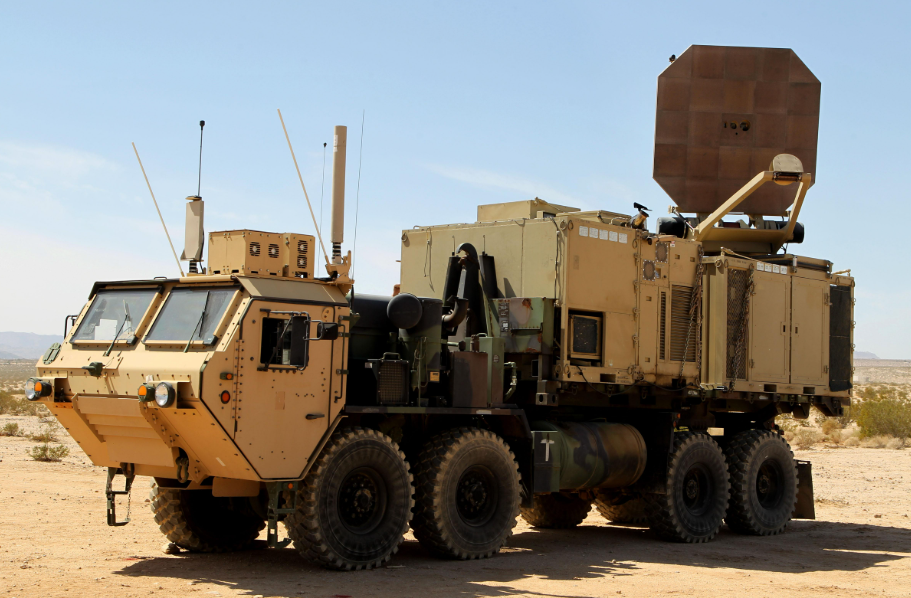
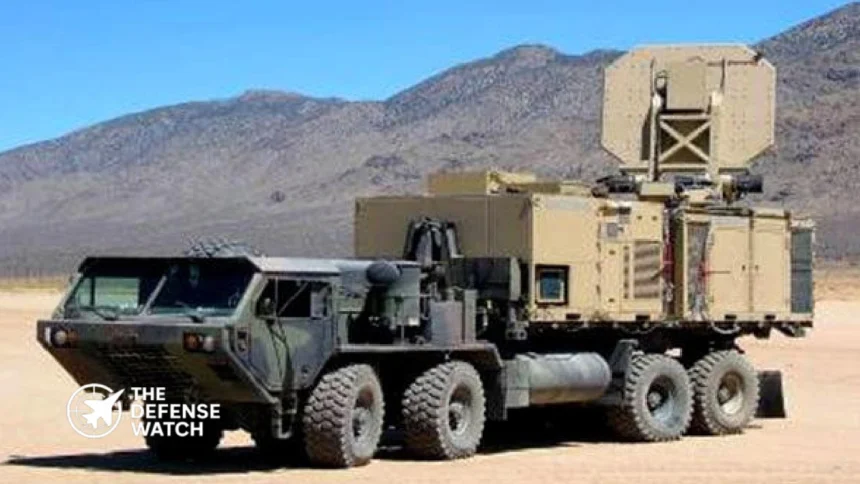
The Active Denial System is designed to discourage people from approaching or remaining in a designated area without relying on conventional projectiles. Instead of firing bullets or dispersing chemical agents, it directs a focused beam of electromagnetic energy toward exposed skin.
The system operates at approximately 95 gigahertz, within the millimeter-wave portion of the electromagnetic spectrum. The energy is absorbed primarily in the skin’s superficial layers, producing a rapidly increasing sensation of heat that is intended to make the person move away from the beam.
Military descriptions compare the effect to suddenly encountering intense heat from an oven. The discomfort can prompt an immediate withdrawal response, while the intended effect subsides after the person leaves the beam.
CNN reported that the system can reach a little more than half a mile under suitable conditions and that the sensation generally lasts around 10 to 15 minutes. Those figures describe the system’s reported capabilities and effects, not a guarantee of performance in every environment.
The ADS is therefore different from a conventional microwave oven, which heats food throughout a container. Its directed beam is designed to produce a localized surface-heating effect on a person exposed to it.
Although the system is described as nonlethal, that designation does not mean it is incapable of causing injury. Its intended effect depends on creating significant discomfort, making exposure conditions, operator judgment and the ability to leave the affected area important safety considerations.
What the Pentagon’s authorization allows
The seven-month arrangement gives DHS responsibility for deciding how the system will be evaluated and for developing its own tactics, techniques and procedures, according to the CNN report.
The distinction between testing and operational deployment is important. The authorization gives DHS an opportunity to assess the weapon for border-related missions, but publicly available reporting does not establish where the system will be tested, which personnel will operate it, or whether it will ultimately be used against people attempting to cross the border.
The arrangement also leaves open the possibility of a further request. CNN reported that DHS could seek an extension after the initial loan period, depending on its assessment of operational needs.
U.S. Customs and Border Protection (CBP) told CNN that the agency continually evaluates technologies intended to improve operational effectiveness and strengthen its mission capabilities. The Pentagon referred CNN’s questions to DHS.
Neither statement, as reported, confirms that CBP has adopted the ADS as an operational border-control tool.
Why the system was not used in Afghanistan
The ADS was developed for military crowd management and force protection, particularly situations in which troops need to create distance without immediately resorting to conventional weapons.
The U.S. military transported a vehicle-mounted version to Afghanistan in 2010, but it was not used in combat, according to reporting on the system’s history. Earlier proposals to use the technology in other security settings also failed to result in operational deployment.
That history matters because a weapon’s ability to produce a predictable physical effect under controlled conditions does not automatically make it suitable for field operations.
The system’s effectiveness can be affected by environmental conditions, including precipitation, while clothing and the circumstances of exposure can influence the effect on a person. These limitations complicate its use in settings where personnel must respond quickly to changing crowd behavior.
Border enforcement presents additional challenges. Officers may encounter groups of different sizes, people moving through uneven terrain, and individuals who are close to roads, waterways or other hazards. A technology intended to make people move away from a particular location could create secondary risks if people retreat into dangerous surroundings.
The available reporting does not establish that DHS has resolved these concerns through its new evaluation.
The safety question behind the nonlethal label
The central safety issue is not simply whether the ADS can cause lasting injury under ordinary operating conditions. It is whether its effects can be controlled reliably when used against people in unpredictable circumstances.
The intended response is intense but temporary discomfort. However, a person who cannot move away promptly, receives excessive exposure or encounters other adverse conditions may face a different risk profile.
Claims that the system causes no lasting harm should therefore be treated cautiously. The reported authorization does not itself provide new clinical evidence, a complete safety assessment or details of the safeguards DHS intends to apply.
The circumstances of a border encounter also matter. If a person exposed to the beam is near a river, on steep terrain or in a crowded group, an abrupt attempt to escape the discomfort could create a risk of falls, separation or additional rescue requirements.
A meaningful assessment would need to consider not only direct injury but also foreseeable consequences of the movement the weapon is designed to induce.
There is also a distinction between technical safety and legal authorization. Even if a device is designed to avoid permanent injury, its use must still be assessed against applicable rules governing force, necessity, proportionality and the treatment of people under government control.
The ADS’s intended purpose does not settle those questions.
Why the border mission differs from a military operation
The proposed use of the ADS raises a question that extends beyond its technical performance: whether a weapon developed for military crowd control offers a clear advantage in civilian border enforcement.
Border Patrol personnel already have conventional tools and procedures for managing crossings, controlling access to restricted areas and responding to security incidents. The case for introducing a directed-energy weapon would depend on demonstrating that it addresses a specific operational problem that existing measures cannot adequately handle.
The technology could, in principle, allow officers to influence movement from a distance without using conventional projectiles. But that potential advantage must be weighed against the system’s logistical requirements, environmental limitations, training demands and the risks associated with causing people to flee.
Its practical value would also depend on the situations in which DHS intends to use it. A device intended to disperse a crowd in an open area may be less suitable where people have limited escape routes or where rapid movement could endanger others.
CNN reported that the use of the ADS had been considered during President Donald Trump’s first administration in 2018 but was not pursued. A former DHS official cited concerns about treating migrants and U.S. citizens as enemy combatants, while questions about the weapon’s necessity have also persisted within border enforcement circles.
That history suggests that the current authorization is not simply a technical decision. It reopens an unresolved policy question about the circumstances in which military-developed force technologies should be used by civilian law enforcement.
What the seven-month evaluation needs to establish
For the ADS to move beyond testing, DHS would need to determine whether its potential benefits justify the risks and costs of introducing it into border operations.
Several issues will be central to that assessment:
- Operational effectiveness: Whether the system can achieve a defined enforcement objective under realistic border conditions.
- Environmental limitations: How weather, terrain, clothing and visibility affect its performance.
- Safety procedures: How operators will limit exposure, identify vulnerable individuals and respond to injuries or unexpected reactions.
- Use-of-force rules: What circumstances would justify activation and what restrictions would govern its use.
- Training and accountability: Which personnel would operate the system, how incidents would be documented and how compliance would be assessed.
These are assessment criteria, not confirmed elements of the DHS testing plan. The publicly reported authorization does not disclose a complete test protocol or establish that the department has adopted specific safeguards.
The seven-month loan provides a defined period for evaluation, but it does not guarantee that the system will enter regular service. DHS could seek further authorization, continue testing or decide that the weapon is unsuitable for the intended mission.
For now, the most important distinction is between permission to test a capability and a decision to use it against people during border enforcement.