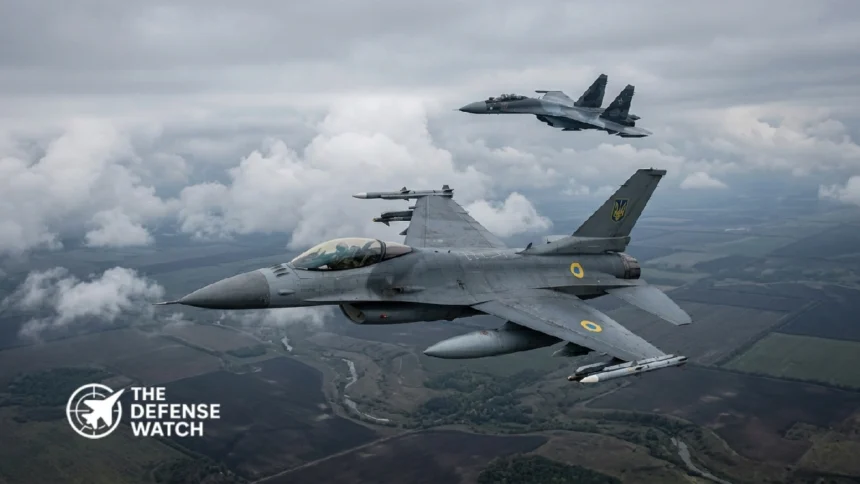
The F-16 Fighting Falcon and the Su-35S Flanker-E represent two different approaches to modern fighter aviation. Ukraine operates Western-supplied F-16s to strengthen its air defense and combat aviation capabilities, while Russia uses the Su-35S as a multirole fighter with a strong air-superiority mission.
- What Are the F-16 and Su-35?
- How Does an F-16 vs. Su-35 Air Battle Work?
- 1. Detection and situational awareness
- 2. Weapon selection and missile employment
- 3. Defensive maneuvering and electronic warfare
- 4. The role of other air defense systems
- Why Does the Reported Engagement Matter?
- It demonstrates the potential role of Western fighters in Ukraine
- It highlights the importance of the wider combat network
- It carries implications for Russia’s air operations
- It reinforces Ukraine’s need for sustained support
- F-16 vs. Su-35: Key Differences
- Frequently Asked Questions
- Can a Ukrainian F-16 shoot down a Russian Su-35?
- Is the Su-35 more powerful than the F-16?
- Which missile was used in the reported engagement?
- Does the reported shootdown mean Ukraine has achieved air superiority?
- Conclusion
A reported engagement in July 2026 brought these aircraft into focus after Ukraine announced the loss of a Russian Su-35 and U.S. Joint Chiefs Chairman Gen. Dan Caine subsequently confirmed that a Ukrainian F-16 had shot down a Russian fighter in air-to-air combat. Public reporting linked the two accounts, although the exact weapon and sequence of events have not been conclusively established.
Understanding the encounter requires looking at three questions: what the aircraft are, how an air-to-air engagement can unfold, and why the outcome matters for the war in Ukraine.
What Are the F-16 and Su-35?
F-16 Fighting Falcon
The F-16 is a single-engine multirole fighter developed by General Dynamics, now part of Lockheed Martin. It serves with numerous air forces and can perform air defense, interception and air-to-ground missions.
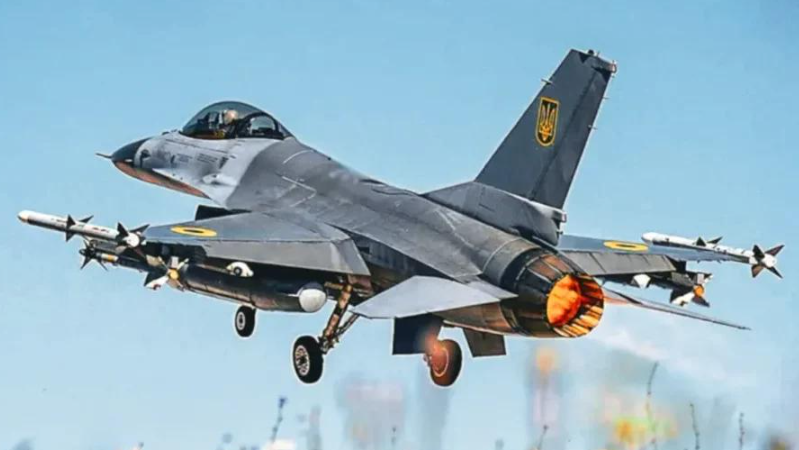
Ukraine received F-16s from European partner countries following training and preparation programs. The aircraft give Ukrainian pilots access to Western weapons and avionics, although their capabilities depend on the individual aircraft configuration, software, weapons integration and available support.
The F-16 is not a single, identical configuration across all operators. Radar performance, electronic warfare equipment and weapon options vary between versions.
Su-35S Flanker-E
The Su-35S is a Russian twin-engine multirole fighter developed by Sukhoi. It combines a large airframe, an advanced radar system and a range of Russian air-to-air weapons.
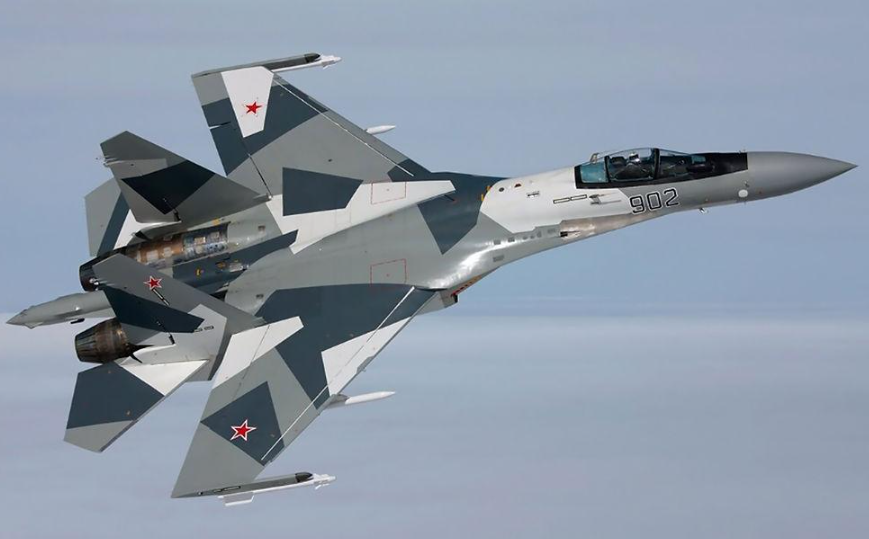
Its equipment includes the Irbis-E radar and compatibility with weapons such as R-77-series radar-guided missiles and the long-range R-37M. These systems support engagements against aircraft at different distances, depending on the target, launch conditions and tactical situation.
The Su-35S is designed for air-superiority missions, but it also performs other combat roles. Its capabilities make it a serious threat to Ukrainian aircraft, including the F-16.
How Does an F-16 vs. Su-35 Air Battle Work?
An air-to-air engagement is not determined by aircraft specifications alone. Pilots must detect and identify threats, establish a useful firing opportunity, launch a suitable weapon and respond to the opponent’s defensive actions.
1. Detection and situational awareness
Before a fighter launches a missile, its pilot needs information about the target’s position and movement.
Aircraft radar can help locate and track opponents. Ground-based radar, command networks and information from other platforms can also contribute to the overall air picture.
The aircraft that detects a threat first may gain a tactical advantage, but detection alone does not guarantee a successful attack. The pilot must also have a suitable firing solution and account for the target’s likely response.
The publicly available information about the reported July 2026 encounter does not establish which sensors or external information sources contributed to the engagement.
2. Weapon selection and missile employment
The F-16 can carry radar-guided AIM-120 AMRAAM missiles and infrared-guided AIM-9 Sidewinder missiles, subject to its configuration and available weapons.
The Su-35S can employ Russian air-to-air missiles, including weapons from the R-77 family and the longer-range R-37M.
Missile performance depends on factors such as launch altitude, aircraft speed, target maneuvering and electronic countermeasures. A published maximum range does not mean a missile can reliably hit a maneuvering fighter at that distance.
The weapon used in the reported Ukrainian F-16 engagement has not been conclusively identified in the public reporting cited here. It would therefore be premature to attribute the result to a particular missile.
3. Defensive maneuvering and electronic warfare
Once a pilot detects an incoming threat, the aircraft may maneuver to make an interception more difficult. Radar warning equipment and electronic countermeasures can also help pilots respond to radar tracking or missile threats.
The effectiveness of these defenses depends on the equipment available, the warning received and the conditions of the encounter.
Neither the presence nor the effectiveness of a specific electronic warfare system in the reported engagement has been publicly established.
4. The role of other air defense systems
Fighter combat takes place within a wider military environment. Ground-based air defense systems, including surface-to-air missiles, can threaten aircraft and influence where opposing fighters operate.
Some accounts surrounding the July 2026 Su-35 loss questioned whether a ground-based system might have been involved. However, the public information does not conclusively establish that a Patriot battery or another surface-to-air missile system destroyed the aircraft.
This distinction is important because a fighter shootdown and a ground-based air defense engagement are different events, even when both contribute to the same air campaign.
Why Does the Reported Engagement Matter?
It demonstrates the potential role of Western fighters in Ukraine
Ukraine’s F-16 fleet was introduced to strengthen a combat aviation force facing a larger Russian air arm. Its mission extends beyond fighting enemy fighters to include intercepting aerial threats and supporting other military operations.
A verified air-to-air victory would show that Ukrainian F-16s can contribute to counterair operations under combat conditions. It would not, on its own, establish that the F-16 is generally superior to the Su-35.
It highlights the importance of the wider combat network
Modern air warfare depends on more than an individual aircraft’s radar, speed or weapons. Intelligence, warning systems, pilot training, command arrangements and support from other platforms can all influence the outcome.
A fighter with fewer advantages in one technical area may still succeed if its pilot has better information or encounters the opponent under favorable conditions. The available evidence does not establish which of these factors determined the reported July engagement.
It carries implications for Russia’s air operations
The loss of an advanced fighter can impose costs in aircraft replacement, pilot availability and mission planning. The broader operational effect depends on the circumstances of the loss and the force’s ability to replace the aircraft and maintain its remaining fleet.
One reported shootdown is not enough to demonstrate a lasting change in air superiority. Russia retains substantial combat aviation and ground-based air defense capabilities.
It reinforces Ukraine’s need for sustained support
Operating F-16s requires trained personnel, maintenance facilities, spare parts, suitable weapons and a reliable supply chain. Aircraft availability is especially important for a country conducting repeated defensive missions while also seeking opportunities to challenge enemy aircraft.
The long-term value of Ukraine’s F-16 fleet will depend on its ability to maintain aircraft readiness and integrate the fighters with other parts of its air defense system.
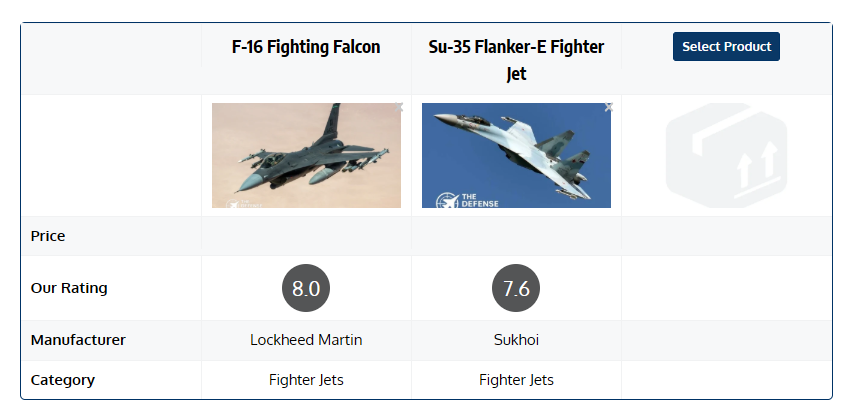
F-16 vs. Su-35: Key Differences
| Feature | F-16 Fighting Falcon | Su-35S Flanker-E |
|---|---|---|
| Country of origin | United States | Russia |
| Engine configuration | Single-engine | Twin-engine |
| Main roles | Multirole combat and air defense | Multirole combat and air superiority |
| Radar | Varies by aircraft version | Irbis-E |
| Air-to-air weapons | Western weapons, including AIM-120 and AIM-9 variants where integrated | Russian weapons, including R-77-series missiles and R-37M |
| Ukrainian war role | Air defense and other combat missions | Russian combat aviation operations |
| Overall combat superiority | Cannot be established from one encounter | Cannot be established from one encounter |
The comparison illustrates the differences in design and operating context, rather than identifying a universal winner. The performance of each aircraft depends on its configuration, weapons, supporting systems and mission.
Frequently Asked Questions
Can a Ukrainian F-16 shoot down a Russian Su-35?
Yes, an F-16 is capable of engaging and destroying another fighter when the conditions and weapons employment permit. A July 2026 encounter was publicly credited to a Ukrainian F-16 by the U.S. Joint Chiefs chairman, while Ukraine identified a Su-35 as the Russian aircraft lost. The complete engagement details remain uncertain.
Is the Su-35 more powerful than the F-16?
The Su-35S is larger, has two engines and carries sophisticated radar and weapons systems. However, overall combat effectiveness cannot be determined by size or engine count alone. The aircraft’s configuration, pilot training, weapon employment and support network all matter.
Which missile was used in the reported engagement?
The publicly available reporting cited in this article does not conclusively identify the missile used. Claims about a specific weapon should be treated as unconfirmed unless supported by reliable additional evidence.
Does the reported shootdown mean Ukraine has achieved air superiority?
No. A single engagement does not establish air superiority. That requires a broader assessment of each side’s ability to control or contest airspace over a relevant area and period.
Conclusion
The reported F-16 and Su-35 encounter offers a useful example of how modern air combat depends on aircraft capability, weapons, situational awareness and supporting systems. It also illustrates why an individual combat result should not be confused with proof that one fighter is categorically better than another.
The most important unanswered questions concern the precise circumstances of the engagement, including the weapon used and the contribution of other systems. Until more evidence becomes available, the event should be treated as a reported F-16 air-to-air victory, not as definitive proof of a general shift in the balance of air power.