U.S. Navy Funds SM-6 Block IAU Production Transition
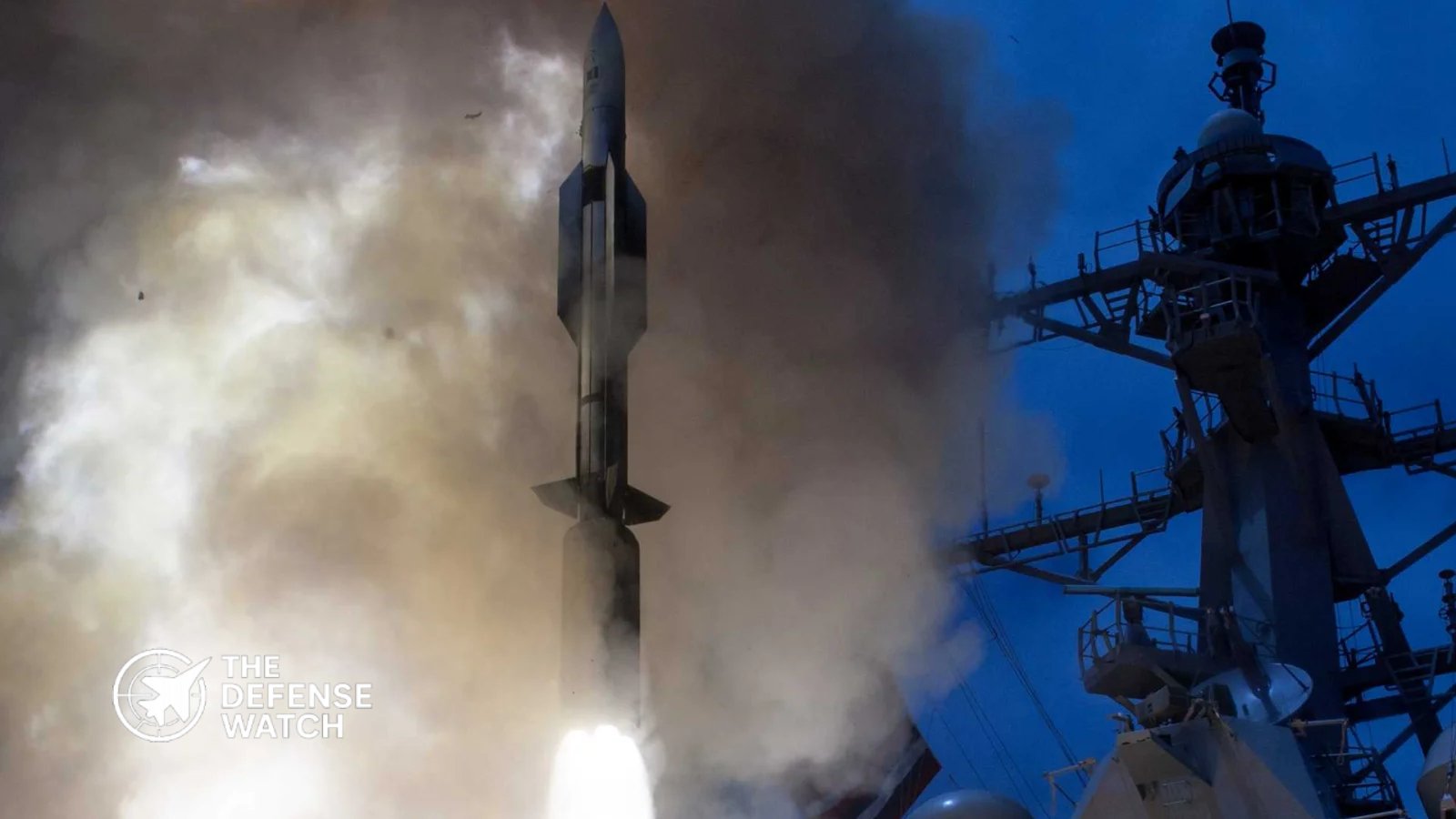
The U.S. Navy has awarded Raytheon Missile and Defense $160.9 million to move the upgraded Standard Missile-6 Block IAU into production, addressing aging electronic components in the existing Block IA configuration while the current missile remains in production.
The September 24 award, formally posted by the Navy on October 6, is an undefinitized contract action for transition-to-production work. The award covers initial production activities and the development, testing and validation of manufacturing processes needed to produce the upgraded configuration at scale.
The action is important less because it changes what the SM-6 can do than because it is intended to keep the missile manufacturable as older electronic components become difficult to sustain.
An electronics refresh rather than a new missile
The SM-6 Block IAU, or Block IA Upgrade, is intended to replace obsolete electronics in the existing missile. The reported changes include the guidance section and Target Detection Device, including the Guidance Section Electronics Unit.
The Navy’s transition-to-production effort does not represent a new propulsion system or a redesigned missile airframe. Public procurement information describes the IAU as an obsolescence upgrade to the SM-6 Block IA All-Up-Round.
That distinction matters because the IAU should not be confused with the separate SM-6 Block IB development. Block IB is associated with a larger second-stage motor and is intended to provide increased missile performance. The IAU effort instead seeks to preserve the existing Block IA configuration while replacing components that could otherwise constrain future production.
The Navy has therefore chosen to solve a manufacturing and sustainment problem before it becomes a production interruption.
Production continuity is a central issue
The transition is being conducted while Block IA production continues.
The Navy’s fiscal 2026 weapons justification documents show procurement of 108 SM-6 Block IAs in fiscal 2024, 103 in fiscal 2025 and a planned 139 in fiscal 2026. The same document says the Navy was seeking to maintain production continuity, noting that a production break could require first article inspections, component requalification and recertification of the production line before manufacturing could resume.
That background helps explain why the IAU transition is being funded before the upgraded missile becomes the dominant production configuration.
The Navy’s procurement planning calls for an extended SM-6 production effort covering fiscal years 2027 through 2037, with industry expected to establish capacity for more than 500 missiles per year. The transition-to-production award is intended to prepare the industrial base for that requirement rather than simply purchase a discrete batch of missiles.
The $160.9 million award consequently should not be interpreted as the price of a particular number of missiles. The award notice describes it as an undefinitized transition-to-production action, not a finalized production order with a disclosed missile quantity.
A much larger SM-6 production effort is underway
The IAU transition is taking place alongside a broader expansion of SM-6 procurement.
A separate Navy award dated September 30 provided Raytheon with $5.905 billion for fiscal 2026 SM-6 multiyear procurement. The award was posted October 6 and was made on a sole-source basis.
RTX also announced on October 1 that Raytheon had received a five-year SM-6 contract with two additional option years, with a potential value of up to $24.4 billion. The company said the agreement is intended to increase the availability of SM-6 interceptors and support a more consistent supply of the weapon.
These awards put the IAU transition into a wider procurement context. The Navy is not simply updating an older missile because of component obsolescence. It is simultaneously preparing the production system to support substantially higher demand.
Raytheon said in February that agreements with the Department of War were intended to raise annual SM-6 production to more than 500 missiles.
Why the SM-6 matters to the fleet
The SM-6 has become a particularly important weapon for Aegis-equipped surface combatants because it supports several missions from a common missile family.
The Navy and Missile Defense Agency have demonstrated the SM-6 in terminal ballistic missile defense. During Flight Test Aegis Weapon System 31 Event 1a in March 2023, USS Daniel Inouye launched two SM-6 Dual II missiles and successfully intercepted a medium-range ballistic missile target during the test.
A year later, during FTM-32, the Navy and Missile Defense Agency again demonstrated an SM-6 Dual II with software upgrade against an advanced medium-range ballistic missile target. The test also involved Australian forces and an Arleigh Burke-class Flight III destroyer equipped with the AN/SPY-6 radar.
The weapon also supports air defense and anti-surface missions. That combination makes SM-6 inventory relevant not only to individual ship protection but also to the broader missile-defense and distributed maritime operations architecture.
For the Navy, maintaining supply therefore involves more than replacing aging electronics. It also means keeping a missile available for ships that rely on the Aegis combat system as the service expands and modernizes its surface fleet.
The industrial-base problem behind the upgrade
The most consequential part of the IAU program may be its manufacturing objective.
Modern guided missiles depend on long supply chains for electronics, seekers, propulsion components, control hardware and other specialized parts. Components that were readily available when an earlier missile configuration entered production can become obsolete years later, forcing the military to redesign portions of a weapon even when its basic operational requirements remain unchanged.
The IAU approach limits that redesign to areas affected by component obsolescence. That reduces the need to reopen the missile’s propulsion and airframe design simply to keep production viable.
The Navy is also pursuing the transition while maintaining the existing Block IA line. That creates a manufacturing challenge of its own because suppliers must support the current configuration while qualifying and introducing replacement components for the IAU configuration.
RTX has previously said the Navy and Raytheon were working on increased SM-6 production capacity, including additional sources for critical components and modernization of manufacturing processes. The Navy highlighted similar efforts during a 2024 visit to Raytheon, including investments intended to accelerate Block IA production.
What the IAU does not establish
Public information does not support treating Block IAU as a longer-range or faster SM-6.
The transition-to-production award concerns the replacement of obsolete electronics and the manufacturing processes needed to produce the updated configuration. It does not establish a new motor, larger warhead, new airframe or disclosed increase in range.
Nor does the $160.9 million award by itself establish that more than 500 missiles will actually be delivered annually. The figure describes the production capacity the Navy wants industry to be able to support, while actual procurement quantities will depend on future contracts and funding.
That distinction is important as the Navy moves from individual annual purchases toward larger multiyear procurement arrangements.
The immediate objective is straightforward: keep SM-6 production running while replacing components that could become a bottleneck, then build enough industrial capacity to support higher procurement levels in the following decade.
For a weapon that has become part of the Navy’s air-defense, anti-surface and terminal ballistic missile defense inventory, the ability to manufacture it reliably may be nearly as important to long-term force availability as incremental improvements to the missile itself.
Reporting note: The September 24 transition-to-production award is an undefinitized action. Public documents do not disclose a specific number of SM-6 Block IAU missiles covered by the $160.9 million award or establish a final annual delivery rate for the upgraded configuration.