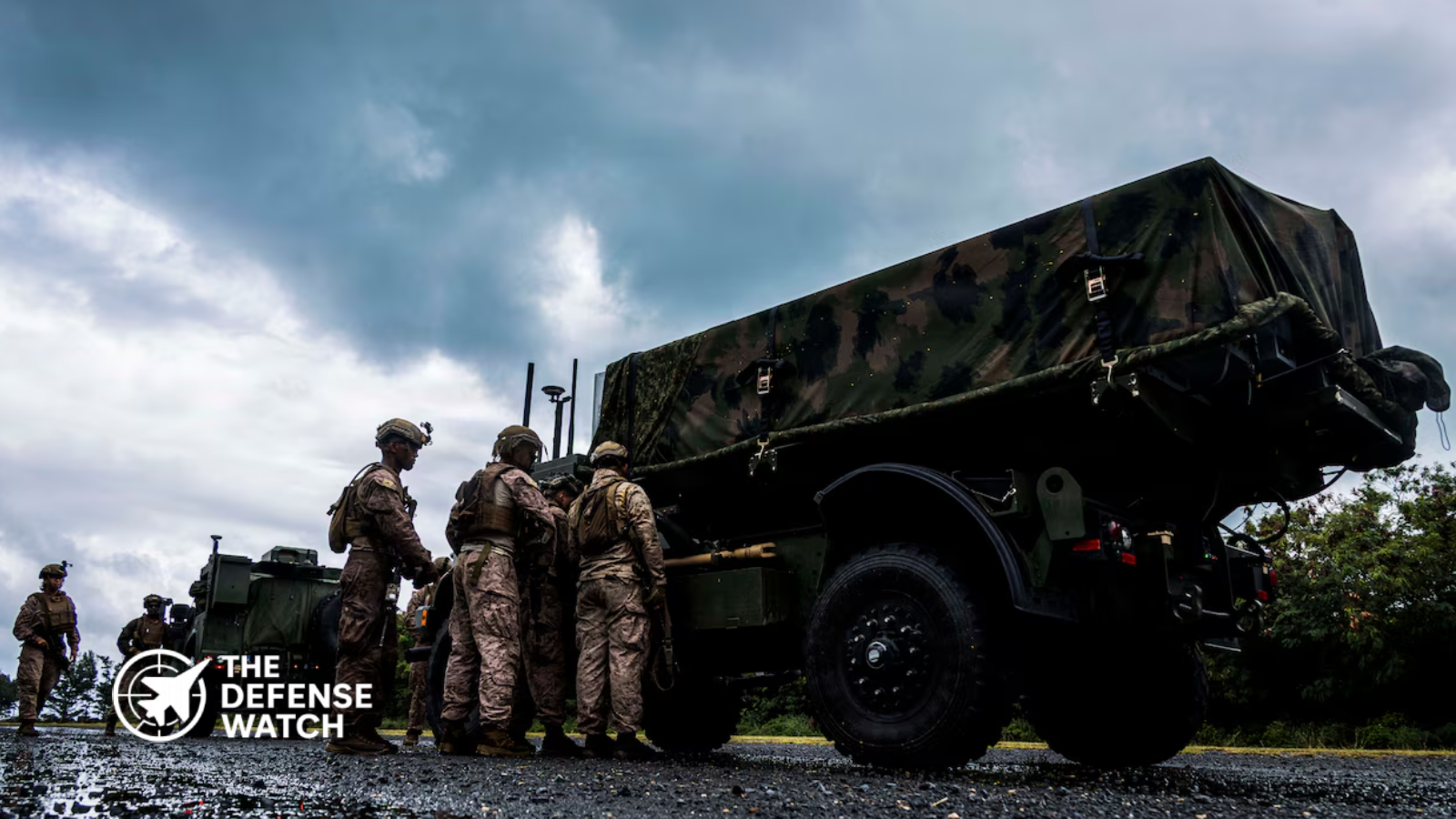
Marines Rehearse NMESIS Anti-Ship Tactics in Hawaii
The U.S. Marine Corps is continuing to develop its ability to employ mobile ground-based anti-ship fires, with Marines from the 3rd Marine Littoral Regiment conducting a multi-day NMESIS training evolution in Hawaii.
The training took place at Marine Corps Training Area Bellows from Sept. 28 through Oct. 2, 2026, involving the 3rd Littoral Combat Team’s Medium-Range Missile Battery. According to the Department of War, the exercise concentrated on modernized artillery operations, distributed command and control, fire mission processing, mobility and basic field skills.
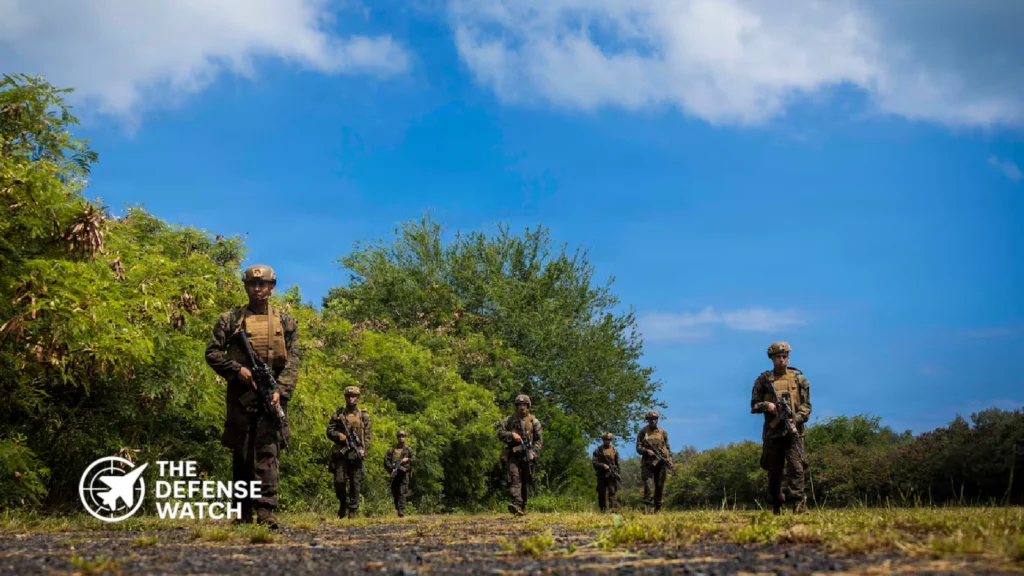
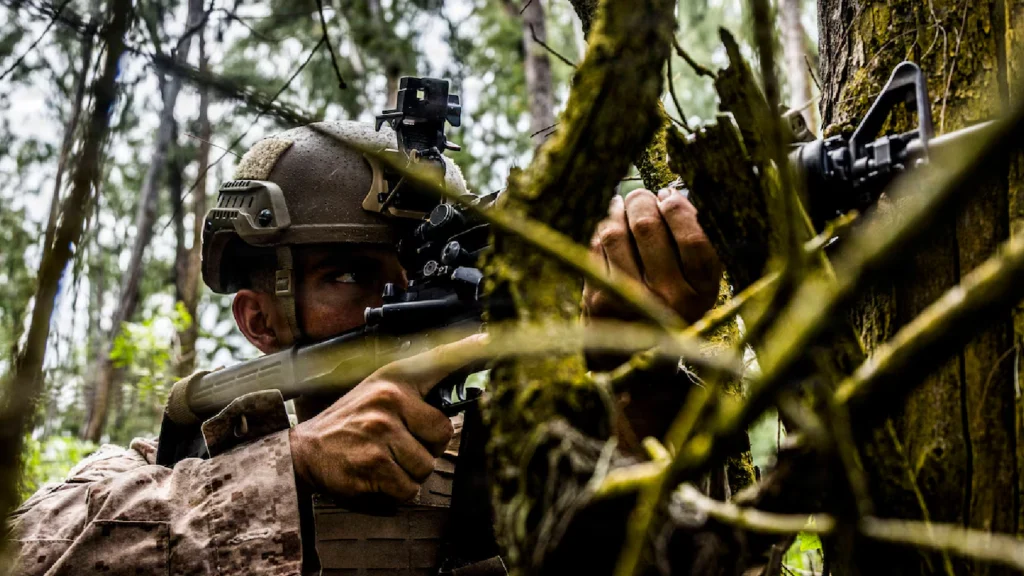
Rather than being limited to missile employment, the training addressed the broader sequence required to operate a mobile anti-ship unit in a contested environment. Marines rehearsed communication pathways, convoy operations, position occupation and battery defense while processing simulated fire missions.
Training the complete firing system
NMESIS, the Navy-Marine Expeditionary Ship Interdiction System, is a ground-based anti-ship weapon designed to give Marine units an expeditionary maritime strike capability.
The system is part of the Marine Corps’ effort to build formations capable of operating in the littorals while contributing fires to naval and joint operations. The service describes NMESIS as an expeditionary, survivable ground-based anti-ship platform intended to provide commanders with maritime fires at extended ranges.
The Hawaii exercise shows why operating the launcher itself is only one part of the requirement.
A missile battery must be able to move, establish positions, communicate with other elements, receive and process targeting information, conduct fire missions and protect its own personnel and equipment. The Marine Corps training specifically addressed several of these functions rather than treating the missile launcher as an isolated weapons system.
Images released by the Marine Corps show Marines positioning NMESIS vehicles, conducting fire mission processing and establishing security around the system. Some portions of the imagery were blurred for security reasons.
A mobile maritime fires capability
The Marine Corps’ approach differs from traditional coastal defense models in an important respect. NMESIS is intended to operate as part of a maneuvering Marine formation rather than as a permanently fixed coastal missile battery.
That mobility matters in a Pacific operating environment where forces may need to disperse across islands and coastal terrain. A ground-based anti-ship capability can potentially contribute to sea denial while operating from land, allowing Marine units to participate in maritime operations without relying exclusively on surface combatants for offensive anti-ship fires.
The Marine Corps has already begun moving the capability beyond Hawaii. The 3rd Marine Littoral Regiment received NMESIS in 2024, and the system has subsequently been deployed with the regiment during exercises in the Philippines.
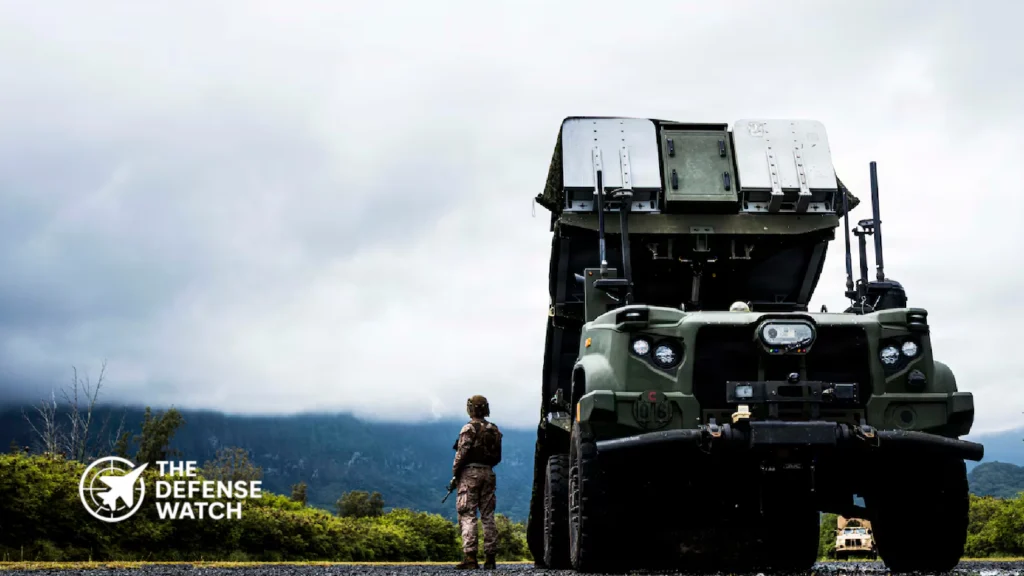
Marines assigned to the 3rd Littoral Combat Team, 3rd Marine Littoral Regiment, 3rd Marine Division, prepare a Navy-Marine Expeditionary Ship Interdiction System for fire mission processing and battery defense operations at Marine Corps Base Training Area Bellows, Hawaii, Oct. 1, 2026. During this training exercise, the Marines refined their skills on the ship interdiction system’s fire missions, convoy operations, communication pathways and basic infantry tactics. Portions of this image have been blurred for security purposes. (Image : DoW)
The 3rd Marine Division’s experience also provides a useful indication of how the system is being integrated into the broader littoral force. In June 2026, the division reported that its 12th Marine Littoral Regiment had formally received NMESIS and the Marine Air Defense Integrated System on Okinawa. The division said its Hawaii-based 3rd Marine Littoral Regiment had received NMESIS in November 2024.
The command-and-control problem
The Hawaii training also highlights an issue that is easy to overlook when discussing anti-ship missile systems.
Possessing a missile launcher does not by itself create an effective maritime strike capability. The unit needs a reliable chain for receiving information, determining whether a target can be engaged, passing the appropriate fire mission and coordinating with other elements.
The Department of War said the exercise was designed to improve distributed command and control as well as the technical procedures associated with NMESIS fire missions. That focus is consistent with the Marine Corps’ wider effort to connect its fires with naval and joint kill webs.
This is particularly relevant to operations in the Pacific, where Marine units could be dispersed over large distances and expected to contribute to a wider maritime picture. The value of a mobile anti-ship system therefore depends not only on its missile and launcher, but also on communications, targeting, mobility, logistics and survivability.
Hawaii as a training environment
Hawaii provides the Marine Corps with an important environment for practicing these skills before deploying them elsewhere in the Indo-Pacific.
The 3rd Marine Littoral Regiment has used Hawaii for progressively more complex training while also deploying capabilities to exercises with regional partners. Earlier in 2026, Marines from the regiment conducted a comprehensive training exercise at Pohakuloa Training Area designed to improve weapon-system proficiency and combat readiness.
The broader Hawaiian operating environment also provides a link between Marine land forces and naval operations. RIMPAC 2026, held around Hawaii and the Pacific from June 24 to July 31, brought together 30 nations, more than 30 ships, five submarines, national land forces and more than 30,000 personnel. The exercise included multiple live-fire sinking activities involving U.S. and allied forces.
That wider environment gives Marine units opportunities to practice how land-based capabilities can contribute to maritime operations alongside naval and joint forces.
From a missile system to a maritime force
The significance of the latest NMESIS training is therefore less about a new missile capability and more about the continued development of the Marine Corps’ operating model.
The service received NMESIS as part of its Force Design effort to give Marine Littoral Regiments organic capabilities for sea denial and maritime operations. The 2026 Okinawa deployment and exercises in the Philippines show that the capability is moving from acquisition and initial fielding toward repeated operational training.
At the same time, the Hawaii exercise demonstrates that the Marine Corps is training the supporting tasks required to make the system useful in the field. Fire mission processing, distributed command and control, movement, communications and local security all become critical when a missile battery is expected to operate as a dispersed force.
The training does not, by itself, demonstrate how NMESIS would perform against a real adversary or establish the system’s effectiveness in combat. The exercise was a training evolution, and publicly released information does not provide enough detail to assess the system’s performance against operational maritime targets.
What it does establish is that the Marine Corps continues to build the personnel, procedures and field routines needed to operate ground-based anti-ship fires as part of its wider littoral warfare concept. For the 3rd Marine Littoral Regiment, that development extends a capability that has already moved from Hawaii into exercises elsewhere in the Indo-Pacific.