General Dynamics Shows Wolf XM30 at AUSA 2026
General Dynamics Land Systems will present its Wolf XM30 infantry fighting vehicle design in complete form at the Association of the U.S. Army annual meeting and exposition in Washington, D.C., October 12 to 14. The company plans to display a one eighth scale model at its booth, giving visitors a detailed look at the vehicle competing to become the U.S. Army’s next infantry fighting vehicle.
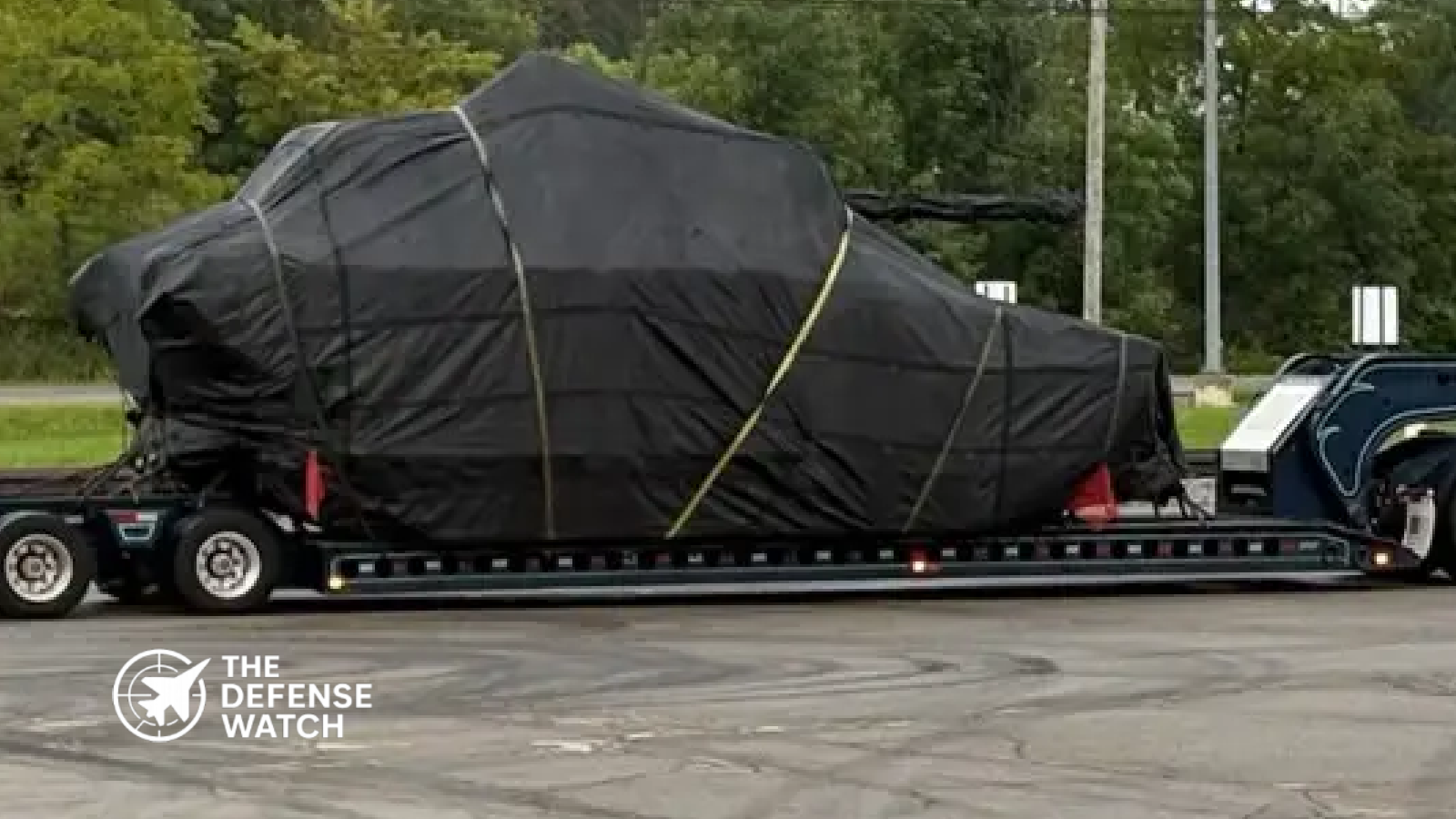
The exhibition comes at an important point in the XM30 program. General Dynamics delivered its first full scale Wolf prototype to the Army on August 21, 2026, while American Rheinmetall Vehicles has also delivered its competing Lynx prototype. The two vehicles are now moving into a testing period that will help determine which design advances toward production.
The XM30 is intended to replace the M2 Bradley, which entered Army service in 1981. Rather than simply extending the Bradley design, the Army has structured XM30 around a new digital acquisition approach, modular open systems architecture and a vehicle capable of accepting future hardware and software upgrades.
From digital design to a physical contender
General Dynamics describes Wolf as a purpose built XM30 design developed around the Army’s requirements for survivability, lethality, mobility and fightability.
The company says the vehicle was designed from the beginning around a Modular Open Systems Approach, or MOSA. This architecture is intended to make it easier to replace or upgrade components during the vehicle’s service life without redesigning the entire platform.
The Army has also emphasized digital engineering as part of the XM30 development process. Its Project Manager XM30 describes the program as a digital acquisition effort that combines MOSA, digital engineering and DevSecOps.
That approach matters because the Army is attempting to avoid a common problem with long lived armored vehicles. Adding armor, electronics, communications equipment and defensive systems over decades can consume available space, weight and electrical capacity. The Bradley has undergone repeated modernization, but the Army has sought a successor with greater room for future growth.
The Wolf model at AUSA therefore represents more than an exhibition display. It provides a public view of a design that has moved from digital development into physical prototype testing.
What the Army requires from XM30
The Army’s original XM30 requirements established several important characteristics.
The vehicle is designed around a two Soldier crew and a capacity for six additional infantry Soldiers. It is also intended to use a 50 mm cannon, a remote turret and anti tank guided missiles, while incorporating modern sensors and fire control systems.
The Army awarded General Dynamics Land Systems and American Rheinmetall Vehicles contracts worth approximately $1.6 billion combined in June 2023. The agreements covered detailed design, prototype construction and testing.
At that stage, the Army planned to downselect to a single manufacturer following testing, with first unit equipped targeted for fiscal year 2029.
The current procurement path remains competitive. The Army’s fiscal year 2027 budget justification identifies funding for up to 19 XM30 vehicles, hulls and turrets, but does not identify the eventual production contractor. The document says contractor performance, preproduction testing and Soldier feedback will inform the award decision.
That distinction is important. The Wolf is a leading contender in the current competition, but General Dynamics has not been selected as the XM30 production contractor.
The 50 mm weapon and the changing armored battlefield
One of the most visible changes from the Bradley concept is the XM30’s planned 50 mm primary weapon.
The Army has separately advanced development of a 50 mm ammunition family intended for the XM30. In October 2024, the service announced that the XM1202 target practice with tracer cartridge had achieved Milestone C, allowing it to enter production for training and development purposes.
The Army has also identified armor piercing and high explosive airburst rounds as part of the broader 50 mm ammunition family.
This parallel development shows that the vehicle and its ammunition are being developed as connected parts of a larger combat system. The XM30 is not simply a new chassis receiving an existing weapon. Its lethality depends on the integration of the cannon, ammunition, sensors and fire control system.
The final operational performance of the weapon system, however, will depend on testing. Public Army documents do not establish a final XM30 combat range, ammunition load, armor protection level or complete sensor performance for the competing vehicles.
Those details should not be treated as settled specifications while the Army is still evaluating the designs.
Why the prototype competition matters
The XM30 competition is significant because the Army is trying to balance two competing requirements.
The first is immediate combat capability. The replacement for the Bradley must protect its crew and infantry passengers while operating alongside tanks and other armored vehicles.
The second is long term adaptability. Modern armored vehicles must accommodate electronic warfare, unmanned systems, networked communications, active protection and other technologies that can change considerably during a vehicle’s service life.
The Army’s use of MOSA is intended to address that second problem. A more open architecture can make it easier to introduce new equipment without creating a completely new vehicle program.
That does not remove the engineering challenges. Open architectures only provide value if hardware interfaces, software standards, cybersecurity, power generation, cooling and physical space are sufficient to support future upgrades.
The Wolf and Lynx prototypes will therefore be judged on more than appearance or individual weapon characteristics. Soldier feedback, reliability, maintainability, mobility, survivability and performance during realistic testing will be central to the selection process.
A test of the Bradley replacement strategy
The timing of the AUSA display is particularly relevant because the XM30 program is moving from design work into a more demanding phase of physical evaluation.
The Army’s earlier plan called for detailed designs and prototype testing before a limited competition for production. Current Army budget documents continue to show prototype and production planning extending into fiscal year 2027 and beyond.
The service has also tied the program to its broader effort to modernize armored formations. The XM30 is expected to operate as part of a combined arms formation rather than as an isolated infantry carrier. The Army’s current description gives it a role in maneuvering with a joint combined arms team while also supporting control of robotics and semi autonomous systems.
That suggests the eventual XM30 will be evaluated as part of a wider battlefield network. Its ability to exchange information, operate with other platforms and accept future technology could prove as important as its basic armor and firepower.
The industrial decision ahead
For General Dynamics, the Wolf XM30 is also an important competition for a major U.S. armored vehicle production program.
The company already has extensive experience producing and supporting U.S. tracked combat vehicles, while American Rheinmetall is offering a competing Lynx based solution. The Army’s decision will therefore affect not only the future infantry fighting vehicle fleet but also industrial workloads, supply chains and long term sustainment.
The fiscal year 2027 budget request provides $546.99 million for up to 19 XM30 vehicles, although the final production contractor has not yet been selected. The Army says those vehicles will support production qualification testing and initial operational test and evaluation before fielding.
For now, the Wolf remains a candidate rather than the Army’s chosen Bradley replacement.
Its appearance as a complete scale model at AUSA 2026 will give defense officials and industry observers a closer look at the design, but the more consequential evidence will come from the vehicles already entering Army testing.
The eventual selection will depend on how the competing designs perform with Soldiers, how well they meet the Army’s operational requirements and how effectively each platform can accommodate the technologies that armored formations are expected to use during the XM30’s service life.