Executive Summary
- More than 100 energy projects are being showcased during a three-day Pentagon energy innovation expo, spanning tactical microgrids, expeditionary power, nuclear energy, energy storage and space-based power concepts.
- The Department of War is linking installation energy resilience with operational energy, arguing that power infrastructure at U.S. bases and forward locations must be able to support forces during cyberattacks, physical disruption and contested logistics.
- The initiative also connects energy technology to Golden Dome, advanced nuclear power and space operations, highlighting a growing requirement for resilient power to support sensors, directed-energy systems, autonomous platforms and distributed military infrastructure.
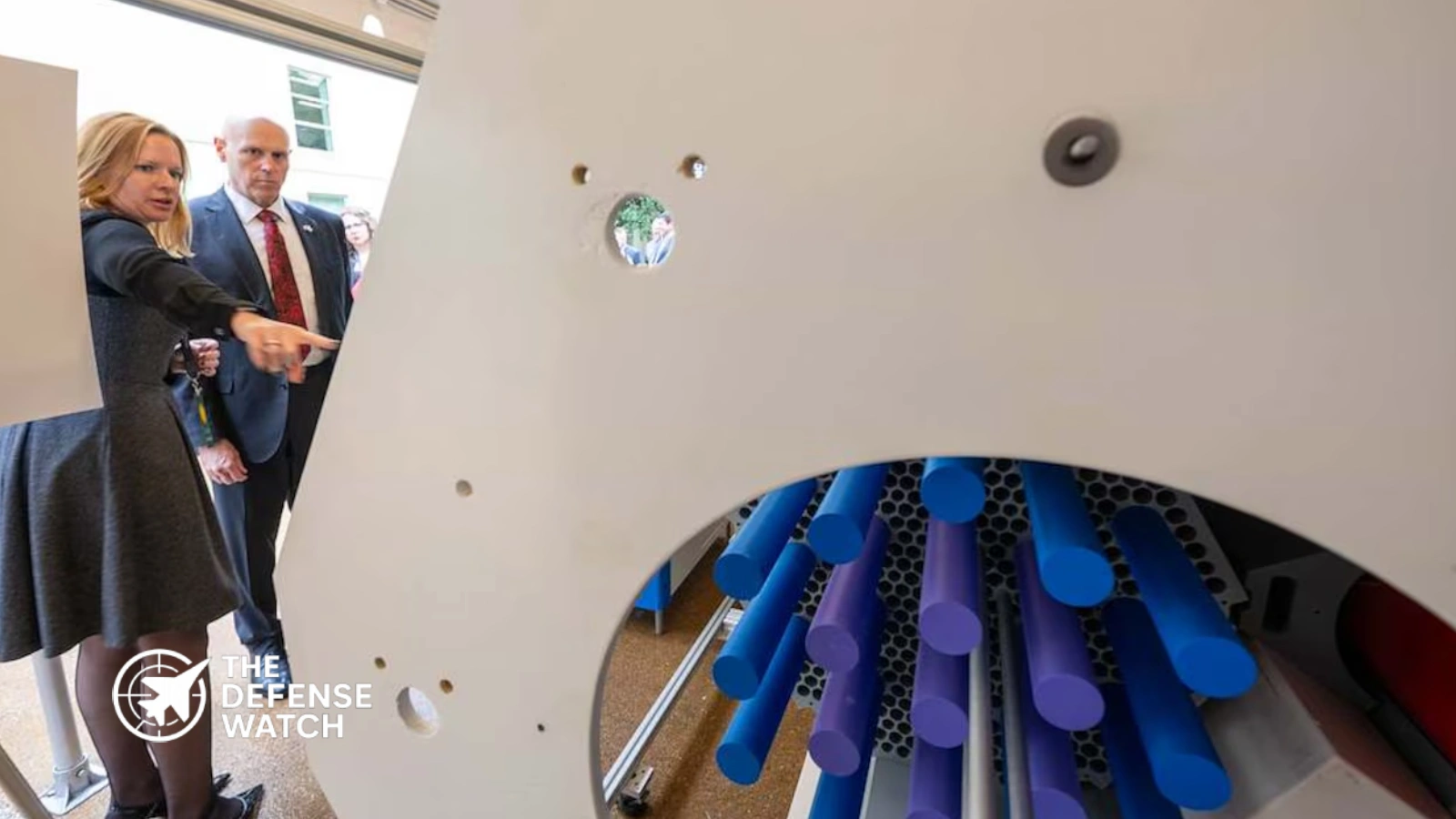
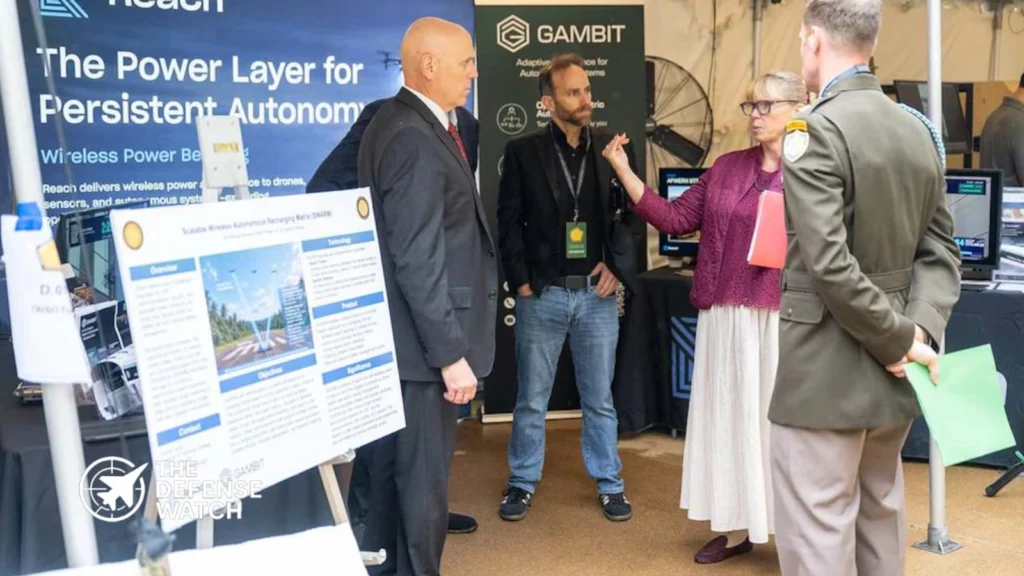
The Pentagon is putting energy technology at the center of a broader effort to improve military resilience, with more than 100 projects displayed during the three-day Energy Sentry, Pentagon: Department of War’s Energy Innovation Expo that began Sept. 22, 2026.
The projects span the Army, Navy and Air Force and include the Army’s Tactical Microgrid Standard, the Navy’s Common Operational Resilience and Energy Storage system, space power concepts and the Air Force’s Modular Energy for Tactical Expeditionary Operations Resource, or METEOR power system.
The event reflects a shift in how the department is framing energy. Rather than treating power at domestic installations and fuel or batteries supporting deployed forces as separate planning problems, senior officials are increasingly describing them as interconnected parts of military readiness.
Dale R. Marks, assistant secretary of war for energy, installations and environment, said the distinction between installation energy and operational energy had become increasingly difficult to sustain because attacks against power infrastructure can affect both domestic force generation and deployed operations.
Energy Is Becoming a Warfighting Constraint
The significance of the Pentagon expo extends beyond individual power-generation technologies.
Modern military forces depend on electricity for command and control, communications, intelligence systems, radar, air-defense networks, maintenance infrastructure, autonomous systems and increasingly sophisticated weapons. A disruption to electrical power can therefore affect several layers of a military operation at the same time.
The department’s position is that an adversary does not necessarily need to attack a deployed combat unit directly to disrupt military operations. A disruption to an installation supporting logistics, command networks or deployment activity can have effects further down the force-generation chain.
That makes energy resilience an operational issue rather than simply an infrastructure-management problem.
The approach also aligns with a broader U.S. effort to prepare military infrastructure for contested logistics. Existing congressional legislation has already recognized the need to examine future operational-energy requirements across land, air, sea, space, cyberspace and other operational environments.
The Tactical Microgrid Problem
Microgrids are one of the most important technologies highlighted by the department because they can allow defined groups of electrical loads and distributed energy resources to continue operating when disconnected from a larger grid.
The Army’s Tactical Microgrid Standard is therefore relevant to both forward operations and installation resilience. The department also cited the Navy’s Common Operational Resilience and Energy Storage system as part of the energy architecture supporting future capabilities.
The operational advantage is not simply backup electricity.
A tactical microgrid can potentially coordinate generation, storage and electrical loads so commanders can prioritize mission-critical systems when power availability is constrained. That becomes increasingly important as forces deploy more sensors, autonomous systems, communications equipment and electronic systems.
The department did not disclose a single standardized power output, endurance figure or deployment configuration for the Tactical Microgrid Standard in the material released for the expo. Those specifications should therefore be treated as undisclosed rather than estimated.
Golden Dome Creates a New Energy Requirement
One of the strongest connections made at the expo is between energy infrastructure and the proposed Golden Dome missile-defense architecture.
Marks said the system’s kill chain will require substantial electrical power, particularly as the architecture incorporates advanced sensors and directed-energy capabilities.
This creates a different engineering problem from conventional air-defense systems.
A kinetic interceptor carries its own energy in the form of propellant and warhead. A directed-energy weapon instead depends on an external electrical supply capable of repeatedly supporting the weapon and its associated sensors, cooling and power-management equipment.
That means the effective availability of a directed-energy system can depend not only on the weapon itself but also on the electrical architecture supporting it.
The department specifically connected tactical microgrids and energy storage with this requirement.
| Energy requirement | Military relevance |
|---|---|
| Tactical microgrids | Maintain power when conventional grid access is disrupted |
| Long-duration storage | Extend operations when generation or grid connections are unavailable |
| High-power generation | Support energy-intensive sensors and weapons |
| Cyber protection | Reduce vulnerability of digital power-management systems |
| Vehicle-centric power | Support mobile forces and expeditionary systems |
| Fast-forming microgrids | Establish resilient power at changing operational locations |
The key challenge is integration. A resilient power system must be capable of supporting military loads while also operating within the physical, logistical and cyber constraints of an expeditionary force.

Nuclear Microreactors Move Into the Energy Discussion
The expo also places advanced nuclear power within the department’s wider energy strategy.
Marks highlighted TRISO, or tristructural isotropic, fuel as part of efforts to develop a domestic supply chain for advanced reactor applications. The department says the effort supports the Army’s Janus initiative for commercially owned and operated nuclear microreactors at domestic military installations and the Air Force’s Advanced Nuclear Power for Installations program, or ANPI.
The nuclear work is not limited to installation power.
The department is also supporting the Versatile Autonomous Lightweight Kilowatt-class Reactor Experiment, or VALKRE, in cooperation with NASA. The Department of Energy previously described the project as involving a reactor experiment and data-gathering effort, with an initial non-radiological mockup planned at Idaho National Laboratory’s Microreactor Agile Non-Nuclear Experimental Test Bed.
The potential military value is tied to endurance.
Conventional generators require a continuing fuel supply. Batteries require recharging or replacement. A nuclear microreactor represents a different approach, potentially providing sustained electrical generation where fuel logistics are difficult.
However, nuclear systems introduce their own requirements, including regulatory approval, physical security, reactor operations, maintenance and specialized infrastructure. The Pentagon’s current announcement establishes the direction of these programs but does not provide a fielding schedule or operational performance figures for the systems discussed.
Space Power Becomes Part of the Logistics Architecture
The expo also highlights an increasingly important relationship between military power and space operations.
Marks cited the Navy’s Assured Space Power Initiative and an exhibit described as a system for transmitting power from space. The department said wireless transmission concepts could potentially deliver energy between space assets, from space to the ground and between ground locations.
The concept is significant because power is a persistent limitation for distributed autonomous systems.
Remote sensors, unmanned aircraft and isolated military units can be constrained by battery capacity, generator fuel and the requirement to move personnel or equipment simply to restore power.
Wireless energy transmission could eventually provide another method of sustaining such systems. But the Pentagon announcement does not provide verified transmission distance, delivered power, efficiency or operational deployment data for the exhibit.
Those figures should not be assumed until the department or program developers publish validated technical results.
From Fuel Logistics to Energy Logistics
The broader idea is more important than any single space-power demonstration.
Military logistics traditionally moves fuel, batteries and replacement equipment toward operational units. Future forces may also need to move, generate, store and distribute electricity as an integrated logistics function.
That could affect the design of bases, tactical formations and autonomous systems.
For example, a forward operating location with resilient generation and storage could support communications and sensors without relying continuously on a vulnerable external grid. A distributed autonomous force could similarly become less dependent on personnel physically reaching every platform to replace batteries.
The technology is still developing, but the operational requirement is clear: persistent military systems require persistent access to energy.
METEOR and Expeditionary Power
The Air Force’s METEOR power system is another example of the department’s focus on expeditionary energy.
The Modular Energy for Tactical Expeditionary Operations Resource is intended to address power requirements associated with tactical and expeditionary operations. Its inclusion alongside microgrids, energy storage and nuclear systems illustrates the department’s effort to approach energy as a portfolio rather than as a collection of isolated equipment programs.
That distinction matters.
An expeditionary force cannot assume that commercial electrical infrastructure will always be available. It also cannot assume that long fuel convoys will remain uncontested.
The result is a requirement for power systems that can be transported, connected, managed and protected under changing operational conditions.
The Cybersecurity Problem Is as Important as Generation
More electrical capacity does not automatically create a more resilient military installation.
Modern power systems increasingly depend on digital controls, networked sensors and automated energy-management systems. Those systems can introduce cyber dependencies that did not exist in older generator-based architectures.
The department therefore says it intends to combine microgrids with long-duration storage and cyber hardening.
This creates a three-part resilience problem:
- Generation: The installation or tactical unit needs enough electricity.
- Storage and distribution: Power must remain available when generation or grid access changes.
- Control security: The systems managing electrical power must remain functional during cyber or physical attacks.
A failure in any one of these areas can reduce the value of the others.
For that reason, future military microgrids will likely need to be evaluated as operational networks rather than simply as electrical infrastructure.
Bridging the Defense Technology Valley of Death
The Pentagon’s discussion also addresses a familiar problem in defense acquisition: technologies can demonstrate technical promise without reaching operational deployment.
Marks described the department’s goal of connecting several innovation funding mechanisms so promising energy technologies can move from laboratory development toward fielded military capability. Programs cited include the Operational Energy Capital Improvement Fund, Operational Energy Prototyping Fund, Strategic Environmental Research and Development Program and Environmental Security Technology Certification Program.
This is important because energy technologies face a particularly difficult transition from prototype to military use.
A system can produce electricity efficiently in a controlled demonstration and still be unsuitable for combat operations because it is too heavy, difficult to maintain, dependent on specialized components or incompatible with existing tactical equipment.
The department’s stated test is therefore operational rather than purely technical: whether a technology can actually be deployed and used by warfighters.
What the Pentagon Energy Expo Signals
The common thread across the more than 100 exhibits is not a single breakthrough energy technology.
It is the attempt to build an energy architecture capable of supporting a military force that is becoming more distributed, electrically dependent and reliant on high-power sensors and weapons.
That architecture includes tactical microgrids, mobile power, energy storage, advanced nuclear systems, cyber protection and potential space-based power transmission.
The shift also reflects a broader change in military planning. The power requirement of a future force cannot be separated cleanly from its communications, sensing, air defense, autonomous systems or logistics requirements.
For Golden Dome in particular, energy could become an enabling layer beneath the visible weapons and sensors. The same principle applies to forward bases and expeditionary formations: resilient electrical power can determine whether high-value systems remain available when conventional infrastructure or supply routes are disrupted.
The Pentagon’s expo therefore represents less a showcase of individual generators or batteries than an effort to define energy as part of the military force structure itself.
The next test will be fielding.
Until these technologies demonstrate reliability under operational conditions, the gap between an energy concept displayed at the Pentagon and a capability available to deployed forces remains significant. The department’s emphasis on prototypes, acquisition pathways and operator involvement suggests that closing that gap is now a central part of its energy strategy.