• Home
  • About
  • Defense Systems
  • Manufacturer
  • Comparisons
  • Compare 
  • Tools
TheDefenseWatch.com
  • Aerospace & Aviation
  • Military & Ordnance
  • Naval & Maritime
  • Cyber & Space Defense
  • Policy & Strategy
  • Global News
  • Tools Library
    • Smart Calculator
    • Drone Flight Time Calculator
    • Drone Range Calculator
    • Counter-Drone Jammer Effective Range Calculator
    • Counter-Battery Radar Detection Calculator
    • Artillery Fire Correction Calculator
    • Thermal Camera Detection Range Calculator
    • Missile Range & Time-of-Flight Calculator
    • Radar Detection Range Calculator
    • FPV Strike Drone Payload vs Range Calculator
    • Loitering Munition Endurance Calculator
    • Sniper Ballistic Drop & Windage Calculator
    • Bullet Drop Calculator
    • U.S. Army Combat Fitness Test (ACFT) Calculator
    • Military Pension Calculator
    • Military Retirement Calculator
    • Military Pension Calculator
    • Large Number Calculator
Font ResizerAa

TheDefenseWatch.com

The Defense Watch | U.S. & Global Defense News, Analysis & Military Updates

Search
  • Home
  • About
  • Defense Systems
  • Manufacturer
  • Comparisons
  • Compare 
  • Tools

Stay Updated

Get the latest update

Subscribe

Explore

  • Drone
  • Fighter Jets & Military Aircraft
  • Hypersonic Weapons
  • Aircraft Carriers
  • Strategic History & Missions
  • Tools Library
Home » China’s Quantum Radar Claims Put U.S. Stealth Edge in Question
Global News

China’s Quantum Radar Claims Put U.S. Stealth Edge in Question

TeamDefenseWatch
Last updated: October 16, 2025 4:18 am
TeamDefenseWatch
Share
2 Min Read
quantum radar China
AI Image
SHARE

China’s Bold Quantum Radar Announcement

China recently publicized claims that its defense industries have developed a programmable quantum radar capable of detecting stealth aircraft, potentially able to “see through” advanced low-observable designs. According to Chinese sources, the system leverages quantum entanglement and coherence effects to detect ultra-low observable (ULO) targets with minimal return signals.

Contents
China’s Bold Quantum Radar AnnouncementHow Quantum Radar Could Work (In Theory)Context: China’s Broader Anti-Stealth PushAnalysis: What This Means for U.S. Defense and Global SecurityConclusion and Outlook

In parallel, at the 11th World Radar Expo, China also highlighted several “anti-stealth” radar systems, such as the JY-27V meter-wave radar and SLC-7 multifunctional radar, which its designers claim can detect U.S. stealth platforms including F-22 and F-35 aircraft.

The quantum radar narrative builds on earlier Chinese academic papers that proposed creating a miniature electromagnetic vortex or “storm” via accelerated electrons and strong magnetic fields, arguing such a field could interact differently with the stealth surface and enable detection where conventional radars fail.

However, experts remain cautious. Many in the defense and quantum physics communities view China’s claims skeptically, warning that the jump from laboratory proof-of-concept to an operational, deployable quantum radar remains extremely challenging.

- Advertisement -

How Quantum Radar Could Work (In Theory)

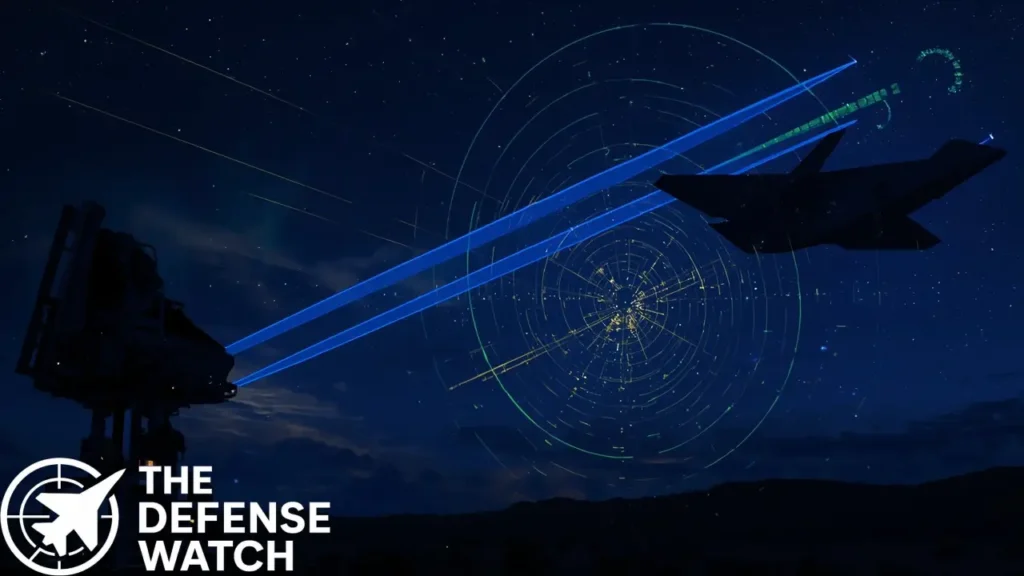
Traditional radar operates by transmitting electromagnetic pulses and measuring their return. Stealth aircraft minimize that return via shaping, radar-absorbent materials, and low-emission technologies (like LPIR) to reduce their detectability.
quantum radar China

Quantum radar, by contrast, is based on schemes such as quantum illumination: pairs of entangled photons are created, one sent outward (signal) and the other retained (idler). The correlation between the two allows the system to distinguish a weak return signal from noise, even when much of the entanglement is lost over distance.

In principle, this technique could permit detection of objects with extremely low radar cross-sections under clutter and jamming conditions. A “programmable” quantum radar could adapt entanglement properties or measurement strategies in real time based on target and environmental conditions.

Still, significant obstacles remain: preserving quantum correlations over long distances and through lossy media, building high-power quantum transmitters, and integrating quantum receivers into robust field systems are formidable engineering challenges.

Context: China’s Broader Anti-Stealth Push

China’s quantum radar claims align with a multi-pronged strategy for counter-stealth. At the radar expo, China also prioritized low-frequency radar bands, high-power apertures, and advanced signal processing to target stealth aircraft.

Records show that the People’s Liberation Army (PLA) has already deployed anti-stealth radars along its coastlines and islands in the East and South China Seas, posing potential threats to U.S. aircraft operating in those regions.

Beyond radar, China is reportedly exploring novel detection methods—such as satellite-based signal disturbance detection (e.g. via Starlink interference experiments) —and even a stratospheric airship with infrared sensors targeting the thermal signature of stealth fighters.

At the same time, China is enhancing its own stealth-capable platforms. A recent upgrade to the J-20 stealth fighter reportedly tripled its radar detection range via a silicon carbide (SiC) radar chip, making the J-20 not just survivable but also a potent sensor node.

- Advertisement -

Analysis: What This Means for U.S. Defense and Global Security

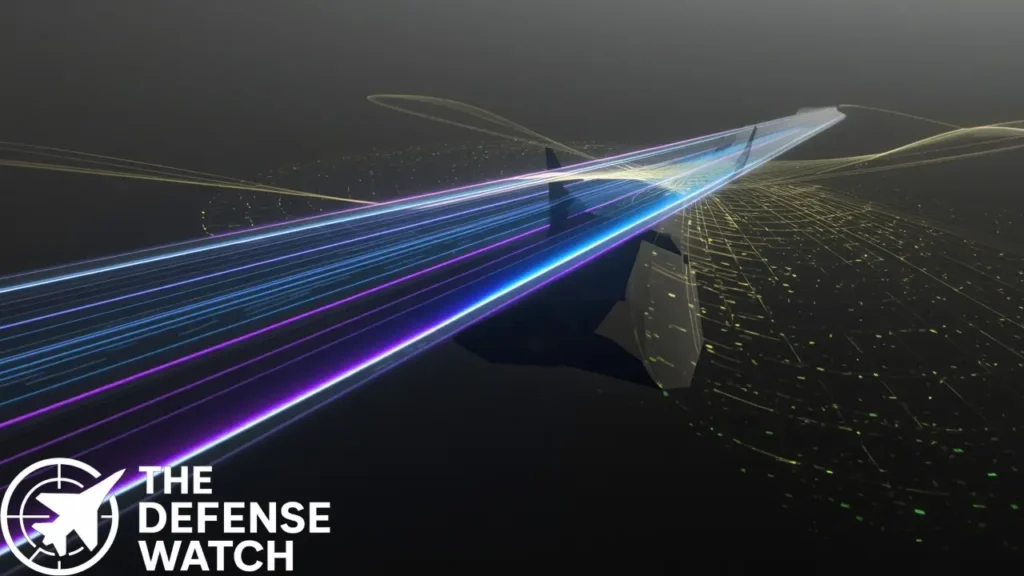
If China’s quantum radar claims prove feasible and operational, they could upend the balance in the stealth-versus-counterstealth arms race. Stealth platforms are a core pillar of U.S. power projection, enabling strike aircraft to penetrate contested airspace with reduced detection risk. A breakthrough countermeasure would force a strategic shift.

However, the likelihood of a fully functioning quantum radar in the near term remains low. Most academic and intelligence assessments view current Chinese claims as aspirational or speculative. Transitioning from lab-scale quantum experiments to rugged systems that survive in contested electromagnetic and physical environments is a leap that even leading quantum research centers worldwide are still trying to conquer.
U.S. Defense and Global Security
AI Image

Even so, the assertion is strategically significant. It signals Beijing’s ambition to neutralize U.S. stealth advantages, placing pressure on Washington to accelerate alternatives—such as stealth enhancements, electronic warfare, distributed sensor networks, multi-domain fusion, and counter-countermeasures.

From a global security perspective, breakthroughs in quantum sensing could trigger a new technology race. Other major powers (e.g., Russia, European nations, and India) would be compelled to invest in quantum science for both offense and defense. The delicate balance of deterrence might shift if stealth is no longer a guaranteed edge.

For technology trends, quantum radar fits into a larger push toward quantum-enabled sensing, communication, and computing. Its potential success (or failure) could influence how defense R&D is prioritized—allocating resources between incremental radar enhancements and disruptive quantum architectures.

Conclusion and Outlook

China’s claim of a working quantum radar is a provocative statement, one that may be more ambition than reality for the moment. But even as it invites skepticism, the narrative itself imposes a challenge on U.S. defense planners: the possibility that stealth may lose its dominance sooner than expected.

Over the coming years, expect increased U.S. investment in counter-counterstealth, quantum-resistant detection methods, more resilient sensor fusion, and perhaps classified programs aimed at validating or discrediting Chinese claims. If Beijing does deliver a credible quantum radar, operational balances in Indo-Pacific airpower, deterrence, and strategic strike capability could undergo a dramatic reassessment.


Source

TAGGED:China Defensecounter-stealthquantum radarstealthU.S. military technology
Share This Article
Facebook Copy Link Print
ByTeamDefenseWatch
TeamDefenseWatch is the official editorial byline of TheDefenseWatch.com. Working under one umbrella, TheDefenseWatch.com, the team delivers verified, factual reporting on global defense, military technology, aerospace systems, and security developments. Articles are sourced from official statements, defense industry releases, and trusted media, with editorial review to ensure accuracy and clarity.Contact: info@TheDefenseWtach.com
3 Comments
  • Pingback: From the F-117 to the F-22: How Fighter Jet Stealth Evolved Since the 1990s
  • Pingback: Trump Signals Landmark F-35 Sale to Saudi Arabia, Raising Regional and Security Alarms
  • Pingback: China’s PADJ-X Software Flags Possible B-21 Bomber Stealth Vulnerabilities | TheDefenseWatch.com

Leave a Reply Cancel reply

Your email address will not be published. Required fields are marked *

Search Defense Systems

Latest Defense Systems

  • F-47A Fighter Jet F-47A Fighter Jet
  • China DF-61 Missile China DF-61 Missile
  • B61 Nuclear Bomb B61 Nuclear Bomb
  • Japan E-767 Airborne Japan E-767 Airborne
  • Remington 870 Shotgun Remington 870 Shotgun
  • RUTA B1 Cruise Missile RUTA B1 Cruise Missile
  • XQ-67A Drone XQ-67A Drone
  • B-25 Mitchell Bomber B-25 Mitchell Bomber
  • F-100 Super Sabre F-100 Super Sabre

Recent Compares

  • J-10C vs JF-17 Thunder: Which Fighter Is More Capable? J-10C vs JF-17 Thunder: Which Fighter Is More Capable? View Comparison →
  • Tejas vs Gripen: Key Differences and Capabilities Tejas vs Gripen: Key Differences and Capabilities View Comparison →
  • Tejas vs MiG-21 Bison: How India Replaced Its Iconic Supersonic Fighter Tejas vs MiG-21 Bison: How India Replaced Its Iconic Supersonic Fighter View Comparison →
  • F-35 vs F-16: Stealth, Sensors and Combat Roles F-35 vs F-16: Stealth, Sensors and Combat Roles View Comparison →
  • Tejas Fighter Jet vs F-16 Fighting Falcon: Capability Compared Tejas Fighter Jet vs F-16 Fighting Falcon: Capability Compared View Comparison →
  • Rafale Fighter Jet vs F-16 Fighting Falcon : Which Fighter Has the Edge? Rafale Fighter Jet vs F-16 Fighting Falcon : Which Fighter Has the Edge? View Comparison →
  • Su-57 Fighter Jet vs J-20 Fighter Jet: Stealth and Air Combat Compared Su-57 Fighter Jet vs J-20 Fighter Jet: Stealth and Air Combat Compared View Comparison →
  • Mirage 2000 vs Tejas Mk1A: Legacy Combat Power vs Indigenous Modernization Mirage 2000 vs Tejas Mk1A: Legacy Combat Power vs Indigenous Modernization View Comparison →
  • Rafale Fighter Jet vs F-22 Raptor: Which Air Dominance Fighter Has the Edge? Rafale Fighter Jet vs F-22 Raptor: Which Air Dominance Fighter Has the Edge? View Comparison →
  • Tejas Fighter Jet vs. Rafale Fighter Jet: India’s Indigenous Fighter Meets France’s Proven Multirole Combat Aircraft Tejas Fighter Jet vs. Rafale Fighter Jet: India’s Indigenous Fighter Meets France’s Proven Multirole Combat Aircraft View Comparison →

Recent Posts

  • Marine One Explained: The Presidential Helicopter, Its Fleet and the VH-92A Transition
  • Sikorsky Wins South Korea Contract for Four S-92A+ Presidential Helicopters
  • Saudi Arabia Intercepts Missiles Targeting Riyadh as Aramco Building Is Damaged
  • US Approves Potential $1.08 Billion Black Hawk Helicopter Sale to Mexico
  • NASA Completes Final ISS Solar Array Installation, Raising Station Power Capacity by 30%

You Might Also Like

WHAP 8x8 armored vehicle
Global News

Greece Evaluates Indian WHAP 8×8 Armored Vehicle for Army Modernization

January 2, 2026
Australia locally made GMLRS missiles
Global News

Australia Becomes First Nation After US To Test Fire Locally Made GMLRS Missiles

September 8, 2026
North Korea ballistic missiles
Global News

North Korea Fires Ballistic Missiles as US Signals Reduced Role on Korean Peninsula

January 27, 2026
HIMARS FLEX
Global News

Lockheed Martin Unveils HIMARS FLEX To Expand Offensive And Air Defense Fires

September 7, 2026

Logo

Copyright © 2026 TheDefenseWatch.com

Helpful Links

  • Home
  • About Us
  • Privacy Policy
  • Terms of Use / Disclaimer
  • U.S. Privacy Notice – CCPA Compliance

Defense Systems

  • Defense Systems
  • Comparisons 
  • Manufacturer
  • Tactical Calculators

Popuplar

Which 5 Air Forces Possess the Costliest Fighter Jet Fleets in the World
Evolving Strategic Value: Carrier Strike Groups in the Indo-Pacific’s Future Security Architecture
Autonomous Weapon Systems Spark U.S. Ethics Debate Amid Rapid Military AI Integration

We report on developments involving military forces, governments, defense companies, research organizations, and security institutions around the world. 

Welcome Back!

Sign in to your account

Username or Email Address
Password

Lost your password?