Uzbekistan J-10CE Fighters Officially Break Cover
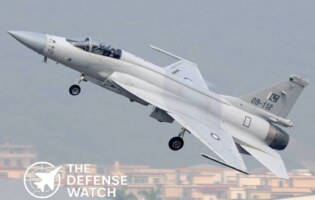
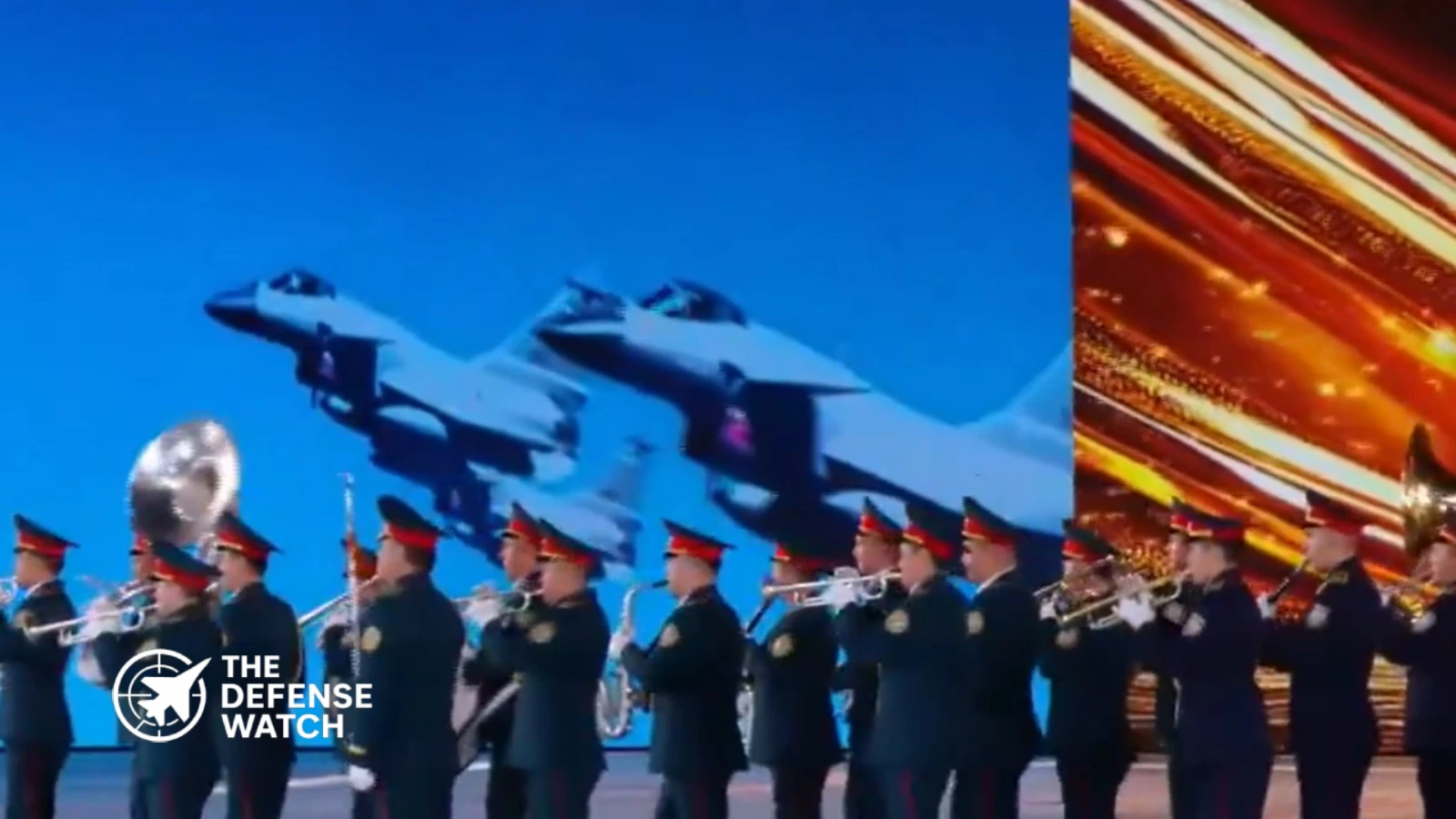
The Uzbekistan J-10CE fighter acquisition has moved from months of unconfirmed reporting to clear visual evidence after Uzbek state media showed Chinese-built J-10CE aircraft during the country’s 35th Independence Day celebrations. At least six aircraft were shown operating together, with Uzbek military markings visible on the fighters.
- Uzbekistan J-10CE Fighters Officially Break Cover
- Takeaways
- At Least Six Aircraft Shown In Uzbek Service
- Why The J-10CE Matters To Uzbekistan
- The J-10CE’s Combat-System Advantage
- A Different Procurement Path From Russia
- Central Asia Is Becoming More Important To China’s Fighter Export Strategy
- The Pakistan Experience Adds Context
- What Remains Unknown About The Uzbek Program
- What The J-10CE Means For Uzbekistan’s Air Force
- A Broader Shift In Central Asian Defense Procurement
- What To Watch Next
Takeaways
Uzbekistan has publicly revealed Chinese-built J-10CE fighters, providing the clearest confirmation yet that the country has begun operating the export version of China’s J-10C multirole fighter.
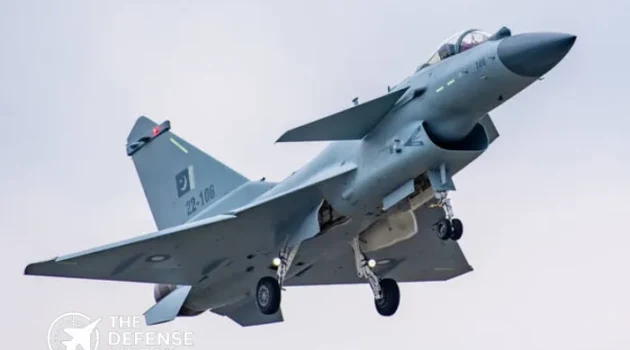
The development follows the publication of photographs earlier in August showing J-10CE airframes believed to be allocated to Uzbekistan. Those images included an aircraft carrying the number 1020, although identifying markings were initially obscured.
The latest footage is important because it provides a much stronger basis for assessing the acquisition. Earlier reports had suggested that Uzbekistan was purchasing the Chinese fighter, but the absence of official imagery had left the status of the program uncertain.
At Least Six Aircraft Shown In Uzbek Service
Footage released around the independence celebrations showed at least six J-10CEs on the ground and in formation. The aircraft were also shown receiving a water-cannon salute, a traditional ceremony associated with significant aircraft arrivals.
The appearance of the Uzbek markings is particularly significant. It establishes that the aircraft are not simply J-10C test or production aircraft photographed in China, but airframes associated with the Uzbek military.
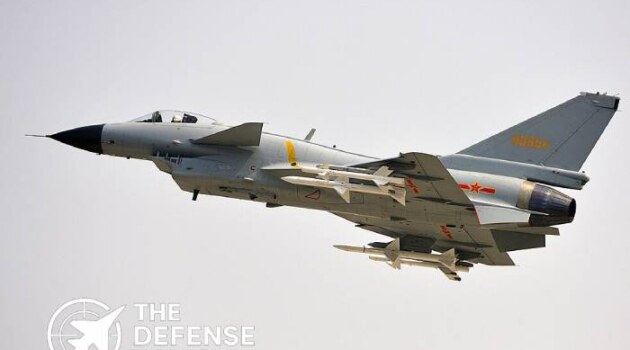
The J-10CE is the export version of the J-10C family developed by Chengdu Aircraft Industry Group under China’s state-owned AVIC aerospace structure. China’s Ministry of National Defense describes the J-10CE as an all-weather, single-engine, single-seat multirole fighter capable of supersonic flight and beyond-visual-range engagement operations.
What Is Known About The Aircraft
Item Current Assessment Aircraft Chengdu J-10CE Operator Uzbekistan Air Force Confirmed aircraft visually shown At least 6 Reported total requirement 24 aircraft Manufacturer Chengdu Aircraft Industry Group Export designation J-10CE Configuration Single-engine, single-seat multirole fighter Foreign operators Pakistan and Uzbekistan First foreign operator Pakistan Reported Uzbek serials 1014, 1020 and related 10xx series Contract value Not officially disclosed The six aircraft shown publicly should not automatically be treated as the complete Uzbek order. Earlier reports have repeatedly cited a potential 24-aircraft acquisition, but neither Tashkent nor Beijing has publicly confirmed the complete number or financial value.
Why The J-10CE Matters To Uzbekistan
Uzbekistan’s fighter inventory has historically reflected the country’s Soviet legacy. Its combat aviation fleet has included Russian-designed MiG-29 and Su-27 fighters alongside Su-25 attack aircraft.
The arrival of the J-10CE therefore represents more than an additional aircraft type. It introduces a modern Chinese combat aircraft ecosystem into a force whose fast-jet inventory has traditionally been tied to Soviet and Russian designs.
This creates a significant modernization opportunity, but it also introduces new requirements for training, weapons integration, maintenance, technical personnel and logistics.
A modern fighter fleet is not defined by airframes alone. Uzbekistan will need trained pilots, mission planners, maintainers, spare parts, ground support equipment, simulators and an appropriate weapons inventory if the J-10CE is to provide a meaningful increase in combat capability.
The J-10CE’s Combat-System Advantage
The J-10CE belongs to a generation of fighters built around modern sensors, digital avionics and networked weapons rather than relying primarily on the legacy radar and analog systems associated with older Soviet-era aircraft.
China describes the aircraft as capable of engaging multiple targets beyond visual range in complex electromagnetic environments and conducting precision attacks against ground targets using multiple guidance methods.
That combination gives the J-10CE a broad mission set.
The aircraft can perform air-to-air missions, air defense, interception and precision strike roles. Its single-engine configuration also provides a relatively compact platform compared with heavier twin-engine fighters such as the Su-27 family.
The practical value of these capabilities will depend heavily on the sensors, electronic warfare systems and weapons supplied under the Uzbek configuration. Public information on the exact Uzbek weapons package remains limited.
A Different Procurement Path From Russia
The strategic significance of Uzbekistan selecting a Chinese fighter becomes clearer when viewed against the country’s broader defense modernization.
For decades, Russia remained the dominant supplier of combat aircraft across much of Central Asia. Uzbekistan’s move toward a Chinese fighter provides another major supplier option and reduces the assumption that future modernization must follow a Russian equipment pathway.
This does not necessarily mean Uzbekistan is abandoning military relationships with Russia. Tashkent continues to maintain broad international relationships and has pursued a multi-vector foreign policy.
Instead, the J-10CE acquisition demonstrates that Uzbekistan has greater freedom to diversify its military technology base.
That matters because combat aircraft procurement creates long-term dependencies. The supplier controls or strongly influences aircraft upgrades, spare parts, training pipelines, weapons compatibility and technical support.
Selecting the J-10CE therefore creates a substantial Chinese industrial and training relationship alongside Uzbekistan’s existing defense partnerships.
Central Asia Is Becoming More Important To China’s Fighter Export Strategy
Uzbekistan’s appearance as a J-10CE operator comes at a time when China is attempting to expand international sales of its advanced combat aircraft.
Pakistan was the first foreign customer for the J-10CE. Chinese state media has highlighted the aircraft’s export status and its development as a modern multirole fighter.
Bangladesh is also moving toward negotiations for the J-10CE, although the number of aircraft and final contract terms remain unresolved. Reuters reported in August that Bangladesh was advancing toward formal discussions with China over the fighter.
The Uzbek acquisition therefore arrives at a useful moment for China’s defense industry. A second confirmed foreign operator provides an additional reference customer for a fighter that Beijing is marketing internationally.
For prospective customers, an aircraft operated by more than one foreign air force can be easier to evaluate in terms of training, maintenance and long-term support.
The Pakistan Experience Adds Context
Pakistan’s experience with the J-10C has also increased international attention on the platform.
Pakistan inducted J-10CE fighters beginning in 2022, and Chinese official reporting documented their appearance at Pakistan Day events that year.
The aircraft subsequently received significant international attention following the May 2025 India-Pakistan conflict. Claims concerning individual aircraft losses and the performance of specific weapons remain politically contested, so those claims should not be treated as independently established measures of the J-10CE’s combat effectiveness.
What can be established is that the Pakistan experience has placed the J-10C family under far greater international scrutiny than it received before 2025.
That visibility could influence future export decisions, particularly among countries seeking a modern fighter without entering the cost and political framework associated with some Western platforms.
What Remains Unknown About The Uzbek Program
Despite the new evidence, several important questions remain unanswered.
The exact size of the Uzbek fleet has not been officially disclosed. The reported 24-aircraft figure has appeared repeatedly in defense reporting, but it should remain classified as a reported requirement rather than a confirmed final delivery total.
The contract value is also not public.
There is no confirmed public breakdown of the associated weapons package, training arrangement, simulator fleet, maintenance support or future modernization provisions.
Those details will ultimately determine how much capability Uzbekistan receives from the acquisition.
The difference between receiving a modern fighter and operating a modern combat aviation system is substantial. The latter requires sustained investment in infrastructure, training, weapons and support.
What The J-10CE Means For Uzbekistan’s Air Force
The most important effect of the J-10CE acquisition may be its role as a bridge between Uzbekistan’s legacy fleet and a more modern combat aviation structure.
If additional aircraft arrive, the J-10CE could become one of the country’s principal multirole fighters. That would provide Uzbekistan with a modern platform capable of performing missions that would be increasingly difficult for older MiG-29 and Su-27 aircraft to support economically.
The transition will also test Uzbekistan’s ability to integrate Chinese aircraft into its existing command, control, air-defense and logistics architecture.
That integration is particularly important in Central Asia, where air forces operate across large geographic areas and must maintain credible readiness without the infrastructure available to much larger military powers.
A Broader Shift In Central Asian Defense Procurement
The J-10CE’s arrival should be viewed as part of a broader evolution in Central Asian defense procurement.
Countries in the region are increasingly seeking options beyond traditional Russian suppliers while maintaining relationships with Moscow. China is well positioned to benefit from this trend because it can offer a wide range of military systems, including fighters, air-defense systems, unmanned aircraft, missiles and supporting technologies.
Uzbekistan already has a growing defense relationship with China. The Uzbek presidency has described bilateral ties with Beijing as an all-weather strategic partnership and has emphasized expanding practical cooperation.
The fighter acquisition adds a high-value military dimension to that broader relationship.
For China, the significance is equally clear. Establishing the J-10CE in Uzbekistan places a Chinese fourth-generation-plus fighter in a strategically important Central Asian country bordering Afghanistan and located within a region where Russia has historically maintained extensive defense relationships.
The development does not by itself indicate a formal realignment of Uzbekistan’s security policy. It does, however, demonstrate the growing diversity of military technology available to Central Asian states.
What To Watch Next
The next indicators will be the delivery of additional J-10CEs, confirmation of the total Uzbek order, identification of the aircraft’s weapons and the development of dedicated training and maintenance infrastructure.
Public appearances of additional aircraft could also establish whether the reported 24-aircraft figure represents the final requirement or an earlier planning figure.
The integration of the J-10CE into Uzbekistan’s wider air-defense network will be another important measure of the program’s long-term impact.
For now, the clearest fact is that Uzbekistan has moved beyond speculation. At least six Chinese-built J-10CE fighters have been publicly shown carrying Uzbek markings, confirming that China’s modern fighter export presence has expanded into Central Asia.
That makes the Uzbek J-10CE program an important development not only for Tashkent’s air force modernization, but also for the changing defense-industrial balance across the region.