

Uzbekistan J-10CE Fighters Officially Break Cover
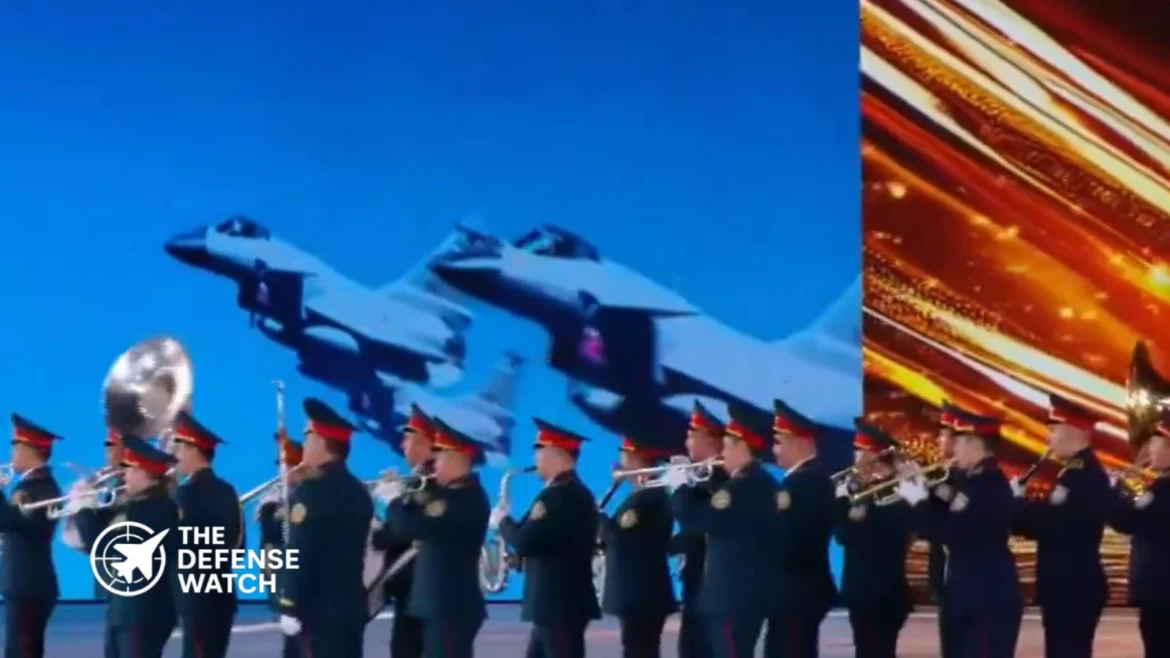
The Uzbekistan J-10CE fighter acquisition has moved from months of unconfirmed reporting to clear visual evidence after Uzbek state media showed Chinese-built J-10CE aircraft during the country’s 35th Independence Day celebrations. At least six aircraft were shown operating together, with Uzbek military markings visible on the fighters.
Takeaways
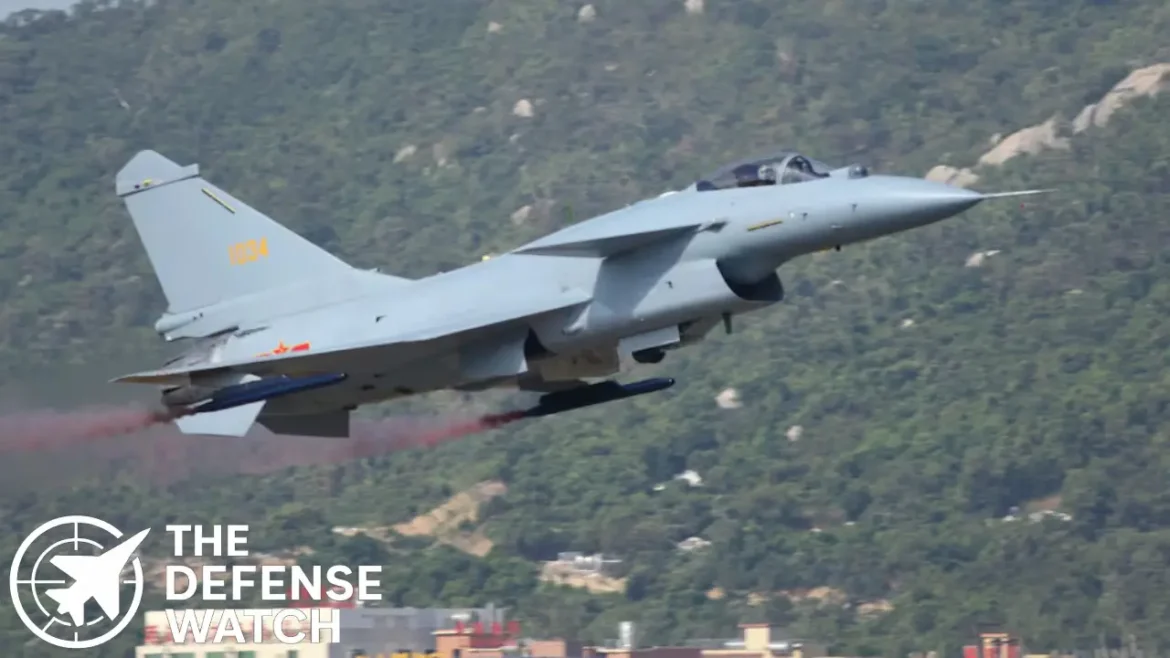
Uzbekistan has publicly revealed Chinese-built J-10CE fighters, providing the clearest confirmation yet that the country has begun operating the export version of China’s J-10C multirole fighter.
The development follows the publication of photographs earlier in August showing J-10CE airframes believed to be allocated to Uzbekistan. Those images included an aircraft carrying the number 1020, although identifying markings were initially obscured.
The latest footage is important because it provides a much stronger basis for assessing the acquisition. Earlier reports had suggested that Uzbekistan was purchasing the Chinese fighter, but the absence of official imagery had left the status of the program uncertain.
At Least Six Aircraft Shown In Uzbek Service
Footage released around the independence celebrations showed at least six J-10CEs on the ground and in formation. The aircraft were also shown receiving a water-cannon salute, a traditional ceremony associated with significant aircraft arrivals.
The appearance of the Uzbek markings is particularly significant. It establishes that the aircraft are not simply J-10C test or production aircraft photographed in China, but airframes associated with the Uzbek military.
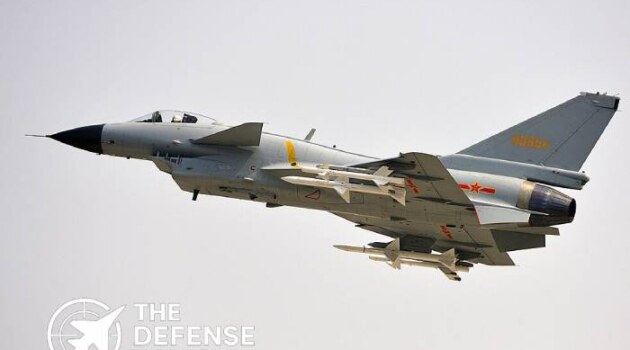
The J-10CE is the export version of the J-10C family developed by Chengdu Aircraft Industry Group under China’s state-owned AVIC aerospace structure. China’s Ministry of National Defense describes the J-10CE as an all-weather, single-engine, single-seat multirole fighter capable of supersonic flight and beyond-visual-range engagement operations.
What Is Known About The Aircraft
Item Current Assessment Aircraft Chengdu J-10CE Operator Uzbekistan Air Force Confirmed aircraft visually shown At least 6 Reported total requirement 24 aircraft Manufacturer Chengdu Aircraft Industry Group Export designation J-10CE Configuration Single-engine, single-seat multirole fighter Foreign operators Pakistan and Uzbekistan First foreign operator Pakistan Reported Uzbek serials 1014, 1020 and related 10xx series Contract value Not officially disclosed The six aircraft shown publicly should not automatically be treated as the complete Uzbek order. Earlier reports have repeatedly cited a potential 24-aircraft acquisition, but neither Tashkent nor Beijing has publicly confirmed the complete number or financial value.
Why The J-10CE Matters To Uzbekistan
Uzbekistan’s fighter inventory has historically reflected the country’s Soviet legacy. Its combat aviation fleet has included Russian-designed MiG-29 and Su-27 fighters alongside Su-25 attack aircraft.
The arrival of the J-10CE therefore represents more than an additional aircraft type. It introduces a modern Chinese combat aircraft ecosystem into a force whose fast-jet inventory has traditionally been tied to Soviet and Russian designs.
This creates a significant modernization opportunity, but it also introduces new requirements for training, weapons integration, maintenance, technical personnel and logistics.
A modern fighter fleet is not defined by airframes alone. Uzbekistan will need trained pilots, mission planners, maintainers, spare parts, ground support equipment, simulators and an appropriate weapons inventory if the J-10CE is to provide a meaningful increase in combat capability.
The J-10CE’s Combat-System Advantage
The J-10CE belongs to a generation of fighters built around modern sensors, digital avionics and networked weapons rather than relying primarily on the legacy radar and analog systems associated with older Soviet-era aircraft.
China describes the aircraft as capable of engaging multiple targets beyond visual range in complex electromagnetic environments and conducting precision attacks against ground targets using multiple guidance methods.
That combination gives the J-10CE a broad mission set.
The aircraft can perform air-to-air missions, air defense, interception and precision strike roles. Its single-engine configuration also provides a relatively compact platform compared with heavier twin-engine fighters such as the Su-27 family.
The practical value of these capabilities will depend heavily on the sensors, electronic warfare systems and weapons supplied under the Uzbek configuration. Public information on the exact Uzbek weapons package remains limited.
A Different Procurement Path From Russia
The strategic significance of Uzbekistan selecting a Chinese fighter becomes clearer when viewed against the country’s broader defense modernization.
For decades, Russia remained the dominant supplier of combat aircraft across much of Central Asia. Uzbekistan’s move toward a Chinese fighter provides another major supplier option and reduces the assumption that future modernization must follow a Russian equipment pathway.
This does not necessarily mean Uzbekistan is abandoning military relationships with Russia. Tashkent continues to maintain broad international relationships and has pursued a multi-vector foreign policy.
Instead, the J-10CE acquisition demonstrates that Uzbekistan has greater freedom to diversify its military technology base.
That matters because combat aircraft procurement creates long-term dependencies. The supplier controls or strongly influences aircraft upgrades, spare parts, training pipelines, weapons compatibility and technical support.
Selecting the J-10CE therefore creates a substantial Chinese industrial and training relationship alongside Uzbekistan’s existing defense partnerships.
Central Asia Is Becoming More Important To China’s Fighter Export Strategy
Uzbekistan’s appearance as a J-10CE operator comes at a time when China is attempting to expand international sales of its advanced combat aircraft.
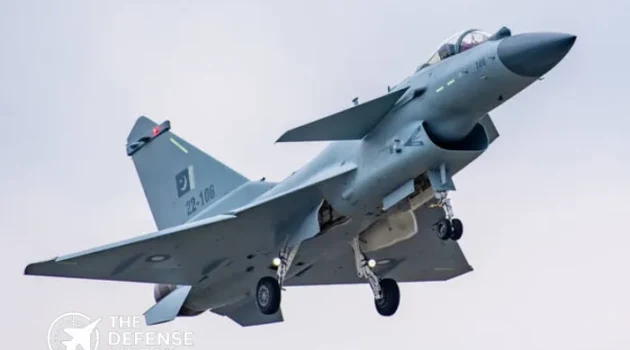
Pakistan was the first foreign customer for the J-10CE. Chinese state media has highlighted the aircraft’s export status and its development as a modern multirole fighter.
Bangladesh is also moving toward negotiations for the J-10CE, although the number of aircraft and final contract terms remain unresolved. Reuters reported in August that Bangladesh was advancing toward formal discussions with China over the fighter.
The Uzbek acquisition therefore arrives at a useful moment for China’s defense industry. A second confirmed foreign operator provides an additional reference customer for a fighter that Beijing is marketing internationally.
For prospective customers, an aircraft operated by more than one foreign air force can be easier to evaluate in terms of training, maintenance and long-term support.
The Pakistan Experience Adds Context
Pakistan’s experience with the J-10C has also increased international attention on the platform.
Pakistan inducted J-10CE fighters beginning in 2022, and Chinese official reporting documented their appearance at Pakistan Day events that year.
The aircraft subsequently received significant international attention following the May 2025 India-Pakistan conflict. Claims concerning individual aircraft losses and the performance of specific weapons remain politically contested, so those claims should not be treated as independently established measures of the J-10CE’s combat effectiveness.
What can be established is that the Pakistan experience has placed the J-10C family under far greater international scrutiny than it received before 2025.
That visibility could influence future export decisions, particularly among countries seeking a modern fighter without entering the cost and political framework associated with some Western platforms.
What Remains Unknown About The Uzbek Program
Despite the new evidence, several important questions remain unanswered.
The exact size of the Uzbek fleet has not been officially disclosed. The reported 24-aircraft figure has appeared repeatedly in defense reporting, but it should remain classified as a reported requirement rather than a confirmed final delivery total.
The contract value is also not public.
There is no confirmed public breakdown of the associated weapons package, training arrangement, simulator fleet, maintenance support or future modernization provisions.
Those details will ultimately determine how much capability Uzbekistan receives from the acquisition.
The difference between receiving a modern fighter and operating a modern combat aviation system is substantial. The latter requires sustained investment in infrastructure, training, weapons and support.
What The J-10CE Means For Uzbekistan’s Air Force
The most important effect of the J-10CE acquisition may be its role as a bridge between Uzbekistan’s legacy fleet and a more modern combat aviation structure.
If additional aircraft arrive, the J-10CE could become one of the country’s principal multirole fighters. That would provide Uzbekistan with a modern platform capable of performing missions that would be increasingly difficult for older MiG-29 and Su-27 aircraft to support economically.
The transition will also test Uzbekistan’s ability to integrate Chinese aircraft into its existing command, control, air-defense and logistics architecture.
That integration is particularly important in Central Asia, where air forces operate across large geographic areas and must maintain credible readiness without the infrastructure available to much larger military powers.
A Broader Shift In Central Asian Defense Procurement
The J-10CE’s arrival should be viewed as part of a broader evolution in Central Asian defense procurement.
Countries in the region are increasingly seeking options beyond traditional Russian suppliers while maintaining relationships with Moscow. China is well positioned to benefit from this trend because it can offer a wide range of military systems, including fighters, air-defense systems, unmanned aircraft, missiles and supporting technologies.
Uzbekistan already has a growing defense relationship with China. The Uzbek presidency has described bilateral ties with Beijing as an all-weather strategic partnership and has emphasized expanding practical cooperation.
The fighter acquisition adds a high-value military dimension to that broader relationship.
For China, the significance is equally clear. Establishing the J-10CE in Uzbekistan places a Chinese fourth-generation-plus fighter in a strategically important Central Asian country bordering Afghanistan and located within a region where Russia has historically maintained extensive defense relationships.
The development does not by itself indicate a formal realignment of Uzbekistan’s security policy. It does, however, demonstrate the growing diversity of military technology available to Central Asian states.
What To Watch Next
The next indicators will be the delivery of additional J-10CEs, confirmation of the total Uzbek order, identification of the aircraft’s weapons and the development of dedicated training and maintenance infrastructure.
Public appearances of additional aircraft could also establish whether the reported 24-aircraft figure represents the final requirement or an earlier planning figure.
The integration of the J-10CE into Uzbekistan’s wider air-defense network will be another important measure of the program’s long-term impact.
For now, the clearest fact is that Uzbekistan has moved beyond speculation. At least six Chinese-built J-10CE fighters have been publicly shown carrying Uzbek markings, confirming that China’s modern fighter export presence has expanded into Central Asia.
That makes the Uzbek J-10CE program an important development not only for Tashkent’s air force modernization, but also for the changing defense-industrial balance across the region.
(adsbygoogle = window.adsbygoogle || []).push({});Executive Summary:
Bangladesh is expected to advance plans to acquire 24 Chinese J-10CE multirole fighter aircraft during Prime Minister Tarique Rahman’s official visit to China beginning Monday. The potential deal would represent one of Dhaka’s most significant combat aviation procurements in decades and could deepen defense cooperation between Bangladesh and China amid broader economic and strategic engagement.
Bangladesh Advances J-10CE Fighter Acquisition During China Visit
Bangladesh’s reported plan to acquire 24 Chinese J-10CE fighter jets is expected to be a key defense topic during Prime Minister Tarique Rahman’s visit to China, where both countries are also expected to discuss infrastructure, trade, investment, and broader strategic cooperation.
If finalized, the acquisition would provide the Bangladesh Air Force (BAF) with a modern fourth-generation-plus multirole combat aircraft capable of conducting air superiority, strike, and precision attack missions. The deal would also represent a major step in the country’s long-running effort to modernize an aging combat fleet.
The reported negotiations come as regional air forces continue investing in advanced fighter aircraft, long-range precision weapons, and networked combat capabilities to address evolving security requirements across South Asia and the Indo-Pacific.
Why The J-10CE Matters For Bangladesh
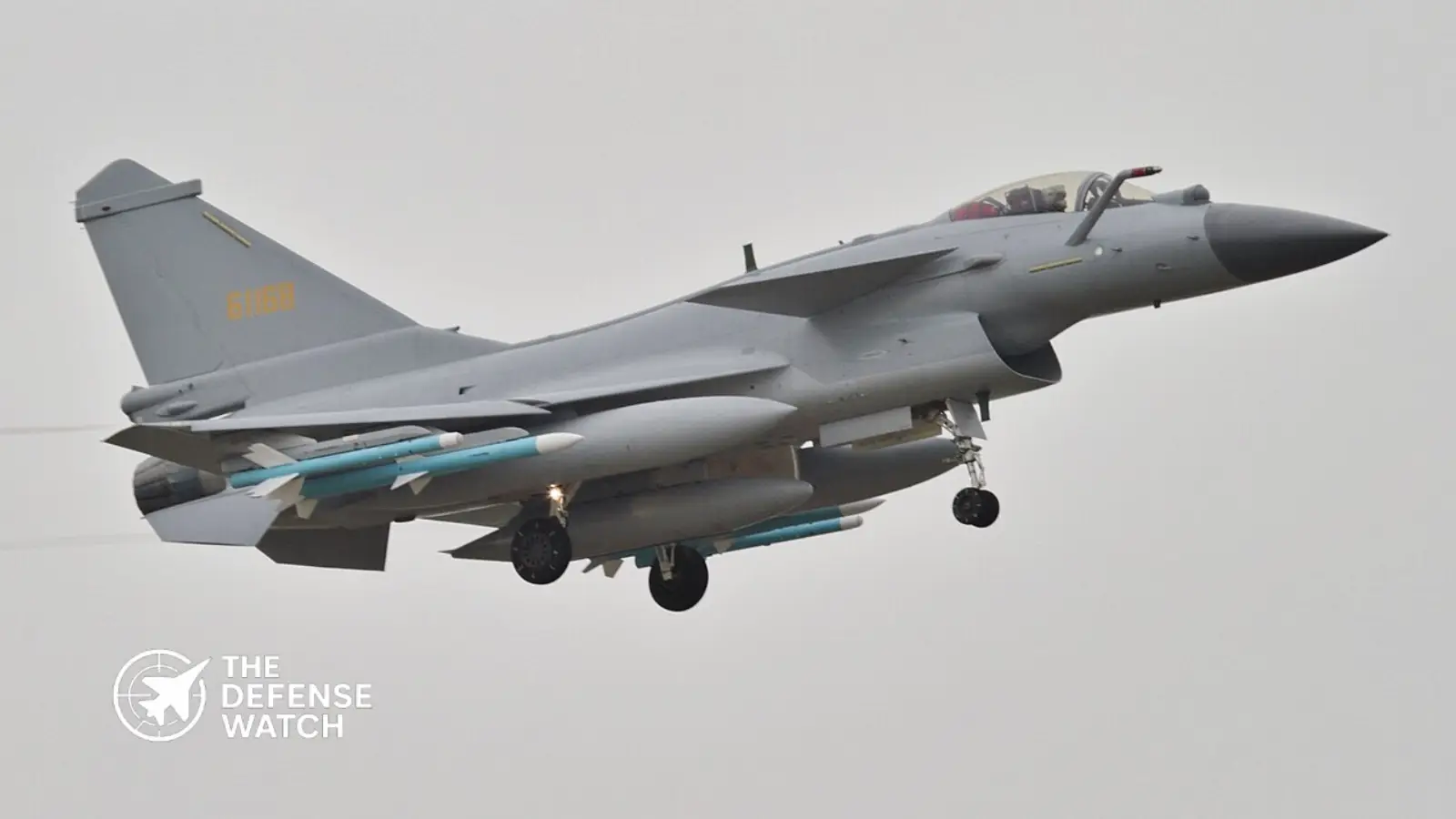
The J-10CE is the export variant of China’s J-10C fighter, developed by the state-owned aerospace manufacturer China Aviation Industry Corporation (AVIC).
The aircraft is designed as a multirole platform capable of performing both air-to-air and air-to-ground missions while integrating modern avionics, sensors, and weapons.
(adsbygoogle = window.adsbygoogle || []).push({});Key J-10CE Capabilities
Capability Details Role Multirole fighter Generation 4.5-generation Radar Active Electronically Scanned Array (AESA) radar Engine WS-10 or export-configured turbofan Air-to-Air Weapons PL-10, PL-15 missiles Air-to-Ground Weapons Precision-guided bombs and missiles Flight Control Digital fly-by-wire Combat Radius Approximately 1,000+ km depending on mission profile One of the aircraft’s most notable features is its compatibility with the PL-15 beyond-visual-range air-to-air missile, a weapon widely regarded as one of China’s most capable long-range air combat systems.
The combination of AESA radar technology, modern electronic warfare systems, and advanced missile integration gives the J-10CE capabilities that significantly exceed those of many legacy fighter platforms still operating in regional inventories.
(adsbygoogle = window.adsbygoogle || []).push({});Bangladesh Air Force Modernization Efforts
The Bangladesh Air Force has pursued modernization initiatives under the country’s long-term military development plans, seeking to replace older combat aircraft while improving air defense and strike capabilities.
Current fighter assets include Chinese-origin aircraft such as the F-7BGI and other legacy platforms that face increasing challenges against modern threats.
Acquiring 24 J-10CE fighters would provide several advantages:
- Improved air defense coverage
- Enhanced beyond-visual-range engagement capability
- Better precision strike capacity
- Increased interoperability with existing Chinese-origin systems
- Reduced maintenance complexity compared with operating multiple fighter types
The size of the reported acquisition suggests Bangladesh may be seeking to establish at least one operational fighter wing equipped with the new aircraft while creating capacity for training and maintenance support.
atOptions = { ‘key’ : ‘e7d18db8b7513fb2a224cf4c3f18bbf0’, ‘format’ : ‘iframe’, ‘height’ : 90, ‘width’ : 728, ‘params’ : {} };Expanding China-Bangladesh Defense Cooperation
Defense ties between Dhaka and Beijing have expanded steadily over the past two decades.
China has become one of Bangladesh’s principal defense suppliers, providing military equipment across multiple domains, including aircraft, naval platforms, armored vehicles, missile systems, and training support.
The potential J-10CE acquisition would further strengthen that relationship and could be accompanied by additional agreements covering:
- Pilot training
- Maintenance and logistics support
- Spare parts supply
- Technical assistance
- Infrastructure development for aircraft operations
For China, a successful J-10CE sale would add another export customer for one of its premier fighter aircraft and reinforce Beijing’s position as a major defense supplier in South Asia.
Regional Strategic Implications
The potential acquisition carries implications beyond Bangladesh’s immediate military requirements.
South Asia is experiencing a period of accelerated air power modernization. Regional air forces are introducing advanced fighters equipped with AESA radars, network-enabled weapons, and electronic warfare systems designed to improve survivability in contested environments.
A Bangladesh Air Force fleet of 24 J-10CE fighters would significantly enhance the country’s ability to conduct air sovereignty missions and maintain credible deterrence capabilities.
While Bangladesh traditionally pursues a balanced foreign policy focused on strategic autonomy, major defense acquisitions often reflect broader defense-industrial relationships and long-term support arrangements.
The deal would also underscore China’s growing influence in regional defense markets, where Beijing increasingly competes with Western, Russian, and other international suppliers for advanced combat aircraft contracts.
Technical And Operational Considerations
Introducing a new fighter aircraft involves more than purchasing airframes.
Bangladesh would need to develop the supporting ecosystem necessary for sustained operations, including maintenance facilities, simulator infrastructure, pilot conversion training, and supply chain management.
Key implementation factors include:
Training Requirements
- Pilot transition programs
- Ground crew certification
- Weapons integration training
- Tactical doctrine development
Infrastructure Investments
- Hangars and maintenance facilities
- Mission planning systems
- Simulator centers
- Spare parts storage and logistics networks
Long-Term Sustainment
- Engine support agreements
- Software updates
- Radar maintenance
- Weapons inventory management
These factors often represent a substantial portion of the overall lifecycle cost of a fighter acquisition program.
Original Analysis: What The Deal Means For Regional Air Power
The reported J-10CE acquisition is significant because it reflects a broader shift occurring across developing air forces. Rather than purchasing large numbers of lower-cost legacy fighters, many countries are increasingly seeking smaller fleets of more capable aircraft equipped with advanced sensors and long-range weapons.
For Bangladesh, the J-10CE offers a pathway to modern air combat capabilities without the acquisition costs associated with fifth-generation fighters. The platform’s AESA radar, digital architecture, and modern missile suite could provide a meaningful leap in operational effectiveness compared with older aircraft currently in service.
From a strategic perspective, the deal also illustrates how China is increasingly using defense exports to expand long-term security relationships. Fighter aircraft purchases create decades-long dependencies involving maintenance, upgrades, training, and weapons procurement. As a result, such agreements often carry significance that extends well beyond the aircraft themselves.
For the United States and other regional stakeholders, the reported procurement highlights the continued growth of China’s defense-industrial footprint across Asia. The success of the J-10CE in export markets could influence future fighter competitions in regions where affordability and capability are both major procurement considerations.
Outlook
No official contract announcement has yet been made regarding the reported acquisition of 24 J-10CE fighters. However, the issue is expected to feature prominently during high-level discussions in Beijing.
If negotiations progress toward a formal agreement, the procurement would mark one of the most important military aviation developments in Bangladesh’s recent history and further strengthen the defense relationship between Dhaka and Beijing.

Bangladesh Clears Path for Multirole Fighter Acquisition
Bangladesh’s caretaker government has provisionally approved a sweeping modernization of its air force, granting the Bangladesh Air Force (BAF) the green light to procure multirole combat aircraft, along with advanced surface-to-air missiles and long-range radars.
Although Air Chief Marshal Hasan Mahmood Khan has not publicly confirmed a model, industry and regional analysis suggest a strong tilt toward the Chinese J-10CE export variant, a 4.5-generation fighter already in service with Pakistan. Under the authorization, Bangladesh may acquire up to 20 jets by 2027, with total costs — including training, spares, infrastructure, and sustainment — estimated at around US $2.2 billion.
This decision comes amid growing urgency: Bangladesh’s current fighter fleet, composed largely of aging Chinese F-7s and a handful of Russian MiG-29s, has suffered from high maintenance demands and safety issues. One F-7 crashed into a Dhaka college campus earlier this year, claiming dozens of lives and underscoring the pressing need for fleet renewal.
Strategic Rationale Behind the Move
Reinforcing Air Sovereignty and Coastal Defense
Geographically positioned between India and the Bay of Bengal, Bangladesh’s air defense challenges are pronounced. A modern multirole fleet would give Dhaka enhanced capabilities to surveil, interdict, and enforce its airspace, particularly over maritime boundaries and in contested coastal corridors. The shift to more capable jets is aligned with the broader Forces Goal 2030 modernization roadmap.
Chinese Equipment Ecosystem and Existing Ties
Bangladesh already fields several Chinese-origin platforms — from light tanks to submarines — which suggests that interoperability, logistics synergies, and political alignment could favor a Chinese fighter choice. Moreover, previous diplomatic engagements, including during a visit by interim Chief Adviser Muhammad Yunus to Beijing, signaled mutual interest in stronger defense ties and arms trade cooperation.
Risks and Balancing Western Options
While the Chinese J-10CE remains the frontrunner, Bangladesh has reportedly explored Western alternatives, including attending Eurofighter Typhoon demonstration flights in Italy. However, aligning with Chinese systems carries diplomatic trade-offs: potential friction with the United States and Western suppliers, export control constraints, and reliance on China for long-term sustainment.
Publicly, Bangladesh’s Finance Adviser declined to comment when pressed on the $2.2 billion deal, underlining the sensitivity of the procurement in political and fiscal circles.
Technical Prospects and Integration Challenges
The J-10CE is believed to incorporate modern avionics such as active electronically scanned array (AESA) radar, digital flight control, and compatibility with beyond-visual-range missiles like the PL-15E. If fully integrated, it would constitute a qualitative leap over Bangladesh’s existing fleet of second- and third-generation jets.
However, successful deployment demands upgrades in BAF’s command, control, communications, computers, and intelligence (C4I) framework. Integration of datalinks, secure networks, and ground-based radar nodes will be critical for network-centric operations. Key infrastructure—bases, maintenance depots, hardened shelters, fuel systems—would also require modernization before new jets can deploy.
Regional Implications and Competitive Dynamics
Bangladesh’s move enters a dynamic South Asian airpower landscape. India’s air force fields advanced platforms like the Rafale, Su-30MKI, and indigenous Tejas Mk1A, maintaining qualitative edge in many domains. The acquisition of J-10CEs narrows the gap, particularly in radar and missile capabilities.
At the same time, neighboring countries and strategic watchers will assess this as part of China’s broader regional outreach. The introduction of relatively capable Chinese fighters into smaller air forces amplifies China’s defense posture beyond its borders, even if indirectly.
Outlook and Next Steps
With in-principle approval secured, the next phases hinge on a multiministerial committee led by the BAF to negotiate terms, finalize contracts, and choose between government-to-government (G2G) approaches or direct commercial deals.
If the timeline holds, training may begin in China as early as 2027, with first deliveries arriving in late 2027 or 2028. Full operational capability could be achieved by the early 2030s, catalyzing a new era for Bangladesh’s air defence posture.
Analysis & Context
This decision highlights a broader trend among mid-tier states in Asia: a shift toward 4th/4.5-generation multirole jets to replace aging interceptor fleets. The J-10CE particularly appeals to countries already using Chinese equipment, lowering integration and sustainment risk. That said, reliance on a single supplier presents vulnerability—both politically and logistically.
For Bangladesh, the stakes are high. Successful modernization could yield a credible deterrent in the Bay of Bengal region. But delays, cost overruns, or integration failures would risk strategic and fiscal backlash. Balancing ambition with execution discipline will be key.
FAQs
The J-10CE leverages Bangladesh’s existing Chinese equipment ecosystem, offers attractive financing, and presents fewer export control obstacles. Western jets can be costlier, diplomatically sensitive, and involve more complex technology transfer challenges.
The sum includes not only the aircraft but training, spares, infrastructure, maintenance, and lifetime support — spreading cost over 10 years makes it more manageable.
Yes — the current approval is in-principle. The final decision depends on multiministerial committee review, negotiations, and competitive offers.
If all goes smoothly, initial deliveries may come in 2027–28, with full operational capability by around 2030.
Moderately. While it won’t match India’s cutting-edge platforms, it strengthens Bangladesh’s deterrence and forces competitors to account for improved BAF capabilities.