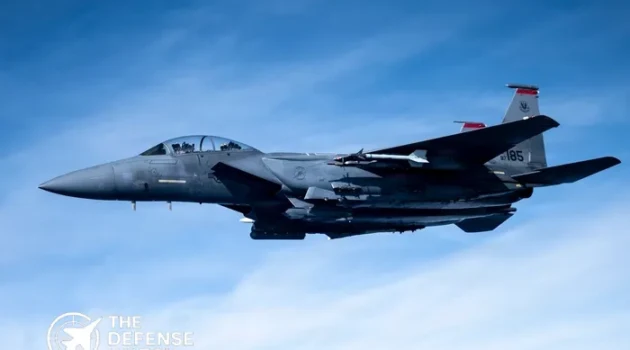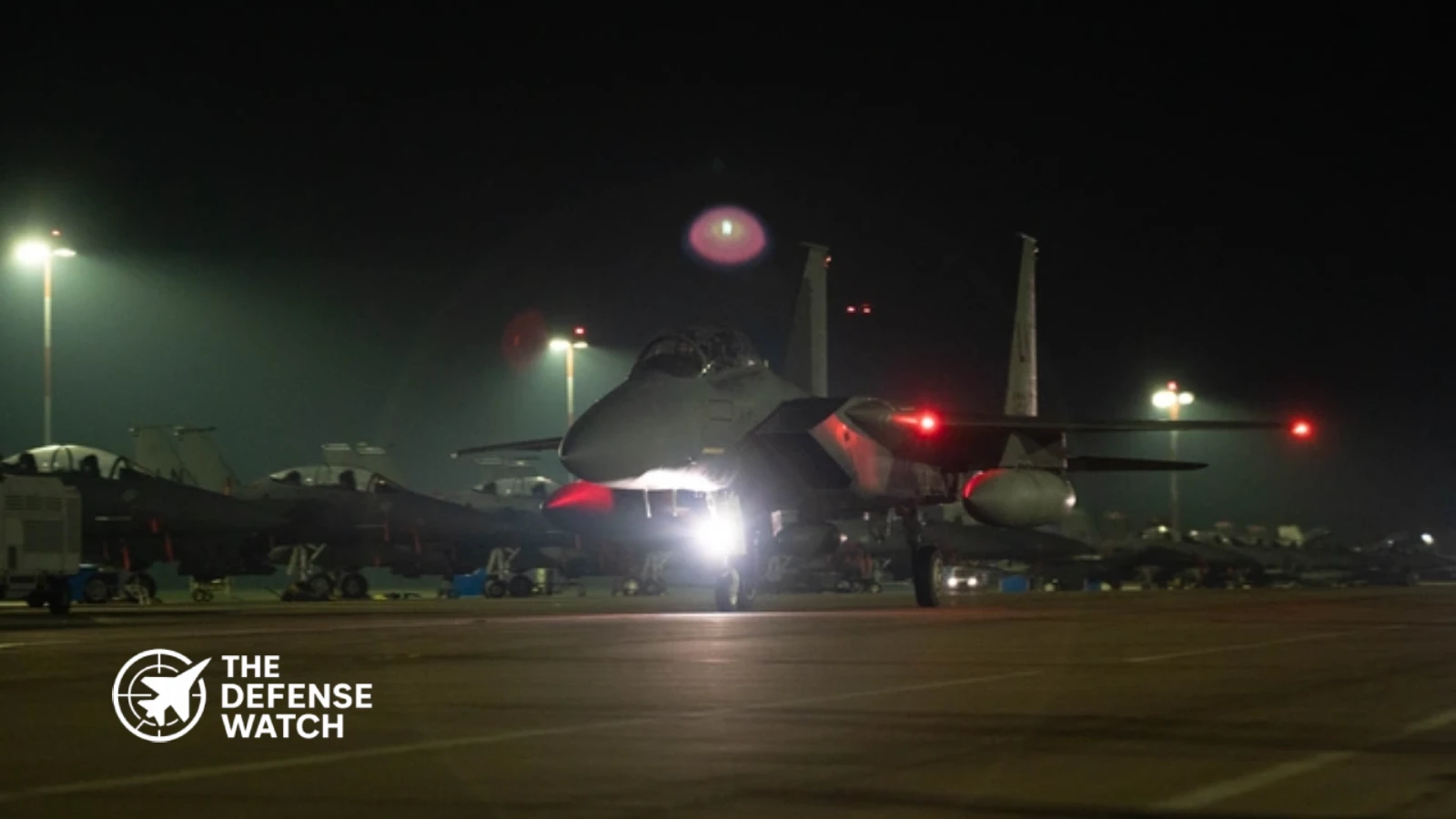
Boeing Expands Japan F-15 EPAWSS Training Capability
Boeing has received a $17.6 million F-15 Japan EPAWSS contract modification to integrate electronic warfare functionality into the existing weapons system trainer supporting Japan’s F-15 Super Interceptor program. The U.S. Air Force said the $17,609,471 modification will fund software development, testing, simulator software updates, and aircrew and aircraft maintenance courseware. The work is being performed by Boeing in St. Louis, Missouri, and is scheduled for completion on Feb. 28, 2031.
Takeaways
Boeing is expanding Japan’s F-15 Super Interceptor training architecture to include EPAWSS electronic warfare capabilities.
1. $17.6 Million Contract Modification
Boeing received a $17,609,471 modification to an existing U.S. Air Force contract supporting Japan’s F-15 Super Interceptor program.
2. EPAWSS Training Integration
The work will integrate Eagle Passive/Active Warning and Survivability System functionality into Japan’s existing weapons system training architecture.
3. Software And Courseware Development
The modification covers software development, testing, simulator software updates and new aircrew and aircraft maintenance courseware.
4. Work Runs Through February 2031
Boeing will perform the work in St. Louis, Missouri, with completion scheduled for Feb. 28, 2031.
5. Supports Japan’s F-15 Modernization
The training modification follows broader U.S.-Japan investment in modernizing the F-15J fleet, including electronic warfare, radar, mission computer and weapons system upgrades.
The award is part of contract FA8634-22-C-2705, which supports Japan’s F-15 modernization program through the U.S. Foreign Military Sales system. The Air Force Life Cycle Management Center at Wright-Patterson Air Force Base, Ohio, is the contracting activity.
The modification is significant because it extends EPAWSS modernization beyond aircraft hardware. It brings the aircraft’s updated electronic warfare functions into the training environment, allowing the weapons system trainer and associated courseware to reflect the capabilities being introduced to Japan’s F-15 fleet.
What The $17.6 Million Modification Covers
According to the contract announcement, the modification covers several related activities rather than a standalone hardware purchase.
| Area | Contract Scope |
|---|---|
| Contractor | Boeing |
| Location | St. Louis, Missouri |
| Contract | FA8634-22-C-2705 |
| Modification value | $17,609,471 |
| Customer | Japan |
| Acquisition | Foreign Military Sales |
| Acquisition method | Sole source |
| Main system | EPAWSS |
| Training element | F-15 weapons system trainer |
| Work included | Software, testing, simulator updates and courseware |
| Completion | Feb. 28, 2031 |
The contract uses both cost-plus-fixed-fee and firm-fixed-price elements. The full amount is being obligated with Foreign Military Sales funds at the time of award.
The work is therefore focused on integrating the electronic warfare capability into the broader training architecture rather than procuring another operational aircraft modification package.
EPAWSS Brings Digital Electronic Warfare To The F-15
EPAWSS is designed to replace older F-15 electronic warfare technology with an integrated digital system capable of detecting, identifying and locating threats while supporting defensive responses against modern threat systems.
The U.S. Air Force has described EPAWSS as an integrated digital electronic warfare system designed to improve F-15 survivability in contested environments. The system can detect, identify and locate threat emitters and support functions intended to deny, degrade and disrupt hostile systems.
That represents a major change from the architecture used on earlier F-15 aircraft. Air Force documentation has noted that the legacy F-15E electronic warfare system was based on technology developed for Cold War-era threats. EPAWSS provides a modern digital architecture better suited to environments containing more sophisticated radar, electronic attack and integrated air defense systems.
For Japan, incorporating those functions into the training system is important because electronic warfare is not simply an aircraft equipment upgrade. Pilots and maintainers need to understand how the system detects threats, how its warning information is presented, and how the aircraft’s defensive functions interact with other mission systems.
Why Training Integration Matters
A modern electronic warfare suite changes the information available to an aircrew during a mission.
A simulator that does not accurately reproduce those functions can leave a gap between aircraft capability and crew training. By updating the weapons system trainer and associated courseware, Boeing is being tasked with bringing the training environment into closer alignment with the upgraded aircraft.
The modification specifically includes simulator software updates and aircrew courseware. It also includes aircraft maintenance courseware, which is important because the introduction of a modern digital EW architecture creates new training requirements for personnel responsible for operating, troubleshooting and maintaining the system.
The approach also allows training to be developed alongside the broader modernization effort rather than treating training as a separate activity after the aircraft upgrade is complete.
Japan’s F-15 Modernization Is A Broader Program
The EPAWSS training work is one element of a much larger Japanese F-15 modernization effort.
The original F-15 Japan Super Interceptor program was established to modify Japan Air Self-Defense Force F-15MJ aircraft and included development, testing and delivery of weapons system trainers. A 2021 contract announcement valued the initial contract action at up to $471.3 million and identified four weapons system trainers as part of the program.
The program has subsequently received additional modifications for electronic warfare, radar, self-protection and mission computer capabilities.
In December 2024, the U.S. Department of Defense announced a $450.5 million contract action for the F-15 Japan Super Interceptor program covering production Lot One requirements, including radars, self-protection systems and mission computer units.
The broader modernization architecture means Japan is not simply maintaining the existing F-15J configuration. It is updating key mission systems while preserving the airframe as a major component of its air defense force.
Japan’s Ministry of Defense identifies the F-15J/DJ as a principal fighter aircraft of the Japan Air Self-Defense Force. Its published specifications list a two-engine configuration, a maximum speed of approximately Mach 2.5 and a fleet presence across multiple fighter squadrons.
EPAWSS Connects Aircraft Modernization With Pilot Training
The operational value of an electronic warfare upgrade depends partly on whether crews can use the capability effectively.
EPAWSS provides threat detection and electronic warfare functions that can affect how an F-15 crew interprets the electromagnetic environment. Training systems therefore need to represent those functions with sufficient fidelity for pilots to build familiarity with the system before operating the aircraft.
This is where the new Boeing modification has broader significance.
The contract does not announce a new aircraft or a new electronic warfare system. Instead, it addresses an important integration problem created by modernization: ensuring that the training ecosystem keeps pace with changes to the aircraft.
For Japan’s F-15 force, this can support a more consistent transition between classroom instruction, simulator training and aircraft operations.
Japan Already Has A Dedicated EPAWSS Procurement Framework
Japan’s involvement with EPAWSS predates the latest training modification.
The Defense Security Cooperation Agency established a special nonrecurring cost for Japan associated with the EPAWSS AN/ALQ-250 system in 2022. The DSCA documentation specifically identifies the system as the Eagle Passive Active Warning Survivability F-15 System and lists a Japan-specific special nonrecurring charge of $1,868,224.
That documentation confirms that EPAWSS has been incorporated into the formal Foreign Military Sales framework supporting Japan’s F-15 modernization.
The latest Boeing modification consequently fits into an established modernization pathway rather than representing an isolated training investment.
F-15 Electronic Warfare Modernization Is Advancing In The U.S.
The U.S. Air Force is also moving EPAWSS into wider operational use on its own F-15 fleet.
In January 2025, the Air Force announced delivery of the first EPAWSS-equipped F-15E Strike Eagles to RAF Lakenheath in the United Kingdom. The aircraft were described as the first operational F-15Es equipped with the system and were assigned to the 48th Fighter Wing.
In 2026, the Air Force also established a dedicated EPAWSS Speedline at Warner Robins Air Logistics Complex to accelerate installation of the system on F-15E aircraft. The new line operates independently from standard programmed depot maintenance, allowing aircraft to receive the upgrade without waiting for their normal maintenance cycle.
These developments show that EPAWSS is transitioning from a development and testing effort toward broader fleet integration.
For Japan, aligning its training architecture with EPAWSS becomes increasingly relevant as the upgraded capability moves closer to operational use.
What The Contract Means For U.S.-Japan Defense Cooperation
The award also illustrates the role of Foreign Military Sales in sustaining common technology and training standards between the United States and an important Indo-Pacific ally.
Japan operates a large F-15J fleet and has been investing in modernization to keep the aircraft relevant as its principal fighter force evolves. The U.S. government, Boeing and Japanese defense organizations therefore have to manage not only aircraft hardware but also mission software, simulators, maintenance training and operational courseware.
The training component can be particularly important for long-term sustainment. A weapons system trainer must remain synchronized with aircraft configuration changes, while maintenance personnel require updated technical instruction as avionics and electronic warfare equipment evolve.
The $17.6 million modification addresses that supporting infrastructure.
Long Completion Timeline Reflects Complex Integration Work
The contract is scheduled to run until Feb. 28, 2031, nearly five years from the current award.
That timeline does not mean the F-15s will remain without training capability until 2031. Rather, the length of the effort reflects the software development, integration, testing and courseware work required to modify an established weapons system training architecture.
Electronic warfare training also has to account for interactions between sensors, warning systems, countermeasures and the wider mission system.
The challenge is therefore broader than reproducing individual cockpit displays. The training environment must accurately represent how the modernized aircraft responds to an electromagnetic threat environment and how aircrew and maintenance personnel interact with the new system.
Bottom Line
Boeing’s $17.6 million F-15 Japan EPAWSS contract modification is a training and systems-integration award supporting Japan’s broader F-15 Super Interceptor modernization program.
The work will bring EPAWSS functionality into the existing weapons system trainer while funding simulator software updates, testing and aircrew and maintenance courseware.
The award follows earlier U.S.-Japan investments in EPAWSS, radars, self-protection systems and mission computers for Japan’s F-15 fleet. It also comes as the U.S. Air Force expands operational fielding of EPAWSS on its own F-15E force.
The immediate result is not a new aircraft capability announcement, but a modernization of the training infrastructure needed to operate and maintain that capability. For a fleet undergoing extensive avionics and electronic warfare upgrades, keeping simulators and courseware synchronized with aircraft configuration is a central part of turning new hardware and software into usable operational capability.