Top 5 Russian Fighter Jets in 2026: Su-57 to MiG-35 Ranked
Russian fighter jets remain a central pillar of Moscow’s airpower strategy in 2026, as wartime attrition, sanctions pressure, and a renewed export push reshape the Russian Aerospace Forces (VKS) fleet. From the fifth-generation Su-57 Felon to the Mach-capable MiG-31BM interceptor, this technical ranking breaks down the five most significant Russian fighter jets currently in production or frontline service.
KEY FACTS AT A GLANCE
| Aircraft | Manufacturer | Generation | Max Speed | Combat Radius | Key Sensors | Primary Armament |
|---|---|---|---|---|---|---|
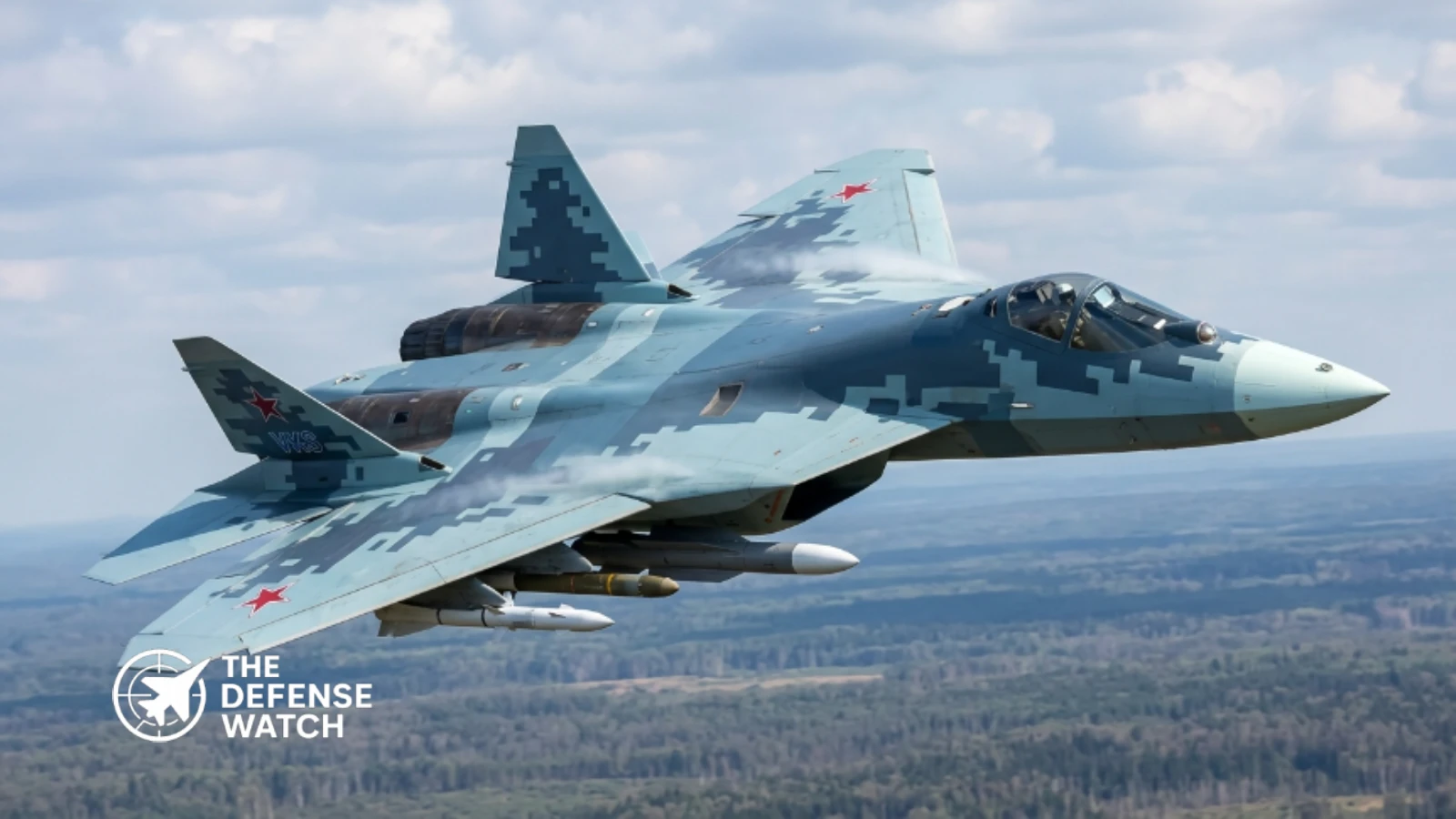
| Su-57 Felon | Sukhoi / UAC | 5th Gen | Mach 2.0 | ~1,500 km | N036 Byelka AESA, 101KS Atoll IRST | R-77M, R-37M, RVV-SDM |
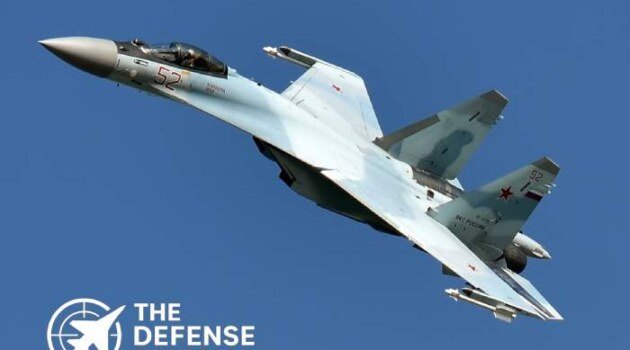
| Su-35S Flanker-E | Sukhoi / UAC | 4++ Gen | Mach 2.25 | ~1,600 km | Irbis-E PESA radar, OLS-35 IRST | R-77-1, R-37M, R-73 |
| Su-34M Fullback | Sukhoi / UAC | 4+ Gen (strike) | Mach 1.8 | ~1,100 km | Sh-141 radar suite, Khibiny EW | Kh-38, Kh-59MK2, FAB-series glide bombs |
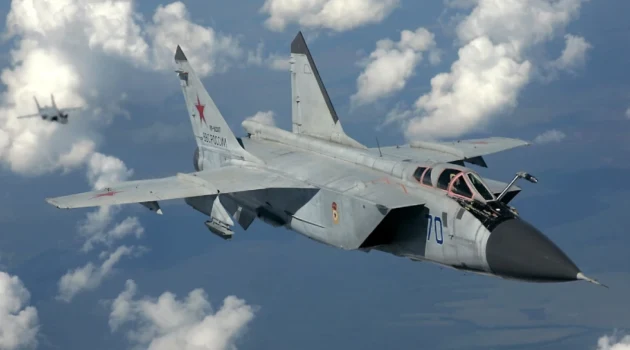
| MiG-31BM Foxhound | MiG / UAC | 4th Gen (interceptor) | Mach 2.83 | ~1,450 km | Zaslon-M PESA radar | R-37M, Kh-47M2 Kinzhal |
| MiG-35 Fulcrum-F | MiG / UAC | 4++ Gen | Mach 2.25 | ~1,000 km | Zhuk-AME AESA radar, OLS-UEM IRST | R-77-1, R-74M, Kh-31 |
Executive Summary:
Russia’s fighter fleet in 2026 reflects a dual reality: a slow-maturing fifth-generation program and a battle-hardened 4th/4.5-generation core sustaining wartime operations. The Su-57 has begun limited export deliveries to Algeria and secured new contracts at DSA-2026 in Kuala Lumpur, even as a fire at the Komsomolsk-on-Amur plant briefly disrupted output. Meanwhile, the Su-35S and Su-34M continue rolling off the same production line at a steady wartime tempo, with the MiG-31BM still flying Kinzhal-armed strike missions and the MiG-35 awaiting broader fleet integration. Together these five platforms define Russia’s current and near-term airpower posture.
Technical Deep-Dive
Airframe & Stealth
The Su-57 is Russia’s only true low-observable design, using semi-recessed weapon bays, faceted intake ducting, and composite/RAM (Radar Absorbent Material) coatings to reduce frontal RCS (Radar Cross Section), though its rear-aspect signature is widely assessed as less stealthy than Western fifth-gen peers. The Su-35S, Su-34M, MiG-31BM, and MiG-35 are non-stealth designs relying on speed, payload, and electronic warfare for survivability rather than signature reduction — the Su-34M’s armored cockpit “bathtub” being a notable structural feature for the strike role.
Avionics & Sensor Fusion
Sensor fusion is the clearest generational divide in this lineup. The Su-57’s N036 Byelka AESA radar array (with side-facing panels for wide-angle coverage) is paired with the 101KS Atoll IRST/EW suite for a genuinely fused targeting picture. The Su-35S instead uses the powerful but mechanically-scanned Irbis-E PESA radar, giving strong detection range without true AESA agility. The MiG-35 fields Russia’s newest Zhuk-AME AESA radar, positioning it as an avionics testbed for future upgrades, while the MiG-31BM’s Zaslon-M remains a legacy PESA optimized for long-range, high-altitude intercepts rather than fusion.
Propulsion
The Su-57 currently flies primarily on AL-41F1 “izdeliye 117” engines, with the definitive izdeliye 30 engine still in staged rollout for full supercruise performance. The Su-35S and MiG-35 both use variants of the AL-41F1S/RD-33MK family for thrust-vectoring agility, while the MiG-31BM’s twin D-30F6 turbofans remain unmatched among this group for sustained high-Mach interception, enabling its signature Kh-47M2 Kinzhal launch profile.
Strategic & Export Outlook
Russia’s export strategy centers on the Su-57E, marketed through Rosoboronexport with an active Block-style capability roadmap — baseline aircraft, followed by upgraded avionics, AESA integration, and eventual two-seat variants pitched to India for potential licensed production. Algeria remains the only confirmed foreign Su-57 operator, with Middle Eastern and Southeast Asian buyers cited as active prospects following the DSA-2026 exhibition. The Su-35S export line, heavily weighted toward Iran, is absorbing a growing share of Komsomolsk-on-Amur capacity, directly constraining how many airframes reach the VKS domestically.
Gaming & Esports Crossover: Flanker Firepower in Digital Skies
For strategy and combat-sim audiences, this lineup reads like a tech tree: the MiG-31BM is the glass-cannon interceptor built for alpha-strike Kinzhal runs, the Su-35S is the balanced all-rounder favored in dogfight-heavy loadouts, and the Su-57 is the late-game unlock — powerful but bottlenecked by production, mirroring how sim titles gate fifth-gen stealth platforms behind steep resource costs.
FAQs
Is the Su-57 a true fifth-generation fighter?It has stealth shaping and an internal weapons bay, but its rear RCS and engine maturity trail the F-22 and F-35, leading most analysts to call it a “4.5-to-5th-gen” transitional design.
Which Russian fighter has seen the most combat use?The Su-34M and Su-35S have flown the highest sortie counts in the Ukraine conflict, primarily in strike and escort roles.
Has Russia exported the Su-57?Algeria is the only confirmed foreign operator as of 2026, with additional Rosoboronexport contracts announced but customers undisclosed.
Conclusion
The Su-57, Su-35S, Su-34M, MiG-31BM, and MiG-35 collectively illustrate a fleet in transition — wartime demand keeps 4th/4.5-generation production lines running hot, while fifth-generation ambitions advance unevenly under sanctions and industrial strain. Until Su-57 output scales meaningfully, Russia’s regional air balance will continue to rest on these proven, non-stealth workhorses.