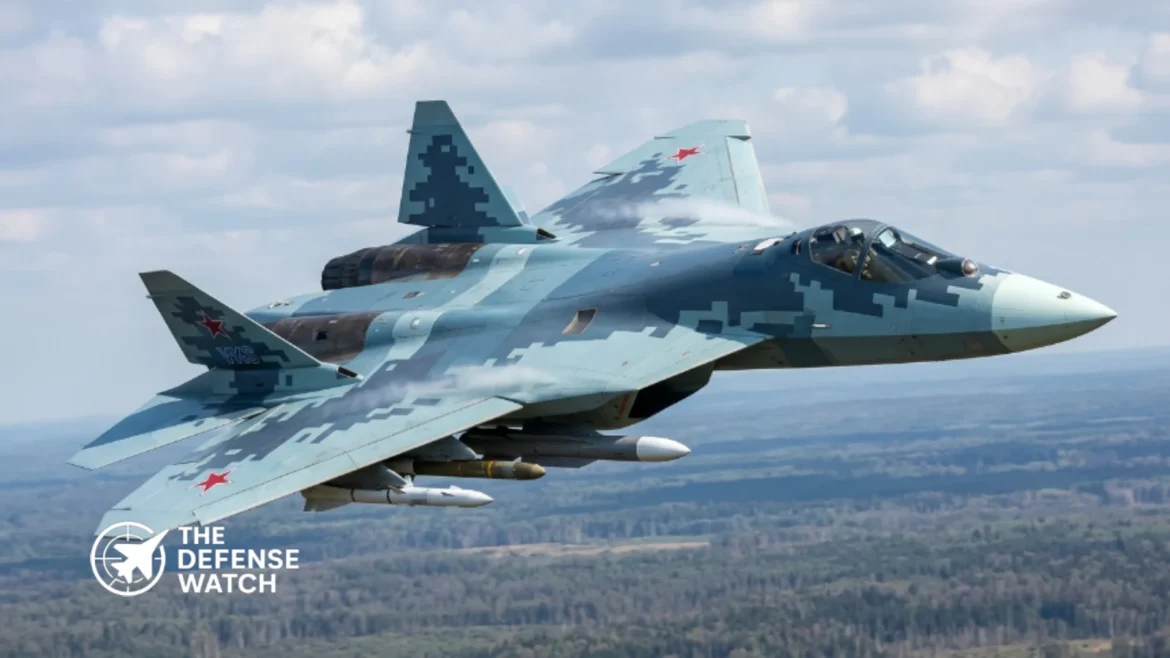
Top 5 Russian Fighter Jets in 2026: Su-57 to MiG-35 Ranked
Russian fighter jets remain a central pillar of Moscow’s airpower strategy in 2026, as wartime attrition, sanctions pressure, and a renewed export push reshape the Russian Aerospace Forces (VKS) fleet. From the fifth-generation Su-57 Felon to the Mach-capable MiG-31BM interceptor, this technical ranking breaks down the five most significant Russian fighter jets currently in production or frontline service.
KEY FACTS AT A GLANCE
| Aircraft | Manufacturer | Generation | Max Speed | Combat Radius | Key Sensors | Primary Armament |
|---|---|---|---|---|---|---|
| Su-57 Felon | Sukhoi / UAC | 5th Gen | Mach 2.0 | ~1,500 km | N036 Byelka AESA, 101KS Atoll IRST | R-77M, R-37M, RVV-SDM |
| Su-35S Flanker-E | Sukhoi / UAC | 4++ Gen | Mach 2.25 | ~1,600 km | Irbis-E PESA radar, OLS-35 IRST | R-77-1, R-37M, R-73 |
| Su-34M Fullback | Sukhoi / UAC | 4+ Gen (strike) | Mach 1.8 | ~1,100 km | Sh-141 radar suite, Khibiny EW | Kh-38, Kh-59MK2, FAB-series glide bombs |
| MiG-31BM Foxhound | MiG / UAC | 4th Gen (interceptor) | Mach 2.83 | ~1,450 km | Zaslon-M PESA radar | R-37M, Kh-47M2 Kinzhal |
| MiG-35 Fulcrum-F | MiG / UAC | 4++ Gen | Mach 2.25 | ~1,000 km | Zhuk-AME AESA radar, OLS-UEM IRST | R-77-1, R-74M, Kh-31 |
Executive Summary:
Russia’s fighter fleet in 2026 reflects a dual reality: a slow-maturing fifth-generation program and a battle-hardened 4th/4.5-generation core sustaining wartime operations. The Su-57 has begun limited export deliveries to Algeria and secured new contracts at DSA-2026 in Kuala Lumpur, even as a fire at the Komsomolsk-on-Amur plant briefly disrupted output. Meanwhile, the Su-35S and Su-34M continue rolling off the same production line at a steady wartime tempo, with the MiG-31BM still flying Kinzhal-armed strike missions and the MiG-35 awaiting broader fleet integration. Together these five platforms define Russia’s current and near-term airpower posture.
Technical Deep-Dive
Airframe & Stealth
The Su-57 is Russia’s only true low-observable design, using semi-recessed weapon bays, faceted intake ducting, and composite/RAM (Radar Absorbent Material) coatings to reduce frontal RCS (Radar Cross Section), though its rear-aspect signature is widely assessed as less stealthy than Western fifth-gen peers. The Su-35S, Su-34M, MiG-31BM, and MiG-35 are non-stealth designs relying on speed, payload, and electronic warfare for survivability rather than signature reduction — the Su-34M’s armored cockpit “bathtub” being a notable structural feature for the strike role.
Avionics & Sensor Fusion
Sensor fusion is the clearest generational divide in this lineup. The Su-57’s N036 Byelka AESA radar array (with side-facing panels for wide-angle coverage) is paired with the 101KS Atoll IRST/EW suite for a genuinely fused targeting picture. The Su-35S instead uses the powerful but mechanically-scanned Irbis-E PESA radar, giving strong detection range without true AESA agility. The MiG-35 fields Russia’s newest Zhuk-AME AESA radar, positioning it as an avionics testbed for future upgrades, while the MiG-31BM’s Zaslon-M remains a legacy PESA optimized for long-range, high-altitude intercepts rather than fusion.
Propulsion
The Su-57 currently flies primarily on AL-41F1 “izdeliye 117” engines, with the definitive izdeliye 30 engine still in staged rollout for full supercruise performance. The Su-35S and MiG-35 both use variants of the AL-41F1S/RD-33MK family for thrust-vectoring agility, while the MiG-31BM’s twin D-30F6 turbofans remain unmatched among this group for sustained high-Mach interception, enabling its signature Kh-47M2 Kinzhal launch profile.
Strategic & Export Outlook
Russia’s export strategy centers on the Su-57E, marketed through Rosoboronexport with an active Block-style capability roadmap — baseline aircraft, followed by upgraded avionics, AESA integration, and eventual two-seat variants pitched to India for potential licensed production. Algeria remains the only confirmed foreign Su-57 operator, with Middle Eastern and Southeast Asian buyers cited as active prospects following the DSA-2026 exhibition. The Su-35S export line, heavily weighted toward Iran, is absorbing a growing share of Komsomolsk-on-Amur capacity, directly constraining how many airframes reach the VKS domestically.
Gaming & Esports Crossover: Flanker Firepower in Digital Skies
For strategy and combat-sim audiences, this lineup reads like a tech tree: the MiG-31BM is the glass-cannon interceptor built for alpha-strike Kinzhal runs, the Su-35S is the balanced all-rounder favored in dogfight-heavy loadouts, and the Su-57 is the late-game unlock — powerful but bottlenecked by production, mirroring how sim titles gate fifth-gen stealth platforms behind steep resource costs.
FAQs
Is the Su-57 a true fifth-generation fighter?It has stealth shaping and an internal weapons bay, but its rear RCS and engine maturity trail the F-22 and F-35, leading most analysts to call it a “4.5-to-5th-gen” transitional design.
Which Russian fighter has seen the most combat use?The Su-34M and Su-35S have flown the highest sortie counts in the Ukraine conflict, primarily in strike and escort roles.
Has Russia exported the Su-57?Algeria is the only confirmed foreign operator as of 2026, with additional Rosoboronexport contracts announced but customers undisclosed.
Conclusion
The Su-57, Su-35S, Su-34M, MiG-31BM, and MiG-35 collectively illustrate a fleet in transition — wartime demand keeps 4th/4.5-generation production lines running hot, while fifth-generation ambitions advance unevenly under sanctions and industrial strain. Until Su-57 output scales meaningfully, Russia’s regional air balance will continue to rest on these proven, non-stealth workhorses.

(adsbygoogle = window.adsbygoogle || []).push({});Executive Summary:
Russia fields one of the most diverse fighter inventories on earth — spanning a Mach 2.83 interceptor that predates the Berlin Wall’s fall to a fifth-generation stealth jet currently receiving AI-assisted upgrades. Understanding which platforms matter operationally in 2026 requires cutting through marketing claims and reading what actually flies, what actually kills, and what the Ukraine war has quietly validated.
Russia lost the propaganda war for its air force the moment its jets failed to establish early air superiority over Ukraine. But that narrative obscures something important: the specific aircraft doing the most damage in that conflict are not the ones struggling. They are performing exactly as designed — and they are worth understanding precisely because of it.
Here are the five Russian fighter jets that genuinely matter in 2026, ranked by operational impact and technical capability.
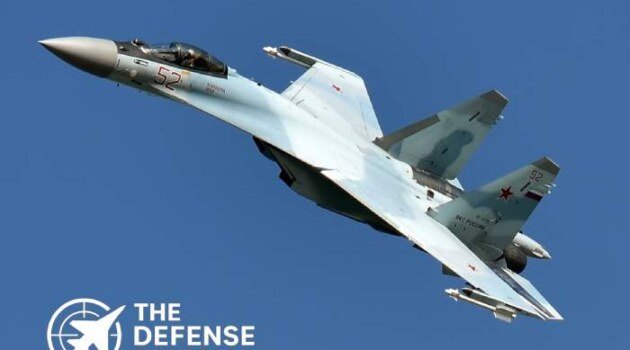
#1 — Sukhoi Su-35S “Flanker-E”: The War’s Actual Air Supremacy Workhorse
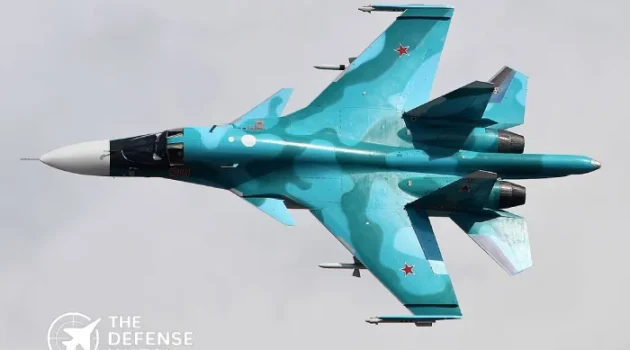
The Su-35S is Russia’s most combat-proven fighter of the current war. Classified as 4++ generation, it bridges the gap between Cold War Flanker doctrine and fifth-generation sensor integration — and it has delivered results.
⚡ Key Facts at a Glance — Su-35SatOptions = { ‘key’ : ‘e7d18db8b7513fb2a224cf4c3f18bbf0’, ‘format’ : ‘iframe’, ‘height’ : 90, ‘width’ : 728, ‘params’ : {} };- Max Speed: Mach 2.25 (~2,700 km/h)
- Combat Radius: ~1,600 km (unrefueled)
- Primary Radar: Irbis-E passive phased array, 400 km detection range
- Engines: 2× Saturn AL-41F1S with 3D thrust vectoring
- Payload: 8,000 kg across 12 hardpoints
- Unit Cost: ~$85 million (export estimate)
- Fleet Size (Russia): 130+ airframes, deliveries ongoing through 2026
According to Rostec, by early 2026 the Su-35S had downed more Ukrainian aircraft in air-to-air combat than any other Russian platform — a claimed total that includes Su-27s, MiG-29s, Su-24s, and Su-25s. In May 2026, reports emerged of a Ukrainian F-16 lost in a long-range engagement, though specific weapon details remain unconfirmed.
The Su-35S accomplishes this without stealth. Its edge is kinematic: twin AL-41F1S turbofans with full 3D thrust vectoring, generating roughly 64,000 lbf combined, make it arguably the most maneuverable production fighter in the world at high angles of attack. Paired with the Irbis-E radar — capable of detecting targets at 400 km — it holds BVR engagement range that most 4th-gen adversaries cannot match.
The strategic gaming parallel: Think of the Su-35S as a macro-dominant player in a real-time strategy game who wins not through a specific tech advantage but through raw mechanical execution and vision control. It does not need stealth if no adversary radar in its theater is good enough to matter at range.
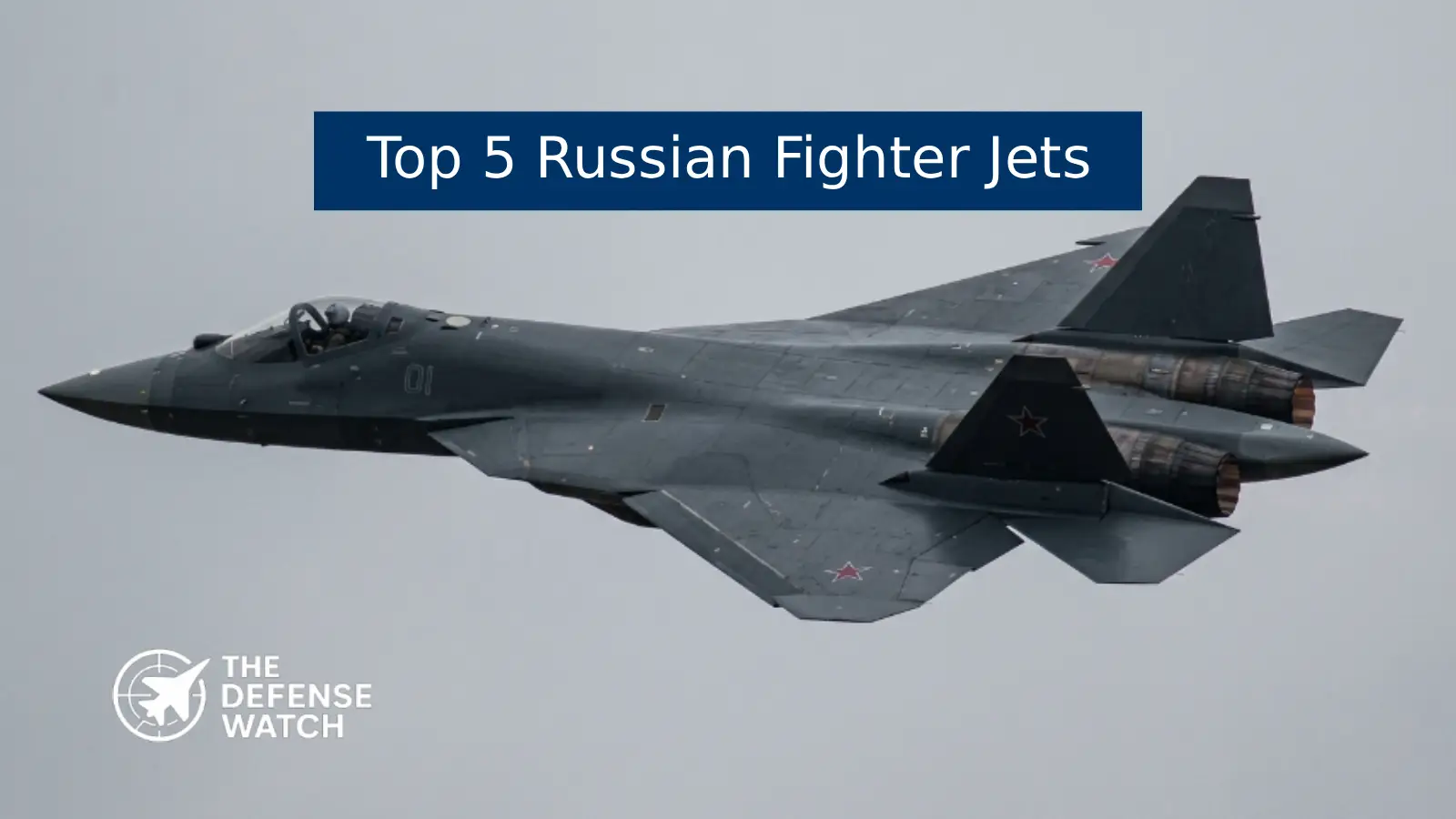
#2 — Sukhoi Su-57 “Felon”: Russia’s Fifth-Gen Bet, Finally Paying Off
Russia’s only operational fifth-generation fighter spent years being dismissed for its production numbers. That critique is thinning. The Russian Aerospace Forces received a new batch in a “upgraded technical configuration” in early 2026, with the Su-57M1 variant expected to enter production before year-end.
⚡ Key Facts at a Glance — Su-57- Max Speed: Mach 2.0 (supercruise at Mach 1.3 without afterburner)
- Combat Radius: ~3,500 km
- Radar: N036 Byelka AESA + N036B-1-01 cheek arrays
- Engines: 2× AL-41F1 (pending full transition to AL-51F-1 / Izdeliye 30)
- Length / Wingspan: 20.1 m / 14.1 m
- Unit Cost: ~$35–50 million (domestic); ~$50–70 million (export)
- Fleet Size (Russia): ~30 airframes in service as of mid-2026
The Su-57’s defining feature is sensor architecture, not stealth alone. Its N036 Byelka AESA radar is supplemented by cheek-mounted arrays providing angular coverage that forward-facing radars cannot achieve — a design priority that reflects Russian doctrine: see broadly, engage first.
(adsbygoogle = window.adsbygoogle || []).push({});In May 2026, the Su-57 conducted at least ten cruise missile launches over Kursk Oblast, the Sea of Azov, and Crimea — its most significant confirmed combat deployment since the war began. Russia appears to be using it as a long-range strike platform from safe standoff positions, preserving airframes while extracting operational value.
The Su-57M1 upgrade cycle adds AI-assisted pilot aids, enlarged airframe sections for improved supersonic lift, and the long-delayed AL-51F-1 engine — the first clean-sheet Russian fighter engine in over 40 years. Algeria has already taken delivery of export units. Vietnam is in discussions.
The cost disruption angle is real. At $50 million per unit versus the F-35’s $110 million, the Su-57 is the rare fifth-generation platform that mid-tier air forces can actually budget for — even if the capability gap versus the F-35 in stealth fidelity and software integration remains significant.
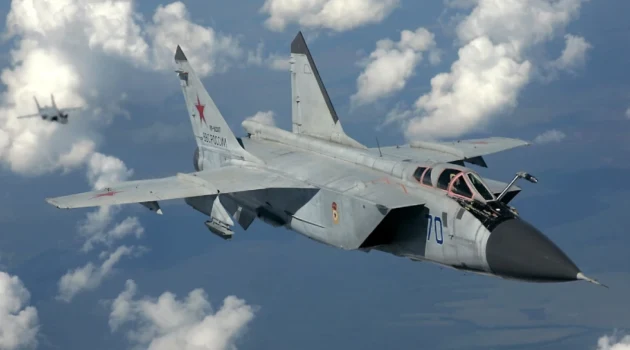
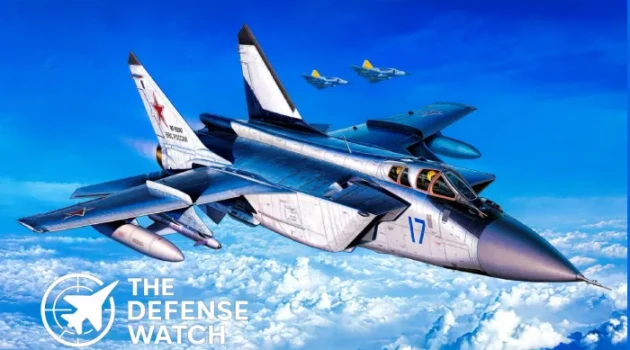
#3 — MiG-31BM “Foxhound”: The Fastest Operational Fighter on Earth
No aircraft in active global service flies faster than the MiG-31. The BM variant, an extensive avionics-focused upgrade of the original 1981 design, remains a unique tool with no Western equivalent.
⚡ Key Facts at a Glance — MiG-31BM- Max Speed: Mach 2.83 (~3,000 km/h)
- Service Ceiling: 20,600 m
- Radar: Zaslon-AM passive phased array, 320 km detection range
- Primary Weapon (BM): R-37M ultra-long-range AAM (400 km range)
- Hypersonic Carrier: Kh-47M2 Kinzhal in MiG-31K variant
- Crew: 2 (pilot + weapons system officer)
- Russia Plans: Extend service life to mid-2030s
The MiG-31BM is not a dogfighter. It is an area denial platform — a tool for intercepting high-altitude threats across Russia’s vast northern territory, where geography demands something that can sprint 1,000 km in under 20 minutes. The R-37M missile it carries has a reported engagement range exceeding 400 km, meaning the MiG-31 can attack AWACS, tankers, and standoff aircraft before they come anywhere near Russian airspace.
The MiG-31K variant introduced a second role: hypersonic delivery. Carrying the Kh-47M2 Kinzhal — essentially an air-launched Iskander-M ballistic missile — the MiG-31K has been used operationally in Ukraine. The platform’s extreme speed and high-altitude cruise profile give Kinzhal an energy head-start that dramatically extends its own speed and penetration capability.
Russia has no replacement for this mission set. The MiG-31 will remain in service into the 2030s by necessity.
#4 — Sukhoi Su-30SM “Flanker-H”: The Export Champion That Fights at Home
The Su-30SM is the aircraft that funded Russian aerospace’s post-Cold War survival. It became the backbone of India’s Air Force, Algeria’s, and Vietnam’s — and then came home as a serious multirole platform for the Russian Aerospace Forces themselves.
⚡ Key Facts at a Glance — Su-30SM- Max Speed: Mach 2.0
- Combat Radius: ~1,500 km
- Crew: 2 (tandem cockpit)
- Engines: 2× AL-31FP with 2D thrust vectoring
- Hardpoints: 12, carrying up to 8,000 kg
- Radar: N011M Bars passive phased array
- Unit Cost: ~$50 million (domestic estimate)
The twin-seat configuration is the Su-30SM’s operational signature. The weapons system officer in the rear cockpit significantly enhances sensor management and weapons employment — particularly relevant during complex multi-target BVR engagements or strike profiles requiring precision targeting coordination.
Its 12 hardpoints accommodate an exceptionally diverse weapon load: R-77 and R-73 for air-to-air, Kh-59 and Kh-31 for ground attack, and P-800 Oniks for anti-ship. That cross-domain flexibility has made it the preferred export option for air forces that cannot afford separate airframes for each mission type.
Russia has operated it extensively in Syria, refining crew tactics for strike-coordination in contested environments.
#5 — Sukhoi Su-34 “Fullback”: The Strike Fighter That Rewrote the Mission Profile
The Su-34 looks like a fighter. It carries weapons like a fighter. But inside, it is configured like a light bomber — with a side-by-side cockpit, a galley for crew meals, and a relief tube for multi-hour missions. That unusual design reflects a precise operational requirement.
⚡ Key Facts at a Glance — Su-34- Max Speed: Mach 1.8
- Combat Radius: ~1,100 km (up to 4,000 km ferry range)
- Empty Weight: 22,500 kg (heaviest Russian fighter)
- Hardpoints: 12, up to 8,000 kg weapons load
- Engines: 2× AL-31FM1, ~30,000 lbf thrust each
- Key Weapons: Kh-59, Kh-35, P-800 Oniks, Kh-31 anti-radiation missiles
- Unit Cost: ~$36–50 million (domestic estimate)
Russia has used the Su-34 more than any other aircraft in Ukraine for deep strike missions. Its capacity to carry anti-radiation missiles (suppression of enemy air defenses) while retaining air-to-air missiles for self-defense makes it a critical SEAD/DEAD platform. The Su-34M modernization adds improved targeting systems and expanded guided munitions compatibility.
Its dual-engine redundancy and hardened cockpit give crews survivability margins that single-engine platforms cannot offer on deep penetration routes. In a conflict characterized by dense ground-based air defense systems, that margin matters.
Comparative Specifications Table
Platform Generation Max Speed Combat Radius Unit Cost (Est.) Key Strength Weakness Su-35S 4++ Mach 2.25 1,600 km ~$85M (export) Supermaneuverability, 400 km radar No stealth Su-57 5th Mach 2.0 3,500 km $35–70M Stealth, multi-sensor fusion Low fleet numbers, engine gap MiG-31BM 4th (interceptor) Mach 2.83 720 km ~$50M Speed, 400+ km AAM range, Kinzhal carriage No dogfight role, aging airframe Su-30SM 4+ Mach 2.0 1,500 km ~$50M Crew endurance, cross-domain payload Older radar vs. AESA peers Su-34 4+ strike Mach 1.8 1,100 km ~$36–50M Strike endurance, SEAD, crew comfort Not an air superiority platform The Real Lesson Ukraine Taught About Russian Air Power
“The aircraft that has killed the most Ukrainian jets is not Russia’s most advanced — it is Russia’s most ready.”
The Su-35S, not the Su-57, defined Russian air-to-air performance in this war. That is not a failure of Russian aerospace ambition. It is a confirmation of a doctrine that Western air planners have sometimes underestimated: mass, readiness, and kinematic performance at scale outperform limited quantities of technically superior hardware — at least in a prolonged attritional conflict.
The MiG-31BM reinforces the same point from a different angle. A 1981 airframe, properly upgraded and purpose-matched to a genuine mission need, has remained operationally relevant through multiple conflicts across four decades. Russia kept it because no available replacement does what it does. That is a product management decision as much as a military one.
The Su-57’s restricted deployment — used primarily as a missile truck firing from within Russian airspace — tells a parallel story familiar to competitive gaming: you do not commit your highest-value asset to a contested engagement when standoff range lets you achieve the same effect safely. The Su-57 is being preserved. Whether that reflects operational caution or genuine capability concern is a question the AL-51F-1 engine program and the Su-57M1 production ramp will eventually answer.
Why This Fleet Still Matters Globally in 2026
Russia’s fighter fleet — despite attrition, sanctions, and production constraints — remains a relevant force multiplier for any nation that aligns with or purchases from Moscow. Algeria now operates Su-57s. India is in active discussions for additional Flanker-family aircraft. Vietnam, Belarus, and several Gulf-adjacent states maintain Russian platforms as core air defense infrastructure.
The fleet’s export reach means that Western air forces — and F-35 operators in particular — will train and plan against these platforms for decades. Understanding what the Su-35S actually does in combat, what the MiG-31BM’s R-37M actually threatens, and what the Su-57’s real capability ceiling is matters not just for Russian adversaries but for every defense planner watching the Indo-Pacific and European theaters simultaneously.
Russia’s air force is not winning the war in Ukraine. But Russia’s fighters, at the individual platform level, are performing specific missions with measurable effectiveness — and that is the analysis that actually informs future procurement, doctrine, and allied air combat planning.
Belarus Receives First Su-30SM2 Fighters in 2026
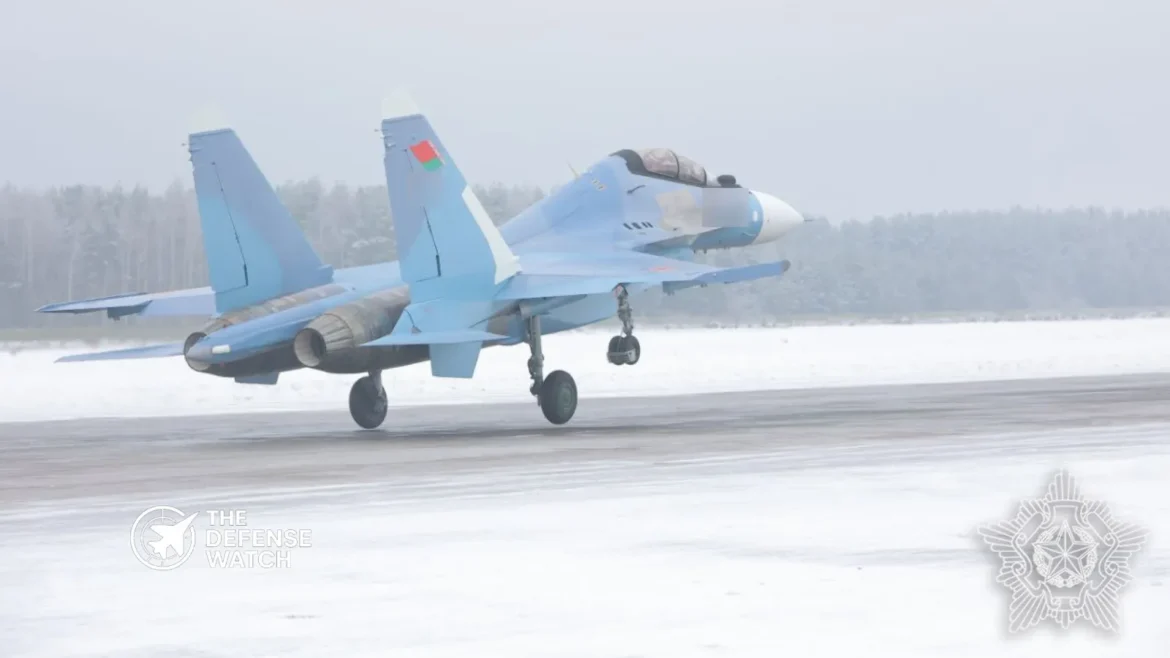
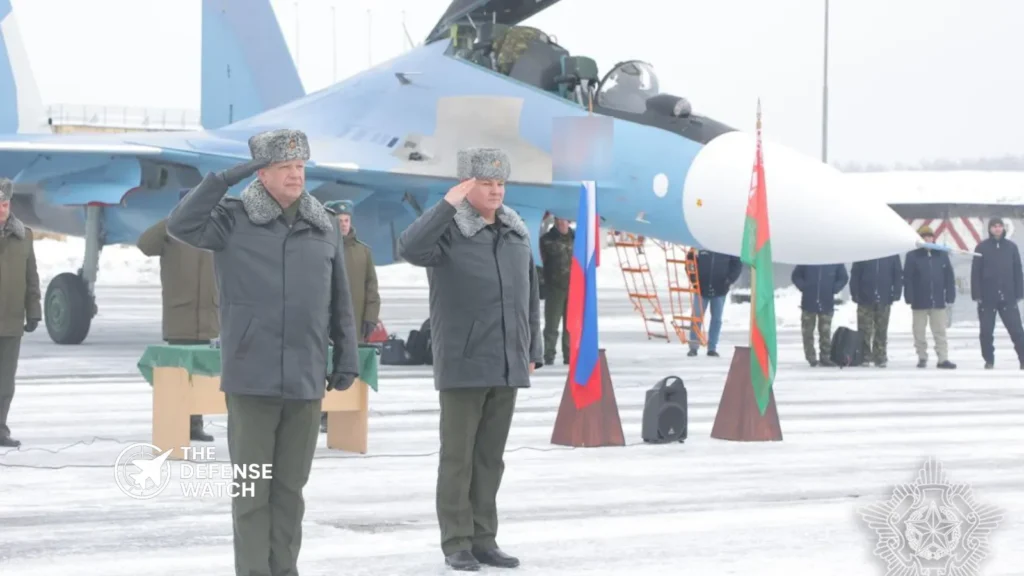
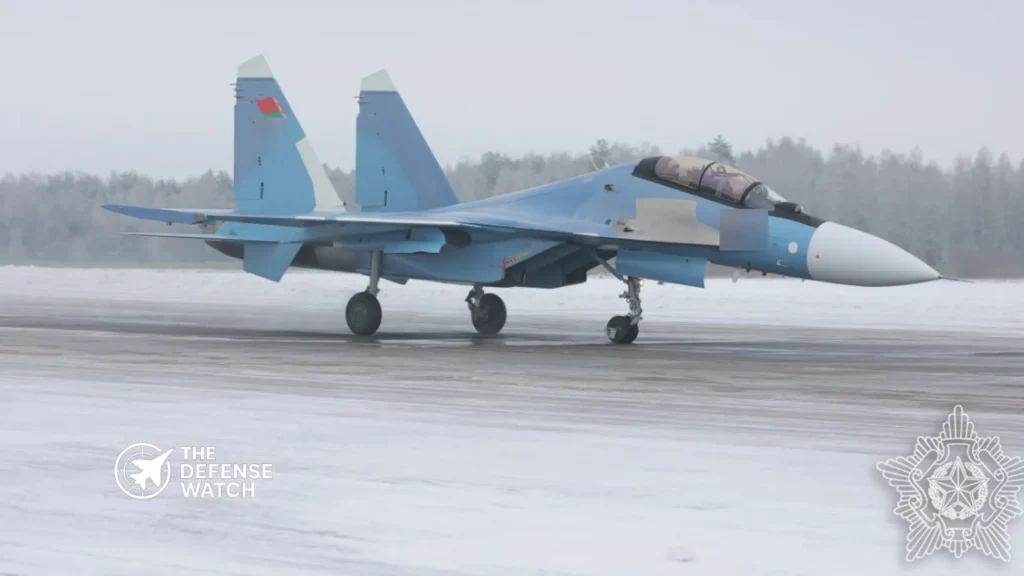
The Belarusian Ministry of Defense announced that the Belarus Air Force and Air Defense Forces have received a new batch of Su-30SM2 multirole fighters, marking the first delivery of the type in 2026. The batch consists of two aircraft, delivered from Russia as part of ongoing military aviation cooperation between the two countries.
(adsbygoogle = window.adsbygoogle || []).push({});
The announcement was made through official Belarusian defense channels, confirming that the aircraft have entered operational service with the Air Force and Air Defense Forces. The delivery continues Belarus long term effort to modernize its combat aviation fleet with upgraded Russian-built platforms.
What the Su-30SM2 Brings to the Belarus Air Force
The Su-30SM2 is an upgraded version of the Su-30SM, incorporating avionics, sensors, and mission systems derived from Russia newer Su-35 fighter program. It is designed for multirole operations, including air superiority, ground attack, and maritime strike missions.
Key improvements of the Su-30SM2 include enhanced radar capabilities, improved navigation and targeting systems, and updated weapons integration. The aircraft is powered by AL-41F-1S engines, offering improved thrust and reliability compared to earlier variants.
(adsbygoogle = window.adsbygoogle || []).push({});For Belarus, the Su-30SM2 provides a significant step forward in maintaining a capable and modern combat aviation force, especially as older Soviet-era aircraft are gradually retired.
Belarus Fighter Fleet Modernization Effort
Belarus has been operating Su-30SM fighters since the late 2010s, with the aircraft forming the backbone of its modern fighter fleet. The transition to the Su-30SM2 standard reflects a broader modernization strategy aimed at improving combat readiness, interoperability, and sustainability.
According to Belarusian defense officials, the Su-30SM2 allows existing aircrew and ground personnel to transition with minimal disruption, as the aircraft builds on systems already familiar to Belarus pilots and maintenance teams.
The Air Force and Air Defense Forces continue to emphasize multirole platforms capable of both defensive and deterrence missions within Belarus airspace.
Russia and Belarus Defense Cooperation
The delivery underscores the close defense and aerospace ties between Russia and Belarus, particularly in the field of military aviation. Belarus remains one of the few countries to receive newly produced Russian combat aircraft amid ongoing international sanctions and export restrictions.
Russian defense industry sources have previously stated that Su-30SM2 production supports both domestic and allied requirements, with upgrades intended to extend the aircraft service life well into the 2030s.
See also: Belarus Expands Integrated Air Defense Cooperation with Russia
Operational Role and Regional Context
The Su-30SM2 is expected to operate alongside Belarus existing air defense network, which includes ground-based missile systems and radar assets. The aircraft dual-seat configuration supports complex missions, training, and command and control roles.
(adsbygoogle = window.adsbygoogle || []).push({});While Belarus does not publish detailed deployment plans, the Ministry of Defense has consistently stated that new aircraft deliveries are intended to strengthen national air defense and ensure sovereignty over national airspace.
The arrival of the first 2026 batch signals that further deliveries may follow under existing procurement agreements.