

Executive Summary:
China launched nine additional Guowang low Earth orbit internet satellites aboard an upgraded Long March 8A rocket from Hainan, bringing the constellation to 186 satellites in orbit. The launch underscores Beijing’s steady effort to build a sovereign broadband network that can support commercial connectivity while strengthening China’s independent space infrastructure.
China Guowang Constellation Continues Rapid Expansion
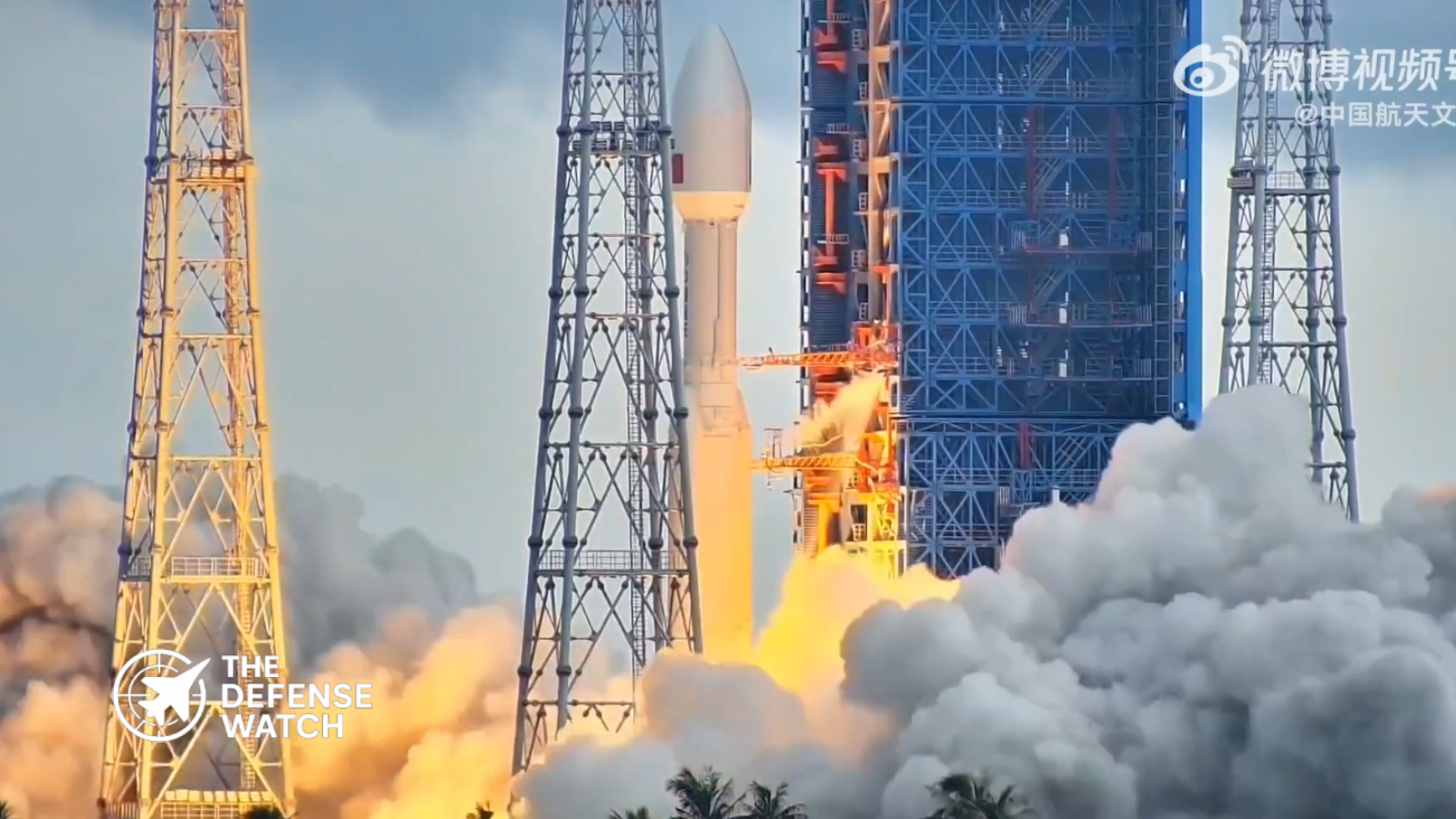
China’s Guowang constellation expanded again after the successful launch of nine new low Earth orbit (LEO) internet satellites aboard an upgraded Long March 8A launch vehicle from the Wenchang Space Launch Site in Hainan.
The mission marked the 23rd batch of Guowang, also known as Xingwang, satellites, increasing the operational constellation to 186 spacecraft in orbit. The launch represents another milestone in China’s long term effort to establish a domestic satellite broadband network capable of providing nationwide and international connectivity.
The mission was conducted by the China Aerospace Science and Technology Corporation (CASC), which continues to increase the launch cadence needed to support one of the world’s largest planned satellite constellations.
Guowang Is China’s State Backed Starlink Alternative
The China Guowang constellation is widely viewed as Beijing’s answer to commercial megaconstellations such as SpaceX’s Starlink. Unlike privately operated systems, Guowang is managed through a state owned enterprise established to coordinate China’s national satellite internet strategy.
Current plans call for approximately 13,000 satellites operating in low Earth orbit over the coming years. The network is expected to provide broadband communications across China while extending services to international markets participating in Chinese infrastructure initiatives.
Although the constellation is often compared with Starlink because of its broadband mission, Guowang is designed within China’s broader national space and digital infrastructure strategy, emphasizing sovereign control over satellite communications.
Long March 8A Supports Higher Launch Capacity
The latest mission utilized the upgraded Long March 8A, an enhanced version of China’s Long March 8 launch vehicle developed for heavier payloads and larger constellation deployments.
The improved rocket offers greater lift capability, allowing multiple satellites to be deployed during a single mission while supporting China’s increasingly demanding launch schedule.
China has significantly expanded its launch infrastructure over the past several years, with Wenchang becoming a primary site for missions supporting commercial, civil, and national space programs. The growing availability of upgraded launch vehicles is expected to play an important role in deploying thousands of additional satellites planned for Guowang.
Strategic Importance Extends Beyond Commercial Broadband
While the primary purpose of the Guowang constellation is broadband internet access, its strategic value extends beyond commercial telecommunications.
Large LEO constellations provide resilient communications infrastructure that can improve connectivity in remote regions and support emergency response following natural disasters. At the national level, sovereign satellite communications reduce dependence on foreign operated networks and strengthen critical infrastructure resilience.
For major space powers, maintaining independent satellite communications capabilities has become increasingly important as governments integrate space based services into transportation, economic development, disaster management, and national security planning.
China’s continued investment reflects a broader international trend in which governments are accelerating deployment of sovereign satellite networks alongside commercial providers.
Global Competition In LEO Broadband Intensifies
The latest China Guowang constellation launch comes as competition in the low Earth orbit communications market continues to accelerate.
SpaceX remains the largest operator of broadband satellites through its Starlink network, while other major projects include Amazon’s Project Kuiper and Europe’s IRIS² initiative. Several countries are also pursuing national satellite communications capabilities to reduce strategic dependence on foreign providers.
China’s steady launch cadence demonstrates that Beijing intends to remain a significant participant in this increasingly competitive sector. Achieving the planned deployment of roughly 13,000 satellites will require sustained production, frequent launches, and continued expansion of launch infrastructure over the coming years.
From a defense and geopolitical perspective, resilient satellite communications have become an increasingly important component of national infrastructure. Governments worldwide view secure space based connectivity as essential for economic competitiveness, emergency response, and strategic autonomy.
Although Guowang remains in the deployment phase, each successive launch moves China closer to establishing a comprehensive state backed broadband constellation capable of supporting both domestic and international communications objectives.
Why It Matters
The latest launch demonstrates that China continues to execute a methodical deployment strategy for one of the world’s largest planned satellite internet constellations. While commercial broadband remains the primary mission, the expanding network also strengthens China’s independent space infrastructure and reflects the growing global importance of sovereign satellite communications in an increasingly contested space environment.
