• Home
  • About
  • Defense Systems
  • Manufacturer
  • Comparisons
  • Compare 
  • Tools
TheDefenseWatch.com
  • Aerospace & Aviation
  • Military & Ordnance
  • Naval & Maritime
  • Cyber & Space Defense
  • Policy & Strategy
  • Global News
  • Tools Library
    • Smart Calculator
    • Drone Flight Time Calculator
    • Drone Range Calculator
    • Counter-Drone Jammer Effective Range Calculator
    • Counter-Battery Radar Detection Calculator
    • Artillery Fire Correction Calculator
    • Thermal Camera Detection Range Calculator
    • Missile Range & Time-of-Flight Calculator
    • Radar Detection Range Calculator
    • FPV Strike Drone Payload vs Range Calculator
    • Loitering Munition Endurance Calculator
    • Sniper Ballistic Drop & Windage Calculator
    • Bullet Drop Calculator
    • U.S. Army Combat Fitness Test (ACFT) Calculator
    • Military Pension Calculator
    • Military Retirement Calculator
    • Military Pension Calculator
    • Large Number Calculator
Font ResizerAa

TheDefenseWatch.com

The Defense Watch | U.S. & Global Defense News, Analysis & Military Updates

Search
  • Home
  • About
  • Defense Systems
  • Manufacturer
  • Comparisons
  • Compare 
  • Tools

Stay Updated

Get the latest update

Subscribe

Explore

  • Drone
  • Fighter Jets & Military Aircraft
  • Hypersonic Weapons
  • Aircraft Carriers
  • Strategic History & Missions
  • Tools Library
Home » Bangladesh Air Force Gains Approval to Acquire Multirole Fighters in $2.2 B Deal
Asian Defense & Security

Bangladesh Air Force Gains Approval to Acquire Multirole Fighters in $2.2 B Deal

TeamDefenseWatch
Last updated: September 9, 2026 4:10 am
TeamDefenseWatch
Share
2 Min Read
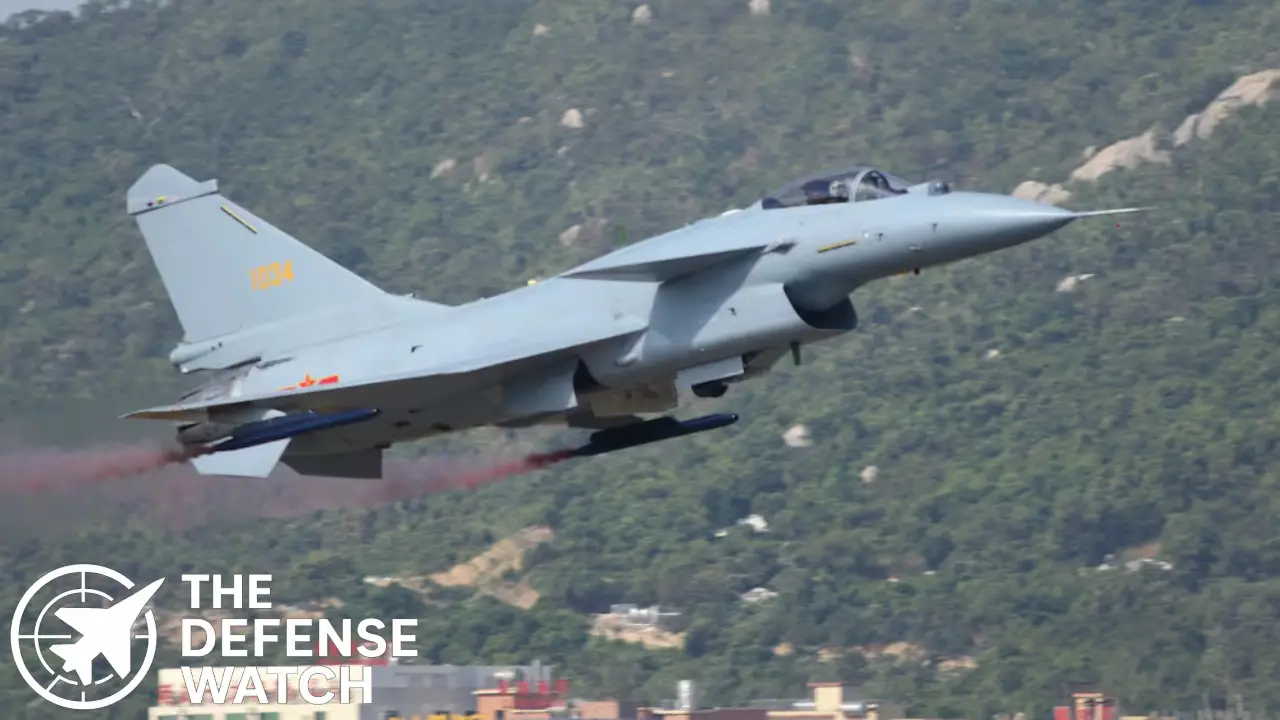
Bangladesh multirole fighters
SHARE

Bangladesh Clears Path for Multirole Fighter Acquisition

Bangladesh’s caretaker government has provisionally approved a sweeping modernization of its air force, granting the Bangladesh Air Force (BAF) the green light to procure multirole combat aircraft, along with advanced surface-to-air missiles and long-range radars.

Contents
Bangladesh Clears Path for Multirole Fighter AcquisitionStrategic Rationale Behind the MoveReinforcing Air Sovereignty and Coastal DefenseChinese Equipment Ecosystem and Existing TiesRisks and Balancing Western OptionsTechnical Prospects and Integration ChallengesRegional Implications and Competitive DynamicsOutlook and Next StepsAnalysis & ContextFAQs

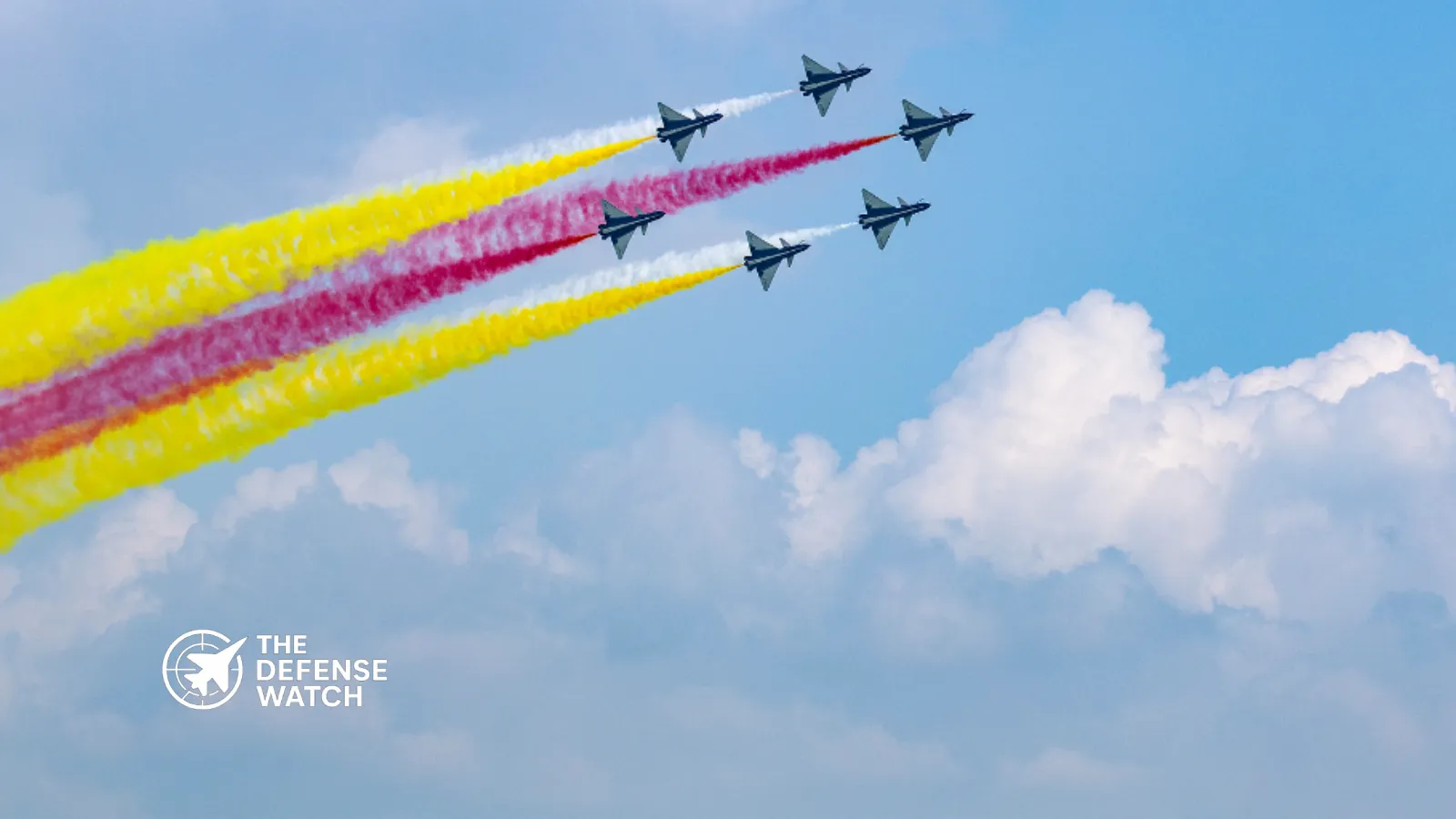
Although Air Chief Marshal Hasan Mahmood Khan has not publicly confirmed a model, industry and regional analysis suggest a strong tilt toward the Chinese J-10CE export variant, a 4.5-generation fighter already in service with Pakistan. Under the authorization, Bangladesh may acquire up to 20 jets by 2027, with total costs — including training, spares, infrastructure, and sustainment — estimated at around US $2.2 billion.

This decision comes amid growing urgency: Bangladesh’s current fighter fleet, composed largely of aging Chinese F-7s and a handful of Russian MiG-29s, has suffered from high maintenance demands and safety issues. One F-7 crashed into a Dhaka college campus earlier this year, claiming dozens of lives and underscoring the pressing need for fleet renewal.

Strategic Rationale Behind the Move

Reinforcing Air Sovereignty and Coastal Defense

Geographically positioned between India and the Bay of Bengal, Bangladesh’s air defense challenges are pronounced. A modern multirole fleet would give Dhaka enhanced capabilities to surveil, interdict, and enforce its airspace, particularly over maritime boundaries and in contested coastal corridors. The shift to more capable jets is aligned with the broader Forces Goal 2030 modernization roadmap.

- Advertisement -

Chinese Equipment Ecosystem and Existing Ties

Bangladesh already fields several Chinese-origin platforms — from light tanks to submarines — which suggests that interoperability, logistics synergies, and political alignment could favor a Chinese fighter choice. Moreover, previous diplomatic engagements, including during a visit by interim Chief Adviser Muhammad Yunus to Beijing, signaled mutual interest in stronger defense ties and arms trade cooperation.

Risks and Balancing Western Options

While the Chinese J-10CE remains the frontrunner, Bangladesh has reportedly explored Western alternatives, including attending Eurofighter Typhoon demonstration flights in Italy. However, aligning with Chinese systems carries diplomatic trade-offs: potential friction with the United States and Western suppliers, export control constraints, and reliance on China for long-term sustainment.

Publicly, Bangladesh’s Finance Adviser declined to comment when pressed on the $2.2 billion deal, underlining the sensitivity of the procurement in political and fiscal circles.

Technical Prospects and Integration Challenges

The J-10CE is believed to incorporate modern avionics such as active electronically scanned array (AESA) radar, digital flight control, and compatibility with beyond-visual-range missiles like the PL-15E. If fully integrated, it would constitute a qualitative leap over Bangladesh’s existing fleet of second- and third-generation jets.

However, successful deployment demands upgrades in BAF’s command, control, communications, computers, and intelligence (C4I) framework. Integration of datalinks, secure networks, and ground-based radar nodes will be critical for network-centric operations. Key infrastructure—bases, maintenance depots, hardened shelters, fuel systems—would also require modernization before new jets can deploy.

Regional Implications and Competitive Dynamics

Bangladesh’s move enters a dynamic South Asian airpower landscape. India’s air force fields advanced platforms like the Rafale, Su-30MKI, and indigenous Tejas Mk1A, maintaining qualitative edge in many domains. The acquisition of J-10CEs narrows the gap, particularly in radar and missile capabilities.

At the same time, neighboring countries and strategic watchers will assess this as part of China’s broader regional outreach. The introduction of relatively capable Chinese fighters into smaller air forces amplifies China’s defense posture beyond its borders, even if indirectly.

Outlook and Next Steps

With in-principle approval secured, the next phases hinge on a multiministerial committee led by the BAF to negotiate terms, finalize contracts, and choose between government-to-government (G2G) approaches or direct commercial deals.

- Advertisement -

If the timeline holds, training may begin in China as early as 2027, with first deliveries arriving in late 2027 or 2028. Full operational capability could be achieved by the early 2030s, catalyzing a new era for Bangladesh’s air defence posture.

Analysis & Context

This decision highlights a broader trend among mid-tier states in Asia: a shift toward 4th/4.5-generation multirole jets to replace aging interceptor fleets. The J-10CE particularly appeals to countries already using Chinese equipment, lowering integration and sustainment risk. That said, reliance on a single supplier presents vulnerability—both politically and logistically.

For Bangladesh, the stakes are high. Successful modernization could yield a credible deterrent in the Bay of Bengal region. But delays, cost overruns, or integration failures would risk strategic and fiscal backlash. Balancing ambition with execution discipline will be key.

Source 1| Source 2

FAQs

Why is Bangladesh choosing the J-10CE over Western fighters?

The J-10CE leverages Bangladesh’s existing Chinese equipment ecosystem, offers attractive financing, and presents fewer export control obstacles. Western jets can be costlier, diplomatically sensitive, and involve more complex technology transfer challenges.

Is $2.2 billion high for 20 fighters?

The sum includes not only the aircraft but training, spares, infrastructure, maintenance, and lifetime support — spreading cost over 10 years makes it more manageable.

Could Bangladesh cancel or choose another vendor later?

Yes — the current approval is in-principle. The final decision depends on multiministerial committee review, negotiations, and competitive offers.

When will the new jets fly operationally?

If all goes smoothly, initial deliveries may come in 2027–28, with full operational capability by around 2030.

Does this shift alter regional airpower balance?

Moderately. While it won’t match India’s cutting-edge platforms, it strengthens Bangladesh’s deterrence and forces competitors to account for improved BAF capabilities.


TAGGED:Air Force modernizationBangladeshJ-10CEMultirole Fighter AcquisitionSouth Asia Defense
Share This Article
Facebook Copy Link Print
ByTeamDefenseWatch
TeamDefenseWatch is the official editorial byline of TheDefenseWatch.com. Working under one umbrella, TheDefenseWatch.com, the team delivers verified, factual reporting on global defense, military technology, aerospace systems, and security developments. Articles are sourced from official statements, defense industry releases, and trusted media, with editorial review to ensure accuracy and clarity.Contact: info@TheDefenseWtach.com
6 Comments
  • Pingback: Which 5 Air Forces Possess the Costliest Fighter Jet Fleets in the World 2025
  • Pingback: European MBDA Meteor Missile Unit Cost Marks Major Benchmark at Approximately €2 Million
  • Pingback: Lockheed Martin Accelerates F-16V Deliveries to Taiwan Amid Rising Strait Tensions
  • Pingback: Ukraine and France Sign Historic Defense Agreement for 100 Rafale Fighter Jets and Advanced Air Defense Systems
  • Pingback: GDIT Secures $19.1M U.S. Air Force DCGS Contract Modification | TheDefenseWatch.com
  • Pingback: US Navy $248M Tactical Radio Contract Awarded to Data Link Solutions | TheDefenseWatch.com

Leave a Reply Cancel reply

Your email address will not be published. Required fields are marked *

Search Defense Systems

Latest Defense Systems

  • F-47A Fighter Jet F-47A Fighter Jet
  • China DF-61 Missile China DF-61 Missile
  • B61 Nuclear Bomb B61 Nuclear Bomb
  • Japan E-767 Airborne Japan E-767 Airborne
  • Remington 870 Shotgun Remington 870 Shotgun
  • RUTA B1 Cruise Missile RUTA B1 Cruise Missile
  • XQ-67A Drone XQ-67A Drone
  • B-25 Mitchell Bomber B-25 Mitchell Bomber
  • F-100 Super Sabre F-100 Super Sabre

Recent Compares

  • J-10C vs JF-17 Thunder: Which Fighter Is More Capable? J-10C vs JF-17 Thunder: Which Fighter Is More Capable? View Comparison →
  • Tejas vs Gripen: Key Differences and Capabilities Tejas vs Gripen: Key Differences and Capabilities View Comparison →
  • Tejas vs MiG-21 Bison: How India Replaced Its Iconic Supersonic Fighter Tejas vs MiG-21 Bison: How India Replaced Its Iconic Supersonic Fighter View Comparison →
  • F-35 vs F-16: Stealth, Sensors and Combat Roles F-35 vs F-16: Stealth, Sensors and Combat Roles View Comparison →
  • Tejas Fighter Jet vs F-16 Fighting Falcon: Capability Compared Tejas Fighter Jet vs F-16 Fighting Falcon: Capability Compared View Comparison →
  • Rafale Fighter Jet vs F-16 Fighting Falcon : Which Fighter Has the Edge? Rafale Fighter Jet vs F-16 Fighting Falcon : Which Fighter Has the Edge? View Comparison →
  • Su-57 Fighter Jet vs J-20 Fighter Jet: Stealth and Air Combat Compared Su-57 Fighter Jet vs J-20 Fighter Jet: Stealth and Air Combat Compared View Comparison →
  • Mirage 2000 vs Tejas Mk1A: Legacy Combat Power vs Indigenous Modernization Mirage 2000 vs Tejas Mk1A: Legacy Combat Power vs Indigenous Modernization View Comparison →
  • Rafale Fighter Jet vs F-22 Raptor: Which Air Dominance Fighter Has the Edge? Rafale Fighter Jet vs F-22 Raptor: Which Air Dominance Fighter Has the Edge? View Comparison →
  • Tejas Fighter Jet vs. Rafale Fighter Jet: India’s Indigenous Fighter Meets France’s Proven Multirole Combat Aircraft Tejas Fighter Jet vs. Rafale Fighter Jet: India’s Indigenous Fighter Meets France’s Proven Multirole Combat Aircraft View Comparison →

Recent Posts

  • Marine One Explained: The Presidential Helicopter, Its Fleet and the VH-92A Transition
  • Sikorsky Wins South Korea Contract for Four S-92A+ Presidential Helicopters
  • Saudi Arabia Intercepts Missiles Targeting Riyadh as Aramco Building Is Damaged
  • US Approves Potential $1.08 Billion Black Hawk Helicopter Sale to Mexico
  • NASA Completes Final ISS Solar Array Installation, Raising Station Power Capacity by 30%

You Might Also Like

China J-35A stealth fighter Singapore Airshow
Asian Defense & Security

China Showcases Military Aviation Power at Singapore Airshow 2026 as Regional Allies Question U.S. Commitments

September 12, 2026
North Korea Hwasong-11 EMP
Asian Defense & Security

North Korea Tests Hwasong-11 EMP Strike System Targeting US-South Korea Airpower

April 9, 2026
China Yitian II 8x8 short range air defense missile system with launcher deployed
Asian Defense & Security

China Unveils Yitian II SHORAD System with 20 km Missiles

September 7, 2026
Taiwan Altius 600M drones
Asian Defense & Security

Taiwan Altius 600M Drone Program Faces Logistics Questions Over Missing Chargers

September 14, 2026

Logo

Copyright © 2026 TheDefenseWatch.com

Helpful Links

  • Home
  • About Us
  • Privacy Policy
  • Terms of Use / Disclaimer
  • U.S. Privacy Notice – CCPA Compliance

Defense Systems

  • Defense Systems
  • Comparisons 
  • Manufacturer
  • Tactical Calculators

Popuplar

Which 5 Air Forces Possess the Costliest Fighter Jet Fleets in the World
Evolving Strategic Value: Carrier Strike Groups in the Indo-Pacific’s Future Security Architecture
Autonomous Weapon Systems Spark U.S. Ethics Debate Amid Rapid Military AI Integration

We report on developments involving military forces, governments, defense companies, research organizations, and security institutions around the world. 

Welcome Back!

Sign in to your account

Username or Email Address
Password

Lost your password?