• Home
  • About
  • Defense Systems
  • Manufacturer
  • Comparisons
  • Compare 
  • Tools
TheDefenseWatch.com
  • Aerospace & Aviation
  • Military & Ordnance
  • Naval & Maritime
  • Cyber & Space Defense
  • Policy & Strategy
  • Global News
  • Tools Library
    • Smart Calculator
    • Drone Flight Time Calculator
    • Drone Range Calculator
    • Counter-Drone Jammer Effective Range Calculator
    • Counter-Battery Radar Detection Calculator
    • Artillery Fire Correction Calculator
    • Thermal Camera Detection Range Calculator
    • Missile Range & Time-of-Flight Calculator
    • Radar Detection Range Calculator
    • FPV Strike Drone Payload vs Range Calculator
    • Loitering Munition Endurance Calculator
    • Sniper Ballistic Drop & Windage Calculator
    • Bullet Drop Calculator
    • U.S. Army Combat Fitness Test (ACFT) Calculator
    • Military Pension Calculator
    • Military Retirement Calculator
    • Military Pension Calculator
    • Large Number Calculator
Font ResizerAa

TheDefenseWatch.com

The Defense Watch | U.S. & Global Defense News, Analysis & Military Updates

Search
  • Home
  • About
  • Defense Systems
  • Manufacturer
  • Comparisons
  • Compare 
  • Tools

Stay Updated

Get the latest update

Subscribe

Explore

  • Drone
  • Fighter Jets & Military Aircraft
  • Hypersonic Weapons
  • Aircraft Carriers
  • Strategic History & Missions
  • Tools Library
Home » U.S. Army MV-75 Cheyenne Expands Long Range Assault Capability With Advanced RTX Mission Systems
Aerospace & AviationFighter Jets & Military Aircraft

U.S. Army MV-75 Cheyenne Expands Long Range Assault Capability With Advanced RTX Mission Systems

Daniel Mercer / Defense & Aerospace Analyst
Last updated: September 12, 2026 3:20 pm
Daniel Mercer / Defense & Aerospace Analyst
Share
7 Min Read
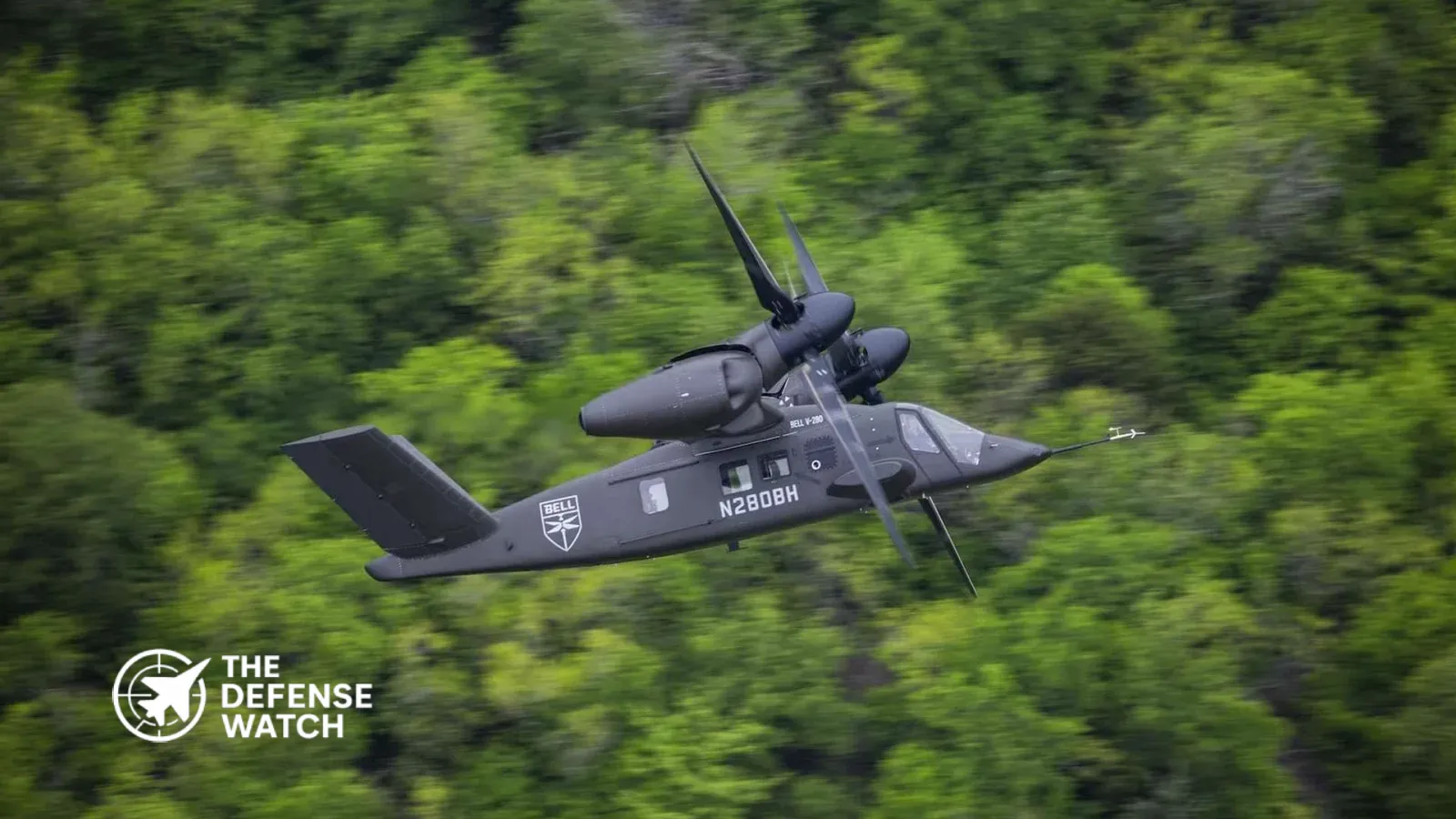
MV-75 Cheyenne helicopter
SHARE

Executive Summary:

The U.S. Army has selected RTX to provide key mission systems for the new MV-75 Cheyenne Future Long Range Assault Aircraft, strengthening the platform’s ability to conduct long range air assault missions in contested environments. The integration supports the Army’s broader aviation modernization strategy by improving navigation, communications, survivability, and mission effectiveness for future operations.

U.S. Army MV-75 Cheyenne Gains RTX Mission Systems For Longer Range Assault Missions

The MV-75 Cheyenne program has reached another important milestone as the U.S. Army moves forward with integrating advanced mission systems supplied by RTX for its next generation Future Long Range Assault Aircraft (FLRAA). The latest development reflects the Army’s continued investment in replacing the UH-60 Black Hawk with a faster, longer range platform capable of operating across increasingly contested battlefields.

Contents
  • U.S. Army MV-75 Cheyenne Gains RTX Mission Systems For Longer Range Assault Missions
  • RTX Will Supply Core Mission Systems
  • The MV-75 Cheyenne Is Central To Army Aviation Modernization
  • Why Advanced Mission Systems Matter
  • Supporting Multi Domain Operations
  • Technical Overview
  • Strategic Importance For The U.S. Army
  • Industry Collaboration Continues
  • Outlook

According to information released by Army Recognition, RTX will provide a comprehensive suite of avionics and mission equipment designed to enhance navigation, communications, sensing, and aircraft survivability for the MV-75 Cheyenne. The capability upgrade aligns with the Army’s modernization priorities for multi domain operations.

RTX Will Supply Core Mission Systems

Rather than focusing solely on airframe performance, the Army is emphasizing integrated mission systems that allow aircraft crews to operate effectively in electronic warfare environments while maintaining connectivity with joint forces.

RTX is expected to deliver several critical technologies, including:

- Advertisement -
CapabilityOperational Benefit
Integrated avionicsImproved pilot workload management
Secure communicationsReliable connectivity across joint forces
Advanced navigationPrecision operations in GPS challenged environments
Survivability systemsIncreased protection against modern threats
Mission computingFaster sensor processing and battlefield awareness

These systems are intended to provide pilots with greater situational awareness while enabling the aircraft to remain operational during complex expeditionary missions.

  • MV-75 Cheyenne Helicopter

    MV-75 Cheyenne Helicopter

    • Advanced Avionics: Modular Open Systems Approach (MOSA) with digital backbone for evolving capabilities.
    • High Maneuverability: Tiltrotor configuration for VTOL and high-speed forward flight.
    • Multi-role Capability: Assault, transport, recon, MEDEVAC, and logistics support.
    • Superior Survivability: Advanced countermeasures, reduced signatures, and robust design for contested environments.
    • View Details →
    7.5

    The MV-75 Cheyenne Is Central To Army Aviation Modernization

    The MV-75 Cheyenne is Bell’s tiltrotor aircraft selected under the Future Long Range Assault Aircraft program, one of the U.S. Army’s highest priority aviation modernization efforts.

    The aircraft is designed to replace thousands of UH-60 Black Hawk helicopters over the coming decades.

    Compared with legacy helicopters, the MV-75 offers major improvements in:

    • Higher cruise speed
    • Greater combat radius
    • Longer operational range
    • Increased payload flexibility
    • Improved survivability in contested environments

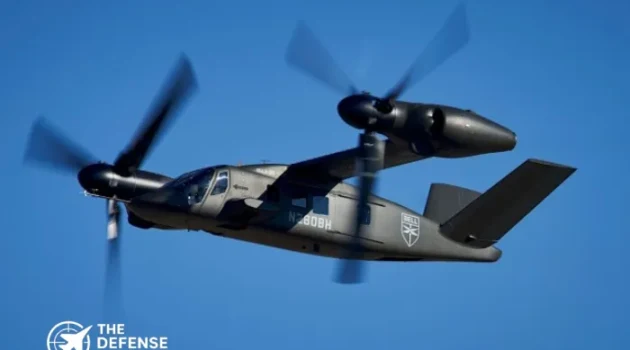
    Its tiltrotor design enables helicopter style vertical takeoff and landing while achieving airplane like cruise performance during long distance missions.

    This combination allows commanders to move troops farther, faster, and with fewer forward refueling requirements.

    Why Advanced Mission Systems Matter

    Modern conflicts increasingly feature sophisticated integrated air defense systems, electronic warfare capabilities, and long range precision weapons.

    Aircraft performance alone is no longer sufficient.

    Mission systems now determine whether crews can:

    • Navigate through GPS denial
    • Maintain secure communications
    • Detect emerging threats
    • Share targeting information
    • Coordinate with unmanned systems
    • Operate across multiple military services

    RTX’s technologies are intended to address these operational challenges by integrating sensors, mission computers, communications, and defensive systems into a unified architecture.

    Supporting Multi Domain Operations

    The U.S. Army’s modernization strategy centers on Multi Domain Operations (MDO), where land, air, cyber, space, and maritime forces operate as an integrated network.

    Within this framework, the MV-75 Cheyenne is expected to perform missions including:

    • Long range air assault
    • Rapid troop insertion
    • Medical evacuation
    • Logistics support
    • Special operations
    • Command and control
    • Expeditionary resupply

    Advanced mission systems enable these operations by connecting aircraft to wider battlefield networks while improving decision making during high tempo missions.

    Technical Overview

    SpecificationMV-75 Cheyenne
    ManufacturerBell Textron
    ProgramFuture Long Range Assault Aircraft (FLRAA)
    Primary MissionLong range assault transport
    ConfigurationTiltrotor
    Replacement AircraftUH-60 Black Hawk
    Mission Systems ProviderRTX
    Expected RoleArmy aviation modernization

    Strategic Importance For The U.S. Army

    The MV-75 represents more than a replacement for the Black Hawk.

    It reflects a broader shift toward increasing operational reach across the Indo Pacific and other theaters where forces may need to cover much greater distances than in previous conflicts.

    The Army has repeatedly identified long range maneuver as a critical requirement for future warfare. Large operational areas reduce reliance on vulnerable forward bases while giving commanders additional options during distributed operations.

    The integration of RTX mission systems directly supports this concept by improving mission resilience even when adversaries attempt to disrupt communications or navigation.

    • MV-75 Cheyenne Helicopter

      MV-75 Cheyenne Helicopter

      • Advanced Avionics: Modular Open Systems Approach (MOSA) with digital backbone for evolving capabilities.
      • High Maneuverability: Tiltrotor configuration for VTOL and high-speed forward flight.
      • Multi-role Capability: Assault, transport, recon, MEDEVAC, and logistics support.
      • Superior Survivability: Advanced countermeasures, reduced signatures, and robust design for contested environments.
      • View Details →
      7.5

      As electronic warfare becomes a defining feature of modern combat, resilient avionics and secure communications may prove just as important as aircraft speed or payload capacity.

      Industry Collaboration Continues

      The FLRAA program also illustrates the growing collaboration between major U.S. defense companies.

      Bell provides the aircraft platform while RTX contributes mission systems that leverage decades of experience in avionics, sensors, communications, and airborne survivability technologies.

      This approach allows specialized companies to focus on their respective strengths while delivering an integrated capability for the U.S. Army.

      As engineering and testing continue, additional subsystem integration and flight evaluations will help validate operational performance before full fielding.

      Outlook

      The addition of RTX mission systems marks another significant step toward operational deployment of the MV-75 Cheyenne. While the aircraft’s speed and range have attracted considerable attention, its effectiveness in future conflicts will depend equally on its ability to operate within highly contested electromagnetic environments.

      For the U.S. Army, combining Bell’s next generation tiltrotor platform with RTX’s advanced mission technologies supports a broader transformation of Army aviation, one aimed at extending operational reach, improving survivability, and enabling faster decision making across increasingly complex battlefields.
TAGGED:MV-75 CheyenneRTX
Share This Article
Facebook Copy Link Print
ByDaniel Mercer / Defense & Aerospace Analyst
Follow:
Daniel Mercer is a defense and aerospace analyst at TheDefenseWatch.com covering military aviation, aerospace technology, unmanned systems, air warfare, and defense procurement. His reporting uses official documents, government and military statements, company announcements, and other public sources.
Leave a Comment

Leave a Reply Cancel reply

Your email address will not be published. Required fields are marked *

Latest Defense Systems

  • Spirit UAS Spirit UAS
  • GBU-43/B MOAB Bomb GBU-43/B MOAB Bomb
  • John F. Kennedy Aircraft Carrier John F. Kennedy Aircraft Carrier
  • Voyager Tanker Voyager Tanker
  • YU-20 Tanker YU-20 Tanker
  • China KJ-500 Aircraft China KJ-500 Aircraft
  • SPY-6 Radar SPY-6 Radar
  • Boeing VC-25B Presidential Aircraft Boeing VC-25B Presidential Aircraft
  • SM-3 Block IB Missile SM-3 Block IB Missile

Recent Compares

  • J-10C vs JF-17 Thunder: Which Fighter Is More Capable? J-10C vs JF-17 Thunder: Which Fighter Is More Capable? View Comparison →
  • Tejas vs Gripen: Key Differences and Capabilities Tejas vs Gripen: Key Differences and Capabilities View Comparison →
  • Tejas vs MiG-21 Bison: How India Replaced Its Iconic Supersonic Fighter Tejas vs MiG-21 Bison: How India Replaced Its Iconic Supersonic Fighter View Comparison →
  • F-35 vs F-16: Stealth, Sensors and Combat Roles F-35 vs F-16: Stealth, Sensors and Combat Roles View Comparison →
  • Tejas Fighter Jet vs F-16 Fighting Falcon: Capability Compared Tejas Fighter Jet vs F-16 Fighting Falcon: Capability Compared View Comparison →
  • Rafale Fighter Jet vs F-16 Fighting Falcon : Which Fighter Has the Edge? Rafale Fighter Jet vs F-16 Fighting Falcon : Which Fighter Has the Edge? View Comparison →
  • Su-57 Fighter Jet vs J-20 Fighter Jet: Stealth and Air Combat Compared Su-57 Fighter Jet vs J-20 Fighter Jet: Stealth and Air Combat Compared View Comparison →
  • Mirage 2000 vs Tejas Mk1A: Legacy Combat Power vs Indigenous Modernization Mirage 2000 vs Tejas Mk1A: Legacy Combat Power vs Indigenous Modernization View Comparison →
  • Rafale Fighter Jet vs F-22 Raptor: Which Air Dominance Fighter Has the Edge? Rafale Fighter Jet vs F-22 Raptor: Which Air Dominance Fighter Has the Edge? View Comparison →
  • Tejas Fighter Jet vs. Rafale Fighter Jet: India’s Indigenous Fighter Meets France’s Proven Multirole Combat Aircraft Tejas Fighter Jet vs. Rafale Fighter Jet: India’s Indigenous Fighter Meets France’s Proven Multirole Combat Aircraft View Comparison →

Recent Posts

  • Saab Presents First GlobalEye AEW&C Aircraft for Sweden
  • Israel Signs Deal for 12 AH-64E Apache Attack Helicopters
  • Nepal Orders Robinson Unmanned SPIRIT Drones for Army Operations
  • Draken Deploys Sting and Phantom Sky Training System Together for First Time
  • Ukraine Says Neptune Strike Damaged Six Russian Su-34 Aircraft

You Might Also Like

Kratos XQ-58A Valkyrie
Aerospace & AviationDrones & UAVs

Kratos Races To Expand XQ-58A Valkyrie Production Amid Rising Demand From The U.S. Marine Corps And Taiwan

August 7, 2026
Boeing B-52 Stratofortress
Aerospace & Aviation

B-52 Stratofortress Celebrates 70 Years of Vigilance as Radar Modernization Nears Flight Testing

September 8, 2026
Lockheed Martin DREXR upgrade
Aerospace & AviationFighter Jets & Military Aircraft

Lockheed Martin Unveils DREXR Upgrade To Counter Evolving Threats On U.S. Navy E-2D Hawkeye

September 7, 2026
KAAN prototype taxi tests
Aerospace & AviationFighter Jets & Military Aircraft

Türkiye Races To Deploy KAAN Fighter Amid Next Generation Air Power Competition

August 4, 2026

Logo

Copyright © 2026 TheDefenseWatch.com

Helpful Links

  • Home
  • About Us
  • Privacy Policy
  • Terms of Use / Disclaimer
  • U.S. Privacy Notice – CCPA Compliance

Defense Systems

  • Defense Systems
  • Comparisons 
  • Manufacturer
  • Tactical Calculators

Popuplar

Which 5 Air Forces Possess the Costliest Fighter Jet Fleets in the World
Evolving Strategic Value: Carrier Strike Groups in the Indo-Pacific’s Future Security Architecture
Autonomous Weapon Systems Spark U.S. Ethics Debate Amid Rapid Military AI Integration

We report on developments involving military forces, governments, defense companies, research organizations, and security institutions around the world. 

Welcome Back!

Sign in to your account

Username or Email Address
Password

Lost your password?