• Home
  • About
  • Defense Systems
  • Manufacturer
  • Comparisons
  • Compare 
  • Tools
TheDefenseWatch.com
  • Aerospace & Aviation
  • Military & Ordnance
  • Naval & Maritime
  • Cyber & Space Defense
  • Policy & Strategy
  • Global News
  • Tools Library
    • Smart Calculator
    • Drone Flight Time Calculator
    • Drone Range Calculator
    • Counter-Drone Jammer Effective Range Calculator
    • Counter-Battery Radar Detection Calculator
    • Artillery Fire Correction Calculator
    • Thermal Camera Detection Range Calculator
    • Missile Range & Time-of-Flight Calculator
    • Radar Detection Range Calculator
    • FPV Strike Drone Payload vs Range Calculator
    • Loitering Munition Endurance Calculator
    • Sniper Ballistic Drop & Windage Calculator
    • Bullet Drop Calculator
    • U.S. Army Combat Fitness Test (ACFT) Calculator
    • Military Pension Calculator
    • Military Retirement Calculator
    • Military Pension Calculator
    • Large Number Calculator
Font ResizerAa

TheDefenseWatch.com

The Defense Watch | U.S. & Global Defense News, Analysis & Military Updates

Search
  • Home
  • About
  • Defense Systems
  • Manufacturer
  • Comparisons
  • Compare 
  • Tools

Stay Updated

Get the latest update

Subscribe

Explore

  • Drone
  • Fighter Jets & Military Aircraft
  • Hypersonic Weapons
  • Aircraft Carriers
  • Strategic History & Missions
  • Tools Library
Home » NATO Says Russia Struggling To Supply Crimea As Ukrainian Strikes Disrupt Key Logistics Routes
Geopolitical & Strategic DoctrinesPolicy & Strategy

NATO Says Russia Struggling To Supply Crimea As Ukrainian Strikes Disrupt Key Logistics Routes

Samuel Drake | Defense Analyst
Last updated: June 22, 2026 3:03 am
Samuel Drake | Defense Analyst
Share
2 Min Read
Russia struggling to supply Crimea
SHARE

Executive Summary:

NATO officials say Russia is facing increasing difficulty supplying occupied Crimea after sustained Ukrainian strikes against transport infrastructure and logistics networks. The assessment highlights fuel shortages, disrupted transport routes, and growing pressure on Russian military sustainment efforts in southern Ukraine.

Russia Struggling To Supply Crimea, NATO Says

Russia struggling to supply Crimea has become an increasingly significant issue in the Ukraine war, according to comments from a senior NATO official speaking during a recent NATO defense ministers meeting. The assessment comes as Ukraine intensifies attacks on Russian logistics networks, bridges, fuel facilities, and transport corridors supporting operations in occupied southern Ukraine.

Contents
Russia Struggling To Supply Crimea, NATO SaysUkrainian Strikes Target Critical Supply NetworksFuel Shortages Emerging Across CrimeaDrones Reshaping The BattlefieldWhy Crimea Matters StrategicallyAnalysis: Logistics Becoming A Primary Battlefield

According to the official, Ukrainian efforts to interdict supply routes into Crimea and parts of occupied Zaporizhzhia are producing visible effects on Russian military logistics. The official cited fuel shortages, transportation bottlenecks, and increasing restrictions on key supply routes supporting Russian forces in the region.

Ukrainian Strikes Target Critical Supply Networks

The NATO assessment aligns with a broader Ukrainian strategy focused on attacking operational depth rather than solely concentrating on front line positions.

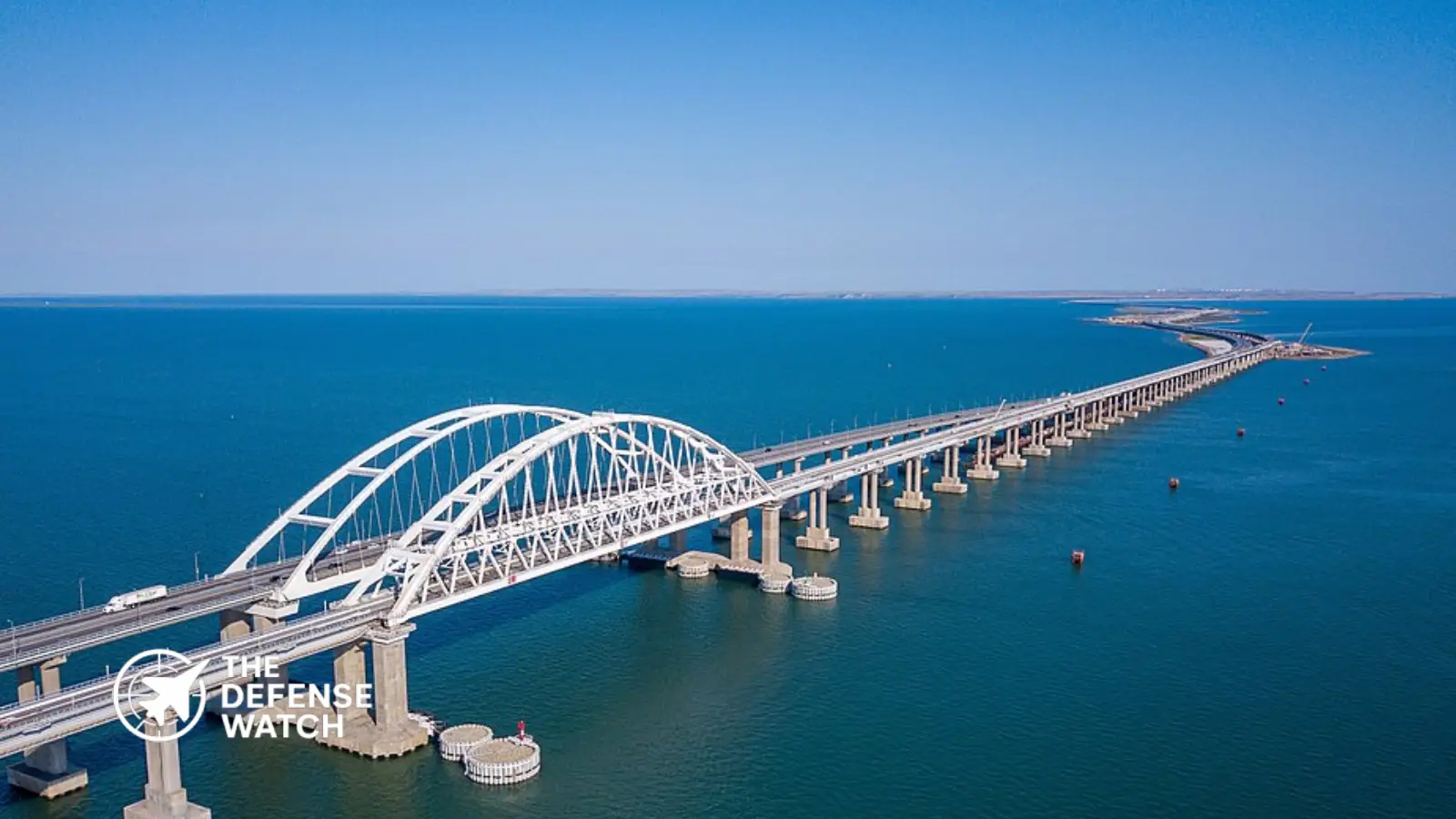
Over recent weeks, Ukrainian forces have reportedly targeted bridges in northern Crimea, transport infrastructure connecting occupied territories, and ferry services operating across the Kerch Strait. NATO officials noted that while the Kerch Bridge remains operational, its use is believed to be constrained by concerns over future Ukrainian attacks.

- Advertisement -

Additional reporting indicates that Ukrainian drone campaigns have struck fuel depots, road networks, and logistics hubs that support Russian military operations throughout southern Ukraine. These attacks have contributed to transportation disruptions and fuel distribution challenges across Crimea.

Fuel Shortages Emerging Across Crimea

One of the most visible indicators of logistical strain has been the emergence of fuel shortages across occupied Crimea.

Recent reports indicate that Russian authorities have introduced restrictions on fuel sales, limiting supplies primarily to government agencies and essential services after repeated attacks on logistics infrastructure. Ukrainian strikes against fuel storage facilities and transportation routes have complicated efforts to maintain regular fuel deliveries into the peninsula.

Crimea remains heavily dependent on external fuel deliveries. Unlike mainland Russia, the peninsula lacks sufficient domestic refining capacity to sustain military and civilian demand independently. This dependency makes transportation corridors and fuel infrastructure attractive targets for Ukrainian planners seeking to weaken Russian operational capabilities.

Drones Reshaping The Battlefield

A central factor behind the reported logistics disruption is Ukraine’s expanding use of long range and mid range drone systems.

The NATO official credited Ukrainian innovation, improved command and control capabilities, and increasingly effective drone operations for enabling strikes deep behind Russian front lines. According to the assessment, these capabilities have allowed Ukraine to target supply routes, fuel infrastructure, and transportation networks that are critical to sustaining Russian forces.

Recent reporting from multiple sources suggests Ukrainian drone attacks have increasingly focused on road traffic, fuel depots, bridges, and military logistics facilities. Analysts note that these attacks are intended to degrade Russia’s ability to move personnel, ammunition, fuel, and equipment across occupied territories.

Why Crimea Matters Strategically

Crimea remains one of the most strategically important territories in the conflict.

- Advertisement -

The peninsula serves as a major logistics hub for Russian military operations in southern Ukraine and hosts significant naval, air, and command infrastructure. Maintaining reliable supply lines into Crimea is essential for sustaining Russian military operations across the southern theater.

The ongoing campaign demonstrates how modern warfare increasingly depends on logistics resilience. While combat operations often receive greater public attention, military planners have long emphasized that the ability to move fuel, ammunition, equipment, and personnel frequently determines operational success.

The NATO official cautioned that a major crisis for Russian forces in Crimea is not necessarily imminent. However, the official stressed that military effectiveness ultimately depends on sustainment, warning that prolonged disruptions to supply networks could gradually degrade operational capabilities and increase pressure on occupation authorities.

Analysis: Logistics Becoming A Primary Battlefield

The latest NATO assessment highlights a broader trend emerging in the Ukraine war. Rather than focusing exclusively on direct battlefield engagements, both sides are increasingly targeting the systems that enable military operations.

Ukraine’s campaign against Russian logistics demonstrates a growing emphasis on operational depth, precision strikes, and infrastructure interdiction. By targeting fuel supplies, transport routes, bridges, and logistics hubs, Ukrainian forces appear to be seeking cumulative effects that weaken Russian military effectiveness over time.

For Russia, protecting supply corridors into Crimea is becoming a strategic necessity. The peninsula’s geographic position creates inherent logistical vulnerabilities, particularly when transportation infrastructure and fuel distribution networks come under sustained attack.

Whether these pressures ultimately translate into significant operational consequences remains uncertain. However, the growing focus on logistics warfare suggests that control of supply networks may prove as important as territorial gains in shaping future developments across the southern front.


TAGGED:CrimeaNATOUkraine war
Share This Article
Facebook Copy Link Print
BySamuel Drake | Defense Analyst
Follow:
Samuel Drake is a defense analyst at TheDefenseWatch.com covering naval warfare, military ordnance, maritime technology, fleet modernization, and defense procurement. His reporting focuses on documented capabilities, procurement programs, and military technology.
Leave a Comment

Leave a Reply Cancel reply

Your email address will not be published. Required fields are marked *

Search Defense Systems

Latest Defense Systems

  • B61 Nuclear Bomb B61 Nuclear Bomb
  • Japan E-767 Airborne Japan E-767 Airborne
  • Remington 870 Shotgun Remington 870 Shotgun
  • RUTA B1 Cruise Missile RUTA B1 Cruise Missile
  • XQ-67A Drone XQ-67A Drone
  • B-25 Mitchell Bomber B-25 Mitchell Bomber
  • F-100 Super Sabre F-100 Super Sabre
  • North American F-86 Sabre North American F-86 Sabre
  • North American XB-70 Valkyrie North American XB-70 Valkyrie

Recent Compares

  • J-10C vs JF-17 Thunder: Which Fighter Is More Capable? J-10C vs JF-17 Thunder: Which Fighter Is More Capable? View Comparison →
  • Tejas vs Gripen: Key Differences and Capabilities Tejas vs Gripen: Key Differences and Capabilities View Comparison →
  • Tejas vs MiG-21 Bison: How India Replaced Its Iconic Supersonic Fighter Tejas vs MiG-21 Bison: How India Replaced Its Iconic Supersonic Fighter View Comparison →
  • F-35 vs F-16: Stealth, Sensors and Combat Roles F-35 vs F-16: Stealth, Sensors and Combat Roles View Comparison →
  • Tejas Fighter Jet vs F-16 Fighting Falcon: Capability Compared Tejas Fighter Jet vs F-16 Fighting Falcon: Capability Compared View Comparison →
  • Rafale Fighter Jet vs F-16 Fighting Falcon : Which Fighter Has the Edge? Rafale Fighter Jet vs F-16 Fighting Falcon : Which Fighter Has the Edge? View Comparison →
  • Su-57 Fighter Jet vs J-20 Fighter Jet: Stealth and Air Combat Compared Su-57 Fighter Jet vs J-20 Fighter Jet: Stealth and Air Combat Compared View Comparison →
  • Mirage 2000 vs Tejas Mk1A: Legacy Combat Power vs Indigenous Modernization Mirage 2000 vs Tejas Mk1A: Legacy Combat Power vs Indigenous Modernization View Comparison →
  • Rafale Fighter Jet vs F-22 Raptor: Which Air Dominance Fighter Has the Edge? Rafale Fighter Jet vs F-22 Raptor: Which Air Dominance Fighter Has the Edge? View Comparison →
  • Tejas Fighter Jet vs. Rafale Fighter Jet: India’s Indigenous Fighter Meets France’s Proven Multirole Combat Aircraft Tejas Fighter Jet vs. Rafale Fighter Jet: India’s Indigenous Fighter Meets France’s Proven Multirole Combat Aircraft View Comparison →

Recent Posts

  • General Atomics to Supply Components for U.S. Army and Navy Hypersonic Weapons
  • Lockheed Martin Tests Mk21A Reentry Vehicle for Sentinel ICBM
  • Lockheed Martin Wins $122.4 Million Trident II Navigation Contract
  • Pentagon Prepares Review of Military Legal System and JAG Corps
  • U.S. and Colombia Launch Southern Vanguard 2027 Exercise

You Might Also Like

Iran US ceasefire negotiations 2026
Geopolitical & Strategic DoctrinesPolicy & Strategy

Iran-US Ceasefire Negotiations Stall as Strait of Hormuz Standoff Deepens

September 8, 2026
pentagon
Policy & Strategy

Pentagon Reports Strong Interest in Competition for Next Great American Base

October 27, 2026
Finland defense spending GDP 2030
Geopolitical & Strategic DoctrinesPolicy & Strategy

Finland Races To Hit 3.2% GDP Defense Target By 2030 Despite Sweeping Austerity Cuts

September 7, 2026
NATO Task Force X-Arctic
Alliances & DoctrinesPolicy & Strategy

NATO Moves To Deploy Arctic Drone Network As Competition Intensifies In The High North

June 9, 2026

Logo

Copyright © 2026 TheDefenseWatch.com

Helpful Links

  • Home
  • About Us
  • Privacy Policy
  • Terms of Use / Disclaimer
  • U.S. Privacy Notice – CCPA Compliance

Defense Systems

  • Defense Systems
  • Comparisons 
  • Manufacturer
  • Tactical Calculators

Popuplar

Which 5 Air Forces Possess the Costliest Fighter Jet Fleets in the World
Evolving Strategic Value: Carrier Strike Groups in the Indo-Pacific’s Future Security Architecture
Autonomous Weapon Systems Spark U.S. Ethics Debate Amid Rapid Military AI Integration

We report on developments involving military forces, governments, defense companies, research organizations, and security institutions around the world. 

Welcome Back!

Sign in to your account

Username or Email Address
Password

Lost your password?