• Home
  • About
  • Defense Systems
  • Manufacturer
  • Comparisons
  • Compare 
  • Tools
TheDefenseWatch.com
  • Aerospace & Aviation
  • Military & Ordnance
  • Naval & Maritime
  • Cyber & Space Defense
  • Policy & Strategy
  • Global News
  • Tools Library
    • Smart Calculator
    • Drone Flight Time Calculator
    • Drone Range Calculator
    • Counter-Drone Jammer Effective Range Calculator
    • Counter-Battery Radar Detection Calculator
    • Artillery Fire Correction Calculator
    • Thermal Camera Detection Range Calculator
    • Missile Range & Time-of-Flight Calculator
    • Radar Detection Range Calculator
    • FPV Strike Drone Payload vs Range Calculator
    • Loitering Munition Endurance Calculator
    • Sniper Ballistic Drop & Windage Calculator
    • Bullet Drop Calculator
    • U.S. Army Combat Fitness Test (ACFT) Calculator
    • Military Pension Calculator
    • Military Retirement Calculator
    • Military Pension Calculator
    • Large Number Calculator
Font ResizerAa

TheDefenseWatch.com

The Defense Watch | U.S. & Global Defense News, Analysis & Military Updates

Search
  • Home
  • About
  • Defense Systems
  • Manufacturer
  • Comparisons
  • Compare 
  • Tools

Stay Updated

Get the latest update

Subscribe

Explore

  • Drone
  • Fighter Jets & Military Aircraft
  • Hypersonic Weapons
  • Aircraft Carriers
  • Strategic History & Missions
  • Tools Library
Home » Nuclear Energy’s Rising Role in Global Defense Strategy and Energy Security
Alliances & DoctrinesPolicy & Strategy

Nuclear Energy’s Rising Role in Global Defense Strategy and Energy Security

TeamDefenseWatch
Last updated: September 26, 2025 11:23 am
TeamDefenseWatch
Share
2 Min Read
Nuclear energy
SHARE

Nuclear Energy Back in Strategic Spotlight

Nuclear energy is reemerging as a central pillar in global defense and energy strategies. Once sidelined due to safety concerns and public resistance, nuclear power is now being reevaluated by major powers—including the United States, China, and Russia—not only as a clean energy source but also as a foundation for national security resilience.

Contents
Nuclear Energy Back in Strategic SpotlightNuclear Energy and Defense ResilienceNuclear Energy in Geopolitical CompetitionAnalysis: The Strategic ImplicationsConclusionFAQs

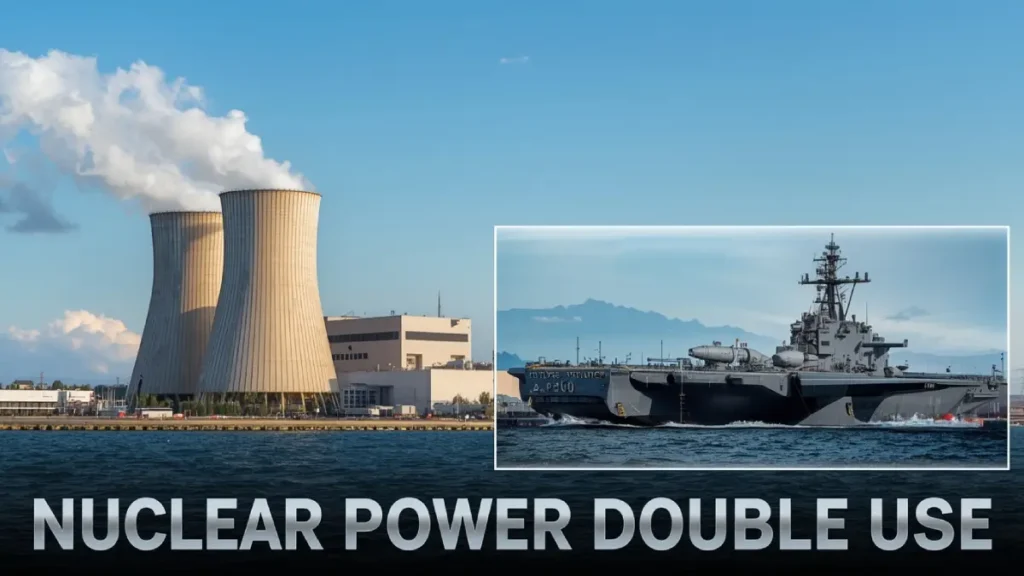
Defense planners increasingly view nuclear energy as dual-use: sustaining military bases, powering advanced technologies, and reinforcing deterrence frameworks. The U.S. Department of Defense has already launched initiatives to deploy small modular reactors (SMRs) to provide reliable power for remote bases and forward-deployed operations. Similar efforts are underway in Europe and Asia, signaling a broader shift.

Nuclear energy

Source: IAEA – Nuclear Energy and Security

Nuclear Energy and Defense Resilience

Modern militaries are heavily dependent on stable energy supplies. Cyber threats, fuel shortages, and climate pressures have exposed vulnerabilities in traditional grids. Nuclear power—particularly in modular and mobile forms—offers independence from fragile supply chains.

- Advertisement -
  • Small Modular Reactors (SMRs): Portable, low-maintenance reactors that can power military installations, radars, and space operations.
  • Naval Propulsion: Nuclear-powered submarines and carriers remain unmatched in endurance, giving navies global reach without constant refueling.
  • Energy Resilience: Bases powered by nuclear reactors are less exposed to fuel convoys, which are frequent targets in conflict zones.

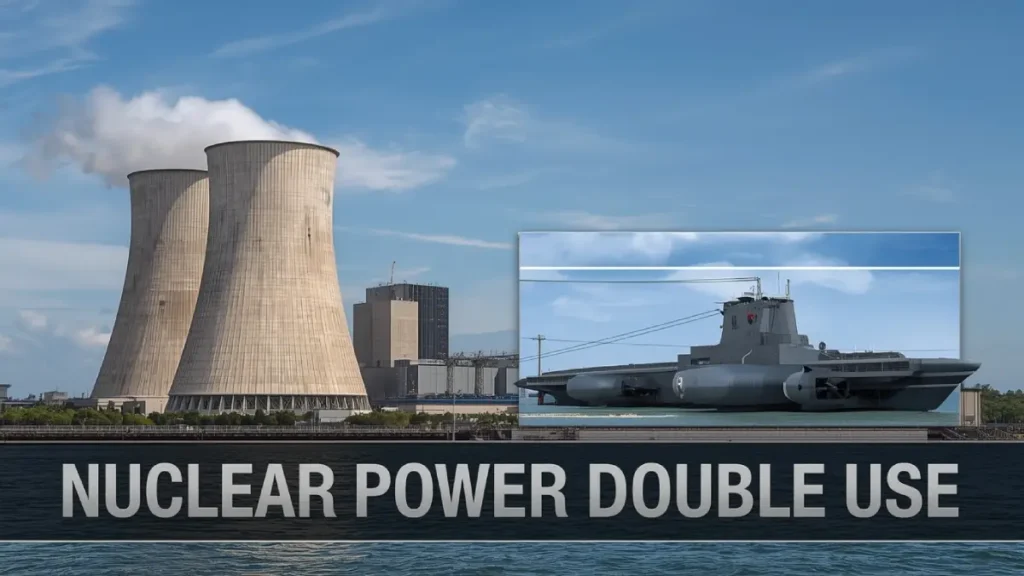
Russia and China are also investing in advanced nuclear technologies, including floating reactors for Arctic operations and space-based nuclear propulsion systems—highlighting the military dimension of nuclear innovation.
Nuclear energy

Nuclear Energy in Geopolitical Competition

The return of great power competition has amplified the nuclear energy race. Beyond deterrence through warheads, civilian nuclear power is increasingly tied to influence and alliances.

  • China is exporting nuclear technology through its Belt and Road framework, offering reactor deals to developing countries.
  • Russia has positioned Rosatom as a state-backed supplier of nuclear reactors and fuel, locking in decades-long energy dependencies.
  • The U.S. and allies are promoting nuclear partnerships under AUKUS and NATO frameworks, highlighting nuclear technology’s role in strategic balance.
Nuclear energy

This competition is reshaping not just energy policy but also global security alignments. Nations that secure advanced nuclear capabilities are strengthening both their economies and defense structures.

Analysis: The Strategic Implications

For defense strategists, nuclear energy is more than a power source—it is a national security asset. As militaries adopt increasingly power-hungry systems, from directed energy weapons to advanced radar networks, demand for resilient power will intensify.

At the same time, nuclear energy plays into broader deterrence frameworks. Nations with robust nuclear infrastructure signal long-term resilience, reducing vulnerabilities that adversaries might exploit.

However, proliferation risks remain. Expanding civilian nuclear technology in unstable regions could open pathways for weapons development. Balancing strategic benefits with non-proliferation obligations will be a critical challenge for policymakers in the coming decade.

Conclusion

Nuclear energy’s dual role in defense and energy security ensures it will remain a focal point of strategic planning. From powering military bases to reshaping alliances, nuclear power is no longer just an energy issue—it is a geopolitical instrument.

As competition intensifies among major powers, nuclear energy will continue to shape the future of both defense and global security frameworks.

- Advertisement -

FAQs

Why is nuclear energy important for defense?

Nuclear energy provides reliable, resilient power for bases, propulsion for submarines and carriers, and strengthens national energy security.

What are Small Modular Reactors (SMRs)?

SMRs are compact nuclear reactors designed to provide flexible, mobile, and low-maintenance energy for civilian and defense needs.

How are major powers competing in nuclear energy?

The U.S., Russia, and China are all exporting nuclear technology, tying it to military resilience and geopolitical influence.

What risks come with expanding nuclear power?

While enhancing resilience, nuclear expansion also risks proliferation, particularly in politically unstable regions.

Note: The images are AI-generated.

TAGGED:Military energy securityNuclear energy in defenseNuclear geopoliticsNuclear strategySmall modular reactors
Share This Article
Facebook Copy Link Print
ByTeamDefenseWatch
TeamDefenseWatch is the official editorial byline of TheDefenseWatch.com. Working under one umbrella, TheDefenseWatch.com, the team delivers verified, factual reporting on global defense, military technology, aerospace systems, and security developments. Articles are sourced from official statements, defense industry releases, and trusted media, with editorial review to ensure accuracy and clarity.Contact: info@TheDefenseWtach.com
8 Comments
  • Pingback: China’s Space Militarization: Rising Threat to U.S. Space Dominance
  • Pingback: NATO vs China-Russia Alliance: Is the World Entering a New Cold War?
  • Pingback: U.S. Terminates All Trade Negotiations With Canada Amid Ad Dispute
  • Pingback: U.S. to Launch LGM-30G Minuteman III Ballistic Missile in Scheduled Strategic Readiness Test
  • Pingback: Inside the B-21 Raider Program: How the Future of American Stealth Bombing Compares with the B-2 and China’s H-20
  • Pingback: US–China Lunar Nuclear Power Race Heats Up as NASA Eyes 100 kW Reactor by 2030
  • Pingback: U.S. Army Selects Nine Bases for Janus Microreactors to Enhance Operational Power
  • Pingback: UK Deploys Typhoon Jets to Qatar to Reinforce Middle East Security | TheDefenseWatch.com

Leave a Reply Cancel reply

Your email address will not be published. Required fields are marked *

Search Defense Systems

Latest Defense Systems

  • B61 Nuclear Bomb B61 Nuclear Bomb
  • Japan E-767 Airborne Japan E-767 Airborne
  • Remington 870 Shotgun Remington 870 Shotgun
  • RUTA B1 Cruise Missile RUTA B1 Cruise Missile
  • XQ-67A Drone XQ-67A Drone
  • B-25 Mitchell Bomber B-25 Mitchell Bomber
  • F-100 Super Sabre F-100 Super Sabre
  • North American F-86 Sabre North American F-86 Sabre
  • North American XB-70 Valkyrie North American XB-70 Valkyrie

Recent Compares

  • J-10C vs JF-17 Thunder: Which Fighter Is More Capable? J-10C vs JF-17 Thunder: Which Fighter Is More Capable? View Comparison →
  • Tejas vs Gripen: Key Differences and Capabilities Tejas vs Gripen: Key Differences and Capabilities View Comparison →
  • Tejas vs MiG-21 Bison: How India Replaced Its Iconic Supersonic Fighter Tejas vs MiG-21 Bison: How India Replaced Its Iconic Supersonic Fighter View Comparison →
  • F-35 vs F-16: Stealth, Sensors and Combat Roles F-35 vs F-16: Stealth, Sensors and Combat Roles View Comparison →
  • Tejas Fighter Jet vs F-16 Fighting Falcon: Capability Compared Tejas Fighter Jet vs F-16 Fighting Falcon: Capability Compared View Comparison →
  • Rafale Fighter Jet vs F-16 Fighting Falcon : Which Fighter Has the Edge? Rafale Fighter Jet vs F-16 Fighting Falcon : Which Fighter Has the Edge? View Comparison →
  • Su-57 Fighter Jet vs J-20 Fighter Jet: Stealth and Air Combat Compared Su-57 Fighter Jet vs J-20 Fighter Jet: Stealth and Air Combat Compared View Comparison →
  • Mirage 2000 vs Tejas Mk1A: Legacy Combat Power vs Indigenous Modernization Mirage 2000 vs Tejas Mk1A: Legacy Combat Power vs Indigenous Modernization View Comparison →
  • Rafale Fighter Jet vs F-22 Raptor: Which Air Dominance Fighter Has the Edge? Rafale Fighter Jet vs F-22 Raptor: Which Air Dominance Fighter Has the Edge? View Comparison →
  • Tejas Fighter Jet vs. Rafale Fighter Jet: India’s Indigenous Fighter Meets France’s Proven Multirole Combat Aircraft Tejas Fighter Jet vs. Rafale Fighter Jet: India’s Indigenous Fighter Meets France’s Proven Multirole Combat Aircraft View Comparison →

Recent Posts

  • General Atomics to Supply Components for U.S. Army and Navy Hypersonic Weapons
  • Lockheed Martin Tests Mk21A Reentry Vehicle for Sentinel ICBM
  • Lockheed Martin Wins $122.4 Million Trident II Navigation Contract
  • Pentagon Prepares Review of Military Legal System and JAG Corps
  • U.S. and Colombia Launch Southern Vanguard 2027 Exercise

You Might Also Like

Ukraine drone and air defense
Alliances & DoctrinesPolicy & Strategy

Norway Moves To Boost Drone And Air Defense Support As Ukraine Faces Intensifying Aerial Threats

September 17, 2026
Project Agincourt autonomous warfare
Geopolitical & Strategic DoctrinesPolicy & Strategy

Project Agincourt Pushes Pentagon to Speed Up Autonomous Weapons Fielding

October 24, 2026
Drone Dominance Program
Defense Budgets & PolicyPolicy & Strategy

Pentagon Races To Deploy 200,000 AI Attack Drones Through Drone Dominance Program

September 7, 2026
Army Foundation College expansion plans
Policy & Strategy

UK Army Weighs Second Army Foundation College As Under-18 Recruitment Expands

September 7, 2026

Logo

Copyright © 2026 TheDefenseWatch.com

Helpful Links

  • Home
  • About Us
  • Privacy Policy
  • Terms of Use / Disclaimer
  • U.S. Privacy Notice – CCPA Compliance

Defense Systems

  • Defense Systems
  • Comparisons 
  • Manufacturer
  • Tactical Calculators

Popuplar

Which 5 Air Forces Possess the Costliest Fighter Jet Fleets in the World
Evolving Strategic Value: Carrier Strike Groups in the Indo-Pacific’s Future Security Architecture
Autonomous Weapon Systems Spark U.S. Ethics Debate Amid Rapid Military AI Integration

We report on developments involving military forces, governments, defense companies, research organizations, and security institutions around the world. 

Welcome Back!

Sign in to your account

Username or Email Address
Password

Lost your password?