• Home
  • About
  • Defense Systems
  • Manufacturer
  • Comparisons
  • Compare 
  • Tools
TheDefenseWatch.com
  • Aerospace & Aviation
  • Military & Ordnance
  • Naval & Maritime
  • Cyber & Space Defense
  • Policy & Strategy
  • Global News
  • Tools Library
    • Smart Calculator
    • Drone Flight Time Calculator
    • Drone Range Calculator
    • Counter-Drone Jammer Effective Range Calculator
    • Counter-Battery Radar Detection Calculator
    • Artillery Fire Correction Calculator
    • Thermal Camera Detection Range Calculator
    • Missile Range & Time-of-Flight Calculator
    • Radar Detection Range Calculator
    • FPV Strike Drone Payload vs Range Calculator
    • Loitering Munition Endurance Calculator
    • Sniper Ballistic Drop & Windage Calculator
    • Bullet Drop Calculator
    • U.S. Army Combat Fitness Test (ACFT) Calculator
    • Military Pension Calculator
    • Military Retirement Calculator
    • Military Pension Calculator
    • Large Number Calculator
Font ResizerAa

TheDefenseWatch.com

The Defense Watch | U.S. & Global Defense News, Analysis & Military Updates

Search
  • Home
  • About
  • Defense Systems
  • Manufacturer
  • Comparisons
  • Compare 
  • Tools

Stay Updated

Get the latest update

Subscribe

Explore

  • Drone
  • Fighter Jets & Military Aircraft
  • Hypersonic Weapons
  • Aircraft Carriers
  • Strategic History & Missions
  • Tools Library
Home » PLA Navy Unveils New Terminal Defense System To Counter Hypersonic And Sea-Skimming Threats
Global News

PLA Navy Unveils New Terminal Defense System To Counter Hypersonic And Sea-Skimming Threats

Kaleem Sheikh | Regional Defense Correspondent
Last updated: September 7, 2026 10:40 am
Kaleem Sheikh | Regional Defense Correspondent
Share
2 Min Read
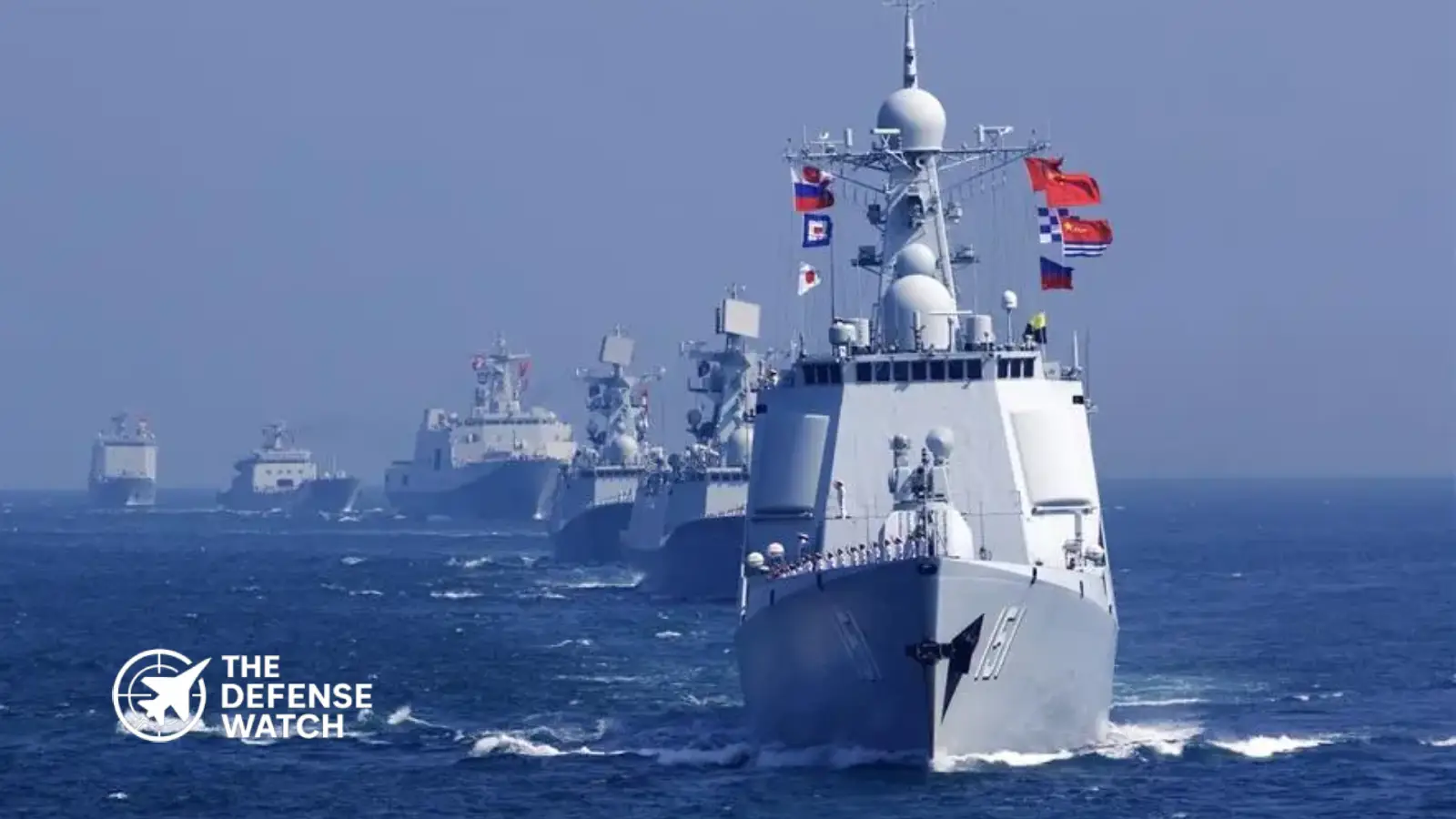
Chinese PLA Navy terminal defense system undergoing sea trials during anti-missile interception exercise in the Bohai Sea.
SHARE
Follow The Defense Watch on Google:

Executive Summary:
The Chinese PLA Navy has completed type certification trials for a new terminal air-defense and anti-missile system designed to intercept ultra-low-altitude and potentially hypersonic threats. Chinese military analysts say the system could strengthen layered fleet defense for destroyers, frigates, and future carrier strike groups amid growing regional missile competition.

PLA Navy Terminal Defense System Advances China’s Naval Air Defense

The PLA Navy terminal defense system entered a new phase of development after Chinese state media confirmed completion of type certification trials in the Bohai Sea. The tests reportedly evaluated the system’s ability to engage high-speed sea-skimming targets in electronically contested environments, a capability increasingly viewed as essential in modern naval warfare.

Contents
PLA Navy Terminal Defense System Advances China’s Naval Air DefenseFocus On Sea-Skimming And Hypersonic ThreatsElectronic Warfare Resistance Emerges As Key FeatureExpanding China’s Layered Naval Defense NetworkStrategic Implications For Indo-Pacific Naval Competition

According to Chinese state broadcaster CCTV, the trials involved multiple target drones simulating ultra-low-altitude penetration attacks against naval vessels. Footage released during the report showed successful interceptions of incoming targets flying only meters above the sea surface.

Chinese military commentators cited by state media described the system as part of a layered naval defense architecture designed to protect warships during the final phase of incoming missile attacks. The capability is intended to complement longer-range naval air defense missiles already deployed aboard PLA Navy surface combatants.

Focus On Sea-Skimming And Hypersonic Threats

Chinese analysts claimed the new PLA Navy terminal defense system may possess the ability to counter maneuvering hypersonic weapons in addition to conventional anti-ship missiles. While those claims remain unverified outside Chinese sources, the emphasis reflects broader global concern over high-speed precision strike weapons.

- Advertisement -

The report stated the system intercepted targets flying at altitudes between 5 and 10 meters above sea level, a difficult engagement profile for naval radar and fire-control systems because of sea clutter and limited reaction time.

Chinese military expert Wang Yunfei told the Global Times that the system could use advanced fire-control algorithms and kinetic-kill technologies to improve interception performance against complex threats.

If accurate, the development would place China among a small group of countries pursuing naval defenses optimized for both hypersonic and sea-skimming missile engagements. The United States, Japan, and several NATO navies are also accelerating investments in terminal defense technologies as anti-ship missile ranges and speeds continue to increase.

Electronic Warfare Resistance Emerges As Key Feature

One of the most notable elements of the reported trials was the system’s operation under heavy electromagnetic interference conditions. Chinese commentators emphasized anti-jamming performance as a major requirement for future naval combat systems.

Modern naval warfare increasingly depends on the ability to maintain sensor tracking, communications, and missile guidance during electronic attack operations. The Russia-Ukraine conflict and Red Sea maritime attacks have reinforced the importance of resilient air defense networks capable of operating in degraded environments.

The Chinese report suggested the trials tested both target interception and system coordination across multiple defensive layers. Analysts noted that future naval conflicts are expected to involve simultaneous drone, missile, and electronic warfare attacks designed to overwhelm ship defenses.

Expanding China’s Layered Naval Defense Network

Chinese analysts said the new system is intended to close an engagement gap between the PLA Navy’s HQ-9B long-range missile system, the HQ-10 short-range missile system, and the Type 1130 close-in weapon system.

That layered structure mirrors defensive concepts already used by the U.S. Navy and several allied fleets, where multiple defensive rings provide overlapping protection against incoming threats.

- Advertisement -

The report also indicated the new system could eventually be deployed aboard destroyers, frigates, and potentially aircraft carriers.

China has rapidly expanded its naval modernization efforts over the past decade, commissioning new Type 055 cruisers, Type 052D destroyers, and the Fujian aircraft carrier as part of a broader effort to extend maritime reach and improve blue-water operational capability.

Strategic Implications For Indo-Pacific Naval Competition

The unveiling of the PLA Navy terminal defense system comes as Indo-Pacific navies increasingly focus on survivability against advanced anti-ship missiles and drone saturation attacks.

Regional militaries, including the United States, Japan, Australia, and South Korea, are investing heavily in integrated air and missile defense systems capable of countering hypersonic and low-observable threats.

China’s emphasis on layered fleet defense also aligns with its broader carrier strike group ambitions. Analysts widely assess that Beijing aims to build naval formations capable of operating farther from mainland air cover while maintaining credible defenses against advanced missile attacks.

Although many technical claims surrounding the new system cannot yet be independently verified, the completion of type certification trials suggests the platform may be approaching operational deployment within the PLA Navy.

Enjoying our coverage?

Make The Defense Watch a preferred source on Google to see more of our geopolitical and defense insights when relevant to you.


TAGGED:China NavyMissile Defensenaval warfare
Share This Article
Facebook Copy Link Print
ByKaleem Sheikh | Regional Defense Correspondent
Follow:
Kaleem Sheikh is a regional defense correspondent at TheDefenseWatch.com covering defense and security developments across Asia and the Middle East, including military operations, procurement, and regional security issues.
Leave a Comment

Leave a Reply Cancel reply

Your email address will not be published. Required fields are marked *

Search Defense Systems

Latest Defense Systems

  • F-15J Eagle Fighter Jet F-15J Eagle Fighter Jet
  • China’s GJ-21 Stealth Drone China’s GJ-21 Stealth Drone
  • China’s GJ-11 Stealth Drone China’s GJ-11 Stealth Drone
  • F-15EX Eagle Fighter Jet F-15EX Eagle Fighter Jet
  • TRML-4D Radar TRML-4D Radar
  • F-47A Fighter Jet F-47A Fighter Jet
  • China DF-61 Missile China DF-61 Missile
  • B61 Nuclear Bomb B61 Nuclear Bomb
  • Japan E-767 Airborne Japan E-767 Airborne

Recent Compares

  • J-10C vs JF-17 Thunder: Which Fighter Is More Capable? J-10C vs JF-17 Thunder: Which Fighter Is More Capable? View Comparison →
  • Tejas vs Gripen: Key Differences and Capabilities Tejas vs Gripen: Key Differences and Capabilities View Comparison →
  • Tejas vs MiG-21 Bison: How India Replaced Its Iconic Supersonic Fighter Tejas vs MiG-21 Bison: How India Replaced Its Iconic Supersonic Fighter View Comparison →
  • F-35 vs F-16: Stealth, Sensors and Combat Roles F-35 vs F-16: Stealth, Sensors and Combat Roles View Comparison →
  • Tejas Fighter Jet vs F-16 Fighting Falcon: Capability Compared Tejas Fighter Jet vs F-16 Fighting Falcon: Capability Compared View Comparison →
  • Rafale Fighter Jet vs F-16 Fighting Falcon : Which Fighter Has the Edge? Rafale Fighter Jet vs F-16 Fighting Falcon : Which Fighter Has the Edge? View Comparison →
  • Su-57 Fighter Jet vs J-20 Fighter Jet: Stealth and Air Combat Compared Su-57 Fighter Jet vs J-20 Fighter Jet: Stealth and Air Combat Compared View Comparison →
  • Mirage 2000 vs Tejas Mk1A: Legacy Combat Power vs Indigenous Modernization Mirage 2000 vs Tejas Mk1A: Legacy Combat Power vs Indigenous Modernization View Comparison →
  • Rafale Fighter Jet vs F-22 Raptor: Which Air Dominance Fighter Has the Edge? Rafale Fighter Jet vs F-22 Raptor: Which Air Dominance Fighter Has the Edge? View Comparison →
  • Tejas Fighter Jet vs. Rafale Fighter Jet: India’s Indigenous Fighter Meets France’s Proven Multirole Combat Aircraft Tejas Fighter Jet vs. Rafale Fighter Jet: India’s Indigenous Fighter Meets France’s Proven Multirole Combat Aircraft View Comparison →

Recent Posts

  • Boeing B-1B LAM Pylon Clears Design Review, Advancing Hypersonic Weapons Integration
  • Pakistan, Türkiye Explore Deeper Air Force Cooperation in Drones and Electronic Warfare
  • Meta Muse AI Agent Faces Privacy Concerns After Reports of Unauthorized Data Access
  • Trump Nominates Christopher LaNeve for Permanent U.S. Army Chief of Staff
  • Sweden and UK Plan Meteor Missile Support for Ukraine’s Gripen Fighters

You Might Also Like

IDF eliminates Hezbollah operative
Global News

IDF Eliminates Hezbollah Operative In Southern Lebanon Airstrike

February 13, 2026
US combat sorties against Iran
Global News

US Conducts 6,000 Combat Sorties Against Iran Since Operation Epic Fury Began

September 7, 2026
Iran protest death toll
Global News

Iran Acknowledges 2,000 Protest Deaths as Trump Weighs Military Strikes

January 13, 2026
US Navy Royal Saudi Naval Forces exercise
Global News

US Navy, Royal Saudi Naval Forces Conclude Indigo Defender Maritime Exercise in Red Sea

September 7, 2026

Logo

Copyright © 2026 TheDefenseWatch.com

Helpful Links

  • Home
  • About Us
  • Privacy Policy
  • Terms of Use / Disclaimer
  • U.S. Privacy Notice – CCPA Compliance

Defense Systems

  • Defense Systems
  • Comparisons 
  • Manufacturer
  • Tactical Calculators

Popuplar

Which 5 Air Forces Possess the Costliest Fighter Jet Fleets in the World
Evolving Strategic Value: Carrier Strike Groups in the Indo-Pacific’s Future Security Architecture
Autonomous Weapon Systems Spark U.S. Ethics Debate Amid Rapid Military AI Integration

We report on developments involving military forces, governments, defense companies, research organizations, and security institutions around the world. 

Welcome Back!

Sign in to your account

Username or Email Address
Password

Lost your password?

Enjoying our coverage?

Make The Defense Watch a preferred source on Google to see more insights.