• Home
  • About
  • Defense Systems
  • Manufacturer
  • Comparisons
  • Compare 
  • Tools
TheDefenseWatch.com
  • Aerospace & Aviation
  • Military & Ordnance
  • Naval & Maritime
  • Cyber & Space Defense
  • Policy & Strategy
  • Global News
  • Tools Library
    • Smart Calculator
    • Drone Flight Time Calculator
    • Drone Range Calculator
    • Counter-Drone Jammer Effective Range Calculator
    • Counter-Battery Radar Detection Calculator
    • Artillery Fire Correction Calculator
    • Thermal Camera Detection Range Calculator
    • Missile Range & Time-of-Flight Calculator
    • Radar Detection Range Calculator
    • FPV Strike Drone Payload vs Range Calculator
    • Loitering Munition Endurance Calculator
    • Sniper Ballistic Drop & Windage Calculator
    • Bullet Drop Calculator
    • U.S. Army Combat Fitness Test (ACFT) Calculator
    • Military Pension Calculator
    • Military Retirement Calculator
    • Military Pension Calculator
    • Large Number Calculator
Font ResizerAa

TheDefenseWatch.com

The Defense Watch | U.S. & Global Defense News, Analysis & Military Updates

Search
  • Home
  • About
  • Defense Systems
  • Manufacturer
  • Comparisons
  • Compare 
  • Tools

Stay Updated

Get the latest update

Subscribe

Explore

  • Drone
  • Fighter Jets & Military Aircraft
  • Hypersonic Weapons
  • Aircraft Carriers
  • Strategic History & Missions
  • Tools Library
Home » Lockheed Martin Expands Guam Aegis Ashore Missile Defense Program Under New Pentagon Contract
Defense Contracts

Lockheed Martin Expands Guam Aegis Ashore Missile Defense Program Under New Pentagon Contract

Daniel Mercer / Defense & Aerospace Analyst
Last updated: September 7, 2026 10:40 am
Daniel Mercer / Defense & Aerospace Analyst
Share
2 Min Read
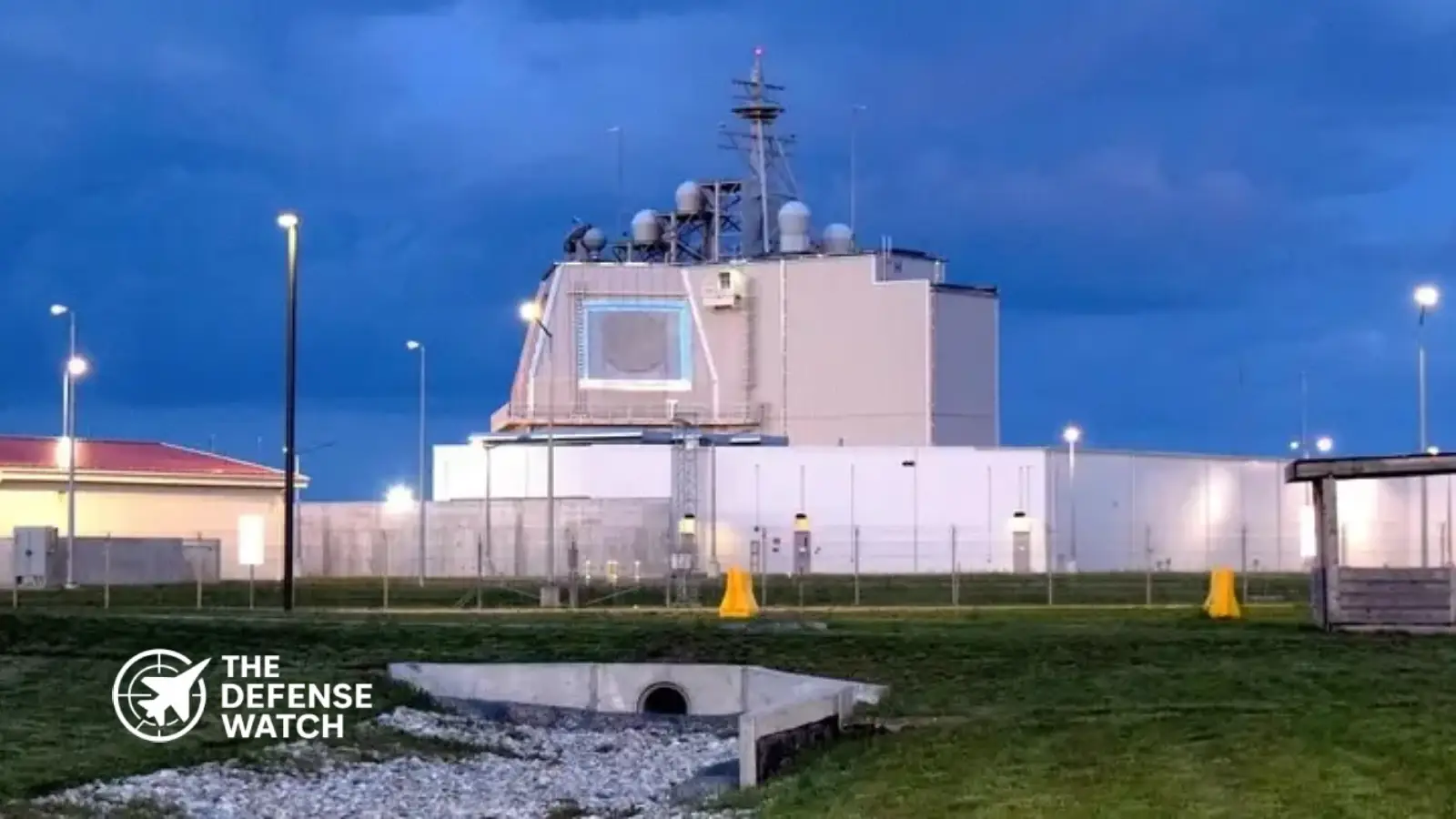
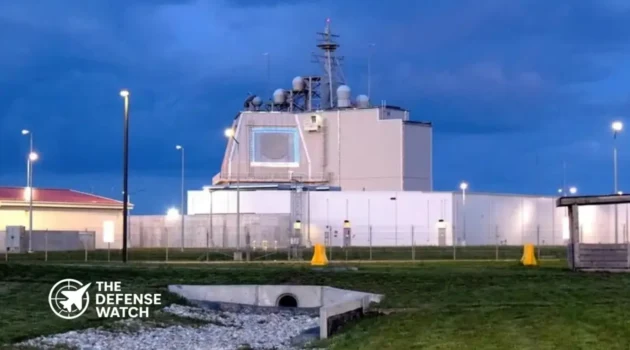
U.S. missile defense installation in Guam featuring Aegis Ashore launch systems and radar infrastructure operated under Lockheed Martin contract
Image: U.S. Navy
SHARE

Executive Summary:
The U.S. Department of Defense has extended Lockheed Martin’s contract supporting the Guam Aegis Ashore missile defense system, reinforcing Washington’s broader Indo-Pacific defense posture. The effort is aimed at strengthening protection for critical U.S. military infrastructure on Guam against evolving regional missile threats.

Lockheed Martin Contract Reinforces Guam Missile Defense Network

The Guam Aegis Ashore missile defense system remains a central component of the United States’ evolving missile defense architecture in the Indo-Pacific region. The U.S. Department of Defense has extended Lockheed Martin’s contract tied to the development and integration of the Guam Defense System, according to reporting from European defense industry sources.

Contents
Lockheed Martin Contract Reinforces Guam Missile Defense NetworkGuam’s Strategic Importance Continues To GrowLockheed Martin’s Role In The ProgramLayered Missile Defense Becomes Pentagon PriorityIndo-Pacific Security Environment Driving ModernizationBroader Implications For U.S. Defense Strategy

The contract extension supports continued engineering, integration, and system development work associated with the island’s layered missile defense network. Guam is considered strategically vital due to its role as a forward-operating hub for U.S. military forces across the Pacific.

  • Aegis Ballistic Missile Defense System

    Aegis Ballistic Missile Defense System

    • Maximum Range: 2,500+ km Tracking Capability
    • Maximum Altitude: Exo-atmospheric Intercept
    • Radar Detection Range: 310+ km
    • Missile Speed: Mach 10+
    • View Details →
    8.3

    The project is managed through the U.S. Missile Defense Agency (MDA) in coordination with the U.S. Navy and other defense stakeholders.

    Guam’s Strategic Importance Continues To Grow

    Guam has become increasingly important in U.S. defense planning as tensions continue to shape the Indo-Pacific security environment. The island hosts major American military facilities, including Andersen Air Force Base and Naval Base Guam, both considered critical logistical and operational nodes.

    The Guam Aegis Ashore missile defense system is designed to provide persistent defense against ballistic, hypersonic, and cruise missile threats. The system is expected to integrate sensors, interceptors, command-and-control networks, and vertical launch systems into a layered defensive shield.

    U.S. defense officials have repeatedly identified Guam as a potential target in any future high-end regional conflict scenario. As a result, protecting the territory has become a priority under broader American force posture initiatives in the Pacific.

    Lockheed Martin’s Role In The Program

    Lockheed Martin is responsible for core combat system integration work linked to the Guam defense effort. The company’s expertise with the Aegis combat system architecture positions it as a key industry partner for the project.

    The extension reportedly covers continued software integration, system engineering, and operational support tied to the evolving Guam defense architecture. While full financial details were not publicly disclosed in the original reporting, the contract demonstrates continued Pentagon investment in regional missile defense modernization.

    • Aegis Ballistic Missile Defense System

      Aegis Ballistic Missile Defense System

      • Maximum Range: 2,500+ km Tracking Capability
      • Maximum Altitude: Exo-atmospheric Intercept
      • Radar Detection Range: 310+ km
      • Missile Speed: Mach 10+
      • View Details →
      8.3

      The Guam system is expected to leverage technologies derived from the U.S. Navy’s Aegis Ballistic Missile Defense ecosystem already deployed aboard destroyers and cruisers.

      Layered Missile Defense Becomes Pentagon Priority

      The Guam Aegis Ashore missile defense system reflects a broader Pentagon shift toward integrated and layered regional defense concepts. U.S. military planners are increasingly focused on defending fixed bases and forward-deployed assets from multi-domain missile threats.

      Unlike traditional silo-based missile defense systems, the Guam architecture is intended to operate as a distributed network capable of responding to different classes of incoming threats simultaneously.

      The Pentagon has accelerated investment in missile warning systems, interceptor technologies, and integrated command-and-control platforms as part of this strategy.

      Defense analysts note that Guam’s defense network could eventually serve as a model for future regional missile defense deployments across allied territories and forward operating locations.

      Indo-Pacific Security Environment Driving Modernization

      The continued expansion of missile capabilities across the Indo-Pacific has intensified U.S. efforts to harden regional military infrastructure. American defense officials have emphasized the need for resilient air and missile defense systems capable of operating in contested environments.

      The Guam Aegis Ashore missile defense system is also aligned with broader U.S. efforts to improve joint interoperability between the Navy, Army, Air Force, and Missile Defense Agency.

      In recent years, the United States has increased defense cooperation with regional allies while simultaneously modernizing its own Pacific force posture. Guam’s location allows rapid access to East Asia and the Western Pacific, making it one of the most strategically significant U.S. territories in the region.

      Broader Implications For U.S. Defense Strategy

      The Pentagon’s continued investment in Guam underscores Washington’s long-term focus on Indo-Pacific deterrence. Beyond protecting military infrastructure, the system contributes to maintaining operational continuity during potential regional crises.

      The contract extension also highlights how large-scale missile defense projects are increasingly dependent on integrated partnerships between the Department of Defense and major defense contractors.

      As missile threats evolve in speed, range, and maneuverability, U.S. defense planners are prioritizing systems capable of adapting to future operational demands. Guam’s layered defense architecture is expected to remain one of the Pentagon’s highest-profile missile defense initiatives over the coming decade.
TAGGED:Aegis AshoreGuam DefenseIndo-Pacific SecurityLockheed MartinMissile Defense
Share This Article
Facebook Copy Link Print
ByDaniel Mercer / Defense & Aerospace Analyst
Follow:
Daniel Mercer is a defense and aerospace analyst at TheDefenseWatch.com covering military aviation, aerospace technology, unmanned systems, air warfare, and defense procurement. His reporting uses official documents, government and military statements, company announcements, and other public sources.
Leave a Comment

Leave a Reply Cancel reply

Your email address will not be published. Required fields are marked *

Search Defense Systems

Latest Defense Systems

  • F-47A Fighter Jet F-47A Fighter Jet
  • China DF-61 Missile China DF-61 Missile
  • B61 Nuclear Bomb B61 Nuclear Bomb
  • Japan E-767 Airborne Japan E-767 Airborne
  • Remington 870 Shotgun Remington 870 Shotgun
  • RUTA B1 Cruise Missile RUTA B1 Cruise Missile
  • XQ-67A Drone XQ-67A Drone
  • B-25 Mitchell Bomber B-25 Mitchell Bomber
  • F-100 Super Sabre F-100 Super Sabre

Recent Compares

  • J-10C vs JF-17 Thunder: Which Fighter Is More Capable? J-10C vs JF-17 Thunder: Which Fighter Is More Capable? View Comparison →
  • Tejas vs Gripen: Key Differences and Capabilities Tejas vs Gripen: Key Differences and Capabilities View Comparison →
  • Tejas vs MiG-21 Bison: How India Replaced Its Iconic Supersonic Fighter Tejas vs MiG-21 Bison: How India Replaced Its Iconic Supersonic Fighter View Comparison →
  • F-35 vs F-16: Stealth, Sensors and Combat Roles F-35 vs F-16: Stealth, Sensors and Combat Roles View Comparison →
  • Tejas Fighter Jet vs F-16 Fighting Falcon: Capability Compared Tejas Fighter Jet vs F-16 Fighting Falcon: Capability Compared View Comparison →
  • Rafale Fighter Jet vs F-16 Fighting Falcon : Which Fighter Has the Edge? Rafale Fighter Jet vs F-16 Fighting Falcon : Which Fighter Has the Edge? View Comparison →
  • Su-57 Fighter Jet vs J-20 Fighter Jet: Stealth and Air Combat Compared Su-57 Fighter Jet vs J-20 Fighter Jet: Stealth and Air Combat Compared View Comparison →
  • Mirage 2000 vs Tejas Mk1A: Legacy Combat Power vs Indigenous Modernization Mirage 2000 vs Tejas Mk1A: Legacy Combat Power vs Indigenous Modernization View Comparison →
  • Rafale Fighter Jet vs F-22 Raptor: Which Air Dominance Fighter Has the Edge? Rafale Fighter Jet vs F-22 Raptor: Which Air Dominance Fighter Has the Edge? View Comparison →
  • Tejas Fighter Jet vs. Rafale Fighter Jet: India’s Indigenous Fighter Meets France’s Proven Multirole Combat Aircraft Tejas Fighter Jet vs. Rafale Fighter Jet: India’s Indigenous Fighter Meets France’s Proven Multirole Combat Aircraft View Comparison →

Recent Posts

  • Marine One Explained: The Presidential Helicopter, Its Fleet and the VH-92A Transition
  • Sikorsky Wins South Korea Contract for Four S-92A+ Presidential Helicopters
  • Saudi Arabia Intercepts Missiles Targeting Riyadh as Aramco Building Is Damaged
  • US Approves Potential $1.08 Billion Black Hawk Helicopter Sale to Mexico
  • NASA Completes Final ISS Solar Array Installation, Raising Station Power Capacity by 30%

You Might Also Like

General Dynamics Mission Systems supporting U.S. Navy Virginia-class submarine testing operations under new $66 million contract
Defense ContractsSubmarines

Seacorp Secures $32M Navy Deal For Submarine Payload Control Technology

May 8, 2026
BAE Systems self-propelled howitzer vehicle during U.S. Army artillery operations
Defense Contracts

BAE Systems Secures $535 Million Deal For U.S. Army Self-Propelled Howitzer Production

September 7, 2026
SLCM-N fire control system
Defense Contracts

General Dynamics Secures $194 Million Deal For SLCM-N Fire Control Engineering

September 7, 2026
J-10C fighter jet
Asian Defense & Security

How China’s J-10C “Vigorous Dragon” Is Challenging U.S. Air Power

September 8, 2026

Logo

Copyright © 2026 TheDefenseWatch.com

Helpful Links

  • Home
  • About Us
  • Privacy Policy
  • Terms of Use / Disclaimer
  • U.S. Privacy Notice – CCPA Compliance

Defense Systems

  • Defense Systems
  • Comparisons 
  • Manufacturer
  • Tactical Calculators

Popuplar

Which 5 Air Forces Possess the Costliest Fighter Jet Fleets in the World
Evolving Strategic Value: Carrier Strike Groups in the Indo-Pacific’s Future Security Architecture
Autonomous Weapon Systems Spark U.S. Ethics Debate Amid Rapid Military AI Integration

We report on developments involving military forces, governments, defense companies, research organizations, and security institutions around the world. 

Welcome Back!

Sign in to your account

Username or Email Address
Password

Lost your password?