• Home
  • About
  • Defense Systems
  • Manufacturer
  • Comparisons
  • Compare 
  • Tools
TheDefenseWatch.com
  • Aerospace & Aviation
  • Military & Ordnance
  • Naval & Maritime
  • Cyber & Space Defense
  • Policy & Strategy
  • Global News
  • Tools Library
    • Smart Calculator
    • Drone Flight Time Calculator
    • Drone Range Calculator
    • Counter-Drone Jammer Effective Range Calculator
    • Counter-Battery Radar Detection Calculator
    • Artillery Fire Correction Calculator
    • Thermal Camera Detection Range Calculator
    • Missile Range & Time-of-Flight Calculator
    • Radar Detection Range Calculator
    • FPV Strike Drone Payload vs Range Calculator
    • Loitering Munition Endurance Calculator
    • Sniper Ballistic Drop & Windage Calculator
    • Bullet Drop Calculator
    • U.S. Army Combat Fitness Test (ACFT) Calculator
    • Military Pension Calculator
    • Military Retirement Calculator
    • Military Pension Calculator
    • Large Number Calculator
Font ResizerAa

TheDefenseWatch.com

The Defense Watch | U.S. & Global Defense News, Analysis & Military Updates

Search
  • Home
  • About
  • Defense Systems
  • Manufacturer
  • Comparisons
  • Compare 
  • Tools

Stay Updated

Get the latest update

Subscribe

Explore

  • Drone
  • Fighter Jets & Military Aircraft
  • Hypersonic Weapons
  • Aircraft Carriers
  • Strategic History & Missions
  • Tools Library
Home » US, Partner Nations Sink Two Decommissioned Ships During Balikatan Maritime Exercise
Naval & MaritimeNaval Strategy & Maritime Security

US, Partner Nations Sink Two Decommissioned Ships During Balikatan Maritime Exercise

Samuel Drake | Defense Analyst
Last updated: September 7, 2026 11:20 am
Samuel Drake | Defense Analyst
Share
2 Min Read
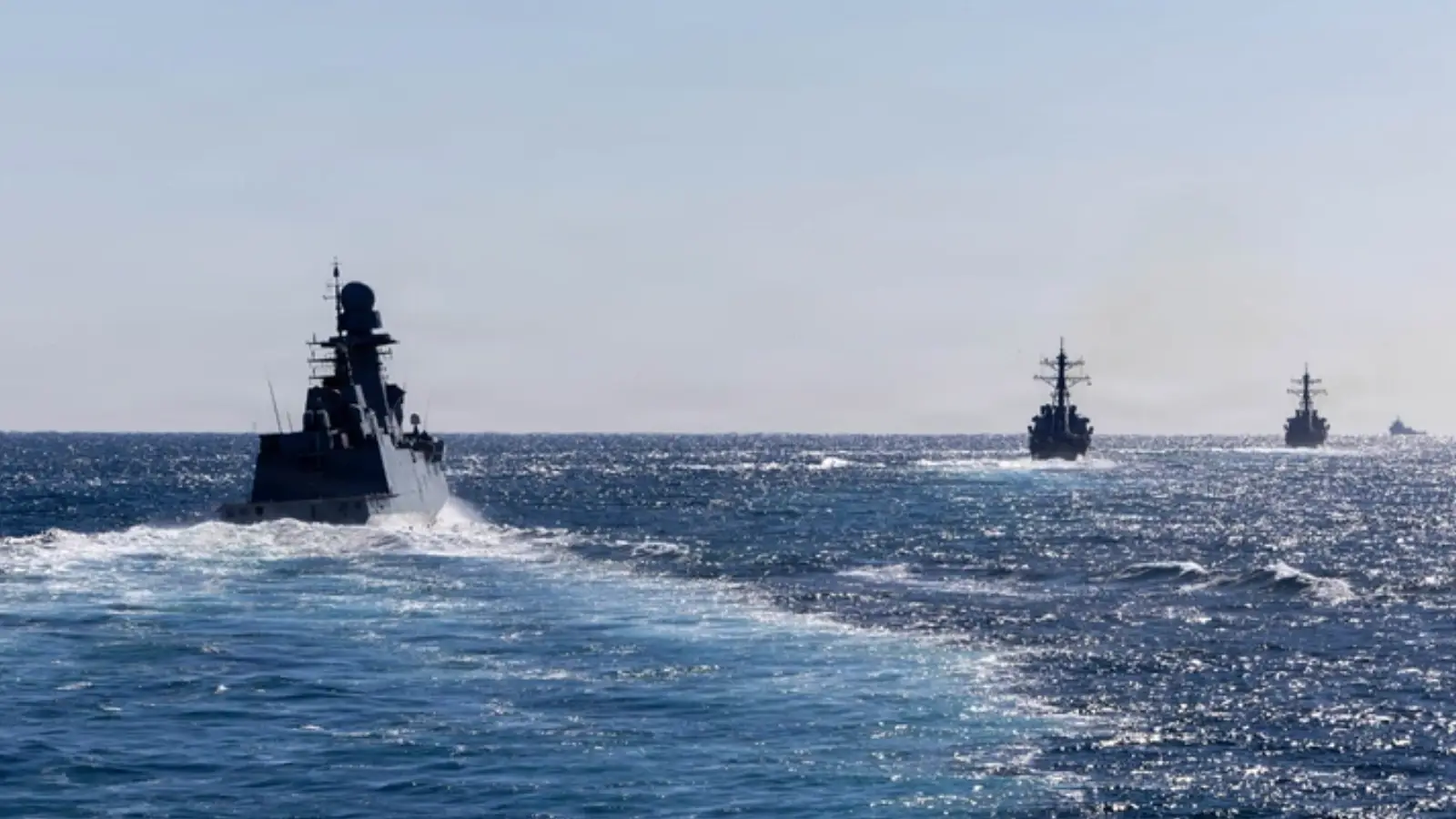
US and Philippine military forces conduct live-fire strikes against decommissioned target ships during Balikatan 2026 maritime exercise in the Indo-Pacific.
SHARE

Executive Summary:
US and partner nation forces sank two decommissioned vessels during the Balikatan 2026 exercise, showcasing allied maritime strike coordination in the Indo-Pacific. The live-fire drills highlighted expanding US-Philippine defense cooperation amid growing regional security tensions.

Balikatan 2026 Maritime Exercise Highlights Allied Naval Strike Capability

The Balikatan 2026 maritime exercise demonstrated a major display of allied naval firepower as US and partner nation forces successfully sank two decommissioned ships during coordinated live-fire operations in Philippine waters.

Contents
Balikatan 2026 Maritime Exercise Highlights Allied Naval Strike CapabilityAllied Forces Expand Maritime CooperationLive-Fire SINKEX Sends Strategic MessagePhilippines Continues Defense Modernization PushStrategic Importance Of Indo-Pacific Exercises

The annual Balikatan exercise, conducted primarily between the United States and the Philippines, has evolved into one of the Indo-Pacific region’s most closely watched multinational military drills. This year’s sinking exercise, commonly referred to as SINKEX, underscored the growing emphasis on maritime security, joint targeting operations, and combined deterrence missions.

According to US military officials, the exercise involved coordinated strikes from multiple military platforms, including naval vessels, aircraft, and missile systems. The operation targeted two retired ships that were intentionally positioned offshore for the live-fire event.

The drills are designed to improve interoperability between allied forces while testing real-world maritime engagement scenarios under combat-like conditions.

- Advertisement -

Allied Forces Expand Maritime Cooperation

Balikatan 2026 included participation from US treaty ally the Philippines alongside several partner nations observing or contributing to portions of the exercise. Defense officials said the maritime phase focused heavily on combined command-and-control operations and synchronized targeting procedures.

The sinking exercise demonstrated how allied forces can rapidly identify, track, and engage hostile maritime targets using integrated strike networks. Analysts note that these scenarios closely reflect operational challenges that could emerge in contested Indo-Pacific waters.

The United States has steadily increased its military cooperation with the Philippines over the past several years through expanded rotational deployments, infrastructure access agreements, and larger bilateral exercises.

Military planners increasingly view the Philippine archipelago as strategically important due to its location near major sea lanes and contested regional waters.

Live-Fire SINKEX Sends Strategic Message

The destruction of the decommissioned vessels carried operational and geopolitical significance beyond training value alone.

SINKEX operations allow naval forces to evaluate weapon effectiveness, targeting coordination, and battle damage assessment in realistic conditions. Unlike simulated engagements, live-fire sinking drills provide crews with practical experience against full-sized maritime targets.

Defense observers say Balikatan 2026 also served as a visible demonstration of allied readiness amid growing regional competition in the Indo-Pacific.

The exercise took place as regional militaries continue expanding naval modernization efforts, anti-ship missile deployments, and maritime surveillance operations across the Pacific theater.

- Advertisement -

US Indo-Pacific Command has repeatedly emphasized the importance of maintaining freedom of navigation, strengthening alliance structures, and improving distributed maritime operations.

Philippines Continues Defense Modernization Push

For the Philippines, participation in high-end maritime exercises supports broader military modernization goals.

The Armed Forces of the Philippines have accelerated efforts to improve coastal defense, maritime awareness, and naval strike capabilities in response to evolving regional security concerns. Manila has expanded defense procurement programs involving missile systems, patrol vessels, radar infrastructure, and joint training initiatives with allied nations.

Balikatan exercises increasingly incorporate advanced combat scenarios involving amphibious operations, air defense missions, cyber coordination, and maritime interdiction drills.

Military officials from both countries have stated that the exercise is intended to improve crisis response capabilities while enhancing interoperability across all military domains.

Strategic Importance Of Indo-Pacific Exercises

Large-scale multinational drills like Balikatan have become central to US defense strategy in the Indo-Pacific region.

The Pentagon continues to prioritize distributed force posture, allied integration, and rapid-response capabilities across the Pacific as regional competition intensifies. Exercises involving naval strike coordination and maritime denial operations are now regularly featured in allied training events.

Defense analysts believe these drills help strengthen deterrence by demonstrating that allied militaries can conduct coordinated operations across air, sea, and land domains under realistic operational conditions.

The live-fire sinking of the two vessels during Balikatan 2026 reinforced the increasing complexity and scale of Indo-Pacific military exercises.


TAGGED:Balikatan 2026Indo-Pacific SecurityMaritime ExercisePhilippine MilitaryUS Navy
Share This Article
Facebook Copy Link Print
BySamuel Drake | Defense Analyst
Follow:
Samuel Drake is a defense analyst at TheDefenseWatch.com covering naval warfare, military ordnance, maritime technology, fleet modernization, and defense procurement. His reporting focuses on documented capabilities, procurement programs, and military technology.
Leave a Comment

Leave a Reply Cancel reply

Your email address will not be published. Required fields are marked *

Search Defense Systems

Latest Defense Systems

  • F-47A Fighter Jet F-47A Fighter Jet
  • China DF-61 Missile China DF-61 Missile
  • B61 Nuclear Bomb B61 Nuclear Bomb
  • Japan E-767 Airborne Japan E-767 Airborne
  • Remington 870 Shotgun Remington 870 Shotgun
  • RUTA B1 Cruise Missile RUTA B1 Cruise Missile
  • XQ-67A Drone XQ-67A Drone
  • B-25 Mitchell Bomber B-25 Mitchell Bomber
  • F-100 Super Sabre F-100 Super Sabre

Recent Compares

  • J-10C vs JF-17 Thunder: Which Fighter Is More Capable? J-10C vs JF-17 Thunder: Which Fighter Is More Capable? View Comparison →
  • Tejas vs Gripen: Key Differences and Capabilities Tejas vs Gripen: Key Differences and Capabilities View Comparison →
  • Tejas vs MiG-21 Bison: How India Replaced Its Iconic Supersonic Fighter Tejas vs MiG-21 Bison: How India Replaced Its Iconic Supersonic Fighter View Comparison →
  • F-35 vs F-16: Stealth, Sensors and Combat Roles F-35 vs F-16: Stealth, Sensors and Combat Roles View Comparison →
  • Tejas Fighter Jet vs F-16 Fighting Falcon: Capability Compared Tejas Fighter Jet vs F-16 Fighting Falcon: Capability Compared View Comparison →
  • Rafale Fighter Jet vs F-16 Fighting Falcon : Which Fighter Has the Edge? Rafale Fighter Jet vs F-16 Fighting Falcon : Which Fighter Has the Edge? View Comparison →
  • Su-57 Fighter Jet vs J-20 Fighter Jet: Stealth and Air Combat Compared Su-57 Fighter Jet vs J-20 Fighter Jet: Stealth and Air Combat Compared View Comparison →
  • Mirage 2000 vs Tejas Mk1A: Legacy Combat Power vs Indigenous Modernization Mirage 2000 vs Tejas Mk1A: Legacy Combat Power vs Indigenous Modernization View Comparison →
  • Rafale Fighter Jet vs F-22 Raptor: Which Air Dominance Fighter Has the Edge? Rafale Fighter Jet vs F-22 Raptor: Which Air Dominance Fighter Has the Edge? View Comparison →
  • Tejas Fighter Jet vs. Rafale Fighter Jet: India’s Indigenous Fighter Meets France’s Proven Multirole Combat Aircraft Tejas Fighter Jet vs. Rafale Fighter Jet: India’s Indigenous Fighter Meets France’s Proven Multirole Combat Aircraft View Comparison →

Recent Posts

  • Marine One Explained: The Presidential Helicopter, Its Fleet and the VH-92A Transition
  • Sikorsky Wins South Korea Contract for Four S-92A+ Presidential Helicopters
  • Saudi Arabia Intercepts Missiles Targeting Riyadh as Aramco Building Is Damaged
  • US Approves Potential $1.08 Billion Black Hawk Helicopter Sale to Mexico
  • NASA Completes Final ISS Solar Array Installation, Raising Station Power Capacity by 30%

You Might Also Like

Norway Eelume S autonomous underwater drone
Naval & MaritimeNaval Strategy & Maritime Security

Norway Eelume S Autonomous Underwater Drone Set To Replace Traditional Mine Hunting Vessels

February 25, 2026
Germany Type 424 intelligence ship
Naval & MaritimeNaval Strategy & Maritime Security

Germany Moves To Expand Naval Signals Intelligence Fleet With Fourth Type 424 Ship

September 14, 2026
MILDEN submarine
Naval & MaritimeSubmarines

Turkey Launches Construction of First Indigenous MILDEN Submarine, Marking Major Naval Milestone

December 8, 2025
F/A-18 Block III upgrade program
Naval & MaritimeNaval Strategy & Maritime Security

US Navy Completes First In House F/A-18 Block III Upgrade Boosting Carrier Strike Readiness

September 7, 2026

Logo

Copyright © 2026 TheDefenseWatch.com

Helpful Links

  • Home
  • About Us
  • Privacy Policy
  • Terms of Use / Disclaimer
  • U.S. Privacy Notice – CCPA Compliance

Defense Systems

  • Defense Systems
  • Comparisons 
  • Manufacturer
  • Tactical Calculators

Popuplar

Which 5 Air Forces Possess the Costliest Fighter Jet Fleets in the World
Evolving Strategic Value: Carrier Strike Groups in the Indo-Pacific’s Future Security Architecture
Autonomous Weapon Systems Spark U.S. Ethics Debate Amid Rapid Military AI Integration

We report on developments involving military forces, governments, defense companies, research organizations, and security institutions around the world. 

Welcome Back!

Sign in to your account

Username or Email Address
Password

Lost your password?