• Home
  • About
  • Defense Systems
  • Manufacturer
  • Comparisons
  • Compare 
  • Tools
TheDefenseWatch.com
  • Aerospace & Aviation
  • Military & Ordnance
  • Naval & Maritime
  • Cyber & Space Defense
  • Policy & Strategy
  • Global News
  • Tools Library
    • Smart Calculator
    • Drone Flight Time Calculator
    • Drone Range Calculator
    • Counter-Drone Jammer Effective Range Calculator
    • Counter-Battery Radar Detection Calculator
    • Artillery Fire Correction Calculator
    • Thermal Camera Detection Range Calculator
    • Missile Range & Time-of-Flight Calculator
    • Radar Detection Range Calculator
    • FPV Strike Drone Payload vs Range Calculator
    • Loitering Munition Endurance Calculator
    • Sniper Ballistic Drop & Windage Calculator
    • Bullet Drop Calculator
    • U.S. Army Combat Fitness Test (ACFT) Calculator
    • Military Pension Calculator
    • Military Retirement Calculator
    • Military Pension Calculator
    • Large Number Calculator
Font ResizerAa

TheDefenseWatch.com

The Defense Watch | U.S. & Global Defense News, Analysis & Military Updates

Search
  • Home
  • About
  • Defense Systems
  • Manufacturer
  • Comparisons
  • Compare 
  • Tools

Stay Updated

Get the latest update

Subscribe

Explore

  • Drone
  • Fighter Jets & Military Aircraft
  • Hypersonic Weapons
  • Aircraft Carriers
  • Strategic History & Missions
  • Tools Library
Home » United Kingdom Elevates National Terrorism Threat Level to Severe
Geopolitical & Strategic DoctrinesPolicy & Strategy

United Kingdom Elevates National Terrorism Threat Level to Severe

Samuel Drake | Defense Analyst
Last updated: May 1, 2026 1:32 pm
Samuel Drake | Defense Analyst
Share
2 Min Read
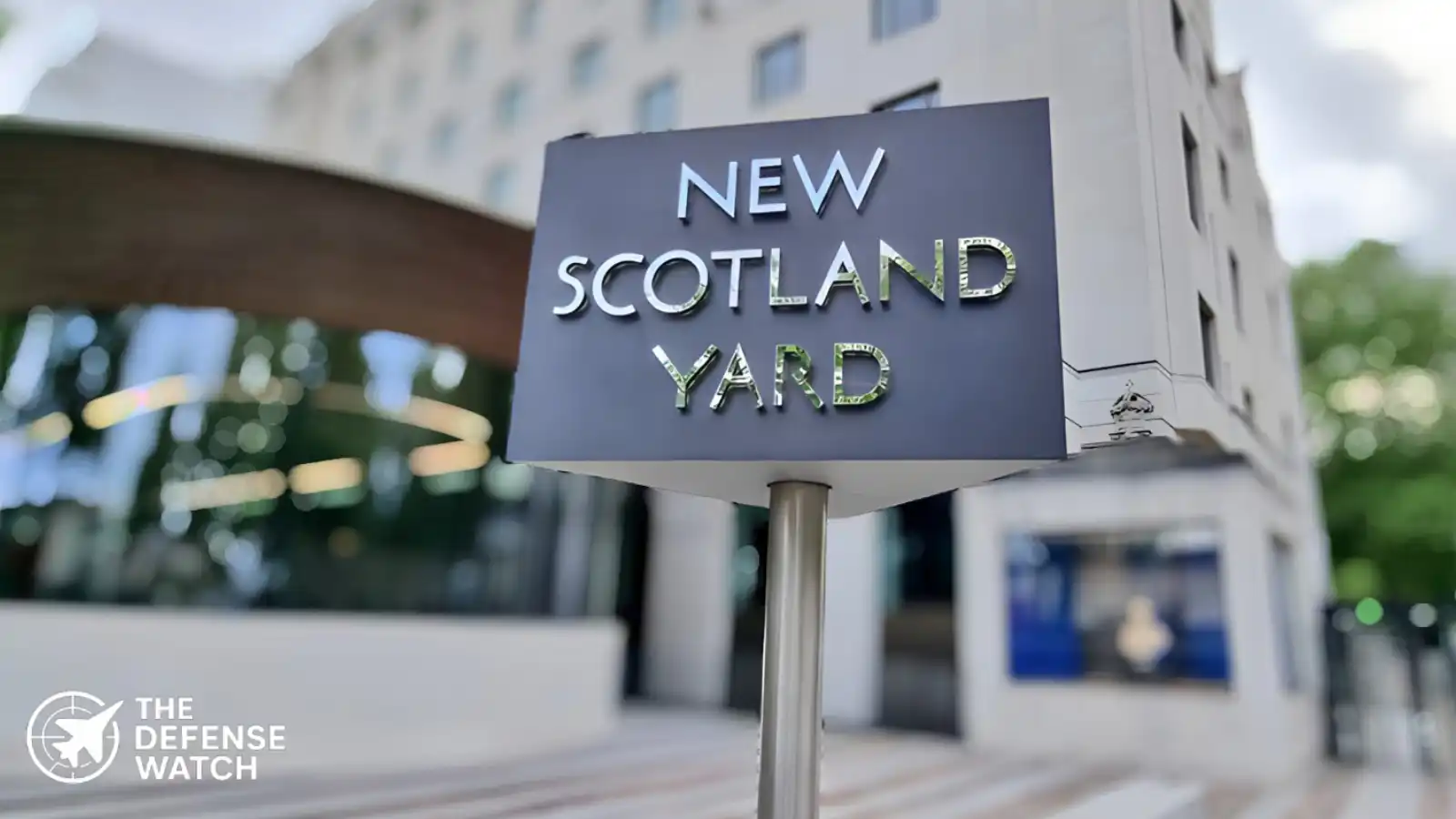
Official UK national terrorism threat level indicator showing the transition to the 'Severe' category
SHARE

Executive Summary: The UK government, acting on the recommendation of the Joint Terrorism Analysis Centre (JTAC), has officially raised the national terrorism threat level from Substantial to Severe. This shift indicates that a terrorist attack is now considered highly likely, a decision driven by recent domestic incidents and the evolving international security landscape.

Strategic Shift in National Security Posture

The decision to escalate the threat level to Severe follows a comprehensive review of intelligence by JTAC, an independent body comprised of representatives from 16 government departments and agencies. This adjustment represents the fourth highest level on the UK’s five-tier system, positioned below ‘Critical’ (an attack is highly likely in the near future) and above ‘Substantial’ (an attack is likely).

Contents
  • Strategic Shift in National Security Posture
  • Threat Level Comparison and Definitions
  • Technical Indicators and Tactical Realities
  • Geopolitical and Strategic Context
  • Public Guidance and Institutional Response

The reclassification is a preventative measure designed to heighten the readiness of first responders, security services, and the public. While the government has not cited a specific, imminent plot, the move reflects a heightened “baseline” threat environment characterized by diversified actor profiles and methods of operation.

Threat Level Comparison and Definitions

To understand the technical nuances of the UK’s alert system, the following table compares the current Severe status against the previous Substantial baseline.

Security MetricSubstantial (Previous)Severe (Current)StatusKey Determinant
ProbabilityLikelyHighly LikelyActiveIntelligence volume & intent
Operational ReadinessStandardEnhancedActivePolice/Security mobilization
Public AlertnessVigilantHeightenedActiveVisual deterrents/Public messaging
Resource AllocationBaselinePrioritizedActiveCritical National Infrastructure (CNI) protection

Technical Indicators and Tactical Realities

The shift to Severe necessitates a change in how security assets are deployed across the United Kingdom. Intelligence analysts focus on several key vectors:

- Advertisement -
  • Self-Initiated Lone Actors: A primary concern for UK counter-terrorism forces remains individuals who radicalize online and act without direct command-and-control from established groups.
  • Methodology Shifts: Continued monitoring of “low-sophistication” attack methods, such as the use of bladed weapons or vehicle-ramming, which require minimal preparation time.
  • Protective Security Detail: Immediate increase in the visibility of armed policing at transport hubs, government buildings, and major public venues.
  • Critical National Infrastructure (CNI): Enhanced screening protocols for energy, water, and communication sectors to mitigate sabotage risks.

Geopolitical and Strategic Context

The elevation of the threat level does not occur in a vacuum. It is inextricably linked to broader geopolitical instability. The Home Office and JTAC continuously monitor international conflicts and the propaganda output of extremist organizations that may seek to inspire domestic sympathizers.

The current strategic environment is marked by:

  1. Regional Instability: Conflict in the Middle East often acts as a catalyst for increased domestic radicalization risks.
  2. Technological Proliferation: The use of encrypted communication platforms complicates the “detection-to-disruption” cycle for MI5 and Counter Terrorism Policing.
  3. Recent Incidents: The cumulative impact of recent “lone actor” events has necessitated a recalibration of the probability of future occurrences.

Public Guidance and Institutional Response

The UK Government emphasizes that the change in the threat level is a tool for transparency and preparedness rather than a cause for public panic. Counter Terrorism Policing continues to operate a high volume of active investigations—numbering in the hundreds—at any given time.

The “Severe” designation ensures that all levels of the National Health Service (NHS), Police forces, and Private Security firms are operating under a unified understanding of the risk environment. This synchronization is critical for minimizing response times in the event of a kinetic incident.


TAGGED:counter-terrorismHome Office.JTACnational securityUK Security
Share This Article
Facebook Copy Link Print
BySamuel Drake | Defense Analyst
Follow:
Samuel Drake is a defense analyst at TheDefenseWatch.com covering naval warfare, military ordnance, maritime technology, fleet modernization, and defense procurement. His reporting focuses on documented capabilities, procurement programs, and military technology.
Leave a Comment

Leave a Reply Cancel reply

Your email address will not be published. Required fields are marked *

Latest Defense Systems

  • RUTA B1 Cruise Missile RUTA B1 Cruise Missile
  • XQ-67A Drone XQ-67A Drone
  • B-25 Mitchell Bomber B-25 Mitchell Bomber
  • F-100 Super Sabre F-100 Super Sabre
  • North American F-86 Sabre North American F-86 Sabre
  • North American XB-70 Valkyrie North American XB-70 Valkyrie
  • Northrop YF-23 Fighter Northrop YF-23 Fighter
  • P-51 Mustang Fighter Aircraft P-51 Mustang Fighter Aircraft
  • Rafale F5 Fighter Rafale F5 Fighter

Recent Compares

  • J-10C vs JF-17 Thunder: Which Fighter Is More Capable? J-10C vs JF-17 Thunder: Which Fighter Is More Capable? View Comparison →
  • Tejas vs Gripen: Key Differences and Capabilities Tejas vs Gripen: Key Differences and Capabilities View Comparison →
  • Tejas vs MiG-21 Bison: How India Replaced Its Iconic Supersonic Fighter Tejas vs MiG-21 Bison: How India Replaced Its Iconic Supersonic Fighter View Comparison →
  • F-35 vs F-16: Stealth, Sensors and Combat Roles F-35 vs F-16: Stealth, Sensors and Combat Roles View Comparison →
  • Tejas Fighter Jet vs F-16 Fighting Falcon: Capability Compared Tejas Fighter Jet vs F-16 Fighting Falcon: Capability Compared View Comparison →
  • Rafale Fighter Jet vs F-16 Fighting Falcon : Which Fighter Has the Edge? Rafale Fighter Jet vs F-16 Fighting Falcon : Which Fighter Has the Edge? View Comparison →
  • Su-57 Fighter Jet vs J-20 Fighter Jet: Stealth and Air Combat Compared Su-57 Fighter Jet vs J-20 Fighter Jet: Stealth and Air Combat Compared View Comparison →
  • Mirage 2000 vs Tejas Mk1A: Legacy Combat Power vs Indigenous Modernization Mirage 2000 vs Tejas Mk1A: Legacy Combat Power vs Indigenous Modernization View Comparison →
  • Rafale Fighter Jet vs F-22 Raptor: Which Air Dominance Fighter Has the Edge? Rafale Fighter Jet vs F-22 Raptor: Which Air Dominance Fighter Has the Edge? View Comparison →
  • Tejas Fighter Jet vs. Rafale Fighter Jet: India’s Indigenous Fighter Meets France’s Proven Multirole Combat Aircraft Tejas Fighter Jet vs. Rafale Fighter Jet: India’s Indigenous Fighter Meets France’s Proven Multirole Combat Aircraft View Comparison →

Recent Posts

  • Destinus Produces 1,750 Ruta B1 Cruise Missiles as European Output Expands
  • Boeing Wins $11.1 Million Contract Modification for Kuwait F/A-18 Training Support
  • U.S. Navy Awards $23.1 Million Contract for Cybersecurity of Shipboard Power Systems
  • Lockheed Martin Wins $43.7 Million F-35 Reprogramming Lab Upgrade Contract
  • USS Colorado Arrives in Australia for AUKUS Submarine Maintenance

You Might Also Like

Trump Ukraine peace plan
Geopolitical & Strategic DoctrinesPolicy & Strategy

Trump’s 28-Point Ukraine “Peace Plan” Calls for Kyiv to Cede Territory and Abandon NATO Ambitions

November 24, 2025
Canada Turkey defense partnership
Alliances & DoctrinesPolicy & Strategy

Canada Moves To Build Defense Alliance With Turkey As U.S. Steps Back From Global Security Role

September 7, 2026
500 billion euro crisis fund defense
Defense Budgets & PolicyPolicy & Strategy

Europe Could Tap Massive ESM Crisis Fund to Finance Defense Spending

January 31, 2026
US missile launchers Philippines
Alliances & DoctrinesPolicy & Strategy

US To Send More Missile Launchers To The Philippines Despite China Alarm

February 18, 2026

Logo

Copyright © 2026 TheDefenseWatch.com

Helpful Links

  • Home
  • About Us
  • Privacy Policy
  • Terms of Use / Disclaimer
  • U.S. Privacy Notice – CCPA Compliance

Defense Systems

  • Defense Systems
  • Comparisons 
  • Manufacturer
  • Tactical Calculators

Popuplar

Which 5 Air Forces Possess the Costliest Fighter Jet Fleets in the World
Evolving Strategic Value: Carrier Strike Groups in the Indo-Pacific’s Future Security Architecture
Autonomous Weapon Systems Spark U.S. Ethics Debate Amid Rapid Military AI Integration

We report on developments involving military forces, governments, defense companies, research organizations, and security institutions around the world. 

Welcome Back!

Sign in to your account

Username or Email Address
Password

Lost your password?