Germany P-8A Poseidon Arrives In Scotland For NATO Patrol Mission
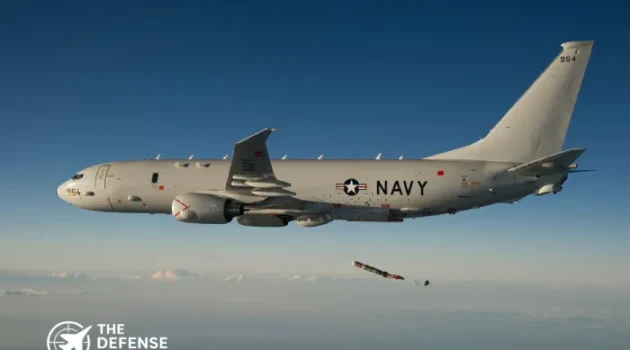
Germany P-8A Poseidon deployment to Scotland marks a notable step in Berlin’s expanding maritime security role inside NATO. Germany has sent one of its newly introduced Boeing P-8A Poseidon aircraft to Scotland to support operations aimed at tracking Russian submarine movements in the North Atlantic.
The deployment places German airpower in one of NATO’s most strategically sensitive maritime zones. Scotland hosts key Royal Air Force facilities and provides rapid access to northern waters where Russian submarines often transit between the Arctic, Norwegian Sea, and Atlantic approaches.
- Germany has deployed a P-8A Poseidon maritime patrol aircraft to Scotland for NATO surveillance operations.
- The mission is focused on monitoring increased Russian submarine activity in the North Atlantic and nearby sea lanes.
- Germany is acquiring eight Boeing P-8A Poseidon aircraft to replace its aging P-3C Orion fleet.
- Scotland remains a critical hub for anti-submarine warfare operations due to access to the GIUK gap.
- The deployment highlights deeper German integration into NATO maritime security operations.
For Germany, the mission also serves as an operational milestone for the P-8A fleet, which is gradually replacing the German Navy’s aging Lockheed P-3C Orion patrol aircraft.
Why Scotland Matters In Anti-Submarine Warfare
Scotland is central to NATO maritime defense because of its proximity to the Greenland-Iceland-United Kingdom corridor, commonly known as the GIUK gap. This chokepoint has long been vital for detecting and tracking submarines moving from Russian bases on the Kola Peninsula into the wider Atlantic.
By deploying the P-8A Poseidon there, Germany joins the United States, United Kingdom, Norway, and other allies already operating advanced maritime patrol aircraft in the region.
This matters because Russian submarine operations have grown more active in recent years. NATO commanders have repeatedly warned that quieter submarines armed with cruise missiles pose a serious challenge to sea lines of communication and allied naval movements.
What The P-8A Poseidon Brings
The P-8A Poseidon is one of the most capable maritime patrol aircraft in service today. Built by Boeing and based on the 737 airframe, it combines long endurance with modern sensors and networked warfare systems.
Core capabilities include:
- Advanced surface search radar
- Sonobuoy deployment for submarine detection
- Electronic surveillance systems
- Secure data links for NATO interoperability
- Anti-ship and anti-submarine weapons compatibility
- Long-range patrol endurance
Germany selected the aircraft to quickly close a capability gap after delays in broader European maritime patrol programs. That decision gave Berlin an immediate, proven platform already used by the United States Navy, Royal Air Force, Royal Norwegian Air Force, and others.
Strategic Signal From Berlin
The Germany P-8A Poseidon deployment is more than a routine training event. It signals that Berlin is taking a larger operational role in collective defense missions beyond continental land forces.
Historically, Germany’s naval aviation footprint has been more limited than some NATO peers. Sending a frontline maritime patrol aircraft to Scotland demonstrates willingness to contribute directly to undersea surveillance, an area increasingly important as Russia modernizes its submarine fleet.
It also strengthens burden-sharing inside the alliance. With multiple NATO members now flying the same aircraft type, crews can exchange tactics, maintenance support, and mission data more efficiently.
Russian Submarine Activity Remains A NATO Priority
Russian submarines remain among Moscow’s most survivable strategic assets. Nuclear-powered attack submarines and cruise missile platforms can threaten carrier groups, logistics shipping, and coastal infrastructure.
That makes persistent tracking missions essential. Maritime patrol aircraft like the P-8A are often the first layer of detection, cueing frigates, destroyers, helicopters, and submarines to investigate contacts.
Germany’s participation broadens NATO’s surveillance coverage at a time when alliance forces are stretched across the Baltic, Black Sea, Arctic, and Atlantic theaters.
Outlook
As Germany receives additional Poseidon aircraft, similar forward deployments are likely to become more common. The fleet gives Berlin a faster route into high-end maritime operations while improving NATO readiness.
For alliance planners, the arrival of another P-8A operator in Scotland means more aircraft available to monitor contested waters and respond quickly to submarine activity.