• Home
  • About
  • Defense Systems
  • Manufacturer
  • Comparisons
  • Compare 
  • Tools
TheDefenseWatch.com
  • Aerospace & Aviation
  • Military & Ordnance
  • Naval & Maritime
  • Cyber & Space Defense
  • Policy & Strategy
  • Global News
  • Tools Library
    • Smart Calculator
    • Drone Flight Time Calculator
    • Drone Range Calculator
    • Counter-Drone Jammer Effective Range Calculator
    • Counter-Battery Radar Detection Calculator
    • Artillery Fire Correction Calculator
    • Thermal Camera Detection Range Calculator
    • Missile Range & Time-of-Flight Calculator
    • Radar Detection Range Calculator
    • FPV Strike Drone Payload vs Range Calculator
    • Loitering Munition Endurance Calculator
    • Sniper Ballistic Drop & Windage Calculator
    • Bullet Drop Calculator
    • U.S. Army Combat Fitness Test (ACFT) Calculator
    • Military Pension Calculator
    • Military Retirement Calculator
    • Military Pension Calculator
    • Large Number Calculator
Font ResizerAa

TheDefenseWatch.com

The Defense Watch | U.S. & Global Defense News, Analysis & Military Updates

Search
  • Home
  • About
  • Defense Systems
  • Manufacturer
  • Comparisons
  • Compare 
  • Tools

Stay Updated

Get the latest update

Subscribe

Explore

  • Drone
  • Fighter Jets & Military Aircraft
  • Hypersonic Weapons
  • Aircraft Carriers
  • Strategic History & Missions
  • Tools Library
Home » US Moves To Counter Iran Strait Threat As Trump Warns Of “Severe Consequences”
Global News

US Moves To Counter Iran Strait Threat As Trump Warns Of “Severe Consequences”

Kaleem Sheikh | Regional Defense Correspondent
Last updated: April 6, 2026 10:47 am
Kaleem Sheikh | Regional Defense Correspondent
Share
2 Min Read
Trump Iran Strait warning
SHARE
Follow The Defense Watch on Google:

Trump Iran Strait Warning Raises Stakes For Global Security

The Trump Iran Strait warning has sharply escalated tensions in the Middle East, as Washington signals it is prepared to respond if Tehran disrupts maritime traffic through the Strait of Hormuz, one of the world’s most critical energy chokepoints.

Contents
Trump Iran Strait Warning Raises Stakes For Global SecurityStrategic Importance Of The Strait Of HormuzMilitary Posture And Response OptionsDiplomatic Signals Amid EscalationImplications For Global Energy And Maritime SecurityAnalysis: A High-Risk Signaling Environment

Former US President Donald Trump warned of severe consequences if Iran follows through on threats to close the strait, while also suggesting that a diplomatic agreement remains within reach.

The dual messaging reflects a familiar pattern in US-Iran relations, combining coercive signaling with conditional openness to negotiation.

¦ KEY FACTS AT A GLANCE
  • Former US President Donald Trump warned Iran of severe consequences if the Strait of Hormuz remains closed.
  • Tehran has signaled it could disrupt maritime traffic amid ongoing geopolitical tensions.
  • The Strait of Hormuz handles roughly 20 percent of global oil shipments, making it a critical chokepoint.
  • Trump indicated a diplomatic deal with Iran remains possible despite escalating rhetoric.
  • US and allied naval forces are closely monitoring developments in the Persian Gulf region.

Strategic Importance Of The Strait Of Hormuz

The Strait of Hormuz is central to global energy flows, with roughly one fifth of the world’s oil supply transiting the narrow waterway daily. Any disruption would have immediate consequences for energy markets, naval operations, and regional security dynamics.

- Advertisement -

From a military perspective, the strait represents a constrained maritime environment where asymmetric tactics can have outsized effects. Iran’s naval doctrine has long emphasized the use of fast attack craft, naval mines, and anti-ship missiles to challenge larger naval forces in confined waters.

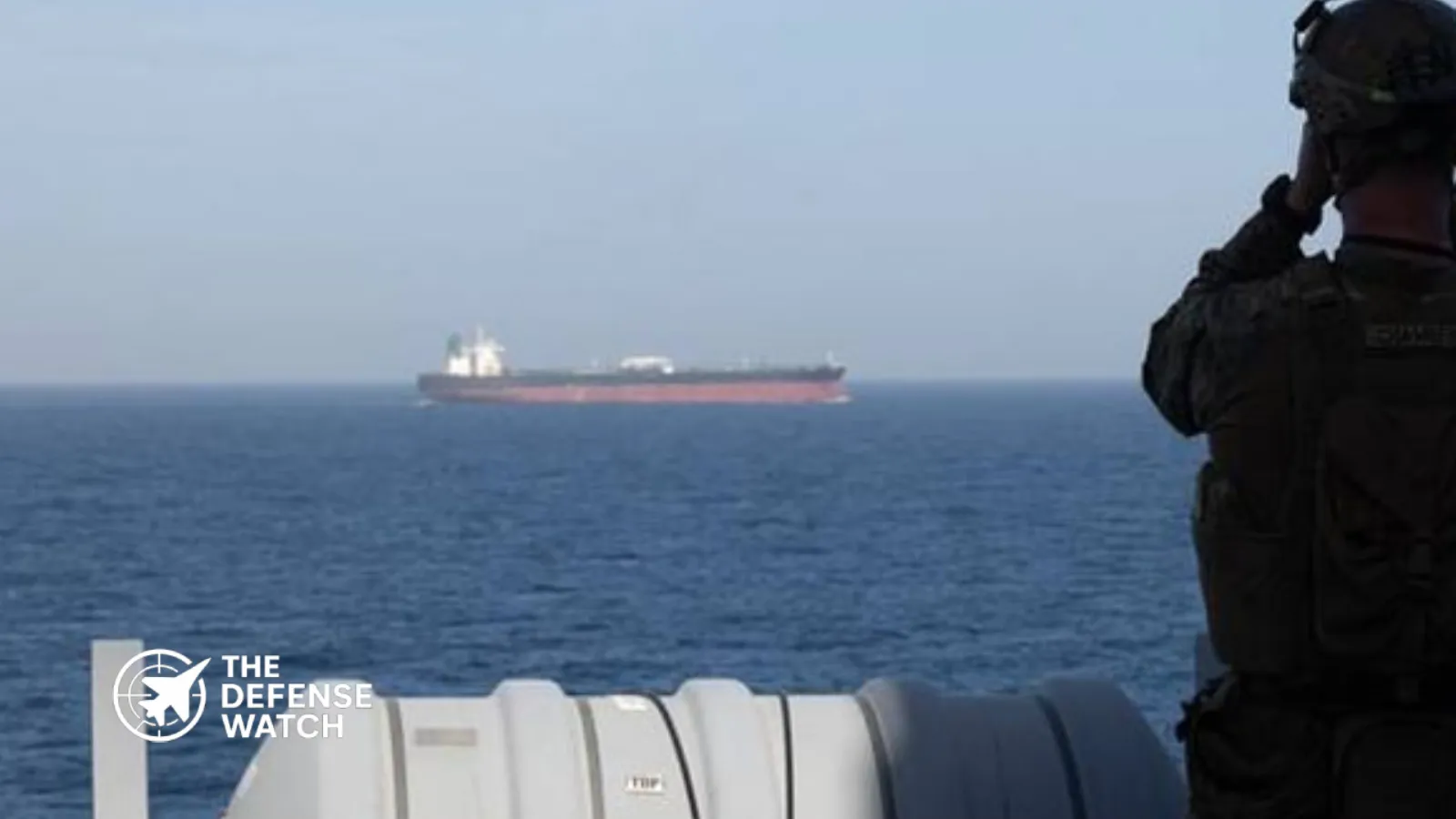
The Trump Iran Strait warning therefore carries operational implications beyond political signaling. It suggests that US naval forces may be preparing contingency plans to ensure freedom of navigation, a core mission for the US Navy’s Fifth Fleet based in Bahrain.

Military Posture And Response Options

In the event of a sustained disruption, the United States and its allies have several response options, ranging from increased naval patrols to escort operations for commercial shipping.

Carrier strike groups, guided missile destroyers, and maritime patrol aircraft would likely play central roles in securing sea lanes. Mine countermeasure vessels could also be deployed to address one of the most persistent threats in the region.

However, any military response carries escalation risks. Iran’s integrated coastal defense network, combined with its missile capabilities, creates a layered threat environment that complicates US operational planning.

The Trump Iran Strait warning underscores the balance Washington must strike between deterrence and escalation control.

Diplomatic Signals Amid Escalation

Despite the strong rhetoric, Trump indicated that a deal with Iran remains possible, suggesting that backchannel diplomacy or renewed negotiations could still emerge.

This aligns with broader US strategic objectives, which often seek to combine pressure with incentives to bring adversaries to the negotiating table.

- Advertisement -

For Tehran, signaling the ability to disrupt the Strait of Hormuz serves both as a deterrent and as leverage in potential negotiations. The threat itself can influence global markets and political calculations without requiring actual closure of the waterway.

Implications For Global Energy And Maritime Security

The Trump Iran Strait warning has immediate implications for global energy markets. Even the perception of risk in the Strait of Hormuz can drive oil price volatility and disrupt supply chains.

For US allies in Europe and Asia, many of which depend heavily on Gulf energy exports, the situation underscores the importance of maritime security cooperation.

Naval coalitions, intelligence sharing, and joint exercises are likely to intensify if tensions persist. The scenario also reinforces the strategic value of alternative energy routes and diversification efforts.

Analysis: A High-Risk Signaling Environment

At its core, the current situation reflects a high-risk signaling environment where both sides are attempting to assert leverage without triggering open conflict.

The Trump Iran Strait warning is not just a political statement. It is part of a broader deterrence framework aimed at preserving freedom of navigation while preventing escalation.

Yet history shows that miscalculation in such environments is a persistent risk. Close encounters at sea, misinterpreted signals, or proxy actions could quickly escalate into a wider confrontation.

For defense planners, the focus will remain on maintaining readiness, ensuring maritime security, and preserving strategic stability in one of the world’s most sensitive regions.

Enjoying our coverage?

Make The Defense Watch a preferred source on Google to see more of our geopolitical and defense insights when relevant to you.


TAGGED:global oil tradeMiddle East securityNaval StrategyStrait of HormuzUS Iran tensions
Share This Article
Facebook Copy Link Print
ByKaleem Sheikh | Regional Defense Correspondent
Follow:
Kaleem Sheikh is a regional defense correspondent at TheDefenseWatch.com covering defense and security developments across Asia and the Middle East, including military operations, procurement, and regional security issues.
Leave a Comment

Leave a Reply Cancel reply

Your email address will not be published. Required fields are marked *

Search Defense Systems

Latest Defense Systems

  • F-104 Starfighter F-104 Starfighter
  • F-15J Eagle Fighter Jet F-15J Eagle Fighter Jet
  • China’s GJ-21 Stealth Drone China’s GJ-21 Stealth Drone
  • China’s GJ-11 Stealth Drone China’s GJ-11 Stealth Drone
  • F-15EX Eagle Fighter Jet F-15EX Eagle Fighter Jet
  • TRML-4D Radar TRML-4D Radar
  • F-47A Fighter Jet F-47A Fighter Jet
  • China DF-61 Missile China DF-61 Missile
  • B61 Nuclear Bomb B61 Nuclear Bomb

Recent Compares

  • J-10C vs JF-17 Thunder: Which Fighter Is More Capable? J-10C vs JF-17 Thunder: Which Fighter Is More Capable? View Comparison →
  • Tejas vs Gripen: Key Differences and Capabilities Tejas vs Gripen: Key Differences and Capabilities View Comparison →
  • Tejas vs MiG-21 Bison: How India Replaced Its Iconic Supersonic Fighter Tejas vs MiG-21 Bison: How India Replaced Its Iconic Supersonic Fighter View Comparison →
  • F-35 vs F-16: Stealth, Sensors and Combat Roles F-35 vs F-16: Stealth, Sensors and Combat Roles View Comparison →
  • Tejas Fighter Jet vs F-16 Fighting Falcon: Capability Compared Tejas Fighter Jet vs F-16 Fighting Falcon: Capability Compared View Comparison →
  • Rafale Fighter Jet vs F-16 Fighting Falcon : Which Fighter Has the Edge? Rafale Fighter Jet vs F-16 Fighting Falcon : Which Fighter Has the Edge? View Comparison →
  • Su-57 Fighter Jet vs J-20 Fighter Jet: Stealth and Air Combat Compared Su-57 Fighter Jet vs J-20 Fighter Jet: Stealth and Air Combat Compared View Comparison →
  • Mirage 2000 vs Tejas Mk1A: Legacy Combat Power vs Indigenous Modernization Mirage 2000 vs Tejas Mk1A: Legacy Combat Power vs Indigenous Modernization View Comparison →
  • Rafale Fighter Jet vs F-22 Raptor: Which Air Dominance Fighter Has the Edge? Rafale Fighter Jet vs F-22 Raptor: Which Air Dominance Fighter Has the Edge? View Comparison →
  • Tejas Fighter Jet vs. Rafale Fighter Jet: India’s Indigenous Fighter Meets France’s Proven Multirole Combat Aircraft Tejas Fighter Jet vs. Rafale Fighter Jet: India’s Indigenous Fighter Meets France’s Proven Multirole Combat Aircraft View Comparison →

Recent Posts

  • Saab and Poland’s Dezamet Sign MAPAM Mortar Ammunition Production Deal
  • Nordic Air Defence to Send K200 Drone Interceptor to Ukraine for Trials
  • Türkiye Inducts First Three Bayraktar Kızılelma Unmanned Fighter Aircraft
  • U.S. Army Tests SIG Sauer M7 Rifle in Indo-Pacific Jungle Training
  • India’s Rafale Fleet Listed at 32 Aircraft After 2025 Pakistan Conflict

You Might Also Like

ELTA North America M3S2 contract
Global News

ELTA North America Wins DoD Contract to Evaluate M3S2 Vehicle Protection Multi-Sensor Suite

January 6, 2026
AMRAAM ER missile sale to Denmark
Global News

US Approves 951 Million AMRAAM ER Missile Sale to Denmark for Air Defense Boost

September 8, 2026
Libya Haftar combat drones
Global News

Libya’s Haftar Expands Combat Drone Fleet Amid UN Arms Embargo

April 3, 2026
US seizes Iranian cargo ship
Naval & MaritimeNaval Strategy & Maritime Security

US Moves To Seize Iranian Cargo Ship As Middle East Ceasefire Faces Collapse

April 20, 2026

Logo

Copyright © 2026 TheDefenseWatch.com

Helpful Links

  • Home
  • About Us
  • Privacy Policy
  • Terms of Use / Disclaimer
  • U.S. Privacy Notice – CCPA Compliance

Defense Systems

  • Defense Systems
  • Comparisons 
  • Manufacturer
  • Tactical Calculators

Popuplar

Which 5 Air Forces Possess the Costliest Fighter Jet Fleets in the World
Evolving Strategic Value: Carrier Strike Groups in the Indo-Pacific’s Future Security Architecture
Autonomous Weapon Systems Spark U.S. Ethics Debate Amid Rapid Military AI Integration

We report on developments involving military forces, governments, defense companies, research organizations, and security institutions around the world. 

Welcome Back!

Sign in to your account

Username or Email Address
Password

Lost your password?

Enjoying our coverage?

Make The Defense Watch a preferred source on Google to see more insights.