• Home
  • About
  • Defense Systems
  • Manufacturer
  • Comparisons
  • Compare 
  • Tools
TheDefenseWatch.com
  • Aerospace & Aviation
  • Military & Ordnance
  • Naval & Maritime
  • Cyber & Space Defense
  • Policy & Strategy
  • Global News
  • Tools Library
    • Smart Calculator
    • Drone Flight Time Calculator
    • Drone Range Calculator
    • Counter-Drone Jammer Effective Range Calculator
    • Counter-Battery Radar Detection Calculator
    • Artillery Fire Correction Calculator
    • Thermal Camera Detection Range Calculator
    • Missile Range & Time-of-Flight Calculator
    • Radar Detection Range Calculator
    • FPV Strike Drone Payload vs Range Calculator
    • Loitering Munition Endurance Calculator
    • Sniper Ballistic Drop & Windage Calculator
    • Bullet Drop Calculator
    • U.S. Army Combat Fitness Test (ACFT) Calculator
    • Military Pension Calculator
    • Military Retirement Calculator
    • Military Pension Calculator
    • Large Number Calculator
Font ResizerAa

TheDefenseWatch.com

The Defense Watch | U.S. & Global Defense News, Analysis & Military Updates

Search
  • Home
  • About
  • Defense Systems
  • Manufacturer
  • Comparisons
  • Compare 
  • Tools

Stay Updated

Get the latest update

Subscribe

Explore

  • Drone
  • Fighter Jets & Military Aircraft
  • Hypersonic Weapons
  • Aircraft Carriers
  • Strategic History & Missions
  • Tools Library
Home » Pakistan Rejects Afghan Claim Its Air Strikes Killed Over 400 In Kabul Hospital
Asian Defense & Security

Pakistan Rejects Afghan Claim Its Air Strikes Killed Over 400 In Kabul Hospital

Kaleem Sheikh | Regional Defense Correspondent
Last updated: March 17, 2026 4:34 am
Kaleem Sheikh | Regional Defense Correspondent
Share
2 Min Read
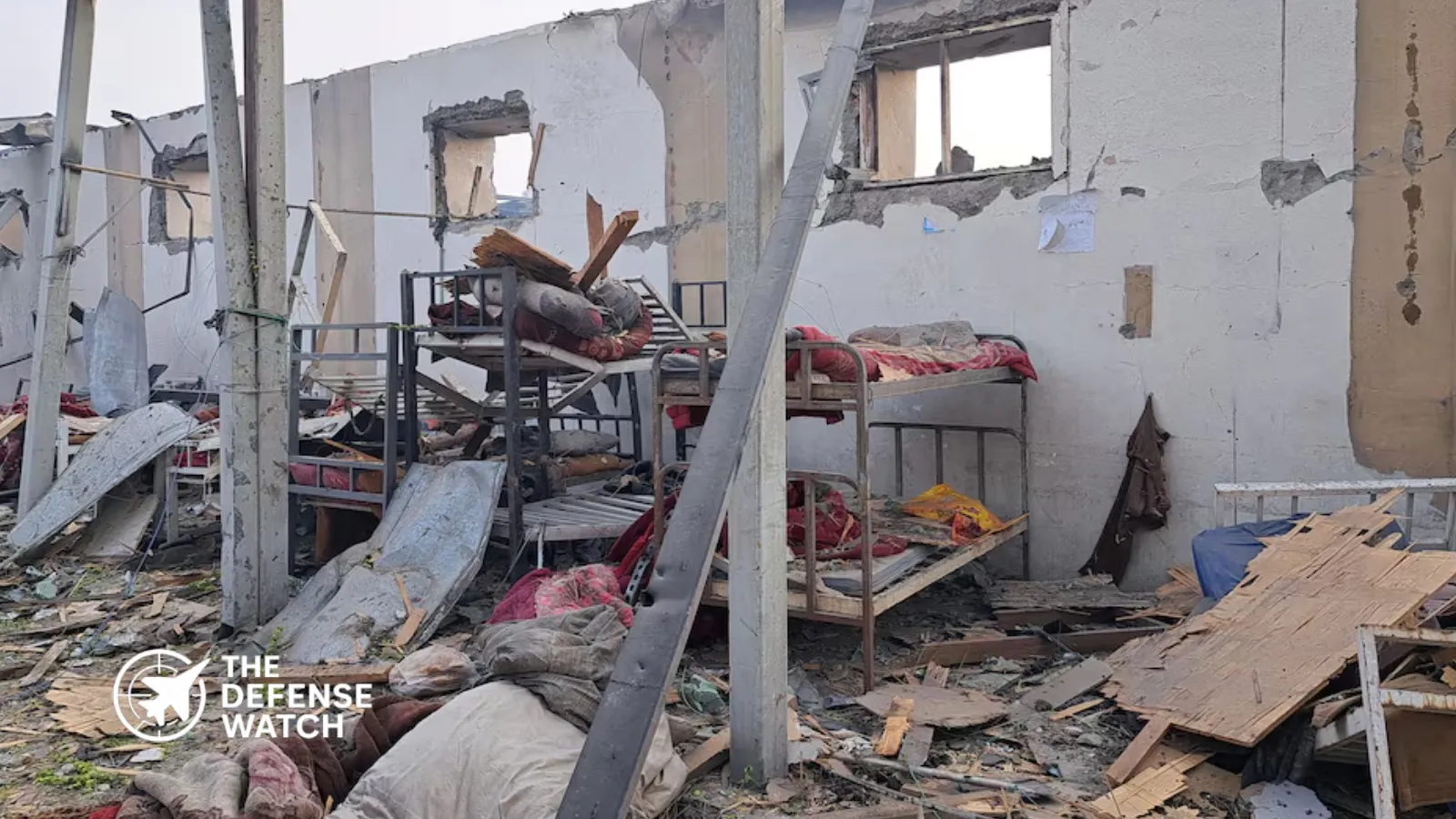
Pakistan air strike Kabul hospital
SHARE
¦ KEY FACTS AT A GLANCE
  • Taliban claims over 400 killed and 250 injured in an alleged Pakistani airstrike on a Kabul hospital.
  • Strike reportedly targeted urban infrastructure, raising concerns over targeting accuracy and rules of engagement.
  • Incident marks a sharp escalation in Pakistan Afghanistan tensions and cross border military activity.
  • Occurred in March 2026 amid ongoing counterterrorism operations along the Durand Line.
  • Civilian impact could reshape regional security dynamics and diplomatic engagement.

Pakistan Air Strike Kabul Hospital

Pakistan air strike Kabul hospital reports indicate one of the deadliest incidents in recent Afghanistan conflict dynamics, with Taliban officials claiming more than 400 fatalities and at least 250 injuries following a strike in Kabul.

Contents
  • Pakistan Air Strike Kabul Hospital
  • The Big Picture
  • What’s Happening
  • Why It Matters
  • Strategic Implications
  • Competitor View
  • What To Watch Next
  • Capability Gap
  • The Bottom Line

The reported attack, cited by Reuters, raises immediate concerns about escalation, civilian protection, and cross border military operations between Pakistan and Afghanistan.

The Big Picture

Cross border strikes between Pakistan and Afghanistan reflect a deteriorating security environment tied to militant safe havens and counterterrorism operations along the Durand Line.

Pakistan has intensified operations targeting groups it accuses of launching attacks from Afghan territory, particularly factions linked to Tehrik-e-Taliban Pakistan (TTP). These operations increasingly blur the line between domestic counterterrorism and interstate military action.

- Advertisement -

Urban strikes, especially in a capital like Kabul, signal a potential shift in operational scope and risk tolerance.

What’s Happening

Taliban authorities reported that a Pakistani air strike hit a hospital in Kabul, causing mass casualties.

According to Reuters:

  • Over 400 people were reportedly killed
  • At least 250 were injured
  • The strike targeted a hospital facility in Kabul
  • The incident occurred on March 17, 2026

Pakistan has not fully confirmed the specific details of the strike as described by Taliban officials, and independent verification remains limited.

The scale of casualties, if confirmed, would make this one of the most significant single incidents involving cross border military action in recent years.

Why It Matters

Civilian infrastructure strikes carry immediate operational and political consequences.

Targeting or mistakenly striking a hospital raises serious questions about intelligence accuracy, targeting procedures, and adherence to international humanitarian law.

For Pakistan, the incident risks undermining its stated objective of precision counterterrorism operations. For Afghanistan’s Taliban authorities, it strengthens their narrative of external aggression.

- Advertisement -

The Pakistan air strike Kabul hospital case could also draw increased scrutiny from international organizations monitoring civilian harm in conflict zones.

Strategic Implications

Escalation risks between Pakistan and Afghanistan are now significantly higher.

Pakistan’s willingness to conduct strikes deeper into Afghan territory suggests a more aggressive posture aimed at neutralizing perceived threats at their source.

This approach may improve short term disruption of militant networks, but it increases the likelihood of retaliatory actions, proxy escalation, or breakdown in border coordination mechanisms.

Regional stability could deteriorate if such incidents become more frequent or involve major population centers.

Competitor View

Regional actors will closely monitor this development.

China, which has growing economic and security interests in both Pakistan and Afghanistan, may view the incident as a destabilizing factor for regional connectivity projects.

Iran may interpret the strike as part of broader instability along its eastern flank, particularly if refugee flows increase or security conditions worsen.

India could see the situation as evidence of Pakistan’s expanding military footprint beyond its borders, reinforcing existing strategic narratives.

These interpretations align with known regional concerns about cross border militancy and state responses.

What To Watch Next

Official responses will shape the trajectory of this crisis.

Key developments to monitor include:

  • Pakistan’s formal statement clarifying the target and intent
  • Taliban response, including diplomatic or military measures
  • International reaction from the United Nations or major powers
  • Any escalation in cross border strikes or retaliatory actions

Operational patterns in the coming weeks will indicate whether this was an isolated incident or part of a broader campaign.

Capability Gap

Pakistan’s cross border operations highlight a persistent intelligence and targeting gap.

Militant groups operating across porous borders create challenges for precise engagement. Without reliable real time intelligence and coordination with local authorities, the risk of misidentification increases.

Airpower provides reach and speed, but it lacks the granular control needed in dense urban environments.

This gap between strategic intent and tactical execution remains a central issue in counterterrorism campaigns.

The Bottom Line

The Pakistan air strike Kabul hospital incident underscores how cross border counterterrorism operations can rapidly escalate into major regional crises with strategic consequences.


TAGGED:AfghanistanairstrikesPakistanRegional SecurityTaliban
Share This Article
Facebook Copy Link Print
ByKaleem Sheikh | Regional Defense Correspondent
Follow:
Kaleem Sheikh is a regional defense correspondent at TheDefenseWatch.com covering defense and security developments across Asia and the Middle East, including military operations, procurement, and regional security issues.
Leave a Comment

Leave a Reply Cancel reply

Your email address will not be published. Required fields are marked *

Latest Defense Systems

  • RUTA B1 Cruise Missile RUTA B1 Cruise Missile
  • XQ-67A Drone XQ-67A Drone
  • B-25 Mitchell Bomber B-25 Mitchell Bomber
  • F-100 Super Sabre F-100 Super Sabre
  • North American F-86 Sabre North American F-86 Sabre
  • North American XB-70 Valkyrie North American XB-70 Valkyrie
  • Northrop YF-23 Fighter Northrop YF-23 Fighter
  • P-51 Mustang Fighter Aircraft P-51 Mustang Fighter Aircraft
  • Rafale F5 Fighter Rafale F5 Fighter

Recent Compares

  • J-10C vs JF-17 Thunder: Which Fighter Is More Capable? J-10C vs JF-17 Thunder: Which Fighter Is More Capable? View Comparison →
  • Tejas vs Gripen: Key Differences and Capabilities Tejas vs Gripen: Key Differences and Capabilities View Comparison →
  • Tejas vs MiG-21 Bison: How India Replaced Its Iconic Supersonic Fighter Tejas vs MiG-21 Bison: How India Replaced Its Iconic Supersonic Fighter View Comparison →
  • F-35 vs F-16: Stealth, Sensors and Combat Roles F-35 vs F-16: Stealth, Sensors and Combat Roles View Comparison →
  • Tejas Fighter Jet vs F-16 Fighting Falcon: Capability Compared Tejas Fighter Jet vs F-16 Fighting Falcon: Capability Compared View Comparison →
  • Rafale Fighter Jet vs F-16 Fighting Falcon : Which Fighter Has the Edge? Rafale Fighter Jet vs F-16 Fighting Falcon : Which Fighter Has the Edge? View Comparison →
  • Su-57 Fighter Jet vs J-20 Fighter Jet: Stealth and Air Combat Compared Su-57 Fighter Jet vs J-20 Fighter Jet: Stealth and Air Combat Compared View Comparison →
  • Mirage 2000 vs Tejas Mk1A: Legacy Combat Power vs Indigenous Modernization Mirage 2000 vs Tejas Mk1A: Legacy Combat Power vs Indigenous Modernization View Comparison →
  • Rafale Fighter Jet vs F-22 Raptor: Which Air Dominance Fighter Has the Edge? Rafale Fighter Jet vs F-22 Raptor: Which Air Dominance Fighter Has the Edge? View Comparison →
  • Tejas Fighter Jet vs. Rafale Fighter Jet: India’s Indigenous Fighter Meets France’s Proven Multirole Combat Aircraft Tejas Fighter Jet vs. Rafale Fighter Jet: India’s Indigenous Fighter Meets France’s Proven Multirole Combat Aircraft View Comparison →

Recent Posts

  • Iran Releases Footage of Underground Missile Tunnels Amid Rising US Military Tensions
  • China Says HQ Missile Systems Intercepted Two New Missile Types in PLA Drill
  • Phoenix Defense Ventures Wins $310.5 Million HH-60W Training Contract
  • Rolls-Royce Showcases Naval Engines and Automation Systems at Euronaval 2026
  • North Korea Tests Cruise Missile With Dispersal Warhead, KCNA Says

You Might Also Like

CENTCOM chief Israel visit
Global News

CENTCOM Chief to Visit Israel as U.S. Military Buildup Accelerates Across Middle East

January 24, 2026
US Army VAMPIRE counter drone system
Asian Defense & Security

US Army Races To Deploy VAMPIRE Counter Drone System Amid Rising Drone Threats In Indo Pacific

September 8, 2026
China sanctions US defense firms
Asian Defense & Security

China Sanctions 20 US Defense Firms Over Taiwan Arms Sales

December 26, 2025
HQ-20
Asian Defense & Security

China Publicly Tests HQ-20 Air Defense System, Signaling Operational Deployment

November 19, 2025

Logo

Copyright © 2026 TheDefenseWatch.com

Helpful Links

  • Home
  • About Us
  • Privacy Policy
  • Terms of Use / Disclaimer
  • U.S. Privacy Notice – CCPA Compliance

Defense Systems

  • Defense Systems
  • Comparisons 
  • Manufacturer
  • Tactical Calculators

Popuplar

Which 5 Air Forces Possess the Costliest Fighter Jet Fleets in the World
Evolving Strategic Value: Carrier Strike Groups in the Indo-Pacific’s Future Security Architecture
Autonomous Weapon Systems Spark U.S. Ethics Debate Amid Rapid Military AI Integration

We report on developments involving military forces, governments, defense companies, research organizations, and security institutions around the world. 

Welcome Back!

Sign in to your account

Username or Email Address
Password

Lost your password?