- The US Army approved the M111 offensive hand grenade for Full Material Release, the first newly approved lethal grenade since 1968.
- The grenade relies on blast overpressure instead of fragmentation, making it more effective in enclosed combat environments.
- Developed at Picatinny Arsenal, the system replaces the aging Mk3A2 grenade series with a safer and modern design.
- The M111 uses the same fuze and arming procedures as existing M67 grenades to simplify logistics and training.
- The new design improves safety while giving infantry units a dedicated weapon for close quarters urban combat.
US Army Approves M111 Offensive Hand Grenade
The M111 offensive hand grenade has been approved by the US Army for Full Material Release, marking the first newly authorized lethal hand grenade for the service since 1968. The decision allows the Army to move the weapon into wider production and operational use across infantry units.
Developed by the Army’s Capabilities Program Executive Office Ammunition and Energetics in partnership with the DEVCOM Armaments Center at Picatinny Arsenal, the grenade replaces the aging Mk3A2 series. The new munition addresses both safety concerns and modern battlefield requirements, particularly in urban environments where traditional fragmentation grenades pose significant risks to friendly forces.
The Big Picture
The US Army’s approval of the M111 reflects a broader effort to modernize legacy munitions and adapt infantry equipment for contemporary combat environments.
Urban warfare has become a defining feature of modern conflicts, from Iraq and Syria to recent fighting in densely populated areas worldwide. Military planners increasingly expect future operations to take place in cities, where buildings, narrow corridors, and civilian infrastructure complicate the use of traditional explosive weapons.
Hand grenades have remained a staple of infantry combat for decades. However, many designs currently in service trace their origins to Cold War era requirements. The Mk3A2 offensive grenade, introduced in 1968, remained the Army’s primary concussive grenade despite evolving operational needs.
By introducing the M111 offensive hand grenade, the Army is updating a critical piece of soldier equipment that had seen limited innovation for nearly six decades.
What’s Happening
The US Army formally cleared the M111 offensive hand grenade for Full Material Release after years of development and testing at Picatinny Arsenal in New Jersey.
The weapon replaces the obsolete Mk3A2 grenade, which faced increasing restrictions due to its asbestos based body. The M111 eliminates this hazard by using a plastic casing that is fully consumed during detonation.
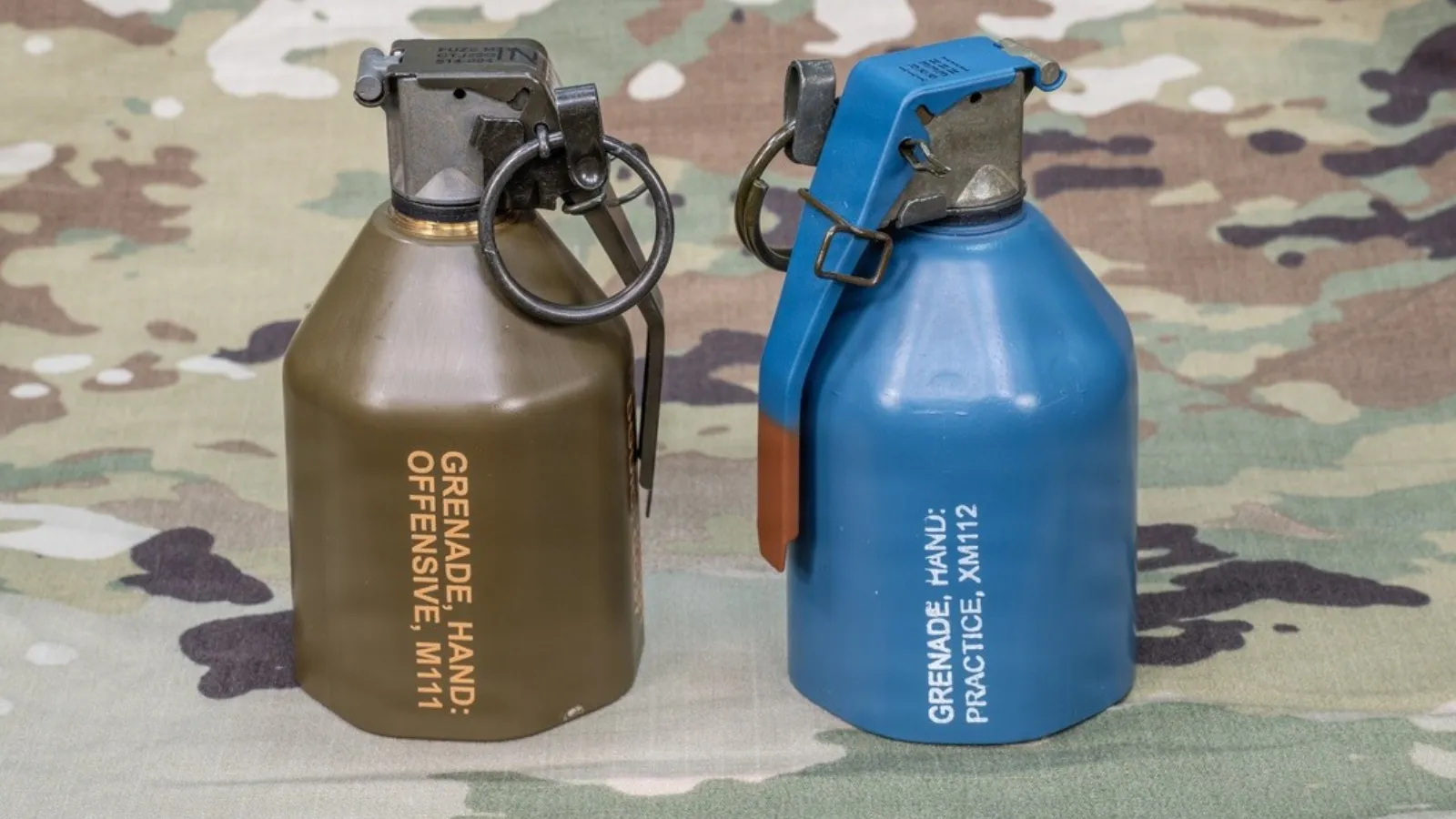
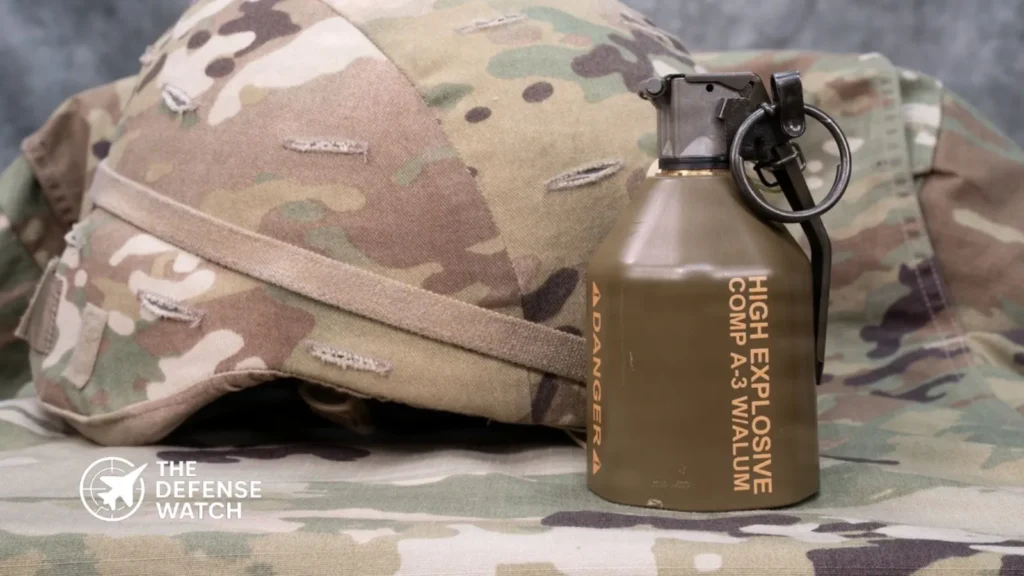
Unlike the widely used M67 fragmentation grenade, the M111 relies primarily on blast overpressure rather than metal fragmentation to neutralize targets. This design produces powerful shock waves capable of incapacitating enemy personnel in enclosed spaces such as rooms, bunkers, and narrow structures.
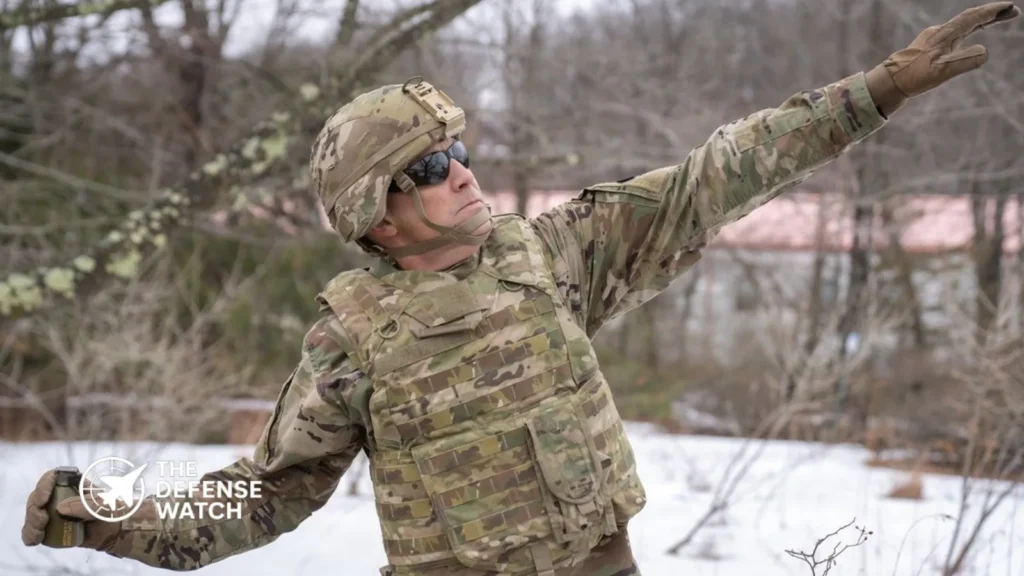
Army officials say the weapon fills a critical operational niche. Fragmentation grenades like the M67 can send lethal fragments in all directions, which may bounce off walls or penetrate barriers in confined spaces. The M111 instead concentrates its lethal effects through pressure waves, reducing the risk to friendly forces positioned nearby.
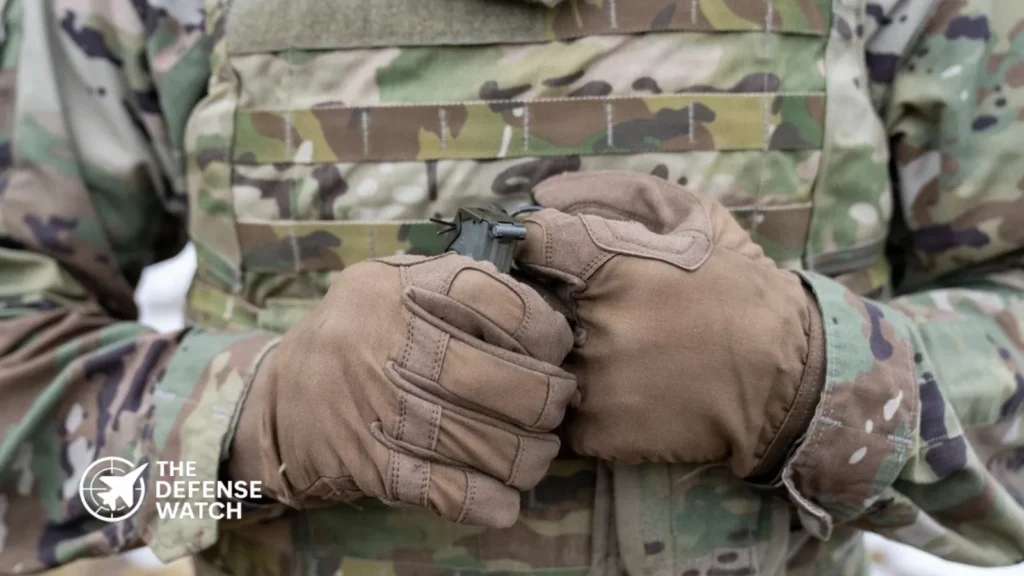
The grenade uses the same fuze and five step arming process as the M67 fragmentation grenade. This design decision allows soldiers to train using familiar procedures while simplifying manufacturing and supply chains.
Why It Matters
The introduction of the M111 offensive hand grenade directly reflects lessons learned during decades of close quarters combat.
US forces conducting urban operations in Iraq and Afghanistan often encountered situations where fragmentation grenades were not the ideal tool. When fighting inside buildings or narrow corridors, fragments can travel unpredictably or penetrate interior walls, increasing the risk of friendly casualties.

Army program officials noted that door to door combat in Iraq revealed the limitations of existing grenade types. A blast based weapon designed for confined spaces offers a safer alternative for clearing rooms and fortified positions.
The M111 gives infantry units greater flexibility. Soldiers can now choose between fragmentation effects in open terrain using the M67, or concentrated blast effects when operating inside structures.
This approach reflects a broader trend toward specialized infantry munitions tailored for specific tactical environments.
Strategic Implications
Although the M111 is a relatively small piece of equipment, its introduction has broader implications for infantry combat capability.
Urban combat presents unique challenges for modern militaries. Dense terrain restricts movement, limits visibility, and creates complex engagement environments where traditional weapons may not perform as intended.
By fielding a grenade optimized for enclosed spaces, the US Army is improving the survivability and effectiveness of infantry units conducting room clearing operations.
The change also highlights the importance of incremental modernization. While large scale programs such as next generation combat vehicles often dominate headlines, improvements to basic soldier equipment can have immediate operational impact.
Grenades remain among the most widely used infantry weapons. Enhancing their safety and effectiveness directly affects frontline combat units.
Competitor View
Potential adversaries closely monitor US efforts to improve infantry lethality and urban combat capabilities.
Russia and China both emphasize urban warfare in their military planning and training exercises. Russian operations in Ukraine have demonstrated the brutal realities of fighting in cities, while Chinese military writings frequently highlight the importance of urban operations in potential future conflicts.
The introduction of the M111 may reinforce perceptions that the US military is preparing for sustained close quarters combat scenarios. It also signals continued investment in infantry modernization even as attention shifts toward high technology systems such as drones and long range precision weapons.
At the tactical level, however, improvements to close combat equipment remain essential for ground forces.
What To Watch Next
The Army’s approval of the M111 offensive hand grenade allows the program to transition from development to broader production.
Future milestones will likely include expanded procurement contracts and gradual distribution to operational units. Training grenades, designated the M112, will support instruction and allow soldiers to practice with equipment that closely replicates the live weapon.
Industry participation may also expand. Because the Army retains government owned intellectual property for the grenade design, multiple manufacturers could potentially compete for production contracts.
This approach supports the Pentagon’s broader effort to strengthen the domestic ammunition industrial base.
Capability Gap
The M111 offensive hand grenade addresses a long standing capability gap in close quarters combat.
Fragmentation grenades excel in open terrain but can create unacceptable risks in confined spaces. Conversely, older offensive grenades such as the Mk3A2 lacked modern materials and safety standards.
The M111 attempts to balance lethality with controlled effects in urban environments. Its blast overpressure can incapacitate enemies inside rooms or bunkers while reducing unintended fragmentation hazards.
However, offensive grenades also have limitations. Their blast effects diminish quickly in open areas, meaning they cannot replace fragmentation grenades in all situations.
For this reason, the Army continues to field both grenade types as complementary tools for different combat scenarios.
The Bottom Line
The M111 offensive hand grenade modernizes a decades old infantry weapon and gives US soldiers a safer, more effective option for close quarters urban combat.