• Home
  • About
  • Defense Systems
  • Manufacturer
  • Comparisons
  • Compare 
  • Tools
TheDefenseWatch.com
  • Aerospace & Aviation
  • Military & Ordnance
  • Naval & Maritime
  • Cyber & Space Defense
  • Policy & Strategy
  • Global News
  • Tools Library
    • Smart Calculator
    • Drone Flight Time Calculator
    • Drone Range Calculator
    • Counter-Drone Jammer Effective Range Calculator
    • Counter-Battery Radar Detection Calculator
    • Artillery Fire Correction Calculator
    • Thermal Camera Detection Range Calculator
    • Missile Range & Time-of-Flight Calculator
    • Radar Detection Range Calculator
    • FPV Strike Drone Payload vs Range Calculator
    • Loitering Munition Endurance Calculator
    • Sniper Ballistic Drop & Windage Calculator
    • Bullet Drop Calculator
    • U.S. Army Combat Fitness Test (ACFT) Calculator
    • Military Pension Calculator
    • Military Retirement Calculator
    • Military Pension Calculator
    • Large Number Calculator
Font ResizerAa

TheDefenseWatch.com

The Defense Watch | U.S. & Global Defense News, Analysis & Military Updates

Search
  • Home
  • About
  • Defense Systems
  • Manufacturer
  • Comparisons
  • Compare 
  • Tools

Stay Updated

Get the latest update

Subscribe

Explore

  • Drone
  • Fighter Jets & Military Aircraft
  • Hypersonic Weapons
  • Aircraft Carriers
  • Strategic History & Missions
  • Tools Library
Home » Israel MOD Signs $42 Million Merkava Tank Transmission Deal With Ashot Ashkelon
Military & OrdnanceTanks & Armored Vehicles

Israel MOD Signs $42 Million Merkava Tank Transmission Deal With Ashot Ashkelon

Daniel Mercer / Defense & Aerospace Analyst
Last updated: September 7, 2026 6:01 pm
Daniel Mercer / Defense & Aerospace Analyst
Share
8 Min Read
Israel MOD Merkava transmission deal
SHARE
■ KEY FACTS AT A GLANCE
  • ► Israel MOD signed an agreement with Ashot Ashkelon worth approximately $42 million.
  • ► The deal covers rehabilitation and supply of Merkava tank transmissions.
  • ► Work is part of a broader framework for 1,500 and 1,200 horsepower transmissions for Merkava and Namer platforms.
  • ► Cumulative orders under the project now total about $82 million.
  • ► The contract supports Israel’s effort to expand its domestic defense production base.

Israel MOD Signs $42 Million Merkava Tank Transmission Deal

The Israel MOD Merkava transmission deal marks another step in strengthening the operational readiness of Israel’s main battle tank fleet while reinforcing domestic defense manufacturing capacity.

Contents
  • Israel MOD Signs $42 Million Merkava Tank Transmission Deal
    • Scope Of The Merkava Tank Transmission Deal
    • Why Transmission Rehabilitation Matters
    • Broader Context: Industrial Expansion And Force Buildup
    • Implications For Regional Defense Posture
    • Industrial Role Of Ashot Ashkelon
    • Looking Ahead
(adsbygoogle = window.adsbygoogle || []).push({});

The Defense Procurement Directorate within the Israel Ministry of Defense announced the signing of a contract valued at approximately $42 million with Ashot Ashkelon Industries Ltd. The agreement covers the rehabilitation and supply of transmissions for Merkava tanks operated by the Israel Defense Forces.

According to the ministry, the contract is part of a broader strategy led by Defense Minister Israel Katz and IMOD Director General Maj. Gen. Amir Baram, aimed at expanding Israel’s defense production base and supporting ongoing force buildup initiatives.

Scope Of The Merkava Tank Transmission Deal

Under the terms of the agreement, Ashot Ashkelon will rehabilitate transmissions used in the Merkava main battle tank. The total contract value exceeds NIS 130 million, equivalent to roughly $42 million at current exchange rates.

- Advertisement -

The project falls within a larger framework covering both 1,500 horsepower and 1,200 horsepower transmissions for the Merkava tank and the Namer armored personnel carrier. To date, cumulative orders under this broader program have reached approximately $82 million, or around NIS 253 million.
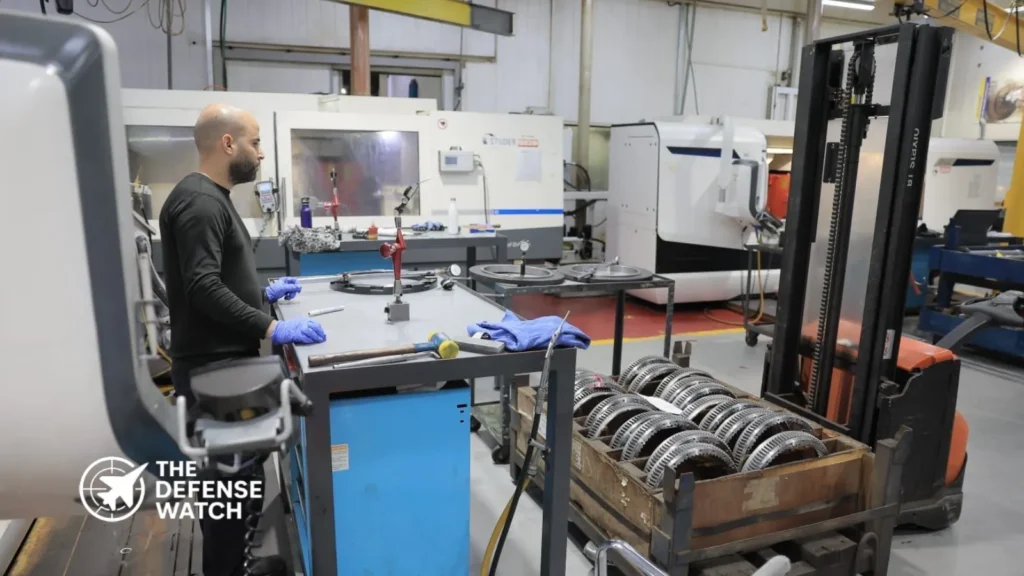
Israel MOD Merkava transmission deal

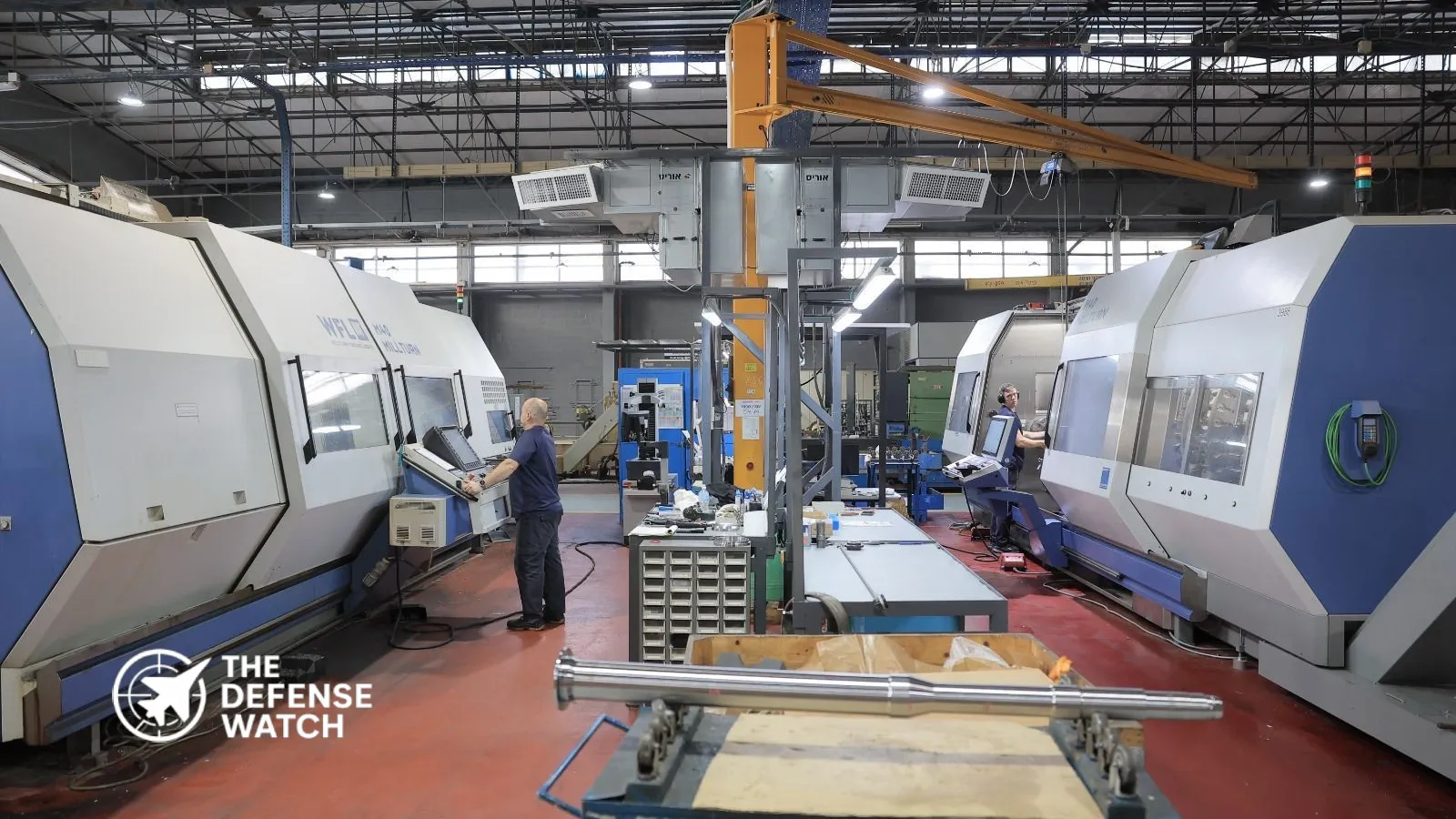
Ashot Ashkelon specializes in propulsion systems, transmissions, and other complex mechanical components for armored vehicles. Its portfolio includes key subsystems for the Merkava tank family and the Namer APC, both central to the IDF’s armored maneuver formations.

Why Transmission Rehabilitation Matters

The Israel MOD Merkava transmission deal underscores the often overlooked but critical role of sustainment in armored warfare.

Modern main battle tanks are complex systems that rely heavily on reliable propulsion and drivetrain components. The Merkava, designed and produced domestically in Israel, is built to operate in demanding terrain and high tempo combat scenarios. Transmission performance directly affects mobility, acceleration, and battlefield survivability.

Rehabilitating existing transmissions rather than procuring entirely new systems can reduce lifecycle costs and shorten turnaround times. For a military operating under sustained operational demands, maintaining fleet readiness is as important as acquiring new platforms.

(adsbygoogle = window.adsbygoogle || []).push({});

Industry data and military logistics studies consistently show that maintenance, repair, and overhaul activities account for a significant share of total ownership costs for armored fleets. By investing in domestic rehabilitation capacity, Israel reduces dependency on external suppliers and strengthens supply chain resilience.

Broader Context: Industrial Expansion And Force Buildup

The Israel MOD Merkava transmission deal comes amid a series of contracts aimed at expanding the country’s defense industrial base.

Israel’s armored forces remain central to its ground maneuver doctrine. The Merkava tank, developed after lessons from earlier conflicts, emphasizes crew protection, survivability, and integration with advanced sensors and active protection systems. Maintaining this fleet in high readiness is a strategic priority.

- Advertisement -

The Namer APC, based on the Merkava chassis, forms the backbone of Israel’s heavy infantry brigades. Shared propulsion and transmission components between the Merkava and Namer platforms create economies of scale in sustainment and logistics.

From a policy perspective, the contract aligns with a broader trend among advanced militaries to localize critical defense production. Recent global supply chain disruptions and heightened regional tensions have reinforced the importance of domestic manufacturing depth.

According to official statements from the Israel Ministry of Defense, the new agreement is designed not only to support immediate operational needs but also to strengthen long term industrial capacity.

Implications For Regional Defense Posture

While the contract focuses on maintenance rather than new tank production, it carries strategic weight.

Sustainment investments signal intent to preserve and potentially expand armored capabilities. In the Middle East security environment, ground maneuver forces remain essential for deterrence and rapid response operations.

The Merkava fleet has undergone successive upgrades over the years, including improvements in fire control systems, protection suites, and digital integration. Ensuring that propulsion systems remain reliable is foundational to enabling these advanced capabilities.

(adsbygoogle = window.adsbygoogle || []).push({});

For U.S. observers and defense planners, the Israel MOD Merkava transmission deal highlights a shared emphasis on readiness and industrial resilience. The U.S. Army, for example, has similarly prioritized maintenance and modernization efforts for the M1 Abrams fleet rather than pursuing entirely new tank designs in the near term.

Industrial Role Of Ashot Ashkelon

Ashot Ashkelon has long been a key supplier within Israel’s defense ecosystem. The company produces high precision gear systems, propulsion components, and mechanical assemblies for both domestic and export markets.

Its involvement in the Merkava and Namer programs reflects its position as a core subcontractor in armored vehicle production and sustainment. The new contract further consolidates that role.

By channeling funds into domestic companies, the Israel Ministry of Defense supports high skill manufacturing jobs and preserves specialized engineering expertise. In a sector where technical know how can erode without continuous production activity, steady contract flow is critical.

(adsbygoogle = window.adsbygoogle || []).push({});

Looking Ahead

The Israel MOD Merkava transmission deal, valued at $42 million, may not represent a new platform acquisition. However, it reinforces a key reality of modern defense planning: readiness depends as much on sustainment as on procurement.

With cumulative orders under the broader transmission framework now reaching $82 million, Israel appears committed to ensuring long term mobility and reliability across its armored fleet.

As regional security dynamics continue to evolve, maintaining operational availability of heavy armored units remains central to Israel’s military doctrine. Contracts such as this one reflect a deliberate approach to force buildup, grounded in industrial capacity and lifecycle management.


TAGGED:Armored VehiclesAshot AshkelonDefense contractsIsrael Ministry of DefenseMerkava Tank
Share This Article
Facebook Copy Link Print
ByDaniel Mercer / Defense & Aerospace Analyst
Follow:
Daniel Mercer is a defense and aerospace analyst at TheDefenseWatch.com covering military aviation, aerospace technology, unmanned systems, air warfare, and defense procurement. His reporting uses official documents, government and military statements, company announcements, and other public sources.
Leave a Comment

Leave a Reply Cancel reply

Your email address will not be published. Required fields are marked *

New Arrivals

  • Boeing VC-25B Presidential Aircraft Boeing VC-25B Presidential Aircraft
  • SM-3 Block IB Missile SM-3 Block IB Missile
  • USS Abraham Lincoln Aircraft Carrier USS Abraham Lincoln Aircraft Carrier
  • M142 HIMARS M142 HIMARS
  • Terrex S5 Infantry Vehicle Terrex S5 Infantry Vehicle
  • A-29 Super Tucano Aircraft A-29 Super Tucano Aircraft
  • DSAR 15 Rifle DSAR 15 Rifle

Recent Compares

  • Tejas vs Gripen: Key Differences and Capabilities Tejas vs Gripen: Key Differences and Capabilities View Comparison →
  • Tejas vs MiG-21 Bison: How India Replaced Its Iconic Supersonic Fighter Tejas vs MiG-21 Bison: How India Replaced Its Iconic Supersonic Fighter View Comparison →
  • F-35 vs F-16: Stealth, Sensors and Combat Roles F-35 vs F-16: Stealth, Sensors and Combat Roles View Comparison →
  • Tejas Fighter Jet vs F-16 Fighting Falcon: Capability Compared Tejas Fighter Jet vs F-16 Fighting Falcon: Capability Compared View Comparison →
  • Rafale Fighter Jet vs F-16 Fighting Falcon : Which Fighter Has the Edge? Rafale Fighter Jet vs F-16 Fighting Falcon : Which Fighter Has the Edge? View Comparison →
  • Su-57 Fighter Jet vs J-20 Fighter Jet: Stealth and Air Combat Compared Su-57 Fighter Jet vs J-20 Fighter Jet: Stealth and Air Combat Compared View Comparison →
  • Mirage 2000 vs Tejas Mk1A: Legacy Combat Power vs Indigenous Modernization Mirage 2000 vs Tejas Mk1A: Legacy Combat Power vs Indigenous Modernization View Comparison →
  • Rafale Fighter Jet vs F-22 Raptor: Which Air Dominance Fighter Has the Edge? Rafale Fighter Jet vs F-22 Raptor: Which Air Dominance Fighter Has the Edge? View Comparison →
  • Tejas Fighter Jet vs. Rafale Fighter Jet: India’s Indigenous Fighter Meets France’s Proven Multirole Combat Aircraft Tejas Fighter Jet vs. Rafale Fighter Jet: India’s Indigenous Fighter Meets France’s Proven Multirole Combat Aircraft View Comparison →
  • F-22 Raptor vs. F-35 Joint Strike Fighter: Which Fifth Generation Fighter Has the Edge? F-22 Raptor vs. F-35 Joint Strike Fighter: Which Fifth Generation Fighter Has the Edge? View Comparison →

Recent Posts

  • USS Oregon Visits Norway as U.S. Navy Maintains High North Presence
  • Lockheed Martin Unveils PAC-3 Edge Interceptor for U.S. Army
  • Northrop Grumman Completes B-2 Spirit of Kitty Hawk Overhaul
  • Army Report Finds Systemic Failures Behind Fatal 2025 Midair Collision
  • Lockheed Martin to Supply Black Hawk Training Systems to Philippine Air Force

You Might Also Like

Project Grayburn rifle replacement
Military & OrdnanceSmall Arms & Infantry Weapons

UK Expands Project Grayburn Rifle Replacement Plan With Industry Notice, Focus on Modern Capability and Domestic Production

January 14, 2026
USS Truxtun repair contract
Defense ContractsNaval & Maritime

US Navy Secures $183 Million Deal To Repair USS Truxtun After Caribbean Collision

April 15, 2026
PrSM Increment 2 missile
Artillery & Missile SystemsMilitary & Ordnance

US Army And Lockheed Martin Successfully Test PrSM Increment 2 Missile With Moving And Maritime Strike Capability

September 12, 2026
best shotgun for home defense
Conventional Weapons & ModernizationMilitary & Ordnance

Best Shotgun for Home Defense: Tactical Comparison of Home Defense Shotguns, Daniel Defense PCCs, and Handguns for Personal Defense

September 7, 2026

Logo

Copyright © 2026 TheDefenseWatch.com

Helpful Links

  • Home
  • About Us
  • Privacy Policy
  • Terms of Use / Disclaimer
  • U.S. Privacy Notice – CCPA Compliance

Defense Systems

  • Defense Systems
  • Comparisons 
  • Manufacturer
  • Tactical Calculators

Popuplar

Which 5 Air Forces Possess the Costliest Fighter Jet Fleets in the World
Evolving Strategic Value: Carrier Strike Groups in the Indo-Pacific’s Future Security Architecture
Autonomous Weapon Systems Spark U.S. Ethics Debate Amid Rapid Military AI Integration

We report on developments involving military forces, governments, defense companies, research organizations, and security institutions around the world. 

Welcome Back!

Sign in to your account

Username or Email Address
Password

Lost your password?