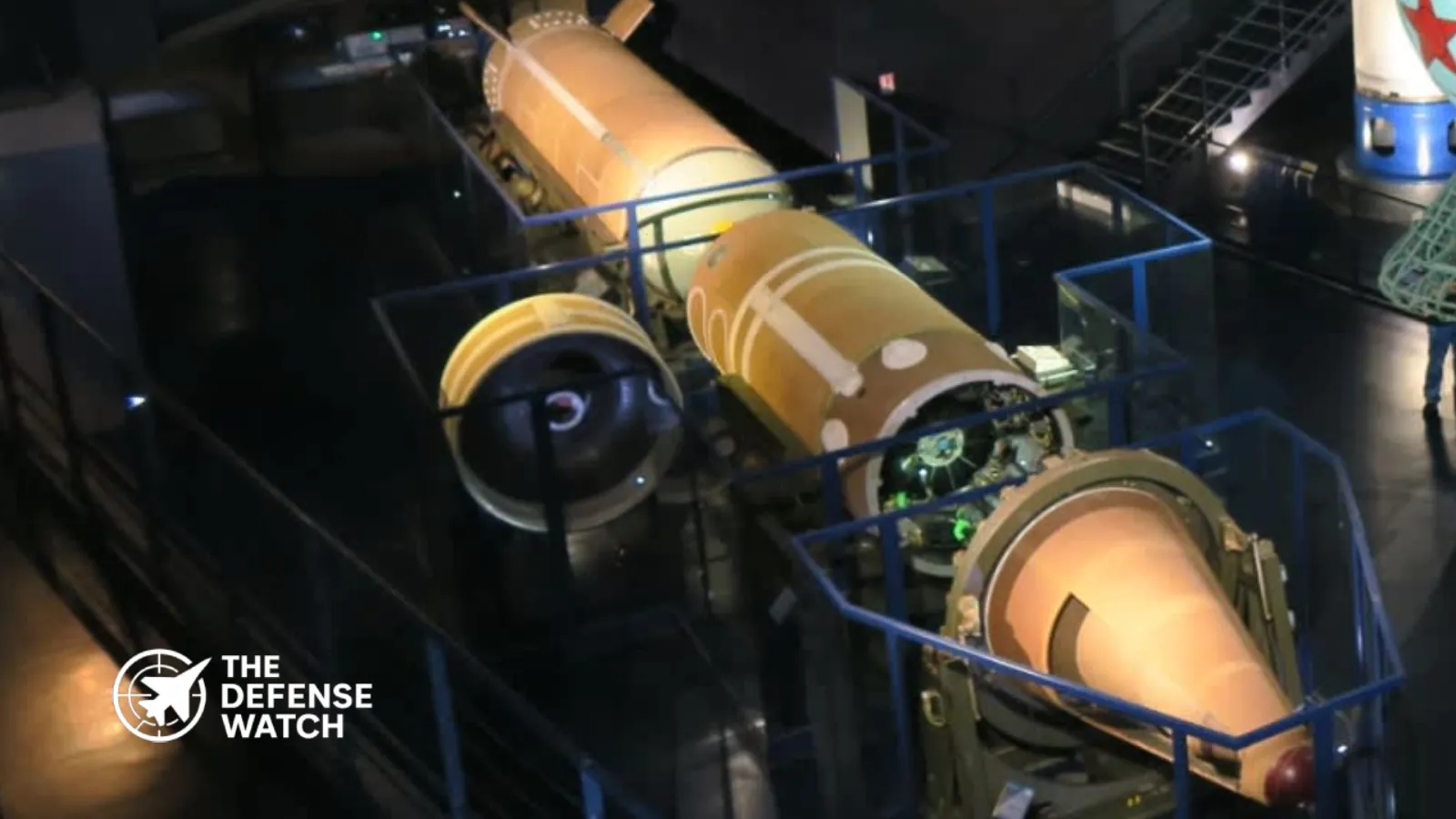
ArianeGroup Hypersonic Missile Proposal Targets Germany And France
The ArianeGroup hypersonic missile proposal is gaining attention as the European rocket manufacturer confirms talks with Berlin and Paris to develop a new long range ballistic weapon system.
According to company officials, the proposed missile would carry hypersonic warheads and strike targets between 1,000 and 3,000 kilometers away. The discussions come just days before the 2026 Munich Security Conference, where European defense priorities are expected to feature prominently.
Company Confirms Ongoing Discussions
ArianeGroup, jointly owned by Airbus and Safran, confirmed it is negotiating with both Germany and France on the potential program.
Vincent Pery, the company’s director of defense programs, told journalists that the system would position ArianeGroup as the only European industrial player with comprehensive ballistic missile capabilities. The company is already a prime contractor for France’s sea based nuclear deterrent missiles, including the M51 submarine launched ballistic missile.
The proposed system would reportedly use hypersonic payloads capable of maneuvering at very high speeds, a capability increasingly prioritized by major military powers.
Range And Strategic Positioning
If developed, the ArianeGroup hypersonic missile would cover a range bracket between 1,000 km and 3,000 km. That places it in the medium to intermediate range ballistic missile category.
Such a capability would significantly expand European long range strike options. At present, France maintains nuclear ballistic missile forces, while Germany does not possess indigenous ballistic missile systems.
The timing of the announcement is notable. The 2026 Munich Security Conference opens February 13 and is expected to address European deterrence, defense industrial cooperation, and strategic autonomy. German Chancellor Friedrich Merz is scheduled to deliver opening remarks.
Hypersonic Weapons In Global Context
Hypersonic weapons travel at speeds exceeding Mach 5 and can maneuver during flight, complicating interception. The United States, China, and Russia have all invested heavily in such systems.
Russia has deployed the Kinzhal air launched ballistic missile and Avangard hypersonic glide vehicle, while China fields the DF 17 system, according to open source defense assessments from the U.S. Department of Defense and NATO briefings. The United States is developing multiple hypersonic programs through the Army, Navy, and Air Force.
Europe, by contrast, has lagged in fielding operational hypersonic strike systems. France has tested the V MaX hypersonic glide vehicle demonstrator under the French defense procurement agency, DGA.
ArianeGroup’s proposal would therefore mark a potential shift toward a sovereign European capability in the hypersonic domain.
Industrial And Political Implications
ArianeGroup is best known for developing the Ariane family of space launch vehicles. However, its defense portfolio includes strategic missile systems for France’s nuclear deterrent.
By offering a new European ballistic missile program, the company is positioning itself at the intersection of industrial strategy and defense policy. Germany has recently expanded defense spending and is increasing investments in long range fires and missile defense under NATO commitments.
France has consistently advocated for stronger European defense autonomy. A jointly developed ArianeGroup hypersonic missile could align with broader Franco German defense cooperation efforts, including projects under the European Union’s Permanent Structured Cooperation framework.
No Formal Contract Announced
As of now, no formal development contract has been signed. Company officials characterized the discussions as ongoing negotiations.
Key questions remain regarding funding structure, operational concept, and whether the system would be conventionally armed or integrated into a broader deterrence architecture.
Defense analysts note that any new medium to intermediate range missile system in Europe would carry strategic implications, particularly in the context of NATO posture and relations with Russia.
Strategic Outlook
The ArianeGroup hypersonic missile concept reflects growing European concern over long range strike parity and advanced weapons competition.
While details remain limited, the proposal signals that Europe’s space launch champion intends to expand deeper into advanced missile systems. Whether Germany and France proceed will likely depend on political alignment, budget commitments, and NATO coordination.
The Munich Security Conference may provide further clarity as European leaders outline their defense priorities for the coming year.