• Home
  • About
  • Defense Systems
  • Manufacturer
  • Comparisons
  • Compare 
  • Tools
TheDefenseWatch.com
  • Aerospace & Aviation
  • Military & Ordnance
  • Naval & Maritime
  • Cyber & Space Defense
  • Policy & Strategy
  • Global News
  • Tools Library
    • Smart Calculator
    • Drone Flight Time Calculator
    • Drone Range Calculator
    • Counter-Drone Jammer Effective Range Calculator
    • Counter-Battery Radar Detection Calculator
    • Artillery Fire Correction Calculator
    • Thermal Camera Detection Range Calculator
    • Missile Range & Time-of-Flight Calculator
    • Radar Detection Range Calculator
    • FPV Strike Drone Payload vs Range Calculator
    • Loitering Munition Endurance Calculator
    • Sniper Ballistic Drop & Windage Calculator
    • Bullet Drop Calculator
    • U.S. Army Combat Fitness Test (ACFT) Calculator
    • Military Pension Calculator
    • Military Retirement Calculator
    • Military Pension Calculator
    • Large Number Calculator
Font ResizerAa

TheDefenseWatch.com

The Defense Watch | U.S. & Global Defense News, Analysis & Military Updates

Search
  • Home
  • About
  • Defense Systems
  • Manufacturer
  • Comparisons
  • Compare 
  • Tools

Stay Updated

Get the latest update

Subscribe

Explore

  • Drone
  • Fighter Jets & Military Aircraft
  • Hypersonic Weapons
  • Aircraft Carriers
  • Strategic History & Missions
  • Tools Library
Home » US Lawmakers Flag AUKUS Nuclear Sub Sale Risk Over Australia Taiwan Commitment
Global News

US Lawmakers Flag AUKUS Nuclear Sub Sale Risk Over Australia Taiwan Commitment

Daniel Mercer / Defense & Aerospace Analyst
Last updated: September 7, 2026 9:10 pm
Daniel Mercer / Defense & Aerospace Analyst
Share
2 Min Read
AUKUS nuclear submarine sale
SHARE

US Report Says Australia Rejects Taiwan Defense Pledge, Threatens Nuclear Submarine Sale

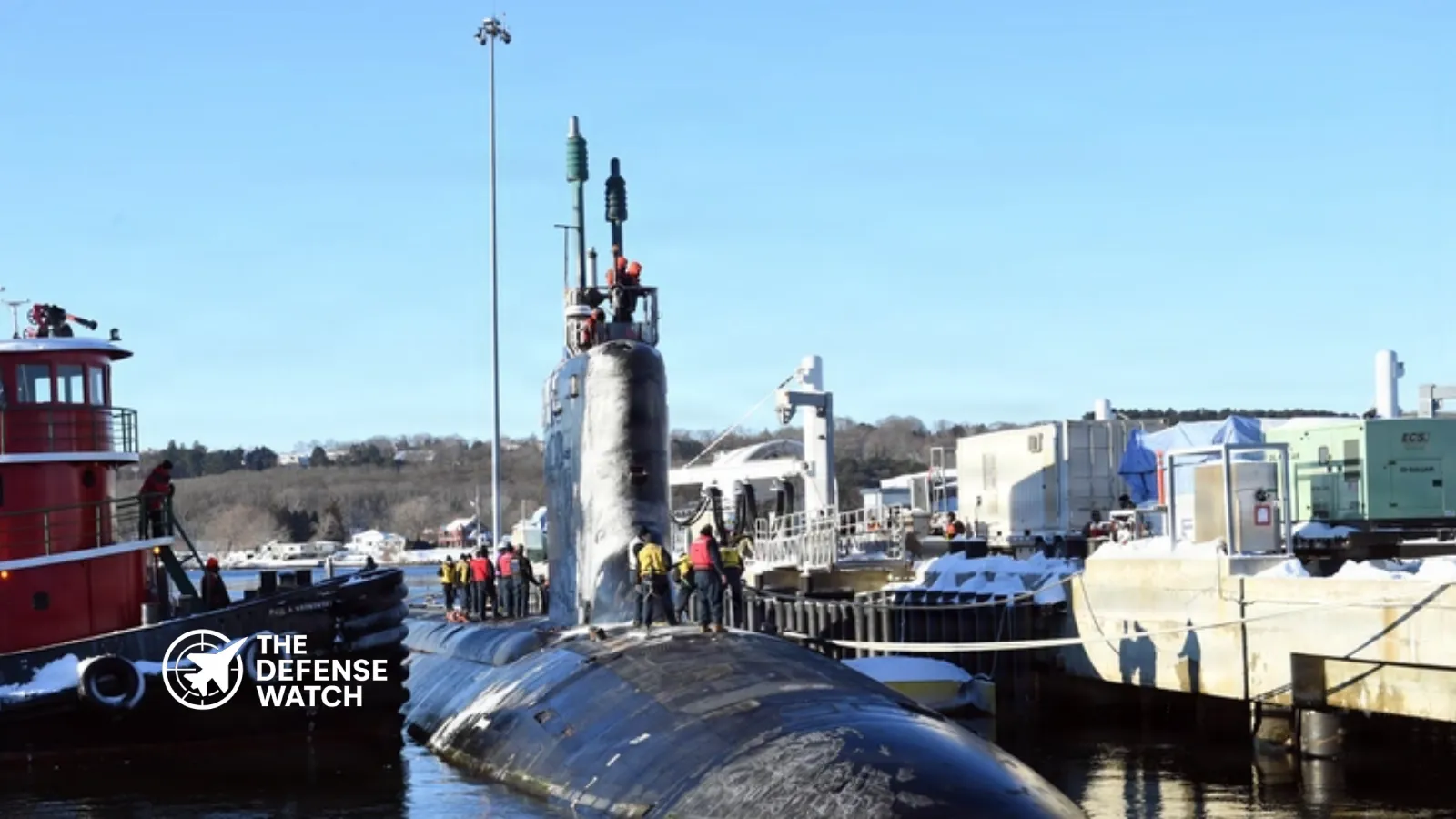
A recent US Congress Research Service (CRS) report highlights Australia’s refusal to explicitly commit to defending Taiwan if conflict with China occurs, adding new strain to the AUKUS security partnership and raising the possibility that the United States might not sell Virginia-class nuclear submarines to Australia.

Contents
US Report Says Australia Rejects Taiwan Defense Pledge, Threatens Nuclear Submarine SaleReport Focuses on Taiwan Security CommitmentStrategic and Security Concerns Over TransferUS Industrial Capacity LimitsAlternate Proposal: US Retains Subs, Deploys ForwardBroader Implications for AUKUS and Indo Pacific
(adsbygoogle = window.adsbygoogle || []).push({});

The report suggests US policymakers should consider retaining control of the submarines rather than transferring them to the Royal Australian Navy, a move framed as necessary to preserve deterrence and ensure US access to advanced undersea capability in a Taiwan contingency.

Report Focuses on Taiwan Security Commitment

The CRS analysis, published in late January, cites public statements by Australian Deputy Prime Minister and Defense Minister Richard Marles noting that Australia has not promised to support the United States militarily if China and the US go to war over Taiwan.

That reticence is described as a core tension in the trilateral Australia-UK-US (AUKUS) pact, which was originally intended to boost allied capability in the Indo-Pacific by transferring nuclear-powered submarines to Australia. In practical terms, the report warns that submarines sold to Canberra might not be available for fighting in a Taiwan Strait crisis if Canberra chooses not to commit them.

- Advertisement -

Strategic and Security Concerns Over Transfer

The CRS report raises two main concerns tied to a potential submarine sale. One is allied interoperability and strategic alignment, particularly whether Australia would make its most advanced platforms available in a high-end conflict involving Taiwan. The second is information security risk, with the report warning that Australia faces frequent cyberattacks linked to China. These attacks could expose sensitive nuclear submarine technologies if shared too broadly.

US Industrial Capacity Limits

The report also highlights US Navy shipyard capacity constraints. American yards currently build about 1.2 submarines per year, requiring a significant ramp-up to meet both US Navy and allied demand. To supply Australia under the original AUKUS plan, capacity would need year-on-year growth beyond what current infrastructure supports.

Alternate Proposal: US Retains Subs, Deploys Forward

In response to these issues, the report outlines a proposal where the United States does not sell any Virginia-class submarines to Australia. Instead, the boats would remain under US Navy control but operate from Australian bases. That concept aims to keep advanced undersea capability close at hand while avoiding concerns over allied operational commitments and industrial strain.

(adsbygoogle = window.adsbygoogle || []).push({});

Under this scenario, Australia could redirect funds toward other defense needs such as long-range anti-ship missiles and unmanned systems, or invest in capabilities tailored to its own territorial defense.

Broader Implications for AUKUS and Indo Pacific

This shift could reshape expectations for AUKUS. The original vision centered on deep industrial and capability sharing to counter Chinese maritime and nuclear strengths. Redefining the nuclear submarine element signals both the limits of current allied commitment frameworks and the tensions inherent in balancing national priorities within a coalition.

The debate also comes as broader Western defense planning increasingly focuses on Taiwan as a potential flashpoint. Multiple US defense reviews and media reports have highlighted growing Chinese military capability and intentions in the region, prompting allied force posture and planning adjustments.


TAGGED:AUKUSAustralia defense policyIndo PacificNuclear SubmarinesUS Congress
Share This Article
Facebook Copy Link Print
ByDaniel Mercer / Defense & Aerospace Analyst
Follow:
Daniel Mercer is a defense and aerospace analyst at TheDefenseWatch.com covering military aviation, aerospace technology, unmanned systems, air warfare, and defense procurement. His reporting uses official documents, government and military statements, company announcements, and other public sources.
Leave a Comment

Leave a Reply Cancel reply

Your email address will not be published. Required fields are marked *

Search Defense Systems

Latest Defense Systems

  • F-47A Fighter Jet F-47A Fighter Jet
  • China DF-61 Missile China DF-61 Missile
  • B61 Nuclear Bomb B61 Nuclear Bomb
  • Japan E-767 Airborne Japan E-767 Airborne
  • Remington 870 Shotgun Remington 870 Shotgun
  • RUTA B1 Cruise Missile RUTA B1 Cruise Missile
  • XQ-67A Drone XQ-67A Drone
  • B-25 Mitchell Bomber B-25 Mitchell Bomber
  • F-100 Super Sabre F-100 Super Sabre

Recent Compares

  • J-10C vs JF-17 Thunder: Which Fighter Is More Capable? J-10C vs JF-17 Thunder: Which Fighter Is More Capable? View Comparison →
  • Tejas vs Gripen: Key Differences and Capabilities Tejas vs Gripen: Key Differences and Capabilities View Comparison →
  • Tejas vs MiG-21 Bison: How India Replaced Its Iconic Supersonic Fighter Tejas vs MiG-21 Bison: How India Replaced Its Iconic Supersonic Fighter View Comparison →
  • F-35 vs F-16: Stealth, Sensors and Combat Roles F-35 vs F-16: Stealth, Sensors and Combat Roles View Comparison →
  • Tejas Fighter Jet vs F-16 Fighting Falcon: Capability Compared Tejas Fighter Jet vs F-16 Fighting Falcon: Capability Compared View Comparison →
  • Rafale Fighter Jet vs F-16 Fighting Falcon : Which Fighter Has the Edge? Rafale Fighter Jet vs F-16 Fighting Falcon : Which Fighter Has the Edge? View Comparison →
  • Su-57 Fighter Jet vs J-20 Fighter Jet: Stealth and Air Combat Compared Su-57 Fighter Jet vs J-20 Fighter Jet: Stealth and Air Combat Compared View Comparison →
  • Mirage 2000 vs Tejas Mk1A: Legacy Combat Power vs Indigenous Modernization Mirage 2000 vs Tejas Mk1A: Legacy Combat Power vs Indigenous Modernization View Comparison →
  • Rafale Fighter Jet vs F-22 Raptor: Which Air Dominance Fighter Has the Edge? Rafale Fighter Jet vs F-22 Raptor: Which Air Dominance Fighter Has the Edge? View Comparison →
  • Tejas Fighter Jet vs. Rafale Fighter Jet: India’s Indigenous Fighter Meets France’s Proven Multirole Combat Aircraft Tejas Fighter Jet vs. Rafale Fighter Jet: India’s Indigenous Fighter Meets France’s Proven Multirole Combat Aircraft View Comparison →

Recent Posts

  • Marine One Explained: The Presidential Helicopter, Its Fleet and the VH-92A Transition
  • Sikorsky Wins South Korea Contract for Four S-92A+ Presidential Helicopters
  • Saudi Arabia Intercepts Missiles Targeting Riyadh as Aramco Building Is Damaged
  • US Approves Potential $1.08 Billion Black Hawk Helicopter Sale to Mexico
  • NASA Completes Final ISS Solar Array Installation, Raising Station Power Capacity by 30%

You Might Also Like

Starlink-controlled drones Ukraine
Global News

Ukraine Appoints Defense Adviser After Russia Uses Starlink-Controlled Drones

January 25, 2026
U.S. Army Green Berets Arctic training
Global News

U.S. Army Green Berets Test Arctic Recon And Electronic Warfare Capabilities In Alaska Exercise

September 7, 2026
US P 8A Poseidon sale
Fighter Jets & Military AircraftGlobal News

US Approves 2.3 Billion Dollar P 8A Poseidon Sale to Replace Singapore Maritime Patrol Fleet

September 12, 2026
L3Harris P25 transition Florida SLERS
Global News

L3Harris Successfully Completes First Phase of P25 Transition for Florida SLERS

September 7, 2026

Logo

Copyright © 2026 TheDefenseWatch.com

Helpful Links

  • Home
  • About Us
  • Privacy Policy
  • Terms of Use / Disclaimer
  • U.S. Privacy Notice – CCPA Compliance

Defense Systems

  • Defense Systems
  • Comparisons 
  • Manufacturer
  • Tactical Calculators

Popuplar

Which 5 Air Forces Possess the Costliest Fighter Jet Fleets in the World
Evolving Strategic Value: Carrier Strike Groups in the Indo-Pacific’s Future Security Architecture
Autonomous Weapon Systems Spark U.S. Ethics Debate Amid Rapid Military AI Integration

We report on developments involving military forces, governments, defense companies, research organizations, and security institutions around the world. 

Welcome Back!

Sign in to your account

Username or Email Address
Password

Lost your password?