- Australia has provided AIM-120 AMRAAM missiles to strengthen the United Arab Emirates air defense against Iranian drones and aerial threats.
- The AIM-120 AMRAAM is an advanced active radar-guided air-to-air missile widely used by Western fighter aircraft and integrated air defense systems.
- The move reflects growing international concern about Iran’s expanding drone and missile capabilities across the Middle East.
- UAE operates modern Western fighter fleets including F-16 and Mirage 2000 aircraft capable of employing AMRAAM missiles.
- The transfer strengthens regional air defense networks aimed at countering unmanned aerial threats.
Australia Supplies AIM-120 AMRAAM Missiles To Strengthen UAE Air Defense
The transfer of AIM-120 AMRAAM missiles from Australia to the United Arab Emirates marks a new step in strengthening UAE air defense against Iranian drones and other aerial threats. The move reflects growing concern among regional and Western partners about the increasing use of unmanned systems in Middle Eastern conflicts.
(adsbygoogle = window.adsbygoogle || []).push({});Australia’s decision highlights expanding defense cooperation between Western partners and Gulf states seeking to improve their ability to intercept drones, cruise missiles, and hostile aircraft.
The Big Picture
Drone warfare has become a defining feature of modern conflict across the Middle East. Iran and its regional partners have invested heavily in low cost unmanned aerial systems capable of conducting reconnaissance and long range strike missions.
These drones have already appeared in multiple conflicts and security incidents involving Gulf infrastructure, shipping lanes, and military facilities. Countries in the region are therefore expanding layered air defense systems capable of detecting and destroying small, fast moving targets.
Missiles such as the AIM-120 AMRAAM play a critical role in this evolving defensive architecture. Originally developed for air to air combat, the missile has also been adapted for ground based air defense systems such as NASAMS.
By supplying additional missiles to the UAE, Australia contributes to a broader effort by Western aligned nations to strengthen regional deterrence against drone and missile threats.
What’s Happening
Australia has reportedly supplied AIM-120 Advanced Medium Range Air-to-Air Missiles (AMRAAM) to support the UAE air defense system as regional tensions involving Iran continue to rise.
The missile is one of the most widely deployed air-to-air weapons in Western inventories. Developed by the United States and produced by Raytheon, it uses active radar guidance to engage targets beyond visual range.
AMRAAM missiles can intercept:
- fighter aircraft
- cruise missiles
- unmanned aerial vehicles
- other aerial threats
The UAE operates several advanced fighter aircraft capable of employing the missile, including its fleet of F-16 Block 60 fighters and Mirage 2000 aircraft.
The additional missiles strengthen the UAE’s ability to counter drone swarms and other aerial attacks that may originate from regional adversaries.
Why It Matters
The supply of AIM-120 AMRAAM missiles highlights how air defense priorities are shifting as drones become more common on the battlefield.
Traditional air defense networks focused heavily on high performance aircraft and ballistic missiles. However, modern threats increasingly involve smaller systems such as loitering munitions and one way attack drones.
(adsbygoogle = window.adsbygoogle || []).push({});These platforms often fly at low altitude and can appear in large numbers, making interception more difficult.
Missiles like the AMRAAM offer several advantages in this environment:
- high speed interception
- advanced radar guidance
- compatibility with multiple launch platforms
- proven combat reliability
For countries such as the UAE, expanding missile inventories is essential to maintain sustained air defense operations during prolonged security crises.
Strategic Implications
The transfer of missiles reflects a wider international effort to strengthen Gulf security against Iran’s expanding drone and missile arsenal.
Iran has developed a diverse portfolio of unmanned systems ranging from reconnaissance drones to long range strike platforms capable of carrying explosive payloads. These systems have been exported or shared with regional partners and proxy groups.
Improving the UAE air defense system helps close potential vulnerabilities in protecting critical infrastructure such as:
- energy facilities
- military bases
- ports and shipping routes
- major urban centers
Enhanced air defense coverage also contributes to broader regional deterrence by raising the cost of any attempted drone or missile attacks.
Competitor View
From Tehran’s perspective, the reinforcement of Gulf air defense systems fits into a broader pattern of Western aligned states strengthening military cooperation against Iranian capabilities.
Iran has repeatedly emphasized the strategic value of its drone and missile forces as asymmetric tools that can challenge technologically superior adversaries.
Expanded missile inventories among Gulf states may therefore encourage Iran to further invest in:
- larger drone swarms
- stealthier unmanned systems
- longer range strike capabilities
- electronic warfare measures
This dynamic reflects the continuing competition between offensive drone capabilities and defensive interception technologies.
Capability Gap
The deployment of additional AIM-120 AMRAAM missiles addresses a key operational challenge facing many modern air defense systems: the ability to counter large numbers of low cost aerial threats.
Drone attacks often rely on saturation tactics designed to overwhelm defensive systems. Each interception consumes a missile, meaning defenders must maintain significant stockpiles to sustain operations.
(adsbygoogle = window.adsbygoogle || []).push({});While AMRAAM provides a reliable interception capability, it remains a relatively expensive weapon compared with many drones. This cost imbalance has driven many countries to explore complementary defenses such as:
- directed energy systems
- short range interceptors
- electronic warfare tools
Despite these limitations, AMRAAM remains one of the most trusted missile systems available for high probability aerial interception.
What To Watch Next
Several developments may shape how this capability evolves in the coming years.
First, Gulf states are likely to continue expanding integrated air defense networks linking fighter aircraft, ground based missile systems, and early warning radars.
Second, drone detection and counter drone technologies will receive increasing investment as unmanned threats grow more sophisticated.
Finally, deeper defense cooperation between Western countries and Gulf partners may result in additional missile transfers, training programs, and joint exercises focused on air defense readiness.
The Bottom Line
Australia’s delivery of AIM-120 AMRAAM missiles strengthens the UAE air defense system and underscores the growing importance of counter drone capabilities in Middle Eastern security.

US Report Says Australia Rejects Taiwan Defense Pledge, Threatens Nuclear Submarine Sale
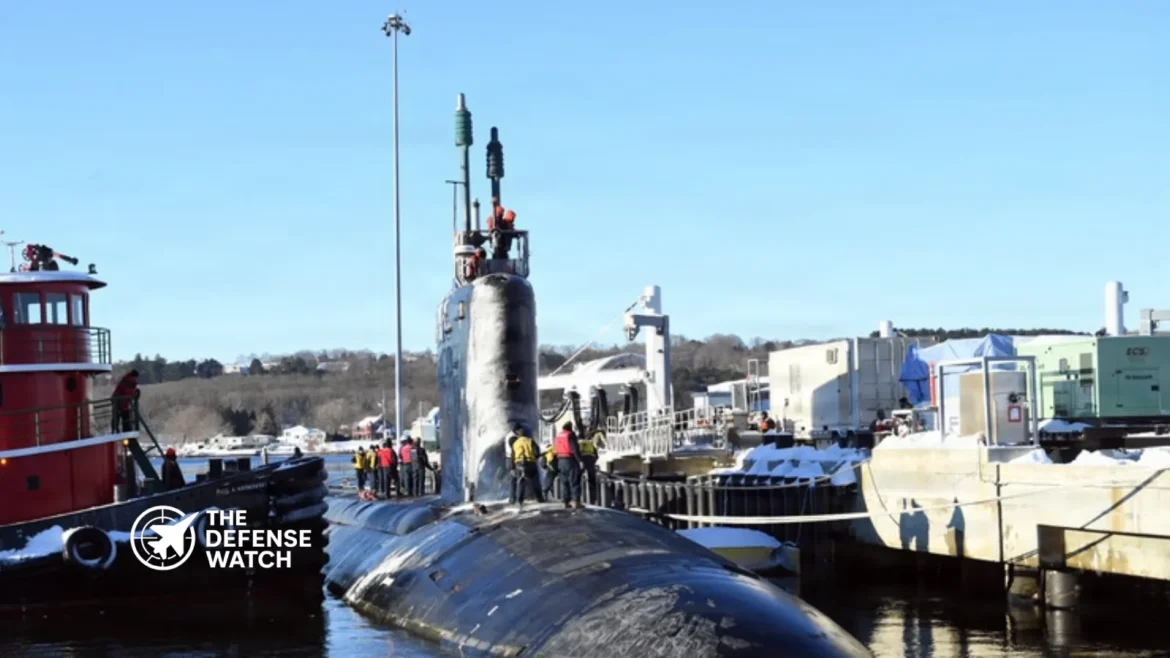
A recent US Congress Research Service (CRS) report highlights Australia’s refusal to explicitly commit to defending Taiwan if conflict with China occurs, adding new strain to the AUKUS security partnership and raising the possibility that the United States might not sell Virginia-class nuclear submarines to Australia.
(adsbygoogle = window.adsbygoogle || []).push({});The report suggests US policymakers should consider retaining control of the submarines rather than transferring them to the Royal Australian Navy, a move framed as necessary to preserve deterrence and ensure US access to advanced undersea capability in a Taiwan contingency.
Report Focuses on Taiwan Security Commitment
The CRS analysis, published in late January, cites public statements by Australian Deputy Prime Minister and Defense Minister Richard Marles noting that Australia has not promised to support the United States militarily if China and the US go to war over Taiwan.
That reticence is described as a core tension in the trilateral Australia-UK-US (AUKUS) pact, which was originally intended to boost allied capability in the Indo-Pacific by transferring nuclear-powered submarines to Australia. In practical terms, the report warns that submarines sold to Canberra might not be available for fighting in a Taiwan Strait crisis if Canberra chooses not to commit them.
Strategic and Security Concerns Over Transfer
The CRS report raises two main concerns tied to a potential submarine sale. One is allied interoperability and strategic alignment, particularly whether Australia would make its most advanced platforms available in a high-end conflict involving Taiwan. The second is information security risk, with the report warning that Australia faces frequent cyberattacks linked to China. These attacks could expose sensitive nuclear submarine technologies if shared too broadly.
US Industrial Capacity Limits
The report also highlights US Navy shipyard capacity constraints. American yards currently build about 1.2 submarines per year, requiring a significant ramp-up to meet both US Navy and allied demand. To supply Australia under the original AUKUS plan, capacity would need year-on-year growth beyond what current infrastructure supports.
Alternate Proposal: US Retains Subs, Deploys Forward
In response to these issues, the report outlines a proposal where the United States does not sell any Virginia-class submarines to Australia. Instead, the boats would remain under US Navy control but operate from Australian bases. That concept aims to keep advanced undersea capability close at hand while avoiding concerns over allied operational commitments and industrial strain.
(adsbygoogle = window.adsbygoogle || []).push({});Under this scenario, Australia could redirect funds toward other defense needs such as long-range anti-ship missiles and unmanned systems, or invest in capabilities tailored to its own territorial defense.
Broader Implications for AUKUS and Indo Pacific
This shift could reshape expectations for AUKUS. The original vision centered on deep industrial and capability sharing to counter Chinese maritime and nuclear strengths. Redefining the nuclear submarine element signals both the limits of current allied commitment frameworks and the tensions inherent in balancing national priorities within a coalition.
The debate also comes as broader Western defense planning increasingly focuses on Taiwan as a potential flashpoint. Multiple US defense reviews and media reports have highlighted growing Chinese military capability and intentions in the region, prompting allied force posture and planning adjustments.