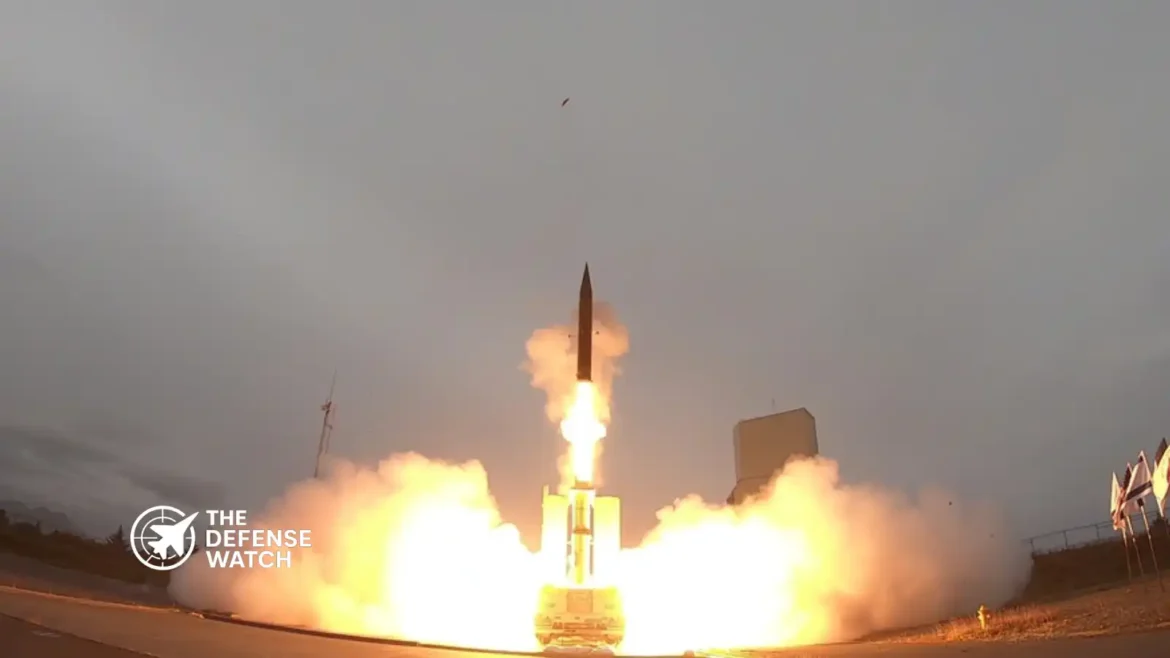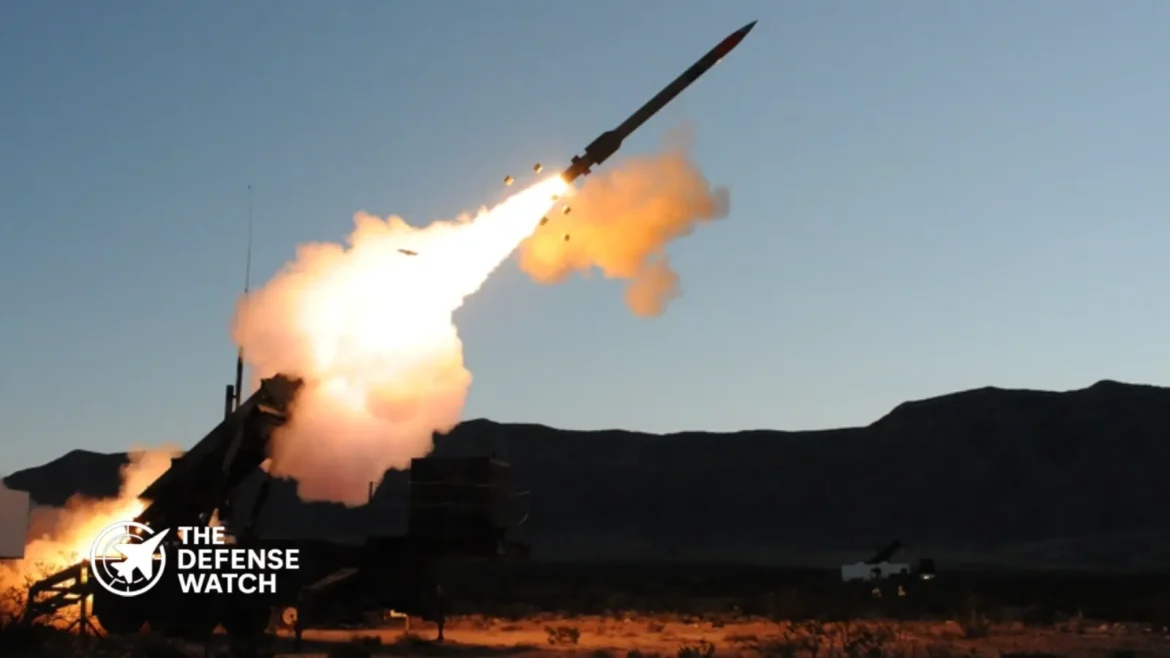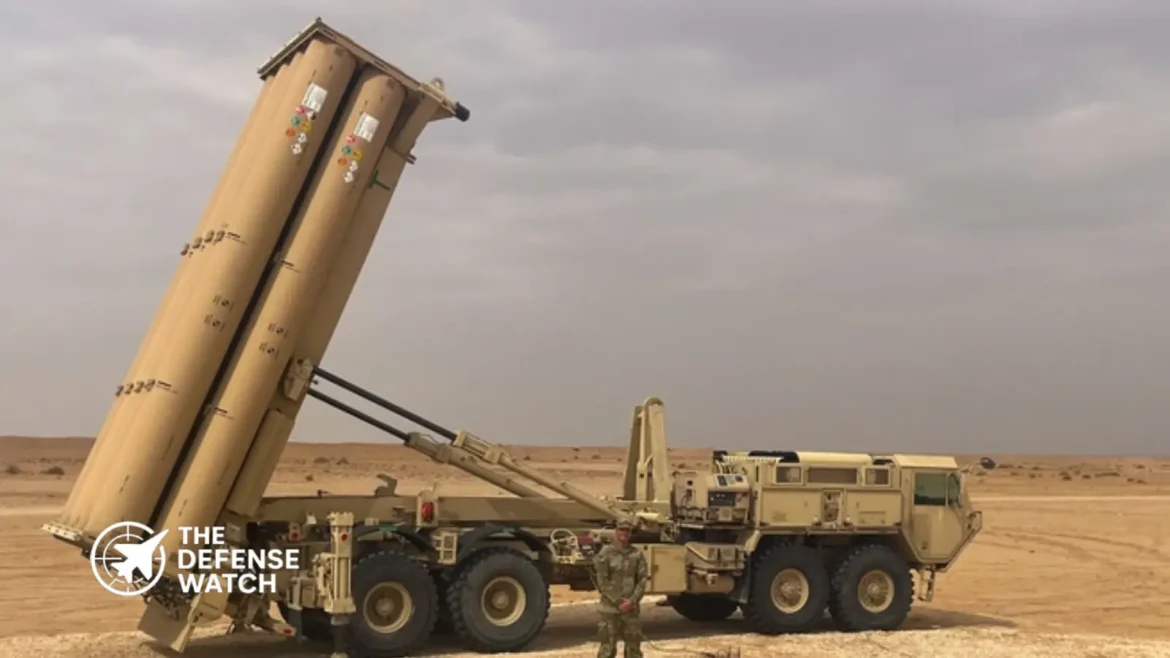
Golden Dome Moves From Concept to Contract
The Golden Dome missile defense program cleared a critical credibility threshold on April 23, when senior Pentagon leaders publicly confirmed three concrete milestones for the first time: a completed architecture blueprint, a functioning Command-and-Control Consortium, and active procurement contracts for system components. The event at Joint Expeditionary Base Little Creek-Fort Story in Virginia marked the Defense Department’s most substantive public update on the program since President Trump signed the founding executive order in January 2025.
- Senior Pentagon and defense industry leaders gathered at Joint Expeditionary Base Little Creek-Fort Story on April 23, 2026, for a formal Golden Dome for America (GDA) progress update — the program’s most substantive public showcase to date.
- Three key milestones confirmed: initial architecture blueprint completed, a Command-and-Control (C2) Consortium established, and active contracts awarded for critical system components.
- GDA is designed as a layered “system of systems” integrating space-based persistent sensors, advanced interceptors, and AI-enabled automated battle management — targeting ballistic, hypersonic, and cruise missile threats.
- Congress allocated $24.4 billion through the FY2025 reconciliation law, with another $13 billion designated for FY2026 — representing roughly 2.2% of annual federal discretionary spending. Independent cost estimates range from $175 billion (White House) to $3.6 trillion (AEI).
- Despite officials declaring the program “ahead of schedule and on budget,” defense analysts warn that fielding meaningful new interceptor capacity before the end of President Trump’s term in January 2029 is not technically feasible given current production realities.
Speakers included Gen. Mike Guetlein, the Senate-confirmed director of Golden Dome for America; Emil Michael, Under Secretary of War for Research and Engineering and the Department’s Chief Technology Officer; and Maj. Gen. Mark Piper, Deputy Director of Operations at NORAD and NORTHCOM. The audience included representatives from both the U.S. government and the defense industrial base, signaling that the program is entering an active acquisition phase.
The Big Picture: Rethinking Homeland Missile Defense
Golden Dome represents the most ambitious restructuring of U.S. homeland missile defense since the Ground-Based Midcourse Defense (GMD) system was first fielded in 2004. The strategic logic driving the program is a recognized shift in the threat environment. Adversaries including China and Russia have deployed hypersonic glide vehicles, fractional-orbit bombardment systems, and advanced cruise missiles that existing U.S. missile defenses were not designed to counter.
The 44-interceptor GMD system — the current backbone of U.S. homeland defense — is optimized for rogue-state ballistic missile threats. A 2025 report by the American Physical Society noted that the system cannot reliably distinguish between a warhead and its decoys, significantly constraining its operational effectiveness against even limited peer-level strikes. Golden Dome is designed to correct that gap by emphasizing boost-phase intercept, where missiles are still climbing, predictable, and radiating heat — before they can release decoys or maneuvering warheads.
What’s Happening: Three Milestones Confirmed
The April 23 event was structured around three specific programmatic achievements that the Department of War characterized as proof of momentum.
Architecture Blueprint: The initial GDA architecture has been completed. This document defines the system’s layered structure — integrating a persistent space-based sensor network, a portfolio of interceptors operating at multiple engagement altitudes and ranges, and a unified command-and-control layer. The Department stated the architecture would be “socialized” with key stakeholders, though full public disclosure of the classified design remains uncertain.
Command-and-Control Consortium: A multi-contractor C2 Consortium has been formally established. This is a foundational step — effective battle management for a system this complex requires interoperable data links, automated threat discrimination, and machine-speed decision-making across sensors and shooters that may be operated by different services and agencies. The C2 challenge is arguably the most technically complex element of the entire program.
Active Contracts Awarded: The Department confirmed that active contracts for critical system components have been placed with defense industry partners. Specific contractors and values were not disclosed in the public release, but the Army Long-Range Persistent Surveillance (ALPS) terrestrial sensor system — being tested in the Hampton Roads region — was highlighted as a key component feeding data into the broader architecture.
Why It Matters: Automation at Machine Speed
Gen. Guetlein framed the program’s urgency in operational terms. “We are moving with purpose and urgency to forge a shield that is layered, integrated, and automated,” he said at the event. “The progress on display today is tangible proof that this is not a future concept, but a reality we must build now.”
Maj. Gen. Piper of NORAD and NORTHCOM reinforced the battlefield logic. The existing architecture of U.S. air and missile defense — multiple legacy systems that do not share data natively and rely on human decision cycles — cannot operate at the speed required to counter advanced hypersonic threats. A hypersonic glide vehicle traveling at Mach 5 or above compresses decision timelines to seconds. Automated battle management is not optional for this mission — it is a fundamental design requirement.
Under Secretary Michael emphasized the program’s commercial technology integration strategy. We are embracing an open architecture that harnesses the full power of American innovation — from artificial intelligence to the commercial space industry,” he said. This approach matters for cost control and adaptability, allowing the government to compete and upgrade components without lock-in to a single prime contractor’s closed ecosystem.
Strategic Implications: Deterrence, Arms Control, and Alliance Friction
Golden Dome introduces strategic complications that extend well beyond its engineering challenges. The program represents a deliberate departure from the post-2002 U.S. missile defense posture, which was explicitly scoped to counter rogue-state threats — not peer adversaries. By explicitly targeting hypersonic and advanced ballistic threats from “any foe,” GDA sends a clear signal to Moscow and Beijing that the U.S. intends to erode the strategic utility of their nuclear deterrents.
The space-based interceptor layer is particularly consequential. These would be the first offensive-capable U.S. weapons systems in orbit. While the Outer Space Treaty prohibits weapons of mass destruction in space, kinetic interceptors occupy a legal gray zone. Multiple U.N. Security Council permanent members have already raised objections, citing concerns about strategic stability and the spirit of arms control norms.
For U.S. allies, especially in NATO and the Indo-Pacific, a robust Golden Dome could alter extended deterrence calculations. If the homeland becomes more defensible, it potentially strengthens the credibility of U.S. commitments — but it may also create friction if allies perceive the system as shifting Washington’s risk calculus toward retrenchment from forward-deployed commitments.
Competitor View: How Beijing and Moscow Are Reading This
China and Russia have both publicly characterized U.S. missile defense expansion as destabilizing. From their perspective, a homeland shield that can intercept retaliatory strikes reduces the credibility of their nuclear deterrents — and creates an asymmetric incentive to expand offensive arsenals to overwhelm any defensive system. China’s rapid expansion of its ICBM force, including road-mobile missiles and fractional-orbit bombardment systems, tracks directly with this logic.
Russia’s investment in hypersonic systems — the Avangard hypersonic glide vehicle and the Kinzhal air-launched ballistic missile — are explicitly designed to defeat missile defenses. Moscow’s response to Golden Dome will likely include further development of these penetration aids, plus diplomatic pressure in multilateral forums to constrain U.S. space-based interceptor deployment.
Iran, while a less capable adversary, may also accelerate its ballistic missile programs in response, viewing a future Golden Dome capability as reducing the coercive value of its existing missile arsenal against U.S. regional interests and allies.
What To Watch Next: Architecture Release and Acquisition Decisions
The Department of War indicated the full GDA architecture will be “socialized” with stakeholders in the coming months. Whether a meaningful unclassified summary reaches Congress and the public will shape the program’s legislative support and industrial base response.
The critical near-term milestone is the release of acquisition funding to the executing agencies. An industry executive interviewed by National Defense Magazine in April 2026 noted that defense firms are cautiously waiting until they “see the dollars in their wallet” before accelerating investment — meaning the spending plan’s impact on production capacity will lag the policy announcements by months.
Watch for THAAD, Patriot, and Aegis Ballistic Missile Defense interceptor procurement actions. These represent the fastest available pathway to increasing actual interceptor inventory, but even orders placed today face multi-year production and delivery timelines. Space-based interceptor development and testing milestones will also be key indicators of whether the program’s most ambitious elements are advancing beyond concept.
Capability Gap: What GDA Aims to Fix — and Where the Limits Are
The operational case for Golden Dome is well-founded. Current U.S. homeland defenses have four compounding weaknesses: limited interceptor inventory, poor discrimination against decoys, no credible boost-phase capability, and a sensor architecture that does not provide global persistent tracking. GDA addresses all four.
The boost-phase focus is particularly significant. Destroying a missile during its powered ascent eliminates the warhead before it separates, before decoys are deployed, and when the target is moving slowly and predictably. The challenge is positioning interceptors close enough to adversary launch points — which is geographically impractical from ground-based sites — making space-based interceptors a logical but technically and financially demanding solution.
The program’s realistic limitations are substantial. Independent cost estimates from the American Enterprise Institute place the total program cost at up to $3.6 trillion over 20 years, dwarfing the White House’s $175 billion figure. The Congressional Budget Office estimated that even a limited space-based interceptor system sized only to counter rogue threats would cost more than $500 billion. Historically, major missile defense programs have exceeded both initial cost estimates and scheduled timelines. Critics also note that placing a large interceptor constellation in low Earth orbit creates orbital decay and replenishment costs that compound over time.
Defense analyst Todd Harrison, whose AEI study produced the high-end cost estimate, has stated bluntly that fielding significant new Golden Dome capacity before the end of Trump’s term in January 2029 is not feasible — but that demonstrations and the redeployment of existing assets to visible locations are achievable short-term outcomes.
The Bottom Line
Golden Dome for America has cleared its first programmatic gates — architecture, C2 framework, and initial contracts — but the gap between bureaucratic milestones and operational interceptor capacity is measured in years and hundreds of billions of dollars, making independent verification of progress as important as Pentagon assurances.

What Makes a Missile “Hypersonic”?
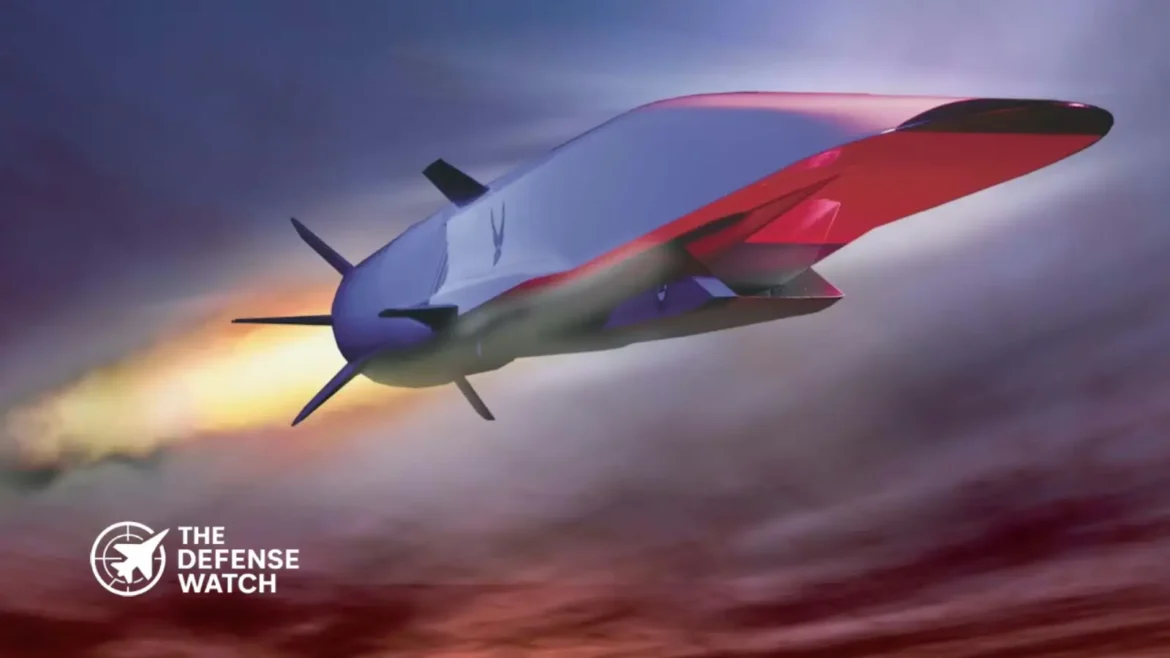
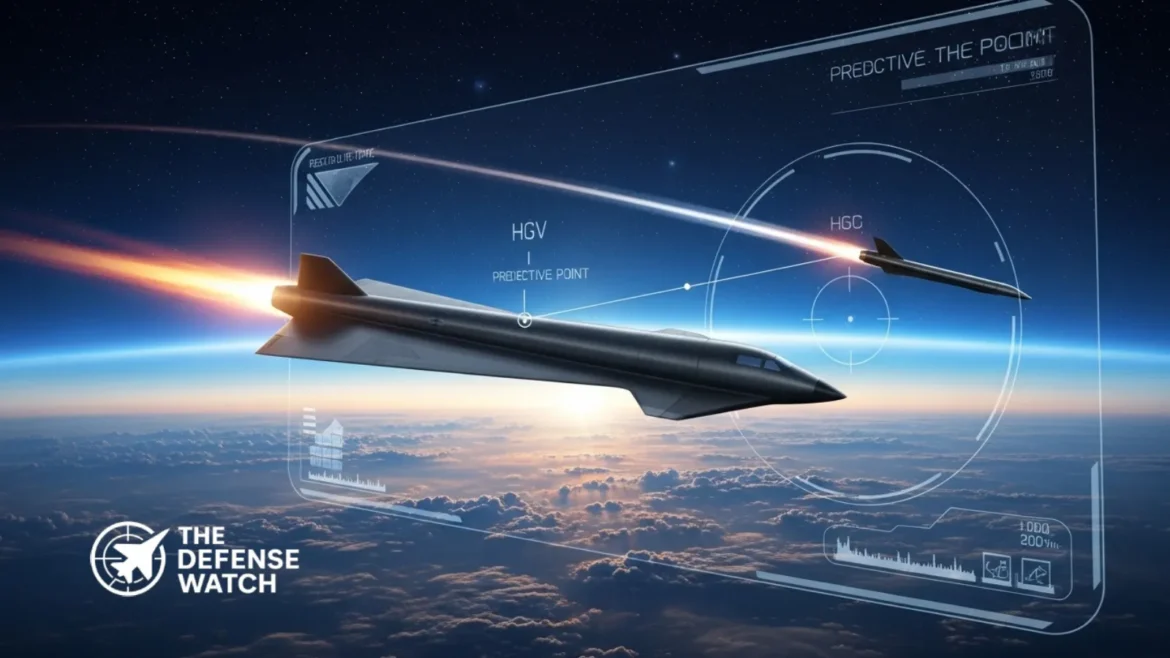
Understanding how hypersonic missiles work begins with a deceptively simple threshold: speed. Any vehicle traveling above Mach 5 — roughly 3,800 mph at sea level — is classified as hypersonic. But raw velocity is only part of the story. What separates the new generation of hypersonic weapons from Cold War-era ballistic missiles is their ability to maneuver throughout the entire flight path, operating in an atmospheric corridor that existing radar networks and missile defenses were never designed to cover.
▮ KEY FACTS AT A GLANCE- Hypersonic missiles travel at Mach 5 or faster — at least five times the speed of sound — and can maneuver in flight, unlike traditional ballistic missiles.
- Two primary types exist: Hypersonic Glide Vehicles (HGVs) boosted by rockets, and Hypersonic Cruise Missiles (HCMs) powered by air-breathing scramjet engines.
- The U.S. Pentagon’s FY2026 budget allocated $3.9 billion for hypersonic weapons development, reflecting maturing programs across Army, Navy, and Air Force.
- In April 2026, the U.S. Army’s Dark Eagle hypersonic missile was placed under USSTRATCOM command — on par with nuclear-capable delivery systems.
- Russia’s Avangard HGV reportedly reaches Mach 20–27; China’s DF-17 has an estimated range of 1,800–2,500 km and can strike regional targets within minutes.
Traditional intercontinental ballistic missiles (ICBMs) arc high into space and follow predictable parabolic trajectories. Ground-based radars can plot an ICBM’s path within seconds of launch and calculate an impact point with high confidence. As aerospace engineers have noted, hypersonic weapons fly much higher than subsonic cruise missiles but much lower than ICBMs — occupying a “sweet spot” in the atmosphere where neither air-defense batteries nor space-based interceptors currently operate effectively.
That combination of extreme speed and unpredictable maneuvering is what makes understanding how hypersonic missiles work so strategically important in 2026.
The Two Architectures: HGVs vs. Scramjet Cruise Missiles
Modern hypersonic weapons fall into two distinct engineering families, each with different propulsion physics, flight profiles, and operational trade-offs.
Hypersonic Glide Vehicles (HGVs)
A Hypersonic Glide Vehicle is a warhead-like payload mounted atop a conventional rocket booster. The rocket accelerates the vehicle to the upper atmosphere — sometimes briefly exiting into near-space — before releasing it. From that point, the glide vehicle uses aerodynamic lift and its own momentum to navigate toward its target, performing sharp lateral maneuvers that can defeat intercept geometry.
The physics behind HGV flight involve a technique called skip reentry: the vehicle enters and briefly exits the upper atmosphere multiple times, extending its effective range while keeping its altitude far below what missile defense tracking systems anticipate. According to defense analysts, this non-ballistic glide trajectory limits detection windows and makes impact prediction nearly impossible until the final seconds of flight.
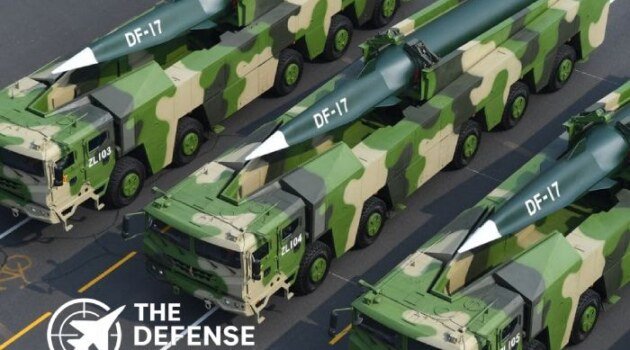
Russia’s Avangard — mounted atop modified SS-19 ICBMs — is the most-cited example, reportedly sustaining speeds between Mach 20 and Mach 27. China’s DF-ZF glide vehicle, carried by the DF-17 ballistic missile, entered PLA Rocket Force service and was publicly unveiled at a military parade in 2019.
Hypersonic Cruise Missiles (HCMs) and Scramjet Propulsion
The second category — and the more technically demanding one — is the Hypersonic Cruise Missile. Where an HGV coasts unpowered after booster separation, an HCM sustains hypersonic flight using an air-breathing engine. That engine is a scramjet: a Supersonic Combustion Ramjet.
A conventional jet engine uses rotating compressor blades to slow incoming air before combustion. A scramjet eliminates those moving parts entirely. Instead, it relies on the vehicle’s own forward speed to compress incoming air. At Mach 5 and above, air enters the engine intake at supersonic velocity, mixes with fuel — typically liquid hydrogen or a hydrocarbon — and ignites in a combustion chamber where airflow never slows below supersonic speeds. The resulting exhaust generates thrust. Defense researchers describe scramjets as elegant in concept but extraordinarily difficult in practice: fuel and air spend mere milliseconds together before exiting the engine, demanding ultra-precise injection and ignition timing at conditions that replicate a small controlled explosion on a repeating cycle at hypersonic velocity.
Because scramjets cannot generate thrust from a standing start, HCMs must first be accelerated to near-hypersonic speeds using a rocket booster before the air-breathing engine can ignite. Once active, however, a scramjet-powered missile can sustain its speed over longer distances than an HGV can glide.
Analyst Take: The scramjet’s fundamental limitation — it must be moving fast before it can start — is also the reason scramjet HCMs are operationally complex to deploy. They require launch platforms that can themselves reach supersonic speed, such as aircraft or naval vertical-launch systems with high-energy boosters. This creates an asymmetry: nations with robust fast-launch infrastructure (carrier-based aircraft, nuclear submarines) can field HCMs more flexibly, while nations relying on ground-based launch pads face longer reaction timelines. In practice, that distinction is reshaping how navies think about hypersonic strike range and survivability.
The Physics of Surviving Hypersonic Flight
At Mach 5 and above, aerodynamic heating becomes an existential engineering challenge. Air molecules striking the vehicle’s leading edges cannot dissipate heat fast enough, generating surface temperatures that can exceed 2,000°C (3,600°F) — hotter than many metals will withstand. Managing that thermal environment is one of the primary reasons hypersonic programs take decades and billions of dollars to mature.
Modern hypersonic weapons use ultra-high-temperature ceramics (UHTCs), carbon-carbon composites, and ablative coatings to survive reentry-like heating during sustained atmospheric flight. These same materials must simultaneously remain structurally stable under the immense aerodynamic loads generated by maneuvering at hypersonic velocity — forces that can exceed hundreds of G-equivalents on structural components.
The plasma sheath that forms around a hypersonic vehicle at peak velocity also creates a secondary problem: communications blackout. Ionized gas absorbs and reflects radio frequencies, temporarily cutting the missile off from GPS signals and uplink commands. Current programs are developing frequency-selective antenna designs and alternative mid-course guidance solutions — including inertial navigation with terminal sensor updates — to maintain accuracy through this blackout window.
Global Hypersonic Race: Status in 2026
Country System Type Speed Status (2026) Russia Avangard HGV Mach 20–27 Operational (ICBM-boosted) Russia Zircon (3M22) HCM (Scramjet) Mach 8–9 Operational (frigates/submarines) China DF-17 / DF-ZF HGV Mach 5–10 Operational (PLA Rocket Force) China YJ-21 HGV (anti-ship) Mach 6+ Operational (carrier-launched) China CJ-1000 HCM (Scramjet) ~Mach 6 Unveiled 2025; development phase United States Dark Eagle (LRHW) HGV Mach 5+ STRATCOM-authorized, Apr 2026 United States HACM HCM (Scramjet) Mach 5+ Targeted deployment FY2027 United States HAVOC (Ursa Major) HCM (Liquid rocket) Mach 5+ Debuted Feb 2026; multi-platform The United States: Playing Catch-Up With New Architecture
The U.S. spent much of the early 2020s absorbing costly program setbacks. The AGM-183A ARRW suffered multiple test failures before its cancellation in 2023. The Navy’s Conventional Prompt Strike (CPS) program, pairing a solid-rocket booster with a Common Hypersonic Glide Body (C-HGB), only achieved its first full success in June 2024, followed by a second successful test in December 2024. A joint Army-Navy test in March 2026 validated a shared booster architecture — a sign that Washington is finally moving from development to fielding.
In a significant command restructuring, a congressional report dated April 7, 2026 confirmed that Dark Eagle now operates under a direct chain from national leadership through USSTRATCOM — the same oversight framework used for nuclear systems — reflecting how seriously planners view the weapon’s strategic weight despite its conventional warhead. Each Dark Eagle battery fields eight missiles, though production remains constrained to an estimated one to two missiles per month, forcing strict target prioritization.
On the industrial side, Colorado-based Ursa Major debuted the HAVOC missile system in February 2026, a liquid-rocket-powered hypersonic weapon designed for multi-platform deployment including fighter aircraft, bombers, ground launchers, and even space-based delivery. The system’s ability to alter speed mid-flight and interface with a range of propulsion options signals a deliberate push toward modular, scalable hypersonic architecture.
China: Broadening the Threat Portfolio
Beijing’s hypersonic program is characterized by diversity and operational urgency. The DF-17 and its DF-ZF glide body are already assigned to the PLA Rocket Force as conventional strike tools targeting regional military infrastructure. The YJ-21 — a carrier-launched anti-ship hypersonic missile — adds a naval dimension, with analysts warning it directly threatens U.S. carrier strike groups operating in the Western Pacific.
In 2025, China unveiled the CJ-1000, a long-range scramjet-powered cruise missile believed capable of sustaining approximately Mach 6 across thousands of kilometers. Simultaneously, Beijing completed the JF-22 hypersonic wind tunnel in Huairou District — reportedly the fastest in the world, capable of simulating speeds up to Mach 30 — signaling long-term investment in next-generation aerodynamic research that will feed future hypersonic designs.
Russia: Operational Reality and Performance Questions
Russia maintains the longest operational hypersonic track record. The Avangard HGV entered service aboard UR-100N UTTH ICBMs and represents the most mature boost-glide system in any national inventory. The Zircon scramjet cruise missile was deployed aboard the Admiral Gorshkov frigate in 2023 and has reportedly been used in strikes on Ukrainian infrastructure in 2024. Western analysts note, however, that Russian performance claims are frequently overstated and that sanctions-driven component shortages have complicated production timelines.
Strategic Analysis: The hypersonic arms race is not simply a speed competition — it is fundamentally a contest over reaction time and deterrence stability. When a hypersonic missile can close on a high-value target in under ten minutes with no predictable trajectory, the decision window for political leadership compresses to near zero. This creates a dangerous structural pressure toward launch-on-warning postures and automated response doctrines. The April 2026 U.S. decision to place Dark Eagle under STRATCOM command — typically reserved for nuclear systems — reflects an acknowledgment that hypersonic conventional weapons have crossed into strategic deterrence territory, blurring the line between conventional and nuclear escalation in ways arms control frameworks have not yet addressed.
The Interception Problem: Why Defenses Are Struggling
Current missile defense architecture was designed around two known threat profiles: slow cruise missiles (which fly low and straight) and ballistic missiles (which arc through space on predictable paths). Hypersonic weapons confound both tracking paradigms simultaneously.
Ground-based radar networks have inherent horizon limitations — a hypersonic glide vehicle flying at 40–60 km altitude is invisible to surface radar until it is dangerously close to its target. Space-based infrared satellites can detect the rocket booster at launch but typically lose track once the glide vehicle separates and its thermal signature drops. Persistent tracking through the full flight envelope requires a proliferated low-Earth orbit sensor layer — exactly what the U.S. Space Development Agency is building, but which will not be fully operational until the late 2020s.
Even with continuous tracking, intercepting a maneuvering vehicle traveling at Mach 5–10 in the near-space corridor is geometrically brutal: an interceptor would require exceptional closing speed and prediction accuracy across a rapidly shrinking engagement window.
Emerging Propulsion: Solid-Fuel Ramjets and Multi-Mode Engines
Not all hypersonic development is centered on scramjets. GE Aerospace’s ATLAS program completed the first supersonic flight tests of a solid-fuel ramjet over Kennedy Space Center in 2025, mounted to an F-104 Starfighter. Engineers consider solid-fuel ramjets more practical for near-term tactical weapons because they eliminate the plumbing complexity of liquid-fuel systems while still providing the range and speed improvements over conventional solid-rocket missiles.
Combined-cycle engines — which integrate a turbine mode for low-speed operation with a scramjet or ramjet mode at high speed — represent the next frontier. These “turbine-based combined cycle” (TBCC) concepts could eventually allow hypersonic weapons to operate from conventional runways or slow-moving ships without requiring an initial rocket boost, dramatically broadening the operational options available to military planners.
FAQs
What is the minimum speed required for a missile to be classified as hypersonic?A missile must sustain speeds greater than Mach 5 — approximately 3,800 mph at sea level — to be classified as hypersonic. The critical distinction from mere high-speed weapons is the ability to maneuver at those speeds throughout the flight path, not just briefly exceed the threshold during a terminal dive.
How does a scramjet engine differ from a conventional jet engine?A conventional jet engine uses spinning compressor blades to slow and compress incoming air before combustion. A scramjet has no moving parts — it relies entirely on the vehicle’s forward speed to compress air, and combustion takes place in a supersonic airflow environment. This makes scramjets far simpler mechanically but requires the vehicle to already be traveling at near-hypersonic speeds before the engine can ignite.
Can existing missile defense systems intercept a hypersonic missile?Not reliably with current architecture. Ground-based radars cannot track hypersonic glide vehicles until they are very close to their targets due to Earth’s curvature and the vehicles’ low flight altitude. Space-based sensors lose track after booster separation. A new proliferated satellite sensor layer combined with directed-energy or kinetic interceptors specifically designed for the near-space corridor is the most credible near-term solution — but it remains years from full deployment.
What is the U.S. Dark Eagle, and why was it placed under STRATCOM command in 2026?The Dark Eagle, formally the Long Range Hypersonic Weapon (LRHW), is the U.S. Army’s first operational hypersonic boost-glide missile system. Despite carrying a conventional (non-nuclear) warhead, it was placed under USSTRATCOM command authority in April 2026 because its speed and global reach make it a strategic asset. The new command chain requires national-level authorization for every strike, aligning it with oversight protocols previously reserved for nuclear delivery systems.
Which country currently leads the hypersonic missile race?Russia and China currently lead in terms of operational deployed systems. Russia fields the Avangard HGV and the Zircon scramjet cruise missile; China operates the DF-17/DF-ZF and YJ-21. The United States has closed the operational gap significantly through 2025–2026, with Dark Eagle achieving STRATCOM authorization and multiple new programs accelerating toward deployment, but Washington is widely assessed as trailing Beijing and Moscow in sheer numbers of fielded hypersonic weapons.
The race between hypersonic missile speed and ballistic missile defense has become the defining arms competition of the 2020s — and U.S. strategists are watching closely, because the outcome could reshape deterrence across every major theater of war.
For decades, American ballistic missile defense (BMD) systems were architected around a predictable threat: missiles that arc through space on fixed, calculable trajectories. Intercept the arc, and you win. But adversaries studied that logic — and engineered around it. Today, China’s DF-17 hypersonic glide vehicle and Russia’s Avangard system maneuver unpredictably at speeds exceeding Mach 20, operating in an altitude band that existing sensors and interceptors were never designed to cover. The question facing the Pentagon, NATO partners, and U.S. allies in the Indo-Pacific is blunt: can the shield hold?
Specifications: Hypersonic Threats vs. BMD Systems
Specification Hypersonic Glide Vehicles
(e.g., DF-17 / Avangard)U.S. Ballistic Missile Defense
(GMD / THAAD / SM-3)Speed Mach 5–27 (varies by system) Interceptors: Mach 8–10+ Flight Altitude 25–100 km (near-space glide) GMD: 1,000+ km; THAAD: 40–150 km Maneuverability High — lateral, pull-up maneuvers Limited — fire-solution depends on predicted path Range 1,800–15,000+ km THAAD: ~200 km; GMD: intercontinental Radar Signature Small; plasma sheath disrupts radar Relies on early-warning satellites + ground radar Warhead Options Conventional / nuclear capable Hit-to-kill (kinetic); no explosive warhead Unit Cost (est.) $50–100M+ per missile SM-3: ~$24M; GBI: ~$75M per interceptor Reaction Window Minutes to impact from launch GMD: 30+ min lead time needed; THAAD: 5–8 min Service Entry DF-17: 2019; Avangard: 2019 GMD: 2004; THAAD: 2008; SM-3 IIA: 2018 Test Success Rate China/Russia: Classified GMD: ~55%; THAAD: ~100% (17/17 tests) Design & Technology: A Fundamental Mismatch
How Hypersonic Glide Vehicles Work
Hypersonic glide vehicles (HGVs) are launched atop ballistic missiles but separate before the terminal phase. Instead of following a predictable parabolic arc, they re-enter the atmosphere and glide at sustained hypersonic speeds — generating intense plasma that partially blinds radar. The DF-17’s warhead, designated the DF-ZF, reportedly pulls lateral maneuvers up to several Gs, making fire-control solutions exponentially harder to compute in real time.
How U.S. Ballistic Missile Defense Is Architected
The U.S. BMD architecture is layered. The Ground-Based Midcourse Defense (GMD) system — based at Fort Greely, Alaska — targets ICBMs in their midcourse phase, relying on long-range X-band radars and kill vehicles (EKVs) that collide with warheads at closing speeds above Mach 15. THAAD (Terminal High Altitude Area Defense) handles shorter-range threats in the terminal phase. Aegis SM-3 provides ship-based midcourse intercept capability and is the most mobile layer. The gap: none of these systems was designed to track and intercept a vehicle flying at 40–80 km altitude, maneuvering unpredictably at Mach 10+.
“You can’t intercept what you can’t track. Hypersonic glide vehicles exploit the seam between what our radars see and what our interceptors can reach.”
Firepower & Performance: Speed Is the Weapon
At Mach 20, the Russian Avangard travels roughly 6.8 kilometers per second. From a launch site in western Russia, it can reach the U.S. East Coast in under 15 minutes — far less than the 25–30 minutes a traditional ICBM requires. That compression of decision time is itself the weapon. It does not need to be nuclear to be destabilizing; a conventional HGV strike on a carrier strike group or command node collapses the window in which defensive responses — diplomatic, kinetic, or otherwise — can be organized.
U.S. BMD interceptors are fast, but the geometry is unforgiving. THAAD’s kill vehicle closes at approximately Mach 8. Against a target that maneuvers after radar track, the fire-control algorithm must predict where the threat will be at intercept — and HGVs are specifically designed to defeat that prediction.
Operational Range & Mobility
Range asymmetry compounds the problem. China’s DF-17, with a reported range of 1,800–2,500 km, can target U.S. bases in Guam, Japan, and South Korea from launch sites deep inside Chinese territory — well outside the effective defensive perimeter of sea-based SM-3 batteries. Avangard, boosted by Russia’s heavy RS-28 Sarmat ICBM, is essentially global in range.
On the U.S. side, THAAD batteries are mobile and deployable — as demonstrated by rotational deployments to South Korea and Guam — but they cover relatively small areas. Aegis-equipped destroyers offer flexibility, but repositioning ships takes hours to days. The Missile Defense Agency’s Next Generation Interceptor (NGI), currently in development, is intended to replace aging GMD kill vehicles, but it addresses ballistic threats primarily, not HGVs in their glide phase.
Combat Effectiveness: Real World & Doctrine
Hypersonic Offense BMD Defense Strengths in Combat Strengths in Defense Near-unpredictable terminal trajectory THAAD: 17/17 intercept test success Exploits “midcourse gap” in BMD layers Aegis SM-3: proven at sea, widely exported Compresses adversary decision time Layered architecture — multiple intercept opportunities Dual-use (conventional + nuclear ambiguity) Hypersonic Defense Architecture (HDA) in development China showcased the DF-17 at its 2019 National Day parade; Russia confirmed Avangard operational in December 2019. Neither system has been used in live combat — but Russia’s reported use of the Kinzhal quasi-ballistic missile in Ukraine has offered real-world data on radar evasion under combat conditions. The U.S. Missile Defense Agency acknowledged the HGV gap explicitly in its 2022 and 2024 budget requests, funding the Glide Phase Interceptor (GPI) program to address the near-space threat. The GPI aims for a first intercept demonstration in the late 2020s — a timeline that leaves a window of vulnerability. Cost & Export Value: Economics of the Arms Race
One overlooked dimension is cost asymmetry. A single GBI interceptor costs roughly $75 million. If an adversary saturates defenses with cheaper HGVs — or even conventional ballistic decoys — the economics of defense become unsustainable at scale. Each THAAD battery costs approximately $800 million; the missiles themselves run $11 million apiece. Against a $50–100 million HGV, the exchange ratio is problematic but not catastrophic — yet.
On the export front, Aegis and THAAD are critical U.S. alliance tools. Japan operates advanced Aegis destroyers and is integrating SM-3 Block IIA. South Korea hosts THAAD. Romania and Poland host Aegis Ashore sites. These deployments extend deterrence — but also extend the attack surface that adversary HGVs must be able to defeat, driving their development further. It is a feedback loop baked into the system. For more on U.S. BMD export posture.
Analysis: Where the Balance Sits in 2026
The honest assessment, drawn from open-source MDA documentation and think-tank analyses from CSIS and RAND, is that the United States currently lacks a fielded system capable of reliably intercepting a maneuvering HGV in its glide phase. The GPI program addresses this, but it will not reach operational capability before 2030 at the earliest. Space-based sensors — the Hypersonic and Ballistic Tracking Space Sensor (HBTSS) constellation, now in early orbit testing — are the most promising near-term enabler; they can track HGVs from above the plasma sheath that blinds ground radar.
That said, framing this purely as a “defense loses” story misses strategic context. Deterrence does not require perfect defense. It requires that any adversary calculate that a hypersonic first strike cannot disarm U.S. retaliatory capability entirely. The U.S. nuclear triad — submarines, ICBMs, and bombers — is survivable against a hypersonic strike, which limits the strategic utility of HGVs to coercive or conventional-strike scenarios. The more acute danger is conventional: hypersonic precision strikes on carriers, airfields, or command nodes in a Taiwan or Baltic crisis could create facts on the ground before a U.S. conventional response could organize.
Conclusion: Which System Has the Edge?
In a direct comparison of hypersonic missile speed vs. ballistic missile defense today, the offense holds a meaningful but not absolute advantage. Existing U.S. BMD layers were not designed for the HGV threat. The GPI and HBTSS programs are credible responses, but they are years away from operational readiness. In the near term, the U.S. relies on deterrence-by-punishment rather than deterrence-by-denial against hypersonic threats.
The edge shifts under different conditions. In a theater defense scenario — protecting a fixed asset like Guam — THAAD’s proven kill chain and potential GPI augmentation provide a meaningful layered defense by the early 2030s. In an ICBM-exchange scenario, Avangard’s glide phase still outpaces current GMD. The race is not over. But the United States is, for now, playing catch-up in the glide phase — and speed, in this contest, is everything.
While current U.S. Ballistic Missile Defense systems like THAAD and Aegis are highly effective against traditional arcs, they face a ‘capability gap’ against hypersonic glide vehicles. The Pentagon is currently closing this gap by developing the Glide Phase Interceptor (GPI) and satellite-based tracking layers.
FAQs
Can U.S. missile defense systems currently intercept hypersonic missiles?No current U.S. system is specifically fielded to intercept a maneuvering hypersonic glide vehicle in its glide phase. THAAD and GMD were designed for ballistic trajectories. The Glide Phase Interceptor (GPI), under MDA development, aims to close this gap but is not expected to reach operational status before 2030.
How fast are hypersonic missiles compared to traditional ballistic missiles?Traditional ICBMs re-enter at roughly Mach 20–23 at terminal phase, but follow predictable arcs. Hypersonic glide vehicles sustain speeds of Mach 5–27 across most of their flight and maneuver laterally — making speed and unpredictability a dual threat rather than speed alone.
What is the Glide Phase Interceptor and when will it be ready?The GPI is a Missile Defense Agency program to develop an interceptor capable of engaging HGVs during their extended glide phase, before terminal descent. It is being developed in partnership with Raytheon and Northrop Grumman. A first intercept flight test is targeted for the late 2020s, with initial operational capability potentially in the early 2030s.
Which countries pose the greatest hypersonic missile threat to the United States?China and Russia are the primary concerns. China has operationally deployed the DF-17 HGV and is developing additional hypersonic systems. Russia’s Avangard, boosted by the Sarmat ICBM, is declared operational.
PAC-3 MSE Aegis Integration Signals New U.S. Navy Air Defense Option
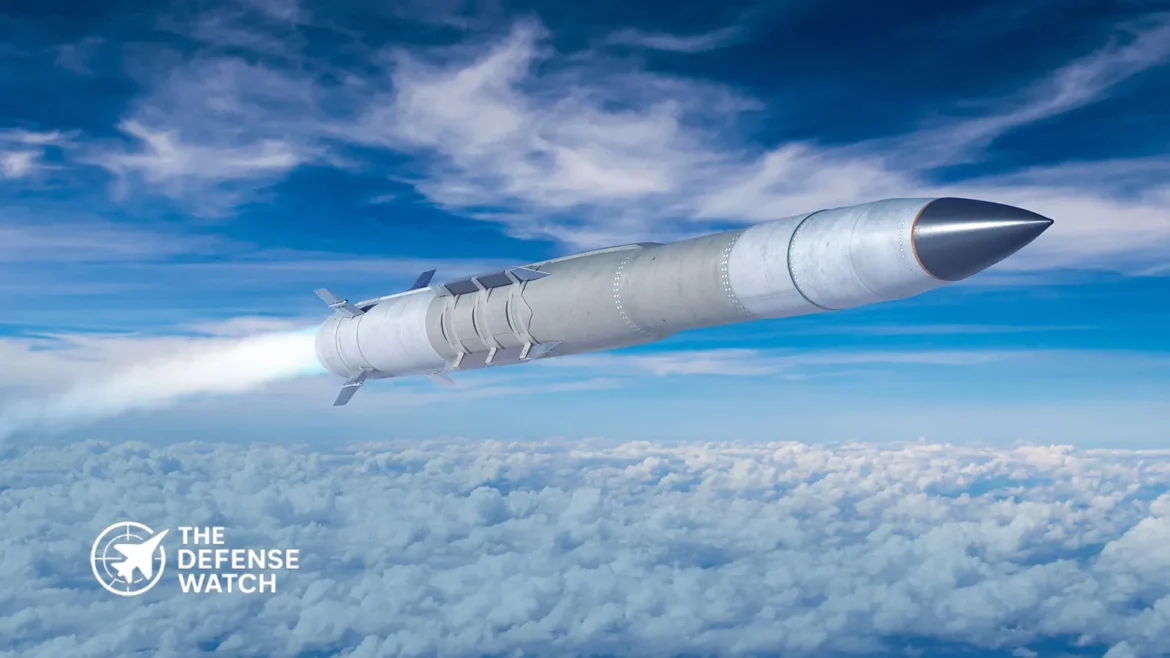
PAC-3 MSE Aegis integration is moving forward after Lockheed Martin announced on April 21 that it received a U.S. Navy contract to connect the Patriot Advanced Capability-3 Missile Segment Enhancement interceptor with the Aegis Combat System. The award represents a notable shift in U.S. missile defense planning by linking a combat-proven land-based interceptor with one of the world’s most widely deployed naval battle management systems.
KEY FACTS AT A GLANCE- Lockheed Martin received a U.S. Navy contract to integrate PAC-3 MSE with the Aegis Combat System.
- PAC-3 MSE is a hit-to-kill interceptor designed to defeat cruise missiles, aircraft, and tactical ballistic missiles.
- The move could strengthen layered naval and expeditionary missile defense in contested regions.
- Integration marks the first known effort to pair PAC-3 MSE with Aegis.
- The program may open new options for future U.S. and allied force protection architectures.
The Big Picture
U.S. forces are adapting to a threat environment defined by larger missile salvos, lower-flying cruise missiles, maneuvering ballistic threats, and growing pressure in the Indo-Pacific, Europe, and the Middle East. Traditional single-layer defense models are becoming less effective against mixed attacks that combine drones, cruise missiles, and ballistic systems.
Aegis-equipped warships already provide long-range air and missile defense using SM-series interceptors. Patriot batteries protect land forces and fixed sites. Combining elements of both systems reflects a broader Pentagon push toward integrated air and missile defense, sensor sharing, and interceptor flexibility.
What’s Happening
Lockheed Martin said the U.S. Navy selected the company to integrate PAC-3 MSE into Aegis for the first time. The effort will allow Aegis to control and employ the interceptor through its existing command-and-control architecture.
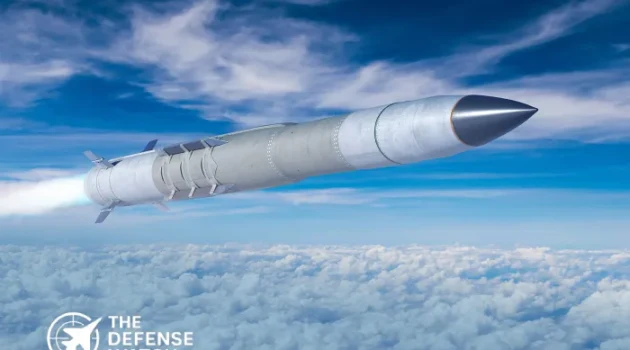
PAC-3 MSE is the latest Patriot family interceptor. It uses hit-to-kill technology, upgraded propulsion, and aerodynamic controls to improve reach, maneuverability, and lethality against incoming threats.
Aegis is deployed aboard U.S. Navy cruisers and destroyers, as well as Aegis Ashore sites and several allied fleets. The combat system is already central to U.S. and partner missile defense operations.
Why It Matters
This contract matters because interceptors are expensive, inventories are finite, and different threats require different tools. PAC-3 MSE Aegis integration could give commanders another engagement option between short-range point defense missiles and larger SM-family interceptors.
That flexibility may help preserve high-end interceptors for more demanding targets while using PAC-3 MSE where it offers a better cost-to-threat match.
It also reflects a shift toward software-defined combat systems. Modern missile defense increasingly depends on whether launchers, radars, and interceptors can communicate across platforms, not just on raw missile performance.
Strategic Implications
A layered naval defense network improves readiness in several ways.
First, forward-deployed ships could gain more engagement depth against saturation attacks.
Second, expeditionary forces ashore could benefit if naval and land batteries share common engagement logic.
Third, allied navies operating Aegis systems may eventually seek similar options, especially nations already invested in Patriot programs.
For the United States, this supports distributed operations where forces are spread across wider areas but remain linked through shared sensors and weapons.
Competitor View
China and Russia closely monitor U.S. integrated air and missile defense progress. Both states have invested heavily in complex strike systems designed to overwhelm defenses through speed, numbers, and trajectory diversity.
A successful PAC-3 MSE Aegis integration would suggest Washington is expanding not just missile inventories, but also the number of ways interceptors can be employed. That complicates adversary attack planning and can strengthen deterrence without deploying entirely new missile families.
Iran and regional actors may also note the trend, particularly after recent combat operations highlighted the importance of defending bases, ports, and naval assets from missile and drone attacks.
What To Watch Next
Key milestones will likely include:
- Software integration and systems engineering work
- Fire control validation between Aegis and PAC-3 MSE
- Live-fire testing against representative targets
- Decisions on launcher compatibility and deployment concepts
- Potential follow-on procurement by U.S. or allied users
The most important indicator will be whether the Navy pursues operational fielding after testing.
Capability Gap
Current missile defense networks often separate naval and land interceptors into different ecosystems. That can limit flexibility during fast-moving operations.
PAC-3 MSE Aegis integration aims to close that gap by enabling one command system to access more interceptors. Still, limitations remain. PAC-3 MSE was originally designed for Patriot architecture, so launcher adaptation, magazine capacity, and cost per round will influence operational value.
The Bottom Line
The contract shows the U.S. military is prioritizing adaptable layered defense networks that connect proven weapons across services rather than relying only on new standalone systems.
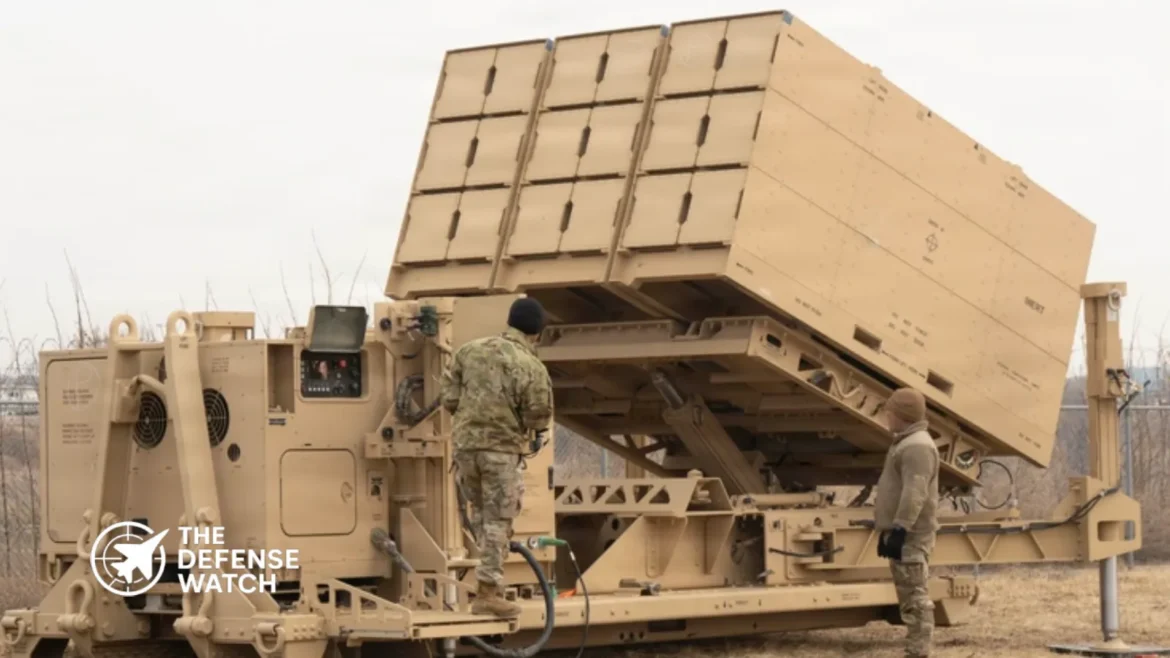
Raytheon LTAMDS Contract Expands Army Air Defense Modernization
The Raytheon LTAMDS contract marks another major step in the U.S. Army’s effort to modernize air and missile defense forces against increasingly advanced threats, including cruise missiles, ballistic missiles, drones, and saturation attacks.
The Department of Defense announced that Raytheon Missiles and Defense, based in Andover, Massachusetts, was awarded a $904.6 million modification to an existing production contract. The funding covers low-rate initial production of five Lower Tier Air and Missile Defense Sensor (LTAMDS) units, plus six spare systems, along with production hardware, software integration, documentation, and related support services.
Following the latest award, the total contract ceiling has grown to $5.36 billion, highlighting the scale and long-term importance of the program.
¦ KEY FACTS AT A GLANCE- Raytheon Missiles and Defense received a $904.6 million contract modification for LTAMDS production.
- The award supports five LTAMDS units and six spare systems for the U.S. Army.
- Total cumulative contract value now stands at $5.36 billion.
- $725.9 million in Fiscal Year 2026 Army missile procurement funds were obligated immediately.
- Work will be completed in Andover, Massachusetts, by Aug. 29, 2031.
What Is LTAMDS And Why It Matters
LTAMDS is the Army’s next-generation radar designed to replace or complement legacy Patriot radar systems. Unlike older radars with a narrower field of view, LTAMDS delivers 360-degree coverage, allowing forces to detect and track threats approaching from multiple directions.
That capability is increasingly important as adversaries field maneuvering missiles, low-flying drones, and swarm tactics intended to exploit radar blind spots.
Raytheon developed LTAMDS to integrate into the Army’s broader Integrated Air and Missile Defense (IAMD) architecture. In practical terms, that means the radar can feed targeting and tracking data to interceptors and command networks faster than older standalone systems.
Why This Contract Is Significant
This latest Raytheon LTAMDS contract is not just another procurement notice. It signals that the Army is moving deeper into fielding mode after years of development and testing.
Low-rate initial production typically means the military is transitioning from prototypes to operational systems while refining manufacturing processes. Ordering five additional units suggests confidence in the platform and growing urgency to deploy it.
That matters because the U.S. military has placed renewed emphasis on air defense after observing missile and drone warfare in Ukraine, the Middle East, and the Indo-Pacific.
Industrial Base And Production Outlook
Work will take place in Andover, Massachusetts, one of Raytheon’s core missile defense manufacturing hubs, with completion scheduled for Aug. 29, 2031.
The long timeline reflects the complexity of radar production, which includes advanced gallium nitride electronics, sensor arrays, software integration, and military qualification testing.
For the U.S. defense industrial base, multi-year radar production helps sustain skilled engineering and manufacturing jobs while preserving capacity for future missile defense programs.
Funding Details
The Army obligated $725.9 million in Fiscal Year 2026 Missile Procurement funds at the time of award. That immediate funding commitment suggests LTAMDS remains a protected modernization priority even amid broader Pentagon budget pressure.
With one bid received through an online solicitation, the contract also reflects the specialized nature of advanced radar production, where only a limited number of firms can meet requirements at scale.
Strategic Outlook
The LTAMDS missile defense system is expected to become a core element of U.S. Army layered defense networks over the next decade. As threats evolve, sensors often determine battlefield success before interceptors are launched.
That makes radar modernization one of the most critical, though less visible, parts of military readiness.
For Raytheon, the new award strengthens its position as a leading supplier of U.S. integrated air and missile defense systems. For the Army, it accelerates the shift toward faster, wider, and more survivable sensing capabilities.
Northrop Grumman Glide Phase Interceptor Program Accelerates
The Glide Phase Interceptor program received a major boost as the Missile Defense Agency awarded Northrop Grumman a $475.3 million agreement modification to accelerate development of its interceptor concept.
The award increases the total value of the existing Prototype Project Other Transaction Agreement from $832.7 million to more than $1.308 billion. The effort focuses on refining and speeding up the design of an interceptor capable of defeating hypersonic glide vehicles during the most challenging portion of their flight.
The work is managed by MDA in Dahlgren, Virginia, with an expected completion date of June 2028.
¦ KEY FACTS AT A GLANCE- Northrop Grumman awarded a $475,297,523 modification under an active Other Transaction Agreement.
- Total Glide Phase Interceptor agreement value rises to $1.308 billion.
- Work supports accelerated development of the Glide Phase Interceptor design concept.
- Funding includes $174.1 million obligated from Section 20003 of Public Law 119-21.
- Estimated completion date is June 2028, managed by MDA in Dahlgren, Virginia.
Why The Glide Phase Matters In Hypersonic Defense
Hypersonic glide vehicles travel at extreme speeds and maneuver unpredictably within the atmosphere. Traditional missile defense systems are optimized for ballistic trajectories, not for threats that skip and glide at lower altitudes.
This is where the Glide Phase Interceptor becomes critical.
Instead of attempting interception during boost phase or terminal phase, the interceptor targets the weapon during its glide phase, when it is still traveling at hypersonic speed but before it descends toward its target.
This window is short. Detection, tracking, discrimination, and engagement must happen in seconds. That requirement is driving new sensor networks, command systems, and interceptor technologies across the U.S. missile defense architecture.
Other Transaction Authority Speeds Development
The agreement operates under Other Transaction Authority, a contracting approach that allows the Pentagon to move faster than traditional acquisition programs.
Under 10 U.S. Code 4022, MDA can rapidly prototype advanced technologies with fewer regulatory delays. This approach is increasingly used for cutting edge systems such as hypersonic defense, space tracking, and directed energy.
For the Glide Phase Interceptor, speed is central. U.S. defense leaders have repeatedly warned that hypersonic weapons from peer competitors are advancing faster than traditional defenses.
Funding Signals Urgency From Congress
At the time of award, $174.1 million was obligated from Section 20003 of Public Law 119-21. This reflects direct congressional support for accelerating hypersonic defense solutions.
Lawmakers have pushed for faster fielding of systems that can counter emerging threats from nations such as China and Russia, both of which have demonstrated operational hypersonic glide vehicles.
This funding is not for theoretical research. It is aimed at turning the Glide Phase Interceptor into a deployable capability within the next few years.
Integration With Broader U.S. Missile Defense Architecture
The Glide Phase Interceptor is not a standalone system. It is expected to work alongside space based tracking sensors, Aegis destroyers, and future missile defense networks.
Programs such as the Hypersonic and Ballistic Tracking Space Sensor and upgrades to Aegis weapon systems are being aligned to support glide phase engagements.
This layered approach reflects a shift in U.S. missile defense thinking. Rather than relying on a single interception opportunity, the Pentagon is building multiple chances to defeat a hypersonic weapon across its flight path.
Northrop Grumman Role In Hypersonic Defense
Northrop Grumman has emerged as a key player in hypersonic defense technologies, including propulsion, sensors, and interceptor concepts.
Its work on the Glide Phase Interceptor builds on experience in missile systems, space tracking, and advanced propulsion. The accelerated schedule suggests MDA sees Northrop’s design as a strong candidate for eventual operational deployment.
The company is competing in a high priority area that is likely to see continued funding growth through the decade.
Strategic Impact
The Glide Phase Interceptor represents one of the first serious attempts by the United States to directly counter hypersonic glide vehicles in their most survivable flight regime.
If successful, it would close a major gap in U.S. missile defense.
For years, analysts have noted that hypersonic weapons were designed specifically to bypass existing missile shields. The Glide Phase Interceptor is designed specifically to remove that advantage.
The expanded funding and accelerated timeline show that this is no longer a long term research project. It is now an urgent operational requirement.
Dynetics IFPC Contract Advances U.S. Army Air Defense Modernization
The Indirect Fire Protection Capability (IFPC) Increment Two contract awarded to Dynetics marks a significant step in strengthening U.S. Army air defense against evolving threats such as drones, cruise missiles, and rockets.
The $617.1 million contract, issued by the U.S. Army, covers fiscal 2026 production requirements for IFPC Inc 2 systems. The award combines cost-plus-fixed-fee and firm-fixed-price elements, reflecting both development support and production scale-up.
Work will be executed under task orders, with locations and funding determined incrementally. The overall program is scheduled for completion by November 2029.
¦ KEY FACTS AT A GLANCE- Dynetics awarded $617.1 million contract for IFPC Increment Two system production.
- Contract includes launchers, training systems, logistics support, and engineering services.
- Work will be assigned per order, with completion expected by November 30, 2029.
- Procurement supports U.S. Army modernization of layered air and missile defense.
- Contract managed by :contentReference[oaicite:1]{index=1} at Redstone Arsenal.
What The IFPC Increment Two System Delivers
The IFPC Inc 2 program is designed to fill a critical gap in the Army’s layered air defense architecture, sitting between short-range air defense systems and high-end missile defense assets.
Under this contract, Dynetics will deliver:
- Launcher systems capable of intercepting aerial threats
- Retrofit prototype launchers for capability upgrades
- All-up-round missile magazines
- Soldier training systems and weight-representative devices
- Contractor logistics support and initial spare parts
- Engineering services to sustain and refine system performance
The system is expected to integrate interceptors such as the AIM-9X Sidewinder and future missiles, enabling flexible responses to a wide range of airborne threats.
Strategic Context: Countering Drones And Cruise Missiles
The IFPC Inc 2 contract reflects a broader shift in U.S. defense priorities. The Army is increasingly focused on countering low-cost, high-volume threats, including unmanned aerial systems and cruise missiles.
Recent conflicts have shown that traditional air defense systems can be strained by saturation attacks. IFPC aims to address this by providing:
- Rapid response against maneuvering targets
- Scalable defense against swarm attacks
- Integration with existing radar and command networks
This layered approach is central to the Army’s modernization strategy, particularly in contested environments where adversaries deploy mixed threat packages.
Acquisition Details And Industrial Base Implications
The contract was awarded through an online solicitation process, with no competing bids received. This underscores Dynetics’ position as a primary integrator for the IFPC Inc 2 system.
The program is managed by Army Contracting Command at Redstone Arsenal, Alabama, a hub for missile and air defense development.
From an industrial standpoint, the award supports:
- Sustained production capacity for air defense systems
- Expansion of supply chains tied to missile defense components
- Continued engineering development alongside production
The hybrid contract structure also allows flexibility as the system evolves, particularly as new interceptors and technologies are integrated.
Operational Impact And Future Outlook
Once fielded at scale, IFPC Inc 2 is expected to enhance protection for fixed and semi-fixed assets, including bases, logistics hubs, and critical infrastructure.
Its deployment aligns with the Army’s goal of creating a more resilient and adaptable air defense network, capable of responding to both near-peer and asymmetric threats.
Looking ahead, the program could serve as a foundation for future upgrades, including:
- Integration of directed energy systems
- Expanded interceptor options
- Enhanced sensor fusion and targeting capabilities
The Dynetics contract signals continued momentum in U.S. efforts to close capability gaps in short- to mid-range air defense.
Lockheed Martin Expands PAC-3 Missile Production Capacity
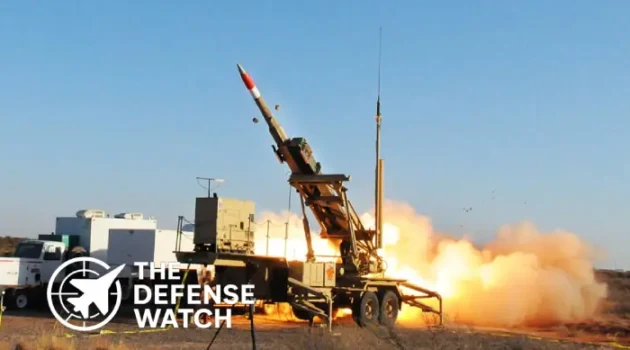
The PAC-3 missile contract awarded to Lockheed Martin marks one of the largest recent investments in U.S. and allied air and missile defense, reinforcing production of the Patriot Advanced Capability-3 Missile Segment Enhancement interceptor.
The $4.76 billion firm-fixed-price award covers full-scale production, engineering support, and lifecycle services. Work will continue across a distributed industrial base in states including Alabama, Florida, Texas, and Pennsylvania, with completion expected by June 30, 2030.
According to the U.S. Department of Defense contract announcement, the majority of funding comes from Foreign Military Sales customers, underscoring strong international demand for the PAC-3 MSE interceptor.
¦ KEY FACTS AT A GLANCE- :contentReference[oaicite:0]{index=0} awarded $4.76 billion contract for PAC-3 MSE missile production.
- Contract covers manufacturing, engineering, and support services through June 2030.
- $264.9 million funded by U.S. Army, $4.49 billion from Foreign Military Sales partners.
- Production spans multiple U.S. states, including Alabama, Florida, Texas, and Pennsylvania.
- Contract reflects growing demand for advanced missile defense against drones and ballistic threats.
Rising Global Demand Driving Production Scale
The scale of this PAC-3 missile contract reflects a clear shift in global defense priorities. Nations are accelerating investments in layered air and missile defense systems as threats from ballistic missiles, cruise missiles, and drones continue to expand.
The PAC-3 MSE interceptor is designed to defeat tactical ballistic missiles, cruise missiles, and advanced aerial threats using hit-to-kill technology. Unlike legacy proximity-based interceptors, the system relies on direct impact, improving precision and lethality.
Foreign Military Sales funding exceeding $4.4 billion suggests sustained procurement from U.S. allies in Europe, the Middle East, and the Indo-Pacific. Many of these regions are facing increased missile proliferation and evolving aerial threats, particularly from low-cost drones and maneuvering ballistic systems.
Industrial Base Spread Across Multiple States
The contract supports a wide network of manufacturing and engineering sites, including Huntsville, Alabama; Clearwater and Pinellas Park, Florida; Grand Prairie, Texas; and Archbald, Pennsylvania, among others.
This distributed production model strengthens supply chain resilience while maintaining surge capacity. It also aligns with broader Pentagon efforts to expand the U.S. defense industrial base following lessons learned from recent conflicts and supply chain disruptions.
From an industrial perspective, the PAC-3 missile contract sustains thousands of skilled jobs and reinforces specialized manufacturing capabilities tied to advanced guidance systems, propulsion, and interceptor assembly.
Strategic Importance Of PAC-3 MSE In Modern Warfare
The PAC-3 MSE has become a central element of U.S. and allied missile defense architectures. It integrates into the Patriot air defense system, providing terminal phase interception against high-speed threats.
Recent operational trends highlight the growing importance of systems like PAC-3. Conflicts in Eastern Europe and the Middle East have demonstrated the increasing use of ballistic missiles and drones in combined attack strategies. This has placed pressure on existing air defense networks and accelerated demand for advanced interceptors.
The PAC-3 missile contract directly supports this evolving operational environment. By expanding production capacity, the U.S. and its partners aim to ensure sufficient interceptor stockpiles to sustain prolonged engagements if required.
Foreign Military Sales Signal Allied Dependence
A notable aspect of the contract is the funding split. Only a small portion, roughly $264.9 million, is allocated from U.S. Army procurement funds, while the majority comes from allied nations through Foreign Military Sales.
This highlights how dependent partner nations have become on U.S.-produced missile defense systems. It also reflects interoperability priorities within NATO and allied frameworks, where standardized systems like Patriot allow for integrated air defense operations.
Countries acquiring PAC-3 MSE systems are not just buying hardware. They are integrating into a broader network of sensors, command systems, and joint operational doctrines led by the United States.
Long-Term Implications For Missile Defense Strategy
The contract signals a sustained commitment to kinetic intercept technologies, even as emerging solutions such as directed energy weapons and electronic warfare systems gain attention.
While future air defense may include lasers and AI-driven intercept solutions, the near-term reality remains centered on proven systems like PAC-3 MSE. These interceptors provide reliable, combat-tested capabilities against a wide range of threats.
At the same time, the size of the PAC-3 missile contract suggests planners anticipate continued high demand for interceptor-based defenses. This aligns with assessments from the Missile Defense Agency and other defense bodies that forecast increasing missile threats over the next decade.
Program Outlook Through 2030
With an estimated completion date in 2030, the contract ensures production continuity over the next several years. This long-term horizon provides stability for suppliers and allows for incremental upgrades to be integrated during the production cycle.
It also gives the U.S. and its allies time to expand layered defense architectures, combining PAC-3 MSE with systems such as THAAD and next-generation radar platforms.
As global security dynamics continue to shift, the PAC-3 missile contract positions Lockheed Martin and its partners at the center of a growing missile defense market.
Israel Accelerates Arrow Interceptor Production To Reinforce Missile Defense
Israel’s decision to accelerate Arrow interceptor production marks a significant expansion of its missile defense posture, as the country adapts to evolving ballistic missile threats across the Middle East.
The Israeli Ministry of Defense has approved measures to increase manufacturing output of the Arrow interceptor family, a key component of the country’s layered air defense architecture. The move comes amid heightened regional tensions and a growing emphasis on preparedness for sustained, high-intensity conflict.
According to official statements and defense industry reporting, the acceleration effort focuses on boosting inventory levels and ensuring rapid replenishment capacity. This reflects lessons learned from recent conflicts, where high interceptor consumption rates have underscored the importance of industrial scalability.
¦ KEY FACTS AT A GLANCE- Israel approved accelerated production of Arrow missile interceptors to strengthen national air defense capacity.
- The decision reflects growing concerns over ballistic missile threats from Iran and regional actors.
- Arrow systems are designed to intercept long-range ballistic missiles outside the atmosphere.
- The move aims to ensure sustained operational readiness during prolonged high-intensity conflict scenarios.
- The program is jointly developed with U.S. support, reinforcing strategic defense cooperation.
Strategic Response To Expanding Missile Threats
The Arrow interceptor system is specifically designed to counter long-range ballistic missiles, including threats that travel outside the Earth’s atmosphere before reentry. This capability places it at the top tier of Israel’s multi-layered defense network, complementing systems like David’s Sling and Iron Dome.
The decision to expand Arrow production is widely viewed as a response to Iran’s advancing missile capabilities. Tehran has continued to develop and field increasingly sophisticated ballistic systems, including longer-range and more precise variants. These developments have shifted regional threat calculations, prompting Israel to prioritize strategic missile defense.
Defense analysts note that interceptor availability is as critical as system capability. In a prolonged conflict scenario, even advanced systems can face operational strain if interceptor stockpiles are insufficient. By accelerating production, Israel is aiming to mitigate this risk and maintain sustained defensive coverage.
Industrial Surge And U.S. Cooperation
The Arrow program is a joint initiative between Israel and the United States, with significant funding and technological collaboration from Washington. This partnership has enabled continuous upgrades to the system, including improvements in interception range, accuracy, and reliability.
Accelerating production will likely involve expanded industrial activity across Israel’s defense sector, particularly among key contractors responsible for missile manufacturing and system integration. While specific production figures have not been disclosed, the emphasis is clearly on increasing throughput and reducing delivery timelines.
From a strategic perspective, the move also aligns with broader U.S. concerns about missile proliferation in the Middle East. Strengthening allied missile defense capabilities is seen as a critical element of regional stability, particularly in deterring escalation.
Operational Implications For Future Conflicts
The expansion of Arrow interceptor production carries direct operational implications. In a high-threat environment, such as a multi-front conflict involving ballistic missile salvos, the ability to sustain interception rates becomes decisive.
Recent conflicts have demonstrated that missile defense systems can be overwhelmed if faced with large-scale, coordinated attacks. By increasing interceptor availability, Israel aims to maintain a credible defense against saturation tactics.
Additionally, the move signals a shift toward long-duration readiness. Rather than preparing for short, limited engagements, Israel is positioning its defense infrastructure for extended operations, where logistics and supply chains play a central role.
This approach reflects a broader trend in modern warfare, where industrial capacity and resilience are increasingly recognized as key components of military power.
Broader Regional And Strategic Context
The acceleration of Arrow interceptor production comes at a time of intensifying geopolitical competition in the Middle East. Iran’s missile development, combined with the proliferation of missile and drone technologies among non-state actors, has created a complex threat environment.
Israel’s response highlights the importance of layered defense systems capable of addressing a wide spectrum of threats, from short-range rockets to intercontinental ballistic missiles. The Arrow system, as the upper layer, plays a critical role in this architecture.
At the same time, the move underscores the growing importance of defense industrial policy. Ensuring rapid production and replenishment is no longer a secondary consideration, but a central element of national security planning.
Pentagon Bolsters PAC-3 Seeker Production With New Boeing Framework
The Pentagon and Boeing agreed on a framework to triple PAC-3 seeker production capacity, a key step in expanding the supply chain for Patriot Advanced Capability-3 Missile Segment Enhancement interceptors and reinforcing U.S. air defense production lines.
(adsbygoogle = window.adsbygoogle || []).push({});¦ KEY FACTS AT A GLANCE- The Pentagon and Boeing agreed on a seven year framework to triple PAC 3 MSE seeker production capacity.
- Boeing will expand output at its Huntsville, Alabama production facility.
- The move supports increased Patriot interceptor production for U.S. and allied forces.
- Boeing invested over 200 million dollars in production expansion since 2024.
- Tripled seeker output removes a key bottleneck in missile defense manufacturing.
The Big Picture
The PAC-3 system forms a central layer of U.S. and allied air and missile defense, designed to intercept ballistic missiles, hypersonic threats, cruise missiles, and hostile aircraft. The interceptors rely on a guidance seeker built by Boeing to acquire, track, and engage targets with high precision. The new seven-year framework builds on existing multiyear deals aimed at scaling production of both the seeker and the complete PAC-3 interceptor round, an effort that has gained urgency amid sustained operational use and global demand.
This agreement aligns with Defense Department initiatives to reinforce domestic defense manufacturing under what officials describe as an “Arsenal of Freedom” strategy, emphasizing rapid scaling, supply chain resilience, and direct engagement with critical suppliers rather than traditional prime-only contract routes.
What’s Happening
The Defense Department entered into a seven-year framework agreement with Boeing to triple production capacity for the PAC-3 MSE seeker, the component that enables Patriot interceptors to detect and engage threats. Work will begin immediately at Boeing’s production site in Huntsville, Alabama, where the company has already invested more than $200 million since 2024 to expand facilities and readiness.
Lockheed Martin remains the prime contractor for the PAC-3 interceptor round. A parallel agreement signed earlier this year aims to boost annual production of PAC-3 interceptors from roughly 600 to about 2,000 units by the end of the decade.
Officials note the framework will enable Boeing to scale output more rapidly and provide a basis for negotiating a formal multiyear production contract later in 2026.
Why It Matters
Air and missile defense interceptors such as the PAC-3 MSE are among the most costly and complex munitions in the U.S. arsenal. Ensuring a steady, scalable supply chain for the seekers that power these interceptors matters for both readiness and cost-effectiveness. Historical production bottlenecks at the seeker level have constrained overall interceptor output, even as demand rises due to heightened global security challenges.
Expanding seeker production capacity addresses a key operational chokepoint in Patriot supply chains, enabling the Army and allied partners to sustain higher production rates without interruption. The Pentagon’s approach reflects a shift away from prime-centric procurement toward direct partnerships with essential subsystem suppliers.
Strategic Implications
For U.S. military planners, boosting PAC-3 seeker capacity supports broader efforts to rebuild and expand missile defense stockpiles that were drawn down by recent crises and high operational tempo. A more resilient production base reduces reliance on small inventories and helps deter adversaries by signaling the ability to sustain long-term defense operations.
Allied nations that operate Patriot systems are likely to benefit from expanded production, improving collective air defense coverage in Europe, the Middle East, and the Indo-Pacific. A more robust supply chain also strengthens cooperation through Foreign Military Sales and shared defense planning.
Competitor View
Competitor states such as Russia and China closely monitor U.S. moves to expand air and missile defense production. A sustained increase in PAC-3 outputs complicates potential adversary planning by bolstering deterrent capabilities and reducing vulnerabilities associated with interceptor shortages. At the same time, competitors are investing in advanced offensive capabilities, including long-range strike and hypersonic weapons, which will continue to pressure defenders to innovate.
What To Watch Next
Observers should track the Pentagon’s negotiation toward a formal multiyear contract with Boeing, expected later in 2026. Congressional appropriations will influence the pace and scale of production beyond the framework. Continued coordination between Boeing and Lockheed Martin to synchronize seeker and interceptor assembly lines will also be key to meeting planned output goals.
Capability Gap
This effort seeks to close a long-standing supply chain gap in missile defense manufacturing. Historically, seeker shortages have limited the ability to scale interceptors proportionally to demand, a challenge that became acute with increased operational use in recent conflicts. Tripling seeker production capacity aims to align guidance component supply with interceptor assembly goals.
The Bottom Line
By tripling PAC-3 seeker production capacity, the Pentagon and Boeing are strengthening the U.S. air defense industrial base and enhancing long-term readiness to counter advanced aerial threats.