

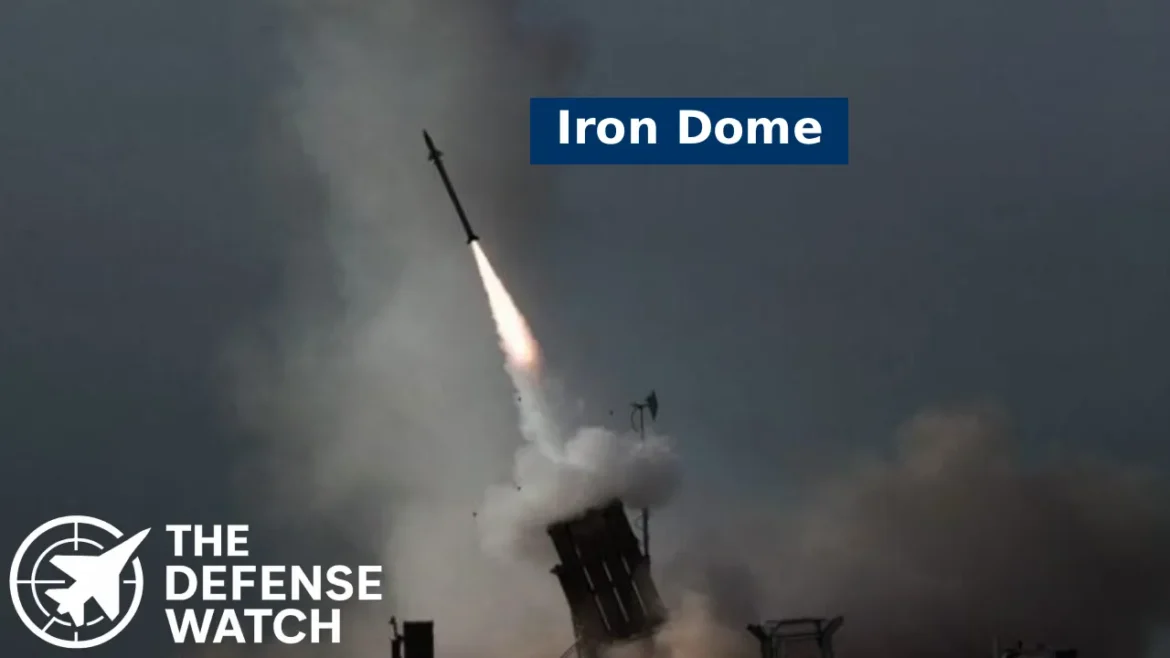
Jerusalem — Israel is rapidly scaling up production of its Iron Dome missile defense system utilizing billions of dollars in U.S. aid, the Israeli Defense Ministry announced on Nov. 20, 2025. The move comes amid heightened security concerns and the need to replenish interceptor stockpiles that were heavily used over the past two years.
Background: A Strategic Surge in Air-Defense Funding
The acceleration in Iron Dome production is being financed through a special U.S. aid package approved by the U.S. Congress in April 2024, totaling $8.7 billion. Of that amount, $5.2 billion is earmarked specifically for strengthening Israel’s air- and missile-defense capabilities — including systems like Iron Dome, David’s Sling, and the emerging Iron Beam laser system.
This is not the first time Israel has tapped into U.S. funds for Iron Dome production. Earlier in January 2025, the Defense Ministry signed a contract with Rafael Advanced Defense Systems to boost serial production of Iron Dome interceptors.
What’s Driving the Acceleration
Officials in Jerusalem pointed to the intensive use of Iron Dome interceptors during the two-year “Iron Swords” war, when thousands of rockets were launched at Israel from Gaza and Lebanon. They noted that replenishing these missile stocks is a top priority to ensure readiness for potential future conflicts.
The expanded contract with Rafael reflects this urgency. The Israeli Ministry of Defense (IMOD) said that the procurement is part of a broader push to reinforce air-defense infrastructure — not only for Iron Dome but also for other systems in its multi-layered architecture, such as David’s Sling and the high-powered Iron Beam.
Rafael leads production, working in coordination with ELTA Systems (an Israel Aerospace Industries unit) and mPrest Systems. Meanwhile, U.S. involvement has deepened: a significant portion of the manufacturing is now taking place in the United States through co-production agreements.
Official Statements and Contract Details
According to the Israeli Defense Ministry’s press release, the production expansion will include both interceptor missiles and the test infrastructure required for sustained output.
In January’s signing ceremony, IMOD’s then–Director General, Maj. Gen. (res.) Eyal Zamir, characterized the boost in Iron Dome manufacturing as “a central component in an unprecedented scope of effort … for force build-up and strengthening while fighting.” Meanwhile, Rafael’s CEO Yoav Tourgeman expressed confidence in the enduring value of both Iron Dome and David’s Sling, pledging commitment to future developments.
Strategic and Policy Implications
Experts see several key implications in this accelerated production:
- Stockpile Restoration and Deterrence: The rapid build-up ensures that Israel’s Iron Dome interceptor inventory can recover from intensive wartime use, enhancing strategic deterrence.
- Industrial Integration: The U.S.-Israel co-production model strengthens bilateral industrial ties. Under the agreement, a larger share of Iron Dome component manufacturing has shifted to U.S. firms — a requirement tied to the aid package.
- Layered Defense Future: The funding supports not just traditional interceptors, but also the maturation of newer technologies like the Iron Beam directed-energy system, which may provide a cost-efficient complement to missile-based layers.
- Geopolitical Signaling: The move underlines the depth of the U.S.–Israel strategic partnership, particularly in air defense — a critical area as regional threats evolve.
What’s Next
- Production Pace: With funding secured, the Ministry of Defense will likely continue to monitor production performance to ensure that interceptor build capacity meets projected demand.
- Deployment Scaling: Israel may deploy more Iron Dome batteries or increase readiness across its territories to match perceived threat trajectories.
- Technological Advancement: The co-investment in Iron Beam could lead to accelerated deployment of the laser-based system, potentially starting in 2026, according to Israeli officials.
- Export Opportunities: Given rising global interest, particularly in Europe, Israel may explore export paths for its Iron Dome technology, potentially leveraging U.S.-supported capacity to meet demand.


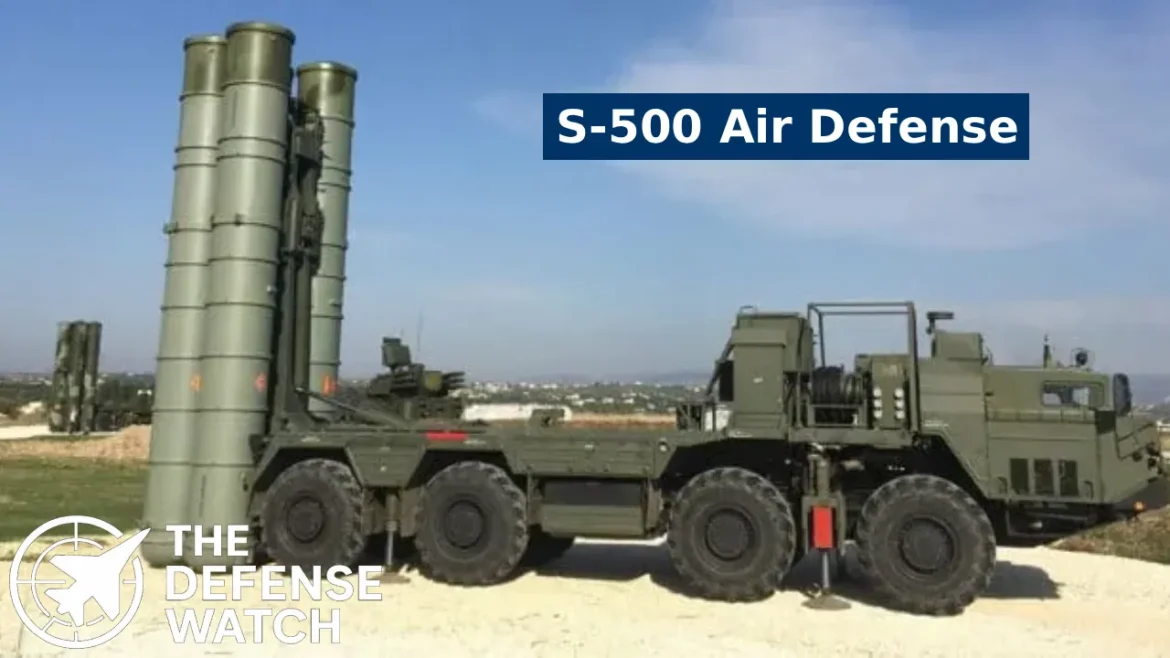
What Is Happening: Russia’s S-500 Threat to U.S. Stealth Jets
Russia is promoting its S-500 “Prometheus” air-defense system as capable of targeting U.S. fifth-generation stealth aircraft like the F-22 Raptor and F-35 Lightning II, according to multiple Russian defense sources and open-source defense reporting.
Authorities claim the S-500 can engage targets at ranges up to 600 km and altitudes up to 200 km, putting it in a new class of “hybrid” air-and-space defense.
Background: Why the S-500 Matters
The S-500, developed by Almaz-Antey, is viewed by Russian officials as a key pillar in their next-generation layered air defense architecture — sitting above systems like the S-400 and alongside emerging systems such as the A-235 ABM.
Moscow contends that the S-500 bridges tactical air defense and strategic missile defense: it’s designed to counter not just aircraft, but hypersonic missiles, ballistic warheads, and even low Earth orbit satellites.
Its radar suite is a multi-band architecture, which Moscow argues gives S-500 the ability to detect and track very low-observable stealth targets.
Key Features & Claimed Capabilities
Radar and Tracking Systems
- The S-500 reportedly uses a combination of 91N6A(M) S-band, 96L6-TsP C-band, 76T6 multimode, and 77T6 ABM engagement radars.
- These radars operate in multiple frequency bands (L-, S-, and X-band), which proponents say helps in detecting stealth aircraft optimized to evade narrower-band radars.
- According to some reports, these radars can detect ballistic targets up to 2,000 km away, and aerodynamic (aircraft) threats up to 800 km.
Interceptors and Engagement
- For air defense roles, the S-500 is said to employ 40N6M long-range interceptor missiles.
- For ballistic or hypersonic threats, it reportedly uses kinetic 77N6-N and 77N6-N1 missiles, capable of “hit-to-kill” interception.
- Russia claims it can engage up to 10 targets simultaneously, with a very fast reaction time (~3–4 seconds).
- The engagement ceiling is claimed to be around 200 km, which would allow the system to intercept threats in near-space.
Mobility & Deployment
- The S-500 is mobile — its radar and launch units are mounted on wheeled chassis, allowing redeployment.
- It is reportedly being integrated into Russia’s existing air defense mix, working alongside S-400, S-350, and Pantsir systems.
- According to some Russian analysts, S-500 units have been deployed to strategically critical locations, including Crimea.
Expert Analysis & Policy Implications
Technical Credibility & Challenges
- While Moscow’s claims are ambitious, independent verification of the S-500’s full performance (especially against stealth aircraft) remains limited.
- Analysts note that detecting stealth is one challenge; achieving a fire-control solution and intercepting such targets is a separate, technically difficult step.
- Hypersonic and ballistic intercept capabilities are central to the system’s appeal. The 77N6 series missiles, if they perform as claimed, would represent a significant leap in Russia’s ability to engage high-speed warheads.
- Some analysts are cautious: while the system may be theoretically capable, operational readiness, production scale, and real-world performance remain open questions.
Strategic Impact & Geopolitical Considerations
- If the S-500 genuinely threatens F-22 and F-35 aircraft, it could complicate NATO planning, particularly for operations near or within range of deployed S-500 units.
- The claimed anti-satellite (ASAT) capability adds a space dimension to Russia’s air defense posture, raising concerns about the securitization of low Earth orbit, especially for ISR and comms satellites.
- For countries that consider buying advanced Russian air defenses (e.g., India), the S-500 could be a force multiplier — but its “game-changing” status depends on whether its high-end claims hold in practice.
- From a policy perspective, even if S-500’s full potential is not yet realized, its perception as a “stealth killer” could be leveraged for deterrence and strategic signaling.
What to Watch Next
- Deployment Scale: How many S-500 regiments Russia will operationalize, and where.
- Export Prospects: Which countries may acquire S-500 and what conditions would apply.
- Operational Tests: Any publicized live-fire tests targeting stealth or hypersonic targets.
- Countermeasures: How NATO and U.S. defense planners adapt to the S-500 threat, possibly via tactics, electronic warfare, or new platforms.
Conclusion
Russia’s S-500 “Prometheus” system represents a bold claim in modern air defense: long-range engagement, multispectral radar, and the ability to threaten fifth-generation stealth fighters like the F-22 and F-35. While many of these claims come from Moscow or Russian-aligned defense outlets, the system’s development underscores how air defense is evolving — merging anti-aircraft, ABM, and space-defense roles. Whether the S-500 fulfills its promised “stealth killer” reputation will depend on further testing, deployment, and real-world performance.

The Race for Hypersonic Speed
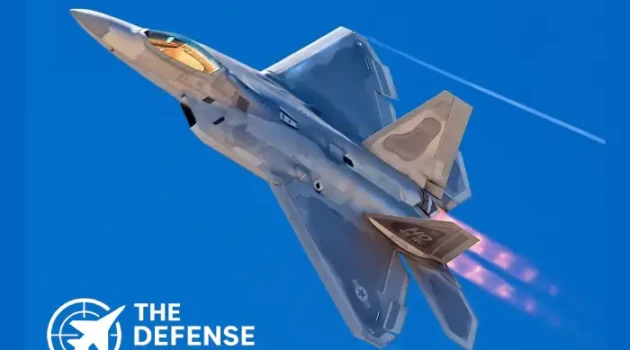
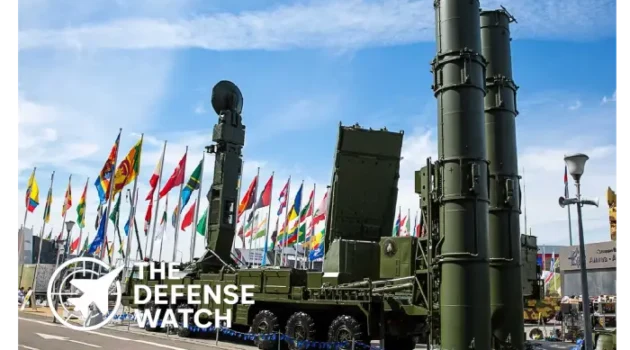
Hypersonic missiles—defined by their ability to sustain hypersonic speed beyond Mach 5—have become one of the most disruptive weapon technologies of the decade. As the U.S. expands a suite of hypersonic missile programs, from glide vehicles to air-breathing cruise designs, Washington aims to strengthen deterrence in an era shaped by rapid advances in hypersonic technology and great-power competition. This article examines how hypersonic weapons achieve such extraordinary velocity, why they are difficult to intercept, and the current state of U.S. hypersonic missile development.
What Defines Hypersonic Speed?
Hypersonic speed begins at Mach 5, or roughly 3,800 miles per hour. At this velocity, airflow behaves differently:
- Air molecules ionize
- Surfaces face extreme thermal stress
- Standard aerodynamic models no longer apply
Because of these conditions, creating a controllable hypersonic weapon requires specialized materials, engines, guidance software, and real-time thermal management.
How Hypersonic Missiles Achieve Hypersonic Velocity
Hypersonic missiles typically fall into two categories—air-breathing hypersonic cruise missiles and hypersonic boost-glide vehicles. Both reach extreme velocity, but through different methods.
Boost-Glide: The Most Mature U.S. Hypersonic Path
A boost-glide hypersonic weapon uses a rocket booster to ascend into the upper atmosphere before releasing a glide body that coasts at hypersonic speed toward its target. Key elements:
- A ballistic-class launch phase
- High-altitude glide
- Unpredictable, non-ballistic maneuvering
This maneuverability is what complicates traditional missile defense systems. The U.S. Army and Navy’s Common Hypersonic Glide Body (C-HGB) is the foundation of both services’ future hypersonic strike capability.
Scramjet Engines: Air-Breathing Hypersonic Cruise Missiles
Unlike boost-glide vehicles, air-breathing hypersonic missiles rely on supersonic combustion ramjet (scramjet) engines. Scramjets compress incoming air at supersonic speeds, allowing combustion without traditional rotating turbines.
This enables a smaller, lighter missile with persistent maneuverability within the atmosphere.
The U.S. Air Force has tested several scramjet designs, including:
- Hypersonic Air-breathing Weapon Concept (HAWC)
- Hypersonic Attack Cruise Missile (HACM)
These programs represent America’s push for air-launched, fast-reaction hypersonic strike options.
The Science Behind Hypersonic Flight
Traveling at hypersonic speed generates friction so intense that the missile’s exterior can reach temperatures exceeding 3,500°F (1,925°C). Engineers combat this with:
Thermal-Resistant Materials
- Heat-resistant carbon composites
- Ceramic matrix structures
- Ablative coatings that shed surface layers to cool the body
Precision Guidance Under Extreme Conditions
Hypersonic flight interferes with radio communication and GPS reception. Guidance systems must function despite:
- Plasma buildup
- Structural vibration
- Rapid temperature swings
The U.S. invests heavily in advanced seekers and resilient satellite links for precision at long ranges.
Inside U.S. Hypersonic Missile Programs
The United States is simultaneously pursuing multiple offensive and defensive hypersonic systems.
U.S. Army – Long-Range Hypersonic Weapon (LRHW)
The LRHW uses the C-HGB glide body mounted on a mobile launcher.
- Range: Over 2,775 km (est.)
- Intended for long-range, time-sensitive targets
U.S. Navy – Conventional Prompt Strike (CPS)
The Navy’s CPS system will deploy the C-HGB aboard the Zumwalt-class destroyers first, followed by Virginia-class submarines.
Its sea-based deployment gives the U.S. global strike coverage with reduced warning time.
U.S. Air Force – HACM and ARRW
While the Air-Launched Rapid Response Weapon (ARRW) program faced setbacks, the HACM remains the Air Force’s lead air-breathing hypersonic system.
HACM integrates scramjet propulsion for long-range precision at hypersonic speed.
Why Hypersonic Weapons Challenge Modern Defense
The combination of speed, maneuverability, and unpredictable trajectories makes hypersonic missiles harder to detect and intercept compared to ballistic missiles.
Limits of Current Radar Systems
Hypersonic weapons can fly at lower altitudes, slipping beneath long-range missile defense radar coverage.
Interceptor Challenges
Current interceptors are optimized for predictable ballistic arcs—not maneuvering hypersonic glide vehicles.
The U.S. Missile Defense Agency is developing specialized sensors, tracking layers, and a future Glide Phase Interceptor (GPI) to counter emerging threats.
Strategic Impact and the Global Hypersonic Competition
The U.S., China, and Russia are all accelerating development, each seeing hypersonic missiles as tools for deterrence and power projection.
While China has advanced flight-test programs, the United States is now increasing funding and joint-service integration to catch up.
The Pentagon’s 2025 budget allocates billions to hypersonic strike and missile defense—illustrating Washington’s long-term commitment to operational deployment.
Analysis: What Comes Next in U.S. Hypersonic Technology
The next phase of U.S. hypersonic development centers on:
- Lower-cost production
- Longer-range precision targeting
- Better thermal protection
- High-fidelity flight sensors
- Integration across the Army, Navy, and Air Force
The U.S. defense industry believes that by the early 2030s, hypersonic missiles could become standard tools for long-range strike missions, much like cruise missiles today.
FAQs
Hypersonic speed begins at Mach 5—five times the speed of sound.
They maneuver unpredictably and fly at altitudes that challenge radar tracking.
As of 2025, the U.S. is still testing systems but rapidly moving toward initial deployment.
Glide vehicles use rocket boosters; scramjet missiles rely on air-breathing engines.

Lockheed Martin has formally unveiled its Golden Dome Missile Defense System, a next-generation homeland protection network designed to counter the accelerating threat of hypersonic weapons, long-range missiles, and autonomous drones. The debut, accompanied by a prototype demonstration video that quickly gained traction on X, marks a significant milestone in U.S. missile defense modernization efforts.
The Golden Dome Missile Defense System, positioned by Lockheed Martin as an integrated, multi-domain shield, aims to provide persistent surveillance, rapid threat evaluation, and precision intercept capabilities — all enabled by advanced artificial intelligence. The company described the system as “ready for immediate field experimentation,” signaling growing urgency in strengthening domestic air and missile defenses.
Background: Rising Threats Drive Need for New Shield
The unveiling comes amid mounting concern in Washington over the proliferation of hypersonic glide vehicles, long-range cruise missiles, and low-cost drone swarms. U.S. defense officials have repeatedly warned that current missile defense infrastructure, designed primarily around ballistic threats, may be insufficient against modern, maneuverable systems introduced by Russia, China, Iran, and North Korea.
As adversarial capabilities expand, the Pentagon has accelerated investment in AI-enabled detection, distributed sensor networks, and multi-layered interceptors capable of engaging targets across different altitudes and mission profiles. The Golden Dome Missile Defense System is Lockheed Martin’s latest entry into this emerging field.
AI Integration and Rapid Response at Core of Golden Dome
Lockheed Martin’s demonstration video — viewed thousands of times within hours — highlights several key elements of the Golden Dome Missile Defense System:
1. Multi-Domain Sensor Fusion
The system fuses data from space-based early warning constellations, ground-based radars, airborne sensors, and naval assets, creating a unified threat picture for operators.
2. AI-Driven Decision Support
According to Lockheed Martin engineers, embedded AI algorithms analyze threat trajectories, classify targets, and recommend optimal intercept solutions. The company states that AI reduces reaction time dramatically, an essential factor when countering hypersonic vehicles traveling more than Mach 5.
3. Interceptor Agility and Multi-Layer Engagement
The Golden Dome appears designed to integrate existing U.S. interceptors with new, agile kill vehicles capable of engaging fast-manoeuvring aerial threats at multiple ranges.
4. Distributed Architecture for National Coverage
Lockheed Martin suggests the system can be deployed as a nationwide grid or scaled to protect regional assets such as nuclear command-and-control centers, critical infrastructure, ports, and military bases.
A spokesperson for Lockheed Martin said the company is prepared to “support immediate government evaluation and testing” and emphasized that Golden Dome “uses existing industrial capacity” to accelerate deployment timelines.
Golden Dome Missile Defense System – Full Specifications
- Maximum Range: 160+ km
- Maximum Altitude: 25–30 km
- Radar Detection Range: 300+ km
- Missile Speed: Mach 4+
Defense Policy and Expert Reaction
Defense analysts note that the Golden Dome Missile Defense System aligns with broader U.S. missile defense trends, particularly the shift toward multi-layered architectures that integrate space assets, artificial intelligence, and rapid-launch interceptors. The Pentagon’s 2024 Missile Defense Review emphasized the need for “persistent domain awareness” and “AI-enabled battle management,” both reflected in the Golden Dome’s design.
Dr. Robert Hayes, a missile defense specialist at the Atlantic Strategic Studies Center, said the system’s debut “signals industry recognition that the next phase of homeland defense must be faster, more automated, and more flexible than previous generations.”
He added that the system’s AI decision framework “may ultimately reduce human-in-the-loop delays” — a controversial but increasingly common development in modern defense systems.
What Comes Next?
U.S. defense planners now face decisions over budget priorities as the Pentagon weighs investments in hypersonic interceptors, space-based sensors, and AI-driven command systems. The Golden Dome’s introduction may influence upcoming congressional deliberations on homeland missile defense modernization.
Lockheed Martin has not yet disclosed full technical specifications, cost projections, or deployment timelines. However, the strong engagement generated by the system’s unveiling video suggests high public interest and early industry momentum.
As adversarial long-range strike capabilities continue evolving, systems like the Golden Dome Missile Defense System are positioned to become central components of the U.S. homeland defense architecture. The Pentagon is expected to comment further when initial testing schedules are formalized.

WASHINGTON — President Donald Trump announced plans to pursue America’s first $1 trillion defense budget during remarks this week in Washington, marking one of the most ambitious military spending targets in U.S. history. The proposal comes as congressional leaders negotiate an agreement to end the ongoing federal shutdown, which has disrupted several Air Force acquisition timelines and slowed contract actions across the Pentagon.
Trump said the milestone budget is needed to accelerate modernization, reinforce deterrence, and maintain U.S. military advantage amid expanding threats from China, Russia, Iran, and North Korea. “We’re entering an era where American strength must leave no room for doubt,” he said, outlining priorities including the E-7 Wedgetail airborne early warning aircraft, expanded munitions production, and the administration’s proposed Golden Dome missile shield concept.
The move signals a sweeping overhaul of near-term defense planning and sets the stage for a legislative battle as budget committees return to work following the shutdown’s near-resolution.
Background: Modernization Pressures and Shutdown Delays
The U.S. military has been pursuing large-scale modernization to replace aging Cold War–era systems, bolster air and missile defense capacity, and expand space-based surveillance. The Air Force, in particular, has faced persistent readiness challenges linked to legacy aircraft sustainment, industrial capacity limits, and global mission demand.
The government shutdown — now in its third week — has slowed acquisition activity, delaying contract awards, evaluation cycles, and oversight actions for programs including the E-7 Wedgetail, Next-Generation Air Dominance (NGAD) initiatives, and munitions replenishment efforts.
Pentagon officials have warned that prolonged funding lapses damage program stability and risk increasing long-term costs. The trillion-dollar defense budget target seeks to counterbalance these disruptions by infusing new resources into procurement, research, and industrial base expansion.
Key Details: Programs Backed in the $1 Trillion Defense Plan
E-7 Wedgetail Procurement
The Air Force has prioritized the E-7 Wedgetail to replace the aging E-3 Sentry AWACS fleet. Under Trump’s proposed budget framework, procurement would accelerate to field the aircraft earlier than previously scheduled.
Senior officials have argued that the Wedgetail offers improved sensor reliability, higher mission availability rates, and greater interoperability with allied fleets already operating the platform.
Golden Dome Missile Shield
The most ambitious line item is the emerging Golden Dome missile shield, envisioned as a layered defense architecture integrating ground-based interceptors, airborne sensors, and space-based tracking systems. While still in early conceptual stages, the project aims to create a nationwide defensive umbrella against advanced missile threats, including hypersonic glide vehicles.
Analysts note that the concept would represent one of the largest U.S. missile defense investments since the Strategic Defense Initiative, but caution that cost, feasibility, and technological maturity remain uncertain.
Industrial Base and Stockpile Replenishment
A substantial portion of the budget is expected to target munitions production and industrial base expansion to address stockpile shortfalls highlighted by recent global operations and foreign military sales.
Political and Policy Perspective
Defense analysts say the proposed $1 trillion defense budget aligns with broader national security trends emphasizing great-power competition and rapid technology adoption. However, the milestone figure is expected to face scrutiny in Congress, particularly from fiscal conservatives and lawmakers advocating reductions to domestic discretionary spending.
“The strategic rationale for higher defense spending is clear, but a trillion-dollar topline raises significant questions about long-term affordability,” said one Washington-based defense budget expert. “Congress will have to weigh modernization urgency against fiscal constraints.”
With the shutdown nearing a negotiated end, appropriators are expected to shift quickly toward rebuilding timelines and reassessing program priorities for the current and upcoming fiscal years.
What’s Next
If approved, Trump’s $1 trillion defense budget would reshape U.S. defense planning through the next decade, accelerating key modernization programs and expanding missile defense architecture. The proposal sets the stage for contentious budget negotiations, with final decisions likely to influence procurement cycles, industrial investments, and force posture for years to come.
Congressional leaders have indicated that ending the shutdown remains the immediate priority, after which committees will begin evaluating the administration’s budget demands in detail. The Pentagon is expected to provide formal justification documents and updated program timelines once full government operations resume.

USS Ted Stevens (DDG-128) Completes Sea Trials with SPY-6 Radar
The future U.S. Navy destroyer USS Ted Stevens (DDG-128) has successfully completed its acceptance sea trials in the Gulf of Mexico, demonstrating exceptional performance across propulsion, navigation, and advanced combat systems testing. As a Flight III Arleigh Burke–class destroyer, the vessel is the first of its kind to fully integrate the AN/SPY-6(V)1 Air and Missile Defense Radar (AMDR), a revolutionary sensor system designed to dramatically improve detection, tracking, and engagement capabilities against modern threats.
The trials, conducted by Huntington Ingalls Industries (HII) Ingalls Shipbuilding Division in collaboration with the U.S. Navy’s Board of Inspection and Survey (INSURV), validated the destroyer’s readiness for delivery. With its completion, the USS Ted Stevens joins the next generation of surface combatants optimized for complex, multi-domain warfare environments.
SPY-6 Radar: A Game Changer for Naval Defense
At the heart of the destroyer’s advancement lies the Raytheon-developed SPY-6 radar, capable of simultaneously detecting ballistic missiles, aircraft, drones, and surface ships at far greater ranges than its predecessors. The radar employs gallium nitride (GaN) technology, offering enhanced power efficiency and scalability, with modular radar arrays that can be tailored to various ship classes.
The system marks a significant leap from the older AN/SPY-1D(V) used on earlier Arleigh Burke variants. SPY-6 can reportedly detect targets with up to 300% more sensitivity and greater resolution, providing crews with faster and more accurate tracking across multiple threat domains. This integration enables the destroyer to operate more effectively within Aegis Combat System Baseline 10, a modernized software suite that enhances interoperability with U.S. and allied forces.
The Arleigh Burke Flight III: Backbone of the Modern Fleet
The Flight III configuration, first introduced with USS Jack H. Lucas (DDG-125), represents the most advanced and capable evolution of the long-serving Arleigh Burke class. Key upgrades include a redesigned electrical power system, improved cooling capacity, and a modified deckhouse to support the SPY-6 radar’s increased size and power demands.
With a displacement of approximately 9,700 tons, the destroyer features vertical launch cells for Standard Missiles (SM-2, SM-6), Tomahawk Land Attack Missiles, and Evolved Sea Sparrow Missiles (ESSM). Its Ballistic Missile Defense (BMD) role has been significantly strengthened, allowing it to engage both short- and intermediate-range ballistic threats.
The Flight III ships are expected to remain a cornerstone of U.S. surface combat operations through the 2040s, bridging the gap between the current fleet and future DDG(X) next-generation destroyers.
Strategic Significance and Defense Context
The completion of sea trials for USS Ted Stevens comes amid heightened global maritime competition. The People’s Liberation Army Navy (PLAN) continues expanding its blue-water fleet, fielding advanced Type 055 Renhai-class destroyers equipped with powerful AESA radars and long-range missiles. The SPY-6-equipped Flight III ships are intended to preserve U.S. naval superiority, providing a decisive edge in both air and missile defense scenarios.
In recent years, the U.S. Navy has emphasized distributed maritime operations, requiring ships capable of independent yet networked action across vast theaters. The SPY-6 radar aligns with this strategy by enabling cooperative engagement, allowing ships and aircraft to share sensor data in real time — a critical feature under the Navy’s Project Overmatch and the broader Joint All-Domain Command and Control (JADC2) initiative.
The destroyer’s technological edge also strengthens defense against hypersonic glide vehicles, low-flying cruise missiles, and saturation attacks, which are becoming increasingly common in modern warfare planning scenarios.
Analysis: What It Means for U.S. Naval Defense
The USS Ted Stevens’ completion of trials signals a major technological milestone for the U.S. surface fleet. The integration of SPY-6 positions the Navy to counter the next generation of missile and aerial threats while reinforcing its Aegis Ballistic Missile Defense System, a key component of both homeland and regional defense networks.
Operationally, Flight III destroyers will serve as multi-mission command nodes, offering enhanced data fusion and coordination across carrier strike groups and allied coalitions. As maritime challenges grow in the Indo-Pacific, the integration of advanced sensors, precision weapons, and digital command systems will be vital for maintaining deterrence and freedom of navigation.
From a defense industry standpoint, the successful trial strengthens the U.S. Navy’s partnership with HII and Raytheon Technologies, ensuring continued production and system refinement under current and future procurement programs.
Conclusion: A Future-Ready Combatant
With the completion of its sea trials, the USS Ted Stevens (DDG-128) stands poised to enter active service as one of the most advanced surface warships in the world. Its cutting-edge SPY-6 radar and Flight III enhancements represent a generational leap in U.S. naval warfare, ensuring the fleet remains prepared for the challenges of 21st-century maritime operations.
As the U.S. Navy moves toward the deployment of DDG(X) destroyers in the 2030s, ships like the Ted Stevens will form the operational backbone of America’s global defense posture — delivering unmatched situational awareness, firepower, and resilience at sea.

On October 2, 2025, U.S. Army units at White Sands Missile Range, New Mexico successfully intercepted two maneuvering cruise missile targets in a contested environment using the Integrated Battle Command System (IBCS), the Army confirmed. According to the Army’s Program Executive Office Missiles and Space and the 3rd Battalion, 43rd Air Defense Artillery Regiment, both engagements resulted in first-shot kills. This test—part of the IBCS Follow-On Operational Test & Evaluation—represents a significant stride in modernizing U.S. air and missile defense capabilities.
Background: Why This Matters
The U.S. Army’s Integrated Battle Command System is its next-generation command-and-control (C2) layer for layered air and missile defense. IBCS is designed around the principle of “any sensor, best weapon,” meaning it fuses input from multiple sensors (radars, tracking systems, etc.) and dynamically assigns the most effective interceptors. Unlike legacy systems where each radar or launcher operates somewhat independently, IBCS can maintain a unified, resilient track picture and reassign engagement responsibilities if a sensor or link is degraded.
Over past tests, IBCS has demonstrated its ability to defeat drone and cruise missile surrogates under jamming conditions. But intercepting maneuvering cruise missiles in a contested electromagnetic environment—simulating adversary jamming or network disruption—raises the complexity substantially. Cruise missiles fly low, can employ terrain masking, and may change heading mid-course, compressing reaction windows.
The October 2 event builds on earlier limited user tests (e.g., 2020 tests where IBCS integrated Sentinel and Patriot sensors to intercept unmanned targets) but pushes the capability into more realistic, stressed conditions.
Test Details & Official Statements
Engagement Timeline & Architecture
During the test, IBCS coordinated detection, tracking, target discrimination, and fire control across multiple sensors and shooter nodes. Soldiers of the 3-43 ADA Battalion used the network to engage two maneuvering cruise missile surrogates under simulated contested electromagnetic conditions. The system issued commands to interceptors, yielding two first-shot kills—i.e. no follow-on shots were needed.
In its public statement, the Army said:
“The test demonstrated IBCS’s ability to execute the kill chain against two maneuvering cruise missiles in a contested environment.”
“Using IBCS, Soldiers from the 3-43 ADA Battalion tracked the incoming threat, identified the hostile missiles, and neutralized both targets with two first-interceptor kills.”
Architecture Resilience
Because the test environment included simulated jamming and network disruption, the performance underscores the resilience of IBCS’s architecture. The system dynamically rerouted data paths and maintained engagement control even as communications were degraded. Its sensor-agnostic design allowed data from disparate radar sources (e.g. Patriot, Sentinel, possibly LTAMDS) to be fused into a coherent operational picture. Then it applied engagement logic to select optimal interceptors across nodes.
Officials emphasize that IBCS’s modular, open architecture supports upgrades and integration with future sensor and shooter systems, including directed energy or hypersonic interceptors.
Expert & Policy Perspective
From a defense-technology perspective, this test is a pivotal demonstration that networked missile defense can contend with advanced cruise threats under contested conditions. Because cruise missiles are relatively low cost and proliferating globally, the ability to neutralize them efficiently is critical. IBCS’s capacity to optimize interceptor allocation (avoid redundant shots) is essential in high-threat environments.
Analysts note that adversaries such as China and Russia are investing heavily in cruise, ballistic, and hypersonic missiles. A system that can respond adaptively is important for deterrence and defense posture. The success here feeds into strategic assessments of U.S. force posture, especially in contested theaters like the Indo-Pacific or Europe.
On the policy side, demonstrating IBCS’s maturity helps justify funding and procurement decisions in Congress and defense budgets. Effective demonstration under operational stress supports further fielding into active Army units and allied interoperability.
What’s Next & Strategic Implications
With the conclusion of Follow-On Operational Test & Evaluation, IBCS is poised to transition from experimental to deployed status across U.S. Army air defense brigades. The Army plans to roll it out in theaters where contested airspace and missile threats are most acute, such as Europe and the Indo-Pacific.
Allied nations already operating Patriot, Sentinel, or similar radars may integrate with or adapt to IBCS to build coalition-wide defense webs—even across national boundaries. In theater defense networks (e.g. Guam Defense System), IBCS could serve as the connective command layer across joint, multi-domain sensors and interceptors.
The ability to intercept maneuvering cruise missiles under contested conditions is also a stepping stone toward defending against more advanced threats (e.g. hypersonics). While not yet a full hypersonic intercept demonstration, success here strengthens the foundation for future extensions of the system.
In sum, the October 2 test marks a turning point: IBCS has matured from concept toward operational capability. It demonstrates that a networked command-and-control posture is viable against complex, contested missile threats, potentially shaping future U.S. and allied missile defense architectures.
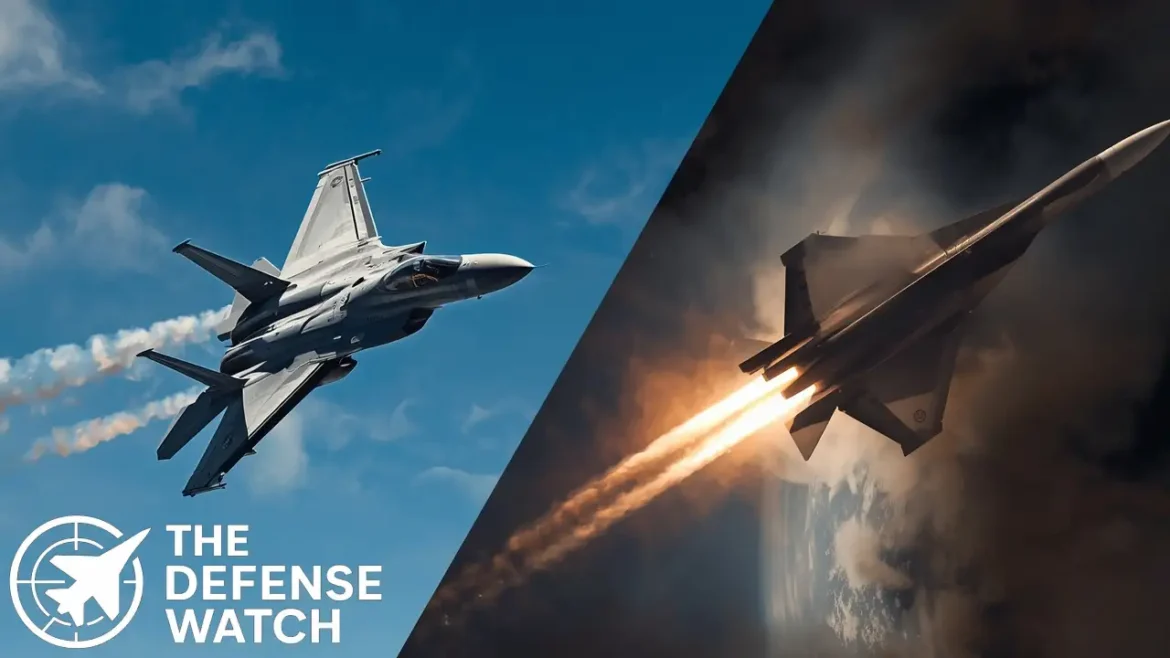
Hypersonic vs Supersonic: A Strategic Shift in Defense Technology
For decades, supersonic speed defined the cutting edge of aerospace and military technology. Today, the focus is shifting toward hypersonic weapons and aircraft, systems capable of flying at speeds once thought impossible. The debate of hypersonic vs supersonic is no longer academic—it shapes how militaries invest in research, adapt doctrine, and prepare for future conflicts.
What Is Supersonic Speed?
Supersonic flight begins when an aircraft or missile exceeds Mach 1, the speed of sound (about 1,225 km/h at sea level). Supersonic jets such as the F-16 Fighting Falcon, F-15 Eagle, or Russia’s Su-35 can sustain speeds between Mach 1 and Mach 2.
Supersonic missiles, such as the BrahMos cruise missile jointly developed by India and Russia, fly at Mach 2.8–3, making them harder to intercept than traditional subsonic systems. Supersonic speed has long been associated with air dominance, faster strike capability, and survivability in contested airspace.
Defining Hypersonic Speed
Hypersonic flight begins at Mach 5 and above, or five times the speed of sound. That translates to over 6,000 km/h—enough to cross the Atlantic Ocean in under an hour.
Unlike supersonic flight, hypersonic systems push the boundaries of physics. Temperatures can soar above 2,000°C, requiring advanced materials and heat shielding to survive. Navigation and control also become more complex, as air behaves differently at hypersonic speeds.
Hypersonic weapons fall into two main categories:
- Hypersonic Glide Vehicles (HGVs): Launched by rockets, they glide at high speeds through the atmosphere while maneuvering to evade defenses.
- Hypersonic Cruise Missiles: Powered by scramjet engines, they maintain sustained hypersonic flight within the atmosphere.
Military Applications: Supersonic vs Hypersonic
Supersonic aircraft and missiles remain essential for air superiority, precision strike, and rapid deployment. However, hypersonic weapons are seen as game-changers.
- Supersonic systems: Effective, combat-proven, and relatively affordable compared to next-gen alternatives. They remain core assets for NATO, Russia, China, and regional powers like India.
- Hypersonic weapons: Prioritized by major military powers for their ability to penetrate advanced air defenses. The U.S., Russia, and China are investing heavily, with systems like Russia’s Avangard HGV, China’s DF-17, and the U.S. Air Force’s AGM-183 ARRW under testing.
The key difference is survivability. Supersonic missiles can be intercepted by modern air defenses such as the U.S. Patriot system or Israel’s David’s Sling. Hypersonic weapons, however, travel too fast and maneuver too unpredictably for current missile defense shields to reliably counter.
Strategic Implications
The arrival of hypersonic technology introduces new strategic risks. Unlike nuclear weapons, which are governed by arms control treaties, hypersonic weapons currently exist in a regulatory gray zone. Their speed compresses decision-making time, potentially destabilizing deterrence.
Analysts warn that widespread deployment could spark an arms race, similar to the Cold War nuclear competition. For smaller powers, however, supersonic systems remain more accessible and practical, ensuring that the gap between regional and global powers does not entirely close.
Supersonic Will Not Disappear
Despite the hype surrounding hypersonics, supersonic aircraft and missiles will continue to dominate military arsenals. The cost, complexity, and limited availability of hypersonic systems mean that supersonic platforms remain the workhorses of global air forces.
In practice, future military doctrine may integrate both technologies: supersonics for mass deployment and affordability, hypersonics for strategic deterrence and precision strikes against high-value targets.
Conclusion
The debate of hypersonic vs supersonic is not about replacement but about evolution. Supersonic systems remain indispensable, while hypersonics represent the cutting edge of next-generation warfare. How nations balance both will define the future of air and missile power.
FAQs
Supersonic flight begins at Mach 1, the speed of sound.
Hypersonic flight begins at Mach 5 and above.
Their speed and maneuverability make them unpredictable and faster than current missile defense reaction times.
No, supersonic systems remain cost-effective and widely deployed, while hypersonics are specialized and limited in number.

Golden Dome Missile Defense Enters Prototyping Phase
WASHINGTON — The Trump administration’s ambitious “Golden Dome” national missile defense initiative, unveiled in May 2025, is moving into the prototyping phase as the U.S. Space Force issued a series of Requests for Proposals (RFPs) on September 18. The effort aims to build a layered shield against ballistic and cruise missile threats, blending ground-based interceptors, directed-energy weapons, and space-based tracking systems.
The move signals a rapid acceleration of the program, which Trump has described as a “21st-century Iron Dome for the American homeland.” Unlike Israel’s Iron Dome, which is designed primarily to intercept short-range rockets, Golden Dome envisions a nationwide protective network against advanced threats, including Russian and Chinese long-range missiles and potentially hypersonic glide vehicles.
Space Force Takes the Lead
The U.S. Space Force, now in its sixth year, has been tasked as the lead acquisition authority for the Golden Dome’s sensor and command-and-control architecture. Officials confirmed that RFPs were issued to major defense primes and emerging technology firms, covering areas such as:
- Next-generation interceptor design
- Directed-energy and laser integration
- Orbital sensor constellations for tracking hypersonic threats
- AI-driven battle management software
Industry sources expect Lockheed Martin, Raytheon, Northrop Grumman, and Boeing to compete aggressively for contracts, alongside newer space-focused companies.
“This will be the largest missile defense procurement initiative since the Strategic Defense Initiative of the 1980s,” said one congressional staffer, noting that Trump has championed the project as a centerpiece of his second-term defense policy.
Budget Tensions in Washington
Despite momentum, budget uncertainty looms. Congress is deeply divided on the cost of building a nationwide missile shield, with estimates ranging from $250 billion to $400 billion over the next two decades. Critics argue the system risks reviving the cost spirals of past missile defense programs, including the Bush-era Ground-based Midcourse Defense (GMD) initiative.
Democratic lawmakers have questioned whether funding Golden Dome will siphon resources from other priorities such as Pacific naval modernization and Ukraine support packages. Republicans, however, frame the program as vital to countering the growing missile arsenals of China, Russia, North Korea, and Iran.
Strategic Context
The timing of the RFP release reflects a broader shift in U.S. defense strategy. With adversaries fielding maneuverable hypersonic weapons that can bypass existing interceptors, Washington is seeking to leap ahead with a layered system that merges terrestrial and orbital capabilities.
Analysts note that the Golden Dome vision echoes aspects of Ronald Reagan’s Strategic Defense Initiative (SDI), but with technologies far closer to operational maturity. The rise of directed-energy weapons and proliferated low-Earth orbit satellites makes the project more plausible than past efforts.
Expert Analysis
Defense experts caution, however, that technological and political hurdles remain steep. “Building a continental missile defense is one thing on paper and another in practice,” said Dr. Andrew Colby, a missile defense analyst at the Hudson Institute. “Adversaries will adapt, and no shield will ever be fully impenetrable. The challenge is balancing deterrence with realistic capability.”
Still, the Space Force’s prototyping push shows Washington is prepared to invest heavily in missile defense as a pillar of U.S. homeland security in the 2030s.
FAQs
It is Trump’s proposed nationwide missile shield to defend against ballistic, cruise, and hypersonic missiles, integrating interceptors, lasers, and satellites.
The U.S. Space Force is the lead agency, handling acquisition and technology integration.
Estimates suggest between $250 billion and $400 billion over two decades.
Iron Dome protects small areas from rockets, while Golden Dome aims to shield the entire U.S. from advanced long-range threats.
No official timeline is set, but experts suggest the early 2030s if Congress approves sustained funding.

The Ground-Based Midcourse Defense (GMD) system stands as the United States’ sole operational framework for intercepting long-range intercontinental ballistic missiles (ICBMs) during their midcourse trajectory. As a bedrock of homeland protection, GMD integrates an intricate network of sensors, ground-based interceptors (GBIs), and command-and-control systems spanning 15 time zones. Despite its scope, GMD faces persistent limitations—particularly against advanced countermeasures and strategic adversaries. Ongoing modernization efforts, notably the Next Generation Interceptor (NGI), seek to enhance its effectiveness and resilience.
System Overview
GMD Architecture and Components
GMD rests on two primary interceptor sites: Fort Greely in Alaska (40 GBIs) and Vandenberg Air Force Base in California (4 GBIs), totaling 44 deployed GBIs. Supporting this posture is a layered sensor array—including space-based infrared systems, radar installations like AN/TPY-2, Cobra Dane, and newer capabilities such as the Long Range Discrimination Radar (LRDR)—and a networked command-and-control infrastructure.
How GMD Intercepts ICBMs
The system detects a launch during the boost and midcourse phases, then employs its fire control network to launch a three-stage solid-fueled GBI. Midflight, the Exoatmospheric Kill Vehicle (EKV) disengages, using onboard sensors to identify and collide with incoming warheads—destroying them by kinetic impact outside the Earth’s atmosphere.
Capabilities and Limitations
GMD has showcased limited success in intercepting simple ICBM-type targets in controlled test environments. However, concerns persist regarding its effectiveness against advanced threat launches—especially those employing decoys, countermeasures, or MIRV (Multiple Independently Targetable Reentry Vehicles) technologies.
An updated U.S. Missile Defense Review emphasizes that GMD is “neither intended nor capable of defeating” the advanced missile arsenals of peer adversaries like Russia and China. Its primary mission remains defense against limited or rogue state threats, rather than full-scale strategic attacks.
Modernization: The Next Generation Interceptor (NGI)
To address these capability gaps, the U.S. Missile Defense Agency has awarded Lockheed Martin a $17 billion contract to develop the Next Generation Interceptor. The NGI is projected to begin deployment by 2028, with 20 interceptors planned for fortification at Fort Greely. This upgrade promises advanced sensors, improved kill vehicle reliability, and the ability to defeat more complex threats.
Other strategic initiatives, such as the “Golden Dome” layered defense concept, propose adding further interceptor fields (e.g., in the U.S. Midwest) and advanced multi-domain sensors—including space-based components—to complement the GMD network.
Analysis and Strategic Context
Evolution of U.S. Homeland Missile Defense
From its origins in the National Missile Defense era of the 1990s, GMD has evolved through technological and geopolitical upheavals. It remains the only fully operational long-range homeland defense system, though its narrow focus on limited threats leaves strategic gaps.
The Road Ahead
Upcoming enhancements like NGI and broader architectures such as Golden Dome suggest a pivot toward more layered, resilient defenses. However, challenges—such as rapid technological advancements by adversaries and integration latency across sensor and interceptor networks—underscore the complexity of defending the U.S. homeland against evolving missile threats.
FAQs
GMD intercepts ICBMs during the midcourse phase—after rocket boost and before atmospheric reentry—using kinetic kill via Exoatmospheric Kill Vehicles.
As of now, 44 Ground-Based Interceptors are deployed—40 in Alaska and 4 in California.
No. GMD is not designed to defeat advanced missile threats from Russia or China—it is aimed at limited threats from rogue states.
The Next Generation Interceptor, being developed by Lockheed Martin, will enhance detection, reliability, and lethality—expected to be deployed by 2028 with 20 new interceptors at Fort Greely.
Golden Dome” is a proposed multi-layered missile defense concept aiming to integrate GMD with space-based sensors, additional interceptor sites, radars, and potentially laser systems—expanding the U.S. homeland defense posture.