Takeaways
Seoul is placing greater emphasis on independent defense while reaffirming its alliance with Washington.
1. Lee Calls For Stronger Independent Defense
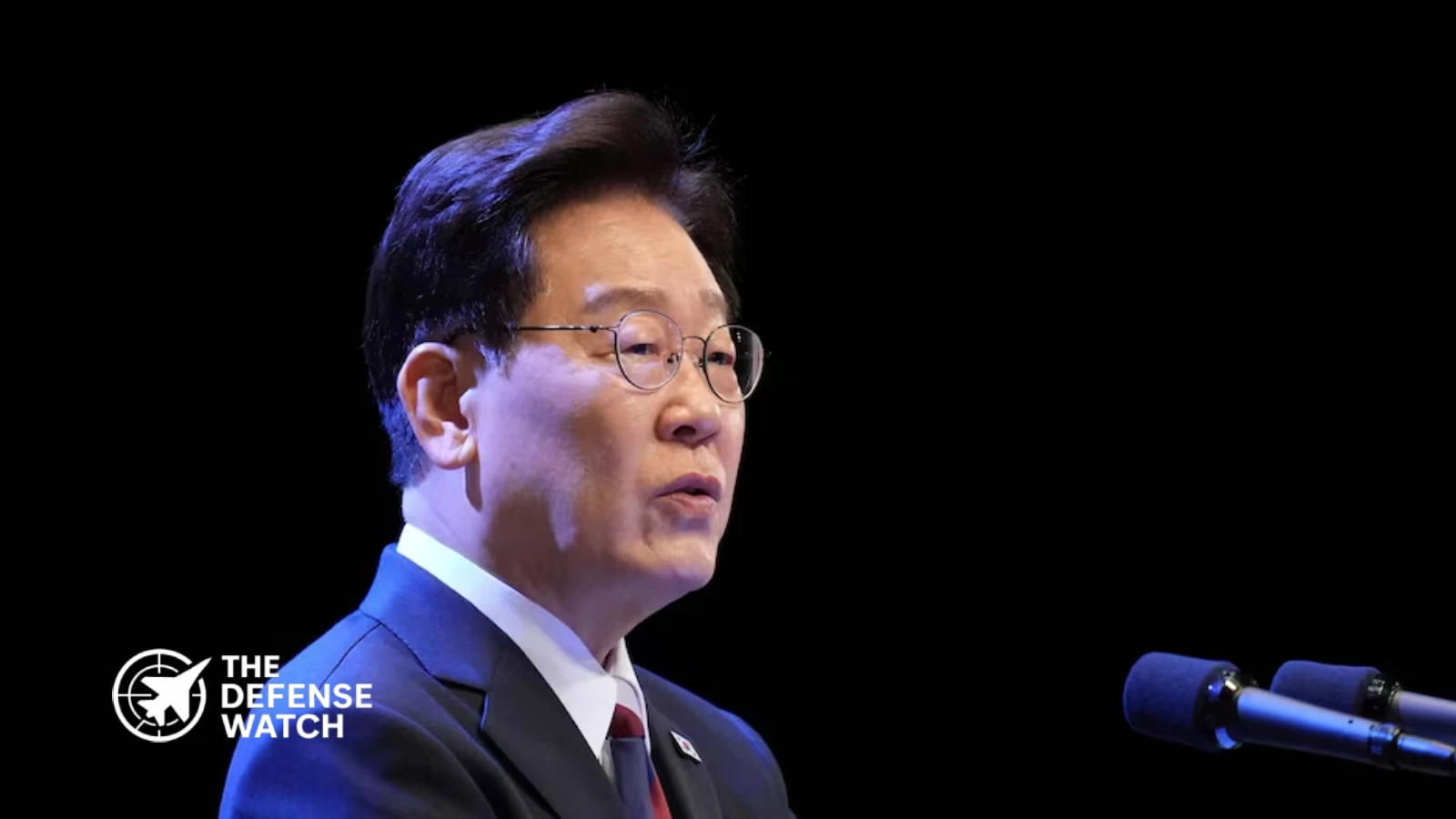
South Korean President Lee Jae Myung called for stronger national defense capabilities, arguing that greater South Korean military strength can reinforce the alliance with the United States.
2. U.S. Drill Policy Has Changed
Lee’s comments followed President Donald Trump’s direction for the Pentagon to substantially reduce joint U.S. South Korea military exercises, creating renewed attention on Seoul’s ability to maintain readiness.
3. Seoul Defends Civil Defense Exercises
Lee said civil defense activities conducted alongside the military exercises are defensive in nature and designed to protect South Korean citizens rather than prepare an attack against North Korea.
4. Wartime Command Transfer Remains A Priority
Lee said South Korea should continue with the planned transfer of wartime operational control from the United States during his administration, in line with the government’s existing plan.
5. Nuclear Powered Submarine Program Highlighted
Lee also called for faster progress on South Korea’s nuclear powered submarine program and stronger training for officers capable of conducting integrated operations across increasingly connected battlefields.
South Korea Strengthens Self Defense Amid Alliance Uncertainty
South Korea’s self defense strategy is receiving renewed attention as President Lee Jae Myung calls for stronger national military capabilities while maintaining the country’s security alliance with the United States.
Speaking during a cabinet meeting on Tuesday, Lee argued that stronger South Korean capabilities and the U.S. South Korea alliance should reinforce each other rather than be viewed as competing priorities. His remarks came after U.S. President Donald Trump instructed the Pentagon to substantially reduce joint military exercises with South Korea.
The timing puts greater focus on how Seoul maintains military readiness if the scale or frequency of combined training changes.
Lee Links Defense Independence To Alliance Strength
Lee said South Korea should proceed with the planned transfer of wartime operational control from the United States without disruption during his term.
The transfer of wartime operational control, commonly referred to as OPCON, has long been part of efforts to increase South Korea’s responsibility for the defense of the Korean Peninsula. Lee’s comments indicate that Seoul intends to continue pursuing that objective even as the wider military relationship with Washington evolves.
The president also described independent defense capabilities and the alliance as mutually reinforcing. In practical terms, a stronger South Korean military could allow Seoul to assume greater responsibility for national defense while continuing to operate alongside U.S. forces.
That approach is significant because the U.S. military presence remains a central element of deterrence on the peninsula. The two countries have developed extensive combined command structures, communications networks and training arrangements over decades.
U.S. South Korea Military Drills Under Scrutiny
The latest discussion follows Trump’s instruction to reduce joint U.S. South Korea exercises.
The decision has placed additional attention on the annual Ulchi Freedom Shield exercise, a major combined training event involving U.S. and South Korean forces.
According to United States Forces Korea, Ulchi Freedom Shield is designed as a combined, joint, all-domain and interagency operating environment. The exercise brings together the Combined Forces Command, United Nations Command, South Korean Joint Chiefs of Staff and South Korean government agencies. Training can include live, virtual, constructive and field-based activities.
The purpose is to strengthen the combined defense posture and improve the alliance’s ability to respond to a range of security threats.
That training has operational importance beyond individual exercises. Repeated combined training allows forces from both countries to practice command relationships, communications, logistics and coordinated operations under simulated crisis conditions.
Previous U.S. Department of Defense statements have described Freedom Shield and Ulchi Freedom Shield as important mechanisms for maintaining readiness and improving interoperability between U.S. and South Korean forces.
Seoul Says Civil Defense Drills Are Defensive
Lee also addressed concerns surrounding civil defense exercises conducted alongside major U.S. South Korea military activities.
At a National Security Council meeting, he said the exercises were defensive and intended to protect the lives and safety of South Korean citizens.
According to the South Korean presidential Blue House statement cited by Reuters, Lee said Seoul had no intention of using the exercises to attack North Korea or increase tensions on the Korean Peninsula.
The distinction is important because military exercises on the peninsula have historically drawn strong criticism from Pyongyang, which routinely portrays U.S. South Korean exercises as preparation for an attack.
Washington and Seoul have consistently described the exercises as defensive. The Pentagon previously characterized Ulchi Freedom Shield as an opportunity for U.S. and South Korean forces to improve interoperability and maintain readiness.
Nuclear Powered Submarine Program Gets New Attention
Lee’s defense priorities extend beyond military exercises.
He called for faster progress on South Korea’s nuclear powered submarine program and urged development of military officers capable of conducting integrated operations.
The submarine reference is particularly notable because South Korea has been expanding its maritime capabilities while confronting a regional security environment increasingly shaped by long range missiles, submarines, unmanned systems, cyber operations and space based capabilities.
Lee also said the distinction between individual battlefields is becoming less clear. That reflects a broader shift in military planning toward integrated operations across land, air, maritime, cyber and other domains.
For South Korea, such integration is directly connected to the challenge of maintaining credible deterrence while taking on a larger share of defense responsibilities.
What Greater Defense Independence Could Mean
The immediate significance of Lee’s comments is not that Seoul is moving away from Washington. Instead, the president presented stronger national capabilities as a way to strengthen the alliance.
That distinction matters.
South Korea already operates one of Asia’s most advanced conventional military forces, with modern fighter aircraft, air and missile defense systems, submarines, surface combatants, precision strike capabilities and a large defense industrial base.
Greater defense independence could therefore involve expanding the ability of South Korean forces to conduct complex operations without depending on U.S. forces for every critical function.
The planned wartime operational control transfer is one part of that effort. More sophisticated command and control, intelligence, surveillance, reconnaissance, logistics and joint training would also be important to making such a transition effective.
The challenge is maintaining interoperability with U.S. forces at the same time.
A reduction in the scale of combined exercises could make that balance more important. Training opportunities provide a practical way for allied forces to identify weaknesses in communications, planning and command relationships before a crisis occurs.
A More Independent South Korean Defense Posture
South Korea’s self defense push comes at a sensitive moment for the U.S. South Korea alliance.
Lee is simultaneously supporting stronger domestic military capabilities, continuing the planned transfer of wartime operational control and emphasizing the importance of the U.S. alliance.
His government is also presenting civil defense preparations as measures intended to protect the population rather than provoke North Korea.
The result is a defense policy that seeks greater South Korean responsibility without abandoning combined defense arrangements with Washington.
For U.S. policymakers and military planners, the development will be closely tied to the future structure of combined exercises and command arrangements on the Korean Peninsula.
For Seoul, the central issue is ensuring that greater defense independence translates into real operational capacity while preserving the interoperability and deterrence benefits provided by the alliance.
At this stage, Lee’s comments point toward continued investment in South Korean military capabilities rather than a retreat from the alliance. The next test will be how those ambitions translate into force development, command arrangements, training and major defense programs.