

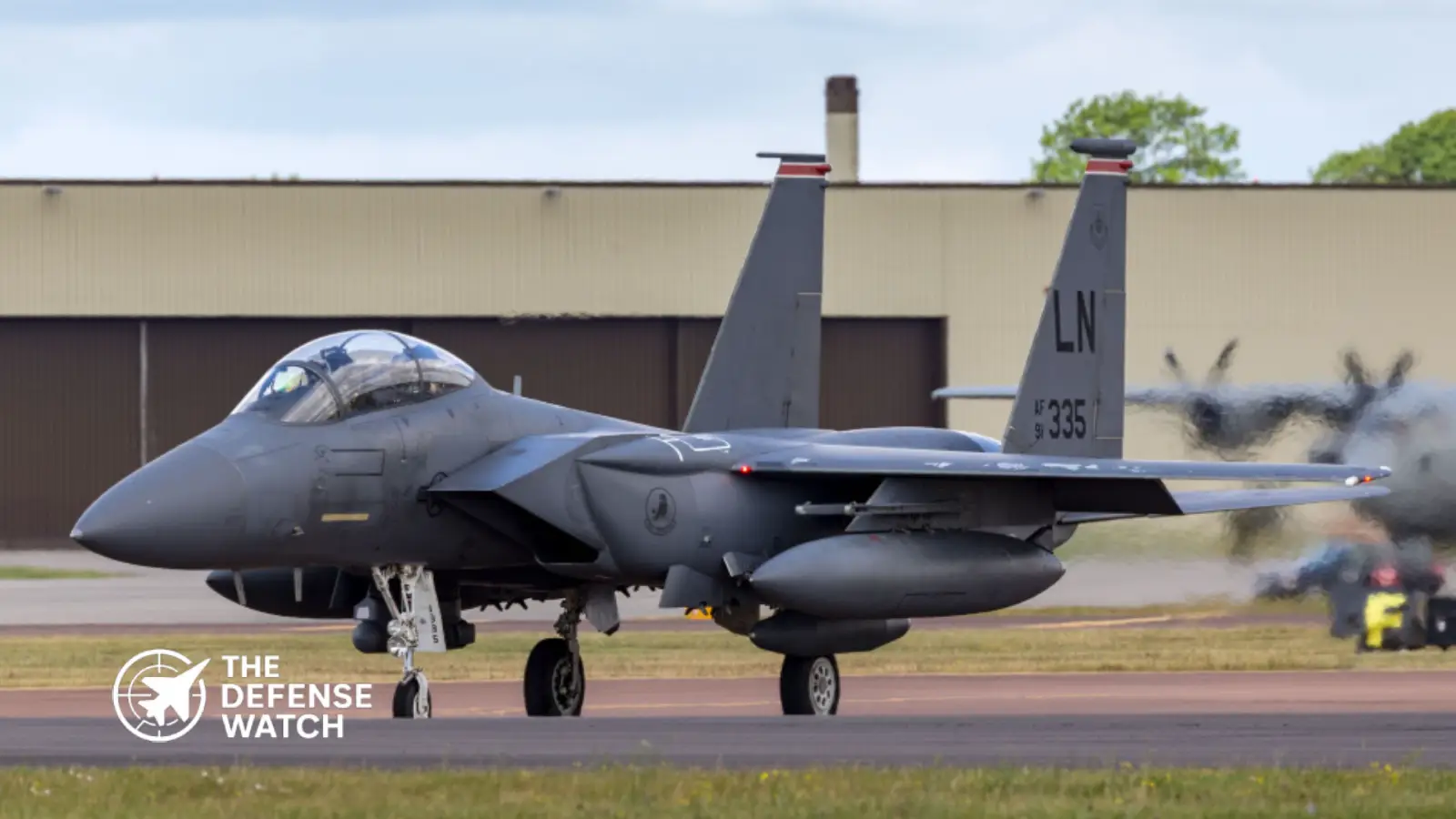
F-15E Shot Down Over Iran: Dude 44 Rescue Explained
An Air Force F-15E Strike Eagle flying as Dude 44 was shot down over southwestern Iran on April 3, 2026, and both crew members survived. U.S. officials have said the aircraft was hit by a shoulder-fired, heat-seeking missile. The pilot, call sign Dude 44 Alpha, was recovered the same day. The weapon systems officer, Dude 44 Bravo, evaded Iranian forces for roughly 50 hours before special operations aircraft extracted him from a mountain ridgeline.
The shootdown was the first known combat loss of a crewed U.S. aircraft during the Iran conflict, according to Air & Space Forces Magazine. It triggered two combat search-and-rescue operations that, by the account of President Donald Trump and Joint Chiefs Chairman Gen. Dan Caine, drew on scores of aircraft and, in the second case, a covert forward airstrip deep inside Iran.
The story has gained detail since April. On Sept. 14, the weapon systems officer gave his first public interview, to CBS’s 60 Minutes, and the military released footage from the recovery. Several questions remain open, including the identities of both aviators and the specific weapon that brought the jet down.
The sequence of events
The table below lists what is attributed to officials or reporting, with the source for each item. Times are local to Iran unless stated.
| When | Event | Attribution |
|---|---|---|
| Apr 3, about 4:40 a.m. | F-15E (Dude 44) downed over southwestern Iran during a combat strike mission; both crew eject | Military Times, citing CENTCOM |
| Apr 3, same day | Pilot recovered in a daylight operation; one A-10 hit during the effort and its pilot ejects over friendly territory | Gen. Caine, as reported by TWZ and Military Times |
| Apr 3-5 | WSO injured, evades on foot into mountains, hides in a crevice | Trump and Caine briefing, as reported by TWZ |
| Apr 4-5, overnight | WSO extracted after a seven-hour flight into Iran in darkness | Military Times |
| Apr 5 | CENTCOM statement that both were recovered in separate missions | Task & Purpose |
| Sep 14 | WSO interview on 60 Minutes; Air Force chief announces 10 battlefield promotions tied to the rescue | Task & Purpose; Air & Space Forces Magazine |
What hit the F-15E
CENTCOM said the aircraft was engaged by Iranian air defenses during a strike mission over southwestern Iran, per Military Times. Trump later said it was brought down by a shoulder-fired missile, as relayed by TWZ via Axios, and the weapon systems officer described the impact on 60 Minutes as being “hit by a freight train,” according to Task & Purpose. The specific missile type has not been publicly identified in the sources reviewed.
That detail carries some tactical weight. TWZ noted that, if a man-portable air-defense system (MANPADS) was responsible, the jet would have been flying inside the typical MANPADS engagement envelope, generally below roughly 15,000 feet. That is TWZ’s analysis, not an official finding. A separate TWZ report discussed a drone swarm the pilot reportedly saw before the hit; I could not corroborate that account in the sources reviewed, so treat it as unconfirmed.
The loss came in a campaign where U.S. officials described air superiority over large parts of Iran. Retired Lt. Gen. David Deptula of the Mitchell Institute argued, in comments to Air & Space Forces Magazine, that air superiority reduces risk without eliminating it.
Rescue one: the pilot, in daylight
Caine described a rescue task force assembled quickly around 10 A-10C Thunderbolt IIs, HC-130J Combat King II aircraft, HH-60W Jolly Green II helicopters and Air Force special warfare airmen. The rescue force went in during daylight, which Caine singled out as a notable choice.
Accounts differ on how long the pilot waited. Fox News put it at a little over six hours, while other outlets say roughly seven; Caine placed the recovery on Friday afternoon. Military Times reported that one HH-60W took multiple small-arms hits and that crew members were wounded. Caine said the injuries were minor.
One A-10 was also hit. According to Caine’s account, that pilot was the one communicating with the downed aviator, and he flew the damaged jet out of Iran before ejecting over friendly territory. Military Times identified the country as Kuwait. He was recovered.
Tactical Calculator: Analyzing loiter endurance and payload-to-fuel ratios for deep-penetration special operations? Model flight parameters with our Drone Flight Time & Range Calculator.
Rescue two: 50 hours for the weapon systems officer
Bravo’s situation was harder. Per his own account on 60 Minutes, as reported by Task & Purpose, his parachute was damaged and he landed hard, breaking his back, a shoulder and an arm. He still moved to higher ground and made contact with U.S. forces. Trump described him as a colonel. Task & Purpose reported that both crew were assigned to the 494th Fighter Squadron.
Caine said both aviators’ rescue beacons were confirmed active after ejection. TWZ, citing the New York Times, reported that the Combat Survivor Evader Locator (CSEL) device gave U.S. officials a position fix about 14 hours after the hit, and that the CIA used a technology unique to the agency to confirm his location and identity. CBS News reporting, summarized by TWZ, added that the team authenticated him with a personal question and that planners weighed at least four rescue options. Hegseth chose a fixed-wing approach using two MC-130s, per CBS.
The deception and the airstrip
The government’s account describes a layered effort to keep Iranian searchers off the ridgeline. Trump said aircraft were moved around to suggest multiple locations. A U.S. official told Fox News that the CIA spread word that a valuable package was being moved toward the coast. CBS reported the team also tried to suggest the officer was heading in other directions, per TWZ. Reuters, as cited by TWZ, reported that U.S. forces jammed electronics and bombed roads around the area to slow ground approaches, and imagery published by CNN showed cratered roads in Isfahan Province.
The pickup itself relied on a forward arming and refueling point (FARP) set up on farmland. According to Military Times, the site sat roughly 14 miles north of Shahreza in southern Isfahan Province. Task & Purpose, citing CENTCOM commander Adm. Brad Cooper, reported about 92 U.S. troops were inside Iran, the first time in more than four decades that U.S. personnel were disclosed as operating on Iranian soil. Pararescuemen and elements of SEAL Team 6 were involved, along with MH-6 Little Bird helicopters of the Army’s 160th Special Operations Aviation Regiment that had been flown in by MC-130J. Task & Purpose also reported that Air Force and Army special operators had rehearsed the same scenario on a Wyoming highway in 2023.
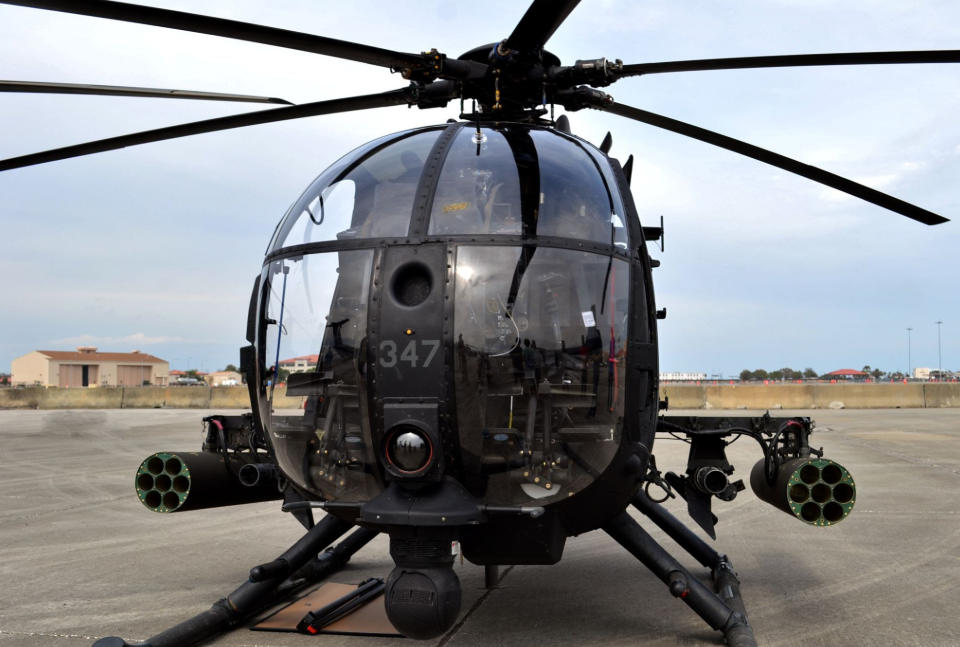
Two MC-130Js became stuck in soft ground and were destroyed on site, per Military Times and Task & Purpose. Trump said smaller aircraft then flew the teams out. TWZ identified the likely type as the C-295W, but that is TWZ’s inference. The number of MH-6s lost has not been confirmed.
Fox News reported that two pararescuemen reached Bravo on a ridgeline of roughly 7,000 feet. He was taken to Landstuhl Regional Medical Center in Germany, according to Fox News as relayed by TWZ.
Where the accounts differ
Several points vary by source, and some of the loudest claims come from interested parties.
- Date. Most reporting gives April 3 for the shootdown, and that matches 4:40 a.m. in Iran. One outlet I reviewed gave April 2, which is consistent with a U.S. time zone; 4:40 a.m. in Iran is the previous evening on the U.S. East Coast. That is my conversion, not an official statement. The WSO’s recovery is likewise dated April 4 in some U.S. reports and April 5 in others.
- Locations. Military Times placed the pilot’s landing in Khuzestan and the WSO near Dehdasht in Kohgiluyeh and Boyer-Ahmad. Another outlet reported Chaharmahal and Bakhtiari, and CBS placed the WSO south of Isfahan. The exact positions have not been published by the U.S. military in the sources reviewed.
- Distance between crew. Military Times says they landed miles apart. Bravo told 60 Minutes about five miles, per Task & Purpose.
- Scale. Trump put the second operation at 155 aircraft, including four bombers, 64 fighters, 48 tankers and 13 rescue aircraft. These are his figures and have not been independently verified here.
- Iranian claims. Iranian state media published images of purported wreckage and Iranian officials disputed that the mission succeeded, according to Task & Purpose and Military Times. U.S. officials confirmed both crew were recovered.
- Israel’s role. Prime Minister Netanyahu said Israel helped, per the Times of Israel as cited by TWZ. TWZ later removed a section describing Israeli unit involvement pending further confirmation, so specifics remain unverified.
What the rescue shows about CSAR in contested airspace
The facts here support a few cautious observations, which are analysis rather than official findings.
First, the helicopter remains the exposed part of a rescue force. The HH-60W that took small-arms hits during the daylight pickup is a reminder of how little protection a slow, low-flying aircraft has once the ground force is alerted. Task & Purpose has reported the Air Force is looking at lasers to help protect rescue helicopters following the Iran mission; I have not reviewed the details.
Second, the choice between rotary-wing and fixed-wing options was driven by more than range. CBS reported that U.S. intelligence indicated the Iranians expected helicopters, and that low cloud ceilings complicated a helicopter approach.
Third, the second recovery shows how much of a CSAR effort is not the pickup itself. The deception, the road cratering, the electronic jamming and the airborne suppression, as reported, all aimed at buying the minutes the MH-6s needed for a roughly seven-minute flight each way, per CBS.
Current status
Both aviators survived and have been publicly known only by call sign. Task & Purpose reported that the pilot declined to be interviewed and neither officer’s name has been released. Air & Space Forces Magazine reported that Air Force Chief of Staff Gen. Ken Wilsbach announced battlefield promotions for 10 Airmen for the Dude 44 rescue on Sept. 14, describing it as a rarity in the service.
Not publicly disclosed in the sources reviewed: the identity of the missile used, any Air Force investigation findings on the shootdown, a confirmed count of MH-6 helicopters lost, and the aircrews’ names.
1. Shot down April 3, both crew survived
An F-15E (Dude 44) was downed over southwestern Iran at about 4:40 a.m. local time, and both aviators ejected.
2. Two separate rescues
The pilot was recovered in daylight the same day; the weapon systems officer was extracted about 50 hours after the shootdown.
3. Shoulder-fired missile, type unidentified
Officials describe a man-portable missile, but the specific weapon has not been publicly named.
4. A covert airstrip made the second pickup possible
About 92 U.S. troops were inside Iran, two MC-130Js were destroyed after becoming stuck, and Little Birds flew the final leg.
5. Several details remain unconfirmed
Aircraft counts come largely from the President, exact landing locations vary by outlet, and the aircrews’ identities have not been released.
